
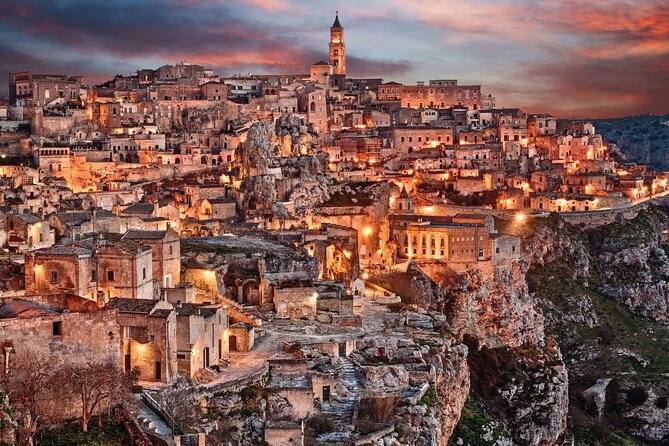
REVIEW · ITALY AUDIO TOURS
Matera Walking Tour with Audio and Written Guide by a Local
Matera rewards slow looking. This self-guided walk gives you a low-cost way to explore the city’s ancient Sassi, underground spaces, churches, and viewpoints at your own pace, using audio and written information on your phone. I like the very low price and the multilingual format, which includes English, Spanish, Italian, German, and French. The route also includes local restaurant advice and Google Maps links, though the directions may feel less clear if you expect a guide leading you from one stop to the next.
You should allow about three to four hours, although your pace will depend on how long you spend inside paid sites. The route begins at Ipogeo MateraSum and finishes near Castello Tramontano, giving you a useful walk across several key parts of town rather than a short look at one square. Bring a charged smartphone, internet access, and headphones if you prefer not to use your phone speaker.
Key points at a glance
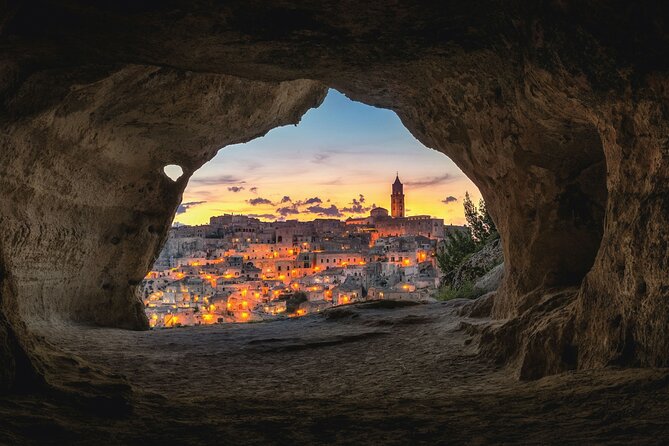
- A remarkably cheap introduction to Matera: At $7.83 per person, the guide costs far less than a traditional private walk and can be a sensible choice for budget-minded visitors.
- Seven important stops: The route covers Matera’s underground cistern, the Sassi districts, the cathedral, cave churches, a noble home, and a Baroque church.
- Google Maps is part of the navigation: You follow the route yourself, so the experience suits independent walkers more than anyone wanting a person at the front of the group.
- Audio and written content work together: You can listen through your phone speaker or headphones, then read details when you want more context.
- Several admission fees are separate: The Palombaro Lungo, cathedral, Casa Noha, and Santa Maria de Idris may require their own tickets.
- The route is flexible but not fully hands-off: You can pause, linger, or skip a stop, yet you are responsible for opening the guide and finding each location.
Why this low-cost Matera walk can work well
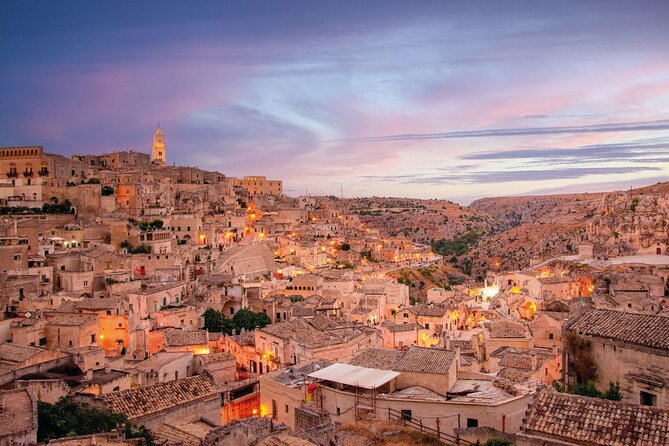
Matera is not a city you understand from one postcard view. Its identity comes from the way homes, churches, stairways, ravines, cisterns, and rock walls fit together. A self-guided route can be useful here because you can stop often, look around, and replay a section without holding up a group.
The price is the biggest draw. At $7.83, this is not meant to replace a long private tour with a local historian. It is a budget tool that organizes your visit and gives you background at the main points. If you are happy using your own phone and following map links, the cost is easy to justify.
I also like the choice of languages. The information is available in five languages, and both audio and text are provided. That helps if you prefer reading in quiet places, need to check a name, or want to listen only to selected sections.
The tradeoff is simple: there is no person physically guiding you. You will not have someone beside you to answer an unexpected question, adjust the route, or point out a detail you almost missed. The digital instructions are supplied through your voucher, WhatsApp message, and email, so read those instructions carefully before you start.
More Audio Walking Tours in Italy
- Florence: 2.5 hour Audio Guided Walking Tour led by Host
★ 4.6 · 293 reviews - Verona Walking Tour with Audio and Written Guide by a Local
★ 4.5 · 157 reviews - Bologna Walking Tour with Audio and Written Guide
★ 4.5 · 132 reviews
Starting below street level at MateraSum
The walk begins at Recinto XX Settembre, 7, at Ipogeo MateraSum. This is a strong opening because Matera makes more sense when you first see what lies beneath the streets.
MateraSum is an underground complex cut into tuff rock. It is often described as a city under the city, and that phrase is useful here because it points to the practical side of Matera’s past. The stone was not only used for homes and churches. It was also shaped into working spaces, water systems, and rooms below ground.
Expect the first stop to set the tone rather than provide a quick photo. You are beginning with the physical character of the city: stone, excavation, darkness, and human adaptation. The audio guide can add context while the written version lets you move at your own speed.
The starting point also has a practical benefit. You begin with a defined address rather than trying to find a guide in a crowded central square. Check the activation details before arriving, since access to the digital material depends on your smartphone and internet connection.
Piazza Vittorio Veneto and the Palombaro Lungo
The route then leads toward Piazza Vittorio Veneto, where the Palazzo dell’Annunziata now houses the Provincial Library named for Tommaso Stigliani. The building gives you a useful point of orientation in the modern part of Matera, before the walk turns more firmly toward the old districts.
Beneath the square is the Palombaro Lungo, an underground water collection and storage structure. The word palombaro refers to this type of cistern. Construction took place in several phases beginning in the 16th century.
This stop matters because water is central to understanding Matera. The city’s dramatic rock homes can look almost self-sufficient from a distance, but daily life depended on systems for collecting and storing water. The cistern helps connect the impressive stone setting with the ordinary work of survival.
The planned time here is about 30 minutes. Admission is not included, so check the separate entry conditions before building your schedule around an interior visit. If you only want the outside context, you can continue without adding that ticket, but the underground structure is one of the route’s most useful stops for understanding how the city functioned.
Reading the Sassi through three districts
The Sassi are Matera’s historic districts, and the route gives you a compact introduction to their layout. The three main areas are Sasso Barisano to the northwest, Sasso Caveoso to the south, and Civita in the middle.
That division is more than a set of names to memorize. It helps you make sense of the city’s shape while walking. Civita occupies the central rocky area, with the two Sassi districts on either side. The guide’s map connection should be particularly useful here, since the streets and stairways can make a short distance feel less direct.
The planned visit is about 30 minutes, but this is a place where you may naturally pause longer. Look for the way buildings appear to grow from the rock and how the old districts change as you move between them. The Sassi are free to visit, so this part of the experience does not require another ticket.
The route is also family-friendly in one important way: you can stop when children need a break and shorten the commentary without losing the overall path. The walk is not tied to a group timetable. That freedom is one of the strongest reasons to choose this format.
Same place, a different route to walk:
- Rome: Pantheon Fast-Track Ticket and Official Audioguide
★ 4.5 · 27,353 reviews - Rome: Colosseum & Forum with Audio Guide App -Optional Arena
★ 4.2 · 24,770 reviews - Florence: Timed Entry to Michelangelo’s David + Audio App
★ 4.6 · 19,496 reviews - Rome: City Sightseeing Hop-on Hop-off Bus with Audioguide
★ 4.0 · 16,045 reviews
The Cathedral on Civita
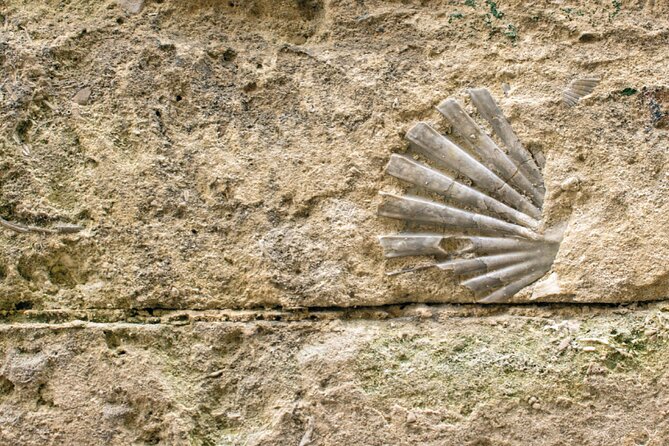
The Cathedral of Maria Santissima della Bruna and Sant’Eustachio, usually called the Duomo of Matera, sits on Civita, the highest point of the city where the first settlement of the Sassi began. It was completed in 1270.
Before the cathedral, this area was home to a Benedictine monastery dedicated to Sant’Eustachio. That monastery was consecrated in 1082, giving you a glimpse of the long religious history concentrated on the central ridge.
The route allows about 25 minutes here. Admission is not included, so treat the time as an orientation rather than a guarantee of a full interior visit. You may need to adjust your pace if you want to enter and spend longer with the building.
This is one of the places where audio commentary can help. A cathedral on a high point is easy to photograph, but its position also explains the city’s structure. From Civita, the two Sassi areas relate to each other more clearly, and the guide can help you connect the view with the names and dates.
Casa Noha and the noble side of the Civita
Casa Noha is in the Civita district, on the natural rock that separates Sasso Caveoso from Sasso Barisano. The building dates from the 16th and 17th centuries and was once the home of the noble de Noha family.
This stop broadens the story beyond churches and humble cave dwellings. Matera’s historic center was not made up of one social class or one kind of building. Casa Noha points to the presence of a noble household within the same larger stone city.
The information provided for this stop does not specify an allotted visit time or included admission. For that reason, check the current entry details before assuming it is part of the basic cost. The digital guide can still help you understand the location from outside, but access and time inside may depend on conditions at the site.
Santa Maria de Idris in Sasso Caveoso

The Church of Santa Maria de Idris is in the middle of Sasso Caveoso, on the rocky promontory of Monterrone. Part of the church is cut into the rock, while another part was built after the collapse of the vault before the 16th century.
This is exactly the kind of stop that gives Matera its unusual character. You are not simply looking at a church made of stone. You are seeing a building shaped by the rock itself, with construction and excavation working together.
The planned visit is about 20 minutes, and admission is not included. That makes it important to keep a little flexibility in your budget. If you want to enter several paid sites, the $7.83 guide is only one part of the day’s expense.
The audio and written formats are useful here for different reasons. Audio lets you keep your eyes on the walls and interior details. Text gives you a quick way to confirm the name, location, and key facts without replaying the whole explanation.
San Pietro Caveoso and the Baroque façade
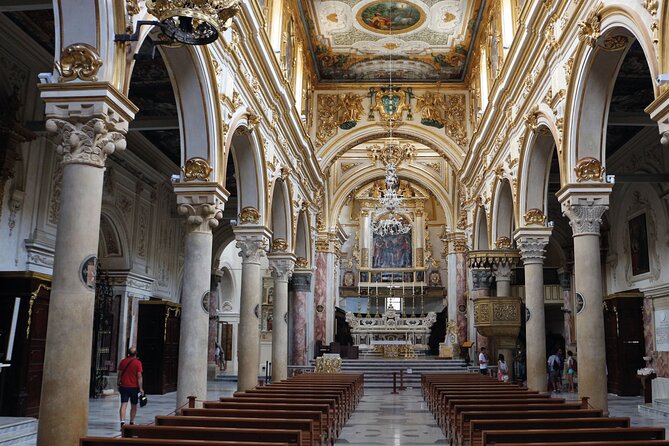
Chiesa di San Pietro Caveoso is in the heart of Sasso Caveoso. Its Baroque façade has three niches containing statues of Saint Paul on the right, Saint Peter on the left, and the Madonna della Misericordia in the center.
The church is planned as a 20-minute stop and admission is free. That makes it an easy place to include even if you decide not to pay for every interior site on the route.
Pay attention to the façade before going inside. The three niches provide a clear visual feature, and the guide can help you identify the figures rather than reducing the visit to another anonymous church stop. This is a good example of how a short explanation adds value to a walk that might otherwise become a blur of stone buildings and religious names.
The Church of Purgatory
The Church of Purgatory brings a different mood to the route. It was built in the Baroque style and is dedicated to the deceased, with its decoration and subject focused on death and the redemption of souls.
The planned visit is about 20 minutes, and admission is free. Because the church deals directly with mortality and redemption, it adds a distinct theme to the day rather than repeating the same architectural story.
I would listen to this section rather than rush through it. The subject is not light, but it helps explain how religious buildings communicated ideas to the people who used them. The written guide is handy if you want to absorb the details quietly.
Finishing near Castello Tramontano
The route finishes at Castello Tramontano on Via del Castello. The stated opening hours run from noon to 11:30 p.m., Monday through Sunday, for the listed operating period ending February 7, 2027.
Ending at the castle gives the walk a clear final point and leaves you near a major landmark rather than sending you back to the starting address. The route therefore works better as a one-way exploration than as a return loop.
The castle is not presented as a full included visit, so do not assume the digital guide covers entry. Still, it is a practical endpoint. You can stop there, finish the last audio section, and decide what to do next without needing to retrace the entire route.
What the digital format really requires
You need a smartphone with an internet connection. Activation details are sent with your voucher, through WhatsApp after booking, and by email the night before the experience, so keep those messages easy to find.
The guide connects with Google Maps. That is convenient for locating the next stop, but it also means you should expect a map-based walk, not a carefully marked trail with a person correcting every turn. One useful approach is to open the map before leaving each site, then start the next audio section once you are oriented.
Headphones are not included. You can listen through your phone speakers or use your own headphones. In quiet churches or underground spaces, headphones may be more comfortable and less distracting, while the speaker option keeps your hands free.
The maximum group size is listed as 104 people, but the format is still self-guided. That number matters less than it would on a conventional group tour because you are not physically moving as one large unit. You control your pauses and pace.
Who should choose this Matera audio tour?
I would recommend it to you if you want a cheap, structured introduction to Matera and are comfortable using your phone. It is also a good match for families, independent walkers, and visitors who want explanations in a language other than English.
It suits you especially well if you plan to choose your own admission tickets. Several sites are not included, so you can keep the base cost low and decide which interiors matter most.
I would be more cautious if you want lively conversation, expert answers on demand, or perfect turn-by-turn reassurance. The audio content has been praised for being clear and appropriately detailed, but the experience depends on your own preparation. A failed activation or neglected email could delay the start.
The cancellation terms are forgiving if your plans change: you can receive a full refund when you cancel at least 24 hours before the local start time. Changes or cancellations inside that window are not accepted for a refund.
Should you book this Matera walking tour?
Book it if you want the main Matera story at a tiny price, with a route that links underground waterworks, the Sassi, Civita, cave churches, and the castle. The multilingual audio and written material, plus Google Maps connection, make it more useful than simply downloading a random city map.
Skip it if your ideal visit requires a human guide beside you. The best value comes from treating this as a flexible digital companion, not a traditional walking tour. Read the activation instructions before you arrive, carry your own headphones, and budget separately for the paid sites.
FAQ
How long does the Matera walking tour take?
The experience takes approximately three to four hours. Your total time can vary depending on how long you spend at each stop and whether you enter sites with separate admission fees.
Where does the tour begin?
It begins at Ipogeo MateraSum, at Recinto XX Settembre, 7, 75100 Matera MT, Italy.
Where does the tour finish?
The route finishes at Castello Tramontano on Via del Castello in Matera.
Is the audio guide available in English?
Yes. Audio and written information are available in English, Spanish, Italian, German, and French.
Do I need a smartphone and internet connection?
Yes. You need a smartphone with an internet connection to activate and use the digital guide. Activation details are provided in your voucher and follow-up messages.
Are headphones included?
No. You can listen through your smartphone speakers or bring your own headphones.
Are admission tickets included?
Admission is not included for the Palombaro Lungo, Matera Cathedral, Casa Noha, or Santa Maria de Idris. The Sassi, San Pietro Caveoso, and the Church of Purgatory are listed as free stops.
Can I cancel for a full refund?
Yes, if you cancel at least 24 hours before the experience start time. Cancellations or changes made less than 24 hours before the start are not refundable.
Just added around Italy
- Torino Walking Tour with Audio and Written Guide by a Local★ 4.5 · 35 reviews
- Medieval Canals and Fountains: A Treviso Self-Guided Audio Tour★ 4.5 · 4 reviews
- Trapani Walking Tour with Audio and Written Guide by a Local★ 4.0 · 8 reviews
- Trento Walking Tour with Audio and Written Guide★ 4.5 · 11 reviews
- Sicily: Selinunte Park Entry Ticket & Sicily Digital Audio Guide★ 4.5 · 4 reviews
- Taormina Walking Tour with Audio and Written Guide by a Local★ 4.5 · 41 reviews
- Taranto Walking Tour with Audio and Written Guide by a Local★ 5.0 · 5 reviews
- Siracusa Walking Tour with Audio and Written Guide by a Local★ 5.0 · 59 reviews
Walking Tours, compared.
City Monuments Guided Walking Tour with Audio Guide
Read our review →

Self Guided Classic Freedom Trail Location Aware (GPS) Walking Audio Tour
Read our review →
Self-Guided Historical Walking Tour (Audio Guide)
Read our review →
Cape Cod & Provincetown Self-Guided Driving & Walking Audio Tour
Read our review →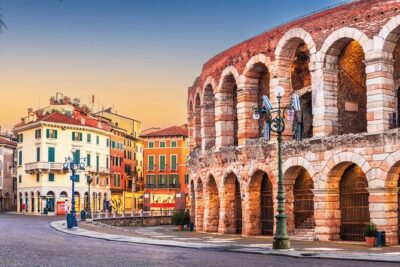
Verona Walking Tour with Audio and Written Guide by a Local
Read our review →
Royal Walking Tour and Buckingham Palace Audio Tour
Read our review →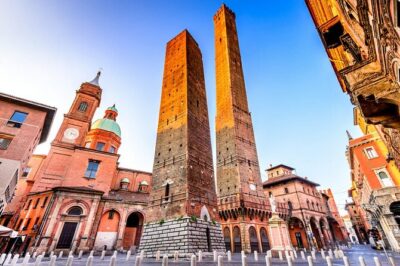
Bologna Walking Tour with Audio and Written Guide
Read our review →Browse the lists this tour appears in