
REVIEW · MADRID AUDIO TOURS
Madrid: Royal Palace Entry with Audio Guide
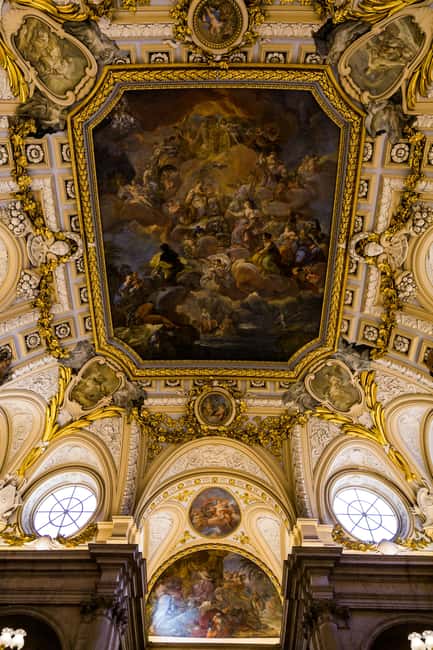
The palace has room for a whole dynasty. Madrid’s Royal Palace gives you grand state rooms, royal art, Stradivarius instruments, and a self-guided visit inside one of Europe’s biggest royal residences. I like the freedom to move at your own pace, and I like that the audio guide adds context without forcing you into a fixed tour. The main drawback is practical: you must collect your ticket away from the palace, and busy periods can make the 90-minute visit feel rushed.
The Palatinos Stradivarius instruments are a special reason to go beyond the usual parade of royal rooms. I also appreciate the choice of five audio-guide languages, English included. Still, the audio commentary covers only a limited number of rooms, and some visitors have found the palace crowded enough to miss parts of the route.
Key points to know before you go

- The ticket pickup is at Plaza de España 9: Collect your entry ticket at the Naturanda Madrid tourist office before heading to the palace.
- The palace is enormous: It covers 199,000 square meters and contains 3,478 rooms, though only selected areas are open to the public.
- The audio guide uses an app: You download the museum guide in English, Spanish, Italian, French, or German.
- The Stradivarius collection is a highlight: The Palatinos instruments give the visit a more personal link to royal life.
- Crowds can affect the experience: Busy conditions may prevent you from seeing every room at a comfortable pace.
- A Spanish guide may also lead the visit: The activity can sometimes operate as a group visit with a guide, rather than as a purely independent audio tour.
What this Royal Palace visit actually offers
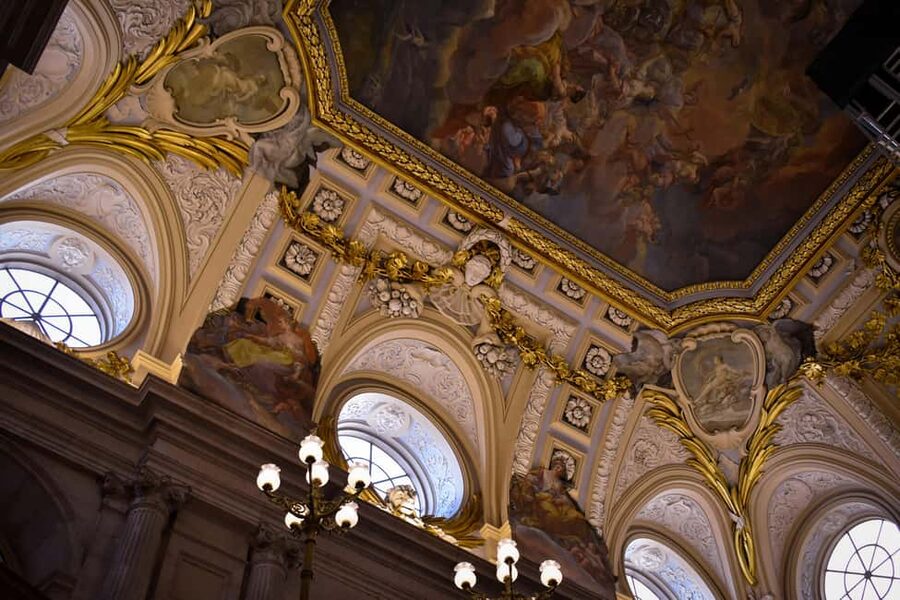
Madrid’s Royal Palace is not a small museum dressed up as a palace. Its scale is the first thing to understand. With 3,478 rooms and 199,000 square meters, it is described as the largest palace in Western Europe. You will not see all of it, of course. The public route focuses on the state rooms, collections, and selected ceremonial spaces.
That scale gives the visit its punch, but it also explains why the advertised 90 minutes can feel tight. You are seeing a carefully chosen slice of a huge royal complex, not wandering through every corridor. I would treat the stated duration as a useful framework, not a promise that you will inspect every display in detail.
The palace was built for Philip V on the remains of the Royal Alcazar, which was destroyed by fire in the 18th century. That detail matters because the building is not simply an old fortress turned royal home. It represents a new royal project built after a major loss, and its grand design reflects the power and ceremony expected of Spain’s monarchy.
You receive admission plus a digital audio guide. The guide is available in English, Spanish, Italian, French, and German through an app. Headphones are not included, so bring your own if you want to listen comfortably without holding your phone close to your ear.
More Castle and Palace Audio Tours in Madrid:
- Royal Palace of Madrid Entry Ticket with Audioguide
★ 3.0 · 68 reviews - Prague: Skip-the-line Castle Ticket and Optional AudioGuide
★ 4.3 · 11,121 reviews - Amsterdam: Royal Palace Entry Ticket + Audio guide
★ 4.6 · 7,889 reviews
Starting at Plaza de España 9
The practical wrinkle comes before the palace itself. You collect the entry ticket on the day of the visit at the Naturanda Madrid tourist office at Plaza de España 9. This is not the same location as the Royal Palace, so you need to allow time for that extra stop.
That arrangement can be inconvenient, especially if you expect to walk directly to the palace with a mobile voucher. One visitor specifically found the separate ticket pickup awkward. My advice is simple: do not arrive at the palace at the last minute. First find the Naturanda office, collect the ticket, and then continue to the palace with a comfortable time cushion.
The activity may operate as a group visit with a guide. That creates some variation in the feel of the experience. You may use the digital audio guide independently, or you may be part of a group led by a Spanish-speaking guide. A Spanish guide was praised for making the visit engaging and explaining details clearly, while the audio guides were also reported to work well.
If you are joining a group, stay alert during the handover from ticket collection to the palace visit. One visitor arrived early but found the group had already started while the audio equipment was being collected. Ten minutes may sound like plenty, but it can disappear quickly when tickets, radios, and meeting instructions are involved.
Seeing the palace in a 90-minute visit

Once inside, the visit focuses on the rooms and collections open to the public. The experience is best approached as a sequence of highlights rather than an attempt to conquer the entire building.
The state rooms are the main event. These spaces show the palace as a working symbol of monarchy, with formal interiors designed for ceremony, court life, and official receptions. I like this part of the visit because it gives the building a human purpose. You are not just looking at expensive decoration. You are seeing rooms designed to control movement, impress important people, and display royal authority.
The audio guide should help you understand the purpose behind what you see. That is valuable in a palace, where a grand room can otherwise blur into the next grand room. Still, the commentary does not describe every space. One visitor felt that it covered very few rooms, so you should not expect a full explanation of the palace’s 3,478 rooms.
Crowds are another factor. A busy palace changes the visit in small but annoying ways. You may need to move with the flow, wait for a clear view, or pass through a room before you have finished listening. One visitor could not see everything they wanted because of the crowd. If the palace is full, the 90-minute schedule feels less generous.
The best strategy is to decide what matters most before you arrive. Give priority to the state rooms, the musical instruments, and the works of art. If a room is packed, do not spend the whole visit waiting for a perfect view. The palace is too large for that approach.
The Palatinos Stradivarius collection
The musical instruments are among the most distinctive parts of the visit. The collection includes the Palatinos Stradivarius instruments, which give you something more specific to look for than a general display of royal luxury.
Stradivarius instruments are famous for their craftsmanship and sound, but here they also connect music with court life. Royal residences were places of ceremony and performance, not just private homes. These instruments help you picture the palace as a place where music formed part of official occasions and daily culture.
This is one of the strongest reasons to use the audio guide. A display case alone can leave you admiring the object without understanding why it belongs in the palace. Commentary can explain the instruments’ place in the collection and help separate this section from the more predictable parade of paintings and furniture.
If you enjoy music, this may be your favorite stop. If you prefer architecture, it still offers a welcome change of pace from formal rooms. Either way, do not rush past it simply because the state apartments look more dramatic at first glance.
A few more audio tours around Madrid worth a look
- Madrid: Las Ventas Bullring Tour with Audio Guide
★ 4.6 · 3,154 reviews - Madrid: Prado Museum Ticket with In-App Audio Guide
★ 3.6 · 1,154 reviews - Audio Guided Tour of the Bullring of Las Ventas in Madrid
★ 4.5 · 290 reviews - Madrid: Reina Sofía Museum Ticket with In-App Audio Guide
★ 3.1 · 231 reviews
Paintings, sculpture, and wall hangings
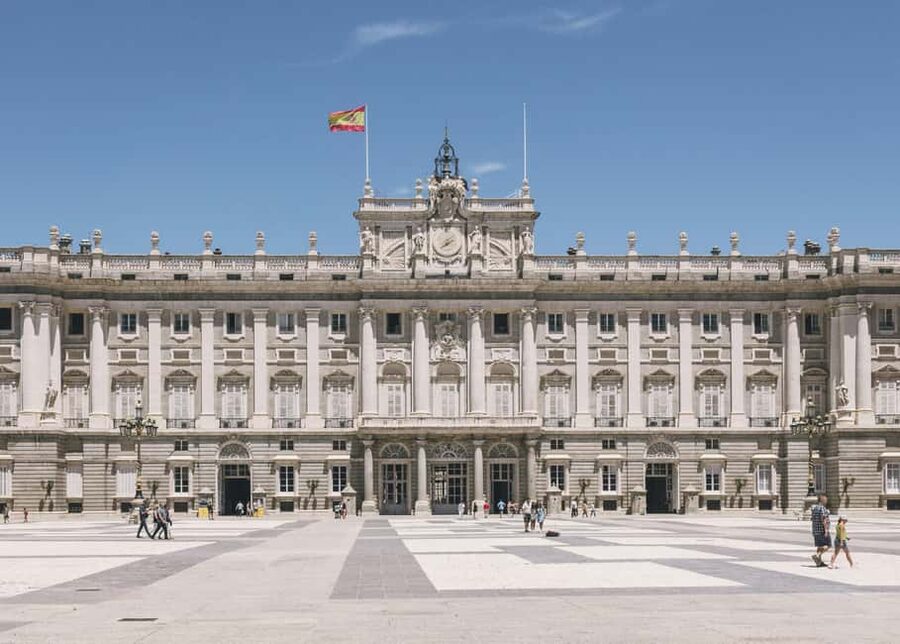
The palace also presents an array of paintings, sculptures, and decorative wall hangings. These works help show how the royal residence functioned as both a home and a public statement.
Paintings are not included merely to fill empty walls. In a palace setting, art can signal family connections, political importance, religious beliefs, and taste. Sculpture adds a sense of permanence and ceremony, while textiles soften the hard grandeur of the interiors and make the rooms feel prepared for use.
You may find that some works attract your attention more than others. The audio guide can give you a route through the collection, but its limited coverage means you should also feel free to stop at anything that catches your eye. A self-guided format works best when you use the commentary as a tool, not as a command to move from one numbered point to the next.
Because the visit is short, you will need to balance looking and listening. If you play every audio segment in full, you may see fewer rooms. If you skip the guide entirely, you lose much of the background that makes the palace meaningful. I would listen to the sections connected to the objects and rooms you care about most.
Audio guide strengths and limits
The digital guide is included in the ticket price and can be downloaded through an app. English, Spanish, Italian, French, and German are available, which makes the activity useful for a wide range of visitors.
Its biggest strength is control. You can pause, move at your own pace, and spend longer with a room that interests you. That suits independent visitors who prefer not to follow a guide’s exact rhythm.
Its main limit is coverage. The guide describes only a selection of rooms, and one visitor found the commentary too brief for the size of the palace. That is not necessarily a problem if you want a compact introduction. It is a problem if you expect a detailed explanation of the entire public route.
Bring headphones. They are not supplied, and the palace can be crowded. Using headphones will make the commentary easier to hear and less distracting to people around you. It also leaves your hands free for taking in the rooms rather than holding a phone against your ear.
There is some evidence that the audio equipment works well when it is part of the group arrangement. Still, check that you have the correct device or app before the group begins. A small delay at the start can become a larger problem if the group moves on.
Is $37 a fair price?
At $37 per person, this is not the cheapest palace entry in Europe. The value depends on how much you want the convenience of a packaged ticket and audio commentary.
The price includes entrance to the Royal Palace and the digital museum guide. It does not include headphones, and you still have to collect the ticket from the Naturanda office at Plaza de España 9. That separate pickup weakens the convenience slightly.
I think the price is reasonable for someone who wants a planned visit with an audio guide and flexible cancellation up to 24 hours before the activity. The reserve-now, pay-later option also helps if your Madrid schedule is still shifting. You are paying for access and a basic interpretive layer, not for a long private tour.
The value is less convincing if you are comfortable buying directly from the official palace and arranging your own visit. The possibility of an overbooking cancellation is another point to consider. One booking was canceled two days before the scheduled date for safety reasons related to overbooking, with a refund arranged after contact. That experience was resolved, but it shows why you should avoid placing this visit on the only open slot in a tightly planned trip.
If you book, keep some flexibility in your schedule. That protects you from both crowd delays and unexpected changes.
Who will like this experience most?
I would recommend it to you if you want a clear introduction to Madrid’s Royal Palace without committing to a long guided tour. The 90-minute format suits a first visit, a family schedule, or a day when you are also seeing other sights near central Madrid.
It is also a good fit if you appreciate art, royal interiors, or historic musical instruments. The Palatinos Stradivarius collection gives the visit a distinctive focus, while the state rooms provide the grand visual experience most people expect from a royal palace.
Independent visitors will like the freedom of the audio guide. You can listen in your preferred language and spend extra time on the sections that interest you. Visitors who want a full architectural or historical study may find the commentary too short.
I would be more cautious if you dislike crowds, dislike collecting tickets from a separate office, or need a guaranteed appointment with no risk of schedule changes. The palace itself is worth seeing, but this particular arrangement requires a little planning.
The site is wheelchair accessible, which makes it a practical option for visitors who need an accessible cultural attraction. Pets are not allowed, and food and drinks are prohibited inside.
Should you book the Royal Palace audio guide?
Book this experience if you want a relatively short, structured visit to one of Madrid’s major sights, especially if you value commentary in English or another supported language. The state rooms, art collections, and Palatinos Stradivarius instruments offer plenty to see, and a Spanish guide may add energy when the visit operates as a group.
I would book with two conditions: collect your ticket well before the palace visit, and bring your own headphones. Go in expecting selected highlights, not all 3,478 rooms. If you can accept crowds and keep your schedule flexible, the $37 price provides a useful introduction to Spain’s royal residence.
If you want the most direct possible entry or a more detailed account of every room, compare this option with official palace admission before paying. For a first look with an audio guide and a 90-minute time frame, it is a solid choice, but not a flawless one.
FAQ
Where do I collect the ticket?
You collect the entry ticket at the Naturanda Madrid tourist office at Plaza de España 9 on the day of the visit.
Is the ticket collected at the Royal Palace?
No. The designated ticket collection point is the Naturanda tourist office at Plaza de España 9, separate from the palace.
How long does the visit last?
The stated duration is 90 minutes. Starting times vary, so you need to check availability for the date you want.
What languages are available for the audio guide?
The digital museum audio guide is available in Spanish, Italian, English, French, and German.
Are headphones included?
No. Headphones are not included, so bring your own if you want to use them with the digital audio guide.
Is the Royal Palace wheelchair accessible?
Yes. The activity is listed as wheelchair accessible.
Can I bring food, drinks, or pets inside?
No. Pets, food, and drinks are not allowed.
Can I cancel the activity for a refund?
Yes. You can cancel up to 24 hours in advance for a full refund. You can also reserve now and pay later, keeping your plans flexible.
Just added around Madrid
- Self-Guided Audio Tour – Cervantes Literary Experience in Madrid★ 4.0 · 6 reviews
- Self Guided Tours Madrid With 100 Captivating Audio Stories★ 5.0 · 2 reviews
- Royal Palace of Madrid Entry Ticket with Audioguide★ 3.0 · 68 reviews
- Self-Guided Audio Tour – Ghosts of Madrid: History and terror★ 3.5 · 9 reviews
- Skip-the-line entrance to the Prado Museum with Digital Audio Guide★ 3.0 · 91 reviews
- Madrid National Archaeological Museum with Audio Tour★ 4.5 · 11 reviews
- Madrid Las Ventas Bullring and Museum Tour with Audio Guide★ 4.5 · 8 reviews
- Manzanares River’s Story: A Self-Guided Audio Tour in Madrid★ 5.0 · 8 reviews
Castle & Palace Audio Tours, compared.
Topkapi Palace and Harem Skip-the-Line-Tickets & Audio Guide
Read our review →
Sforza Castle Entry Ticket with Digital Audio Guide
Read our review →
Topkapi Palace and Harem Ticket with Audio Guide
Read our review →
Knossos Palace Entry Ticket with Optional Audio Guide
Read our review →
Dolmabahce Palace and Harem Fast-Track & Audio
Read our review →
Browse the lists this tour appears in