

REVIEW · ITALY AUDIO TOURS
Lecce Walking Tour with Audio and Written Guide by a Local
Lecce rewards slow walking. This self-guided audio tour links Roman ruins, grand churches, city gates, and local food advice for just $7.23. I like the freedom to pause for an aperitivo or spread the route over several days, and I like that the guide connects with Google Maps. The main drawback is simple: you guide yourself, so a weak internet connection or unclear directions can spoil the flow.
The route takes about three to four hours if you walk it in one go. You use your own smartphone and headphones, if you have them. At this price, it is a strong budget choice, but you should not expect a personal guide, help with crowd control, or the storytelling of a live walk.
Key things to know before you book
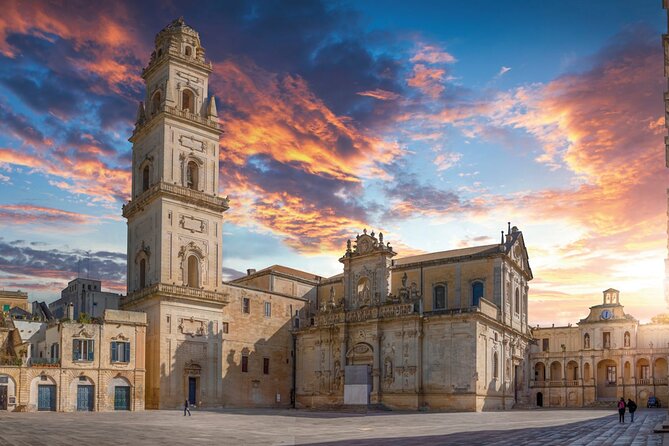
- The route begins at Porta Rudiae and finishes at Museo Sigismondo Castromediano, giving you a useful north-to-south walk through Lecce.
- You can pause and resume the tour for several days, a major advantage if you want time for coffee, lunch, churches, and photographs.
- The route covers both Roman Lecce and Baroque Lecce, including the Roman Theatre, Piazza Sant’Oronzo, the Cathedral, and Basilica of Santa Croce.
- The guide costs $7.23 per person, making it far cheaper than many in-person walking tours, especially for families or groups.
- You need internet access and a working smartphone, and the digital guide may be used through your phone speaker or personal headphones.
- The audio language information needs careful attention: English is offered, while the supplied details list English, Italian, and Spanish audio, with written material also available in German and French.
A low-cost way to meet Lecce
Lecce is a good city for a self-guided walk because many of its main sights sit within a compact central area. You can move from a defensive gate to a cathedral square, then on to Roman remains and the city’s grand Baroque center without arranging transport between stops.
The appeal here is control. You decide how fast to walk, how often to stop, and when to replay a section. One useful feature is the ability to spread the experience over four days. That matters in Lecce, where a quick look at a church façade can easily turn into a pause for a drink, a meal, or another look at a carved detail.
The price also changes the calculation. At $7.23, this is not trying to replace a private guide. It is an inexpensive layer of context that helps you recognize what you are seeing. For a family, the savings can be substantial compared with paying $60 or $70 per person for a live tour.
The tradeoff is that you must manage the route yourself. Some information does not always make clear how to reach the next point, and a phone signal problem can interrupt playback. Downloading or activating the guide carefully before setting out is sensible.
More Audio Walking Tours in Italy
- Florence: 2.5 hour Audio Guided Walking Tour led by Host
★ 4.6 · 293 reviews - Verona Walking Tour with Audio and Written Guide by a Local
★ 4.5 · 157 reviews - Bologna Walking Tour with Audio and Written Guide
★ 4.5 · 132 reviews
Porta Rudiae, your first look at old Lecce
The tour starts at Porta Rudiae on Via Giuseppe Libertini. This historic gate once provided access through Lecce’s defensive walls, and the structure you see today dates from 1703. It was rebuilt in the Baroque period through the work of Prospero Lubelli.
The stop is scheduled for about 10 minutes, which is enough time to examine the gate and get your first explanation of Lecce’s urban history. It is also a practical starting point because the gate gives you a clear physical sense of entering the old city.
I like beginning here rather than dropping straight into the busiest square. A city gate makes the transition from modern Lecce to historic Lecce easy to understand. Pause the audio if you need to orient yourself, since the route depends on your phone and your own attention to the map.
Piazza del Duomo and the city’s enclosed religious world
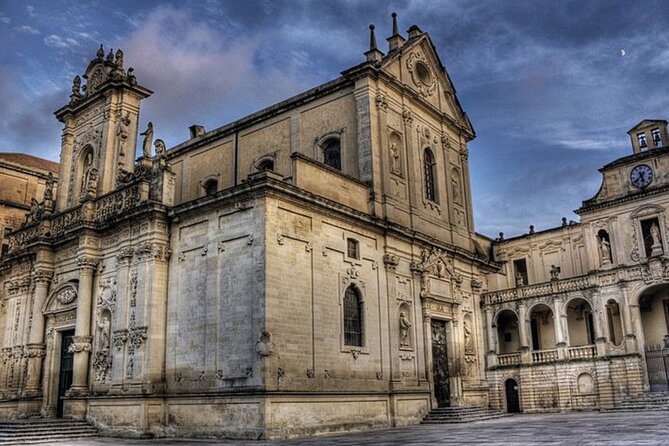
Next comes Piazza del Duomo, one of Lecce’s most unusual urban spaces. In the past, it was known as the Courtyard of the Bishop’s Palace. Religious buildings enclosed the square and separated it from the rest of the city, creating an area reserved for the clergy.
The planned stop lasts about 15 minutes. That short time works if you mainly want the story and a look around, but you may want longer for photographs. The square has a contained feeling that makes it different from the more open public spaces later in the walk.
This is a good example of where an audio guide can add value. Without context, you may simply see an impressive church square. With the explanation, you can understand how its layout reflected religious authority and restricted access.
Lecce Cathedral and the tall bell tower
The Cathedral of Santa Maria dell’Assunta and Sant’Oronzo is scheduled for a longer visit of about 40 minutes. It is the center of Lecce’s religious life and was rebuilt in 1659 on the remains of an earlier church. The earlier building had become too small for the growing number of worshippers.
Admission to the cathedral is not included, so budget for a separate ticket if you want to enter. This is one of the most important practical points in the whole experience. The digital guide can explain the site, but it does not cover entry costs.
The cathedral’s bell tower rises more than 70 meters and carries a very decorative profile, with balustrades, flower vases, pyramids, and other details. The route information notes an excellent view from the top, though the guide does not include admission to the tower. Check access and opening arrangements locally before building your day around that view.
If you enjoy architecture, this is a place where you should resist rushing. The route gives you a framework, but your own eyes do the rest. Stop the recording while you study the façade or interior, then replay a section if the first explanation went by too quickly.
Same place, a different route to walk:
- Rome: Pantheon Fast-Track Ticket and Official Audioguide
★ 4.5 · 27,353 reviews - Rome: Colosseum & Forum with Audio Guide App -Optional Arena
★ 4.2 · 24,770 reviews - Florence: Timed Entry to Michelangelo’s David + Audio App
★ 4.6 · 19,496 reviews - Rome: City Sightseeing Hop-on Hop-off Bus with Audioguide
★ 4.0 · 16,045 reviews
Roman Theatre and the remains of Lupiae
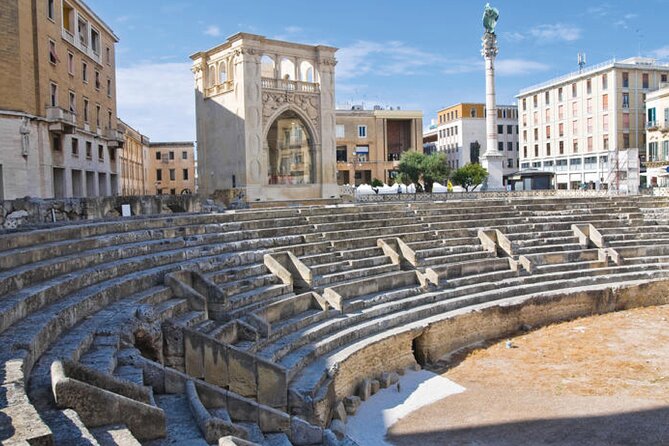
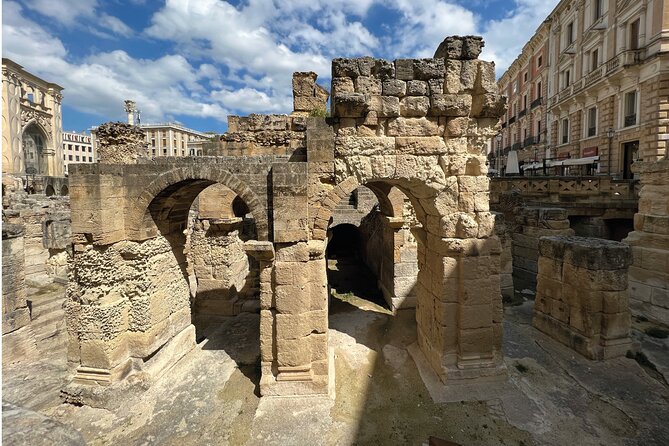
The Roman Theatre takes you back well before Lecce’s Baroque period. It was built during the first decades of the first century AD under the emperor Octavian Augustus and formed part of the Roman city of Lupiae.
The planned stop lasts about 15 minutes, and admission is listed as free. The theatre is one of the clearest reminders that Lecce was an important Roman settlement long before its ornate churches and palaces became the city’s calling card.
The commentary also points toward the Roman amphitheater, another major entertainment site in ancient Lecce. It was commissioned during the same broad period under Augustus, and studies suggest that it could hold about 20,000 spectators.
The route information treats the amphitheater as a later point of interest rather than giving it a separate numbered stop. Pay attention to the map and audio here. A self-guided route can be less obvious when several ancient sites and nearby streets compete for your attention.
Piazza Sant’Oronzo, where ancient and modern Lecce meet
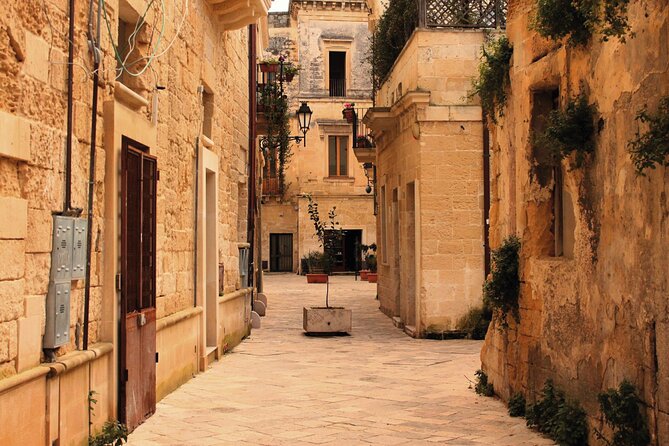
Piazza Sant’Oronzo is described as the social and symbolic center of Lecce. It lies in the heart of the former Roman city of Lupiae, so this square brings the ancient foundation and the modern city together.
Allow about 15 minutes for the official stop, though the square is a natural place to pause longer. You can stop the audio, look around, and use the surrounding streets to decide where to continue. The ability to resume later means you do not have to force the route into one uninterrupted march.
This is also the point where Lecce’s public life becomes especially apparent. The square is not just a historical exhibit. It is a place to notice how the city uses its old center today. The guide’s historical notes help you read the space, while your own unhurried observation gives it a human scale.
Basilica of Santa Croce and Lecce Baroque
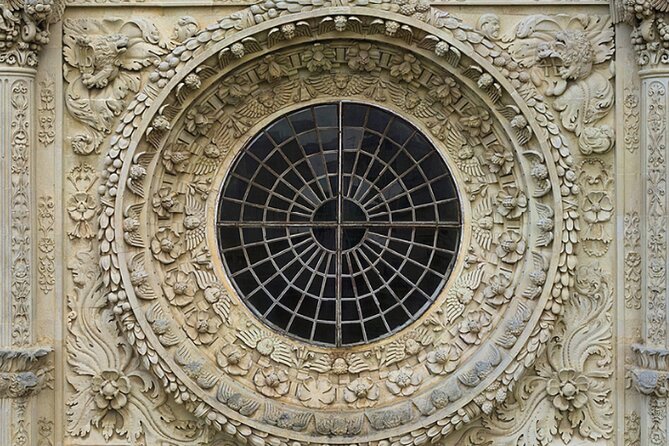
The Basilica of Santa Croce is identified as the symbol of Lecce Baroque. Construction began in 1549 at the initiative of the Celestine Fathers, after an earlier temple and convent in the area were demolished.
The information provided does not give a separate visit time or confirm an admission fee. Treat this as an important exterior or route stop, and check local access if you want to go inside. The digital guide can point out the basilica’s place in the city’s architecture, but you should not assume every interior visit is covered.
This is likely to be one of the most rewarding sections for anyone who enjoys decorative stonework. Lecce is known for its elaborate Baroque character, and Santa Croce gives the route a strong architectural focus after the Roman sites and civic squares.
The audio and written format is useful here because you can replay descriptions while looking carefully. A live guide might move on before you have finished examining a façade. With this tour, you can stop the narration and take your time.
Charles V Castle and the route toward the museum

The Charles V Castle is the largest castle in Puglia. Its origins reach back to the 12th century, while the reconstruction that gave it its present importance was ordered by the Spanish king and emperor Charles V in 1539. The work responded to concerns about Turkish incursions in the Mediterranean.
The castle adds military history to a route otherwise dominated by churches, Roman remains, and public squares. It also helps explain why Lecce was not only a religious and artistic center, but a defended city shaped by Mediterranean politics.
The walk ends at Museo Sigismondo Castromediano on Viale Gallipoli. The supplied opening information lists the museum as open Monday through Sunday from midnight to 11:30 p.m., but that broad schedule is unusual for a museum, so check current hours before relying on it for a final stop.
Finishing at a museum is a useful idea. It gives the walk a clear endpoint and offers the possibility of continuing with local art and archaeology. Still, admission details for the museum are not included, so consider the tour and museum as separate parts of your day.
How the digital guide works in real use
You receive a mobile ticket and activation details in your voucher. Read those instructions closely before you start. You need a smartphone with an internet connection, and you can listen through the phone’s speaker or your own headphones. Headphones are not supplied.
The experience is not a live group walk. The maximum listed capacity is 104 people, but that figure matters less here than it would on a traditional tour because you are not physically moving as one group. You are following the route independently.
The strongest feature is the pause button. You can begin at a later point, stop for a meal, replay a passage, or spread the route over multiple days. You can even start from a square you prefer rather than following the exact order from the beginning, though you should expect the route to make most sense when followed in sequence.
The weak point is technical dependence. One person had trouble with connection and playback, possibly because of Lecce’s walls. Another found the itinerary difficult to load. If your reception is poor, the provider can offer support through WhatsApp, but you should still prepare before leaving your accommodation.
The supplied information also needs careful reading about languages. The product is offered in English, and the materials list audio and text in several languages. The provider specifically clarified that audio is available in English, Italian, and Spanish, while written text is listed in English, German, Spanish, and Italian. French audio was not available in one reported case, so do not book expecting French narration.
What $7.23 buys you
At $7.23 per person, the value is strongest if you want basic orientation and flexibility. You receive a route, audio, written explanations, history, curiosities, Google Maps connection, and advice about local restaurants serving authentic food.
That is a lot for the cost of a snack and drink, especially if you use the guide over several days. The restaurant advice is a welcome touch because it connects sightseeing with eating, though no specific restaurants are named in the supplied details.
You should keep your expectations in proportion. The descriptions may feel brief at some sights, and directions to the next stop are not always fully explained. If you want a specialist in art history, immediate answers to questions, or a polished story adapted to your interests, pay for a live guide instead.
For families, couples, and independent visitors, the savings are persuasive. You can keep children moving at your own pace, pause whenever needed, and avoid paying a full tour price for every person. Solo visitors may also appreciate having a voice in their ear without joining a scheduled group.
Practical advice for a smoother walk
Activate the guide before reaching Porta Rudiae and confirm that the audio plays. Keep the voucher available, since the activation details are placed there.
Bring your own headphones if you prefer privacy. Otherwise, the phone speaker works, but you may need to hold the phone close enough to hear clearly in busy streets.
Allow three to four hours if you want to complete the full route in one outing. Add extra time for the cathedral, bell tower, Basilica of Santa Croce, photographs, food stops, and any paid attractions.
Remember that the cathedral admission is not included. The information also does not confirm admission arrangements for the bell tower, castle, or museum, so check locally before assuming entry is part of the $7.23 price.
Keep Google Maps open and watch for the next point. The route can be easy to follow when the connection works, but the audio does not always explain every turn in detail.
Free cancellation is available if you cancel at least 24 hours before the start time. Changes or cancellations inside that period are not refunded.
Should you book this Lecce walking tour?
Book it if you want a very inexpensive introduction to Lecce, prefer exploring alone, and value the ability to stop and resume over several days. It is particularly practical for families and budget-conscious groups, since the price stays far below most live tours.
Skip it if you need a person beside you, dependable offline access, French audio, or detailed directions at every turn. A weak connection can cause trouble, and some explanations may leave you wanting more.
My call is positive with one condition: prepare your phone first. At $7.23, this guide offers a useful route through Porta Rudiae, the cathedral district, Roman Lecce, Piazza Sant’Oronzo, Santa Croce, Charles V Castle, and the Castromediano Museum. Use it as a flexible companion, not as a substitute for a dedicated local guide.
FAQ
How long does the Lecce walking tour take?
The walk takes approximately three to four hours if completed in one outing.
Where does the tour begin?
It begins at Porta Rudiae on Via Giuseppe Libertini in Lecce.
Where does the tour finish?
The route finishes at Museo Sigismondo Castromediano on Viale Gallipoli.
Is this a tour with an in-person guide?
No. It is a self-guided digital visit using audio, written information, and Google Maps.
What do I need to use the guide?
You need a smartphone with an internet connection. You may listen through your phone speaker or use your own headphones.
Are headphones provided?
No. Headphones are not included.
Is cathedral admission included?
No. Admission to the Cathedral of Saint Mary of the Assumption and Saint Orontius is not included.
What languages are available?
The experience is offered in English. The supplied details list audio in English, Italian, and Spanish, with written material in English, German, Spanish, and Italian.
Can I pause the tour and continue later?
Yes. The digital format allows you to stop and resume, and the guide can be used over several days.
Can I cancel for a full refund?
Yes, if you cancel at least 24 hours before the experience start time. Cancellations within 24 hours are not refunded.
Just added around Italy
- Torino Walking Tour with Audio and Written Guide by a Local★ 4.5 · 35 reviews
- Medieval Canals and Fountains: A Treviso Self-Guided Audio Tour★ 4.5 · 4 reviews
- Trapani Walking Tour with Audio and Written Guide by a Local★ 4.0 · 8 reviews
- Trento Walking Tour with Audio and Written Guide★ 4.5 · 11 reviews
- Sicily: Selinunte Park Entry Ticket & Sicily Digital Audio Guide★ 4.5 · 4 reviews
- Taormina Walking Tour with Audio and Written Guide by a Local★ 4.5 · 41 reviews
- Taranto Walking Tour with Audio and Written Guide by a Local★ 5.0 · 5 reviews
- Siracusa Walking Tour with Audio and Written Guide by a Local★ 5.0 · 59 reviews
Walking Tours, compared.

City Monuments Guided Walking Tour with Audio Guide
Read our review →

Self Guided Classic Freedom Trail Location Aware (GPS) Walking Audio Tour
Read our review →
Self-Guided Historical Walking Tour (Audio Guide)
Read our review →
Cape Cod & Provincetown Self-Guided Driving & Walking Audio Tour
Read our review →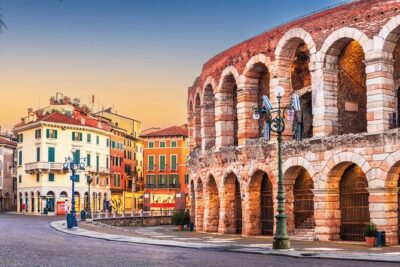
Verona Walking Tour with Audio and Written Guide by a Local
Read our review →
Royal Walking Tour and Buckingham Palace Audio Tour
Read our review →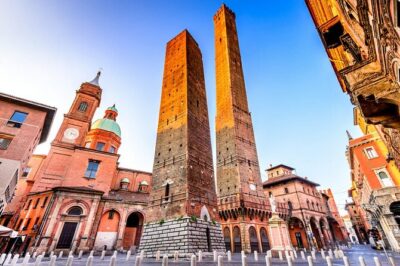
Bologna Walking Tour with Audio and Written Guide
Read our review →Browse the lists this tour appears in