
REVIEW · ITALY AUDIO TOURS
Cosenza: Bilotti Open-Air Museum Audio Guide
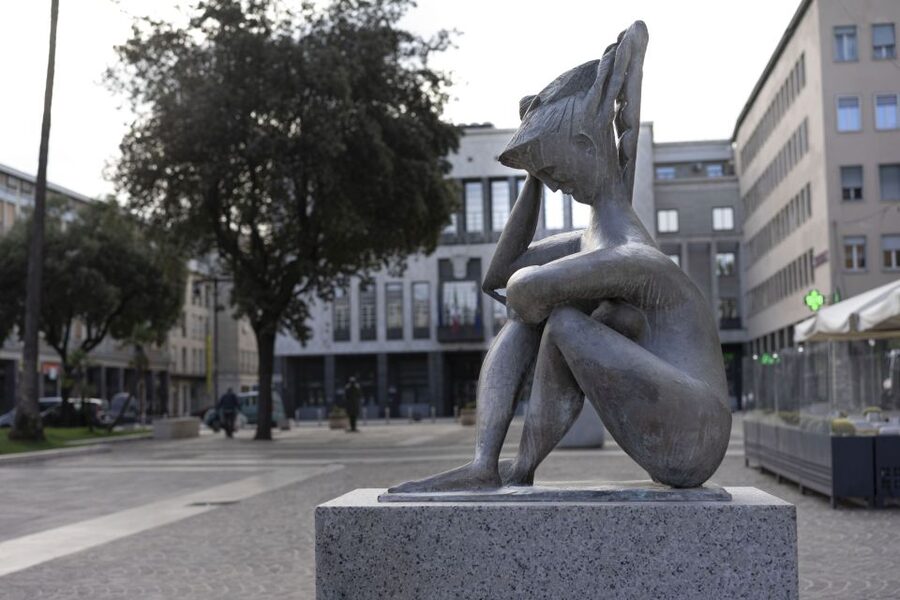
Art belongs outdoors here. Cosenza’s Bilotti Open-Air Museum turns Corso Mazzini into a free public gallery, with 29 sculptures by major Italian and international artists placed along the city’s main walking street. For just $2.35, this two-hour audio guide adds context to works by Giorgio de Chirico, Mimmo Rotella, Sasha Sosno, Amedeo Modigliani, Salvador Dalí, Giacomo Manzù, Pietro Consagra, and others.
I like the freedom to start anywhere on the map, and I like that the guide works in both English and Italian. You can fit it around a business meeting, an afternoon in town, or a broader visit to Calabria. The main caution is the app setup: some people have had trouble receiving the guide or getting the audio to recognize their location, so allow time to activate it before you begin.
- 29 outdoor artworks: See sculptures by de Chirico, Rotella, Sosno, Modigliani, Dalí, Manzù, and more.
- A flexible route: Begin at any mapped point instead of following a fixed walking order.
- Two languages: Audio and written information are available in English and Italian.
- Central location: The collection runs along Corso Mazzini, one of Cosenza’s most attractive streets.
- Very low cost: At $2.35, the guide costs little compared with a standard guided tour.
- App preparation matters: You must download the It Guides app and request activation with your personal ID code.
What the Bilotti Museum Actually Is
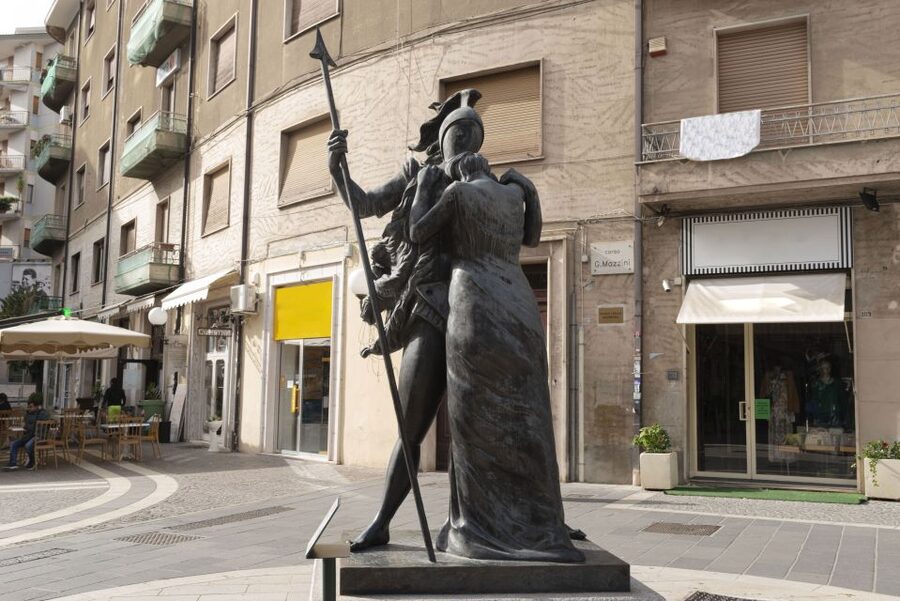
The Bilotti Museum, also called the MAB, is not a traditional building with ticket counters and gallery rooms. It is a public art collection spread along Corso Mazzini in central Cosenza. You walk from one sculpture to the next while the city carries on around you.
That format is the museum’s great strength. You can pause for a coffee, browse shops, sit for a while, or stop the guide when you need a break. You are not locked into a group schedule or a prescribed route. The city itself becomes part of the visit.
The collection includes 29 artworks donated by Carlo Bilotti to the Municipality of Cosenza. The range of names is impressive for a street-based museum. You might encounter work connected with de Chirico’s dreamlike style, Rotella’s modern urban art, Sosno’s bold forms, or the sculpture traditions represented by Modigliani, Dalí, Manzù, and Consagra.
The audio guide gives you the background that a quick walk past the sculptures would miss. Instead of seeing only shapes and materials, you get information about the artists and the story of each work. That added context is the main reason to pay for the guide when the outdoor museum itself can be visited without an admission charge.
Walking Corso Mazzini From Any Starting Point
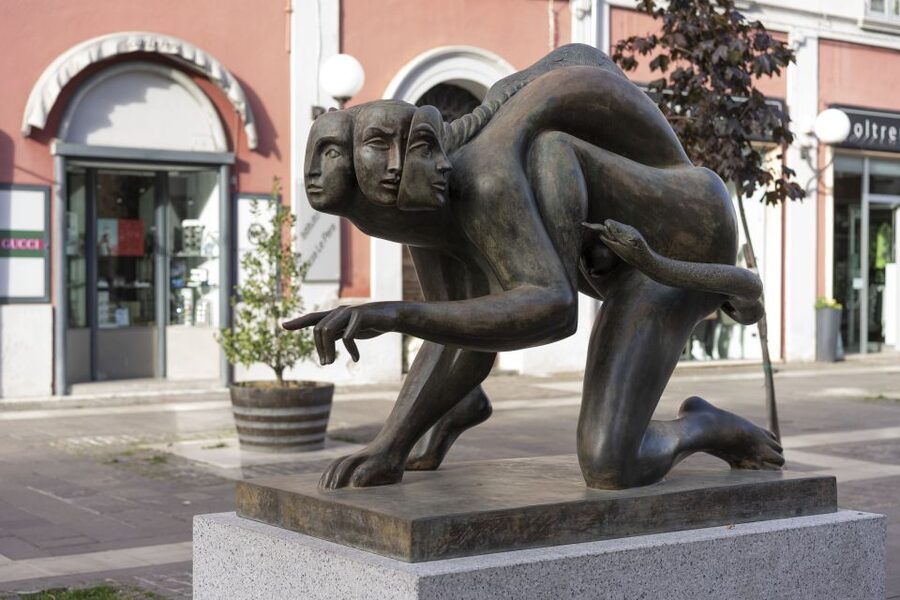
The guide does not force you to begin at one official entrance. You can start from any point shown on the map and make your own way through the collection. This is useful if you are already near Corso Mazzini, arriving from another part of central Cosenza, or working with a short window between other plans.
The suggested duration is two hours. That gives you enough time to walk through the museum at a relaxed pace and listen to the descriptions without treating the street like a racecourse. If you stop often to look closely at the sculptures, read the written material, or take photographs, the time should feel well used.
You may also finish sooner. The flexible structure means you can see only part of the collection if your schedule is tight. The tradeoff is that you do not get the natural rhythm of a local guide leading you from one piece to the next. You need to watch the map and decide where to go.
This is especially handy for business men and women with a spare afternoon. You can fit the museum around meetings instead of giving up a half-day to a fixed tour. Families and independent sightseers may appreciate the same freedom, though the app requires enough attention to manage the route.
More Museum Audio Tours in Italy
- Florence: Uffizi Priority Ticket & Masterpieces Audio App
★ 4.2 · 6,402 reviews - Venice: St. Mark Basilica Ticket, Audioguide+History Gallery
★ 3.9 · 4,780 reviews - Rome: Borghese Gallery Skip-the-Line Ticket & Audioguide
★ 4.3 · 4,318 reviews
The Artists That Give This Street Its Character
The strongest reason to visit is the quality and variety of the names attached to the collection. The museum brings together modern and contemporary works rather than presenting one narrow artistic movement.
Giorgio de Chirico is among the best-known figures represented. His art is associated with unusual spaces, strong architectural shapes, and a dreamlike mood. Seeing a work connected with his career outdoors, with ordinary Cosenza life moving around it, gives you a different setting from a silent indoor gallery.
Mimmo Rotella brings another kind of modern energy. He is known for work based on torn advertising posters and layered urban imagery. His presence helps show how public art can connect with the visual noise of a city rather than remain separate from it.
Sasha Sosno adds an international voice to the collection. Amedeo Modigliani, Salvador Dalí, Giacomo Manzù, and Pietro Consagra broaden the selection further. These are not all artists you would expect to find together along one Italian street, which gives the walk its appeal.
The guide is useful here because names alone can blur together. Twenty-nine sculptures can become a long list if you simply photograph each one and move on. Audio descriptions turn the collection into a series of individual encounters, giving each piece a reason to hold your attention.
Still, keep your expectations sensible. This is not a full museum course in modern sculpture, and the available information is designed for a short self-guided visit. If you want long lectures on artistic technique or a specialist discussion of each work, you will need more than this audio guide provides.
Why the Audio Format Works, and Where It Can Fail
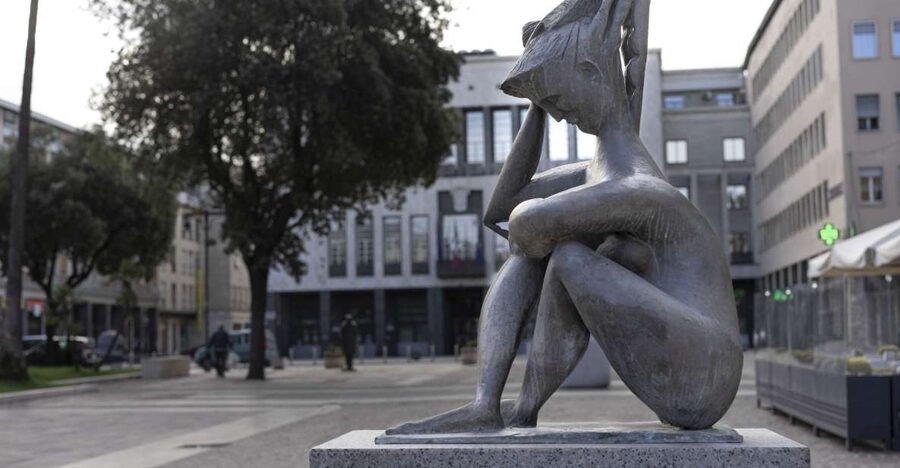
A phone-based guide is a good match for an outdoor museum. You can stand beside a sculpture, listen through your device, and move on when the description ends. The written text gives you another way to follow along in English or Italian, which is helpful if you prefer reading or have difficulty hearing the audio clearly.
The location feature is meant to help you identify the artworks around you. In the best case, the guide tells you which sculpture you are near and supplies its description without requiring a printed map or a guidebook.
The weak point is the technology. One person reported that the guide jumped to the end because the app appeared to think the user was already there. Another person said the service was never delivered as advertised. Those are serious problems for an experience that depends almost entirely on app access and location recognition.
I would treat activation as part of the tour, not as a last-second chore. Download the It Guides app before you reach Corso Mazzini. Open the hamburger menu in the upper-left corner and find your ID code, which begins with ITG. Then use WhatsApp or the internal message service at the number shown on your voucher, send the code, and wait for the guide to be unlocked.
Once activated, look in the app’s My Guides section. Check that the Bilotti Museum guide appears before you set off. This simple check can save you from standing beside the first sculpture while trying to solve a phone problem.
Bring enough battery for two hours of map use and audio playback. That advice is practical rather than a criticism of the tour. A phone-based museum depends on your device, your connection, and the guide being correctly assigned to your account.
English and Italian Information Along the Route
The audio descriptions are available in English and Italian, and the written texts are offered in both languages. That makes the guide useful for international visitors as well as Italian speakers.
I especially like having both formats available. Audio lets you keep your eyes on the sculpture and the street. Text lets you reread a point, compare names, or continue when the surroundings are too noisy for comfortable listening.
The bilingual option also gives you control over the pace. You can listen to every description, read only the works that catch your interest, or use the audio as a short introduction before looking more closely. This is more adaptable than a live guide, though it lacks the chance to ask questions.
Descriptions of 29 works can take time. Do not feel obliged to listen to every word. If one artist interests you more than another, use the free route to spend longer with those pieces and move quickly past others.
Same place, a different route to walk:
- Rome: Pantheon Fast-Track Ticket and Official Audioguide
★ 4.5 · 27,353 reviews - Rome: Colosseum & Forum with Audio Guide App -Optional Arena
★ 4.2 · 24,770 reviews - Florence: Timed Entry to Michelangelo’s David + Audio App
★ 4.6 · 19,496 reviews - Rome: City Sightseeing Hop-on Hop-off Bus with Audioguide
★ 4.0 · 16,045 reviews
Cost and Value at $2.35
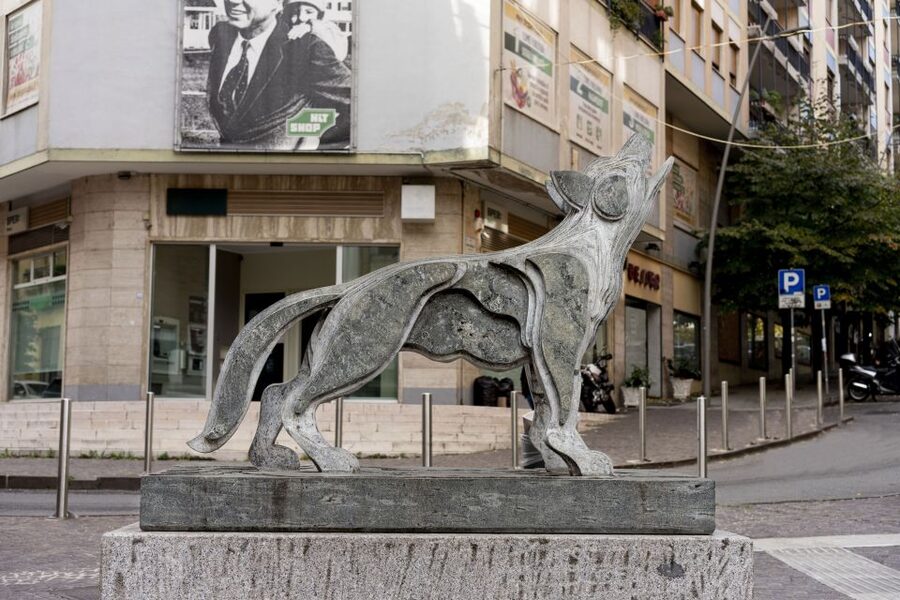
At $2.35 per person, this is an easy purchase to justify if the app works properly. The public artworks themselves do not require a museum entrance ticket, so you are paying for interpretation, navigation, and the convenience of having information on your phone.
That is a good deal for an independent visit. A standard private walking tour would cost far more, and a guidebook might give you less focused information about these particular sculptures. The low price also makes the experience suitable as an add-on rather than the main paid activity of your day.
The value drops sharply if activation fails. When the audio does not arrive or the location feature sends you to the wrong place, you are left with a walk past the sculptures but not the service you paid for. That explains the mixed overall score of 3.4 from nine ratings, despite several very positive comments about the guide’s quality and customer support.
The strongest praise describes the audio guide as well made, affordable, and helpful for visiting independently. One person called customer service excellent. Others described the museum as a must-see public gallery and praised the chance to learn the story behind the sculptures without joining a group.
My advice is simple: buy it for the price, but protect your time by activating it early. If the guide is visible in My Guides before you start walking, the cost is excellent. If it still has not appeared after you send the ID code, contact the provider before proceeding.
Accessibility and Practical Walking Concerns
The experience is described as wheelchair accessible, but the information also says it is not suitable for people with mobility impairments. That contradiction deserves attention. The museum runs along a city street rather than through a private indoor venue, and the exact ease of movement can depend on the route, street conditions, and your personal needs.
If you use a wheelchair or have limited mobility, ask the provider for current route details before booking. Do not assume that an accessible label guarantees a smooth path at every point.
The activity is also marked as unsuitable for people with motion sickness. That warning may relate to the phone-based route and the need to look between the map, the street, and the artworks. If screens or moving map indicators make you uncomfortable, rely more on the written descriptions and take frequent pauses.
Comfortable walking shoes are sensible because the visit is taken on foot. The duration is about two hours, and the route is spread along Corso Mazzini rather than contained in one room. You control the pace, so breaks are easy to add.
Who Will Get the Most From This Visit?
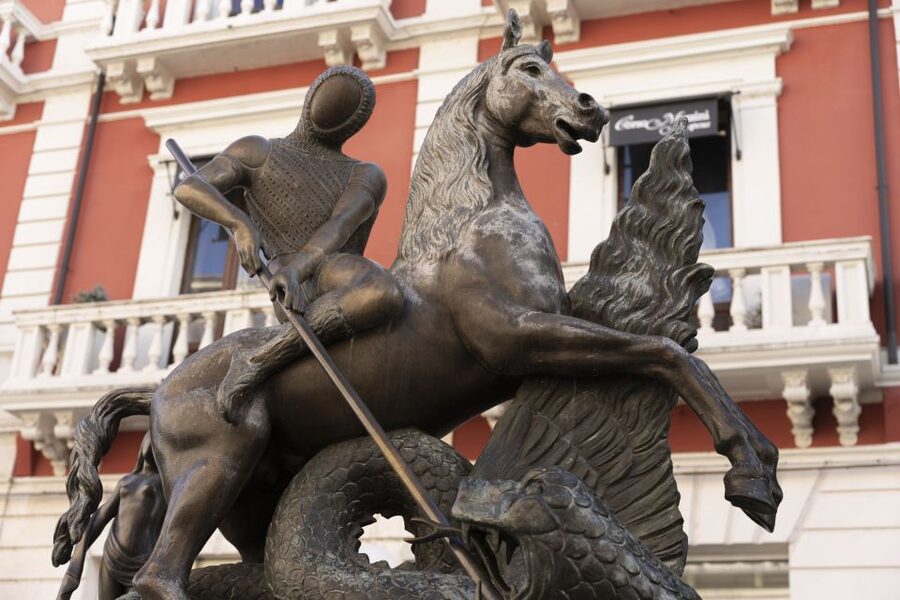
I would recommend the guide to independent visitors who enjoy learning a little while they walk. It works particularly well if you have already planned time in central Cosenza and want a cultural activity that does not require a fixed meeting point.
It is also a good choice for a short city stop. You can begin from wherever you reach Corso Mazzini and continue until your schedule calls you elsewhere. The $2.35 price makes it low risk for a first look at the city’s public art.
Art lovers will get the most from the range of artists. If the names de Chirico, Rotella, Sosno, Modigliani, Dalí, Manzù, and Consagra catch your attention, this street collection offers a surprising amount to see in a compact urban area.
I would be more cautious if you dislike phone-based tours or need guaranteed technical support at the start. You will not have a guide standing beside you to fix the app. The best experience depends on preparing the app, sending the correct code, and checking that your guide has been activated.
Should You Book the Cosenza Bilotti Audio Guide?
Book it if you want an inexpensive, flexible introduction to Cosenza’s public art and you are comfortable preparing an app before walking. The combination of 29 sculptures, well-known artists, English and Italian descriptions, and a self-guided route offers strong value at $2.35.
Skip it if you need a fully hosted tour, dislike troubleshooting, or cannot comfortably manage a phone while walking. You can still see the outdoor artworks, but you may miss the background that makes the collection more meaningful.
My final advice is to reserve only if you can activate the guide before your visit begins. With that safeguard, this is a smart way to spend two hours on Corso Mazzini and see a side of Cosenza that is easy to miss when you rush through town.
FAQ
Where is the Bilotti Open-Air Museum?
It is located along Corso Mazzini in central Cosenza, Calabria, Italy.
How many artworks are included?
The guide covers 29 artworks in the open-air museum.
Which artists are represented?
The collection includes works by Giorgio de Chirico, Mimmo Rotella, Sasha Sosno, Amedeo Modigliani, Salvador Dalí, Giacomo Manzù, Pietro Consagra, and others.
How long does the audio-guided visit take?
The suggested duration is two hours.
Can I start the route from any point?
Yes. You can begin from any point on the map and move through the open-air museum at your own pace.
Which languages are available?
Audio descriptions and written texts are available in English and Italian.
How do I receive the audio guide?
Download the It Guides app, find your ID code beginning with ITG in the hamburger menu, and send that code through WhatsApp or the internal message service at the number shown on your voucher. The guide should then appear in the My Guides section.
Is the activity wheelchair accessible?
The activity is described as wheelchair accessible, but it is also marked as unsuitable for people with mobility impairments. If you have specific access needs, confirm the route with the provider before booking.
Just added around Italy
- Torino Walking Tour with Audio and Written Guide by a Local★ 4.5 · 35 reviews
- Medieval Canals and Fountains: A Treviso Self-Guided Audio Tour★ 4.5 · 4 reviews
- Trapani Walking Tour with Audio and Written Guide by a Local★ 4.0 · 8 reviews
- Trento Walking Tour with Audio and Written Guide★ 4.5 · 11 reviews
- Sicily: Selinunte Park Entry Ticket & Sicily Digital Audio Guide★ 4.5 · 4 reviews
- Taormina Walking Tour with Audio and Written Guide by a Local★ 4.5 · 41 reviews
- Taranto Walking Tour with Audio and Written Guide by a Local★ 5.0 · 5 reviews
- Siracusa Walking Tour with Audio and Written Guide by a Local★ 5.0 · 59 reviews
Museums, compared.
Uffizi Priority Ticket & Masterpieces Audio App
Read our review →
Louvre Museum Hosted Entry and Mona Lisa Audioguide
Read our review →
St. Mark Basilica Ticket, Audioguide+History Gallery
Read our review →
Borghese Gallery Skip-the-Line Ticket & Audioguide
Read our review →
Borghese Gallery Ticket + Audioguide or Guided Tour
Read our review →
Orsay Museum Entry Ticket and Digital Audio Guide App
Read our review →
Uffizi Gallery Timed Entry Ticket & Audio Guide
Read our review →
Acropolis Museum Ticket with optional Audio Guide
Read our review →Browse the lists this tour appears in