
REVIEW · ITALY AUDIO TOURS
Brescia Walking Tour with Audio and Written Guide by a Local
Brescia rewards a closer look. This self-guided walk by Matteo Colosio of Walking Cap links the city’s grand squares, Roman ruins, churches, Teatro Grande, Santa Giulia Museum, and hilltop castle in about five hours. I like the Google Maps connection, which helps you move between sights without fumbling with a paper map, and the mix of audio, text, images, history, and local food tips.
The low price is another strong point. At $7.79 per person, you pay less than a standard private tour and can follow the route at your own pace. The tradeoff is important: this is not a person walking beside you. It is a digital guide, and some audio sections are short and fairly general, so visitors seeking detailed art history may want another guidebook or paid museum commentary as well.
What makes this Brescia walk useful
- A complete city route: Eleven stops connect central squares, cathedrals, Roman monuments, Santa Giulia, and Castello di Brescia.
- Audio and written explanations: You can listen through your phone speaker or headphones, then read more when a subject catches your interest.
- Google Maps directions: Each section helps you get from one stop to the next, a practical help in an unfamiliar city.
- A local point of view: Matteo includes curiosities, anecdotes, food suggestions, and the story behind Brescia’s nickname.
- Strong value at $7.79: The price covers the guide itself, while Santa Giulia and Capitolium tickets cost extra.
- Freedom to set the pace: You can pause, replay, skip a stop, or spend longer at a cathedral or museum.
Starting in Piazza del Mercato
The walk begins in Piazza del Mercato, a compact square where Brescia’s story gets its first chapter. You spend about ten minutes here, learning about the city and the origin of its nickname.
That is a smart starting point. Rather than dropping you straight in front of a famous church, the guide first gives you a bit of local identity. It helps you understand that Brescia is not only a collection of impressive buildings. Its public squares, old streets, and changing names reflect the city’s long political and urban story.
The explanation is designed to be a quick orientation, not a full lecture. If you like short historical introductions before exploring on your own, this works well. If you want dates, architectural analysis, and a detailed account of every period, you may find the treatment too light.
More Audio Walking Tours in Italy
- Florence: 2.5 hour Audio Guided Walking Tour led by Host
★ 4.6 · 293 reviews - Verona Walking Tour with Audio and Written Guide by a Local
★ 4.5 · 157 reviews - Bologna Walking Tour with Audio and Written Guide
★ 4.5 · 132 reviews
Piazza della Vittoria and the rhinoceros
After roughly ten minutes, you reach Piazza della Vittoria, a much larger square with distinctive architecture. The guide uses this stop to discuss the last two centuries of Italian history and points out an unexpected feature: a rhinoceros.
That unusual detail is exactly the sort of thing that makes a self-guided walk more enjoyable. You are not simply ticking off another piazza. You are given a visual detail to look for, along with a reason to connect the square to modern Italian history.
Plan on about twenty minutes here. The audio gives you a useful outline, while the written material lets you reread names and points you may miss while looking around. Since the square is open and free to enter, you can take your time without worrying about a timed ticket.
Piazza della Loggia and Brescia’s painful past
Piazza della Loggia takes you into a more serious chapter. Its Venetian-style buildings date from the fifteenth century, and the square remains one of the central places in the city.
The guide also discusses one of the most serious attacks in Italian history. That subject changes the mood of the walk, but it matters. A good city tour should not present Brescia as only pretty facades and church domes. Here, architecture and modern memory share the same public space.
The stop lasts about fifteen minutes. That is enough for a focused explanation and a look around, though you should not expect a long historical seminar. The audio format works best if you pause the track when you need time to absorb the setting.
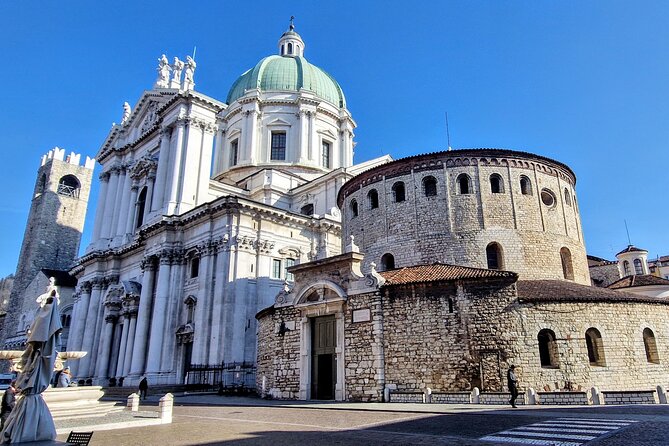
The two cathedrals in Piazza Paolo VI
Piazza Paolo VI, also called Piazza del Duomo, brings together two very different cathedrals. You get about ten minutes of introductory information in the square before entering the individual sites.
The square itself is one of the most satisfying stops because daily city life and major monuments share the same space. You can look from one building to another and immediately see how Brescia changed over the centuries.
Same place, a different route to walk:
- Rome: Pantheon Fast-Track Ticket and Official Audioguide
★ 4.5 · 27,353 reviews - Rome: Colosseum & Forum with Audio Guide App -Optional Arena
★ 4.2 · 24,770 reviews - Florence: Timed Entry to Michelangelo’s David + Audio App
★ 4.6 · 19,496 reviews - Rome: City Sightseeing Hop-on Hop-off Bus with Audioguide
★ 4.0 · 16,045 reviews
Duomo Vecchio
The Duomo Vecchio, or Old Cathedral, gets about twenty minutes. Its story begins in the eleventh century, when Brescia replaced the earlier Basilica of Santa Maria Maggiore with a new cathedral.
The building’s circular plan, inspired by the Holy Sepulchre in Jerusalem, is the feature to watch for. The giant dome and tall bell tower give the church a form unlike the standard rectangular cathedral many visitors expect in Italy.
The guide explains the long construction period and the building’s main character. You should think of this section as a helpful introduction before looking closely at the architecture yourself. Some people will want much more detail about the interior, but the audio and written notes give you a clear reason to pay attention to the unusual plan.
Duomo Nuovo
The New Cathedral receives another twenty-minute section. Construction began in the seventeenth century and took nearly two hundred years. The result is a much larger building with a monumental facade, huge columns, statues, marble, frescoes, and gilded decoration.
The contrast between the Old and New Cathedrals is the real payoff. One has a rounded, compact medieval character. The other presents a grander Baroque-era scale. Listening to both explanations back to back helps you see the change in taste, wealth, and ambition across the city’s history.
Because the two churches are close together, this part of the route is efficient. You do not waste time crossing town between related sights.
Teatro Grande from the outside
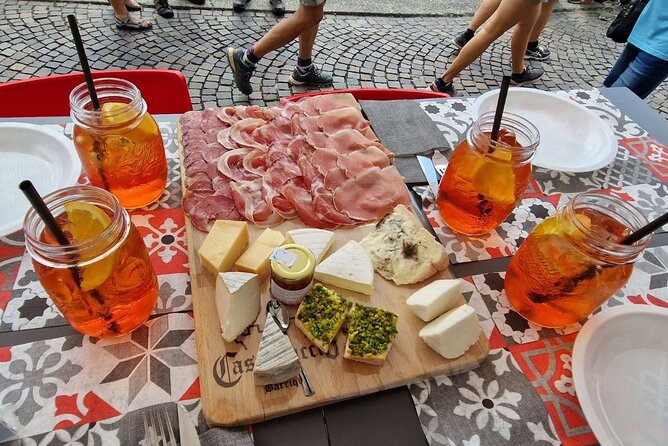
The walk then continues to Teatro Grande, Brescia’s historic theater of music and opera. The stop lasts about ten minutes, but the visit is exterior only. The entrance ticket is not included.
That limitation is easy to miss if you expect a full theater tour. You will hear about the building and its place in Brescia’s cultural life, then view it from outside. If entering the theater is important to you, check opening times and ticket arrangements separately.
Still, an exterior stop can be worthwhile on a route like this. It adds a different part of city life after the churches and public squares. The guide also keeps the visit moving, which helps the five-hour route stay manageable.
Roman Brescia around the Capitolium
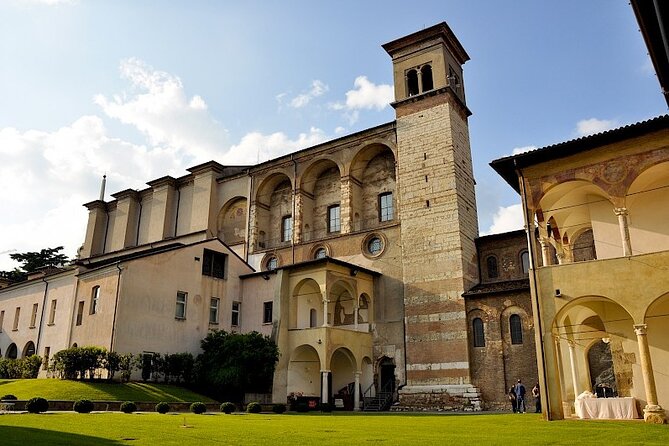
The next section takes you toward Tempio Capitolino and Piazza del Foro. This is where Brescia’s Roman foundations become most visible.
The guide explains how the Romans reshaped the city after Brescia became part of Roman territory in the first century BC. The street followed the line of the ancient decumanus maximus, the main east-west road in a Roman town.
That context makes the stones and street plan easier to read. Without an explanation, Roman remains can look like isolated fragments. Here, you get a basic idea of how they fitted into the wider city.
The listed stop lasts about fifteen minutes. Capitolium admission is not included, so check the current ticket arrangement if you want to enter. The route includes the monument area, but the guide price does not cover every paid attraction along the way.
Teatro Romano and the ancient city
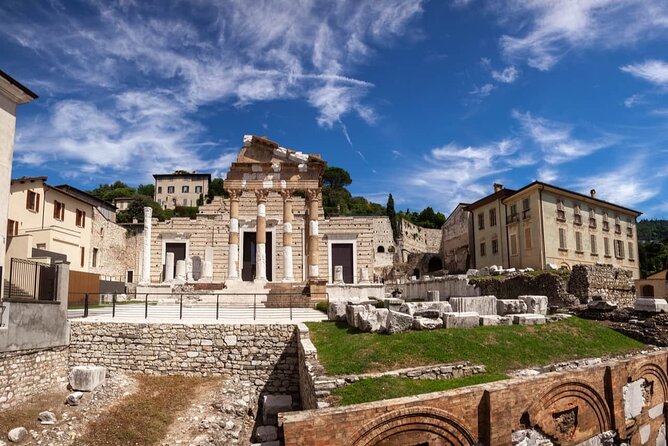
Teatro Romano follows with a twenty-minute stop. The Roman theater was the largest in northern Italy after the theater in Verona, making it one of Brescia’s key ancient sites.
The guide connects it with the nearby Capitolium, so you can understand the area as part of a Roman center rather than as two unrelated ruins. That pairing is useful and keeps the history in one clear section.
This is another place where the digital format has both strengths and limits. The route tells you why the site matters and what to notice. It does not replace a full archaeological guide, and the supplied audio may feel brief if Roman history is your main interest.
Santa Giulia Museum deserves the extra time
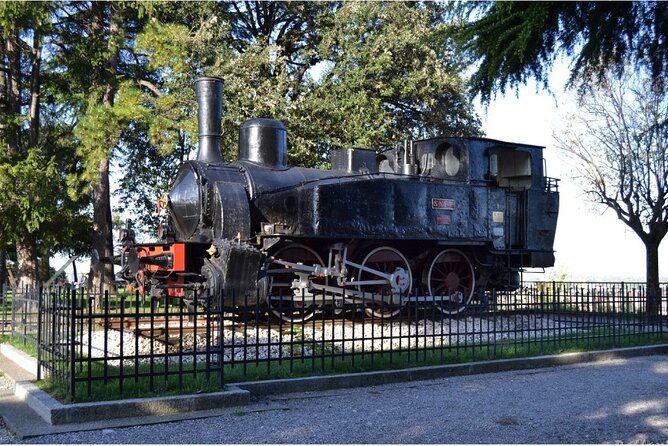
Santa Giulia Museum is the longest stop, at about one hour and forty minutes. Its collection follows Brescia’s story from prehistoric times to the eighteenth century, with thousands of works displayed across roughly 14,000 square meters.
The museum’s unusual strength is its setting and broad time span. You move through art, archaeology, religious objects, and the city’s past in one place. The guide gives you a framework for the visit, so you are not entering a huge museum without any sense of sequence.
Admission is not included. That is the biggest extra cost in the day, and you should allow enough time for it rather than treating it as a quick stop between squares. If museums tire you after an hour, you can shorten this section, but doing so means missing a major part of Brescia’s story.
The guide is likely most helpful here as an introduction. It can point out why the museum matters and suggest what to notice, but it is not designed to explain every object in a collection this large. Use the written information to choose your priorities, then spend your time where your interests lead.
Castello di Brescia and the final view
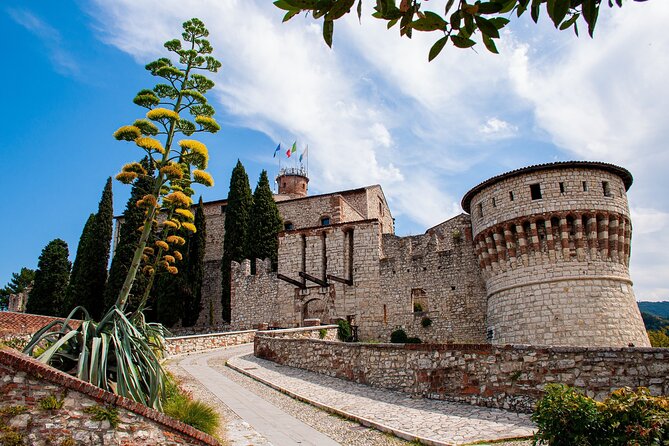
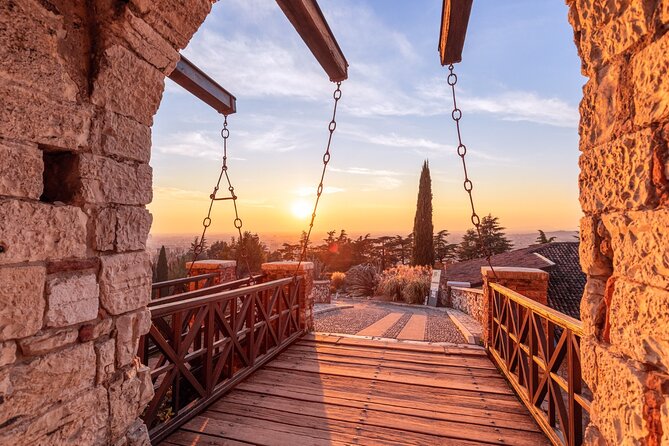
The route ends at Castello di Brescia, with about an hour devoted to the fortress and its views. Many local people regard the castle as a symbol of the city, and it gives the walk a strong finish.
The guide covers the castle’s story and points you toward the broad view over Brescia. Since admission to this stop is listed as free, the final section adds substantial value without another ticket charge.
The castle also changes the rhythm of the day. After enclosed churches and museum rooms, you finish with open space and a wider look at the city. Wear comfortable shoes, since the full route combines city streets, museum floors, and the approach to a hilltop fortress.
The endpoint is different from the starting point, so plan your onward route before you set out. Google Maps is built into the guide, which should help you continue to a hotel, train station, restaurant, or another part of Brescia.
How the digital guide works
You need a smartphone and an internet connection to activate and use the guide. Read the voucher carefully for activation instructions before you begin. A charged phone is essential because the guide depends on your device for audio, text, images, and maps.
You can listen through the phone’s speaker or use headphones. Headphones are useful in busy squares, while the speaker may be easier if you are walking with another person and want to share the explanation.
The content is offered in English, Spanish, Italian, German, and French. The English option is helpful for international visitors, while Italian may suit anyone who wants to hear the places discussed in their local language.
The route can accommodate a large booking capacity of up to 99 people, but this is not a traditional group walk with one guide speaking to everyone. Each person uses the digital material independently. That means no waiting for a group, but also no chance to ask Matteo a question in person as you walk.
Where the $7.79 price makes sense
At $7.79, this is easy to justify if you want a structured route and basic background without paying for a private guide. The Google Maps links alone can save time, especially when you are trying to connect central squares with Roman sites, Santa Giulia, and the castle.
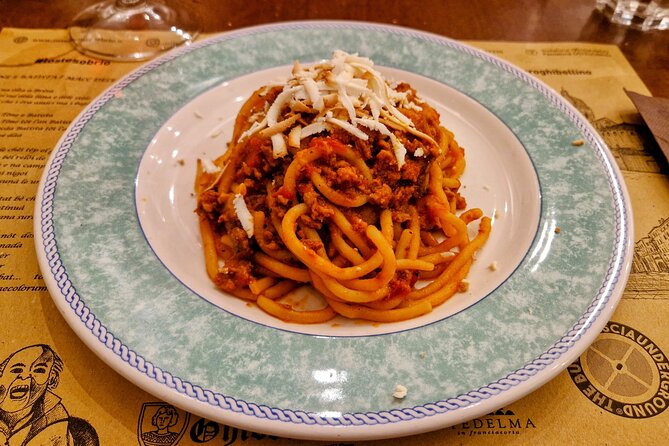
You also get restaurant suggestions for authentic local food, which adds practical value beyond monument descriptions. Those tips may help you turn the walking route into a full day in Brescia rather than a simple list of sights.
The price is less attractive if you already own a detailed guidebook or want expert-level explanations. Several sections are intentionally concise, and some audio clips may run for only about thirty seconds. That keeps the guide light and easy to use, but it can feel thin at major monuments.
I would treat it as a route planner with commentary, not as a replacement for a specialist art historian. That distinction will determine whether the price feels excellent or merely fair.
Who should choose this Brescia experience?
I would recommend it to independent visitors who like freedom, clear directions, and short explanations. It suits couples, solo visitors, and families who do not want to keep pace with a live group.
It is also useful if you are previewing Brescia before a trip. The written material lets you look through the route in advance, and the map links show how the stops fit together. You can decide where to spend more time before arriving.
You may want a different option if you prefer long storytelling, detailed church interiors, or the chance to ask questions. The guide’s own purpose is to cover the city at a manageable pace, so it does not give every monument a full scholarly treatment.
Allow the full five hours if you plan to visit Santa Giulia properly. You can shorten the day by moving quickly through the squares or skipping paid interiors, but that changes the balance of the route.
My call: book it for structure, not a full lecture
Book this Brescia walking tour if you want a low-cost, self-guided introduction that covers far more than the central cathedral square. The route links medieval, modern, Roman, religious, and civic Brescia in a sensible order, and the castle finish is a real plus.
Go in knowing exactly what you are buying: an audio and written guide by Matteo Colosio, not a live person. Keep your phone charged, read the activation instructions, budget separately for Santa Giulia and Capitolium, and use the longer museum and castle sections at your own pace.
For a first visit, I think the combination of directions, local anecdotes, food suggestions, and broad city coverage makes the $7.79 worthwhile. If your priority is exhaustive detail at every monument, pair it with a fuller guidebook or additional museum information.
FAQ
Is this a guided tour with a person walking alongside me?
No. It is a digital audio and written guide that you use independently on your smartphone.
How long does the Brescia walking route take?
The experience is listed as approximately five hours. The planned stops total about five hours, including one hour and forty minutes at Santa Giulia Museum and one hour at Castello di Brescia.
What languages are available?
The audio guide and written information are available in English, Spanish, Italian, German, and French.
Do I need internet access?
Yes. You need a smartphone with an internet connection to activate and use the digital guide. Activation instructions are provided in the voucher.
Are museum and monument tickets included?
No. Santa Giulia Museum admission is not included, and the Capitolium ticket is also excluded. Teatro Grande is viewed from the outside, and its admission is not included.
Where does the walk start and finish?
It starts at Piazza del Mercato in Brescia. It ends at a different location, at Castello di Brescia.
Just added around Italy
- Torino Walking Tour with Audio and Written Guide by a Local★ 4.5 · 35 reviews
- Medieval Canals and Fountains: A Treviso Self-Guided Audio Tour★ 4.5 · 4 reviews
- Trapani Walking Tour with Audio and Written Guide by a Local★ 4.0 · 8 reviews
- Trento Walking Tour with Audio and Written Guide★ 4.5 · 11 reviews
- Sicily: Selinunte Park Entry Ticket & Sicily Digital Audio Guide★ 4.5 · 4 reviews
- Taormina Walking Tour with Audio and Written Guide by a Local★ 4.5 · 41 reviews
- Taranto Walking Tour with Audio and Written Guide by a Local★ 5.0 · 5 reviews
- Siracusa Walking Tour with Audio and Written Guide by a Local★ 5.0 · 59 reviews
Walking Tours, compared.
City Monuments Guided Walking Tour with Audio Guide
Read our review →
Self Guided Classic Freedom Trail Location Aware (GPS) Walking Audio Tour
Read our review →
Self-Guided Historical Walking Tour (Audio Guide)
Read our review →
Cape Cod & Provincetown Self-Guided Driving & Walking Audio Tour
Read our review →
Verona Walking Tour with Audio and Written Guide by a Local
Read our review →
Royal Walking Tour and Buckingham Palace Audio Tour
Read our review →
Bologna Walking Tour with Audio and Written Guide
Read our review →Browse the lists this tour appears in