
REVIEW · NORWAY AUDIO TOURS
Bergen: Troll Museum Entry Ticket + audio guide
Trolls are only the beginning. Bergen’s Troll Museum turns Norwegian fairy tales, Norse mythology, and old folk beliefs into a playful indoor experience using handmade art, augmented reality, holographic effects, sound, and interactive displays. I especially like the strong mix of traditional stories and modern technology, plus the fact that the audio guide and digital material are available in many languages. The main thing to consider is time: a quick visit may feel rushed, especially if you want to use the games room and read the large amount of information.
I also like that this is not only a children’s attraction. The museum gives you useful background on how trolls, Huldrefolket, sea creatures, and Viking creation stories fit into Norwegian culture. At $26 per person, it is not a bargain-basement stop, but the ticket remains valid for 90 days, and the number of interactive features makes it a reasonable rainy-day choice in central Bergen.
Key points to know before you go
- The Hall of Trolls explains the creatures behind the legends, including where trolls live and how their image has changed.
- Augmented reality tablets bring static artwork to life with moving images and sound in 11 languages.
- The Norse mythology section explains the Viking view of the universe, giving the museum more substance than a simple collection of giant troll figures.
- Hidden Beneath the Waves explores Norwegian fjord creatures and marine folklore, while a separate hall introduces Huldrefolket.
- The included audio guide comes in 10 languages, and exhibit text is available in English and Norwegian.
- Plan more than an hour if you want the full experience, since the games room, library, and interactive stations can easily extend your visit.
What the Troll Museum is really like
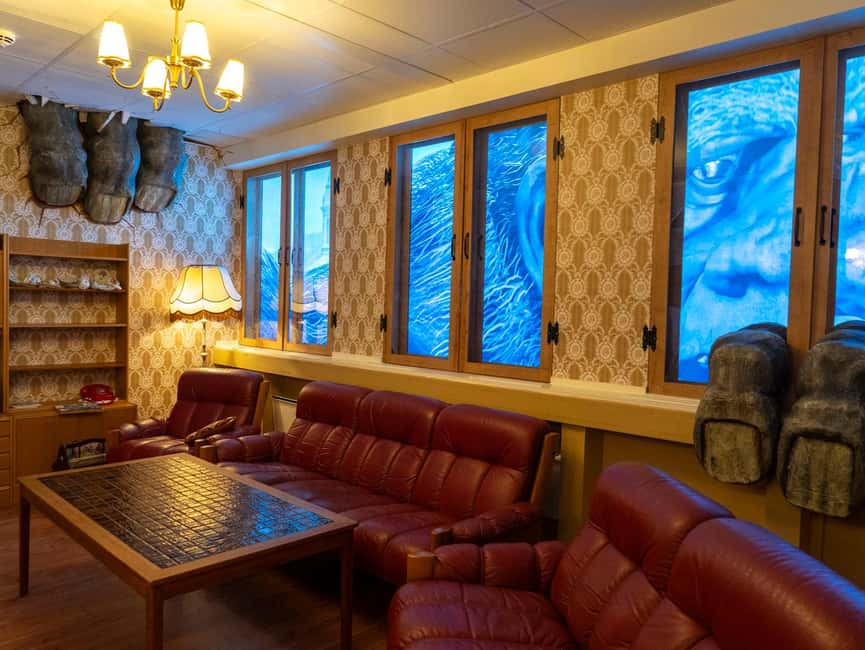
I would think of the Troll Museum as a storybook brought into a gallery, then fitted with modern screens and sensors. The physical displays use detailed handmade art, while digital effects add movement, sound, and extra layers of information.
That combination gives the museum its character. You are not simply looking at a troll sculpture and reading a paragraph beside it. You may use a tablet to reveal animated elements on the artwork, listen to a story, or interact with a screen that explains the creature in front of you.
The museum is in central Bergen at Øvre Dreggsallmenningen 6. It is open daily from 9:00 to 19:00, making it easy to fit around sightseeing, shopping, or a wet-weather change of plans. The activity is listed as wheelchair accessible, which is useful for anyone planning a city day with mobility needs.
The host and greeter service is available in Norwegian and English. Once inside, the audio guide expands your language choices to Norwegian, English, German, French, Italian, Spanish, Dutch, Polish, Russian, and Portuguese. Touch screens and AR tablets also add Chinese to that list.
More Museum Audio Tours in Norway:
- Florence: Uffizi Priority Ticket & Masterpieces Audio App
★ 4.2 · 6,402 reviews - Paris: Louvre Museum Hosted Entry and Mona Lisa Audioguide
★ 4.6 · 5,235 reviews - Venice: St. Mark Basilica Ticket, Audioguide+History Gallery
★ 3.9 · 4,780 reviews
Entering the world of Norwegian fairy tales
The museum’s central idea is simple: Norwegian folklore is not just about cute, friendly trolls. These stories contain warnings, strange creatures, wild places, and beliefs that helped people explain the world around them.
You will encounter familiar fairy-tale ideas, but the museum also gives them cultural context. Norwegian parents have passed these stories down for centuries, and the exhibits help you see why trolls remain such a strong part of the country’s identity.
I like this approach because it gives adults something to follow while children enjoy the visual effects. The museum does not assume that you already know the stories. Information screens and audio content help explain the creatures, settings, and beliefs behind the art.
Still, the amount of information matters. If you have only 30 minutes, you will need to move quickly. A visit of about 90 minutes gives you a better chance to read, listen, use the digital features, and spend time in the activity areas without constantly checking the clock.
The Norse mythology section and Viking creation stories

The Norse mythology section moves the focus beyond trolls and into the Viking understanding of the universe. You can learn how the Vikings pictured creation, the structure of the cosmos, and the forces that shaped the world around them.
This section is valuable because it puts Norwegian fairy tales into a wider setting. Trolls did not appear in isolation. They belong to a larger body of myths and folk beliefs involving nature, gods, hidden beings, and the unknown.
I would allow extra time here if you enjoy mythology or want more background than a typical family attraction provides. The digital tools can make complicated ideas easier to follow, especially when a diagram, image, or narrated explanation adds context to the display.
The drawback is that digital presentation can sometimes compete with the subject itself. If you prefer quiet museums with long printed explanations, the screens, sounds, and moving images may feel busy. If you enjoy learning through a mix of pictures and interaction, the format should work well.
The Hall of Trolls and their natural habitats
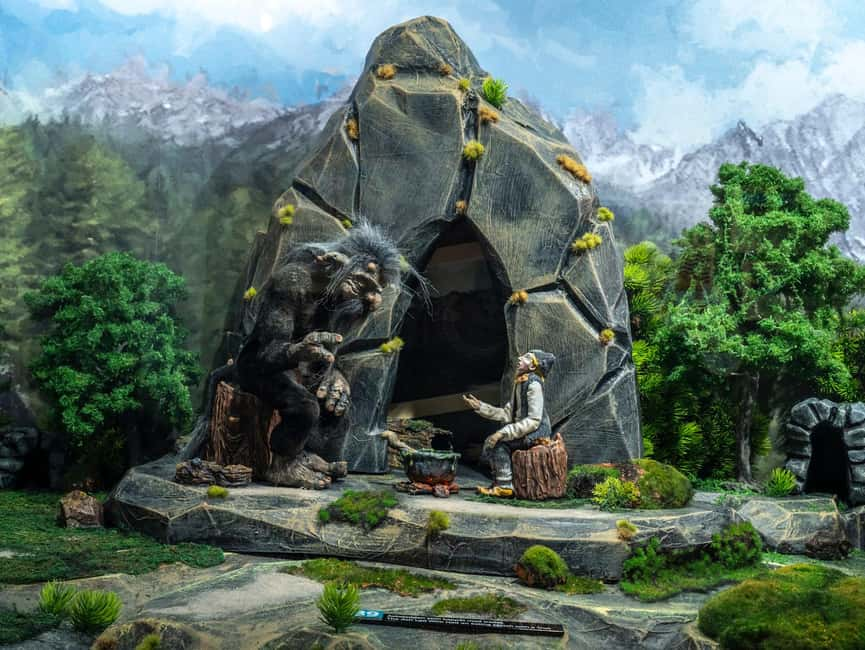
The Hall of Trolls is the museum’s most obvious centerpiece. Here, you can examine what trolls look like, where they are said to live, and how their appearance has changed through Norwegian storytelling.
The idea of a natural habitat is a clever one. Instead of treating trolls as random fantasy characters, the museum presents them as creatures connected to caves, mountains, forests, and other wild settings. That helps explain why trolls are often linked to the untamed side of Norway.
The exhibits use art, storytelling, and technology together. Augmented reality can add motion and sound to physical artwork, giving you more to investigate than the object itself. You may find yourself returning to a display after using a tablet, because the digital layer changes what you notice.
This section should appeal to children, but it is not limited to them. Adults who grew up with fairy tales may enjoy comparing the friendly modern version of a troll with older, stranger, and sometimes more threatening traditions.
A few more audio tours around Norway worth a look
- Oslo: Scenic Fjord Cruise with Audio Guide Commentary
★ 4.5 · 5,375 reviews - Molde: Atlantic Ocean Road & Varden Audio Guide Bus Tour
★ 4.1 · 473 reviews - Geiranger: Bus Tour with Multilingual Audio Guide
★ 4.0 · 317 reviews - Ålesund: Ålesund and Surrounding Islands Audio Guide Tour
★ 4.1 · 116 reviews
Hidden Beneath the Waves and Huldrefolket
One of the more distinctive parts of the museum is Hidden Beneath the Waves, a marine exhibit about creatures associated with the depths of Norwegian fjords. It expands the idea of folklore beyond forests and mountains.
The fjords have always inspired stories about things people could not easily see or explain. This exhibit lets you consider the mysterious creatures believed to live below the water, adding a darker and more unusual note to the visit.
A separate hall focuses on Huldrefolket, secretive beings from Norwegian folk belief. The museum explains who they are, where they live, and why they have such an important place in local stories.
I appreciate these sections because they keep the museum from becoming a single-theme display of troll faces. You get a broader look at Norwegian supernatural traditions, including the relationship between people, nature, water, and the unseen world.
The exact level of detail will depend on how long you spend with the audio guide and screens. If you want to understand the stories rather than simply take photographs, use the available explanations instead of rushing straight through the visual displays.
Augmented reality, holographic fans, and hands-on exhibits
The museum’s modern technology is more than decoration. Augmented reality tablets are available in 11 languages: Norwegian, English, German, French, Italian, Spanish, Dutch, Polish, Russian, Portuguese, and Chinese.
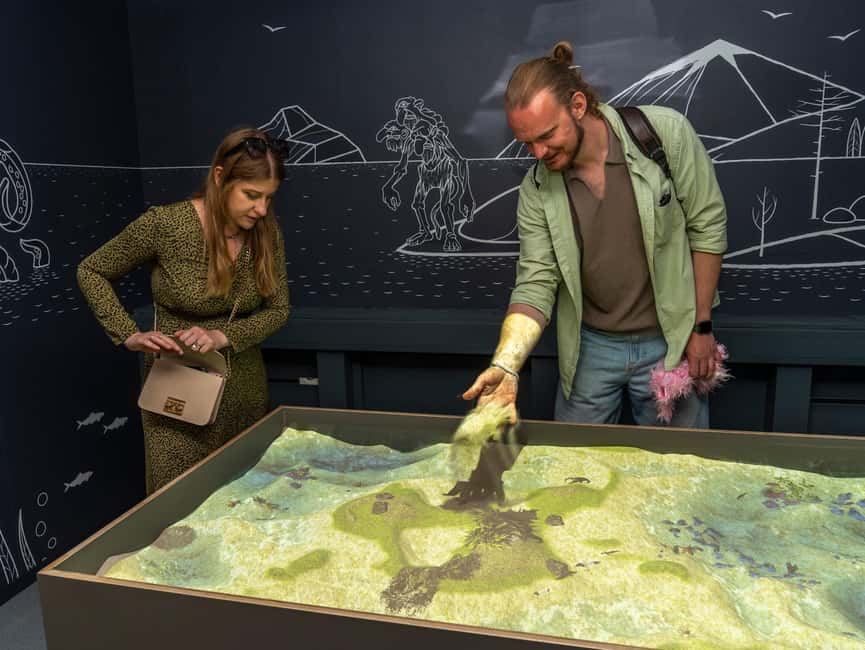
You use the tablet to view artwork with additional moving elements and sound. This can make a flat illustration feel more active and help younger children stay focused. It also gives people who do not speak Norwegian a practical way to access more of the content.
The museum also uses holographic fans and other interactive elements. I would not expect a high-end theme park production, but these effects add movement and surprise to a relatively compact museum.
The strongest part of the technology is that it supports the stories. The effects are most useful when they show how a creature behaves, where it belongs, or how an old tale might unfold. The experience works less well if you expect every station to be a major spectacle.
Hands-on exhibits are especially useful for families. They give children something to do between reading sections, while adults can listen to the audio guide or study the artwork. For a visit with children, I would plan around the activities rather than treating them as a quick extra.
The games room, creativity zones, and small library
The museum includes board games and creativity zones, which give the visit a slower, more relaxed ending. These areas are easy to underestimate. If you arrive with children, you may spend more time here than expected.
The games room is one reason I would not visit shortly before closing. A recent five-star account described arriving one to one and a half hours before closing but still not having enough time, particularly for the games room. That is a useful warning: the advertised opening hours do not automatically mean a short visit will feel complete.
The small library contains fairy tales and mythology books in several languages. I like having this quieter corner because it gives you a chance to look at the stories without the pressure of moving from one digital station to the next.
For adults, the library can help fill in gaps after the main exhibits. For children, the creativity zones provide a chance to make their own connection with the material. If you are visiting alone and mainly want the historical and cultural content, you can skip these areas and finish more quickly.
How much time should you allow?
I would allow 90 minutes at minimum if you want a proper look. That gives you time for the main troll exhibits, a selection of mythology displays, and several interactive stations.
Two hours is more comfortable for families or anyone who likes to listen to the full audio guide. The games room and creativity zones can extend the visit, and the library gives you another reason to stay.
A short visit can still work. If you have only an hour, concentrate on the Hall of Trolls, the Norse mythology section, Hidden Beneath the Waves, and the Huldrefolket hall. You can then sample the AR features instead of using every station.
The attraction is open from 9:00 to 19:00 every day. Because the ticket is valid for 90 days, you have useful flexibility when planning your Bergen schedule. Check the available starting times when booking, but the long validity makes this less rigid than a one-time timed performance.
Is the $26 ticket good value?
At $26 per person, I would not call the Troll Museum a cheap filler activity. It needs to offer more than a few photo opportunities to justify the price.
The ticket includes entry, exhibit text, the audio guide, access to the interactive information screens, and the AR tablets. Those extras matter because the museum’s content is spread across several formats. You are paying for a complete visit rather than simply access to a room of displays.
The value is strongest if you spend at least 90 minutes inside. Families can also get more from the games and creativity areas, while adults interested in folklore may appreciate the mythology and Huldrefolket sections.
The value is weaker if you want a traditional museum with original historical objects or a large collection of physical artifacts. This is primarily a storytelling and digital presentation. You should book it for the way it presents folklore, not because you expect a conventional history museum.
The 90-day validity helps. If rain changes your plans, or you discover that you have an open morning in Bergen, you do not need to force the museum into one exact day. Free cancellation is available up to 24 hours in advance, and you can reserve now and pay later if that option is offered at booking.
Who will enjoy the Troll Museum most?
I would recommend it most strongly to families with school-age children, adults who enjoy mythology, and anyone looking for an indoor activity in central Bergen.
Children get visual art, moving images, games, and creative activities. Adults get cultural background, fairy-tale traditions, Norse mythology, and a closer look at lesser-known beings such as Huldrefolket.
It also works well for mixed-age groups because people can choose their own pace. One person can listen to the audio guide while another uses an AR tablet or spends time in the games room.
I would be more cautious if you dislike screens, interactive displays, or family-oriented spaces. The museum is designed around modern technology, so that approach is central rather than incidental.
The attraction is also a good fit for visitors who need multilingual support. Exhibit text is in English and Norwegian, while audio and digital resources cover a much wider range of languages.
Practical advice for a better visit
Arrive with enough time to use the features you are paying for. If you arrive only an hour before closing, you may see the main displays but miss the games room and some of the slower storytelling.
Bring headphones if you prefer using your own, although the included audio guide is part of the ticket. Take your time with the AR tablets because they are one of the museum’s main differences from a standard folklore exhibit.
I would begin with the Norse mythology section, then continue to the Hall of Trolls. After that, visit Hidden Beneath the Waves and the Huldrefolket hall before spending time with the interactive stations and games.
That order gives you background first, then the troll stories, then the wider group of supernatural beings. It also means you can shorten the visit at the end if your schedule changes.
Should you book the Troll Museum?
I would book this experience if you want a playful but informative look at Norwegian folklore, especially if you are traveling with children or need a rainy-day plan in Bergen. The combination of handmade art, AR, audio storytelling, mythology, and hands-on areas gives you more variety than the title alone suggests.
I would skip it if your main interest is traditional museum collections or if you have only 30 minutes. For everyone else, the $26 price is reasonable when you allow enough time to use the technology and explore beyond the main troll displays. Arrive early enough to enjoy the games room, and you will get a fuller experience for your money.
FAQ
Where is the Troll Museum in Bergen?
The museum is located at Øvre Dreggsallmenningen 6 in central Bergen, Norway.
What are the opening hours?
The Troll Museum is open every day from 9:00 to 19:00.
How long is the ticket valid?
The ticket is valid for 90 days. You should check availability for starting times when booking.
Is an audio guide included?
Yes. An audio guide is included in the ticket price and is available in Norwegian, English, German, French, Italian, Spanish, Dutch, Polish, Russian, and Portuguese.
Which languages are available for the digital exhibits?
The information touch screens and AR tablets are available in Norwegian, English, German, French, Italian, Spanish, Dutch, Polish, Russian, Portuguese, and Chinese.
Is the museum wheelchair accessible?
Yes. The Troll Museum is wheelchair accessible.
Just added around Norway
- Trondheim’s Inner Circle: A Self-Guided Audio Tour★ 4.0 · 15 reviews
- A Tromsø Introduction: A Self-Guided Audio Tour★ 3.5 · 19 reviews
- Panorama Bus Tour with Audio Guide★ 4.0 · 3 reviews
- Discover Sensational Stavanger: Self-Guided Audio Tour★ 3.5 · 7 reviews
- Stavanger’s Historic Sites Smartphone App GPS Audio Walking Tour★ 5.0 · 8 reviews
- Oslo Scavenger Hunt and Highlights Self Guided Audio Tour★ 4.5 · 6 reviews
- Downtown Oslo: Self-Guided Highlights and History Audio Tour★ 4.0 · 10 reviews
- Discover Oslo: Self Guided Audio Tour★ 3.5 · 5 reviews
Museums, compared.
Uffizi Priority Ticket & Masterpieces Audio App
Read our review →
Louvre Museum Hosted Entry and Mona Lisa Audioguide
Read our review →
St. Mark Basilica Ticket, Audioguide+History Gallery
Read our review →
Borghese Gallery Skip-the-Line Ticket & Audioguide
Read our review →
Borghese Gallery Ticket + Audioguide or Guided Tour
Read our review →
Orsay Museum Entry Ticket and Digital Audio Guide App
Read our review →
Uffizi Gallery Timed Entry Ticket & Audio Guide
Read our review →
Acropolis Museum Ticket with optional Audio Guide
Read our review →Browse the lists this tour appears in