
REVIEW · NORWAY AUDIO TOURS
Discover Oslo: Self Guided Audio Tour
Oslo wears its story by the water. This self-guided audio tour links fortress walls, royal buildings, polar ships, and the modern waterfront in roughly two to three hours. I like the freedom to pause for lunch or shopping, and I like that the GPS map lets you choose your own pace rather than follow a guide with a flag.
The price is reasonable at $15.29 if you want basic historical context without joining a group. The catch is important: admission tickets are not included, and one detailed rating called the guiding very limited for the cost. You are buying a walking route and audio commentary, not a personal guide.
Key points to know before you go
- Seven major Oslo sights: The route covers Akershus Fortress, the Opera House, Oslo Cathedral, City Hall, the Nobel Peace Center, the Fram Museum, and the Kon-Tiki Museum.
- A sea-shaped city story: The audio focuses on how the sea influenced Oslo’s defense, trade, culture, and daily life over 800 years.
- Your own timetable: The stated tour length is about two hours, but you can pause the recording for food, shopping, photographs, or museum visits.
- English audio only: You receive audio files and a GPS map, but no physical audio device or guide.
- Museum costs are extra: Entrance fees are excluded at Akershus Fortress, the Nobel Peace Center, Fram Museum, and Kon-Tiki Museum.
- Prepare before walking: Download the audio and have it ready before you start. The tour is mobile-ticket based and begins at a suggested 9:00 a.m.
What the $15.29 price really buys

At $15.29 per person, this is a low-cost way to add structure to an Oslo walk. You receive audio files and a GPS map, so the main purchase is historical explanation and route planning. You do not pay for transportation, food, admission, or an audio device.
That distinction matters. If you plan to visit every museum on the route, your total day will cost far more than the tour price. If you only want to walk past the buildings and hear the basic story, the audio guide may give you enough background without adding a large expense.
I would judge the value by your expectations. For a flexible introduction to central Oslo and the Bygdøy museum area, $15.29 is fair. For detailed interpretation, personal recommendations, or lively conversation, it is thin. The current rating of 3.4 from five ratings, along with a complaint about limited guidance, suggests you should treat this as a useful audio supplement rather than a full sightseeing tour.
More Self-Guided Audio Tours in Norway:
- A Tromsø Introduction: A Self-Guided Audio Tour
★ 3.5 · 19 reviews - Trondheim’s Inner Circle: A Self-Guided Audio Tour
★ 4.0 · 15 reviews - Downtown Oslo: Self-Guided Highlights and History Audio Tour
★ 4.0 · 10 reviews
Starting at Akershus Fortress
Akershus Fortress is the strongest opening point. Built to protect Oslo, it occupies a strategic position by the shoreline, where enemy ships could be spotted before reaching the city. That location gives the audio story a clear theme from the start: Oslo has always looked outward toward the sea.
Allow about 15 minutes for the featured stop, though the fortress grounds may tempt you to stay longer. Admission is not included, so you need to decide if you want to pay for entry or simply use the area as the first setting for the commentary.
I like beginning here because the fortress gives Oslo a physical sense of age and defense. It is not just an old building placed on a sightseeing route. Its position explains why the city grew where it did and why water has mattered so much to its people.
The suggested start time is 9:00 a.m., but the format lets you set your own start and finish points. If you arrive later, you are not tied to a group departure. Download everything before reaching the fortress, since the experience depends on your phone, headphones, and prepared audio files.
The Opera House and Oslo’s modern waterfront
The Norwegian National Opera & Ballet provides a sharp change of mood. This is Norway’s largest performing arts institution, with more than 600 employees, but the building is also designed as a public place. You can walk onto the roof, making the structure part building, part open viewpoint.
The route assigns about 15 minutes here. That is enough for a quick look and a roof walk, but not enough for a performance or a long architectural visit. Admission to the tour stop is not included, though the audio experience does not promise a ticket to a show.
I like this pairing with Akershus Fortress. One stop explains how Oslo defended itself centuries ago. The next shows a city using its waterfront for art, public life, and modern design. That contrast gives the walk more shape than a string of unrelated buildings.
You will need to watch the clock if you want to complete the full route in two to three hours. The Opera House can easily become a pause point, especially if you want photographs or time on the roof.
Oslo Cathedral and the city’s official heart
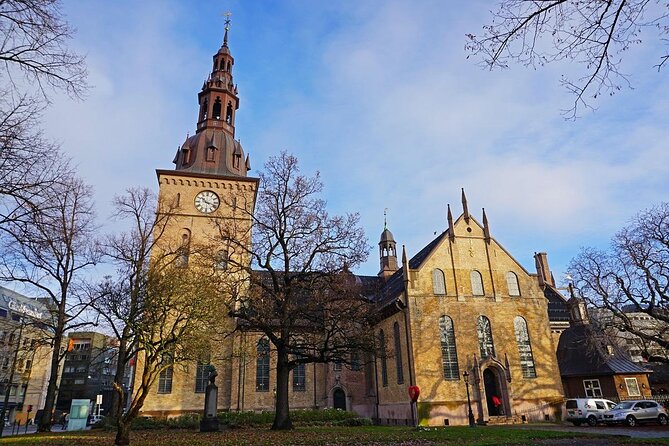
Oslo Cathedral is described as a peaceful stop, and the 15-minute visit fits that mood. The church was consecrated on November 7, 1697, and serves as Norway’s official church. National, parliamentary, and royal events are held here.
Admission is listed as free, which makes this one of the easier stops to include without adding to your day’s budget. The audio can provide the historical frame, while the building itself gives you a quiet break from the waterfront route.
I appreciate the balance here. Oslo is not presented only through forts and museums. A functioning church adds a sense of civic life and ceremony. Keep your expectations measured, though. The planned commentary is brief, so anyone wanting a detailed account of the cathedral will need to spend extra time on site independently.
A few more audio tours around Norway worth a look
- Oslo: Scenic Fjord Cruise with Audio Guide Commentary
★ 4.5 · 5,375 reviews - Molde: Atlantic Ocean Road & Varden Audio Guide Bus Tour
★ 4.1 · 473 reviews - Geiranger: Bus Tour with Multilingual Audio Guide
★ 4.0 · 317 reviews - Ålesund: Ålesund and Surrounding Islands Audio Guide Tour
★ 4.1 · 116 reviews
City Hall and Edvard Munch
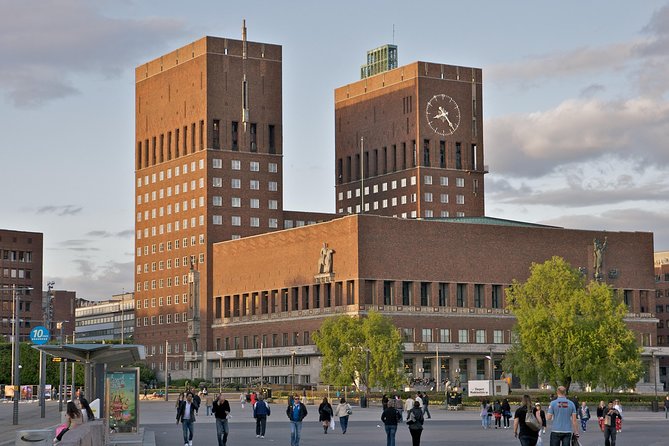
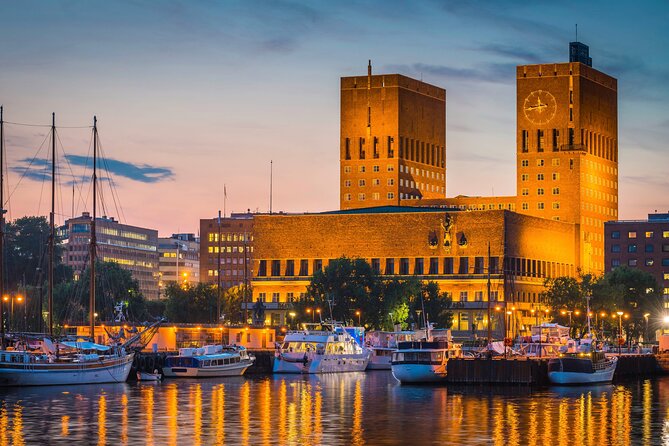
Oslo City Hall offers another free stop and a strong connection between public buildings and art. Its main attraction is the large collection of artwork inside, including a room dedicated to Edvard Munch. More than 300,000 people visit for the art each year.
The scheduled 15 minutes is enough for a quick look, but it may feel rushed if the interior is open and you want to study the artwork. The audio route gives you a reason to enter, yet it does not include a personal explanation of each piece.
This is one place where the self-paced format helps. You can pause the recording and take your time, then restart when ready. I would not treat the 15-minute estimate as a rule. It is simply a planning guide.
The City Hall stop also strengthens the tour’s central idea: Oslo’s story is not only about military power or seafaring. Public art, government, ceremonies, and national identity are part of the city’s character too.
The Nobel Peace Center
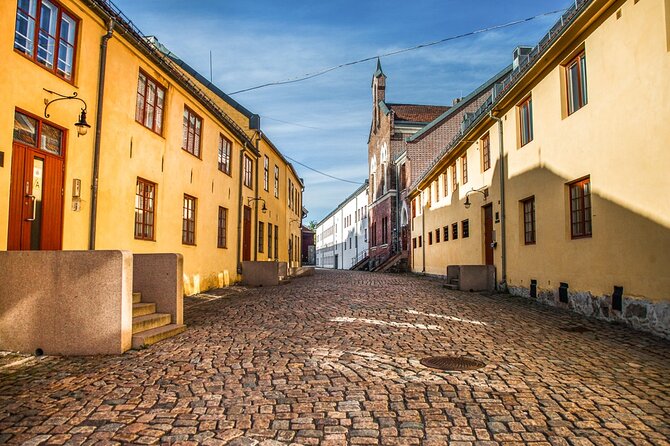
The Nobel Peace Center turns the walk toward international affairs. Its exhibitions, discussions, and reflections focus on influential people, war, and peace. Admission is not included, so you must decide if the interior visit fits your budget and schedule.
The stop is planned for 15 minutes. That works if you want an introduction, but it is not enough for a careful museum visit. As with the other indoor sites, the audio tour can point you toward the building while leaving the actual museum experience to you.
I see this as a useful transition between Oslo’s civic center and the museum district. It adds a global subject to a tour otherwise grounded in Norwegian places. If you prefer an entirely outdoor walk, you can still take in the exterior and continue, but the main value of the center is inside its exhibitions.
Bygdøy’s polar story at the Fram Museum
The Fram Museum tells the story of Norwegian polar expeditions, with the wooden ship Fram as its central object. A ship you can see for yourself gives this stop real focus. Instead of hearing only about exploration in the abstract, you encounter the vessel linked to those voyages.
The museum requires a separate admission fee. The planned 15 minutes is particularly short here. If you enter, you may want much more time than the route estimate allows, so build in flexibility and pause the audio rather than trying to hurry through.
This stop connects neatly to the tour’s repeated attention to the sea. The water shaped Oslo’s defenses, but it also carried Norwegian explorers into polar regions. The Fram Museum expands the story from local shoreline to national ambition.
Transportation is not included. That is worth noting because the route ends at the Norwegian Museum of Cultural History in Bygdøy, while the final listed museum stops are also in the peninsula area. You are responsible for getting between locations, and the tour does not provide a vehicle or transfers.
The Kon-Tiki Museum and Thor Heyerdahl
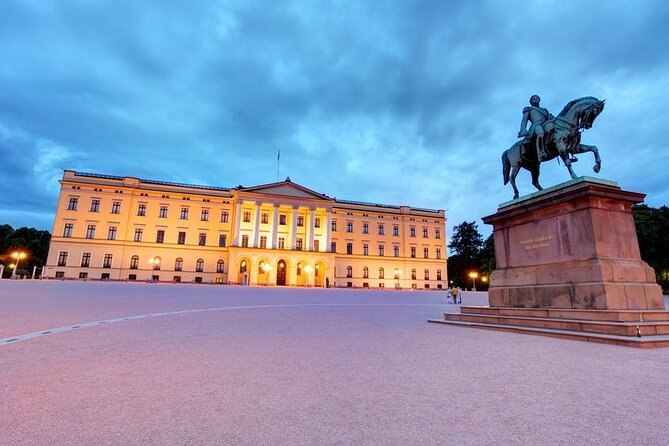
The Kon-Tiki Museum adds a different kind of sea story. It houses the vessels and maps connected with Thor Heyerdahl’s 1947 Kon-Tiki expedition, including the raft used for the voyage. The museum presents the idea that people had mastered long-distance sailing before the saddle and wheel were invented.
Again, admission is not included, and the suggested stop is 15 minutes. That may be enough to see the main object and grasp the basic story, but it is not a full museum visit. I would use the audio tour as an introduction, then decide on the spot if you want to pay for more time inside.
This is a memorable final theme because it returns the tour to human movement across water. Akershus explains why the shoreline protected Oslo. Kon-Tiki asks what people could accomplish once they trusted the sea as a route.
What the self-guided format feels like
The tour is built for independence. You download the audio files, open the GPS map, put in your headphones, and walk. You can choose your own starting point and ending point, even though Akershus Fortress is given as the start and the Norwegian Museum of Cultural History as the end.
That freedom is the best feature for independent visitors. You can stop for food, shop, skip a museum, or pause the recording without holding up anyone else. If your energy drops, you are not stuck completing a fixed group schedule.
The tradeoff is a lack of human help. There is no physical guide to answer questions, explain a confusing turn, or adjust the route around closures. One negative rating specifically described the guiding as very limited for the cost, so I would download the material and check the route before leaving your accommodation.
The tour is available only in English. It permits service animals, is near public transportation, and calls for a moderate level of physical fitness. Those details make it a better fit for someone comfortable walking through a city while managing a phone and headphones.
The maximum listed group size is 50, though the self-guided setup means you are not expected to move as one group. Think of that number as a booking limit, not a promise of a private experience.
Planning the route without rushing
The advertised duration is two to three hours, with the core audio taking about two hours. That estimate makes sense only if you keep most stops brief and do not spend long inside the museums.
A practical approach is to separate the walking commentary from the museum visits. Listen to the route material as you move, then choose one or two museums for proper visits. Trying to enter all four paid attractions, plus the free sites, will likely push the day beyond the stated time.
Keep headphones comfortable and your phone charged. The audio device is not supplied, and the files must be downloaded in advance. A mobile ticket is convenient, but it also means your preparation matters more than it would on a guided walk.
The route’s sea theme makes it easier to remember. Akershus covers defense. The Opera House shows a modern public waterfront. The cathedral and City Hall explain ceremony and civic identity. The Nobel Peace Center adds international concerns. Fram and Kon-Tiki carry the story out into exploration.
Who should book this Oslo audio tour?
I would recommend it to independent visitors who want a simple introduction to Oslo, prefer English commentary, and do not want to follow a guide at a fixed pace. It suits people who already enjoy choosing their own museums and meal stops.
It is also a reasonable choice for a first few hours in Oslo. The route gives you a broad sense of the city before you decide which places deserve more time. The GPS map and pause function are useful if you like flexible sightseeing.
I would be cautious if you expect detailed storytelling, admission to the museums, or personal help along the route. The price is modest, but the extras add up, and the brief stop times are not designed for serious museum study.
Should you book it?
Book this tour if you want a low-cost audio framework for seeing Oslo’s waterfront, civic center, fortress, and museum district on your own. Its best feature is control: you decide when to walk, pause, eat, shop, or stop listening.
Skip it if you want a full guided experience or if you plan to spend most of the day inside museums. In that case, the $15.29 fee may feel less useful, especially since admission, transportation, and a physical audio device are excluded. For a self-directed first look at Oslo, though, it offers a practical route and a clear sea-centered story.
FAQ
How long does the Oslo audio tour take?
The tour takes approximately two to three hours, with the audio portion described as taking about two hours. You can pause the recording when you need time for food, shopping, or sightseeing.
Is the tour available in languages other than English?
No. The tour is available only in English.
Are museum admission fees included?
No. Admission fees are not included. This applies to Akershus Fortress, the Nobel Peace Center, the Fram Museum, and the Kon-Tiki Museum. Oslo Cathedral and Oslo City Hall are listed as free stops.
What do I receive with the booking?
You receive audio files and a GPS map. The tour does not include an audio device, physical guide, transportation, food, or drinks.
Can I choose my own starting and ending points?
Yes. Although Akershus Fortress is given as the suggested start and the Norwegian Museum of Cultural History as the end, the self-guided format lets you choose your own starting and ending points according to your schedule.
What should I do before starting?
Download the audio files and prepare them before you begin. The download instructions are provided in the Before You Go section of your ticket.
Just added around Norway
- Trondheim’s Inner Circle: A Self-Guided Audio Tour★ 4.0 · 15 reviews
- A Tromsø Introduction: A Self-Guided Audio Tour★ 3.5 · 19 reviews
- Panorama Bus Tour with Audio Guide★ 4.0 · 3 reviews
- Discover Sensational Stavanger: Self-Guided Audio Tour★ 3.5 · 7 reviews
- Stavanger’s Historic Sites Smartphone App GPS Audio Walking Tour★ 5.0 · 8 reviews
- Oslo Scavenger Hunt and Highlights Self Guided Audio Tour★ 4.5 · 6 reviews
- Downtown Oslo: Self-Guided Highlights and History Audio Tour★ 4.0 · 10 reviews
- Akerselva River Meander: A Self-Guided Audio Tour★ 3.5 · 8 reviews
Self-Guided Tours, compared.

Acropolis Ticket & Optional Self-Guided Audio Tours
Read our review →


Ultimate Acadia National Park Self-Guided Driving Audio Tour
Read our review →

Santorini: Akrotiri Ticket with Optional Self-Guided Audios
Read our review →
Browse the lists this tour appears in