

REVIEW · ITALY AUDIO TOURS
Alberobello Walking Tour with Audio and Written Guide by a Local
Small price, big dose of trulli.
This self-guided walk gives you a low-cost way to explore Alberobello, with audio and written explanations in several languages. I like the freedom to move at your own pace, and I like the useful route through Rione Monti, Aia Piccola, Casa D’Amore, and Trullo Sovrano. The main catch is simple: you must use your own smartphone and find your way between stops.
At about $7.21 per person, it is a strong choice for couples, families, and budget-minded visitors. The guide can replace much of the basic information supplied by an in-person tour, but it may feel less personal, and some audio appears computer-generated. Bring mobile data, read the activation instructions carefully, and use GPS when the next stop is not obvious.
Key points to know before you book
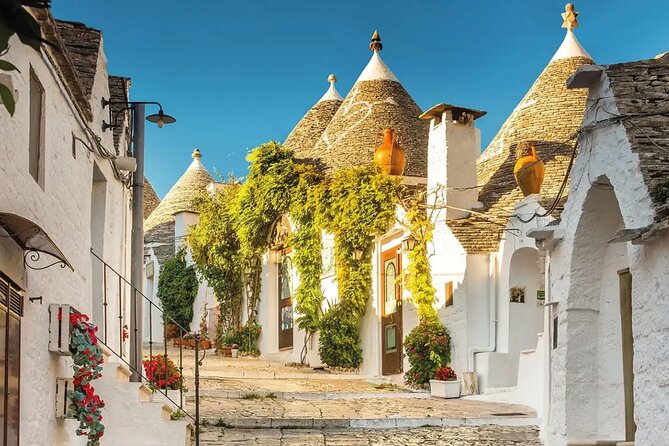
- Two historic neighborhoods: The route takes you through Rione Monti, with more than 1,000 trulli, and Aia Piccola, the older and more authentic district.
- A rare double-roof house: Trullo Siamese has two connected conical roofs sharing a central wall.
- The only two-story trullo: Trullo Sovrano offers a look at how traditional trullo building developed for a wealthier household.
- Self-guided freedom: You can stop for photographs, food, or a closer look without waiting for a group.
- Useful language choice: Written material comes in English, German, Spanish, and Italian. Audio is available in the same four languages.
- Excellent price for groups: A family of five could save a large sum compared with a private guided tour, though the savings come with less personal help.
What this Alberobello walk really offers

This is not a walking tour with a person leading you through town. It is a digital guide that turns your phone into an audio player, map aid, and short history lesson.
The route takes roughly two to three hours, though your actual time will depend on how long you spend looking around. The stops themselves are mostly short, from 15 to 20 minutes. That timing gives you room to pause for photographs or wander slightly, but you should not expect a full museum-style treatment of every building.
The tour begins at the Church of Sant’Antonio on Via Monte Pertica and finishes near Trullo Sovrano at Piazza Sacramento. That creates a useful north-to-south or downhill-to-central-town progression through several important areas of Alberobello.
One point deserves attention: the experience is described as covering Alberobello and Locorotondo, but the listed route includes only Alberobello stops. If Locorotondo is important to your plans, do not assume it is part of this walking route.
The guide is most valuable when you want context but do not need a live person. You can listen through your phone speaker or use your own headphones. Headphones are not supplied, so bring them if you prefer privacy or expect busy streets.
More Audio Walking Tours in Italy
- Florence: 2.5 hour Audio Guided Walking Tour led by Host
★ 4.6 · 293 reviews - Verona Walking Tour with Audio and Written Guide by a Local
★ 4.5 · 157 reviews - Bologna Walking Tour with Audio and Written Guide
★ 4.5 · 132 reviews
Starting at the Sant’Antonio trullo church
The first stop is the Chiesa Parrocchiale di Sant’Antonio da Padova, usually called the Trullo Church. Built in 1926, it was designed in the shape and spirit of a trullo at a time when Alberobello was growing and modernizing.
That date matters. The church is not an old rural trullo converted into a place of worship. It is a modern church built with local architectural ideas, created to serve a larger population that had previously depended on the Mother Church.
The building makes a good opening stop because it introduces the visual language you will see throughout the walk. Conical forms, pale limestone, and the unmistakable trullo silhouette appear here in a religious setting rather than a small home.
Admission is free. The stop is scheduled for about 20 minutes, which should be enough to look at the structure and hear the explanation without making the beginning feel slow.
The church is at Via Monte Pertica, 18. Read your voucher before arriving so you know how to activate the guide. This is not the moment to discover that your phone lacks a connection or that the audio has not loaded.
Understanding why trulli stay cool
The next stop explains the building method that makes Alberobello famous. Trulli are built from dry-laid limestone blocks, without the usual mortar used in conventional masonry.
Their thick walls and roofs help moderate indoor temperatures. Air spaces between the stones can keep interiors cooler in summer and warmer in winter. The effect comes from the construction itself, not from modern heating or cooling equipment.
The conical roofs are made from thin limestone slabs called chiancarelle. Builders place them in overlapping circles, gradually narrowing toward the top. The roof is constructed without interior supports, a fine example of practical local craftsmanship.
This is the kind of information that improves your walk. Without it, you see a row of charming white cones. With it, you begin looking at wall thickness, roof layers, and the way each building was put together.
The guide covers the trulli at no additional admission cost. You should still expect the audio to provide an overview rather than a detailed architectural course. It is best used as a companion while you look closely at the buildings around you.
Rione Monti and its thousand trulli
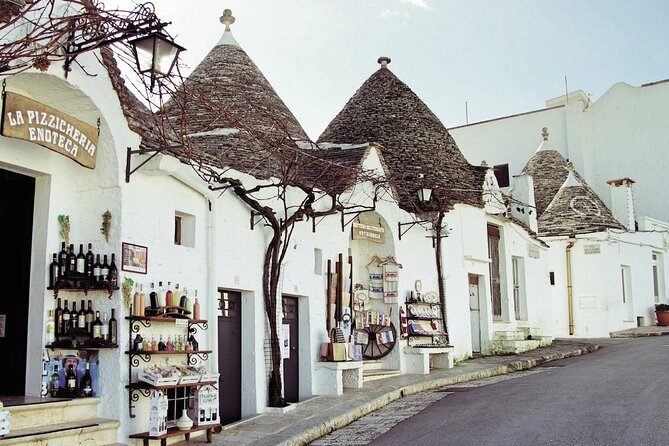
Rione Monti is the most famous district on the route. It lies on Alberobello’s southern hill and contains more than 1,000 trulli across 15 streets.
This is likely to be the most visually rewarding part of the walk. The district is close to Largo Martellotta, an important reference point in town. The name comes from three cisterns dug in the 1800s to collect rainwater, a reminder that the trulli were practical homes as well as photogenic buildings.
The guide’s value here is its ability to give you a little structure in a district that can otherwise feel like a maze of similar cones. You can pause when a doorway, roof symbol, or unusual wall catches your attention, then continue when you are ready.
The weakness is navigation. The digital guide does not always give clear turn-by-turn instructions from one stop to the next. Some people have had to open GPS to locate the following point, so keep your map app ready. Do not assume that the audio will always tell you to turn right, walk downhill, or take the next street.
Plan about 15 minutes for this section in the formal schedule, but that is a very lean estimate if you want photographs. Rione Monti rewards a slower pace.
Same place, a different route to walk:
- Rome: Pantheon Fast-Track Ticket and Official Audioguide
★ 4.5 · 27,353 reviews - Rome: Colosseum & Forum with Audio Guide App -Optional Arena
★ 4.2 · 24,770 reviews - Florence: Timed Entry to Michelangelo’s David + Audio App
★ 4.6 · 19,496 reviews - Rome: City Sightseeing Hop-on Hop-off Bus with Audioguide
★ 4.0 · 16,045 reviews
The unusual Trullo Siamese
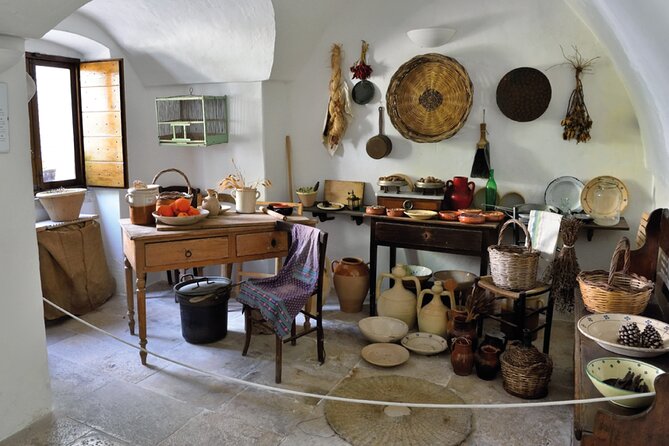
Trullo Siamese is one of the route’s most memorable buildings because it has two connected cone roofs. The pair shares a central wall, creating a double form that is rare among Alberobello’s mostly single-cone trulli.
The building is thought to be one of the oldest in town. From outside, you can see the narrow recess between the two cones, which was filled by the builder to create the finished shape.
This stop is short, around 15 minutes, but it gives the guide a chance to explain that trulli were not all identical. Local builders worked within a common tradition while producing different forms for different needs.
You will get the most from this stop if you look beyond the postcard view. Notice where the two structures meet and how the shared wall changes the outline. The audio description is useful here because the unusual shape is easy to miss when you are simply walking past.
Aia Piccola, the quieter historic quarter
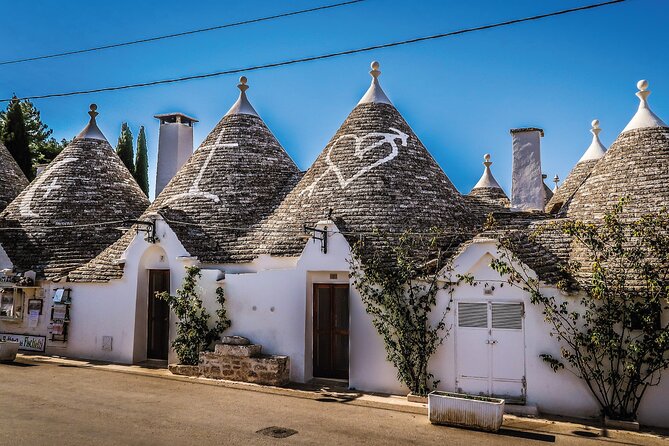
Aia Piccola is described as Alberobello’s oldest and most authentic neighborhood. Its name comes from its former role as an area connected with agricultural work.
This section gives the route a useful change of mood. Rione Monti is the district most people associate with Alberobello, while Aia Piccola helps show how the town’s trulli functioned as part of daily life.
The guide presents Aia Piccola as a place to discover rather than a single monument to check off. Give yourself time to look at the arrangement of the homes and the relationship between the narrow lanes and the buildings.
The stop is scheduled for 15 minutes. That is enough for a quick introduction, but I would not rush it. The strength of a self-guided visit is that you can extend this part without holding up anyone else.
The material is strongest when it supplies basic history and architectural context. It is less strong if you are hoping for a long collection of local anecdotes or personal stories about former residents. Some of the available narration has been described as plain and computer-voiced, with Italian names not always pronounced naturally.
The Civic Museum and a useful optional pause

The former home of doctor and intellectual Giacomo Pezzolla houses the Civic Museum of Alberobello. It focuses on local culture and history and can add depth to what you have seen outside.
The museum is mentioned as part of the route, but no separate stop duration or admission detail is provided. Treat it as an optional possibility rather than assuming that a museum ticket is included.
If you want more than photographs, this is the place to consider spending extra time. The outdoor route shows the shape of the town and its buildings. A museum can help connect those structures with local life.
Because the digital walk is already built around short stops, you may need to make your own decision about entering. Check current opening information locally if the museum is a priority. The tour’s stated opening hours run from midnight to 11:30 p.m. daily, but that refers to the experience’s availability, not necessarily the museum’s own opening schedule.
Casa D’Amore and the change in building rules
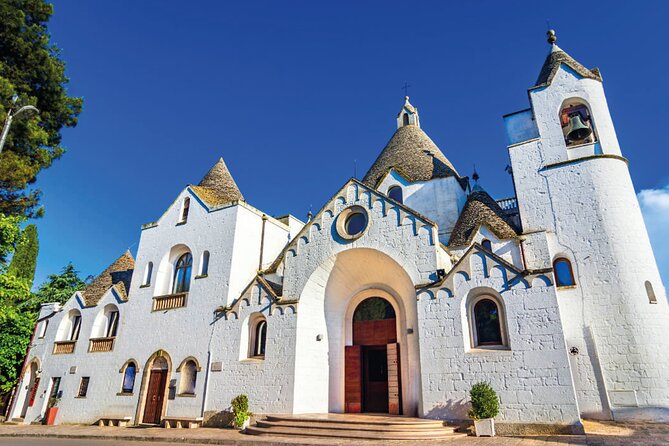
Casa D’Amore marks an important change in Alberobello’s building story. Built in 1797 by Francesco D’Amore, it was the first house in town built entirely with mortar and terracotta rather than the traditional dry-stone method.
The change followed a royal decree that allowed residents to construct houses in this way. That makes Casa D’Amore more than another attractive building. It shows a shift away from the older construction tradition and toward a different legal and building system.
The stop lasts about 15 minutes and is free. Listen for the explanation of why this house mattered, then compare its construction with the dry-stone trulli you have already seen.
This is one of the better stops for visitors who want a little historical cause and effect. You are not just learning what the building looks like. You are seeing how government decisions changed the way homes could be built.
The Mother Church of Saints Cosma and Damiano
The Chiesa Santi Cosma e Damiano is the main church in Alberobello’s historic center. Dedicated to the city’s patron saints, Cosma and Damiano, it dates from 1784.
It replaced a smaller chapel that could no longer hold the local congregation. That practical reason gives the church a clear place in the town’s development. Alberobello was growing, and its religious buildings had to grow with it.
The visit is scheduled for 20 minutes, longer than several of the smaller architectural stops. You can use that time to take in the church’s role in the center of town and listen to the explanation without feeling hurried.
This stop also helps balance the route. Much of the walk focuses on houses and districts, while the church shows the public and religious side of Alberobello. Admission is free according to the tour details.
Ending at the two-story Trullo Sovrano
The route finishes at Trullo Sovrano, the only two-story trullo in Alberobello. It is one of the clearest examples of how the traditional form could be adapted into a larger, more complex home.
Most trulli are associated with small rural dwellings. Trullo Sovrano shows a more ambitious version, designed for a wealthier family and built with the skill of 18th-century local craftsmen.
The stop is listed for about 15 minutes. Admission is not included, so budget separately if you want to enter. The walking guide can explain why the building is unusual, but the paid entry is where you can get a closer look at its interior arrangement.
Finishing here works well. You end with a building that summarizes the route’s central theme: trullo architecture was not a single fixed design. Builders used the same basic materials and methods in different ways, from humble homes to a rare two-story residence.
The ending point is Piazza Sacramento, 10. Since you finish near this important building, you can decide whether to go inside, continue exploring, or stop for food.
Audio quality, maps, and the phone problem
The digital guide includes written text in English, German, Spanish, and Italian. Audio is offered in those same four languages.
That choice is useful for mixed-language groups. One person can read while another listens, and you can switch languages without needing a live guide. Restaurant advice is also included, with suggestions aimed at authentic local food.
The tradeoff is that your phone does nearly all the work. You need an internet-connected smartphone, and the activation details are in your voucher. Read them before you arrive.
You can play the audio through your phone speaker or your own headphones. I would bring headphones if you are visiting with another person and want to listen privately. If your battery is low, charge before starting. The supplied information does not mention a battery pack or a backup audio device.
The route guidance is the main weak point. The map can help you reach the stops, but you may still need GPS to move from one location to the next. Think of this as a digital walking companion, not a fully narrated navigation system.
The audio may also sound computer-generated rather than human. That keeps the price low, but it can make the delivery feel flat and may lead to awkward pronunciation of Italian names.
Is $7.21 good value?
At $7.21 per person, the price is the strongest argument for booking. A live guided walk can cost far more, especially for a family. One family of five calculated savings of about £160 compared with a guided alternative and used the difference for a good dinner.
That comparison captures the tradeoff. You save a lot, but you give up a guide who can answer questions, adjust the route, explain a detail on the spot, and point you toward the next street.
For one person or a couple, I would choose this if you mainly want orientation and basic history. For a larger family, the value improves sharply because the same digital product serves everyone.
Group discounts are available, and the maximum capacity is listed as 108 people. That large number matters less than it might on a normal walking tour because you are not physically joining a group. Still, the experience is built for independent use rather than personal attention.
Who should book this walk?
I would recommend it to you if you:
- Want an inexpensive introduction to Alberobello
- Prefer setting your own pace
- Like using your phone for maps and audio
- Need English, German, Spanish, or Italian content
- Are traveling as a family and want to reduce tour costs
- Plan to spend extra time taking photographs
- Want basic explanations of trulli, churches, and local history
I would look for an in-person guide instead if you want lively storytelling, precise directions, deep local anecdotes, or answers to spontaneous questions. The digital narration covers the essentials, but it does not promise the personality of a local guide.
Book at least one day before any change of plan if possible. Cancellation is free with a full refund when you cancel at least 24 hours before the start time. Changes or cancellations inside that window are not refunded.
Should you book the Alberobello digital walk?
Book it if your priority is value, flexibility, and a clear route through the main trulli districts. The stops are well chosen, the price is hard to beat, and the audio and written formats make the experience usable for several languages.
Do not book it expecting a polished personal tour. You will need internet access, your own phone, and possibly GPS to bridge gaps between stops. If you accept those limits, this is a sensible way to understand Alberobello without spending guided-tour money.
FAQ
How long does the Alberobello walking tour take?
The experience takes approximately two to three hours.
Where does the walking tour start?
It starts at Chiesa Parrocchiale di Sant’Antonio da Padova, also known as the Trullo Church, at Via Monte Pertica, 18, Alberobello.
Where does the tour finish?
It finishes at Trullo Sovrano, Piazza Sacramento, 10, Alberobello.
Is a live guide included?
No. The experience is self-guided through a digital audio and written guide.
Which languages are available?
Written material is available in English, German, Spanish, and Italian. Audio is available in English, Spanish, Italian, and German.
Do I need a smartphone with internet access?
Yes. You need a smartphone with an internet connection to activate and use the digital guide.
Are headphones provided?
No. Headphones are not included. You can listen through your smartphone speaker or use your own headphones.
Is admission to Trullo Sovrano included?
No. Admission to Trullo Sovrano is not included. The other listed stops show free admission.
Can I cancel for a full refund?
Yes, if you cancel at least 24 hours before the experience start time. Cancellations made less than 24 hours in advance are not refunded.
Just added around Italy
- Torino Walking Tour with Audio and Written Guide by a Local★ 4.5 · 35 reviews
- Medieval Canals and Fountains: A Treviso Self-Guided Audio Tour★ 4.5 · 4 reviews
- Trapani Walking Tour with Audio and Written Guide by a Local★ 4.0 · 8 reviews
- Trento Walking Tour with Audio and Written Guide★ 4.5 · 11 reviews
- Sicily: Selinunte Park Entry Ticket & Sicily Digital Audio Guide★ 4.5 · 4 reviews
- Taormina Walking Tour with Audio and Written Guide by a Local★ 4.5 · 41 reviews
- Taranto Walking Tour with Audio and Written Guide by a Local★ 5.0 · 5 reviews
- Siracusa Walking Tour with Audio and Written Guide by a Local★ 5.0 · 59 reviews
Walking Tours, compared.
City Monuments Guided Walking Tour with Audio Guide
Read our review →

Self Guided Classic Freedom Trail Location Aware (GPS) Walking Audio Tour
Read our review →
Self-Guided Historical Walking Tour (Audio Guide)
Read our review →
Cape Cod & Provincetown Self-Guided Driving & Walking Audio Tour
Read our review →
Verona Walking Tour with Audio and Written Guide by a Local
Read our review →
Royal Walking Tour and Buckingham Palace Audio Tour
Read our review →
Bologna Walking Tour with Audio and Written Guide
Read our review →Browse the lists this tour appears in