
REVIEW · ROME AUDIO TOURS
Pamphilj Gallery Skip The Line Tickets and Audio Guide
Art crowds fade behind palace doors. The Doria Pamphilj Gallery gives you a chance to see a family collection in its original home, with paintings by Caravaggio, Raphael, Titian, Bernini, and other major artists. I like the calm setting and the sheer variety of rooms, from formal reception halls to private apartments. The main drawback is price: at $46 per person, this can cost far more than buying a basic entry and audio guide at the gallery.
I also like the freedom of an audio-guided visit lasting about two hours. You can move at your own pace instead of following a group, though the available language is listed as English and there is no live guide. Before booking, compare the online price with the palace’s own rate, since one booking cost €78 while the visitor found a €16 ticket with audio guide available locally.
Key points to know before you go
- Caravaggio and Velázquez are major reasons to visit: You can see important Italian, Flemish, French, and Spanish works in one private collection.
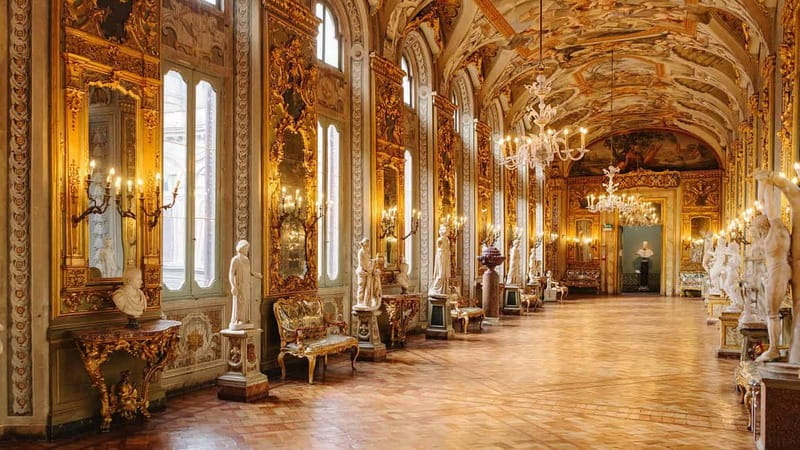
- The palace is part of the experience: Reception rooms, gallery wings, and private apartments are packed with art.
- Two hours is a sensible visit length: It gives you time to hear the audio guide and pause at the main paintings without turning the visit into an all-day project.
- Skip-the-line entry saves time, not necessarily money: The convenience may help, but the ticket price deserves careful comparison.
- The setting is usually quiet: One booking described it as a calm place where you can enjoy the art without much disturbance.
- This is self-guided: You receive audio commentary, not a personal art historian or a group tour.
What the Doria Pamphilj Gallery is really like
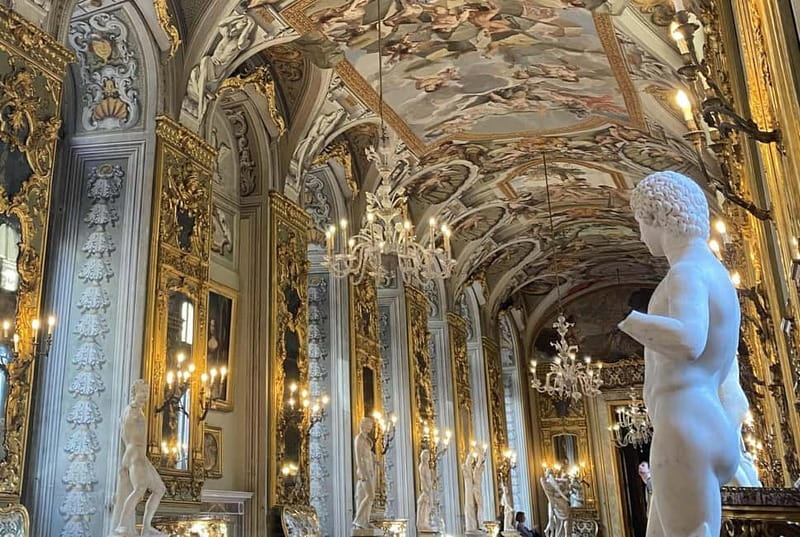
The Palazzo Doria Pamphilj is not simply a building containing paintings. It is the former home of the Doria Pamphilj family, and the collection remains tied to the rooms where the family received guests, lived, and displayed its wealth.
That makes the visit different from a standard modern museum. Here, paintings cover the walls of reception rooms, gallery corridors, and private apartments. The result can feel wonderfully abundant. It can also feel visually busy, especially if you are used to museums where each painting receives a large empty wall and a long label.
I like this old-fashioned display because it helps you understand how powerful families once presented art. A room was not arranged only for easy viewing. It was also a statement about taste, status, family connections, and access to great European artists.
You should expect a collection with many famous names, but do not assume every work will receive equal attention from the audio guide. The palace contains a large number of pieces, so you will need to choose your stopping points. Allow yourself time to look up, look across the room, and notice how the paintings interact with the decoration around them.
More Museum Audio Tours in Italy
- Rome: Borghese Gallery Skip-the-Line Ticket & Audioguide
★ 4.3 · 4,318 reviews - Rome: Borghese Gallery Ticket + Audioguide or Guided Tour
★ 4.6 · 3,219 reviews - Rome: Borghese Gallery Skip-the-Line Tickets with Audioguide
★ 4.6 · 2,562 reviews
Starting with the palace rooms
Your visit begins with entry to the private collection inside Palazzo Doria Pamphilj. The meeting information is brief, so check the exact entrance instructions on your booking before setting out. The host or greeter is listed as English-speaking, but the experience itself is not a guided walk with a staff member explaining every room.
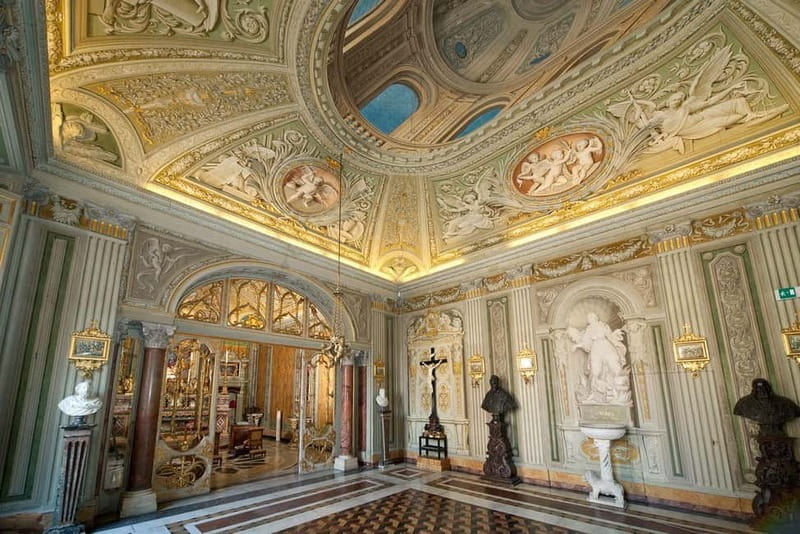
The first part of the visit introduces you to the palace setting and the family collection. You may find that the building itself competes with the paintings for your attention. Formal rooms, decorative details, and dense wall displays create the sense of entering a historic family residence rather than a purpose-built art museum.
The reception rooms are especially useful for understanding the collection’s original purpose. These were spaces designed to impress. Works were selected and positioned as part of a larger display, not isolated from the social life of the palace.
Take a slow first look before starting the audio commentary. The walls can be crowded with paintings, and it is easy to begin listening immediately while missing the overall effect. I find that a few quiet minutes at the start help you understand the scale of the collection.
The gallery wings and the crowded walls
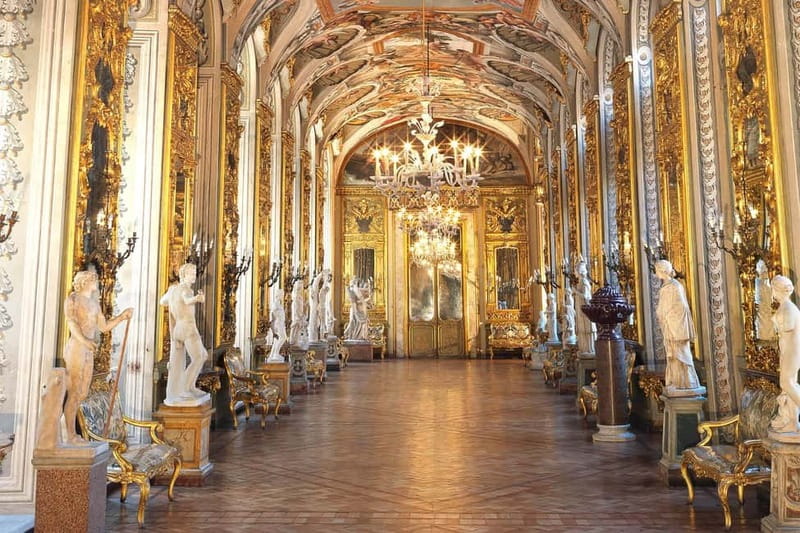
The splendid gallery and its wings are the visual center of the visit. The collection extends along the walls, creating a long sequence of paintings rather than a small group of carefully spaced highlights.
This arrangement is one of the palace’s pleasures. You can see how different schools and periods were brought together under one roof. Italian Baroque works appear alongside Flemish paintings, French scenes by Claude Lorrain, and Spanish Baroque art by Diego Velázquez.
The gallery wings also show why the audio guide matters. Without some background, you might remember only a blur of names and canvases. With the commentary, you can give priority to artists such as Caravaggio, Titian, Raphael, Carracci, and Bernini, then spend less time on pieces that do not interest you as much.
Do not rush from famous name to famous name. The collection’s appeal is partly in the contrasts. A dramatic Italian Baroque painting may sit near a more controlled Flemish work or a French view by Lorrain. Those changes in style help you see how varied European art could be, even within a single private collection.
The crowded display is not ideal for every visitor. If you want quiet rooms with generous space around each masterpiece, you may find the presentation overwhelming. If you enjoy old palaces and the feeling of discovering art room by room, the density adds character.
The major Italian paintings to watch for
Caravaggio is likely to be the artist many people seek first. His work is known for forceful light, strong human presence, and scenes that feel close enough to touch. Give his paintings time. The effect is not always immediate in a crowded room, especially when several other works are competing for attention.
Raphael and Titian offer a different experience. Raphael is associated with balance, clarity, and graceful composition, while Titian is prized for color and painterly richness. Seeing their work within the same private collection gives you a useful point of comparison.
Carracci and Bernini add another layer to the Italian selection. Their presence connects the collection to the development of Baroque art, when artists sought greater movement, drama, and emotional impact.
You do not need advanced art training to enjoy these works. Listen for the basic points in the audio guide, then ask yourself simple questions. Where does your eye go first? How does the light direct your attention? Does the scene feel calm, theatrical, intimate, or formal?
That approach works better than trying to memorize every artist and date. The gallery gives you more art than you can fully absorb in two hours, so focus on a handful of paintings and let the rest provide the setting.
More Museum Audio Tours in Rome
- Rome: Borghese Gallery Skip the line ticket and Audioguide
★ 4.3 · 1,535 reviews - Rome: Borghese Gallery Ticket and Optional Audio Guide
★ 4.3 · 902 reviews - Borghese Gallery, Home to Canova’s Art – Entry with Audioguide
★ 4.0 · 884 reviews - Rome: Borghese Gallery Skip-the-Line Ticket & Audioguide
★ 4.0 · 768 reviews
Flemish, French, and Spanish art in one visit
The collection is not limited to major Italian masters. Flemish artists add detailed interiors, religious subjects, and carefully observed everyday scenes. Their work can reward close viewing, especially when you compare their handling of texture and small details with the broader effects of Italian Baroque painting.
Claude Lorrain represents the French side of the collection. His work is associated with carefully arranged views of nature and architecture, with light playing an important role in the scene. These paintings offer a change of pace after the intensity of Caravaggio or the movement of Baroque compositions.
Diego Velázquez brings Spanish Baroque painting into the palace. His work is a valuable reminder that the collection reaches beyond Italian taste. You can use the audio guide to place his paintings within the wider European picture rather than treating the gallery as an exclusively Roman experience.
This variety is one of the best reasons to visit. In roughly two hours, you can encounter several major European traditions without crossing the city between museums. The tradeoff is that the visit offers breadth more than complete depth. You will get a strong sample of different artists, but not an extended study of any one school.
The private apartments and the family collection
The private apartments make the collection feel personal. They show that these works were not gathered only for public exhibition. They belonged to a family environment, where art helped define the rooms and the people who occupied them.
You can expect paintings in spaces that served practical and ceremonial purposes. Some rooms were used for receiving people, while others were more private. The difference helps you imagine how art functioned in daily palace life.
I find this part valuable because it adds context without requiring a long lecture. The setting explains why the collection is arranged in such a dense way. Paintings were part of the house, not separate objects placed into a neutral gallery.
At the same time, private rooms may be less straightforward to navigate than a modern museum. The audio guide should help you understand what you are seeing, but the information provided does not specify how many stops it includes or how detailed each explanation is. If you are a serious art student, you may want to treat the audio guide as an introduction rather than your only source of information.
How the English audio guide affects the visit
The audio guide gives you structure while preserving freedom. You can pause, replay, and move on when a subject does not interest you. That works well in a collection where the number of paintings can quickly become tiring.
The available language is listed as English. The general description suggests hearing the tour in your language, but the specific information identifies English, so confirm the language option before paying if you need another language.
There is no live guided tour included. That matters if you prefer conversation, questions, or help identifying the most important rooms. You are responsible for setting your own pace and deciding how much detail you want.
For most people, two hours should be enough for a solid visit. I would not try to listen to every available explanation if the collection is crowded with stops. Pick the artists that matter most to you, then allow time to view the rooms without headphones.
Is $46 good value?
The listed price is $46 per person. That is not a small museum admission, so the value depends on what you want from the visit.
The ticket includes entry to the private collection and an audio guide. It also includes the convenience of skip-the-line access. If you have limited time in Rome and want to see major art without waiting at the ticket desk, that convenience may be worth paying for.
Still, price checking is important here. One booking was described as costing €78, while the same visitor found an entry ticket with audio guide for €16 at the palace. I cannot verify that local price or whether conditions changed, but the difference is large enough to justify checking the official rate before committing.
The online purchase does offer flexibility. You can reserve now and pay later, and cancellation is available up to 24 hours before the visit for a full refund. Those terms have practical value if your Rome schedule is still shifting.
My advice is simple: compare the total price, confirm that skip-the-line entry is useful on your date, and decide how much you value advance planning. At $46, I would book mainly for convenience, not because it is the cheapest way to see the palace.
Who will enjoy this visit most
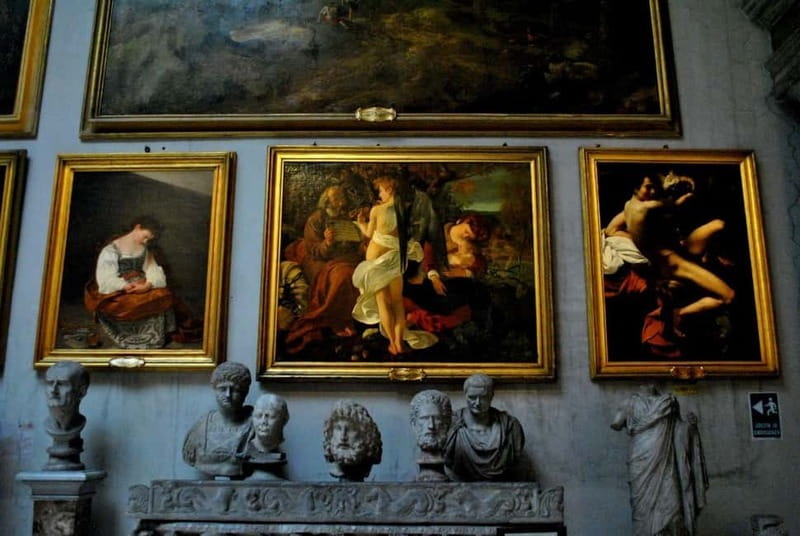
I would recommend the gallery to you if you like old residences, private collections, and seeing many artists in one place. It is especially useful for anyone interested in Caravaggio, Titian, Raphael, Velázquez, or European Baroque painting.
It also suits independent visitors who dislike being hurried. The audio guide lets you choose your own rhythm, and a two-hour duration fits neatly into a day of sightseeing in Rome.
Families with older children may find the palace more interesting than a large museum because the rooms feel connected to real domestic life. Younger children may lose patience with the number of paintings, especially if they are not interested in art.
You may want to skip it if you prefer a short list of famous works, large labels, and lots of open space. The walls are full, the collection is broad, and the self-guided format gives you little personal help beyond the audio commentary.
Practical advice for a better two hours
Before entering, identify your top three artists. Caravaggio, Raphael, Titian, and Velázquez are obvious choices, but you may prefer Bernini, Carracci, or Lorrain.
Use the first few minutes to understand the rooms. Do not start by trying to hear every audio stop. The palace is easier to appreciate once you see how the collection fills the reception rooms, wings, and apartments.
Keep an eye on your energy. A dense private collection can be tiring because your eyes have so much to process. Short pauses help, even if you are eager to keep moving.
Since transportation is not included, plan your own way to the palace and use the stated meeting point instructions carefully. The supplied details do not provide a transport service or a named pickup location, so do not expect a vehicle or a tour escort.
The experience has an overall rating of 4 out of 5 from 25 ratings, but the scores reveal a mixed value picture. One person praised the peaceful atmosphere, while another strongly objected to the price difference. I would take both points seriously: the palace itself may be a calm and rewarding place, but the booking cost deserves scrutiny.
Should you book the Doria Pamphilj Gallery?
Book it if you want a quiet, self-guided palace visit with major European paintings and you value skip-the-line access. The combination of Caravaggio, Titian, Raphael, Velázquez, Flemish masters, Lorrain, Carracci, and Bernini gives you plenty to see in two hours.
I would not book without comparing prices first. If the online cost is close to the local admission, the convenience is reasonable. If it is much higher, buying directly may make better sense, provided you can confirm entry and audio guide availability.
For an art lover who enjoys historic rooms and freedom to explore, this is a strong Rome stop. For a budget-conscious visitor, it is a conditional choice: excellent collection, attractive setting, but a price that may not match the basic ticket value.
FAQ
Where is the experience located?
It takes place at Palazzo Doria Pamphilj in Lazio, Italy, in Rome.
How long does the visit last?
The stated duration is about two hours.
What does the ticket include?
It includes access to the private collection at Palazzo Doria Pamphilj and an audio guide.
Is a live guided tour included?
No. A guided tour is not included. The experience provides an audio guide instead.
What language is the audio guide?
The specific information lists English as the available language.
Which artists can I see?
The collection includes works by Caravaggio, Titian, Raphael, Carracci, Bernini, Flemish masters, Claude Lorrain, and Diego Velázquez.
Can I see the private apartments?
Yes. The visit includes the palace’s private apartments, reception rooms, gallery, and gallery wings.
Is transportation included?
No. Transportation is not included, so you must make your own way to the gallery.
Can I cancel the booking?
Yes. You can cancel up to 24 hours in advance for a full refund. You can also reserve now and pay later.
More Skip-the-Line Tickets in Rome
- Borghese Gallery Skip-the-Line Entry Ticket with Audioguide
★ 4.0 · 345 reviews - Rome Pantheon Fast Track Experience With Audio
★ 4.5 · 66 reviews - Rome Pantheon Guided Audio Tour Skip The Line Escorted Entrance
★ 4.0 · 63 reviews - Pantheon Skip the Line Entry Tickets with Digital Audio Guide
★ 3.5 · 52 reviews
Just added around Rome
- Pantheon Skip the Line Entry Tickets with Digital Audio Guide★ 3.5 · 52 reviews
- Audio guide in Vatican Museums and Sistine Chapel★ 4.5 · 12 reviews
- Trastevere: A Self-guided Audio Tour of Rome’s Medieval Village★ 4.5 · 3 reviews
- St. Peter’s Basilica: Dome Climb with Lift & Audioguide★ 4.5 · 13 reviews
- Navova square underground with audioguide★ 4.5 · 17 reviews
- The Roman Jewish Ghetto: A Self-Guided Audio Tour★ 4.0 · 8 reviews
- Experience: The Pantheon Audio Tour★ 4.5 · 4 reviews
- St. Mary’s Basilica, Pope Francis Tomb Audio Tour with Crypt★ 4.0 · 3 reviews
Museums, compared.
Uffizi Priority Ticket & Masterpieces Audio App
Read our review →
Louvre Museum Hosted Entry and Mona Lisa Audioguide
Read our review →
St. Mark Basilica Ticket, Audioguide+History Gallery
Read our review →
Borghese Gallery Skip-the-Line Ticket & Audioguide
Read our review →
Borghese Gallery Ticket + Audioguide or Guided Tour
Read our review →
Orsay Museum Entry Ticket and Digital Audio Guide App
Read our review →
Uffizi Gallery Timed Entry Ticket & Audio Guide
Read our review →
Acropolis Museum Ticket with optional Audio Guide
Read our review →Browse the lists this tour appears in