

REVIEW · LISBON AUDIO TOURS
Lisbon: National Tile Museum E-Ticket & Audio Guide
Tiles tell Lisbon’s story. This $16 ticket brings you into the National Tile Museum, where Portuguese art, religion, industry, and everyday life appear in glazed color. I like the freedom to explore at your own pace, and I like having offline audio, text, and maps on your phone. The main catch is that the audio does not always follow the museum route in a clear order.
You receive an adult entry ticket by email, then download the app and audio content before arriving. The museum can fill one to two hours, though you could easily spend longer with the displays. I especially like the chance to see the unusual Mickey Mouse panel, the diamond-patterned panel, Mudéjar designs, and the elegant Dona Leonor Chapel. Just remember to bring a charged smartphone and headphones, since neither is supplied.
Key points to know before you go
- The Mickey Mouse panel is a memorable oddity: It gives the museum a playful modern touch among centuries of religious and decorative tile work.
- The Dona Leonor Chapel adds architectural depth: You are not only looking at loose panels. You are seeing tiles used to shape an entire sacred interior.
- The audio guide works offline: Download the content ahead of time so you are not dependent on a museum Wi-Fi connection.
- The $16 price buys convenience: The ticket includes adult admission, skip-the-line service, maps, text, and audio, though queues may still occur at the entrance.
- The guide is flexible but not perfectly ordered: You can replay sections and jump ahead, but you may need to match the audio to the room yourself.
- The visit suits independent sightseers: There is no live guide, and the small-group format is limited to 10 people, so the experience remains self-directed.
Why Lisbon’s tile museum matters
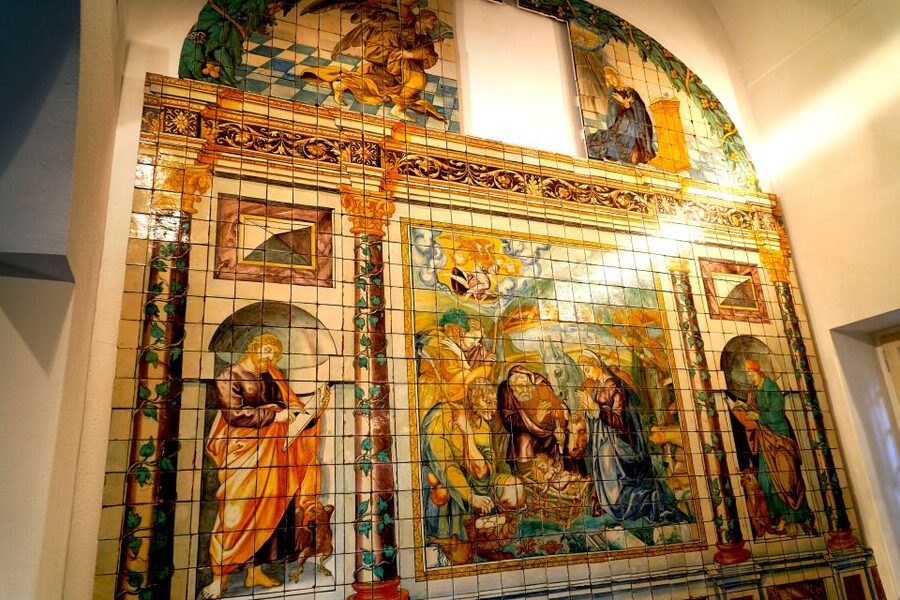
Lisbon’s tiles are more than pretty wall coverings. They are part of the city’s visual language, appearing in churches, homes, public buildings, and decorative interiors. At this museum, you can follow that tradition from medieval patterns through later Portuguese work and into modern imagery.
The collection also helps explain how tile production became an important Portuguese industry. You see the craft not as a single artistic style, but as a long process shaped by outside influence, changing tastes, and local skill.
That context gives the visit more weight than a quick room-by-room look at blue-and-white decoration. The museum connects patterns to Portugal’s medieval past, religious life, design traditions, and modern culture. I find that especially useful if you have already noticed tiled façades around Lisbon but want to understand what you are seeing.
The museum itself provides much of the atmosphere. The building, the chapel, the courtyard, and the tile displays work together. You are not simply walking through a gallery of portable objects. Several spaces show how tiles function as part of architecture.
More Smartphone Audio Tours in Portugal
- Lisbon: São Jorge Castle E-Ticket and Audio Guide
★ 4.3 · 2,182 reviews - Lisbon: Jerónimos Monastery E-Ticket and Audio Guide
★ 3.7 · 660 reviews - Lisbon: National Palace of Ajuda E-Ticket & City Audio Guide
★ 4.1 · 87 reviews
Getting inside with the $16 ticket
The adult ticket costs $16 per person. That is a reasonable price if you want a self-guided visit with extra explanation, especially since the package includes museum entry, skip-the-line service, offline maps, written information, and audio narration.
The value is less clear if you only want to walk through quickly. Free admission is available for children up to 12, and free or reduced tickets must be obtained at the museum rather than through this option. Those tickets do not include skip-the-line privileges.
The skip-the-line feature can save time, but you should not treat it as a guarantee of instant entry. The information warns that long queues may still form at the entrance. Site rules can also alter the way the visit runs, so keep a little flexibility in your schedule.
You receive access instructions by email after booking. Check your spam folder if the message does not appear. The app requires an Android phone version 5.0 or later, or an iPhone running a supported iOS version. It does not work with Windows Phones, iPhone 5, iPhone 5C, older iPods, or older iPads listed in the conditions.
You need about 100 to 150 MB of storage. Download everything before you arrive, and bring headphones. The ticket does not include a smartphone or headphones.
Starting the visit with the phone guide
The guide is designed for independent use. You enter with the electronic ticket, open the app, put on your headphones, and choose the information you want to hear. The content works offline, which is helpful inside a thick-walled historic building or whenever a mobile signal is weak.
The narration covers facts, stories, and less familiar details connected with the exhibits. You can play sections again as often as you like. That makes the system useful if you want to pause, look closely at a panel, or return to a room later.
The strongest part of the audio is its background information. It gives you a reason to look beyond color and pattern. Instead of seeing only a decorative surface, you can consider how a tile relates to Portugal’s industry, religion, and changing artistic tastes.
The weakness is navigation. The guide may not follow the physical route in the exact order you expect. You might finish one section and find that the next audio track describes a different room. The practical solution is simple: look at the image or room selection in the app and move to the section that matches your location.
Do not feel obliged to play every track from the beginning. If you are short on time, advance to the room or exhibit in front of you. Starting with the earliest narration can leave you listening to background material while you have already moved ahead in the building.
This arrangement gives you freedom, but it asks you to pay attention. A live guide would naturally point you in the right direction. Here, you control the pace and must manage the order.
The first tile displays and medieval background
The museum’s story reaches back to Portugal’s medieval period. The audio helps place the tile industry within that long timeline, giving you a sense of how designs and production changed over the centuries.
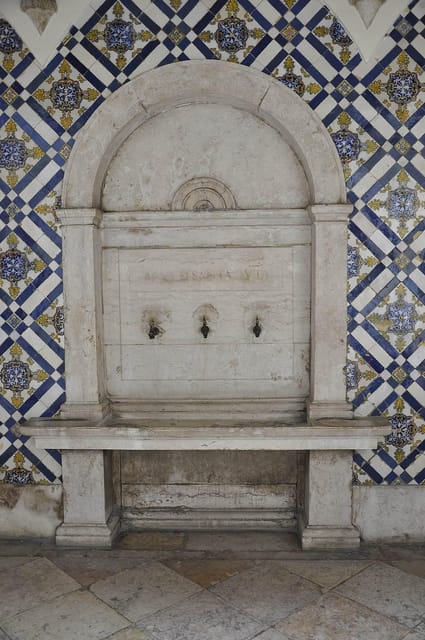
One important visual thread is the Mudéjar patterning. These designs reflect the influence of Islamic artistic traditions in Iberia, especially through repeated geometry and careful surface decoration. You do not need technical knowledge to appreciate them. The value is in noticing how much visual movement can come from a limited set of shapes.
The museum also helps you see tiles as a practical industry. They were decorative, but they also covered large surfaces and helped define interiors. That connection between craft and architecture is one of the visit’s most useful lessons.
I suggest taking time with the patterns before rushing to the famous panels. Repetition can look simple at first, but small changes in shape, border, and color often create the larger design. The audio can give you the background, while your eyes handle the close inspection.
More Smartphone Audio Tours in Lisbon:
- Lisbon: National Pantheon E-Ticket & Audio City Tour
★ 4.0 · 49 reviews - E-ticket to St. George with Audio Tour and Lisbon City Audio Tour
★ 4.5 · 27 reviews - Electric Car Tour of Lisbon Old Town and Belém with GPS Audio Guide
★ 5.0 · 23 reviews - Lisbon: E-ticket to St. George Castle & Audio Tour on Your Phone
★ 3.0 · 18 reviews
The Dona Leonor Chapel
The Dona Leonor Chapel is one of the most important stops. Here, tiles are part of a complete architectural setting rather than isolated artworks on a wall.
The chapel shows why the National Tile Museum is worth visiting even if you are not a specialist in ceramics. You can see how tiled surfaces shape the mood of a religious space. The result is more powerful than a single object in a display case because the decoration surrounds you.
Allow yourself time here. The chapel rewards a slower look at the arrangement, the relationship between surface and structure, and the way the patterns support the room’s purpose. The audio adds useful historical framing, but you should also spend a moment listening to the space and looking without narration.
The route through the museum may not make the chapel’s position obvious in the audio sequence. Use the app’s room images to select the correct section rather than waiting for the program to reach it naturally.
The Mickey Mouse panel and modern surprises
The Mickey Mouse tile panel is an unexpected highlight. It breaks the assumption that the museum is only about old religious scenes or formal geometric designs.
Its presence shows how tile art can absorb modern popular imagery. You get a glimpse of Portugal’s more recent visual culture alongside older traditions. The contrast also makes the wider collection easier to understand: tile work is not frozen in the past.
The panel is a good reason to keep your eyes open for changes in subject and style. After looking at medieval patterns and chapel decoration, the Mickey Mouse image feels like a deliberate jolt. It reminds you that tiled surfaces continued to adapt as society changed.
The diamond-patterned panel offers a different kind of pleasure. Its appeal comes from order, repetition, and the way a simple geometric idea can cover a broad surface without becoming dull. If you enjoy design, this may be one of the places where you want to pause the audio and study the pattern on your own.
Courtyard, café area, and a useful pause
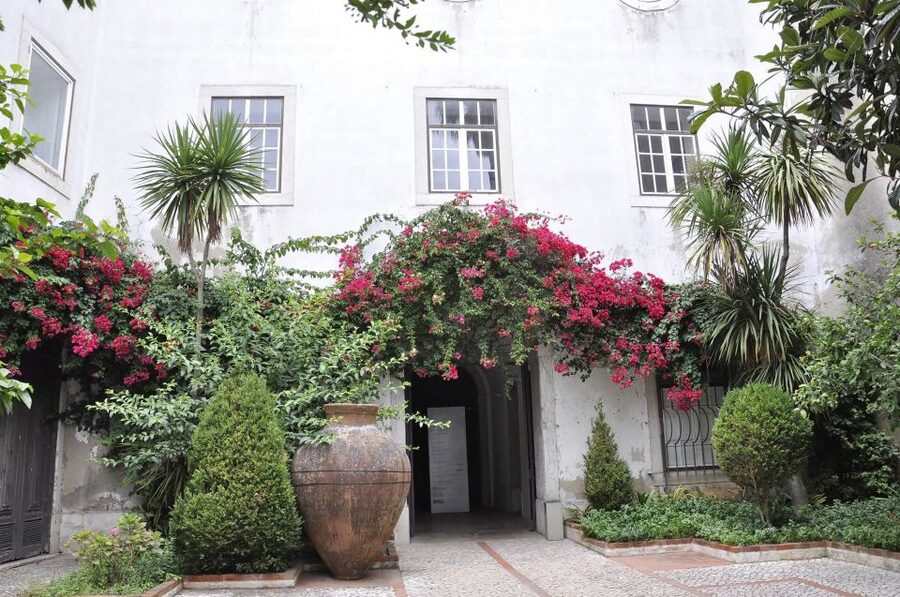
The courtyard is another pleasant part of the visit. It gives you a break from the interior displays and a chance to appreciate the museum setting from a different angle.
A garden area beside the café has tables and chairs where you can sit with food and drink. This is useful if you want to slow the visit rather than treat the museum as a quick stop between other sights. The information does not promise a full meal service, so think of the area as a practical place to rest rather than a reason to plan your day around dining.
The courtyard also helps divide the visit into manageable sections. After dense patterns and detailed narration, a quiet outdoor pause can make the second half easier to enjoy.
How much time should you allow?
The stated duration is one to two hours. That works for a focused visit, especially if you select only the rooms and exhibits that interest you most.
I would allow the full two hours if you want to listen to much of the audio and examine the tile work carefully. One audio user found the material substantial enough for a much longer visit, with the option to skip sections when needed.
You can make the experience shorter by moving directly to the major highlights:
- The Mudéjar-patterned tiles
- The Dona Leonor Chapel
- The Mickey Mouse panel
- The diamond-patterned panel
- The rooms explaining Portugal’s tile industry
You can make it longer by replaying sections, studying the details, and spending time in the courtyard. The flexibility is one of the better reasons to choose this format.
The museum is wheelchair accessible. Entry points and site procedures can change, so follow the museum’s directions on the day.
Is the audio guide worth using?
Yes, if you want more than labels and can manage the app yourself. The narration gives useful context and uncommon anecdotes, and the offline format means you can listen without an active connection.
It is particularly helpful for connecting the displays to Portugal’s medieval past and the development of the tile industry. Without it, you may still enjoy the artwork, but you could miss the larger story tying the rooms together.
The guide is not essential. Wall labels provide enough basic information for some visitors, and the museum may offer a free download on arrival. If you prefer to move quickly or dislike listening through headphones, you can visit without relying on the paid audio content.
The key issue is ease of use. The app is generally straightforward to download, but the room order can be confusing. You may need to keep selecting the relevant picture or section instead of simply pressing play and following along.
I would use the guide selectively. Listen to the introduction and the sections for the chapel, the industry displays, and the unusual panels. Then pause it whenever the narration distracts you from looking.
Who will enjoy this visit most?
This experience suits you if you like museums that let you set your own pace. It works well for independent sightseers, design fans, people interested in Portuguese culture, and anyone who has noticed Lisbon’s tiled buildings and wants more context.
It is also a good choice for mixed-interest groups. One person can listen closely while another studies the patterns, and nobody has to keep up with a live guide. The small-group setup is limited to 10 participants, though the actual visit remains self-directed rather than group-led.
Families can benefit from the short format and the visual variety. Children up to age 12 enter free, but the smartphone audio still requires an adult device and suitable headphones. The Mickey Mouse panel may offer a useful point of interest for younger visitors, while the chapel and patterns give adults more to study.
You may want to skip this option if you need a fully guided route with clear spoken directions from room to room. It is also less suitable if your phone is incompatible, your storage is full, or you do not want to manage downloads before arriving.
Practical ways to make the visit better
Download the ticket and audio guide before leaving your accommodation. Check your email, including the spam folder, and confirm that the app has enough space on your phone.
Bring headphones and charge your phone. Since the audio guide is supplied digitally, a dead battery turns a useful feature into a silent one.
At the entrance, allow time for a possible queue even though skip-the-line service is included. Do not schedule another important activity immediately afterward.
Once inside, identify the room images in the app before pressing play. This one small step solves the biggest navigation problem.
Use the audio as a tool, not a timetable. You can replay it, skip ahead, or stop listening while you examine a panel. The museum is visual first, and no narration should prevent you from looking carefully.
Should you book the National Tile Museum ticket?
I would book it if you want a relaxed museum visit with useful historical background and the freedom to choose your own route. The $16 price is fair for adult admission, skip-the-line service, offline content, and a smartphone guide, especially if you plan to stay for the full two hours.
I would not book it solely for the audio. The narration is informative but can be awkward to follow in sequence, and the museum can still be enjoyed through its displays and labels. If your phone is incompatible or you prefer human guidance, choose another way to visit.
For most independent visitors, the best plan is to use the audio selectively, make time for the Dona Leonor Chapel and the courtyard, and seek out the Mickey Mouse and diamond-patterned panels. That combination gives you the museum’s history, architecture, design, and unexpected humor without forcing you to hear every track.
FAQ
Where is the National Tile Museum experience located?
It is located in Lisbon District, Portugal.
How much does the ticket cost?
The listed price is $16 per person for an adult ticket.
How long does the visit take?
The stated duration is one to two hours, though you may spend longer if you listen to more audio and study the displays carefully.
Is the audio guide included?
Yes. A smartphone audio guide in English is included, along with offline text, audio narration, and maps.
Do I need to bring a smartphone?
Yes. You need a compatible Android or iOS smartphone to use the audio guide. A smartphone and headphones are not provided.
Does the audio guide work offline?
Yes. Offline content includes the written information, audio narration, and maps.
Is the museum wheelchair accessible?
Yes. The museum is wheelchair accessible.
Are children admitted free?
Children up to 12 years old enter free. Free and reduced admission tickets must be obtained on-site and do not include skip-the-line privileges.
Can I cancel the booking for a refund?
Yes. You can cancel up to 24 hours in advance for a full refund.
More Museum Audio Tours in Lisbon
- Lisbon: National Coach Museum Entry Ticket and Audio Guide
★ 4.5 · 49 reviews - National Coach Museum: E-ticket with Audio Tour on Your Phone
★ 4.0 · 11 reviews - Belem, Jeronimos & Tile Museum Skip-the-Line Tickets+Audio Guides
★ 3.5 · 2 reviews - Florence: Uffizi Priority Ticket & Masterpieces Audio App
★ 4.2 · 6,402 reviews
Just added around Lisbon
- Lisbon Walking Tour with Audioguide on Your Smartphone★ 4.5 · 4 reviews
- Self-Guided Audio Tour – Lisbon on Wheels: the capital of the sea★ 5.0 · 3 reviews
- Lisbon: E-ticket to St. George Castle & Audio Tour on Your Phone★ 3.0 · 18 reviews
- Riverside Ride Audio Adventure Lisbon to Belem★ 5.0 · 8 reviews
- Prazeres Cemetery: A Self-Guided Audio Tour in Lisbon★ 3.0 · 2 reviews
- Electric Car Tour of Lisbon Old Town and Belém with GPS Audio Guide★ 5.0 · 23 reviews
- National Coach Museum: E-ticket with Audio Tour on Your Phone★ 4.0 · 11 reviews
- National Palace and Gardens of Queluz: E-ticket with Audio Guide★ 3.5 · 6 reviews
Museums, compared.
Uffizi Priority Ticket & Masterpieces Audio App
Read our review →
Louvre Museum Hosted Entry and Mona Lisa Audioguide
Read our review →
St. Mark Basilica Ticket, Audioguide+History Gallery
Read our review →
Borghese Gallery Skip-the-Line Ticket & Audioguide
Read our review →
Borghese Gallery Ticket + Audioguide or Guided Tour
Read our review →
Orsay Museum Entry Ticket and Digital Audio Guide App
Read our review →
Uffizi Gallery Timed Entry Ticket & Audio Guide
Read our review →
Acropolis Museum Ticket with optional Audio Guide
Read our review →Browse the lists this tour appears in