
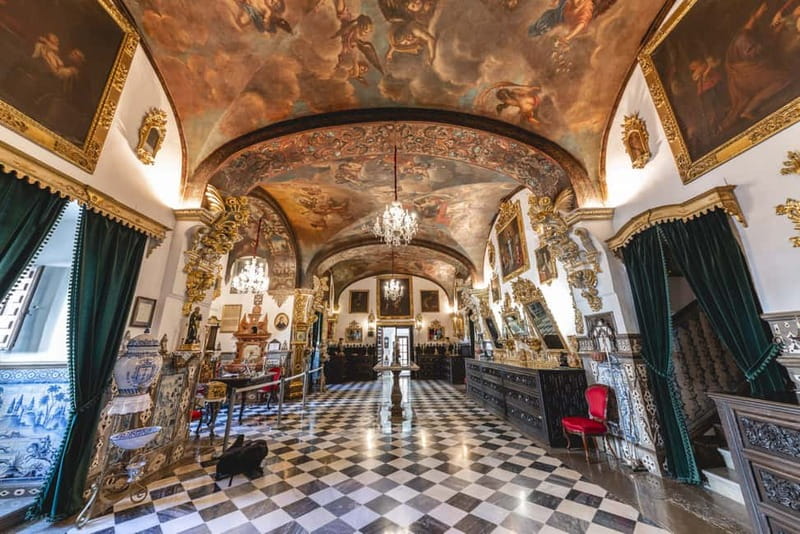
REVIEW · GRANADA AUDIO TOURS
Granada: Basilica of San Juan de Dios Ticket & Audio Guide
Gold, art, and quiet devotion await. The Basilica of San Juan de Dios gives you one of Granada’s most striking Baroque interiors, with elaborate altarpieces, sculptures, chapels, and a clear focus on charity and love. I especially like the reasonable $11 price and the fact that the ticket includes both an audio guide and a VR experience. The main thing to consider is that this is a self-guided visit, not a live tour, so you need to manage the order and pace yourself.
I also like how much there is to see in a relatively short stop. The basilica works well for an hour between Granada’s larger sights, and its central location makes it easy to add to a day around the Cathedral and other historic buildings. The audio guide is available in Spanish, English, French, German, and Portuguese, though the sequence may feel unclear at certain points.
Key points to know before you go
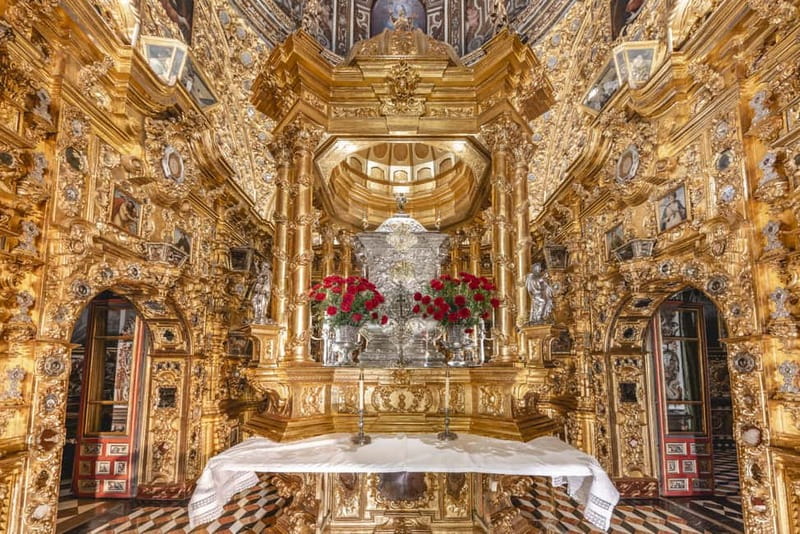
- The gold-covered interior is the main event: Almost every direction brings another painting, sculpture, decorative detail, or gilded surface into view.
- An audio guide adds real value: Without it, many of the religious symbols, artworks, and relics would be easy to miss.
- The VR experience comes with admission: It gives the visit an extra visual element beyond simply walking through the church.
- The basilica reflects Granada’s connection to San Juan de Dios: The site explains the saint’s legacy and his role as co-patron of the city.
- Plan on roughly one hour: That is enough time for a focused visit, though art lovers may want longer.
- It is wheelchair accessible: The ticket includes entry, the audio guide, and VR, but not a live guide.
Why this small basilica deserves time in Granada
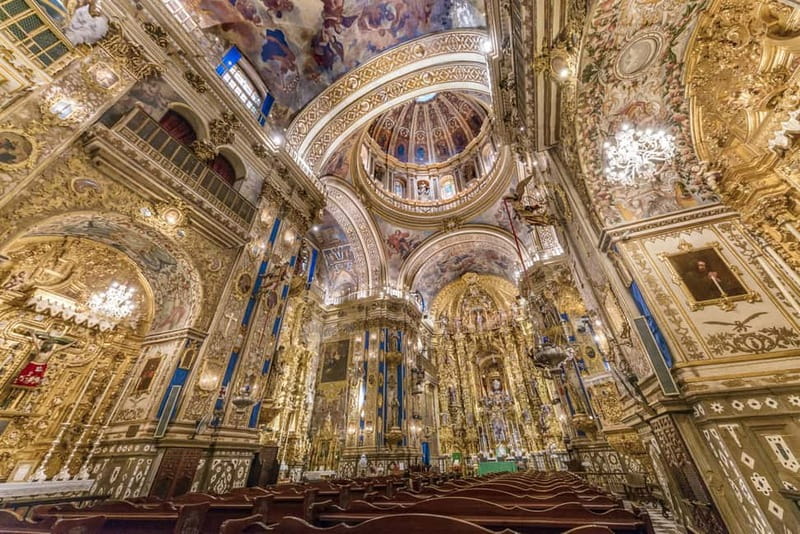
Granada is packed with major monuments, and the Alhambra naturally takes much of the attention. The Basilica of San Juan de Dios offers a different kind of spectacle. Instead of gardens, palaces, and broad views, you get a compact interior designed to overwhelm you with color, shine, movement, and religious imagery.
The basilica is a Baroque masterpiece built around the story and legacy of San Juan de Dios. Its decoration presents charity and love as active forces, not abstract ideas. As you move through the interior, the art is meant to stir both the eye and the heart.
That makes the visit useful even if you are not an expert in church architecture. You do not need to recognize every painter or understand every theological reference to appreciate the force of the setting. Still, the audio guide helps you understand why the basilica looks this way and what its decoration is trying to communicate.
The building remains a working church, with Mass held daily at 8:30 in the morning according to the information provided for the visit. That detail matters. This is not only a preserved monument for sightseeing. It remains a sacred place for worship and devotion, so you should enter with the same quiet respect you would bring to any active church.
More Church Audio Tours in Spain
- Cordoba: Mosque-Cathedral E-Ticket with Audio Guide
★ 4.1 · 2,895 reviews - Cathedral and Giralda Entry Ticket with Audio Guide
★ 4.1 · 505 reviews - Salamanca: Cathedral of Salamanca Ticket with Audio Guide
★ 4.6 · 197 reviews
Entering the Baroque interior
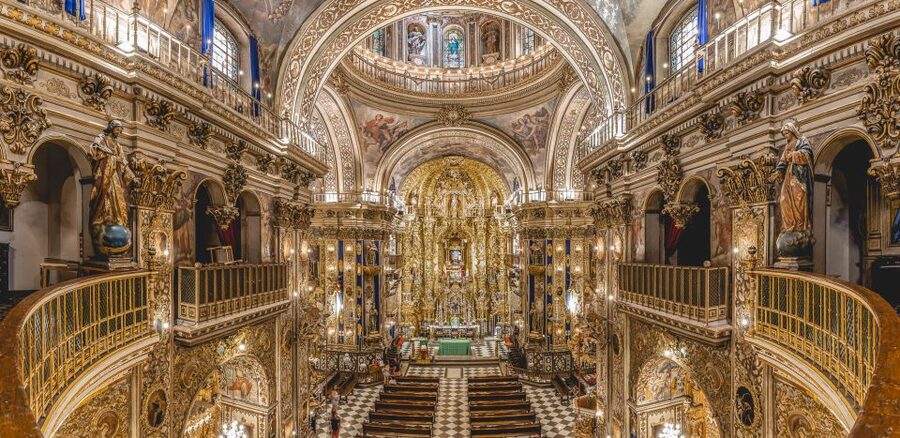
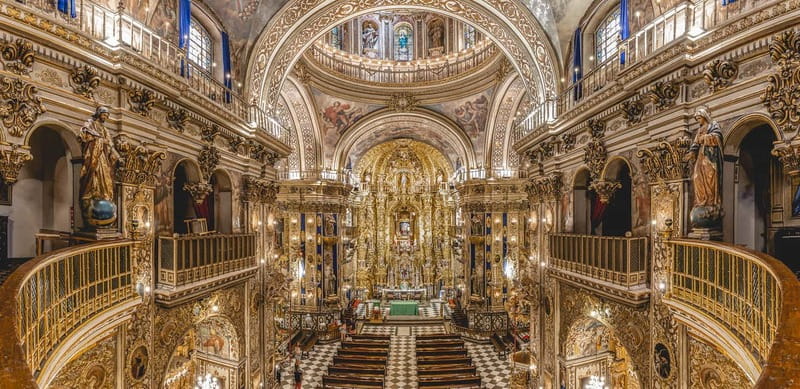
The first impression is visual overload, in the best possible sense. The interior is filled with gilded decoration, paintings, statuary, altarpieces, and architectural details. One visitor described the basilica as almost too ornate to take in at once, with something to notice in every direction.
That density is the point of the Baroque style. The decoration is not restrained. It uses dramatic forms, changing perspectives, bright surfaces, and carefully placed images to create movement. Look up, look toward the altar, then turn back toward the entrance. The experience changes as your eyes adjust.
I would avoid rushing straight to the most obvious altar. Give yourself a minute to absorb the whole room first. Then begin looking at individual chapels and decorative groups. The basilica rewards slow attention because small details can disappear when you focus only on the largest gold surfaces.
The style can feel overwhelming if you prefer plain Romanesque or quiet Gothic churches. It is not a minimalist stop. You are coming here for theatrical religious art, and the building delivers that in abundance.
The altarpieces, sculptures, and gilded details
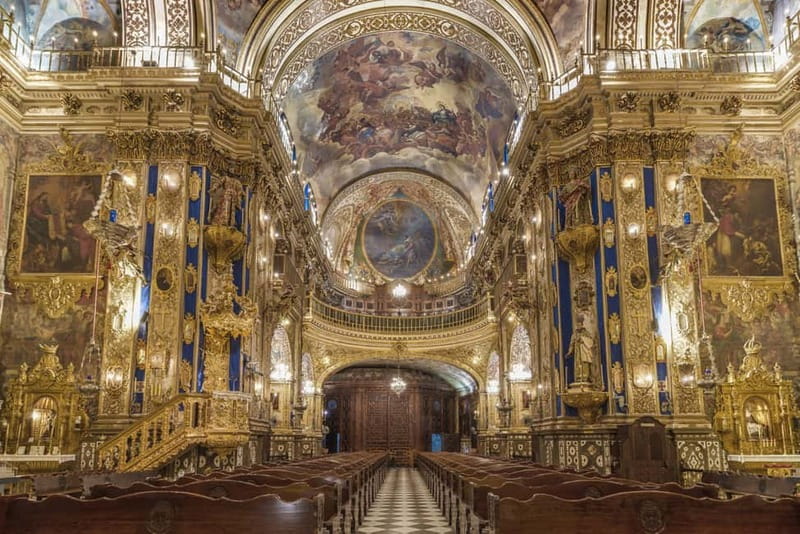
The altarpieces form the visual center of the visit. They combine architecture, sculpture, and painting into one carefully arranged scene. The gold is not simply decoration. It catches light and helps create the sense of movement that is central to Baroque design.
A small extra feature can improve your look at the rear altar area. One visitor noted that lighting this section costs €1 more, allowing the details to show more clearly and making photographs easier. This is not part of the $11 admission, so decide for yourself if the extra light is worth it.
The sculptures deserve more than a passing glance. Their poses and expressions help tell the story of Christian charity and San Juan de Dios’s work. You might find that the figures feel more active than static, as if they are responding to the scenes around them.
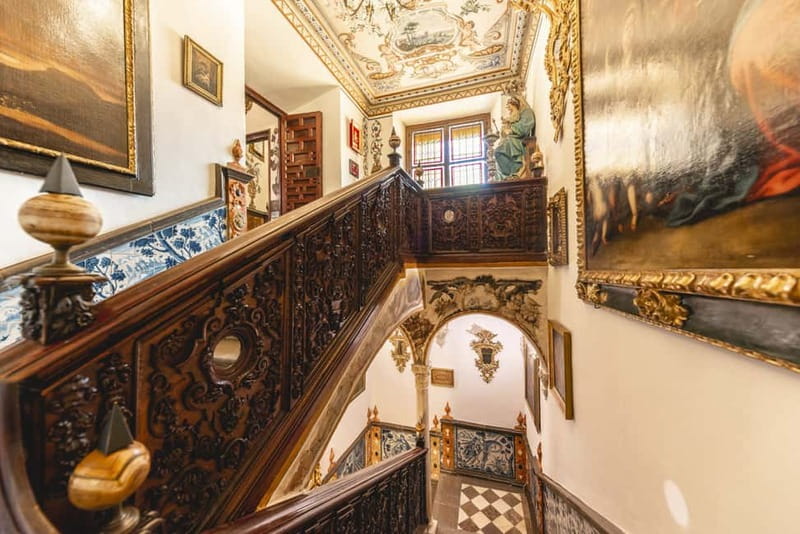
Paintings, relics, and smaller ornaments fill the spaces between the major works. This is where the audio guide earns its keep. Without context, you may see a beautiful collection of objects but miss the connections between them.
The audio content is intended to direct your attention to what you are seeing. In practice, the order may not always be obvious. Pay close attention to the numbered stops, and pause the recording when you need time to find the correct area. One piece of useful advice is not to begin the next explanation until you have located the section being described, particularly around stop five, where the sequence can become confusing.
San Juan de Dios and the message of charity
The basilica is not just a showcase for gold and Baroque craftsmanship. Its meaning centers on San Juan de Dios, the co-patron of Granada. The visit presents his legacy through a message of compassion, service, and care for others.
That focus gives the decoration a purpose. The church is designed to draw you toward an emotional response, but it also points to a model of practical charity. You are not only looking at impressive objects. You are learning why this particular saint matters to Granada and to the people who continue to honor him.
The audio guide helps connect the saint’s story with the rooms, chapels, and images around you. This is especially helpful if you are unfamiliar with San Juan de Dios before arriving. The basilica becomes easier to read once you understand the person at its center.
I appreciate that the experience does not require a long tour to make an impression. You can spend an hour here and come away with a clear sense of the basilica’s religious purpose, artistic style, and local importance.
Same place, a different route to walk:
- Barcelona: Sagrada Familia Entry Ticket with Audio Guide
★ 4.6 · 105,312 reviews - Barcelona: Casa Batlló Entry with Self-Audioguide Tour
★ 4.7 · 25,359 reviews - Granada: Alhambra Entry Ticket with Audio Guide
★ 4.1 · 5,950 reviews - Casa Batllo Admission Ticket with Intelligent Audio Guide
★ 4.5 · 3,168 reviews
The chapels and work of the artists
The chapels give you a chance to move beyond the main altar and inspect the building’s decoration in smaller sections. Each area contributes to the overall message, while also showing the skill of the artists and craftsmen who worked on the basilica.
Tomás Ferrer and Atanasio Bocanegra are among the names connected with the decoration. Their work forms part of the artistic program that makes the basilica feel so complete. The details are not scattered at random. Architecture, painting, sculpture, and ornament are arranged to work together.
Atanasio Bocanegra’s contribution is particularly useful to keep in mind as you examine the painted elements. Tomás Ferrer is also identified as an important contributor to the decoration. The audio guide can help you connect these artists with what you are looking at, although you should not expect the same level of back-and-forth explanation you would get from a private guide.
The chapels are also where the spiritual atmosphere may feel strongest. The central space can seem theatrical, while the smaller areas invite quieter attention. If you are visiting during a religious service, some parts of the basilica may naturally require extra care and silence.
How the audio guide and VR experience work together
The audio guide is included in the ticket and is available in five languages: Spanish, English, French, German, and Portuguese. That makes the experience accessible to a broad range of visitors, and the clear, easy-to-use format has been praised by several people who used it.
Its main strength is interpretation. The basilica contains too many images and objects to understand by sight alone. The guide gives you a framework, points out significant areas, and explains the connection to San Juan de Dios.
Its weakness is navigation. The stops may not always tell you immediately where to look, and the order can feel less natural than it should. I recommend stopping the audio between sections rather than letting it run while you search. You will get more from the visit if you treat it as a visual tour with pauses, not as background listening.
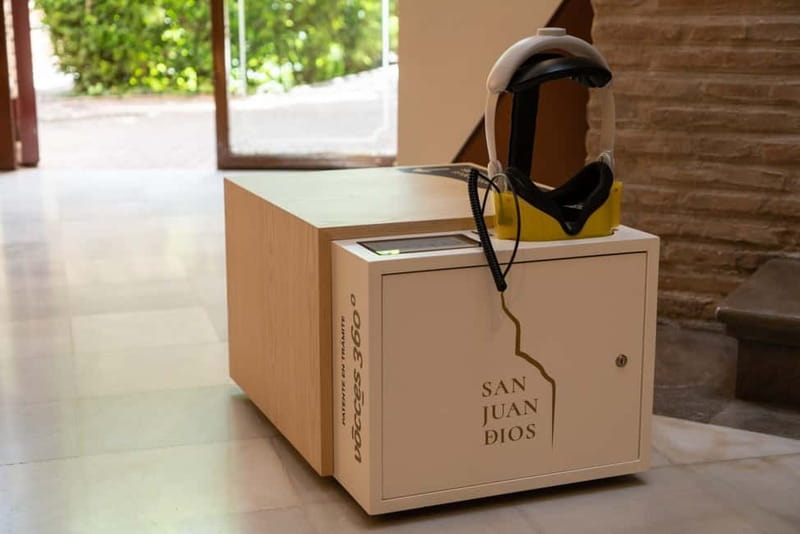
The VR experience adds another layer. The available information does not specify its exact format or length, so I would treat it as a supplement rather than the main reason to book. It is useful for adding a different view of the basilica, but the physical interior remains the heart of the experience.
How long to spend and how to fit it into your day
The ticket is valid for one day, and the visit itself works well as a one-hour stop. That timing makes the basilica easy to place between Granada’s Cathedral, nearby streets, or another central attraction.
If you are mainly interested in the visual impact, an hour should be enough to see the interior, listen to the principal audio stops, and try the VR experience. If you enjoy religious art, photography, or Baroque design, allow extra time so you are not forced to hurry through the chapels.
The basilica sits in the heart of Granada, which is a major advantage. You do not need to build a separate excursion around it. Instead, add it to a central walking day. The visit is compact enough to provide a change of pace after a larger monument.
Try not to judge the basilica only by its size. It may not take an entire afternoon, but the concentration of decoration makes it feel substantial. In Granada, a short stop can still be one of the day’s strongest memories.
Is the $11 ticket good value?
At $11 per person, the admission is good value for anyone interested in art, churches, or Granada’s religious past. You are paying for access to a highly decorated Baroque interior, an audio guide, and a VR experience. The included interpretation makes the price stronger than a basic entry ticket.
The value is even clearer if you compare it with the time required. You do not need to set aside half a day to justify the cost. An hour can give you a meaningful visit, and you can continue exploring Granada immediately afterward.
The price may feel less worthwhile if you are already tired of churches or if ornate decoration is not your style. The basilica is intense and visually crowded. It does not offer a quiet, empty interior with a few carefully framed works.
There may also be a small extra charge of €1 to light the rear altar area. That is optional, but you should know about it if you want the best view for photographs. The admission itself remains straightforward and does not include a live guide.
Who should book this experience?
I would recommend the basilica to you if you enjoy:
- Baroque interiors and gold ornament
- Religious art and sculpture
- Short cultural stops with a clear focus
- Audio guides rather than group tours
- Granada’s local history and traditions
- Accessible sights in a central location
It is also a good choice for independent visitors who want to explore at their own speed. You can pause, replay sections, and spend more time with the details that interest you.
Families and mixed-interest groups may find the VR element useful because it adds variety to the usual church visit. At the same time, the dense decoration may be more meaningful to adults or older children who are willing to listen to the explanations.
If you prefer personal conversation, ask questions, or detailed art history, note that no guided tour is included. The audio guide provides information, but it cannot respond to your interests in the way a live guide can.
The basilica is wheelchair accessible, which makes it a practical option for many visitors. Language support is also strong, with five audio guide choices.
Practical advice for a better visit
Start with a slow visual scan before beginning the audio. This lets you form your own first impression and prevents the commentary from making you look at only one detail at a time.
Keep the audio paused while you find each numbered stop. The guide is generally easy to use, but its flow may not always be obvious. This small adjustment can make the visit much less frustrating.
Look beyond the main altar. The side chapels, sculptures, paintings, and smaller relics explain why the basilica deserves more than a quick photograph at the entrance.
If you want to photograph the rear altar, consider the optional €1 lighting feature. Check the rules on photography and remain considerate during worship, since the basilica is still used for Mass.
Use the basilica as part of a central Granada day rather than treating it as an isolated destination. Its one-day validity and short visit length give you plenty of flexibility.
Should you book the Basilica of San Juan de Dios?
Yes, if you want an affordable and visually powerful cultural stop in Granada. The combination of Baroque art, San Juan de Dios’s story, an audio guide, and VR makes this more than a quick look inside a church.
Book it especially if you are deciding between this basilica and another religious monument. The interior is so ornate that it may become one of the most memorable churches you see in the city. Just remember that the visit is self-guided, the audio sequence can require patience, and the style is lavish rather than subtle.
At $11, the price is easy to justify for most independent visitors. Give it about an hour, listen carefully, and take time to look upward and behind the obvious focal points. That is where much of the basilica’s character reveals itself.
FAQ
How much does admission to the Basilica of San Juan de Dios cost?
The listed price is $11 per person. The ticket includes entry to the basilica, an audio guide, and a VR experience.
How long is the experience?
The ticket is valid for one day. The visit itself can be completed in about one hour, although you may want longer if you study the artwork closely.
Is a live guided tour included?
No. The experience includes an audio guide, but not a live guided tour.
Which languages are available for the audio guide?
The audio guide is available in Spanish, English, French, German, and Portuguese.
Is the basilica wheelchair accessible?
Yes, the activity information states that the Basilica of San Juan de Dios is wheelchair accessible.
Is the basilica still used for worship?
Yes. Mass is held daily at 8:30 in the morning according to the provided visitor information.
Can I cancel the ticket for a refund?
You can cancel up to 24 hours in advance for a full refund. A reserve now and pay later option is also available.
Just added around Spain
- Tenerife Scavenger Hunt and Highlights Self Guided Audio Tour★ 3.5 · 3 reviews
- Tarragona Scavenger Hunt and Highlights Self Guided Audio Tour★ 4.5 · 15 reviews
- Tarragona Cathedral Entrance + Audio Guide (WebApp)★ 4.5 · 36 reviews
- Seville Maestranza Bullring Tour with Audio Guide★ 3.5 · 6 reviews
- Seville Cathedral and La Giralda Entry Ticket with Audio Guide★ 3.0 · 9 reviews
- Royal Alcazar of Seville Entry Ticket with Audio Guide★ 4.0 · 42 reviews
- Sevilla Centre: City Walk Audioguide in 7 Languages on your Phone★ 3.0 · 2 reviews
- Essential Seville’s Ancient History: An Audio Tour★ 5.0 · 9 reviews
Church & Cathedral Audio Tours, compared.
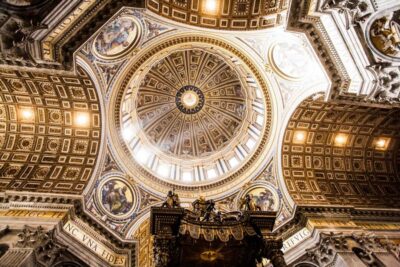
St. Peter’s Basilica & Dome Entry Ticket & Audio Tour
Read our review →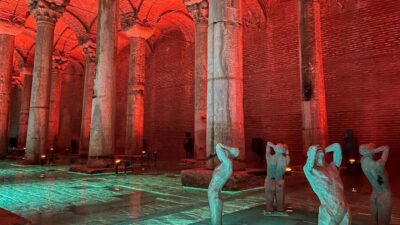
Basilica Cistern Fast-Track Entry and Audio Guide
Read our review →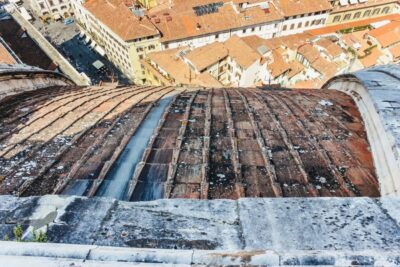
Cathedral & Brunelleschi’s Dome Ticket & Audio App
Read our review →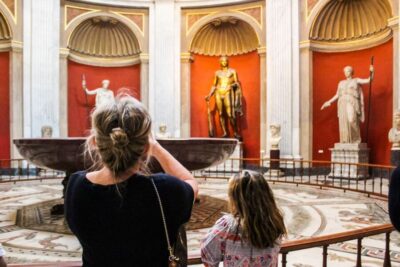
Vatican & Sistine Chapel Ticket with Optional Audio Guide
Read our review →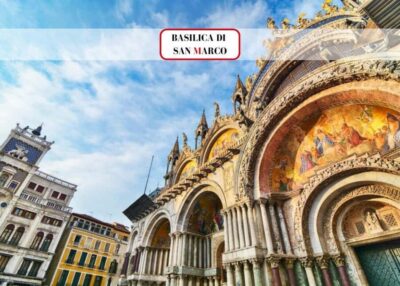
St. Mark Basilica Ticket, Audioguide+History Gallery
Read our review →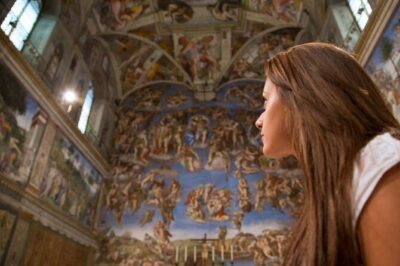
Skip the Line: Vatican & Sistine Chapel Ticket with Audio Guide
Read our review →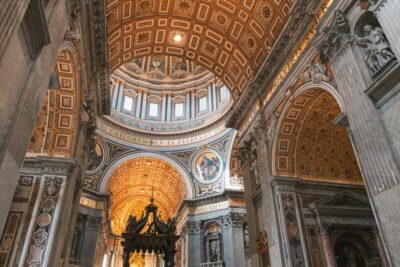
St. Peter’s Basilica with Optional Dome Ticket & Audioguide
Read our review →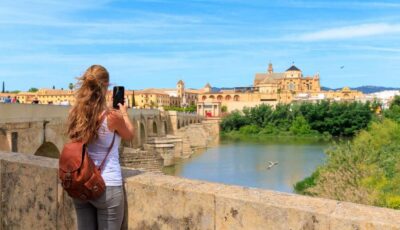
Browse the lists this tour appears in