
REVIEW · GERMANY AUDIO TOURS
Sanssouci Park: A Self-Guide Audio Tour of the Garden’s Landmarks
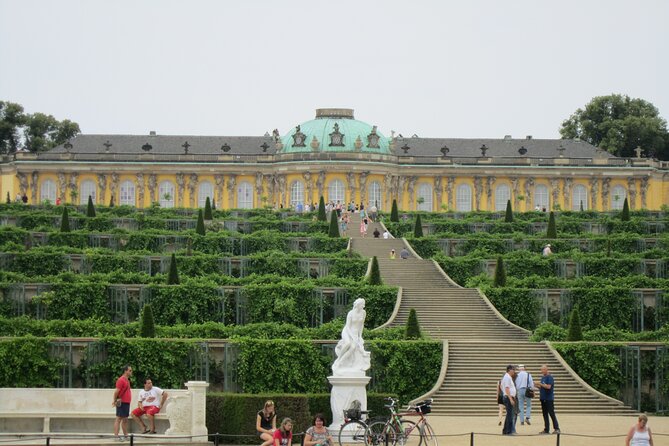
Sanssouci tells its stories in stone, flowers, and potatoes. This self-guided audio walk gives you a simple way to explore Potsdam’s grand royal park while learning why Frederick the Great preferred his small Sanssouci Palace to more formal residences. I like the GPS-guided route, which plays automatically as you walk, and the freedom to stop for photos or linger without holding up a group. The main drawback is that the tour does not include entry to the palaces, museums, or other attractions along the way.
The tour is produced by Jo Eckardt, founder of A Friend in Berlin, and it covers the park’s best-known sights in about one to one and a half hours. I also like the low price of $9.99, especially if you want historical context without paying for a private guide. You will need your own smartphone and headphones, and the non-refundable booking makes it wise to choose your date carefully.
Key points at a glance

- Start at the Obelisk: The walk begins near the Great Fountain and follows a route through Sanssouci Park toward the Church of Peace.
- Frederick the Great’s personal retreat: Learn why the Prussian king built the intimate Sanssouci Palace and spent so much of his time there.
- Odd details make the tour memorable: Look for potatoes on Frederick’s grave, undecipherable hieroglyphics, fake ruins, and statues that do not look very Chinese.
- A park full of variety: The route includes the Neptune Grotto, Historic Mill, Orangery Palace, Chinese House, Church of Peace, and more than 130,000 plants and flowers.
- Works offline: The VoiceMap app provides audio, directions, maps, and geodata without requiring an internet connection during the walk.
- Flexible timing: You can finish in about an hour or pause often for photographs, gardens, and palace visits.
Why Sanssouci Park works well with an audio guide
Sanssouci Park is not just a single palace with a garden behind it. It is a large collection of royal buildings, fountains, statues, orchards, terraces, and little surprises spread across a UNESCO World Heritage Site. Without context, you might admire the views and move on. With a story in your ears, the park becomes easier to understand.
This audio tour is designed for independent sightseeing. You are not following a guide holding a flag, and you are not tied to a departure time. After installing the VoiceMap app and entering your personal code, you follow spoken directions from the Obelisk near the Great Fountain.
The GPS system starts the next recording as you reach the right place. That matters in a park with many paths and monuments. You can keep your phone in your pocket rather than constantly checking a map, though you should still pay attention to your surroundings and the directions on screen.
The audio is available offline, along with the map and location data. Downloading everything before you arrive is still a sensible step. It removes the worry of poor signal and helps protect your mobile data.
Jo Eckardt, the producer and founder of A Friend in Berlin, is the voice behind the tour’s perspective. The material focuses on the people, oddities, and choices that shaped Sanssouci, not only on dates and architectural labels. That approach suits this park, where a small detail can be as interesting as a grand palace.
A few more audio tours around Germany worth a look
- Neuschwanstein Castle Skip-the-Line Ticket with Audio Guide
★ 4.4 · 1,388 reviews - Berlin: Solar Powered Sunset Catamaran Cruise & Audio Guide
★ 4.6 · 1,043 reviews - Berlin: Boat Sightseeing Cruise with Audioguide
★ 4.6 · 947 reviews
Beginning at the Obelisk and Great Fountain
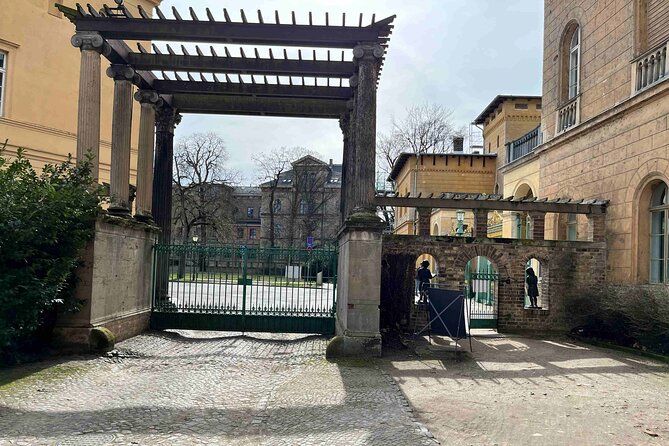
The meeting point is the Obeliskportal on Hauptallee, near the Great Fountain. This is a useful place to begin because the fountain area gives you an immediate sense of the park’s scale and royal ambition.
You will hear about the Great Fountain as you walk and have several chances to photograph it. The fountain is also a practical orientation point, since the opening section leads you past monuments toward the Church of Peace.
The route does not rush you through this first area. If you want the tour to last close to an hour, you can listen while walking at a steady pace. If you prefer photos, pause the audio and spend more time around the water, statues, and surrounding gardens.
That flexibility is one of the tour’s strongest features. A live guide might need to keep moving. Here, you can stop when the light is good or when a particular view catches your eye.
The Church of Peace and the route’s royal setting
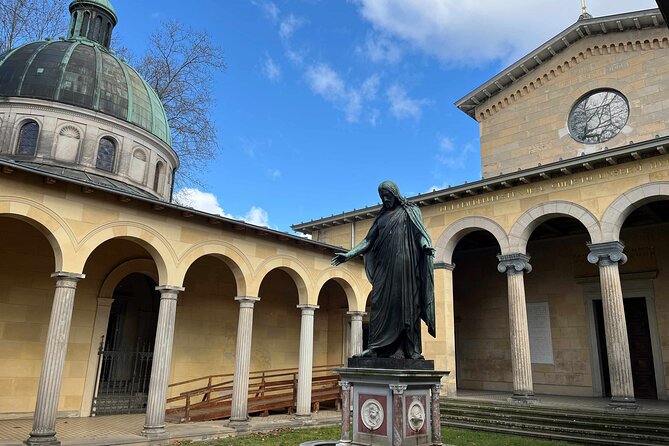
The tour passes toward the Church of Peace, where many Hohenzollern kings are buried. The church also serves as the end point, just outside the building at Am Grünen Gitter 3.
This gives the walk a clear shape. You begin near the Obelisk and Great Fountain, circle through the main sights of Sanssouci Park, and finish with a place tied directly to the Prussian royal family. The endpoint is not simply an arbitrary corner of the park.
You should note that the audio tour does not guide you inside the church or through other museums and attractions. If you want to enter, you must arrange and pay for that separately. The same applies to the palaces mentioned during the walk.
That distinction matters when you compare this $9.99 experience with a guided sightseeing tour. You are paying for the route, narration, directions, and historical interpretation, not admission tickets.
Frederick the Great and the meaning of Sanssouci

The central story is Frederick II, better known as Frederick the Great. The tour explains why he loved this part of Potsdam enough to build Sanssouci Palace and spend much of his time there.
The name Sanssouci is closely associated with the idea of living without worries, and the park reflects that more personal side of royal life. The palace was not presented simply as a huge public monument. Its importance comes from the king’s attachment to the place and the way he used it.
You will also visit Frederick’s grave. The detail to watch for is the potatoes placed on it. The audio explains why they are there, turning an otherwise solemn stop into one of the park’s most memorable small stories.
This kind of detail is where the tour earns its modest price. You can see a grave, fountain, or palace without narration. You cannot easily guess why potatoes became part of Frederick’s memorial unless someone explains the story.
Same place, a different route to walk:
- Füssen: Neuschwanstein Castle Express Ticket and Audio Guide
★ 3.9 · 788 reviews - Neuschwanstein Castle Ticket With Audio Guided Tour
★ 3.5 · 473 reviews - Spicy’s Gewürzmuseum Entry Ticket and Audio Guide
★ 4.3 · 203 reviews - Berlin: Panoramic Boat Tour with Bilingual Audio Guide
★ 4.1 · 136 reviews
Neptune Grotto and the park’s playful side
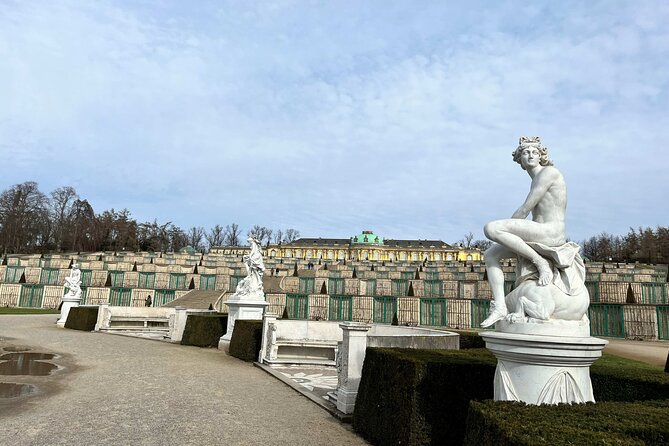
The Neptune Grotto adds a different mood. It is a monument decorated with thousands of crystals and shells, making it more theatrical than a straightforward garden feature.
The stop is a reminder that Sanssouci Park was designed to surprise. You move from formal royal spaces to objects that feel decorative, playful, or slightly strange. The audio helps you notice how these pieces fit into the larger design.
Do not expect an enclosed cave attraction or a long visit inside a major building. This is a monument along the walking route. The experience comes from seeing it in place and understanding its decorative purpose.
Hieroglyphics, ruins, and the Courtyard Castle
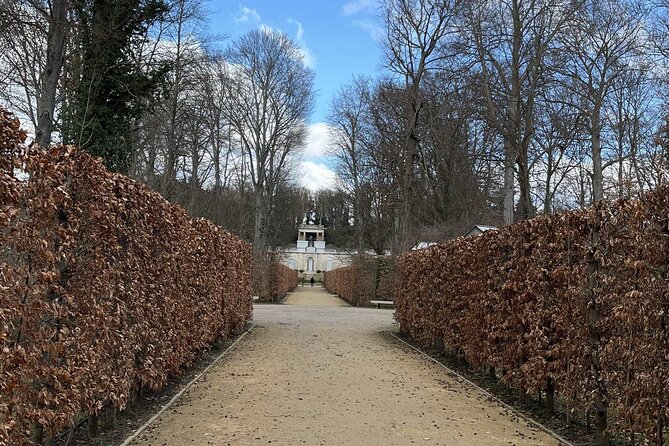
One of the more unusual sections deals with undecipherable hieroglyphics and fake ruins from Sanssouci’s Courtyard Castle. These details are useful because they show that the park is not a perfectly literal historical display.
Royal gardens often use symbols, invented fragments, and decorative references to create a mood. Here, you get a glimpse of that habit through features that look old or mysterious but were made as part of the park’s design.
The audio’s job is especially helpful at this point. Without an explanation, undecipherable markings and artificial ruins could simply seem like damaged leftovers. With the story, they become clues to the way royal spaces were imagined and decorated.
The Historic Mill and a working view of Sanssouci

The Historic Mill of Sanssouci brings a more practical building into the tour. It is a working mill with a beautiful view, offering a change from statues, fountains, and palace architecture.
The word working matters. The mill is not presented only as a decorative monument. It connects the royal park to useful labor and the older functions that existed around grand estates.
You may want to slow down here. The combination of the building, the view, and the audio makes this a good place to understand that Sanssouci was not only about royal display. It also depended on gardens, food production, maintenance, and working structures.
As with the other attractions, admission to the mill is not included. The audio tells you about it and leads you past it, but you will need to pay separately if you choose to go inside.
Orangery Palace and the later royal generation
The route also reaches Orangery Palace, built for Frederick William IV. He loved Sanssouci Park almost as much as his grand-uncle Frederick the Great.
This stop broadens the story beyond one king. Sanssouci continued to matter to later members of the Hohenzollern family, and the buildings show how the park’s role changed over time.
The Orangery is a strong contrast to the more intimate character associated with Sanssouci Palace. You get a sense of different royal tastes within the same park, even if you do not enter the building.
For you, the practical point is simple: allow extra time if you plan to explore the palaces in person. The advertised walking time covers the audio route, not a full tour of each attraction.
More than 130,000 plants, flowers, and useful royal gardening
The gardens are not background decoration. They are one of the main reasons to visit Sanssouci Park, and the audio points out more than 130,000 plants and flowers.
You will hear about fig trees, a vineyard, and the last tree from the Royal Nursery. These features give the gardens a working and historical dimension. They are not only arranged for pretty views. They reflect royal gardening, food production, collecting, and the care needed to maintain such a large estate.
The vineyard is especially fitting near Sanssouci Palace, where terraces and gardens help create the park’s distinctive character. Fig trees and nursery remains add small points of interest that you might miss if you were only walking from palace to palace.
Plant displays change with the seasons, so the exact appearance of the gardens will vary. The audio provides the historical framework, but the flowers and foliage you see depend on when you visit.
The Chinese House and statues with a twist
The Chinese House is one of the park’s most distinctive buildings. The tour explains why the statues around the teahouse do not look Chinese, which gives you a useful warning not to take the building’s name at face value.
The structure and its surrounding figures reflect European ideas about China rather than an exact representation of Chinese architecture or culture. That makes the stop valuable as a lesson in royal taste and eighteenth-century fashion.
You will likely notice the building’s unusual appearance before hearing the explanation. The audio then gives you a way to read the statues and design with more care. It is a good example of the tour’s method: see something odd, then learn why it was made that way.
Flora, statues, and the final walk to the church
The route passes Die Statue der Flora, a statue associated with flowers and gardens. It is a small stop, but it fits the park’s larger emphasis on planting, seasons, and decorative garden art.
The tour keeps moving through individual pieces rather than treating Sanssouci as one large blur. That helps you build a mental map of the park and remember specific points after the walk is over.
By the time you reach the Church of Peace, the main theme has become clear. Frederick the Great loved Sanssouci because it offered a personal retreat shaped by his interests, tastes, and ideas about leisure. Later royal family members continued to value the park, adding their own buildings and changes.
The ending outside the Church of Peace is convenient if you want to continue exploring Potsdam afterward. It also gives the tour a calm finish rather than dropping you near the starting point without a final landmark.
Timing, price, and practical value
At $9.99 per person, this is an inexpensive way to add structure and context to a visit that you might already be planning. A private guide would cost much more, while a simple walk through the park would give you no narration or directions.
The value is strongest if you want to explore independently and enjoy historical anecdotes. You get lifetime access in English, so you can use the tour before or after your booking date, and you can also use the virtual tour option at home.
The route takes about one to one and a half hours. You can complete it in roughly an hour if you walk steadily, or stretch it longer with photographs and stops. Palace and museum visits add separate time and fees.
The displayed rating is 3 out of 5 based on two reviews, so the score is based on a very small sample. The detailed praise focuses on the route through the gardens and the way the stories about the Prussian kings put the park into context. That matches the tour’s main strength: it provides a well-organized narrative without taking away your independence.
The main limitation is the non-refundable policy. You cannot change or cancel for a refund, so book only when your plans are firm. You also need to bring a charged smartphone and headphones, since neither is supplied.
Who should book this Sanssouci audio walk?
I would recommend it if you enjoy history but do not want a scheduled group tour. It suits independent visitors who like to pause, take photographs, enter attractions on their own terms, or finish early when the weather turns unpleasant.
It is also a good choice if you already plan to visit Sanssouci Park and want more than a general walk. The potatoes on Frederick’s grave, the fake ruins, the shell-covered Neptune Grotto, and the unusual Chinese House give you specific things to look for.
I would think twice if you want a guide inside every palace or museum. This experience stays outdoors and does not include admission. You should also skip it if you need a flexible cancellation policy or do not want to use your phone while sightseeing.
For $9.99, the tour offers a useful middle ground: more substance than a solo stroll, less structure than a live guide, and enough freedom to make the park your own.
FAQ
Where does the tour start?
It starts at the Obeliskportal on Hauptallee, 14469 Potsdam, near the Great Fountain.
Where does the tour end?
It ends just outside the Church of Peace at Am Grünen Gitter 3, 14469 Potsdam.
How long does the audio tour take?
The tour takes approximately one hour to one and a half hours.
What app does the tour use?
It uses the VoiceMap app, which is available for Android and iOS.
Does the tour work offline?
Yes. The audio, maps, and geodata are available offline.
Is the tour offered in English?
Yes. Lifetime access to the tour is provided in English.
Are palace and museum entrance fees included?
No. The tour does not include entry to museums or other attractions mentioned along the route. You must pay separately if you choose to enter them.
Do I need to bring headphones?
Yes. A smartphone and headphones are not included.
Is transportation included?
No. Transportation to and from the park is not included.
Can I cancel the booking for a refund?
No. The experience is non-refundable and cannot be changed for any reason.
Just added around Germany
- Explore Trier a Beautiful City Walk with Audio and GPS Guide★ 3.5 · 2 reviews
- Private audio book city rally around Stuttgart’s old town★ 3.5 · 3 reviews
- Stuttgart Scavenger Hunt and Highlights Self Guided Audio Tour★ 5.0 · 2 reviews
- Private audio book city rally around the Jahrhunderthalle in Bochum★ 5.0 · 12 reviews
- Private audio book city rally around the old town of Essen Kettwig★ 4.0 · 6 reviews
- Beautiful Baroque Potsdam: A Self-Guided Audio Tour★ 4.5 · 4 reviews
- Nuremberg Walking Tour with Audioguide on your Smartphone★ 5.0 · 3 reviews
- Nuremberg Scavenger Hunt and Highlights Self Guided Audio Tour★ 4.5 · 7 reviews
Germany Audio Tours, compared.
Neuschwanstein Castle Skip-the-Line Ticket with Audio Guide
Read our review →
Solar Powered Sunset Catamaran Cruise & Audio Guide
Read our review →

Füssen: Neuschwanstein Castle Express Ticket and Audio Guide
Read our review →
Neuschwanstein Castle Ticket With Audio Guided Tour
Read our review →
Spicy’s Gewürzmuseum Entry Ticket and Audio Guide
Read our review →

Französischer Dom Viewing Platform with Audio Guide
Read our review →Browse the lists this tour appears in