
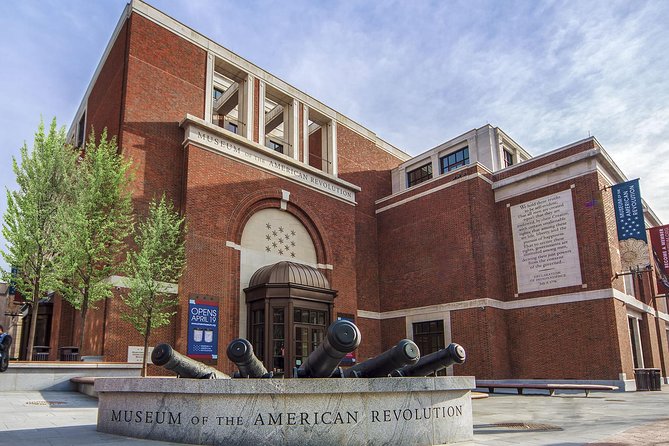
REVIEW · PHILADELPHIA AUDIO TOURS
Museum of the American Revolution Admission Ticket with Audio Guided Option
History feels close here. The Museum of the American Revolution turns a familiar school subject into a walk through wartime choices, fear, sacrifice, and political change. I especially like George Washington’s original headquarters tent and the thoughtful use of life-size scenes, films, and hands-on displays. The main drawback is that school groups can make some galleries noisy and crowded.
I also like the two consecutive days of admission, a welcome benefit when the exhibits hold your attention for three or four hours. The optional audio guide adds useful context in English, Spanish, or French, though you must choose your language when booking. If you want a quick museum stop between Independence Hall and the Liberty Bell, this may feel longer and more detailed than expected.
Key points to know before you go
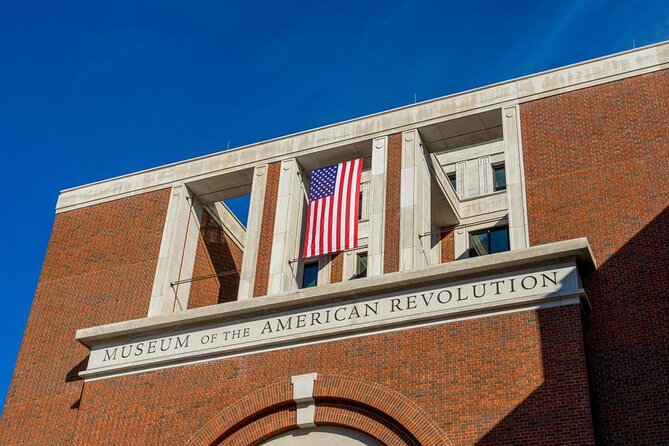
- Washington’s actual headquarters tent is the emotional centerpiece for many visitors.
- Two-day admission lets you split the museum into shorter visits or return for exhibits you missed.
- Life-size scenes and interactive displays make the Revolution accessible to children and adults.
- The introductory film gives you a clear timeline before you enter the main galleries.
- The audio guide is worth considering, especially if you want more explanation at your own pace.
- The museum is an easy walk from Independence Hall and the Liberty Bell in Philadelphia’s Historic District.
Why this museum belongs on a Philadelphia history day
Philadelphia’s Historic District is packed with famous Revolutionary sites. Independence Hall and the Liberty Bell give you the setting, but this museum gives you the wider story. It helps connect political arguments, military campaigns, Native American decisions, life at sea, and the difficult years after independence.
I like that the museum does not treat the Revolution as one neat afternoon in 1776. The exhibits follow George Washington’s journey and place the conflict in a larger frame. You see the pressure building before the Declaration of Independence, the uncertainty of war, and the hard work required after the fighting ended.
Admission costs $25 per person. That is fair value if you spend three or four hours inside, and the two-day ticket makes the price easier to justify. You can return on the following day without paying again, which is especially useful if you are also visiting Independence Hall, the Liberty Bell, and other nearby sites.
The museum is generally best for people who want more than a quick photo stop. Families, history fans, teenagers, and adults who enjoy well-presented exhibits should find plenty to hold their attention. A 15-year-old visitor reportedly made it a favorite stop among Philadelphia’s major historic attractions, which says something about its appeal to younger visitors.
More Museum Audio Tours in the USA
- Medieval Torture Museum Ticket with Audio Guide and Ghost Hunting
★ 5.0 · 962 reviews - Pearl Harbor Aviation Museum Ticket with Audio Tour and Shuttle
★ 4.5 · 58 reviews - Skip the Line: Mel Fisher Maritime Museum Admission Ticket and Audio Tour
★ 4.5 · 29 reviews
Start with the film, then follow the story
The introductory film is a smart first stop. It helps you get your bearings before the galleries begin presenting names, dates, arguments, and battle scenes. If your knowledge of the Revolution is a little rusty, the film gives you a useful timeline without asking you to read every label first.
From there, the museum follows the movement toward war and the choices made by different groups. You encounter authentic printed copies of the Declaration of Independence’s grievances against the King. Seeing the complaints in their original form helps turn a familiar document into a list of specific political frustrations.
The presentation is arranged so you can move through the events in order. That makes it easier to understand how the conflict developed, rather than viewing isolated objects with no connection between them. The displays offer a reasonable amount of detail without making every section feel like a textbook.
The audio option can add another layer. It is available in English, Spanish, or French, and you select the language at checkout. The audio commentary is useful if you want more background while looking at objects and scenes, but you can also explore at your own pace without it.
George Washington’s tent is the emotional center
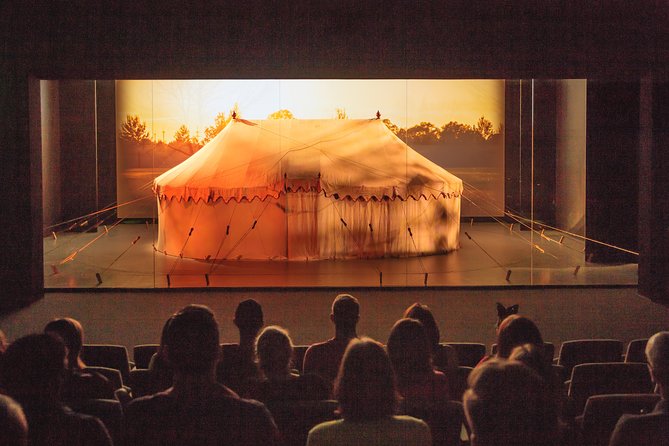
The museum’s most powerful object is George Washington’s original Revolutionary War headquarters tent. It is not simply another artifact behind glass. The tent connects the political story to the physical conditions of military life, command, uncertainty, and long stretches away from home.
Many people find this section especially moving. I can understand why. Washington’s tent is an unusually direct link to the war, and it gives the museum a quiet moment after the more theatrical galleries. Allow yourself time here rather than treating it as a quick photo opportunity.
The museum also follows Washington’s journey through the conflict, showing how his role developed during the war. This helps you see him as a commander dealing with difficult choices, not only as the finished portrait familiar from textbooks and currency.
A practical tip: if you are visiting with children or teenagers, use the tent as a pause between interactive sections. It gives everyone a chance to slow down and consider the human cost behind the larger political story.
Life-size scenes make hard decisions easier to understand
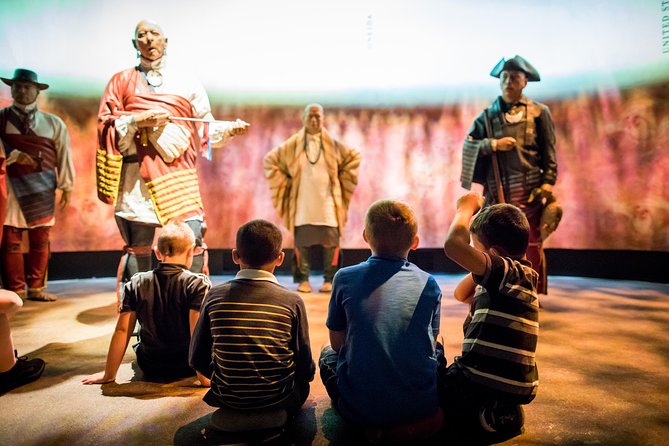
One of the museum’s strengths is its use of full-size reproductions and figures. Under the branches and lanterns of a life-size Boston Liberty Tree, you get a sense of how public protest and political identity were expressed before the war.
Another striking section presents members of the Oneida Indian Nation. You can listen to the debate surrounding their decision to break with the Iroquois Confederacy and support the American cause. This is an important reminder that Native nations faced their own political pressures and were not merely background figures in the colonial story.
The museum also presents the fear and confusion of battle. At the Battle of Brandywine display, a British infantry charge comes toward you in an intense, theatrical scene. It gives a physical sense of what a battlefield assault might have felt like, though visitors looking for a detailed military study may want more discussion of individual battles.
That is one of the museum’s small limits. The overall story is clear and engaging, but some military-history fans may want more detail about battle strategy and campaigns. The focus is broader, covering people, politics, society, and wartime experience rather than providing a battle-by-battle account.
Same place, a different route to walk:
- Los Angeles: Hop-On Hop-Off Bus Tour with Audio Guide
★ 3.7 · 2,030 reviews - City Sightseeing Hop-On Hop-Off Bus Tour with Audio Guide
★ 3.0 · 1,083 reviews - Gettysburg Battlefield Self-Guided Driving Audio Tour
★ 4.5 · 910 reviews - Joshua Tree National Park Self-Guided Driving Audio Tour
★ 4.5 · 762 reviews
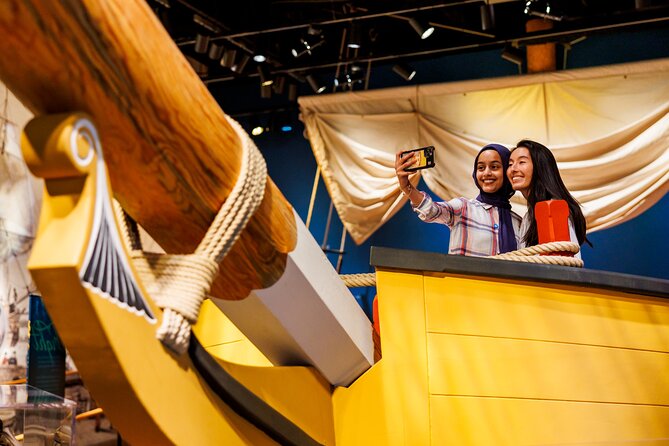
Try the privateer ship and follow the war beyond land
The replica privateer ship adds variety to the museum route. It shows that the Revolution was not fought only on fields and roads. Commerce, naval action, privateering, and control of the sea all shaped the conflict.
Climbing aboard a replica makes this part of the story more immediate. You are not just reading about ships in a case. You get a better sense of the cramped, active world connected to the war at sea.
The museum also examines what wartime life meant for ordinary people. The exhibits move beyond famous founders and military leaders to address the wider strain of the conflict. That broader approach is one reason I would allow at least three hours, even if you normally move quickly through museums.
The museum is larger than some first-time visitors expect. A three-hour visit gives you a solid look, while four hours allows more time with the audio guide, interactive stations, films, and special exhibitions. With the two-day ticket, you do not need to force every section into one long session.
Interactive exhibits work for adults and children

The museum uses films, graphics, three-dimensional models, replicas, and touch-based displays to keep the galleries active. One young visitor described the experience as like walking through a video, which captures the museum’s visual style well.
I would recommend it for families because the exhibits offer several ways to learn. Children can focus on the scenes and interactive elements, while adults can spend longer with the written material and historical context. Children must be accompanied by an adult, so plan to stay with younger visitors throughout the visit.
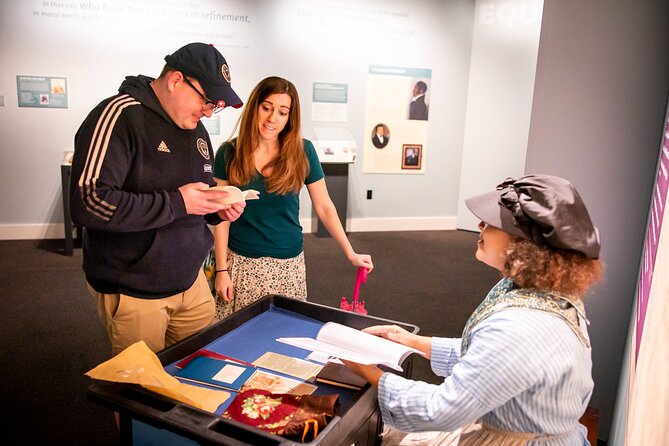
The displays are attractive without relying only on decoration. They use visual storytelling to show how people experienced the period. Several visitors also praised the helpful staff at tables on the second floor. These informal conversations can add a human touch to a museum visit, especially when you have a question that the labels do not answer.
The tradeoff is noise. School groups may be present, and the museum can feel busy around popular displays. If you prefer quiet galleries, arrive with patience and use the two-day entry to return at a calmer time.
What the museum covers well, and what it leaves lighter
The museum does a good job showing that the Revolution involved competing loyalties and difficult decisions. The Oneida presentation is one example. The Declaration display, the Liberty Tree, Washington’s tent, and the privateer ship each offer a different way into the subject.
It also looks beyond July 4, 1776. You can learn about events before and after that date, which helps prevent the common mistake of treating independence as the entire story.
Some subjects receive less attention than certain history fans may want. The Gaspee affair, an early act of resistance involving the burning of a British ship, was specifically missed by one visitor. Others wanted more coverage of figures such as Casimir Pulaski and Tadeusz Kościuszko, both important participants in the war.
That does not make the museum weak. It simply tells you what kind of museum this is. It offers a broad, accessible account of the Revolution through objects, people, scenes, and interactive storytelling. It is not designed as a complete reference work on every event or military figure.
Timing, ticket value, and nearby sights
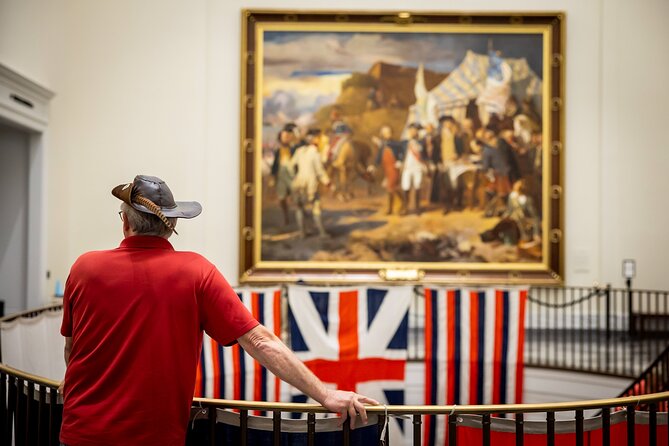
Plan on three to four hours if you want to look carefully. You can move faster, but doing so would undercut the museum’s best feature: the chance to connect many different parts of the story.
The $25 admission is strongest value when you use both days. You might spend one day following the main sequence and return the next day for special exhibitions, the audio guide, or displays you passed too quickly. If your Philadelphia schedule is tight, the ticket still makes sense if you enjoy museums and can spare a substantial part of your day.
The location works well in a Historic District itinerary. The museum is an easy walk from the Liberty Bell and Independence Hall, so you can pair it with those sites without arranging extra transportation. It is also near public transportation.
The ticket is mobile, and skip-the-line entry saves time at the admission point. The activity has a maximum of 14 participants, though the museum itself may still feel busy when school groups or large organized groups are present.
Food and drinks are not included, so plan your meal separately. Service animals are allowed, and most people can participate. Confirmation is provided at booking.
Who should book this experience
I would choose this museum if you want an organized, visual explanation of the American Revolution, especially one that works for mixed-age groups. It is also a strong choice for anyone who has already seen Independence Hall and wants more context about the people and events surrounding it.
The audio guide is a good add-on for adults, serious history fans, and anyone who likes to set their own pace. It is also helpful if you want more explanation without joining a fixed group. Select English, Spanish, or French when you book.
You may want to think twice if you only have one hour in Philadelphia or if your main interest is detailed battlefield history. The museum needs time, and its broad social and political approach means some military subjects and individual figures receive limited attention.
Free cancellation is available when you cancel at least 24 hours before the scheduled start time. Changes or cancellations inside that window are not refunded, and a weather-related cancellation may result in another date or a full refund.
Should you book the Museum of the American Revolution?
Yes, if you can spare at least three hours and want more than a quick look at famous Philadelphia landmarks. Washington’s tent, the life-size scenes, the privateer ship, and the clear chronological layout make this one of the city’s most useful history stops.
The two-day ticket is the deciding advantage. It lets you visit without racing, and the audio guide can make the displays even more rewarding. I would book it for families, teenagers, first-time Philadelphia visitors, and anyone who wants the Revolution presented through real objects and human choices.
Skip it only if your schedule is extremely short or you want a narrow focus on battles and generals. For most history-minded visitors, $25 is a reasonable price for a large, well-organized museum with enough material to justify a return visit.
FAQ
How much does admission cost?
Admission costs $25 per person.
How long should I plan for the museum?
Plan on approximately three to four hours for a thorough visit.
Is the ticket valid for more than one day?
Yes. Admission is valid for two consecutive days.
Is an audio guide available?
Yes. An audio-guided option is available when booking.
Which languages are offered for the audio guide?
The audio guide is available in English, Spanish, and French. You should select your preferred language during checkout.
Is the introductory film included?
Yes. Admission includes an introductory film about the American Revolution.
Is the museum near Independence Hall and the Liberty Bell?
Yes. The museum is an easy walk from both Independence Hall and the Liberty Bell.
What is the cancellation policy?
You can receive a full refund if you cancel at least 24 hours before the experience start time. Cancellations within 24 hours are not refunded.
Just added around the USA
- Self Guided Driving Audio Tour of Saguaro National Park★ 3.0 · 4 reviews
- Self-Guided Audio Driving Tour of Mount Lemmon★ 5.0 · 4 reviews
- Saguaro National Park Self-Guided Audio Tour★ 3.5 · 11 reviews
- A Self Guided Audio Tour in Tombstone★ 4.0 · 11 reviews
- Catskills Scenic Byway Self-Guided Driving Audio Tour★ 4.0 · 9 reviews
- Big Bend National Park Self Guided Audio Tour Guide★ 5.0 · 12 reviews
- Self-Guided Audio Driving Tour in Catskills Scenic Byway★ 4.5 · 7 reviews
- Shiloh Battlefield Self-Guided Driving Audio Tour★ 4.0 · 9 reviews
Museums, compared.
Uffizi Priority Ticket & Masterpieces Audio App
Read our review →
Louvre Museum Hosted Entry and Mona Lisa Audioguide
Read our review →
St. Mark Basilica Ticket, Audioguide+History Gallery
Read our review →
Borghese Gallery Skip-the-Line Ticket & Audioguide
Read our review →
Borghese Gallery Ticket + Audioguide or Guided Tour
Read our review →
Orsay Museum Entry Ticket and Digital Audio Guide App
Read our review →
Uffizi Gallery Timed Entry Ticket & Audio Guide
Read our review →
Acropolis Museum Ticket with optional Audio Guide
Read our review →Browse the lists this tour appears in