
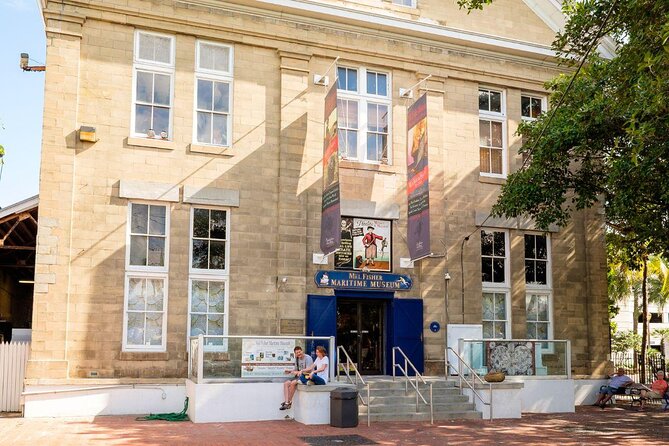
REVIEW · KEY WEST AUDIO TOURS
Skip the Line: Mel Fisher Maritime Museum Admission Ticket and Audio Tour
Treasure has a complicated story. At the Mel Fisher Maritime Museum, you see gold and silver from Spanish treasure galleons, but you also confront the painful history of the Henrietta Marie and the transatlantic slave trade. I like the museum’s strong mix of treasure and serious history, and I like having the freedom to visit for an hour or stay for four. The main consideration is that the audio tour is in English, and some displays may feel heavy for young children.
This is a good Key West stop when the sun is fierce and you want something indoors with real substance. The museum costs $19.50 per person, includes admission and one English audio tour, and is open Tuesday through Sunday from 10 a.m. to 4 p.m. You can walk in with a mobile ticket, and the visit usually works best when you give it two hours rather than rushing through the cases.
Key points to know before you go
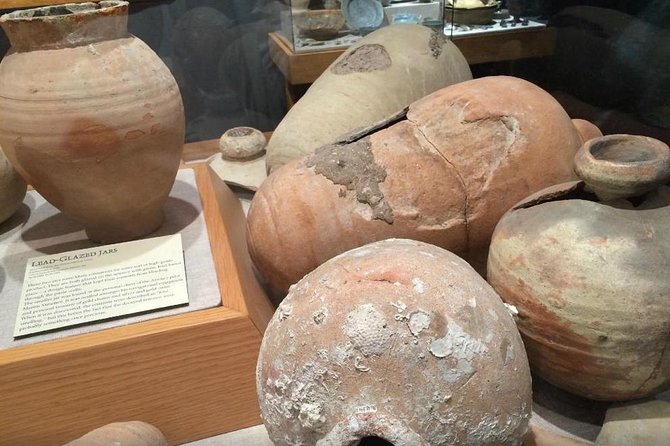
- Mel Fisher’s Atocha treasure: See gold, silver, coins, and other objects recovered from Spanish treasure galleons found by Fisher and his crew.
- A difficult story on the second floor: The Henrietta Marie exhibits use shackles and other artifacts to explain the slave trade with a sober, respectful tone.
- An English audio tour is included: It focuses on the history and treasure gallery, giving you more context than the display labels alone.
- A museum with a legal battle attached: Learn how Fisher fought government efforts to retain recovered artifacts, a dispute that reached the US Supreme Court.
- Plan for one to four hours: Two hours is a sensible target if you want to see the major galleries without hurrying.
- Small-group admission: The activity has a maximum of 15 people, although you explore the museum at your own pace.
Why this Key West museum is more than a treasure room
The Mel Fisher Maritime Heritage Museum tells two stories at once. One is the dramatic tale of shipwreck hunting, lost Spanish treasure, and a long fight to keep what was found. The other is a much darker account of forced migration, slavery, and the people whose lives were tied to the sea in ways they did not choose.
That contrast gives the museum its value. You may arrive expecting a quick look at coins and glittering metal. Instead, the exhibits ask you to consider who owned these objects, how they reached the ocean, and what happened to the people aboard the ships.
The museum also puts a famous Key West figure at the center of the story. Mel Fisher became a local folk legend through his search for Spanish treasure. His battles with the government over the recovered artifacts eventually reached the US Supreme Court, so the museum is not only about underwater finds. It is also about persistence, ownership, law, and the limits of treasure hunting.
I like this approach because it gives the bright objects some context. Gold is easy to admire. Understanding the human cost behind a shipwreck takes more effort, but it makes the visit more meaningful.
More Museum Audio Tours in the USA
- Medieval Torture Museum Ticket with Audio Guide and Ghost Hunting
★ 5.0 · 962 reviews - Museum of the American Revolution Admission Ticket with Audio Guided Option
★ 4.5 · 187 reviews - Pearl Harbor Aviation Museum Ticket with Audio Tour and Shuttle
★ 4.5 · 58 reviews
The Atocha galleries and Spanish treasure
The Spanish Treasure Galleons galleries are likely to be your first major draw. Here, you can see artifacts connected with the discoveries made by Mel Fisher and his crew. The exhibits include Spanish coins in the New World and other recovered objects that show how much material can survive beneath the sea.
The displays are arranged with enough space to make the objects readable. That matters in a museum built around small items. Coins, metal pieces, and personal objects can blur together when packed too tightly behind glass. Here, the signage and presentation help you pause over individual pieces.
I especially like the way this part of the museum turns a famous treasure story into a sequence of questions. How were the objects carried? Why were they on the ship? How did they survive? What did it take to find them? The experience becomes less about simply spotting something valuable and more about understanding the work behind the discovery.
The audio tour is included for the history and treasure gallery. Use it. The objects are interesting on their own, but the story of the wrecks, Fisher’s search, and the legal dispute gives the collection much more weight.
The audio tour is in English, so this experience is best suited to people comfortable listening to English explanations. If you prefer to read every label at your own pace, you can still do that, but the audio adds useful background.
The Henrietta Marie and the human cost of the sea
The Henrietta Marie gallery shifts the mood sharply. This English merchant slave ship dates to 1699. The wreck was discovered in 1972 and only partly excavated until later work brought more of its story to light.
The artifacts include shackles, which are among the most difficult objects in the museum to face. They are plain, physical reminders of the violence built into the transatlantic slave trade. The subject is handled respectfully, without turning suffering into spectacle.
This section also connects the ship to Key West’s African history. The Key West African Cemetery exhibit gives you a stronger sense of the town’s role in that larger story. The Slave Ship exhibit and the cemetery display are not easy stops, but they are important ones.
I would allow extra time here. The Atocha galleries may catch your eye first, yet the Henrietta Marie material deserves slower attention. A short stop can leave you with only the shock of the shackles. A longer pause lets you understand the ship, the trade, the investigation, and the people affected by it.
Families should use their judgment. The museum can help foster a child’s interest in history, especially for older children who are already curious about ships and the past. Younger children may focus on the shiny objects and miss the meaning, while the slave trade exhibits may be upsetting. The museum does not make this topic light, and that is appropriate.
Pirates, shipwreck science, and conservation work
The museum also covers the real pirates of the Caribbean. This section helps separate popular pirate stories from the practical world of ships, cargo, danger, and survival at sea.
The science of shipwrecks adds another useful layer. It explains how history is recovered from underwater sites and how objects are studied after they leave the sea. Shipwreck archaeology is not simply a matter of bringing treasure to the surface. The material can be fragile, damaged, or changed by long exposure to salt water.
You can also take a lab tour and see how conservation reveals history every day. The supplied information does not specify the exact schedule or whether the lab tour requires anything beyond museum admission, so ask at the museum when you arrive if this is a priority.
This is one of the better reasons to visit even if you are not fascinated by coins. The conservation work shows how evidence becomes a story. An object is cleaned, identified, compared, and placed in context. That process turns a piece of wreckage into something you can understand.
Same place, a different route to walk:
- Los Angeles: Hop-On Hop-Off Bus Tour with Audio Guide
★ 3.7 · 2,030 reviews - City Sightseeing Hop-On Hop-Off Bus Tour with Audio Guide
★ 3.0 · 1,083 reviews - Gettysburg Battlefield Self-Guided Driving Audio Tour
★ 4.5 · 910 reviews - Joshua Tree National Park Self-Guided Driving Audio Tour
★ 4.5 · 762 reviews
A visit that works at your own pace
The ticket gives you flexibility. The estimated visit lasts from one to four hours, a wide range that reflects how differently people use the museum.
If you have only an hour, focus on the Atocha treasure gallery, the Henrietta Marie displays, and the audio tour highlights. If you have two hours, you can read the signage, listen carefully, and give the African Cemetery and shipwreck science exhibits the attention they need.
Four hours would suit someone who reads every panel, takes time with the audio, and wants to explore the conservation material in detail. You do not need to follow a rigid group schedule. That is useful in Key West, where the heat, weather, and other plans can easily change your day.
The museum is open Tuesday through Sunday, 10 a.m. to 4 p.m., during both 2025 and 2026. It is closed on Mondays according to the listed schedule, so check your day before setting out.
The activity has a maximum of 15 people. That is a small number, but the experience is still primarily a self-guided museum visit rather than a continuous guided tour. The mobile ticket makes entry simple, and one direct account describes walking right in.
Is $19.50 a fair price?
At $19.50 per person, the admission is reasonable if you spend around two hours inside. The value comes from the combination of a substantial museum collection, the English audio tour, and several subjects beyond the main treasure story.
You are not paying only to see gold and silver. You are paying for access to the Atocha material, the Henrietta Marie collection, the Key West African Cemetery exhibit, the pirate displays, the shipwreck science section, and the story of Fisher’s legal struggle.
The price may feel less attractive if you plan to rush through in 45 minutes. In that case, you will see the objects but miss much of the context that makes the museum worthwhile. I would book it when you can protect at least 90 minutes, and preferably two hours.
There is also a DVD available for purchase, but it is not included. Treat that as an optional souvenir rather than part of the ticket value.
Who will enjoy this museum most?
I would recommend this experience to anyone interested in maritime history, treasure hunting, archaeology, shipwrecks, or Key West’s less polished past. It works especially well for people who like museums with a clear human story rather than rooms of unexplained objects.
Families with older children may find it useful for starting conversations about exploration, historical evidence, and slavery. Children who love pirates or treasure may be drawn in by the Atocha displays, while the audio tour can give the visit more structure.
The museum is also a sensible choice on a hot Key West afternoon. One direct account valued it as a cool break from the heat, and that is practical advice. You get relief from the sun without settling for a shallow indoor attraction.
I would be more cautious if you want a light, playful outing. The Henrietta Marie and African Cemetery exhibits deal with slavery and death. They are important, but they change the emotional tone of the visit.
What I like most, and what to keep in mind
My favorite part is the balance between the Atocha treasure and the Henrietta Marie story. The gold and silver provide an immediate hook, while the slave ship exhibits force you to look beyond the excitement of discovery.
I also like the audio tour because it lets you explore independently while still giving the main gallery a clear narrative. The museum has enough material to reward a slow visit, but you are not locked into a long lecture or fixed departure time.
The main drawback is language. The audio tour is offered in English only, and the supplied information does not list other language options. If you need another language, you may have to rely on the written displays.
The other consideration is emotional. The shackles and slavery exhibits are not decorative history. They deserve attention and may not suit every child or every mood. Go in expecting both wonder and discomfort.
For a smoother visit, arrive with a simple plan:
- Start with the Atocha and Spanish treasure galleries.
- Use the audio tour for the history and treasure material.
- Give the Henrietta Marie exhibits more time than a quick glance.
- Read the Key West African Cemetery material carefully.
- Ask about the lab tour if conservation interests you.
- Leave time for the pirate and shipwreck science sections.
Should you book the Mel Fisher Maritime Museum ticket?
Book it if you want a serious, well-priced indoor museum visit with real artifacts and an English audio guide. The $19.50 cost is fair when you stay for two hours, and the museum gives you far more than a simple display of recovered treasure.
I would especially choose it for a hot afternoon, a family with history-minded older children, or anyone curious about the Atocha and the people connected to these wrecks. Skip it only if you want a purely cheerful attraction, need a non-English audio tour, or have less than an hour to spare.
FAQ
Where is the experience located?
It takes place at the Mel Fisher Maritime Heritage Museum in Key West, USA.
How much does admission cost?
The listed price is $19.50 per person.
What does the ticket include?
It includes museum admission and one English audio tour covering the history and treasure gallery.
How long should I plan to stay?
The visit can take approximately one to four hours. Around two hours gives you time to see the main galleries without rushing.
When is the museum open?
The museum is open Tuesday through Sunday from 10 a.m. to 4 p.m. The listed hours apply for 2025 and 2026.
Is the audio tour available in languages other than English?
No other language is listed. The included audio tour is in English.
Can children participate?
Most people can participate, and the experience can help foster a child’s interest in museums and history. Some exhibits address slavery and may be difficult for younger children.
Can I cancel for a full refund?
Yes. You can cancel at least 24 hours before the experience start time for a full refund. Cancellations or changes made less than 24 hours before the start time are not accepted for a refund.
More Skip-the-Line Tickets in the USA
- Prague: Skip-the-line Castle Ticket and Optional AudioGuide
★ 4.3 · 11,121 reviews - Topkapi Palace and Harem Skip-the-Line-Tickets & Audio Guide
★ 4.3 · 4,745 reviews - Pantheon Reserved Entry Ticket with Audio Guide
★ 4.0 · 4,486 reviews - Rome: Borghese Gallery Skip-the-Line Ticket & Audioguide
★ 4.3 · 4,318 reviews
Just added around the USA
- Self Guided Driving Audio Tour of Saguaro National Park★ 3.0 · 4 reviews
- Self-Guided Audio Driving Tour of Mount Lemmon★ 5.0 · 4 reviews
- Saguaro National Park Self-Guided Audio Tour★ 3.5 · 11 reviews
- A Self Guided Audio Tour in Tombstone★ 4.0 · 11 reviews
- Catskills Scenic Byway Self-Guided Driving Audio Tour★ 4.0 · 9 reviews
- Big Bend National Park Self Guided Audio Tour Guide★ 5.0 · 12 reviews
- Self-Guided Audio Driving Tour in Catskills Scenic Byway★ 4.5 · 7 reviews
- Shiloh Battlefield Self-Guided Driving Audio Tour★ 4.0 · 9 reviews
Museums, compared.
Uffizi Priority Ticket & Masterpieces Audio App
Read our review →
Louvre Museum Hosted Entry and Mona Lisa Audioguide
Read our review →
St. Mark Basilica Ticket, Audioguide+History Gallery
Read our review →
Borghese Gallery Skip-the-Line Ticket & Audioguide
Read our review →
Borghese Gallery Ticket + Audioguide or Guided Tour
Read our review →
Orsay Museum Entry Ticket and Digital Audio Guide App
Read our review →
Uffizi Gallery Timed Entry Ticket & Audio Guide
Read our review →
Acropolis Museum Ticket with optional Audio Guide
Read our review →Browse the lists this tour appears in