
REVIEW · ITALY AUDIO TOURS
Perugia Walking Tour with Audio and Written Guide by a local
Perugia rewards slow walking. This self-guided tour gives you a clear route through the Umbrian capital, from the ancient Etruscan Arch to the underground passages of Rocca Paolina, for only $7.81 per person. I like the low price and the freedom to pause for lunch, linger in a church, or finish the route another day. I also like that the guide includes both audio and written material in five languages, plus advice on local restaurants and Perugia’s famous Baci chocolate.
The trade-off is simple: this is not a personal walking tour. You use your own phone, internet connection, and possibly headphones, while the app and map handle the directions. The narration can be brief, and some users have found themselves switching between the map and written information. Still, with a 4.7 rating and 94 percent recommendation rate, it offers a strong amount of sightseeing for very little money.
Five useful things to know before you go
- You can set your own pace: The route takes about three to four hours, but you can stop for food, photos, shopping, or a longer look inside a church.
- The route links Perugia’s key sights: You visit the Etruscan Arch, medieval aqueduct, Etruscan Well, Piazza IV Novembre, Cathedral of San Lorenzo, Corso Vannucci, Rocca Paolina, and Borgobello viewpoint.
- The price is unusually modest: At $7.81 per person, the tour costs less than many short guided walks, while still providing history, directions, and restaurant suggestions.
- You need your phone ready: The digital guide requires an internet-connected smartphone. Headphones are optional and not supplied.
- It is available in five languages: Audio and text are offered in English, Spanish, Italian, German, and French.
- You can begin flexibly: The stated start point is Via Ulisse Rocchi, 39, but the digital format allows you to start elsewhere if you prefer.
Why this cheap Perugia tour works
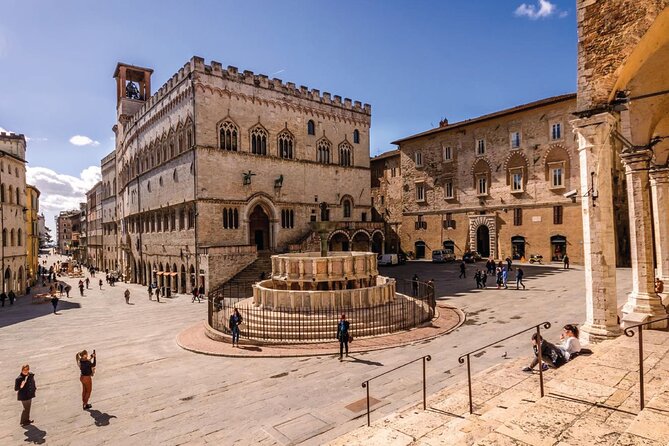
Perugia is not a city you understand from one grand monument alone. Its character comes from layers: Etruscan walls, medieval streets, a cathedral square, Renaissance power struggles, and a papal fortress built over part of the older city.
That makes a self-guided walk a good fit. You move between the sights in a sensible order, listen when you want, and stop when something catches your eye. The guide gives you enough background to make the buildings meaningful without requiring you to keep up with a group.
The cost is the main attraction. For $7.81, you receive a digital guide with audio, written explanations, historical notes, curiosities, and food advice. You do not pay for a live guide, entry to most stops, or a fixed departure time.
I would not expect polished storytelling at the level of a private guide. The written explanations may be more useful than the audio for some people, and the route directions are general rather than turn-by-turn. One particularly useful tip is to rely on Google Maps as a backup when the next street is not obvious.
More Audio Walking Tours in Italy
- Florence: 2.5 hour Audio Guided Walking Tour led by Host
★ 4.6 · 293 reviews - Verona Walking Tour with Audio and Written Guide by a Local
★ 4.5 · 157 reviews - Bologna Walking Tour with Audio and Written Guide
★ 4.5 · 132 reviews
Starting at the Etruscan Arch on Via Ulisse Rocchi
The route begins at the Etruscan Arch, also called the Arch of Augustus. It dates probably to the third century BC and once formed part of Perugia’s roughly three-kilometer ancient city walls.
This is a strong starting point because it immediately places you in the city’s oldest layer. The gate sits on the north side of the historic center, while Porta Marzia marks the southern side. The guide explains that contrast, helping you see Perugia as a fortified Etruscan city before it became a medieval and papal center.
There is no admission charge here. Allow around 10 minutes, though you may want longer if you are getting your bearings or taking photos.
The route begins at Via Ulisse Rocchi, 39, but a major benefit of this format is flexibility. You do not have to treat the starting location like a formal meeting point with a group waiting for you. If your day begins elsewhere in the center, you can use the digital route from your current position.
Walking the medieval aqueduct

The next stop is the Acquedotto Medievale, a four-kilometer aqueduct built beginning in 1254. Its purpose was to carry water from Monte Pacciano to the Fontana Maggiore in the city center.
You spend about 10 minutes here, and admission is free. The stop is especially useful because it shows how practical medieval engineering shaped the city. Perugia’s steep historic center can feel like a series of grand viewpoints and stairways, but this aqueduct reminds you that water supply was one of the city’s major challenges.
The guide connects the aqueduct with the Fontana Maggiore, which you encounter later near Piazza IV Novembre. That connection gives the walk a sense of purpose rather than making each sight feel like an isolated photo stop.
Use comfortable shoes. The route is a walking tour through an old hill city, and you will be moving between different levels of the historic center.
Going underground at the Etruscan Well

The Pozzo Etrusco, or Etruscan Well, is one of the most distinctive stops. It lies beneath Palazzo Sorbello in the historic center and dates to the second half of the 16th century according to the supplied description. The Bourbon di Sorbello family acquired the palace in 1780, and the building remains in the hands of their descendants.
You have around 20 minutes here. Unlike most stops on the route, the well requires a separate admission ticket, so budget for that extra cost.
This is also the point where you should pay attention to the difference between the attraction and the surrounding buildings. The well is underground, while Palazzo Sorbello adds a layer of aristocratic history above it. The audio and written notes help explain why a city already full of churches and squares still has important sights below street level.
Because the ticket is not included, check the current entry arrangements before you arrive. The tour price covers the digital guide, not every attraction along the way.
Same place, a different route to walk:
- Rome: Pantheon Fast-Track Ticket and Official Audioguide
★ 4.5 · 27,353 reviews - Rome: Colosseum & Forum with Audio Guide App -Optional Arena
★ 4.2 · 24,770 reviews - Florence: Timed Entry to Michelangelo’s David + Audio App
★ 4.6 · 19,496 reviews - Rome: City Sightseeing Hop-on Hop-off Bus with Audioguide
★ 4.0 · 16,045 reviews
Reaching Piazza IV Novembre
After the underground well, the route brings you to Piazza IV Novembre, the symbolic center of Perugia. This is where political, religious, and public life have met for centuries.
The square also remains an active event space. It hosts Umbria Jazz concerts, Eurochocolate stands, and conferences connected with the International Journalism Festival. That modern use matters. You are not looking at a preserved square frozen in the past. You are seeing the place where Perugia still gathers.
The suggested stop lasts about 20 minutes, and admission is free. This is a good place to pause the audio, sit for a moment, and take in the buildings around you. The guide’s historical notes are useful here because the square brings several periods together in one compact space.
Seeing San Lorenzo Cathedral
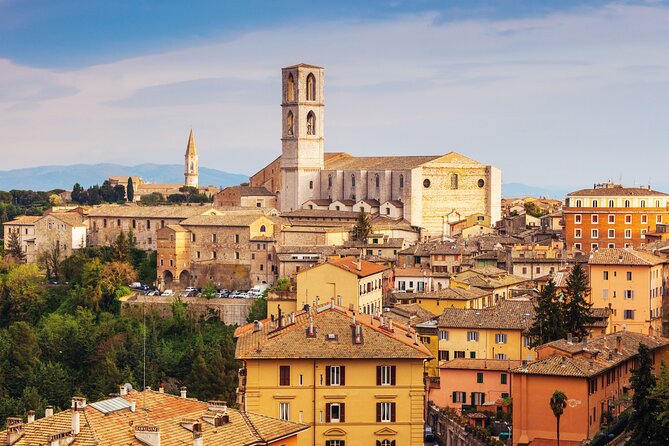
The Cathedral of San Lorenzo occupies the site of an earlier 12th-century Romanesque church. Beneath that area lie traces of the ancient Etruscan and Roman acropolis.
Allow about 30 minutes. Entry is free according to the tour details, making this one of the best-value stops on the route.
The cathedral is not simply a church visit. It represents Perugia’s habit of building over its own past. The guide helps you connect the visible medieval church with the older layers beneath it, a useful theme for understanding the city as a whole.
Give this stop enough time. A rushed visit will reduce it to a quick look inside, while the written guide lets you read at the speed that suits you. If audio narration cuts out, as it can with a phone-based guide, the text provides a dependable backup.
The Loggia of Braccio Fortebracci
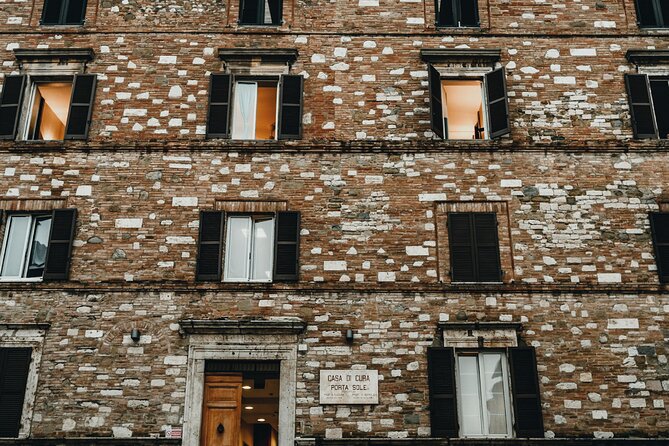
The Loggia di Braccio Fortebracci introduces one of Perugia’s most forceful political figures. Braccio Fortebracci da Montone expanded his control across much of central Italy and took Perugia in 1416 after defeating Carlo I Malatesta.
In 1423, a year before his death, Braccio commissioned the Bolognese architect Fioravante to build a loggia overlooking Piazza IV Novembre. The structure included a staircase leading to Braccio’s residence.
The stop takes about 15 minutes and costs nothing to enter. It is a compact visit, but the story gives the square a sharper political edge. Perugia was not only a religious center. It was also a prize fought over by powerful military leaders and rival authorities.
The digital guide is at its best when it supplies this sort of context. You can look at an architectural detail and understand why it was built, who ordered it, and what it said about power.
Walking Corso Vannucci toward the fortress
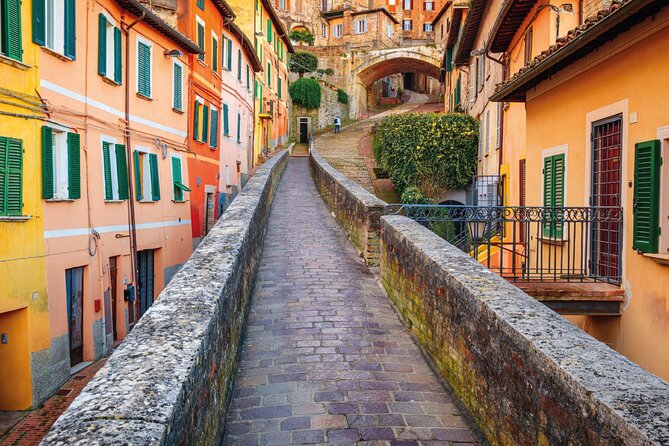
Corso Vannucci is Perugia’s central avenue, linking Piazza Italia with Piazza IV Novembre. It takes its name from Pietro Vannucci, the Renaissance painter better known as Perugino.
The suggested stop lasts about 15 minutes, though this is one place where you will likely want to set your own timing. The route uses the avenue as a connecting spine through the historic center, and you may want to pause along the way.
The guide treats Corso Vannucci as more than a street between monuments. It is the cultural heart of the city, a place where the historic center feels connected to everyday Perugia. You can use the written information for orientation and the audio for background while walking.
Do not expect detailed shopping or café guidance along every block. The main food advice comes through the guide’s restaurant recommendations, which focus on authentic local food and include information about Baci chocolate.
Entering Rocca Paolina and the old city below
The tour’s largest stop is Rocca Paolina, a 16th-century papal fortress built between 1540 and 1543 by order of Pope Paul III Farnese.
The fortress was designed by military architect Antonio da Sangallo the Younger. Its construction followed the Salt War, when papal authority defeated the people of Perugia. Building the fortress required the demolition of about one quarter of the city, a fact that explains why this is more than a scenic historic building.
Rocca Paolina had two main complexes. The larger fortress occupied Landone hill, while a smaller section called Tenaglia sat lower down and connected to the first by three fortified passages.
Allow about 30 minutes. Admission is free, and this is the point where the route becomes especially memorable. You walk through a fortress that absorbed part of the older city, so the experience combines military architecture with the remains of streets and buildings displaced by papal control.
The end point is Piazza Italia, 11, at Rocca Paolina. It is a practical finish because you are still in the historic center, not stranded on the edge of town. The fortress is open daily according to the supplied schedule, from midnight to 11:30 p.m., though you should confirm current access before relying on late hours.
Finishing at Borgobello viewpoint
The final listed stop is Belvedere del Borgobello, a panoramic point overlooking Perugia’s buildings, historic center, and Umbrian countryside.
You have about 15 minutes here, with no admission fee. The viewpoint gives the walk a pleasant change of mood after the political weight of Rocca Paolina. Instead of focusing on walls, churches, and papal authority, you finish by looking outward.
The point is also described as a local meeting place for young people and families. That detail makes it feel less like a formal scenic platform and more like part of daily neighborhood life.
The tour information identifies Rocca Paolina as the official end point, while the route also includes Borgobello as a final viewpoint. Check the exact order in your digital guide when you activate it, especially if you want to finish at a particular location.
Audio, maps, and the phone-based format
You receive both audio and written guidance in English, Spanish, Italian, German, and French. That dual format is important because audio tours are not equally useful in every setting. In a noisy street, the text may be easier. When you are walking between stops, audio may let you keep your eyes on the route.
You must have a smartphone with an internet connection. The activation instructions appear in your booking voucher, so read them carefully before setting out. Headphones are not included, but you can listen through your phone’s speaker or bring your own pair.
The map points you in the right direction, though it may not provide precise street-by-street guidance every time. I would download or open Google Maps as a companion tool. Switching between the map and the historical notes can feel awkward, but this is a small inconvenience for a tour that costs less than a typical museum ticket.
The maximum group size is listed as 108 people, but this does not mean you walk as one large group. The experience is digital and self-guided, so you follow the material independently.
Who should book this Perugia walk?
I would choose this tour if you want an affordable introduction to Perugia and prefer to control the pace yourself. It suits independent visitors, couples, families with older children, and anyone who likes to stop for lunch without worrying about missing the guide.
It is also useful if you want a first route through the historic center. The sequence links the most important sights and gives you enough background to decide where you want to spend extra time.
I would choose a live guide instead if you want lively conversation, instant answers, precise directions, or detailed storytelling at every stop. The audio can be brief, and technical problems may interrupt the flow. You also need to manage the phone, map, battery, and internet connection yourself.
Free cancellation is available up to 24 hours before the experience start time. Cancellations made less than 24 hours in advance are not refundable.
Should you book it?
Book this Perugia walking tour if value and independence matter most. For $7.81, you get a three to four-hour route through Etruscan, medieval, Renaissance, and papal Perugia, plus restaurant advice and food notes about Baci chocolate.
Do not book it expecting a personal guide or perfectly detailed navigation. Bring a charged phone, read the activation instructions, consider headphones, and use Google Maps when needed. With those small preparations, this is a sensible, inexpensive way to see Perugia’s major sights at your own speed.
FAQ
How much does the Perugia walking tour cost?
The tour costs $7.81 per person.
How long does the tour take?
The estimated duration is about three to four hours.
Is this a guided tour with a person?
No. It is a self-guided digital experience with audio and written information. A guide in person is not included.
What languages are available?
The audio and written guide are available in English, Spanish, Italian, German, and French.
Do I need a smartphone?
Yes. You need a smartphone with an internet connection to use the digital guide.
Are headphones included?
No. Headphones are not included. You can listen through your phone’s speaker or use your own headphones.
Where does the tour start?
The stated starting point is Via Ulisse Rocchi, 39, 06123 Perugia, Italy.
Where does the tour finish?
The tour finishes at Rocca Paolina, Piazza Italia, 11, in Perugia’s historic center.
Is admission to the sights included?
Most listed stops are free to enter. Admission to the Etruscan Well is not included.
Can I cancel for a refund?
Yes. You can cancel at least 24 hours before the experience start time for a full refund. Cancellations made less than 24 hours before the start time are not refunded.
Just added around Italy
- Torino Walking Tour with Audio and Written Guide by a Local★ 4.5 · 35 reviews
- Medieval Canals and Fountains: A Treviso Self-Guided Audio Tour★ 4.5 · 4 reviews
- Trapani Walking Tour with Audio and Written Guide by a Local★ 4.0 · 8 reviews
- Trento Walking Tour with Audio and Written Guide★ 4.5 · 11 reviews
- Sicily: Selinunte Park Entry Ticket & Sicily Digital Audio Guide★ 4.5 · 4 reviews
- Taormina Walking Tour with Audio and Written Guide by a Local★ 4.5 · 41 reviews
- Taranto Walking Tour with Audio and Written Guide by a Local★ 5.0 · 5 reviews
- Siracusa Walking Tour with Audio and Written Guide by a Local★ 5.0 · 59 reviews
Walking Tours, compared.
City Monuments Guided Walking Tour with Audio Guide
Read our review →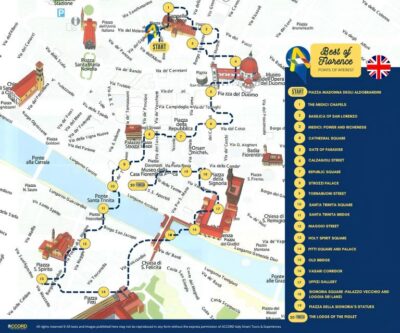

Self Guided Classic Freedom Trail Location Aware (GPS) Walking Audio Tour
Read our review →
Self-Guided Historical Walking Tour (Audio Guide)
Read our review →
Cape Cod & Provincetown Self-Guided Driving & Walking Audio Tour
Read our review →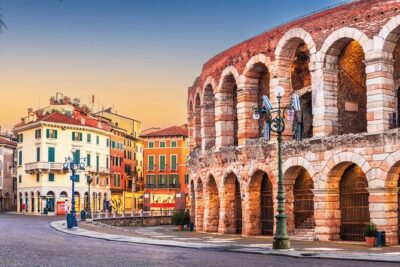
Verona Walking Tour with Audio and Written Guide by a Local
Read our review →
Royal Walking Tour and Buckingham Palace Audio Tour
Read our review →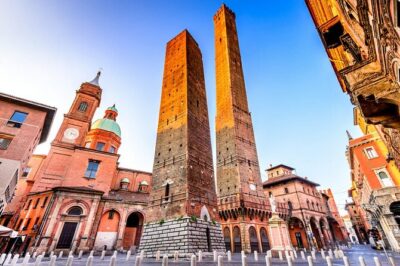
Bologna Walking Tour with Audio and Written Guide
Read our review →Browse the lists this tour appears in