
REVIEW · ITALY AUDIO TOURS
Parma Walking Tour with Audio and Written Guide by a Local
Parma rewards slow looking. This self-guided walk links the city’s grand squares, opera houses, medieval churches, Farnese treasures, and a leafy final park for just $7.21 per person. You use your phone, follow the route, and choose how long to spend at each stop.
I especially like the written backup, useful when audio is hard to hear or your battery is fading, and the local food advice, including the helpful Osteria di Servi recommendation. The main drawback is that admission fees can add up quickly, reaching $46 if you enter every paid site.
Key points before you book
- A flexible four-to-five-hour route lets you linger at major sights or move quickly through familiar ones.
- Audio and text guides are available in English, Spanish, Italian, German, and French.
- The route connects Parma’s civic, religious, artistic, and ducal districts, ending at Parco Ducale.
- Paid admissions are optional, but the Baptistery, Palazzo della Pilotta, and Teatro Regio can change the day’s cost.
- Google Maps directions help you move between stops, a useful feature in an unfamiliar city.
- Food tips are part of the experience, with local restaurant advice built into the guide.
Why this Parma walk works well
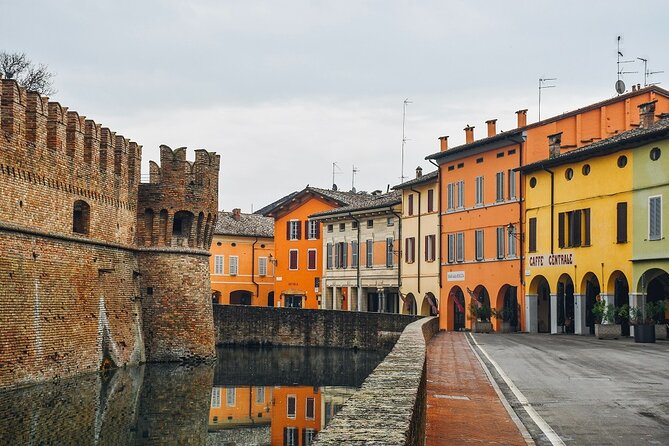
Parma is compact enough to explore on foot, yet it packs several different cities into one. You begin among civic buildings and cafés, pass through a remarkable medieval and Renaissance center, enter the world of Italian opera, then finish with the Farnese court and a large public park.
This is not a conventional walking tour with a guide leading a group from place to place. It is a digital route that gives you recorded commentary, written information, directions, historical notes, curiosities, and food suggestions. You control the pace.
That flexibility matters. You can stop for coffee, spend extra time inside the cathedral, skip a museum, or pause the route for lunch. The guide remains useful in rain, too. One especially practical comment came from a rainy day in Parma, when the route and restaurant suggestion helped make the weather less of a problem.
You need a smartphone with an internet connection. The activation details are in your voucher, so read that information carefully before arriving. You can listen through your phone speaker or use headphones.
The route is offered in English, Spanish, Italian, German, and French. It is listed for a maximum of 104 participants, but the experience itself is self-led, so you are not tied to a single moving group.
More Audio Walking Tours in Italy
- Florence: 2.5 hour Audio Guided Walking Tour led by Host
★ 4.6 · 293 reviews - Verona Walking Tour with Audio and Written Guide by a Local
★ 4.5 · 157 reviews - Bologna Walking Tour with Audio and Written Guide
★ 4.5 · 132 reviews
Starting at Piazza Garibaldi and Parma’s civic heart
The walk begins near the ruins of the Roman Bridge on Strada Giuseppe Mazzini and soon takes you to Piazza Giuseppe Garibaldi. This is Parma’s civic center, also called Piazza del Comune or Piazza Grande.
I like beginning here because the square gives you a useful orientation. Parma has two important centers: the political and civic center around Piazza Garibaldi, and the religious center clustered around Piazza Duomo a few hundred meters away.
Plan about 25 minutes here. The audio guide can help you read the square as more than a pretty open space. Look at the buildings around you, consider how public life gathers here, and then note the contrast when the route moves toward the cathedral quarter.
The stop is free, and it is an easy place to pause before the denser sightseeing begins. If you arrive early, this is also a sensible place to check that your audio and map links work.
Santa Maria della Steccata and Parmigianino’s art
The Basilica di Santa Maria della Steccata introduces you to Parma’s Renaissance side. It was the first church in Parma built with a central plan, giving the building a different feel from the long, processional shape of many medieval churches.
The key work here is the large arch above the main altar, frescoed between 1533 and 1539 by Francesco Mazzola, better known as Parmigianino. The route allows about 15 minutes, which is enough for a focused visit but not a long study of every chapel and decoration.
This is one of the places where the written guide is useful. You can pause the audio, look upward, and read at your own speed. Admission is free, so this stop offers a strong artistic payoff without adding to your budget.
Teatro Regio and Parma’s opera tradition

Teatro Regio is one of Parma’s major cultural landmarks. Its neoclassical exterior is associated with the city’s familiar Parma yellow, while the interior features gilded stucco decoration.
The theater is recognized as a major Italian opera house, and the guide gives you about 30 minutes here. Entry costs €10 and is not included in the digital tour price.
That separate fee is worth considering. If opera and theater architecture matter to you, this is one of the paid stops that can justify the extra cost. If you are mainly interested in medieval Parma, food, or outdoor sightseeing, you may prefer to admire the exterior and save the money for another entrance.
The route does not force you to enter. That is one of the better features of this format. You can decide based on your energy, schedule, and budget rather than paying for a package that includes sights you do not want.
Same place, a different route to walk:
- Rome: Pantheon Fast-Track Ticket and Official Audioguide
★ 4.5 · 27,353 reviews - Rome: Colosseum & Forum with Audio Guide App -Optional Arena
★ 4.2 · 24,770 reviews - Florence: Timed Entry to Michelangelo’s David + Audio App
★ 4.6 · 19,496 reviews - Rome: City Sightseeing Hop-on Hop-off Bus with Audioguide
★ 4.0 · 16,045 reviews
The Baptistery, Diocesan Museum, and Piazza Duomo
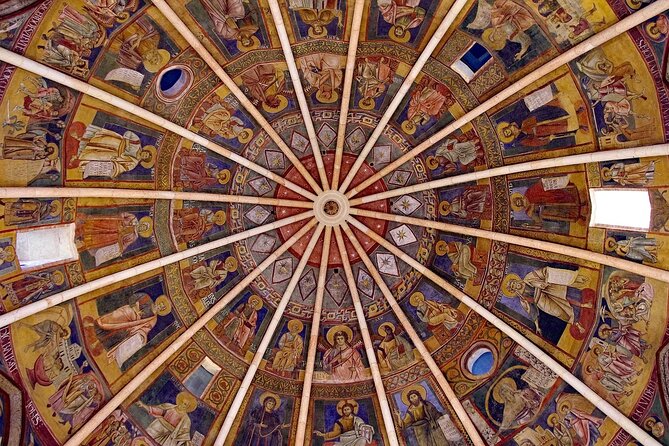
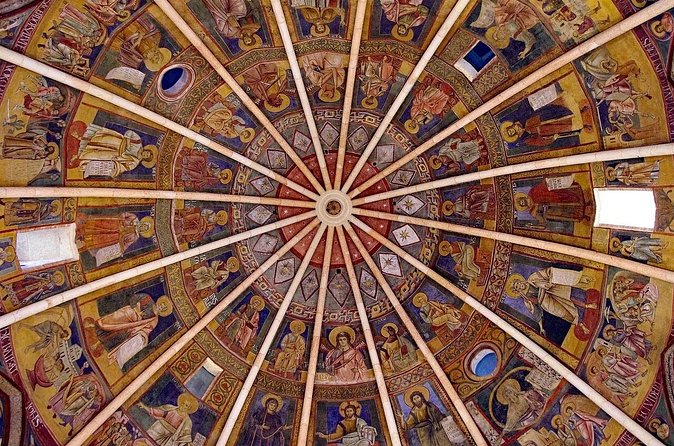
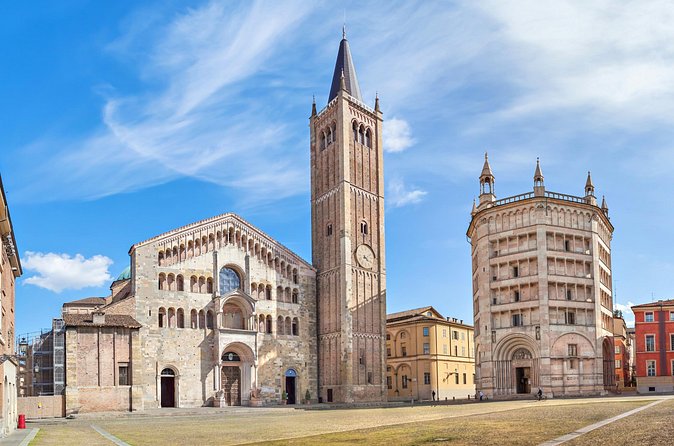
The Baptistery of San Giovanni Battista is one of Parma’s visual highlights. Its octagonal form is covered in pink Verona marble, and the building is important in the shift from Romanesque to early Gothic design in Italy.
The visit is planned for about 15 minutes, though you may want longer if you are studying the exterior and interior details. Entry costs €10 and includes the Diocesan Museum.
That combined ticket gives you a useful value advantage. You are not paying separately for both places, and the museum helps explain some of the religious art and sculpture connected with Parma’s cathedral quarter.
The museum itself gets about 25 minutes on the route. Its collection includes paintings, sacred clothing, silver objects, and a basement lapidary with statues from the Baptistery. This is a compact stop, not a full afternoon museum visit, but it adds context to the buildings you have just seen.
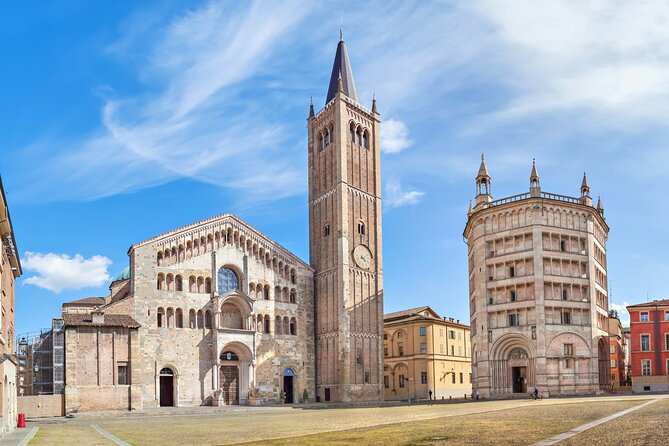
The cathedral follows. Parma Cathedral, or Cattedrale di Santa Maria Assunta, began in 1106 and remains an important medieval building. Its Romanesque plan is still visible, but later Renaissance changes shaped the central nave, dome, and transept. Some side chapels also contain later Gothic frescoes.
The cathedral is free to enter, and the planned visit is about 15 minutes. I would treat that time as a minimum rather than a rule. You can listen to the main explanation, then linger if the dome or frescoes catch your eye.
This section of the route is especially strong because several major sights sit close together. You get a clear sequence: Baptistery, museum, cathedral. The audio guide can help you compare the buildings instead of seeing each one as an isolated monument.
San Paolo, Santa Caterina, and a quieter Renaissance stop
The Chamber of San Paolo and the Cell of Santa Caterina offer a different kind of visit. Instead of grand public buildings, you enter spaces linked with religious life and the private apartment of Giovanna da Piacenza, an important abbess in Parma’s early sixteenth-century cultural setting.
The Chamber of San Paolo is part of the San Paolo museum route. It recreates rooms from the abbess’s private apartment, while the Cell of Santa Caterina contains frescoes and decorations connected with the saint’s life and religious themes.
The suggested time is 30 minutes, and admission costs €8. This is optional, so you can judge it against the rest of your day. I would include it if you enjoy intimate rooms and Renaissance decoration. If you are already planning the full Pilotta visit, you may prefer to keep your time for that larger complex.
The stop also helps break up the better-known monuments. Parma is not only squares, cathedrals, and theaters. Smaller rooms can show how religious, domestic, and artistic life overlapped in the city.
Palazzo della Pilotta and the Farnese court
Palazzo della Pilotta is the largest time commitment on the route, with about one hour planned. It was designed to house services of the Farnese court and connect the ducal residences with court offices and other functions.
The Farnese family was one of Europe’s major noble families from the fifteenth through the eighteenth centuries. That background gives the palace a different mood from the cathedral quarter. Here, Parma becomes a ducal capital shaped by ceremony, administration, and court life.
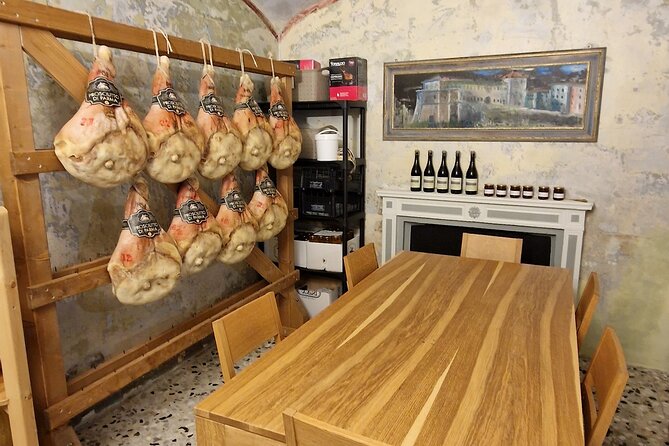
Admission costs €18. This is the single most expensive ticket listed, but it also includes entry to Teatro Farnese. If you plan to see both, the combined fee is easier to justify than paying for only a brief look at one section.
The Palazzo della Pilotta requires some energy. An hour is enough for a purposeful visit, but you should not expect to absorb every room and collection at that speed. Use the audio and written guide to identify what matters most, then explore according to your own interests.
Teatro Farnese, an extraordinary wooden court theater
Inside the Pilotta complex, Teatro Farnese is a special reward. Built between 1617 and 1618 in the old armory of the court, it was designed by the Ferrara architect Giovan Battista Aleotti, known as Argenta.
The theater is often described as the first modern theater in the West. That claim alone makes it worth seeing, but the setting is the real reason to go. The large structure was created for court performances, and its scale and design reveal how seriously the Farnese family treated spectacle.
Only 10 minutes are assigned to this stop. That may be enough for a first impression, but I would give yourself extra time if the space interests you. The admission is included in the €18 Palazzo della Pilotta ticket, so there is no separate theater charge.
This is one of the clearest examples of why the full route can take four to five hours. The city center sights are close together, but the major interiors deserve pauses. If you rush, you will complete the map but lose some of the pleasure.
Finishing at Parco Ducale
The route ends at Parco Ducale, Parma’s best-known public garden. At about 208,000 square meters, it gives you a broad change of pace after churches, museums, and palace rooms.
Plan around 30 minutes for the park, though this is a natural place to take longer. The avenues and intersecting sections create a formal neoclassical design. You can also see historic features such as the Palazzo Ducale del Giardino and the Trianon Fountain.
I like the choice of ending here. You do not finish in another ticket line or beside a crowded monument. You finish outdoors, with room to sit, walk, and think back over the day.
Parco Ducale is open daily from midnight until 11:30 p.m. according to the supplied schedule. The listed end point is Largo Luca Ganzi 3. Since the walk begins near the Roman Bridge and ends across the city at the park, you should plan your onward route from there.
What the €7.21 price really gets you
At $7.21, the base price is low for a four-to-five-hour sightseeing plan. You are paying for the digital guide, audio and written commentary, route directions, local food advice, and practical notes about monuments and curiosities.
The real cost depends on your choices. Optional admission prices are:
- Teatro Regio: €10
- Baptistery and Diocesan Museum: €10
- Chamber of San Paolo and Cell of Santa Caterina: €8
- Palazzo della Pilotta, including Teatro Farnese: €18
Entering every paid sight adds €46, before food or other expenses. You do not need to do that. The cathedral, Santa Maria della Steccata, Piazza Garibaldi, and Parco Ducale are free, so you can create a very inexpensive day by choosing only one or two paid interiors.
The strongest value comes from the flexibility. A traditional guided tour may give you a fixed schedule and live commentary, while this option gives you control and costs much less. The tradeoff is that you must manage your own phone, timing, entrances, and attention.
Food advice and practical phone tips
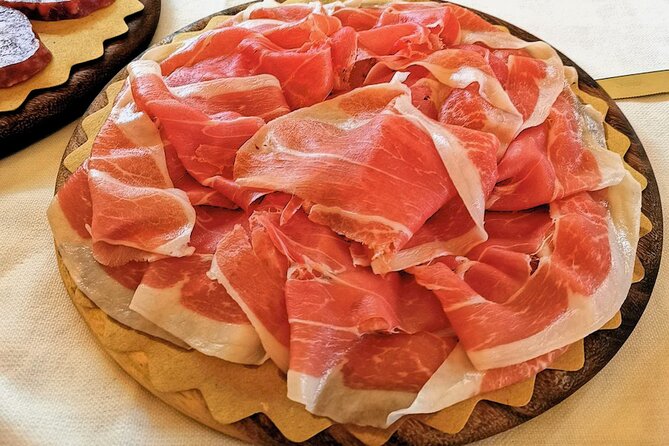
Food guidance is one of the more useful extras. Parma is famous for local food, and the guide includes advice about authentic restaurants. The specific mention of Osteria di Servi is worth noting, especially if rain makes a sit-down meal feel like part of the sightseeing plan.
Read the voucher before you start. The digital guide requires an internet-connected smartphone, and the activation details are provided there. Downloading or opening the material before you set off may help, though the supplied information only confirms that an internet connection is needed.
Bring headphones if you prefer private listening. Phone speakers are also supported, but they may be less convenient in busy public spaces or inside quiet churches.
The written guide is more than a backup for technical trouble. It lets you scan a section, reread a name, and pause without losing your place. One especially useful detail is the Google Maps link between stops, which makes the route easier to follow.
Who should choose this experience?
I would recommend it to independent visitors who want structure without a fixed group. It suits you if you have a short stay in Parma, enjoy moving at your own speed, or want to choose paid sights as you go.
It also works well for families or pairs with different interests. One person can spend longer on art while another takes a break, then you can continue together. The booking information says most travelers can participate, service animals are allowed, and the route is near public transportation.
You should think twice if you want a live guide who can answer questions instantly or adjust the commentary to your interests. Email and WhatsApp support are available from the creator, but that is not the same as having a person beside you.
The walk is also not entirely free once you begin entering museums and theaters. Set your budget first. The base price is excellent, but a full cultural day can cost considerably more.
Should you book the Parma Walking Tour?
Book it if you want a low-cost, flexible introduction to Parma with strong coverage of the cathedral quarter, opera tradition, Renaissance art, Farnese court, and Parco Ducale. I especially like the combination of audio, written explanations, map links, and food advice.
Skip it if you dislike using your phone while sightseeing or need a live guide for conversation and detailed questions. For most independent visitors, though, the $7.21 price gives you a useful route and leaves the important choice in your hands: spend on the sights that matter most to you.
Free cancellation is available up to 24 hours before the start time. Inside that period, changes and refunds are not accepted.
FAQ
How long does the Parma Walking Tour take?
The route takes approximately four to five hours, depending on how long you spend at each stop and which paid attractions you enter.
What languages are available?
The audio and written guide is available in English, Spanish, Italian, German, and French.
Do I need a smartphone and internet connection?
Yes. You need a smartphone with an internet connection to activate and use the digital guide. Activation details are provided in your voucher.
Are admission tickets included?
No. Entry to the Baptistery and Diocesan Museum, Teatro Regio, the Chamber of San Paolo and Cell of Santa Caterina, and Palazzo della Pilotta is not included. The cathedral, Santa Maria della Steccata, Piazza Garibaldi, and Parco Ducale are listed as free.
How much do the optional tickets cost?
The Baptistery and Diocesan Museum cost €10 together. The Chamber of San Paolo and Cell of Santa Caterina cost €8, Teatro Regio costs €10, and Palazzo della Pilotta costs €18, including Teatro Farnese.
Where does the walk begin and end?
It begins at the Roman Bridge ruins on Strada Giuseppe Mazzini 43 in Parma. It ends at Parco Ducale, Largo Luca Ganzi 3.
Can I cancel for a full refund?
Yes. You can cancel at least 24 hours before the experience start time for a full refund. Cancellations or changes made less than 24 hours before the start time are not refunded or accepted.
Just added around Italy
- Torino Walking Tour with Audio and Written Guide by a Local★ 4.5 · 35 reviews
- Medieval Canals and Fountains: A Treviso Self-Guided Audio Tour★ 4.5 · 4 reviews
- Trapani Walking Tour with Audio and Written Guide by a Local★ 4.0 · 8 reviews
- Trento Walking Tour with Audio and Written Guide★ 4.5 · 11 reviews
- Sicily: Selinunte Park Entry Ticket & Sicily Digital Audio Guide★ 4.5 · 4 reviews
- Taormina Walking Tour with Audio and Written Guide by a Local★ 4.5 · 41 reviews
- Taranto Walking Tour with Audio and Written Guide by a Local★ 5.0 · 5 reviews
- Siracusa Walking Tour with Audio and Written Guide by a Local★ 5.0 · 59 reviews
Walking Tours, compared.
City Monuments Guided Walking Tour with Audio Guide
Read our review →
Self Guided Classic Freedom Trail Location Aware (GPS) Walking Audio Tour
Read our review →
Self-Guided Historical Walking Tour (Audio Guide)
Read our review →
Cape Cod & Provincetown Self-Guided Driving & Walking Audio Tour
Read our review →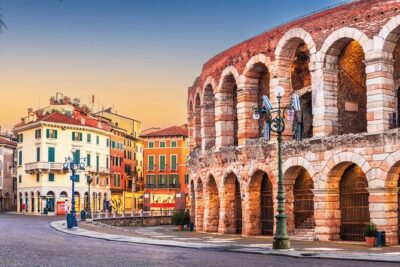
Verona Walking Tour with Audio and Written Guide by a Local
Read our review →
Royal Walking Tour and Buckingham Palace Audio Tour
Read our review →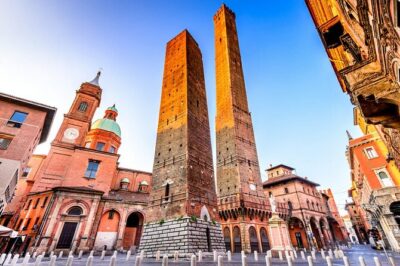
Bologna Walking Tour with Audio and Written Guide
Read our review →Browse the lists this tour appears in