
REVIEW · PARIS AUDIO TOURS
The French Revolution: Self Guided Audio Tour of Paris
Paris remembers its revolutions in stone. This self-guided audio walk links the Marais with the French Revolution, taking you from Place de la Bastille to the Palais de Justice in about 90 to 105 minutes. I like the freedom to start when you want and pause whenever a square, church, or street deserves a closer look. I also like the offline maps and automatic GPS playback, which make the route practical even without a mobile signal.
The tour costs $19.99 per person and includes lifetime access in English through the VoiceMap app. That is fair value if you want a focused history walk without paying for a live guide, though you should remember that museum admissions, transport, food, a phone, and headphones are extra. The fixed, non-refundable booking policy is another reason to choose your date carefully.
The narration is especially well suited to independent visitors, history fans, and families with teenagers. One useful point from the available feedback is that the app worked well and the narration was clear. The main limitation is the short format: you will see many important sites from the outside, but this is not a museum tour or a full course on the Revolution.
Key points to know before you go

- Start at the Bastille, finish near the Palais de Justice: The route crosses central Paris from Place de la Bastille to 08 Boulevard du Palais.
- Sixteen historical stops: You pass through the Marais and continue toward Hôtel de Ville, Saint-Jacques Tower, Place du Châtelet, and the law courthouse.
- Audio plays by GPS: The app can trigger narration as you reach each location, with turn-by-turn directions and maps.
- Works offline: Downloaded audio, maps, and geodata let you take the tour without relying on a live connection.
- Best for self-directed sightseeing: You can pause, replay sections, and set your own pace instead of keeping up with a group.
- No attraction tickets are included: You will need separate admission if you choose to enter a museum or another site along the way.
Why this walk gives Paris a useful historical frame
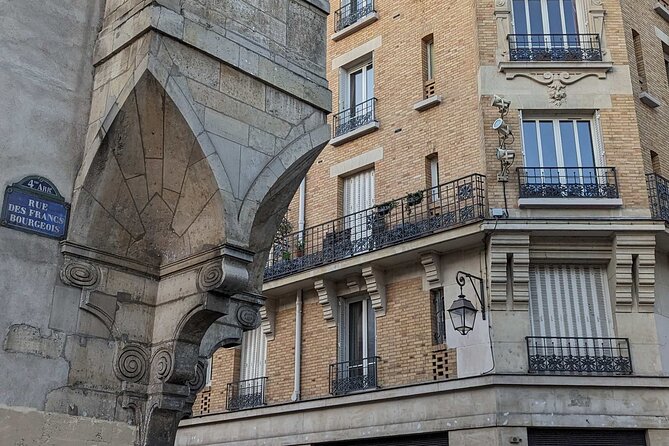
The French Revolution can feel like a blur of dates, names, executions, and political factions. This route makes the subject easier to grasp by tying those events to ordinary city spaces: a square, a mansion, a church, a prison remnant, a city hall, and a bridge.
That approach is valuable because Paris does not present the Revolution as one neatly contained attraction. Much of the story happened in places that still serve everyday purposes. You walk through streets and public squares while the audio explains how power shifted from the monarchy to a republic, how aristocratic property was seized, and how bread prices helped fuel anger among working people.
I would treat this as a guided introduction rather than a definitive history lesson. The tour covers a lot in 90 to 105 minutes, so the narration must move quickly. You get a strong route and a clear political storyline, but you may want to pause the app or visit Musée Carnavalet separately if you want more objects, documents, and detail.
More Self-Guided Audio Tours in France
- The Famous Graves of Père Lachaise – Self-Guided Audio Tour
★ 3.5 · 44 reviews - Montmartre Self-Guided Audio Tour: More Than Meets the Eye
★ 4.5 · 35 reviews - One Hour Père Lachaise Cemetery: A Self-guided Audio Tour
★ 3.5 · 26 reviews
Starting at Place de la Bastille
The tour begins at Place de la Bastille, the right place for a walk about revolutionary Paris. The former Bastille prison became a powerful symbol after it was stormed during the French Revolution. The event helped set off the chain of changes that transformed France.
The square itself is now a large urban junction rather than a preserved fortress site. That contrast is useful. You are not standing inside the old prison, but the audio gives the location a political meaning and helps you picture why the Bastille mattered so much.
Take a moment here to get your bearings before starting the route. Since the tour uses GPS, keep your phone ready and make sure the audio is downloaded before you leave. The supplied information does not specify a required arrival time, so you have flexibility, but the walk is easier if you are not rushing from another appointment.
Place des Vosges and the end of royal power
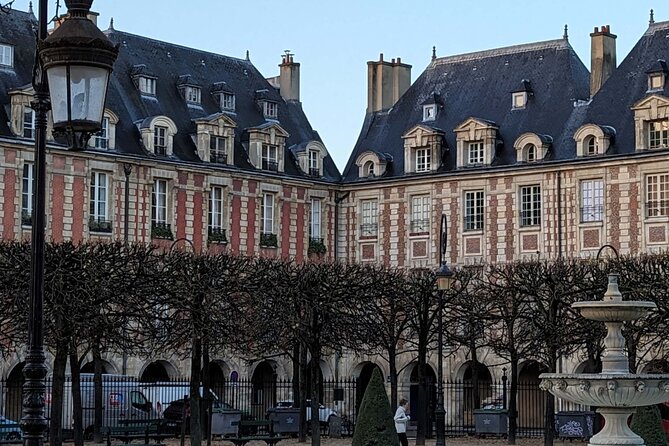
From the Bastille area, the route brings you to Place des Vosges. This elegant square offers a quieter setting for a discussion of the rapid change from monarchy to republic.
The value of this stop is the contrast between the square’s polished appearance and the political disorder that shaped the period. The narration connects the space with major social and political upheavals, giving you a better sense of how revolutionary ideas affected all levels of French society.
You do not need to enter an attraction here to benefit from the stop. Still, the audio format means your attention is divided between listening, following directions, and looking around. If a particular building or view interests you, pause the tour. Lifetime access means you can return to sections later, which is more useful than it may sound when a route contains many stops.
Hôtel de Sully, where architecture meets confiscation
The route passes through the Cour et Jardin de l’Hôtel de Sully and then spends more time on Hôtel de Sully itself. This mansion brings the old aristocratic order into view.
The narration explains how the Revolution affected properties owned by wealthy families. That subject adds needed balance to the story. The Revolution was not only fought in public squares. It also changed who could own, occupy, and control grand private buildings.
You should note that the tour passes by these locations rather than promising entry. No museum or attraction tickets are included, and the information does not say that Hôtel de Sully access is part of the experience. The stop works best as an exterior history lesson, especially if you enjoy reading a building’s political meaning without needing to go inside.
More Self-Guided Audio Tours in Paris
- Montmartre: Secret Stories of Paris – Self-Guided Audio Tour
★ 4.0 · 13 reviews - Self-Guided Audio Tour -The Eiffel Tower, Exterior
★ 4.0 · 9 reviews - Self-Guided Audio Tour Tickets To The d’Orsay Museum
★ 3.0 · 9 reviews - Self-Guided Audio Tour – Montmartre: The heart of art and bohemia
★ 3.5 · 7 reviews
Place Sainte-Catherine and the Saint-Paul church
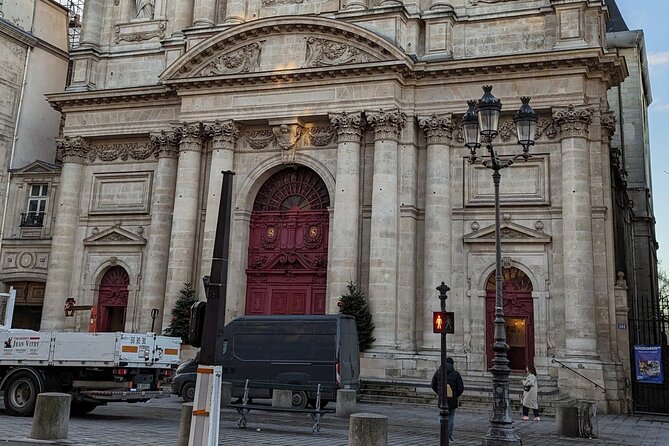
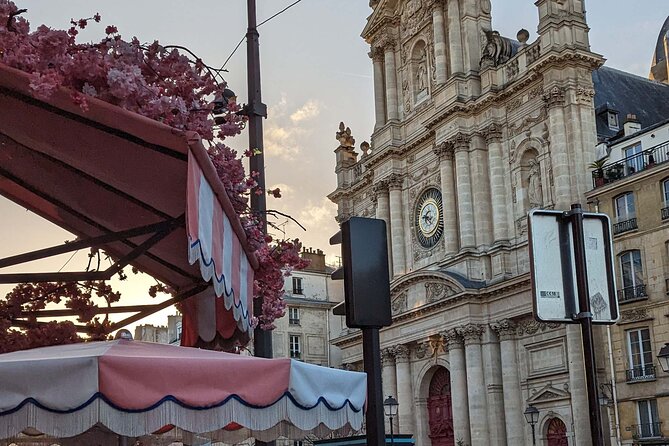
At Place Sainte-Catherine, the medieval character of the area helps set up another discussion of revolutionary Paris. The tour also points you toward the Parish Church of Saint-Paul of Saint-Louis, a site linked with important events during the period.
This section broadens the story beyond palaces and government. Churches were deeply connected to French public life, and the Revolution forced difficult questions about religion, authority, morality, and political loyalty. The audio uses the church and its setting to explain those tensions.
The route includes a second look at the Parish Church of Saint-Paul of Saint-Louis later on. That repetition may feel slightly less efficient, but it also shows that the site carries several threads in the tour’s story. If you prefer a rapid walk, you may find the repeated focus slows the middle section. If you like connecting events over time, it gives the church more weight.
Musée Carnavalet and aristocratic property
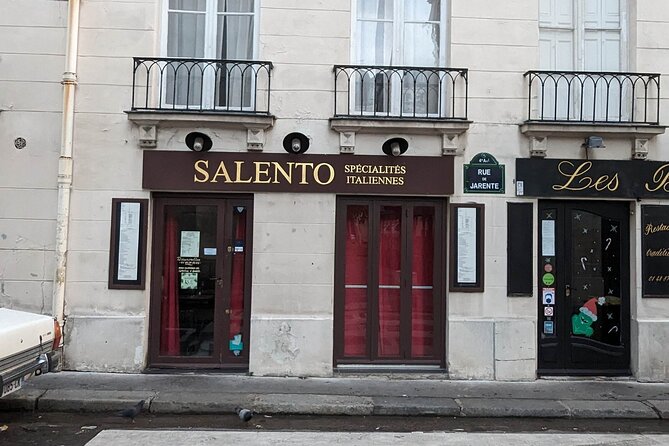
The tour passes Musée Carnavalet, one of the key places on the route for understanding how the Revolution changed Parisian property and culture. The narration covers the confiscation of buildings from aristocratic owners and the wider social changes that followed.
Because the museum is not included, this stop is mainly an exterior orientation. You can hear why the building matters, then decide for yourself if you want to return for a separate visit. The audio walk does not sell itself as a museum substitute, and that is a strength. It gives you context without pretending that a short recording can replace exhibits and galleries.
For history fans, this may be one of the most useful stops because it connects political upheaval with physical buildings. It also helps explain why Paris contains so many layers of ownership, privilege, and public use.
The Petite Force and the cost of bread
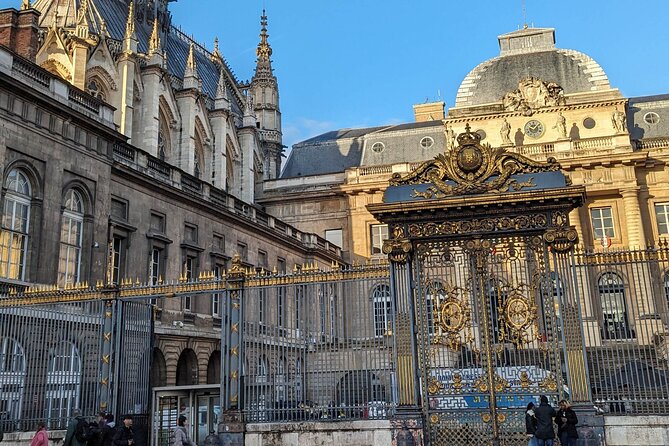
The Vestige de la Petite Force provides one of the route’s most human stops. This surviving historical remnant leads into the problems faced by Parisian workers, especially the strain caused by extremely high bread prices.
This is an important choice in the route. Stories of famous leaders can make the French Revolution seem like a contest among politicians. The Petite Force section brings daily survival back into view. Bread was not an abstract political issue for working people. It affected whether families could eat.
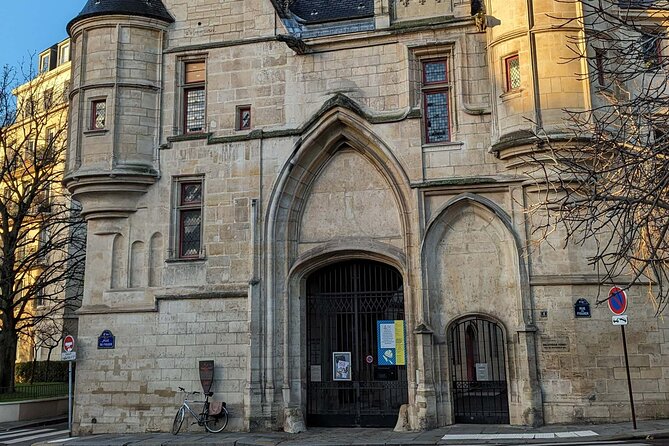
The tour does not appear to treat the prison remnant as a major attraction with an admission charge. You hear its connection to the revolutionary period as you continue through the city. I would listen carefully here, since this section helps explain why public anger became so intense.
Hôtel de Sens and the divided city
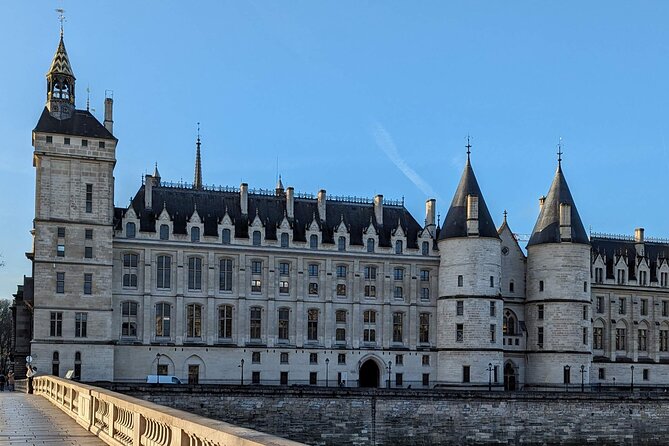
Hôtel de Sens adds another architectural stop with links to the old social order. The audio uses the building to discuss how the Revolution affected aristocrats as well as ordinary people.
That balance matters. A useful history walk should not reduce the period to heroes on one side and villains on the other. The route points toward conflicting pressures: inherited privilege, hunger, political reform, and the search for a new system of government.
You will likely appreciate this stop if you enjoy buildings that reveal social history. The drawback is that exterior viewing can leave some details unclear, especially if you are not already familiar with the building. The narration does the work of supplying meaning, so headphones are essential.
Hôtel de Ville and the birth of a new political order
The route then reaches Hôtel de Ville, Paris City Hall. This is one of the most politically important stops because the tour connects it with the final days of the royal family and the changing structure of government.
The nearby courtyard receives its own attention. Here, the narration explains the birth of the National Assembly and the call for laws shaped by independent citizens. This section moves from street-level unrest to the creation of formal political institutions.
Hôtel de Ville also makes a good midpoint for understanding the tour’s wider direction. You began with the Bastille and a dramatic act of revolt. By this point, the story has moved toward questions of representation, law, and who gets a voice in governing France.
The app format works well here because you can pause in a public space and listen without needing to keep a group together. Just remember that city streets and squares can be distracting. If you want to absorb the political explanation, stop walking for a few minutes.
Saint-Jacques Tower and an older Paris beneath the Revolution
The next section passes the Square of Saint-Jacques Tower and points out part of an over 800-year-old city wall. This detail reaches back well before the Revolution and reminds you that the political events took place inside a much older Paris.
You then see Tour Saint-Jacques itself. The tower is a strong visual marker on the route, and the audio uses it to reflect on the events that unfolded during the revolutionary period.
This is a good example of the tour’s method. It does not show only sites directly tied to one famous event. Instead, it places the Revolution within the long physical story of Paris. The city wall and tower help you notice how old streets, buildings, and public spaces continued into a period of sudden political change.
Place du Châtelet and Pont au Change
At Place du Châtelet, the tour asks you to read the symbolism of the ornate column in the square. This adds a visual puzzle to the walk. Rather than simply naming a monument, the narration connects its design with the social and political climate that helped produce the Revolution.
The route then crosses Pont au Change. Bridges are useful historical viewpoints because they connect separate parts of the city, and this crossing gives the walk a clear sense of progress toward its final stop.
You should allow enough time for this section rather than treating it as a quick transfer. The tour is only about 90 to 105 minutes, but it includes sixteen stops and a steady amount of political explanation. The exact time will depend on your walking speed and how often you pause.
Finishing at the Palais de Justice
The tour ends at the Palais de Justice de Paris, also listed as the Paris Law Courthouse at 08 Boulevard du Palais. The closing section brings together political upheaval, climate events, and social injustice, showing how several pressures helped reshape France and the wider world.
Ending at the courthouse is fitting. The walk began with the storming of a prison and finishes with a place linked to law and public authority. The route does not simply tell you that a revolution happened. It asks you to consider how anger, inequality, political ideas, and difficult living conditions can collide.
The tour ends at the Palace of Justice, but the information provided does not include entry to the courthouse. Plan to finish outside unless you have separate plans and tickets. You also receive no transportation, food, or drinks, so arrange your next stop independently.
What $19.99 gets you
At $19.99 per person, this is a reasonable purchase for a focused self-guided walk. You get English narration, lifetime access, the VoiceMap app for Android and iOS, offline audio, offline maps, geodata, and turn-by-turn directions.
The value depends on how you travel. If you want a live guide to answer questions or adjust the route, this will feel limited. If you want to explore alone, pause often, and revisit the material later, the lifetime access improves the deal.
The tour has a 4.7 rating from three reviews, so the score is encouraging but based on a small sample. The clearest positive points are the well-functioning app and well-done narration. It is also a good match for families with teenagers because the history is tied to places you can see rather than presented only as a long lecture.
There is one important financial caution. The booking is non-refundable and cannot be changed for any reason. Since most bookings are made about nine days ahead, choose your date carefully and do not buy until you are confident your plans will hold.
Who should choose this audio tour?
I would choose this for an independent visitor who wants a clear historical route through central Paris without joining a scheduled group. It suits solo visitors, couples, and families with teenagers who can manage a phone-based experience and several connected stops.
It is especially useful if you already plan to walk through the Marais and want more purpose than simply admiring the streets. The audio gives you a reason to notice the Bastille, Hôtel de Sully, Musée Carnavalet, Hôtel de Ville, and the other sites along the way.
I would be more cautious if you need step-by-step assistance, a live conversation, or detailed museum access. The tour requires your own smartphone and headphones, and the information does not promise a dedicated accessibility service. Most people can participate, but you should decide if a walking route with app directions suits your needs.
Should you book it?
Book this tour if you want a flexible, inexpensive introduction to revolutionary Paris and are happy to handle the walking, phone, and navigation yourself. The offline access is a real advantage, the route covers a wide range of sites, and the narration gives everyday streets a clear political purpose.
Skip it if your priority is entering museums, receiving personal answers from a guide, or making a last-minute booking that can be changed. For everyone else, $19.99 buys a useful historical thread through the Marais and central Paris, with enough freedom to stop for your own discoveries along the way.
FAQ
How long does the audio tour take?
The tour takes approximately 1 hour 30 minutes to 1 hour 45 minutes.
Where does the tour start?
It starts at Place de la Bastille, Pl. de la Bastille, 75004 Paris, France.
Where does the tour end?
It ends at the Paris Law Courthouse, also called the Palace of Justice, at 08 Boulevard du Palais, 75001 Paris.
Is the tour guided by a person?
No. It is an app-based, self-guided audio tour using the VoiceMap app.
What is included in the price?
The price includes lifetime access to the tour in English, the VoiceMap app for Android and iOS, and offline access to the audio, maps, and geodata.
Are museum tickets or attraction fees included?
No. Tickets and entrance fees for museums or other attractions along the route are not included.
Can I cancel or change the booking?
No. The experience is non-refundable and cannot be changed for any reason.
Just added around Paris
- The Tuileries Garden’s Classic Sights: A Self-Guided Audio Tour★ 4.0 · 3 reviews
- Self-Guided Audio Tour -The Eiffel Tower, Exterior★ 4.0 · 9 reviews
- Audioguide – The Eiffel Tower and its secrets★ 4.0 · 4 reviews
- A Self-Guided Audio Tour Around Parc Montsouris★ 3.5 · 6 reviews
- Self-Guided Audio Tour – Montmartre: The heart of art and bohemia★ 3.5 · 7 reviews
- Summit Eiffel Tower Audio Guide Tour with Unlimited Time Access★ 4.5 · 58 reviews
- Latin Quarter, Paris Walking Tour with Audioguide★ 4.5 · 2 reviews
- Self Guided Tours in Paris with 100 Captivating Audio Stories★ 3.5 · 3 reviews
Self-Guided Tours, compared.

Acropolis Ticket & Optional Self-Guided Audio Tours
Read our review →


Ultimate Acadia National Park Self-Guided Driving Audio Tour
Read our review →

Santorini: Akrotiri Ticket with Optional Self-Guided Audios
Read our review →
Browse the lists this tour appears in