
REVIEW · PALM SPRINGS AUDIO TOURS
Death Valley National Park Self-Guided Audio Driving Tour
Death Valley rewards curious drivers. This self-guided audio tour turns an 80-plus-mile road trip into a story-filled visit, with more than 55 audio stops covering borax mining, geology, salt flats, and desert survival. I like the hands-free GPS narration and the fact that one purchase covers up to four people in the car. I also like the freedom to pause for photos, short walks, food, or a sunset.
The main catch is preparation. You must download the tour over strong Wi-Fi or cellular service before entering the park. Some people have had trouble selecting the correct starting route, and Death Valley’s weak signal will not rescue you later. The park entrance fee is also separate.
Key points to know before you go
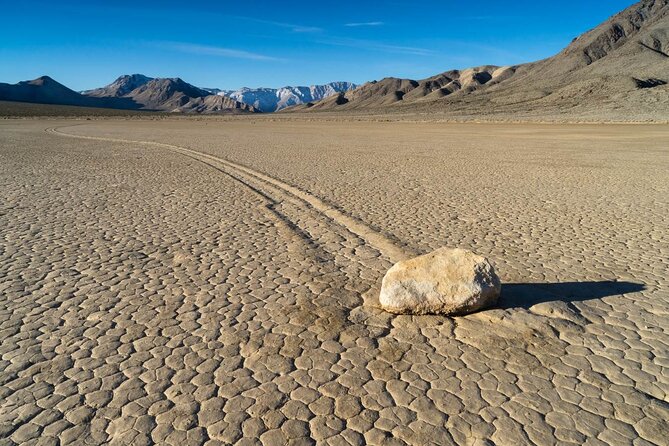
- More than 55 stories across 80-plus miles: The route links major sights with useful background instead of leaving you to guess what you are seeing.
- One price covers the car: At $16.99 for a group of up to four, the cost is low compared with a private guide or bus excursion.
- Offline use is the big advantage: Once downloaded correctly, the audio and map can work without Wi-Fi or cellular service.
- Several starting versions are available: Choose the route that matches your entrance, such as Death Valley Junction, Furnace Creek, Beatty’s Entrance, or Towne Pass.
- Major sights are built into the drive: Expect Badwater Basin, Zabriskie Point, Dante’s View, Artist’s Palette, Devils Golf Course, and Golden Canyon.
- Road conditions matter: Flood damage has affected Badwater Road, North Highway, and Bonnie Clare Road, so check official park alerts before leaving.
What this Death Valley audio tour actually offers
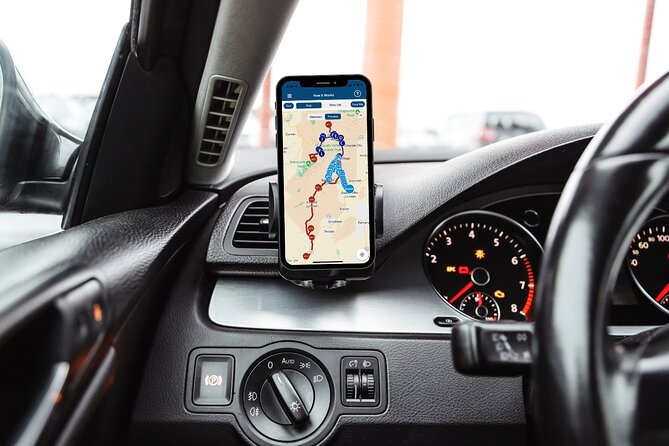
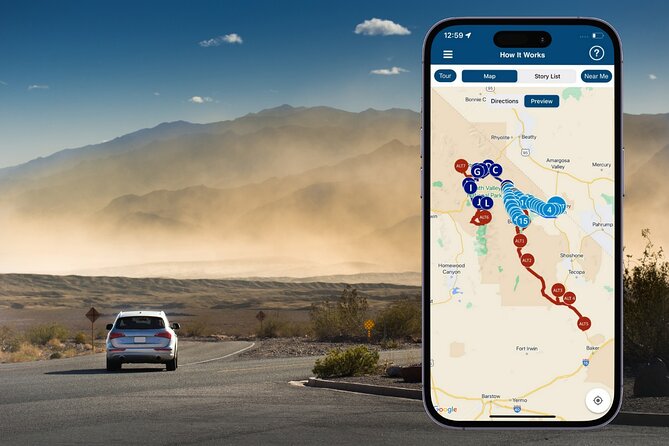
This is not a guided group trip. Nobody meets you at the entrance, and you do not follow a bus or a marked guide vehicle. You drive your own car, open the Action Tour Guide app, and let GPS trigger the stories as you reach each point.
The tour takes about four to five hours and covers more than 80 miles. That timing is a rough guide, not a strict schedule. Photo stops, short walks, snacks, road repairs, and scenic detours can stretch the day.
I see the biggest value in the way the audio fills the long stretches between viewpoints. Death Valley can look empty, but it is not a place without stories. Gold seekers, borax miners, wagon teams, volcanic deposits, shifting salt, and extreme temperatures all help explain why the valley looks so unusual.
The narration also gives you structure. Instead of driving from one parking area to the next with only a map, you receive background as the scenery changes around you. The GPS starts the next story automatically, so you can keep your attention on the road.
You can connect your phone to the car stereo through Bluetooth, USB, or AUX. Apple CarPlay works with the audio playback, while Android Auto support is still described as forthcoming. Headphones may be useful when you leave the car for a short walk, but drivers should keep the setup safe and hands-free.
More Self-Guided Audio Tours in the USA
- Gettysburg Battlefield Self-Guided Driving Audio Tour
★ 4.5 · 910 reviews - Joshua Tree National Park Self-Guided Driving Audio Tour
★ 4.5 · 762 reviews - Ultimate Acadia National Park Self-Guided Driving Audio Tour
★ 4.0 · 521 reviews
Choosing the right entrance and starting point
The starting point is the detail most likely to cause frustration. The app may offer several versions of the Death Valley tour, including:
- East Entrance at Death Valley Junction
- Furnace Creek Visitor Center
- North Entrance at Beatty’s Entrance
- West Entrance at Towne Pass
You need to select the version that matches your actual approach and planned direction. If you choose the wrong one, the story sequence may not line up with your drive. One user had difficulty entering at the preselected point and struggled to catch up with the audio.
My practical advice is simple: install the app, enter the password, download the tour, and open the route while you still have a strong connection. Check the starting point before you leave town. Do not wait until you are sitting beside a silent desert road.
The tour is private in the sense that only your group uses it. You set the pace, decide when to stop, and can pause the narration for a meal or a walk. You can also reuse the purchase on another trip because access does not expire.
Death Valley Junction and the borax story
Death Valley Junction serves as one of the eastern starting points. The opening narration sets the tone by introducing a place famous for heat, dryness, and an ominous name, while also showing why the valley is worth the effort.
The early story about borax is especially useful because it corrects a common idea about Death Valley. Gold brought hopeful miners into the region, but borax became the mineral that helped keep the valley economically important. The famous twenty-mule teams were part of this story, hauling borax across difficult ground.
This is a good example of what the audio does best. A plain road becomes easier to understand once you know what people were trying to extract, how they moved goods, and why the valley mattered beyond its harsh climate.
The five-minute story at this point is short, but it leads into a much longer route. If you begin here, allow time for the full drive, not just the audio clips themselves.
Dante’s View and the scale of Badwater Basin
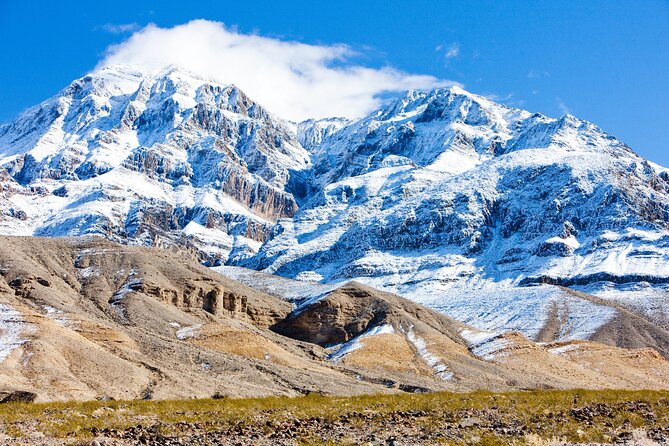
Dante’s View gives you one of the tour’s most dramatic high points. From more than 5,000 feet above Badwater Basin, you look down across the salt flats and toward the Panamint Mountains.
This stop works best for anyone who needs a quick sense of Death Valley’s scale. From ground level, the basin can feel like a huge, flat expanse. From Dante’s View, the relationship between the basin, mountain ranges, and surrounding desert becomes much clearer.
It is also a strong photo stop, especially around sunset. The view can be the payoff for taking the extra road to the overlook, though your exact access depends on current road conditions and park notices.
The audio helps you read the view rather than simply photograph it. You begin to understand that the white basin below is not an isolated patch of salt. It is the lowest part of a much larger geological bowl.
More Driving Audio Tours in the USA:
- Ultimate Lake Tahoe Self-Guided Driving Audio Tour
★ 4.5 · 435 reviews - Scenic Newport, RI Self-Guided Driving Audio Tour
★ 4.5 · 325 reviews - Arches National Park Self-Guided Driving Audio Tour
★ 4.5 · 288 reviews - Yellowstone National Park Self-Guided Driving Audio Tour
★ 4.5 · 249 reviews
Twenty Mule Team Canyon and Zabriskie Point
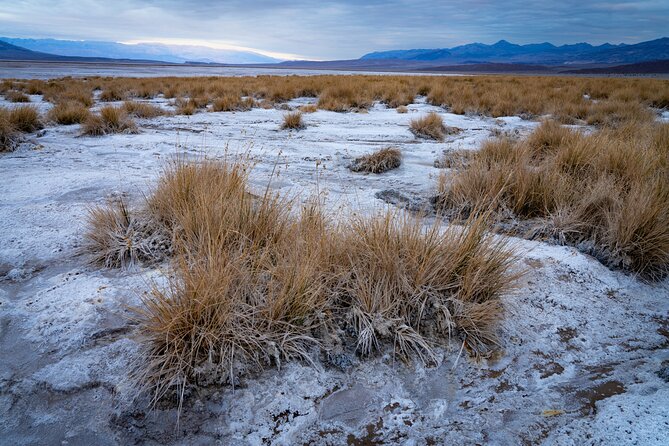
Twenty Mule Team Canyon brings the mining story back into the scenery. Its winding road passes saffron-colored hills and badlands, with changing light that can make the slopes appear orange, yellow, or brown.
The road offers some of the most attractive desert views on the route, especially early in the morning or near sunset. It is also a reminder that not every stop is about a single viewpoint. Sometimes the drive itself is the attraction.
Zabriskie Point is more polished and easier to recognize as a major viewpoint. From the overlook, you can see deeply eroded badlands in the foreground, pale salt flats farther away, and the Panamint Mountains beyond.
The narration connects this view to the forces that shaped it. The folds and ridges are not random decoration. They show how erosion worked through different layers of material over time.
You will want to allow time for photographs here. Zabriskie Point is one of the places where a five-minute audio clip can lead to a longer stop, especially if you want to walk to the viewpoint and study the changing colors.
Furnace Creek, the thermometer, and Golden Canyon
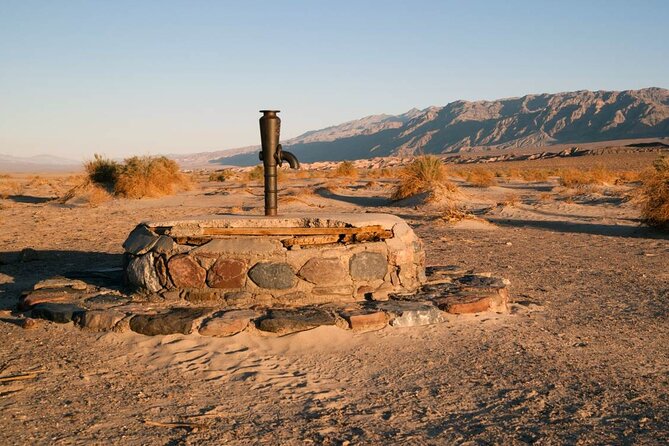
Furnace Creek Visitor Center is a useful service stop. You can find snacks, water, and restrooms, plus the famous large digital thermometer outside.
The thermometer is a bit of fun, but it also makes the climate feel real. Death Valley’s heat is not just a fact in a guidebook. Standing beside the reading gives you a memorable photo and a clear warning to respect the conditions.
The visitor center is also a sensible place to pause the tour. You can refill supplies, use the restroom, and check for updated park information before continuing.
From this area, you can reach Golden Canyon. The out-and-back walk is about three miles total and takes roughly an hour. The trail is popular and is likely to add time to the four-to-five-hour driving estimate.
I like that the tour identifies a walk rather than treating Death Valley as a series of drive-up viewpoints. Still, you need to judge the weather and your own condition carefully. The audio provides the route information, but it does not replace normal desert preparation.
Mars Hill and the strange colors of Artist’s Palette
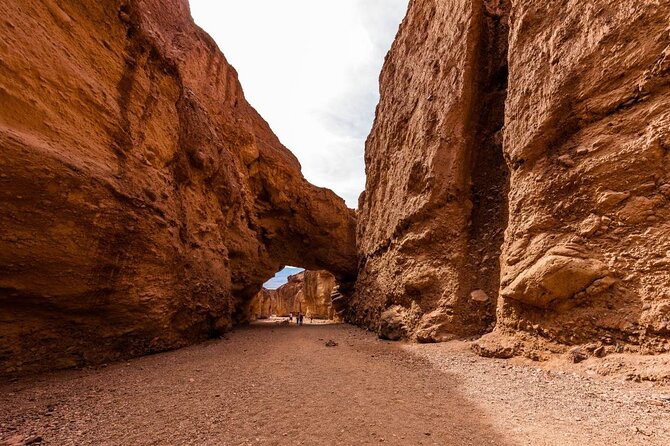
Mars Hill gets its name from its reddish, barren appearance. The ochre rocks and dusty open spaces can look more like another planet than California.
The stop is brief, but it provides a useful visual comparison. You are not just looking at brown desert hills. Mineral color, volcanic activity, erosion, and changing rock layers all play a part in the appearance.
The route then explains a different source of color at Artist’s Palette. These rocks were painted by volcanic deposits containing iron oxides and chlorite. That is different from the sedimentary deposits that give Zabriskie Point its character.
Artist’s Palette is one of Death Valley’s most memorable natural displays. The reds, pinks, yellows, greens, and darker tones can seem too bright to be natural, yet they come from the rocks themselves.
A designated viewing area lets you appreciate the colors without needing a long hike. The audio gives the sight some geological context, which makes the stop more satisfying than a quick photograph from the roadside.
Devils Golf Course and Badwater Basin
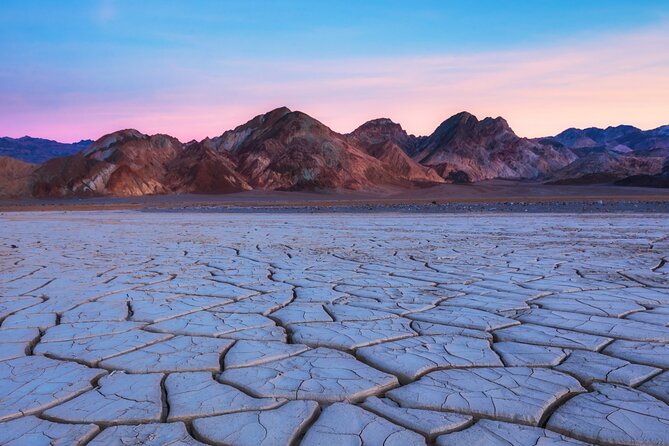
The road to Devils Golf Course is rugged and unpaved, so you should drive carefully and confirm that it is open before relying on this part of the route. The rough surface is part of the experience, but it also means you need to slow down.
The name is a joke with a point. Instead of smooth grass and tidy fairways, you find a harsh field of jagged salt formations. The surface looks rough, cracked, and hostile to almost anything alive.
Badwater Basin provides the grand finale. At 282 feet below sea level, it is the lowest point in North America. Its salt flats cover about 200 square miles, creating one of the park’s broadest and most unusual views.
The basin is best understood after the higher viewpoints earlier in the route. Dante’s View shows it from above, while Badwater lets you stand beside the salt itself. That contrast gives the drive a clear visual arc.
Current access is an important concern. Flood damage has affected Badwater Road, and conditions can change quickly. Check official alerts on the day of your visit before setting out, even if the app route was downloaded earlier.
Price, timing, and what you need to bring
The tour costs $16.99 per group of up to four people. That is a strong price if you have several people in one car. Four people would pay less than $4.25 each, while even a solo driver gets a full route for less than the cost of many guided activities.
The real value depends on how well you prepare. The audio is inexpensive, but it will not function as intended if you forget the password, choose the wrong route, or fail to download the content before losing service.
You also need a separate Death Valley National Park entrance pass. The pass is not included in the tour price and allows entry for seven consecutive days.
The tour is offered in English. Confirmation arrives at booking, followed by setup instructions and a password by email and text. Search for audio tour if you cannot immediately locate the instructions.
The booking page lists operating hours from 8:00 a.m. to 5:00 p.m., Monday through Sunday, for the stated availability period. At the same time, the app provides lifetime access with no expiry, so you can pause and return to the tour on another day or another trip.
Free cancellation is available if you cancel at least 24 hours before the scheduled start time. Cancellations inside that window are not refunded.
Who will get the most from this tour
I would recommend this experience to first-time Death Valley visitors who want more than a basic list of viewpoints. It is especially useful for people who enjoy history, geology, and short explanations while driving.
It also suits families or friends sharing one vehicle, since the price is per car rather than per person. Independent drivers will appreciate the ability to stop for photos, skip a story, or take a break without holding up a group.
The tour may be less suitable if you want a live guide who can answer questions in the moment. It also requires a little technical confidence. You need a compatible phone, GPS, the Action Tour Guide app, and enough preparation to make offline use work.
The strongest practical benefit is the offline mode. One user used it successfully without Wi-Fi or phone service, while another could not get the tour working because it had not been prepared before entering the park. That difference comes down to setup, not the desert signal.
Should you book the Death Valley audio tour?
I would book it if you are driving into Death Valley independently and want a low-cost guide that adds context without controlling your schedule. The route covers the park’s major sights, the narration is generally easy to follow, and offline playback can work very well once the download is complete.
I would skip it only if you prefer spontaneous driving with no app, or if you need a live expert beside you. Before booking, confirm current road conditions, choose the correct entrance version, download everything at home or in town, and bring the separate park pass.
For $16.99 per car, this is a sensible buy for a first visit. Just treat the setup as part of the trip, not as an afterthought.
FAQ
How long does the Death Valley audio tour take?
The driving tour takes approximately four to five hours. Stops for photos, food, walking, road conditions, and side trips can make the outing longer.
How much does the tour cost?
The price is $16.99 per group of up to four people.
Is the Death Valley park entrance fee included?
No. A separate entrance fee is required for Death Valley National Park. That pass grants access for seven consecutive days.
Does the tour work without cell service?
Yes, but you must download the tour while you have a strong Wi-Fi or cellular connection. It is designed to work offline after the download.
Where does the tour start?
Available versions include Death Valley Junction at the East Entrance, Furnace Creek Visitor Center, Beatty’s Entrance at the North Entrance, and Towne Pass at the West Entrance.
Will a guide meet me at the starting point?
No. This is a self-guided activity. You go to the selected starting point and open the Action Tour Guide app.
How does the audio start?
Enter the first story’s location in the app. The audio begins automatically when you reach the point, and later stories play based on your location.
Is the tour available in more than one language?
The tour is offered in English.
Can I pause the tour and continue later?
Yes. You can pause the tour for breaks, food, photographs, or side trips. Access does not expire, so you can also use it on another trip.
What happens if I cancel?
You receive a full refund when you cancel at least 24 hours before the scheduled start time. Cancellations or changes made less than 24 hours before the start time are not accepted for a refund.
More National Park Audio Tours in the USA
- Self-Guided GPS Audio E-Bike Tour Hawaii Volcanoes National Park
★ 4.5 · 131 reviews - Shenandoah National Park Self-Guided Driving Audio Tour
★ 4.5 · 109 reviews - Self-Guided Audio Driving Tour in Glacier National Park
★ 4.5 · 101 reviews - Rocky Mountain National Park Self-Guided Driving Audio Tour
★ 4.5 · 92 reviews
Just added around the USA
- Self Guided Driving Audio Tour of Saguaro National Park★ 3.0 · 4 reviews
- Self-Guided Audio Driving Tour of Mount Lemmon★ 5.0 · 4 reviews
- Saguaro National Park Self-Guided Audio Tour★ 3.5 · 11 reviews
- A Self Guided Audio Tour in Tombstone★ 4.0 · 11 reviews
- Catskills Scenic Byway Self-Guided Driving Audio Tour★ 4.0 · 9 reviews
- Big Bend National Park Self Guided Audio Tour Guide★ 5.0 · 12 reviews
- Self-Guided Audio Driving Tour in Catskills Scenic Byway★ 4.5 · 7 reviews
- Shiloh Battlefield Self-Guided Driving Audio Tour★ 4.0 · 9 reviews
Driving Audio Tours, compared.



Ultimate Acadia National Park Self-Guided Driving Audio Tour
Read our review →



Browse the lists this tour appears in