
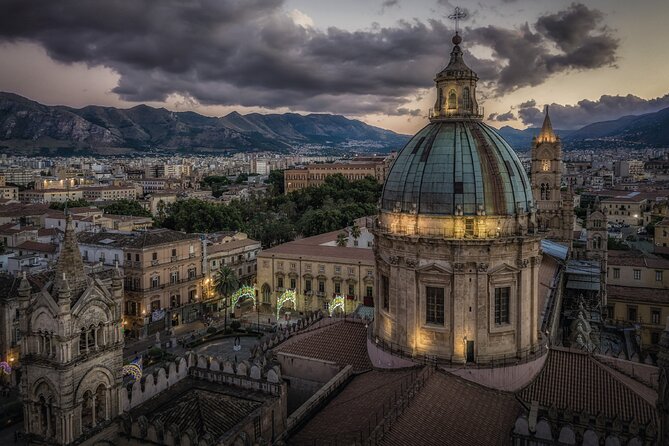
REVIEW · PALERMO AUDIO TOURS
Palermo Walking Tour with Audio and Written Guide by a Local
Palermo rewards curious walkers. This self-guided route links Arab-Norman monuments, grand squares, old markets, and two worthwhile museums for about $7.21 per person. I like the clear Google Maps links and the freedom to pause, skip, or split the route across two days. I also like the practical restaurant suggestions, which add value beyond basic sightseeing notes. The main drawback is simple: you guide yourself, and attraction tickets cost extra.
The route is designed to take six to seven hours, with about ten stops from San Giovanni degli Eremiti to the Museo delle Maioliche Stanze al Genio. The audio and written guide works in English, Spanish, Italian, German, and French. You need a smartphone and an internet connection, and one small criticism is worth noting: the audio is accessed through a password-protected website, not a traditional live guide.
Key points to know before you book

- A full Palermo route for $7.21: The low price covers the digital guide, but you pay separately for several major sights.
- Ten stops across the old city: The walk connects churches, palaces, markets, squares, neighborhoods, and museums.
- Google Maps keeps you on track: The route is easy to follow, though one section may lead through a less tidy side street.
- Flexible by design: You can listen through your phone speaker or headphones, pause whenever you like, and finish somewhere other than the stated endpoint.
- Best for independent sightseeing: You get structure and background without a fixed group or guide setting the pace.
- Allow a full day, or split it in two: The scheduled stops add up to about seven hours before meals, queues, and extra exploring.
How this Palermo audio walk works
This is not a conventional walking tour with a guide waiting at the meeting point. You begin at the Church of San Giovanni degli Eremiti, open the digital material on your smartphone, and follow the route through Palermo’s center.
The guide combines audio commentary, written explanations, maps, historical notes, curiosities, and food advice. That format works well in Palermo, where you may want to stop often. A church can take five minutes or half an hour. A market can be a quick look or a full lunch stop. You are not holding up a group either way.
The instructions for activating the guide are included with your booking confirmation. Read them carefully before you arrive. You need an internet connection to use the digital guide, and you can listen through your phone speaker or headphones.
I particularly like the route links to Google Maps. They make the experience more practical than a simple audio file with a list of addresses. You can also adjust the route to suit your day. The stated end point is the majolica museum, but because this is a self-guided product, you can stop wherever you choose.
The route allows roughly six to seven hours. That estimate makes sense when you add the listed times: two hours at the Norman Palace, one hour at Teatro Massimo, one hour at Palazzo Abatellis, one hour at the majolica museum, plus shorter visits at the other stops. Add lunch, photographs, museum queues, and detours, and a full day is sensible.
More Audio Walking Tours in Italy
- Florence: 2.5 hour Audio Guided Walking Tour led by Host
★ 4.6 · 293 reviews - Verona Walking Tour with Audio and Written Guide by a Local
★ 4.5 · 157 reviews - Bologna Walking Tour with Audio and Written Guide
★ 4.5 · 132 reviews
San Giovanni degli Eremiti and Palermo’s layered past
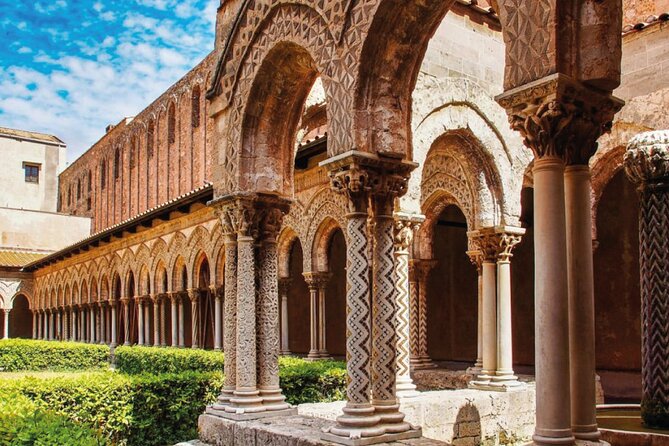
Begin at the Church of San Giovanni degli Eremiti on Via dei Benedettini. You get about 25 minutes here, which is enough to see the site and understand why it appears on Palermo’s UNESCO itinerary.
The complex carries several layers of Palermo’s past. It began with a religious foundation connected to Saint Hermes. During Muslim rule, the site became a mosque. Later, the Benedictines took charge, and the abbot held enough influence to serve as the king’s confessor.
That mixture is typical of Palermo. The city’s major monuments rarely belong to one clean period or tradition. Byzantine, Islamic, Norman, and Latin influences often share the same building or neighborhood.
Admission is not included, with a listed cost of €7. If you plan to enter, check the current opening details before setting out, since the ticket adds to the very low base price. Even if you keep the visit short, beginning here gives the route a strong sense of place.
Two hours at the Norman Palace
The Norman Palace, also called the Royal Palace, deserves the longest stop on the route. Plan for about two hours, and do not treat it as a quick photo stop.
It is described as the oldest royal palace in Europe, and its foundations reach back even further. The building occupies an older Punic and Roman site. In parts of the underground area open to visitors, you can see remains connected with the first Punic settlements.
That fact changes how you look at the palace. You are not only visiting a royal residence from the Norman period. You are walking through a site that has been reused for centuries, with one period built over another.
The palace ticket is listed at €17, so it is the most expensive admission on the route. That cost matters when you compare the tour price with the real day’s budget. The digital guide itself is inexpensive, but the sights it leads you to are not all free.
Set aside enough time here. Rushing through the palace would weaken one of the best parts of the itinerary. The two-hour estimate also gives you room to handle entry procedures and spend time with the sections that interest you most.
Palermo Cathedral and the city’s patron saint
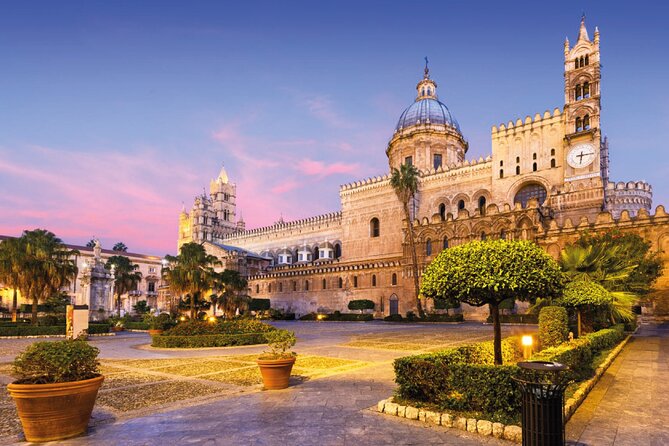
The Cathedral of Palermo is a short 25-minute stop, with free admission listed. It combines Byzantine, Islamic, and Latin elements, making it another clear example of the city’s mixed cultural character.
Inside, the cathedral includes the Diocesan Museum, a chapel containing relics of Santa Rosalia, and the tombs of Norman kings. Santa Rosalia is Palermo’s patron saint, so the chapel connects the building to the city’s religious identity, not just its architecture.
A 25-minute visit is enough for a first look, but you may want more time if you plan to visit the museum or examine the royal tombs closely. Since entry is free according to the provided details, this is one of the route’s best-value stops.
The cathedral follows the Norman Palace naturally, both geographically and historically. The route does a good job of placing major landmarks in an efficient order rather than sending you back and forth across the center.
Same place, a different route to walk:
- Rome: Pantheon Fast-Track Ticket and Official Audioguide
★ 4.5 · 27,353 reviews - Rome: Colosseum & Forum with Audio Guide App -Optional Arena
★ 4.2 · 24,770 reviews - Florence: Timed Entry to Michelangelo’s David + Audio App
★ 4.6 · 19,496 reviews - Rome: City Sightseeing Hop-on Hop-off Bus with Audioguide
★ 4.0 · 16,045 reviews
Teatro Massimo, Palermo’s grand opera house
The next major pause is Teatro Massimo, with about one hour allowed. It is Italy’s largest opera house and the third largest in Europe, a claim that gives the building real scale before you even enter.
The theater was designed by Giovanni Battista Filippo Basile and occupies a strategic position between the old city and Palermo’s later northern expansion. Its neoclassical design makes a sharp change from the medieval and Arab-Norman buildings earlier in the route.
Admission is not included, and the listed ticket price is €12. The tour does not promise a performance, so think of this as an architectural and cultural visit rather than an evening at the opera.
The hour-long stop gives you time to appreciate the building without turning the day into a race. If your interest in theaters is limited, you could shorten this stop and use the extra time at a market or museum.
Quattro Canti and Piazza Pretoria
Quattro Canti is a compact but important stop. You get about 15 minutes at Piazza Villena, the formal name for this famous intersection.
The square was shaped in the seventeenth century, when Via Maqueda crossed the older Via Vittorio Emanuele, also known as the Cassaro. The meeting of those two roads divided Palermo into four districts called the Mandamenti.
This is the kind of place where a map helps. The four-sided design is easier to understand when you know that the intersection helped organize the old city. Without context, you might simply see an attractive urban crossroads and move on.
From there, the route continues to Piazza Pretoria for another 15 minutes. The square is known for its fountain and for the nickname Piazza della Vergogna, or Square of Shame. The name comes from the reaction to the fountain itself, although the supplied information does not explain the full story.
Both squares are free and quick to visit. Their value comes from the setting and the explanation, not from a long interior visit. This is also a good point to pause, check the map, and decide if you want to keep the planned pace.
La Vucciria and Palermo’s market life
La Vucciria gives the route a more everyday side of Palermo. It is in the Loggia district, between Via Roma, Piazza San Domenico, and Via Vittorio Emanuele.
Palermo has several historic markets, including Capo and Ballarò. La Vucciria is the one included here. Its name comes from the French word boucherie, meaning butcher shop, because meat was originally sold in the area.
The market was once one of the liveliest and most chaotic places in the center. Today, the experience may vary by time and day, so you should not expect a fixed show. Go for the setting, the food possibilities, and the chance to see a part of Palermo that is different from its churches and palaces.
The stop is scheduled for 25 minutes, but this is one place where the clock may not matter. If you want a snack or a meal, use the local restaurant advice included with the guide. The route’s food tips are especially useful here because a map alone cannot tell you how to make the most of a market district.
La Kalsa, Palermo’s Islamic-era quarter
La Kalsa receives only 15 minutes, but its importance is larger than that short time suggests. It is one of Palermo’s oldest neighborhoods and dates from the period of Islamic rule.
The district still has an eastern atmosphere, reinforced by monuments built in the Arab-Norman style. This part of the walk helps you connect the individual buildings to a broader neighborhood story.
You might find that 15 minutes is enough for an introduction but not a complete exploration. Since the guide is flexible, you can slow down here if the streets and architecture catch your attention. You can also return another day without needing to repeat the whole route.
La Kalsa works best as a transition between the central squares and the museums farther south. It gives the walk a change of pace and reminds you that Palermo’s character is found in districts, not only in famous monuments.
Palazzo Abatellis and Gothic Renaissance design
Palazzo Abatellis is scheduled for one hour. Located in Piazza Magione, it was built in the fifteenth century for Francesco Abatellis, a Sicilian nobleman.
Architect Matteo Carnilivari designed the building, combining Gothic elements with Renaissance influences. That blend makes it a useful companion to the earlier Arab-Norman sights. Palermo’s architecture is not neatly divided into separate boxes, and this palace adds another layer to the city’s design story.
Admission is not included. The provided information does not give a ticket price, so check the current cost if you want to enter. The hour-long allocation suggests that this is more than an exterior photo stop.
I like having a museum-style visit in the second half of the route. After several large public monuments and outdoor squares, Palazzo Abatellis gives you a more focused setting. It also helps break up the walking day.
The majolica collection at Stanze al Genio
The final listed stop is the Museo delle Maioliche Stanze al Genio, with about one hour allowed. The private collection fills eight rooms and is organized by period and geographical origin.
The collection includes tiles made mainly in Campania and Sicily between the fifteenth and nineteenth centuries. These were used for floors in noble and middle-class homes, so the museum connects decoration with domestic life.
This is a good ending for the route because it is specific and different from the larger monuments. You are not simply seeing another church or palace. You are looking at the surfaces people lived with, and at the changing tastes of households across several centuries.
Admission is not included. The stated final destination is Rooms at the Museum of Majolica Genius on Via Giuseppe Garibaldi, 11, but remember that you are not required to finish there. You can end earlier if you are tired, or continue after the museum if your schedule allows.
What the $7.21 price really buys you
At $7.21 per person, the digital guide is inexpensive for a route that can fill most of a day. The main value comes from organization: the sights are arranged in a sensible order, the audio is paired with written material, and Google Maps links reduce the work of planning.
The price does not cover entry to San Giovanni degli Eremiti, the Norman Palace, Teatro Massimo, Palazzo Abatellis, or the majolica museum. The listed costs for the first three are €7, €17, and €12, or €36 before any museum tickets. That is a major distinction.
I would view this as a low-cost planning tool, not a complete sightseeing package. If you only want to walk past the buildings and visit the free squares and cathedral, the value is excellent. If you enter every paid attraction, the total day becomes much more expensive.
Group discounts are available, though no specific discount amount is provided. The product is offered in English, while the audio and text are also available in Spanish, Italian, German, and French.
Strengths, limits, and practical cautions
The strongest feature is flexibility. You can listen again when you want, pause the route, choose your own pace, and split the sights between two days. That is particularly helpful if you dislike being hurried through a church or museum.
The route is also praised for clear instructions and useful maps. Most people should find the Google Maps connection practical, especially in Palermo’s old center, where streets can change character quickly.
There are limits. One route section may send you down an alley with noticeable waste, a reminder that a mapped route is not always the prettiest route. You can use your judgment and adjust the path.
The digital guide is accessed through a website with a password. That is not difficult if your phone is charged and connected, but it is less straightforward than joining a person at a meeting point. Read the activation instructions before you start.
The product has a 4.4 rating from 20 reviews, with 90 percent recommending it. That is a positive signal, though the sample is not large. The feedback points most strongly to route efficiency, interesting explanations, clear instructions, and the comfort of exploring without a group.
Free cancellation is available up to 24 hours before the start time. Changes or cancellations inside that window are not accepted for a refund. Service animals are allowed, public transportation is nearby, and most people can participate. The stated maximum is 104 people, though the self-guided format means you are not walking as one organized group.
Should you book this Palermo walking tour?
Book it if you want a cheap, flexible introduction to Palermo and prefer to control your own pace. It is especially useful when a live tour is sold out, canceled, or simply not your style. The route gives you a strong first-day framework and enough background to make the major sights more meaningful.
Skip it if you want personal conversation, spontaneous answers, or a guide who can change the route on the spot. You may also decide to plan the walk yourself, since Palermo’s central sights can be visited independently.
My advice is to book it for your first day, then treat the route as a framework rather than a strict schedule. Start early, bring headphones if you prefer privacy, allow extra time for the Norman Palace, and use the restaurant suggestions around the market districts. For $7.21, the structure and flexibility make this a sensible buy, as long as you budget separately for admission tickets.
FAQ
How long does the Palermo audio walking tour take?
The experience is designed to take approximately six to seven hours. The listed stop times add up to about seven hours, before meals, queues, photographs, and extra exploring.
Where does the route begin?
It begins at the Church of Saint John of the Hermits, at Via dei Benedettini, 16, in Palermo.
Where does the route end?
The stated final destination is the Museo delle Maioliche Stanze al Genio at Via Giuseppe Garibaldi, 11. Since the guide is self-directed, you can choose to finish somewhere else.
Is the tour available in English?
Yes. The experience is offered in English, and the audio and written guide are also available in Spanish, Italian, German, and French.
Do attraction tickets come with the tour?
No. Tickets are not included for San Giovanni degli Eremiti, the Norman Palace, Teatro Massimo, Palazzo Abatellis, or the majolica museum. The cathedral, Quattro Canti, Piazza Pretoria, La Vucciria, and La Kalsa are listed without an admission charge.
What do I need to use the digital guide?
You need a smartphone with an internet connection. The activation details are provided in your voucher, and you can hear the audio through your phone speaker or headphones.
Just added around Italy
- Torino Walking Tour with Audio and Written Guide by a Local★ 4.5 · 35 reviews
- Medieval Canals and Fountains: A Treviso Self-Guided Audio Tour★ 4.5 · 4 reviews
- Trapani Walking Tour with Audio and Written Guide by a Local★ 4.0 · 8 reviews
- Trento Walking Tour with Audio and Written Guide★ 4.5 · 11 reviews
- Sicily: Selinunte Park Entry Ticket & Sicily Digital Audio Guide★ 4.5 · 4 reviews
- Taormina Walking Tour with Audio and Written Guide by a Local★ 4.5 · 41 reviews
- Taranto Walking Tour with Audio and Written Guide by a Local★ 5.0 · 5 reviews
- Siracusa Walking Tour with Audio and Written Guide by a Local★ 5.0 · 59 reviews
Walking Tours, compared.
City Monuments Guided Walking Tour with Audio Guide
Read our review →
Self Guided Classic Freedom Trail Location Aware (GPS) Walking Audio Tour
Read our review →
Self-Guided Historical Walking Tour (Audio Guide)
Read our review →
Cape Cod & Provincetown Self-Guided Driving & Walking Audio Tour
Read our review →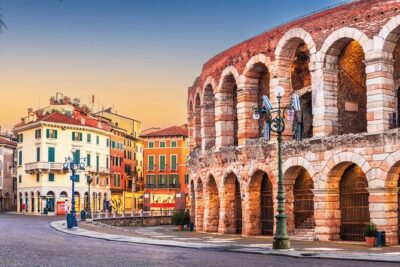
Verona Walking Tour with Audio and Written Guide by a Local
Read our review →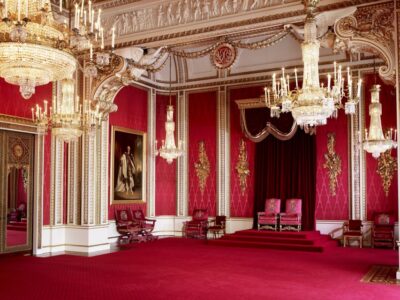
Royal Walking Tour and Buckingham Palace Audio Tour
Read our review →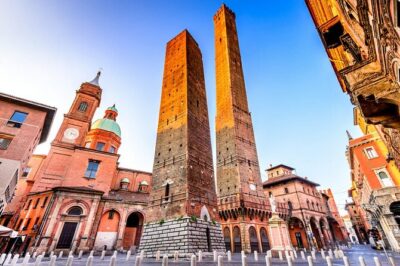
Bologna Walking Tour with Audio and Written Guide
Read our review →Browse the lists this tour appears in