

REVIEW · NEW YORK CITY AUDIO TOURS
New York’s Iconic Central Park: A Self-Guided Audio Tour
Central Park has more stories than paths. This self-guided walk links famous sights from the Plaza Hotel to The Dakota, using an Emmy-nominated storyteller and the VoiceMap app to turn a stroll into a guided New York experience. I like the freedom to start when you want and the way the tour mixes major sights with odd, memorable details, from a runaway zoo animal to a heroic dog with the wrong name. The main drawback is navigation: Central Park paths can loop, and one user had trouble with the app repeatedly reporting that the route was off course.
At $14.99 per person, this is a sensible choice if you want structure without joining a group. I also like that the tour is private by design, since only your own party takes part. Still, you need your own phone and headphones, and the audio is offered only in English.
Key details before you set out

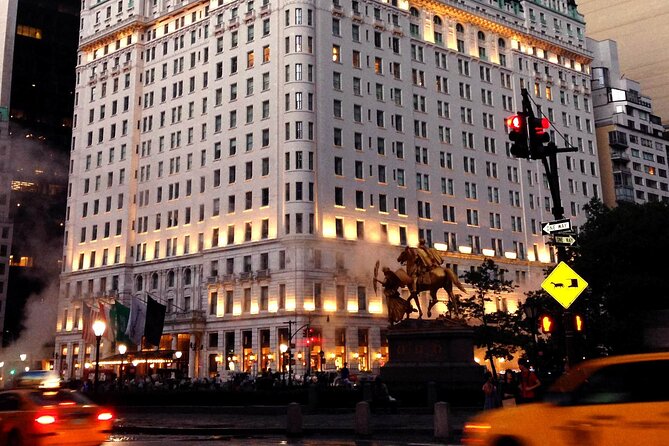
- Start at Grand Army Plaza: Meet near The Plaza Hotel at 768 Fifth Avenue, then walk into Central Park.
- Finish by The Dakota: The route ends at 1 West 72nd Street after passing Strawberry Fields.
- Plan for 90 minutes to two hours: The stated walk is about 90 minutes, but pauses, photos, and wrong turns can lengthen it.
- Use the VoiceMap app offline: Audio, maps, and geodata can be downloaded for use without a live connection.
- Hear stories beyond the postcard sights: Topics include Sherman, Balto, Central Park Zoo, Bethesda Fountain, and John Lennon.
- Pay for flexibility, not admission: The $14.99 fee covers the audio tour only, not food, transportation, museums, or other attractions.
From The Plaza Hotel into Central Park
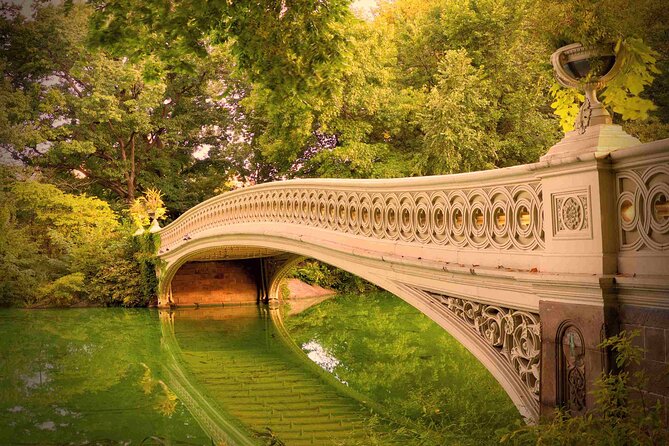
The tour starts at Grand Army Plaza, in front of The Plaza Hotel. This is a useful meeting point because it is easy to identify, and it gives you a clear transition from Fifth Avenue into the park.
The opening section explains how VoiceMap works while you walk. That matters because this is not a tour with a guide waiting at a fixed spot. Your smartphone supplies the narration, and the app uses location data to move the story along as you reach different points.
I would download the tour, audio, map, and geodata before arriving. Offline access is included, so you can avoid relying on a strong mobile signal once you are among the park paths. You also need to bring your own phone and headphones. Neither is supplied.
The route is designed for your group alone. That means you can listen at your own pace instead of keeping up with a large walking party. You can pause for photographs, stop to look around, or replay a section if the park distracts you. The tradeoff is that no person is there to correct a navigation error or answer a question.
More Self-Guided Audio Tours in the USA
- NYC: St. Patrick’s Cathedral Official Self-Guided Audio Tour
★ 3.5 · 45 reviews - New York City’s Financial District: A Self-Guided Audio Tour
★ 4.5 · 8 reviews - New York City’s High Line: A Self-Guided Audio Tour
★ 5.0 · 4 reviews
Pulitzer Fountain and the story of Sherman
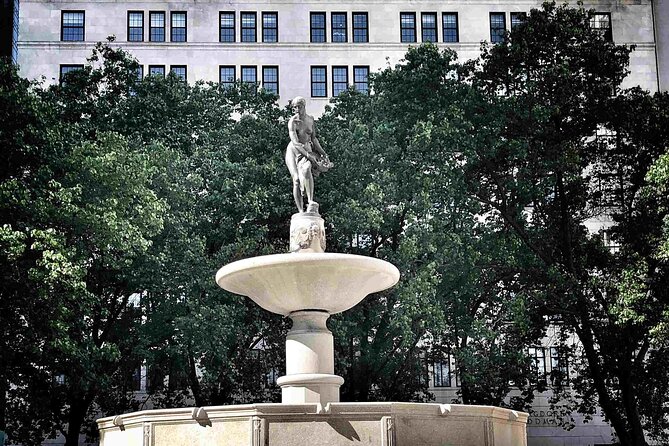
One of the first points is the Pulitzer Fountain, designed in 1916 by Thomas Hastings. Hastings was also connected with the firm that worked on the New York Public Library, giving the fountain a useful link to the grand civic architecture around Fifth Avenue.
The audio uses the fountain as more than a quick photo stop. It gives you a sense of how Central Park’s art and design connect with the city outside its gates. Since the tour is moving at walking speed, you can look at the fountain while the story plays rather than reading a long panel.
You then pass the statue of William Tecumseh Sherman. His Civil War reputation gets a vivid detail: during the Battle of Shiloh, his horse was shot from under him. That sort of small fact is one of the tour’s strengths. It gives a statue a human edge and helps you remember what you are seeing.
I would not expect a full military biography here. The audio is built for a moving walk, so each stop gives you a focused story rather than a long lecture. That keeps the pace lively, though anyone wanting detailed historical analysis may find the treatment brief.
Gapstow Bridge and Central Park on screen
Gapstow Bridge is one of the most recognizable points on the route. It has appeared in films and television programs including Home Alone 2, The Devil Wears Prada, Gossip Girl, and Enchanted.
The appeal here is visual. The bridge gives you a classic Central Park view, and the screen connections help explain why the scene may look familiar even if you have never visited before. I like this kind of context because it links the park to the city’s wider culture without requiring you to enter a museum or buy a ticket.
You should allow a little extra time at Gapstow Bridge for pictures. The stated duration is roughly 90 minutes, but this is a walk you can pause. The app lets you stop and start, so you are not forced to choose between listening and enjoying the view.
The route is not a timed attraction with a door that closes. Its open schedule runs every day, and the tour can be started when you are ready. That is useful if you are fitting Central Park around a museum, meal, or other New York plans.
The Great Zoo Escape and Balto’s real identity
The route passes Central Park Zoo and tells the story of the Great Zoo Escape of 1874. The title alone suggests a lively change of pace from statues and formal park design. This is the sort of unusual incident that can make the walk appealing to families and to anyone who prefers a good story over a list of dates.
You do not need a ticket to the zoo for the audio route itself. Entrance fees to museums and other attractions are not included, so treat the zoo as a sight along the walk unless you make separate plans to enter.
Next comes the statue of Balto. The audio explains the famous dog’s role in saving Nome, Alaska, and adds a memorable correction: Balto was not actually called Balto. That detail gives the stop a little mystery and makes the statue more than a familiar animal monument.
The sequence works well because it shifts from a public institution to a personal tale of endurance and fame. You get a sense of how Central Park collects stories from many parts of American life, not just New York.
More Self-Guided Audio Tours in New York City:
- West Village’s Flappers, Freaks & Punks: A Self-Guided Audio Tour
★ 5.0 · 4 reviews - The Battery: A Self-Guided Audio Tour from Bowling Green Park to Stone St
★ 5.0 · 3 reviews - Boho Greenwich Village: A Self-Guided Audio Tour
★ 5.0 · 3 reviews - Broadway: A Self-Guided Audio Tour of the World’s Iconic Theatre District
★ 4.5 · 3 reviews
Indian Hunter and the Mall’s cathedral-like walk
John Quincy Adams Ward’s Indian Hunter statue is another stop along the route. You hear about both the statue and its artist, which gives you a reason to look closely rather than simply pass by.
The tour then guides you down the Central Park Mall. Many people refer to this walkway as cathedral walk because of its long, formal design and the feeling created by the trees and open path. The audio explains the nickname while you experience the walkway yourself.
This section is likely to be one of the calmer parts of the route. You are not jumping from one isolated object to another. Instead, the walk gives you time to notice the park’s design as a whole.
The tour also addresses a major gap in Central Park’s public art. Until August 2020, there was not a single statue in the park honoring a real woman. That date marked the 100th anniversary of the 19th Amendment, which gave women the right to vote. The point adds a useful layer to the park’s monuments, showing not only who was remembered, but who was left out.
Bethesda Terrace and the fountain below
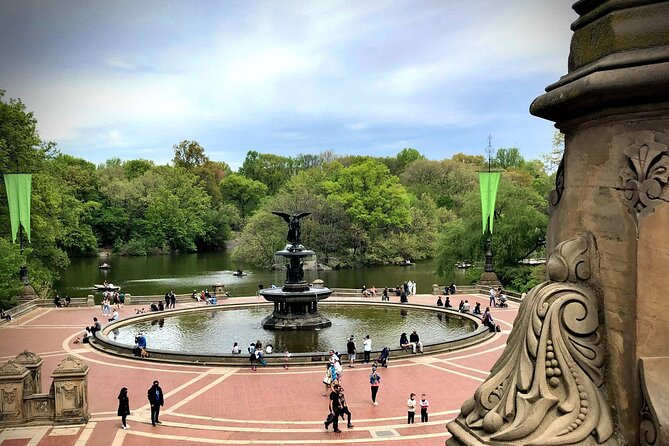
Bethesda Terrace provides one of the route’s strongest visual pauses. From the terrace, you can take in views across the park while hearing about the terrace’s history.
I like this part because it combines setting and explanation. The terrace is not presented as a decorative stop alone. Its position helps you understand how Central Park designers created grand spaces within a city park.
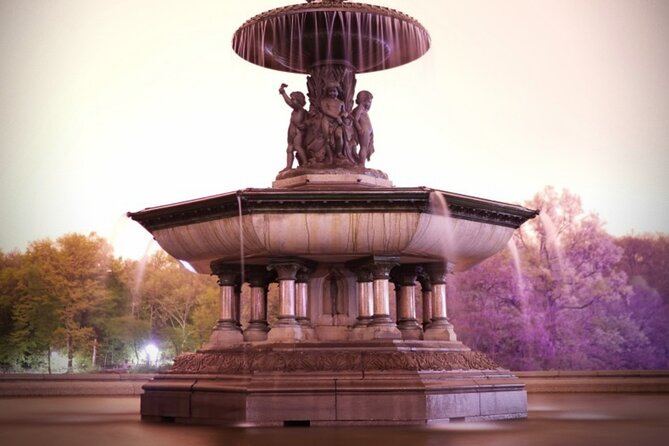
The route continues to Bethesda Fountain, one of the park’s best-known landmarks. You hear its history while walking past it. Since the fountain is included in a larger route, you do not spend the whole tour in one crowded photo area. You get the fountain, the terrace, and the walkways around them as connected parts of the park.
This is also a good place to pause the audio. The tour allows you to stop and start, and there is no reason to rush past a major view simply to maintain the listed 90-minute pace. If you take photos or sit for a while, plan closer to two hours.
Bow Bridge and the darker side of the park
Bow Bridge brings a change in mood. It is one of the park’s most recognizable bridges, but the audio also tells you about some of the horrors that have unfolded in its shadows.
That contrast is useful. Central Park is often sold through romance, film scenes, and scenic views. The darker stories remind you that this is also a real urban space with a long and sometimes troubled past.
The tone may not suit someone looking for a purely cheerful family walk. The route includes stories about murder and difficult events, so you should keep that in mind when deciding who will enjoy the narration. For many people, though, the contrast makes the park feel less like a postcard and more like a living part of New York.
The bridge itself is another place where I would pause the audio for a moment. You can take in the setting first, then resume the story when you are ready.
Strawberry Fields and the walk to The Dakota
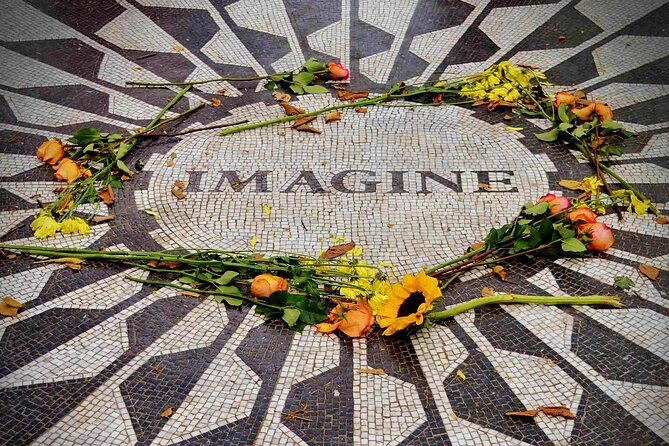
The tour passes through Strawberry Fields, the memorial area connected with John Lennon. Here, the narration discusses Lennon’s murder, bringing the walk into a more recent and deeply personal chapter of New York history.
The subject is serious, and it leads naturally toward the tour’s endpoint. You continue to The Dakota, the historic hotel at 1 West 72nd Street, where the audio explains how the building came to be before ending outside.
Finishing at The Dakota gives the tour a clear shape. You begin near the Plaza Hotel on the southern edge of the park, cross through several of its most familiar spaces, and end on the Upper West Side. It is not a loop, so think about your plans after the walk. The endpoint is near public transportation, but transportation itself is not included.
The route’s ending also makes practical sense for a day in Manhattan. You can continue from The Dakota into the surrounding neighborhood, or simply use the nearby transport links to reach your next stop.
Is $14.99 a fair price?
At $14.99 per person, the tour costs less than many live guided walks, but you are paying for convenience and access rather than personal attention. You receive lifetime access to the English tour, along with the VoiceMap app and offline audio, maps, and geodata.
That lifetime access improves the value if you want to repeat the walk or split it across different visits. You can also pause it often, which is helpful if you want to stop for pictures or explore a nearby sight.
The price does not cover anything beyond the audio experience. Bring your own smartphone and headphones. Food, drinks, transportation, museum admission, and other attraction tickets cost extra.
The private format is another part of the value. Your group does not share the guide with strangers, and you can control the pace. If you prefer asking questions, hearing local recommendations, or getting help with directions, a live guide may justify a higher price.
Navigation, timing, and the one real warning
The main practical concern is route finding. One person reported that the app was hard to use because Central Park paths seemed to send the route in circles and repeatedly announced that the user was lost. The provider issued a refund and asked for more information, but the problem is still worth taking seriously.
I would pay close attention to the map and keep the phone charged. Download the content before starting, and do not treat the app as a substitute for common sense if a path looks wrong. Central Park is large, and its paths can feel less direct than a city street grid.
Most people who can participate in a normal walking tour should be able to take part, and service animals are allowed. Still, the experience involves walking through the park for up to two hours, with pauses and route adjustments depending on your pace.
Who should choose this Central Park walk?
I would recommend it to you if you like history in small portions, want to avoid a fixed group schedule, and enjoy deciding how long to spend at each sight. It is also a good fit if you want film connections, unusual stories, and major Central Park landmarks in one route.
Families may enjoy the zoo escape and Balto story, though the sections about murder and darker events may not suit young children. Film fans will appreciate Gapstow Bridge, while anyone interested in public art will get useful context at the Sherman, Indian Hunter, and Mall stops.
I would hesitate if you dislike smartphone navigation or want a guide beside you. The single published 1-star account focused on app use, not the subject matter, and that is the clearest warning attached to this experience.
Should you book it?
Book this tour if you value freedom, offline access, and a private walking pace more than live interaction. For $14.99, it gives you a well-shaped route from The Plaza Hotel to The Dakota and covers several of Central Park’s most recognizable sights.
Skip it if you need guaranteed navigation help, a guide who can answer questions, or a tour in another language. For everyone else, download the content in advance, bring headphones, allow closer to two hours, and treat the audio as a flexible companion rather than a strict marching order.
FAQ
Where does the Central Park audio tour begin?
It begins in Grand Army Plaza, in front of The Plaza Hotel at 768 Fifth Avenue, New York, NY 10019.
Where does the tour end?
The tour ends in front of The Dakota at 1 West 72nd Street, New York, NY 10023.
How long does the tour take?
The walk takes approximately 90 minutes to two hours. The stated tour length is about 90 minutes, but stops, photos, and pauses can make it longer.
What language is the tour offered in?
The tour is offered in English.
Do I need a smartphone and headphones?
Yes. You need to provide your own smartphone and headphones. The VoiceMap app is available for Android and iOS.
Can I use the tour without mobile data?
Yes. Offline access to the audio, maps, and geodata is included. Download the tour before you begin.
Is this a group tour?
No. It is a private activity for your own group, with no other participants included in your audio experience.
Are attraction tickets included?
No. Museum admission, other attraction tickets, food, drinks, and transportation are not included.
Just added around New York City
- The Battery: A Self-Guided Audio Tour from Bowling Green Park to Stone St★ 5.0 · 3 reviews
- New York City’s High Line: A Self-Guided Audio Tour★ 5.0 · 4 reviews
- West Village’s Flappers, Freaks & Punks: A Self-Guided Audio Tour★ 5.0 · 4 reviews
- Boho Greenwich Village: A Self-Guided Audio Tour★ 5.0 · 3 reviews
- New York City’s Financial District: A Self-Guided Audio Tour★ 4.5 · 8 reviews
- Self-Guided Audio Tour of New York City★ 4.5 · 2 reviews
- Guided Tour (with Audio) Hamilton Musical in Lower Manhattan NYC★ 5.0 · 11 reviews
- Broadway: A Self-Guided Audio Tour of the World’s Iconic Theatre District★ 4.5 · 3 reviews
Self-Guided Tours, compared.

Acropolis Ticket & Optional Self-Guided Audio Tours
Read our review →


Ultimate Acadia National Park Self-Guided Driving Audio Tour
Read our review →


Santorini: Akrotiri Ticket with Optional Self-Guided Audios
Read our review →
Browse the lists this tour appears in