REVIEW · ITALY AUDIO TOURS
Castel Sant’Angelo Entry Ticket & Audioguide
Rome keeps its best surprises behind thick walls. Castel Sant’Angelo packs centuries into one visit, from Roman mausoleum to medieval fortress and papal retreat. I especially like the rooftop view of Rome and the freedom to explore with an audio guide at your own pace. The main caution is price: at $34 per person, this costs far more than the official adult admission of €16.
The ticket can save time when the entrance queue is long, and the self-guided format works well for independent visitors. You will need your own charged phone, internet access, and headphones, and the ticket process requires care because late arrivals and no-shows are not refunded.
Key points to know before you go
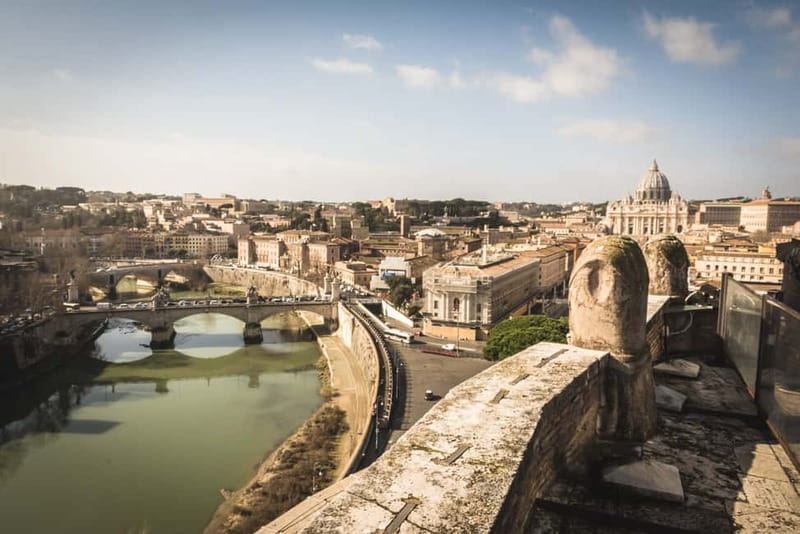
- The terrace is the payoff: You can look across Rome toward Vatican City, the Tiber River, and the Bridge of Angels.
- Five floors tell several Roman stories: The building changes from imperial tomb to fortress, defensive post, museum, and papal residence as you move upward.
- The audio guide is on your phone: Download the app before arrival and bring headphones.
- Skip-the-line value depends on the day: The $34 price can make sense in busy periods, but it is a poor deal when the entrance is quiet.
- The route includes stairs: The panoramic terrace requires climbing, so this is not suitable for wheelchair users or people with mobility impairments.
- Allow about one to two hours: You can move quickly, but the art, rooms, and views reward a slower visit.
Why Castel Sant’Angelo feels different from other Rome sights
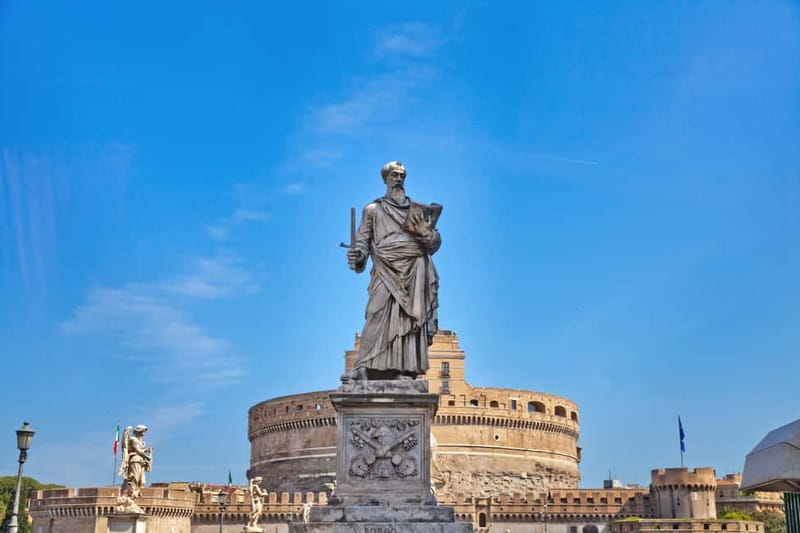
Castel Sant’Angelo is not simply a museum inside an old building. The building itself is the main exhibit. You can see how one enormous Roman structure was reused again and again as political needs changed.
The original building was created as a monumental tomb. Later, it became a fortress during the medieval period and a defensive position against invading forces. Popes then used parts of it as a residence and refuge. That sequence gives the visit a clear purpose: you are not looking at unrelated rooms, but following the building’s long change of role.
I like this kind of sight because the history is easy to read in the architecture. Thick defensive walls, narrow routes, cells, grand rooms, art, and elevated viewpoints all belong to different chapters of the same place.
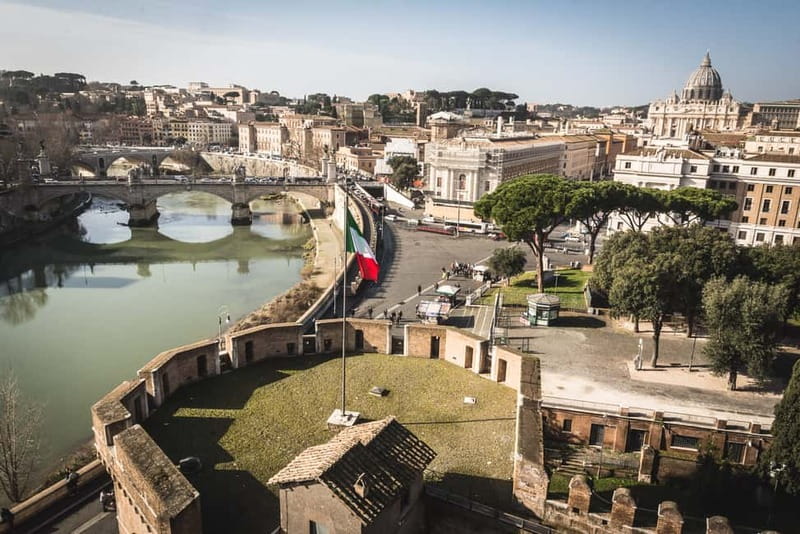
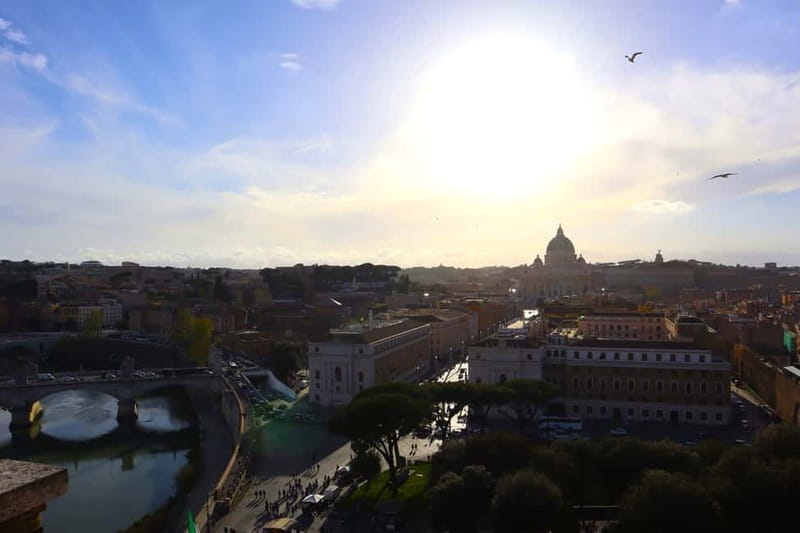
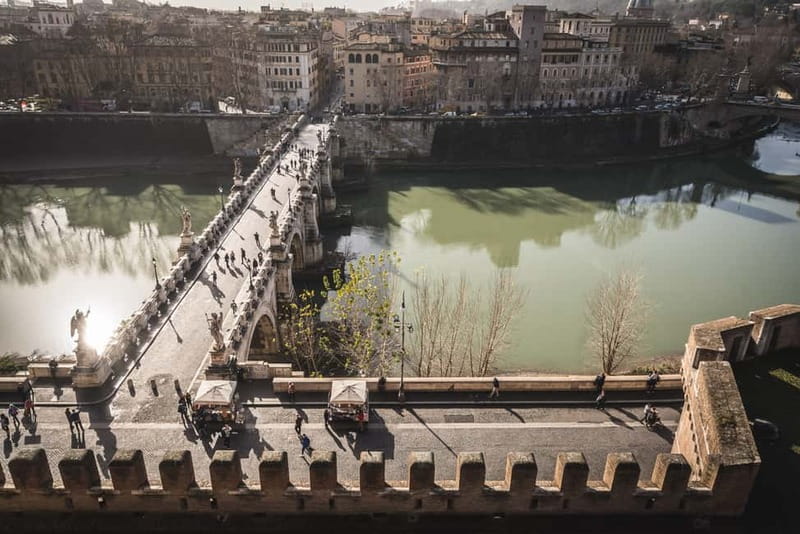
The setting helps. Castel Sant’Angelo sits on the right bank of the Tiber, close to the Bridge of Angels and Vatican City. You get a strong sense of Rome’s geography from above, especially when the river, bridge, domes, and rooftops line up from the terrace.
A few more audio tours around Italy worth a look
- Rome: Pantheon Fast-Track Ticket and Official Audioguide
★ 4.5 · 27,353 reviews - Rome: Colosseum & Forum with Audio Guide App -Optional Arena
★ 4.2 · 24,770 reviews - Florence: Timed Entry to Michelangelo’s David + Audio App
★ 4.6 · 19,496 reviews
Arriving at the entrance with a digital ticket
Your meeting point is the attraction itself, but this is not a guided tour with someone leading you through the castle. Go to the main entrance, show the emailed ticket and valid identification, and enter at the selected date and time.
The ticket is sent to the email used during booking, within 24 hours before the activity. That timing matters. Do not wait until you are standing outside Castel Sant’Angelo to check whether you have received it. Keep an eye on your inbox, and make sure the name and contact details entered during booking match your passport or identification.
The booking requires the complete name of each participant as shown on their passport. You must also bring valid identification for verification. Tickets are valid only for the chosen date and time slot, so arriving late can turn a small delay into a lost booking.
The instructions say there is no staff member included to meet and escort you at the entrance. In practice, some visitors have found a local representative outside who handed over tickets or helped with the app. That assistance is not something I would count on. Treat the visit as independent entry, and prepare the digital ticket yourself.
A few people have had trouble spotting the representative when one was present, especially when the person was not holding a clear flag or company sign. The safest plan is to go directly to the main entrance and follow the booking instructions rather than waiting around for a guide.
The lower levels: a Roman tomb turned into a fortress
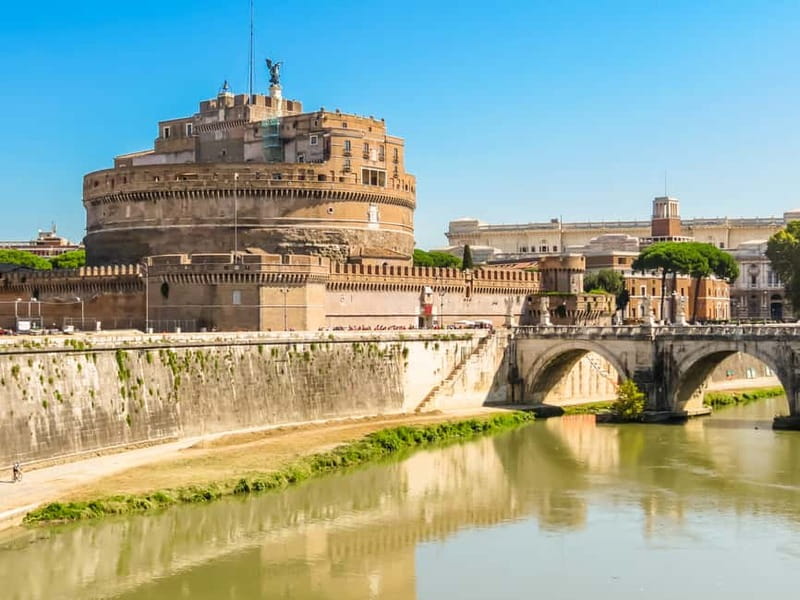
As you enter, the first thing to understand is the original purpose of the structure. Castel Sant’Angelo began as a monumental tomb, built to hold the remains of important Roman figures. The massive cylindrical form still gives the building a solemn, fortified character.
The visit takes you through five floors, generally following a route toward the central spiral ramp. The layout is not a quick corridor-and-gallery visit. You will pass through changing spaces, and the physical climb helps explain how the building worked as a defensive stronghold.
The lower areas feel more severe than the papal rooms above. Cells and defensive sections show the harsher side of the castle. These spaces are valuable because they keep the visit grounded. Castel Sant’Angelo was not only a place of ceremony and art. It was also a secure refuge, a prison, and a military post.
The route can be uneven in character, with stairs and inclines. Comfortable shoes are a must. Bring water, especially in warm weather, since the combination of walking, climbing, and Rome’s heat can wear you down.
Papal rooms, frescoes, and Renaissance decoration
Higher up, the mood changes. The castle contains rooms that served as a papal residence, with Renaissance and Baroque works adding color and ceremony to the heavy military shell.
This contrast is one of the strongest parts of the visit. A building created as a tomb and later strengthened as a fortress was also fitted with rooms suitable for powerful religious leaders. The art and frescoes show how the popes wanted comfort, status, and beauty inside a place built for protection.
The frescoes are especially worth taking time with. The audio guide can help you notice details you might otherwise pass by, and you can pause whenever a room interests you. That is one advantage over a tightly scheduled group tour: you do not need to keep pace with anyone else.
The museum also includes artifacts, weaponry, and relics. The range is broad enough to make the castle feel like more than a set of grand rooms. You get military objects, decorative art, painted interiors, and evidence of daily life in a papal stronghold.
If you enjoy architecture, art, or Roman political history, the combination works well. If your main interest is ancient Rome alone, remember that much of the most visually polished material belongs to later periods.
Same place, a different route to walk:
- Rome: City Sightseeing Hop-on Hop-off Bus with Audioguide
★ 4.0 · 16,045 reviews - Pompeii: Entry Ticket with Audio Guide
★ 4.1 · 13,491 reviews - Venice: La Fenice Opera House Entry Ticket with Audio Guide
★ 4.6 · 11,742 reviews - Rome: Colosseum, Forum, Palatine Hill Entry & Audioguide App
★ 4.4 · 10,957 reviews
The chamber of ashes and the castle’s darker side
One of the more striking sections is the chamber of ashes, connected with the building’s original funerary purpose. Here, the castle returns to the question it began with: who was meant to be remembered, and how did Rome display power after death?
The setting is less decorative than the papal apartments, which makes it useful as a pause in the visit. You move from painted rooms and weapons back to the building’s role as a tomb and memorial.
The castle’s transformations are not always easy to grasp from architecture alone. This is where the digital audio guide earns its place. It gives you a thread to follow as the function of each area changes, helping you connect the tomb, fortress, prison, residence, and museum.
The guide is available in English, French, Italian, Chinese, German, and Spanish. You download the app to your smartphone before the visit. Bring headphones, since headsets are not included, and charge your phone fully before leaving your hotel.
The spiral ramp and the climb to the terrace
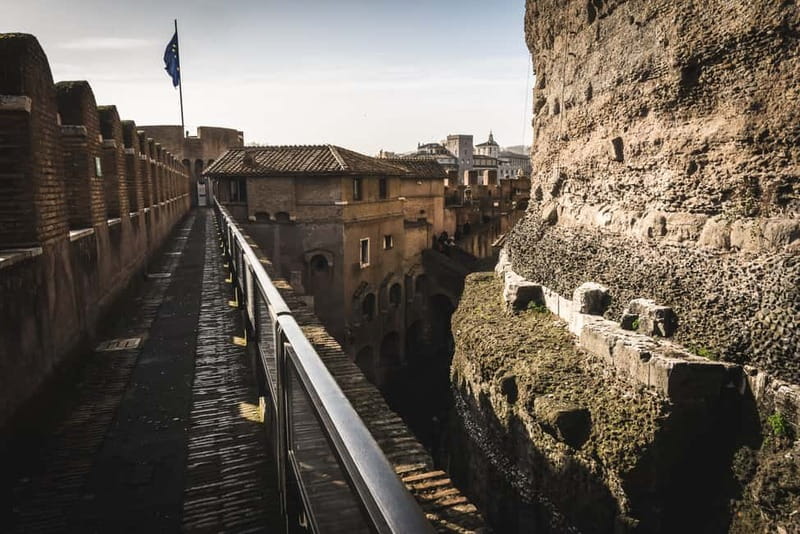
The route gradually leads you upward toward the panoramic terrace. You will climb stairs to reach the top, so this is the part of the visit that requires the most physical effort.
The climb is worthwhile, but it is not suitable for everyone. The attraction specifically advises against visiting if you have a mobility impairment or use a wheelchair. Anyone with a fear of heights should also take the upper levels at a comfortable pace, since the open views and elevated walkways can feel exposed.
The castle is large enough to occupy a couple of hours, though some people move through it in about an hour. I would allow at least 90 minutes if you want to listen to the guide, stop for photographs, and read the displays without rushing.
There is also a small café or bar on an upper level. It provides a useful break, particularly on a hot day, and several visitors have enjoyed sitting there before continuing to the roof. It is not the reason to buy the ticket, but it adds flexibility to the visit.
The terrace view: Rome laid out below you
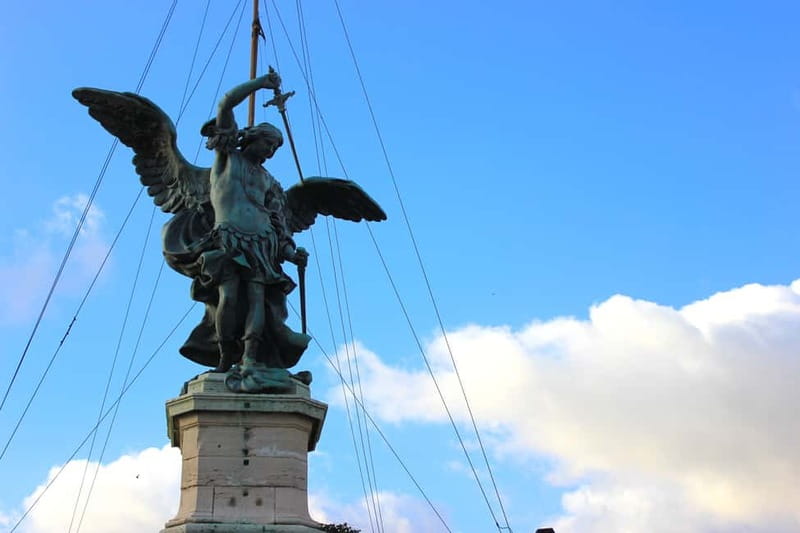
The top terrace is the clearest reason to include Castel Sant’Angelo in a Rome itinerary. From here, you can spot Vatican City, the Tiber River, and the Bridge of Angels. The view gives you a practical sense of how the central city fits together.
The Bridge of Angels is especially important to the experience because it leads directly toward the castle and frames the approach. From above, you can appreciate the connection between river, bridge, fortress, and Vatican area in a way that is difficult from street level.
The view is best treated as part of the historical visit, not just a photo stop. The castle was built to control and protect a strategic part of Rome. Looking over the river helps explain why this site mattered.
Try not to rush the terrace. The art and rooms below are worthwhile, but the open view is the moment that makes the visit feel complete. A small café break can also make this an easy stop between nearby sights.
Is the $34 price fair?
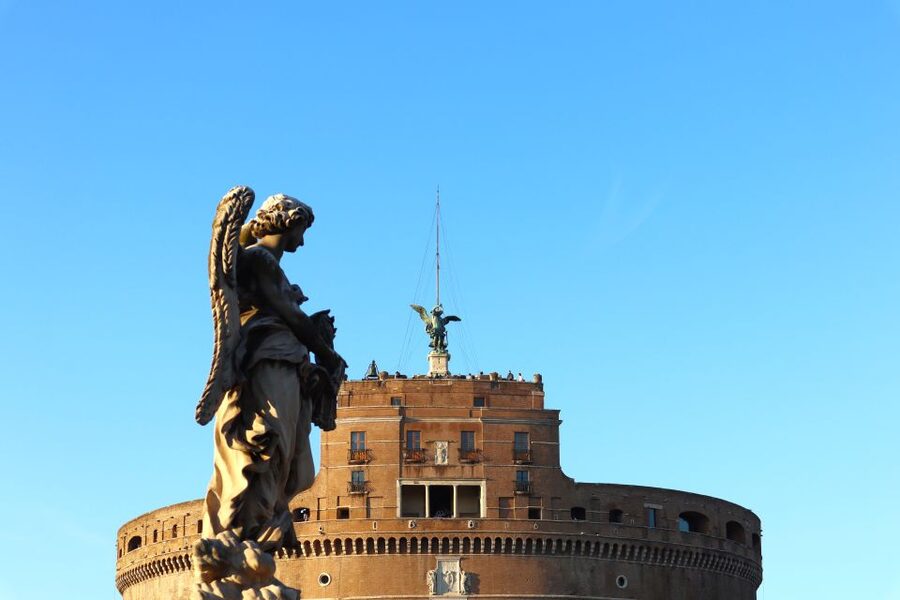
The official adult admission is €16, and entry is free for children under 18. At $34 per person, this package is therefore expensive if you only want admission.
The extra cost pays for convenience and the digital audio guide rather than a personal tour. In high season, the time saved by bypassing a long ticket-office queue can be valuable. Several visitors have entered quickly while other lines were waiting to buy tickets or pass through the ticket counter.
In a quiet period, the calculation changes. If there is little or no line, you may find the official ticket price better value. One person paid much more through a ticket package than the door price and felt the difference was hard to justify. That is a fair warning.
I would consider this ticket mainly when:
- You are visiting during a busy period.
- You want a reserved time slot.
- You prefer an audio guide to reading everything alone.
- You value flexible, independent pacing.
- You do not want to risk a long ticket-office wait.
For a family with children under 18, compare the package price carefully. Children enter the attraction free according to the official pricing information, so paying a full package rate for every child may not be good value.
The audio guide and how to make it work
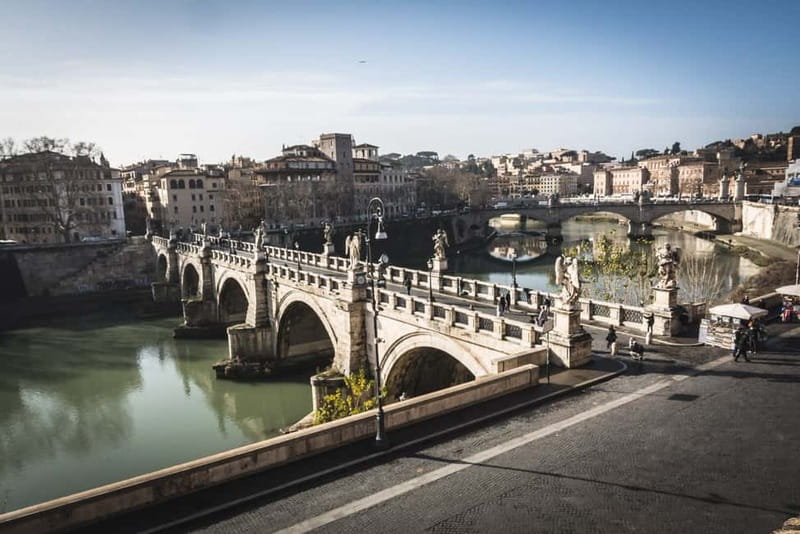
The audio guide is an app, not a live guide and not a provided headset. You need to download the application before the visit, using the instructions sent by email.
The format suits you if you like to stop, start, and choose your own order. You can listen to historical background while walking through the rooms, then pause for photographs or a closer look at the frescoes.
The guide is also useful for groups. One person can move ahead while another takes time with a display, and you are not tied to a guide’s speaking schedule. The downside is simple: the experience depends on your phone working properly.
Before you leave your accommodation, check that:
- The app is installed.
- The audio content is available.
- Your phone is charged.
- Your headphones work.
- You have internet access.
- The email with the ticket is easy to open.
Some visitors have received help setting up the audio app from a local representative, but plan as if you will do it yourself.
Who should book this Castel Sant’Angelo visit?
I recommend it most to independent visitors who want a major historic sight without committing to a group tour. The combination of ancient structure, papal rooms, art, military history, and city views gives you plenty to examine.
It also suits history fans, architecture lovers, photographers, and anyone who enjoys exploring at a personal pace. The castle is a good choice when you want an activity that can fill roughly one to two hours without requiring a full morning.
It is less suitable if you need step-free access, dislike stairs, or want a live expert explaining every room. It may also disappoint if you expect the $34 price to include a personal guide or staff escort.
Families should check the age pricing carefully. Adults pay the package rate, while children under 18 have free official admission. For a couple visiting in high season, the saved time may justify the added cost. For a larger family during a quiet period, buying directly from the attraction may be more economical.
Practical tips for a smoother visit
Arrive early. The instructions are strict about the selected time slot, and late arrivals or no-shows are not refunded.
Keep your passport or valid identification ready. The names on the booking must match the identification used for verification.
Do not bring weapons, sharp objects, luggage, or large bags. Pack lightly so you can move through the castle and climb without extra weight.
Wear shoes with good support. The route includes several levels, stairs, and a climb to the terrace.
Bring water and headphones. The café at the upper level is useful, but you should not depend on it for every refreshment need.
If your schedule changes, cancellation is available up to 24 hours in advance for a full refund. You can also reserve now and pay later, which helps if your Rome plans are still shifting.
Should you book it?
Book this experience if you want a self-guided visit, a strong view over Rome, and the convenience of avoiding a possible ticket queue. The castle itself is excellent, and the audio guide adds useful context to a building that can otherwise feel confusing.
Skip this package if the official €16 admission is easy to obtain on your chosen day, or if you need a live guide, wheelchair access, or a fully assisted entrance. The attraction is worth visiting, but the $34 price needs to be justified by time saved and the included app.
My practical call: book for high season or a tight schedule, and buy directly when the attraction is quiet and you are comfortable organizing your own visit.
FAQ
What does the Castel Sant’Angelo ticket include?
It includes access to Castel Sant’Angelo and a digital audio guide. It does not include a guided tour, staff assistance at the entrance, or headphones.
What languages are available for the audio guide?
The audio guide is available in English, French, Italian, Chinese, German, and Spanish.
How much time should I allow for the visit?
The visit can take about one hour if you move quickly, but allowing one to two hours gives you time for the rooms, artwork, audio guide, photographs, and terrace.
Is the terrace accessible by elevator?
The provided information states that you must climb a series of stairs to reach the panoramic terrace. The experience is not suitable for wheelchair users or people with mobility impairments.
What should I bring?
Bring comfortable shoes, a charged smartphone, headphones, internet access, and valid passport or identification. Large bags, luggage, weapons, and sharp objects are not allowed.
How do I receive my ticket?
The ticket is sent to the email address used during booking within 24 hours before the activity. You must download the required smartphone application before the visit.
Can I cancel the booking?
You can cancel up to 24 hours in advance for a full refund. Late arrivals and no-shows are not accommodated or refunded.
Just added around Italy
- Torino Walking Tour with Audio and Written Guide by a Local★ 4.5 · 35 reviews
- Medieval Canals and Fountains: A Treviso Self-Guided Audio Tour★ 4.5 · 4 reviews
- Trapani Walking Tour with Audio and Written Guide by a Local★ 4.0 · 8 reviews
- Trento Walking Tour with Audio and Written Guide★ 4.5 · 11 reviews
- Sicily: Selinunte Park Entry Ticket & Sicily Digital Audio Guide★ 4.5 · 4 reviews
- Taormina Walking Tour with Audio and Written Guide by a Local★ 4.5 · 41 reviews
- Taranto Walking Tour with Audio and Written Guide by a Local★ 5.0 · 5 reviews
- Siracusa Walking Tour with Audio and Written Guide by a Local★ 5.0 · 59 reviews
Italy Audio Tours, compared.
Pantheon Fast-Track Ticket and Official Audioguide
Read our review →
Colosseum & Forum with Audio Guide App -Optional Arena
Read our review →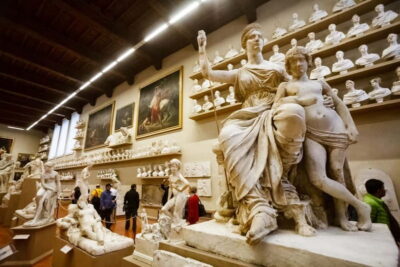
Timed Entry to Michelangelo’s David + Audio App
Read our review →
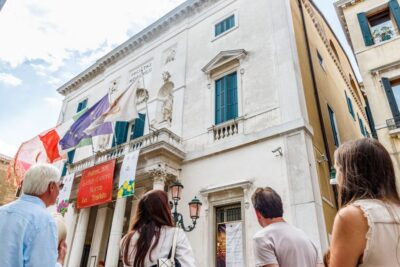
La Fenice Opera House Entry Ticket with Audio Guide
Read our review →
Colosseum, Forum, Palatine Hill Entry & Audioguide App
Read our review →
St. Peter’s Basilica & Dome Entry Ticket & Audio Tour
Read our review →