
REVIEW · FRANCE AUDIO TOURS
Caen: Memorial Museum Entry Ticket & Optional Audio App
History comes sharply into focus here. The Caen Memorial puts World War II into a much wider story, showing how the years before 1945 led to war and how the conflict reshaped Europe afterward. I like its clear layout and the way original objects, documents, films, and personal testimonies work together. I also like that you can take your time, since the ticket is valid for a full day. The main drawback is simple: there is so much to see that a quick visit will feel rushed.
Plan on at least three to four hours, and closer to a full day if you want to read the displays carefully. The museum was built in a city heavily damaged during the war, so its subject is not distant or abstract. You are studying military events, occupation, resistance, persecution, liberation, and peace in the very region where much of this history unfolded.
Key points to know before you go
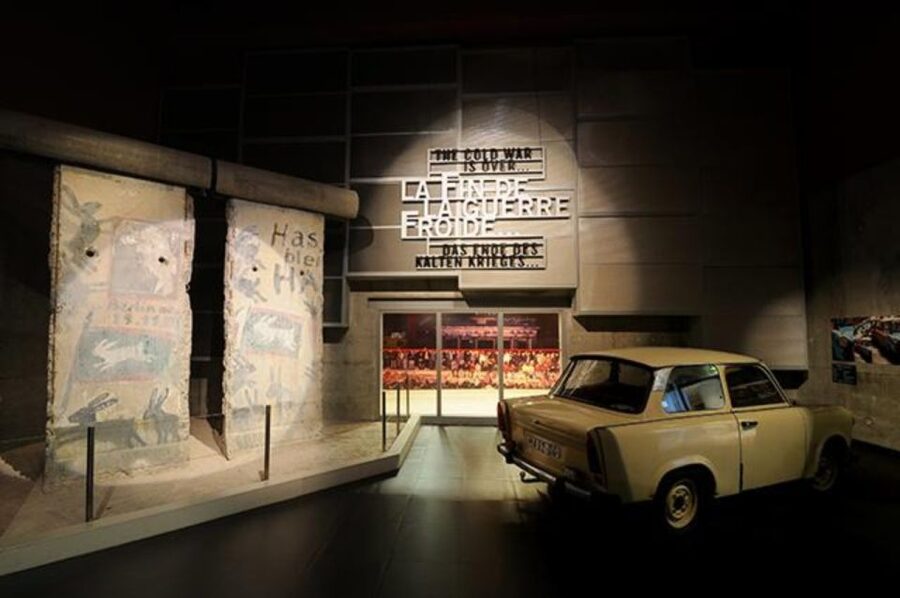
- A full 20th-century story: The exhibits begin after World War I and continue through the fall of the Berlin Wall.
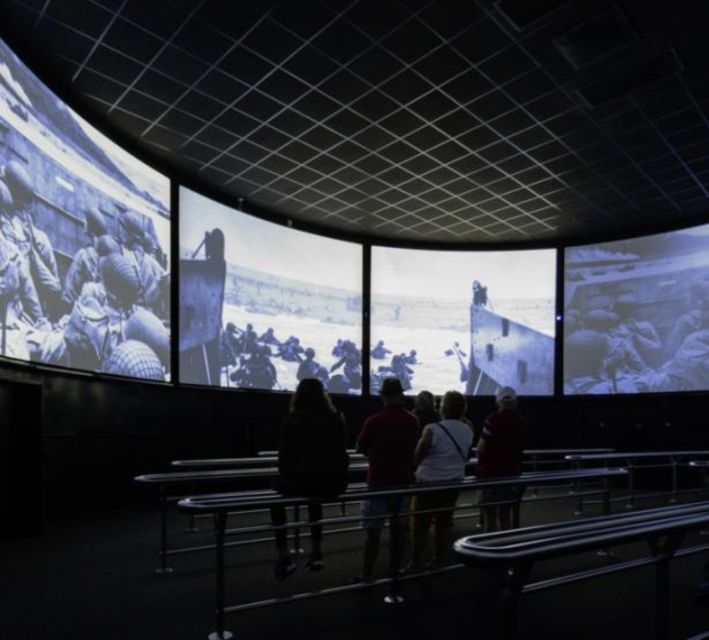
- D-Day gets serious attention: Films and displays explain the Normandy invasion and the 100 days that followed.
- The 19-minute film saves you from getting lost: It gives you the key dates and major turns of the century.
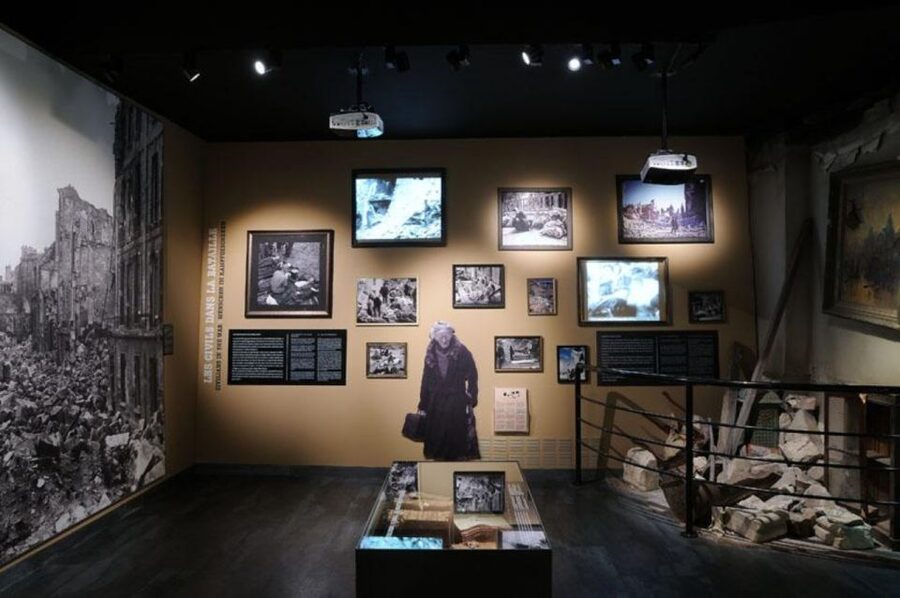
- Original material adds weight: Battle objects, official documents, film, and recorded testimony make the history personal.
- The audio guide is an optional web app: You must select it together with your museum ticket, and it cannot be added on its own.
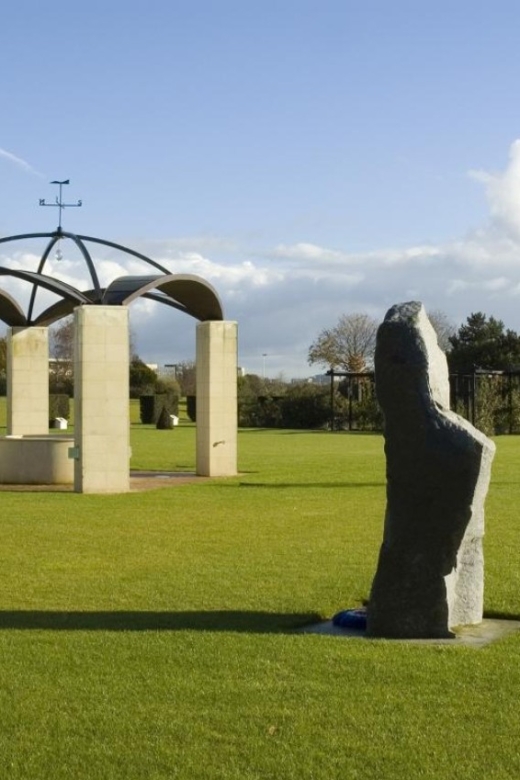
- Three memorial gardens provide quiet space: They honor the Allied forces involved in the liberation of France.
Why Caen is the right place for this museum
Caen is not just a convenient base for Normandy beaches. It was largely destroyed during the fighting, and the museum focuses closely on the shock of occupation, the violence of war, and the relief of liberation. That local setting gives the visit extra force.
The museum also avoids treating D-Day as an isolated military operation. You first see the political and social pressures that built toward war. Then you follow the conflict itself, the Holocaust, the Normandy campaign, and the difficult decades that came after victory.
I appreciate this wide view. Many museums focus on one battle, one unit, or one famous day. Caen asks a larger question: how did Europe get here, and what did the war change? That makes the visit useful even if you already know the basic D-Day story.
More Museum Audio Tours in France
- Paris: Louvre Museum Hosted Entry and Mona Lisa Audioguide
★ 4.6 · 5,235 reviews - Paris: Orsay Museum Entry Ticket and Digital Audio Guide App
★ 4.4 · 3,170 reviews - Louvre Museum Timed Entrance Ticket with Audio Guide
★ 3.0 · 453 reviews
Start with the 19-minute film
The short film about the key events of the 20th century is a smart first stop. It gives you a rough map before you enter the longer displays. You will see the main dates and turning points, from the years after World War I to the fall of the Berlin Wall.
I would watch it near the start of your visit, even if you normally skip museum films. The exhibitions cover a lot of ground, and this introduction helps you place each section in time. Without it, the first rooms can feel broad and politically dense.
The film is not a substitute for the exhibits. Think of it as a briefing. Once you know the basic sequence, the objects and documents have more meaning.
The years before 1945: more than a D-Day museum
The first major sections explain the world that existed before the Second World War. You will encounter the aftermath of World War I, the political shifts of the interwar years, and the pressures that helped create another global conflict.
This is one of the museum’s strongest choices. Instead of dropping you straight into June 1944, it explains the conditions that allowed dictatorship, aggression, and mass violence to spread. That context matters, especially if you are visiting with children or with someone who knows the battles but not the political story behind them.
The material can be heavy and information-rich. Give yourself permission to pause. You do not need to read every label to get value from the visit, but the people who enjoy documents and detailed explanations could spend a long time here.
Occupation, persecution, and the Holocaust
The museum treats occupation as more than a map showing German control. You learn about the strain placed on ordinary people, the loss of freedom, and the human cost of decisions made by governments and armies.
The Holocaust section deserves deliberate time. It is not an easy part of the visit, but it is essential to the museum’s account of the war. The displays connect mass murder to the wider political system, persecution, and the destruction of communities.
I would not rush this section just to reach D-Day. If you have young children, use your judgment, since the material is serious. Children under ten must be accompanied by an adult throughout the museum, and every child needs help processing what they see.
More Smartphone Audio Tours in France
- Paris Orsay Museum Entry Ticket with Digital Audio Guide
★ 3.5 · 93 reviews - Paris: Rodin Museum Ticket & Optional Digital AudioGuide App
★ 4.7 · 56 reviews - Strasbourg Walking Tour with Audioguide on Your Smartphone
★ 4.0 · 42 reviews - Paris: Musee De L’Armee Ticket With Digital Audio Guide
★ 4.2 · 39 reviews
D-Day and the Battle of Normandy
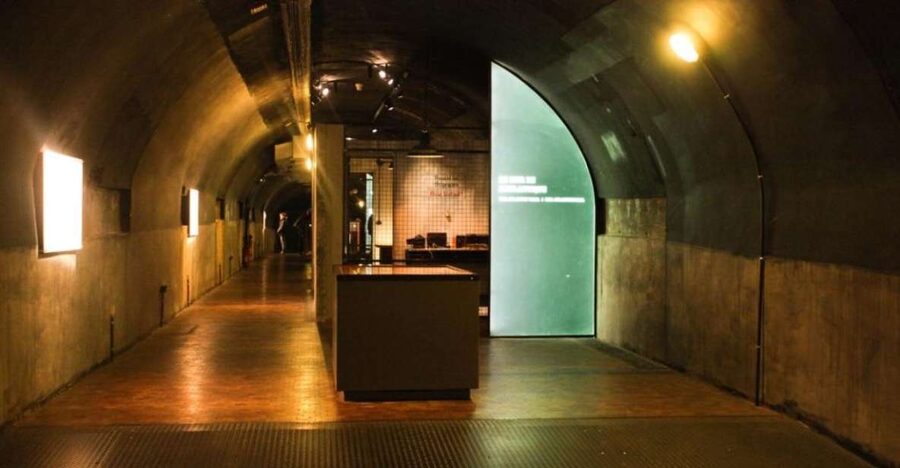
The Normandy displays are the heart of the visit for many people. Films and exhibits explain the D-Day landings, then continue into the 100 days of fighting that followed. That longer view is important because the invasion was the beginning of a campaign, not the end of one.
You can expect a mix of military explanation and human detail. Original battle objects help make the campaign less abstract, while documents and recorded testimony show how events affected soldiers and civilians.
The museum does not reduce the invasion to a collection of famous names and dates. It places the operation within the wider war and shows how Normandy helped change the course of history. If you are also visiting the D-Day beaches, Caen works well as preparation. You will have a better grasp of the sequence of events before seeing the actual sites.
There is a practical tradeoff. The subject is large, and the displays can take hours. If you have only a short stop in Caen, focus on the film, the Normandy section, and the postwar material that interests you most.
From victory to the Berlin Wall
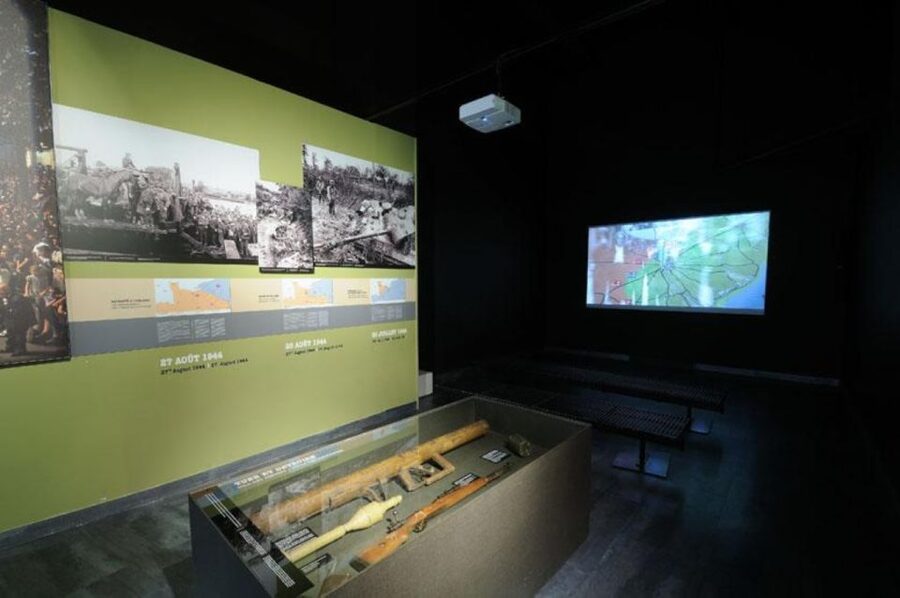
The story continues after liberation, which is one of the museum’s best features. The end of fighting did not solve every problem. Europe had to face destruction, political division, justice, memory, and the growing split between East and West.
The later sections carry the story through the Cold War and up to the fall of the Berlin Wall. This helps you understand why the Second World War still shapes European politics and public memory.
You may find this part less familiar than the D-Day displays, but it gives the museum its full purpose. It shows that 1945 was not a clean finish. It was a major turning point, followed by decades of tension and change.
Films, documents, and objects that slow you down
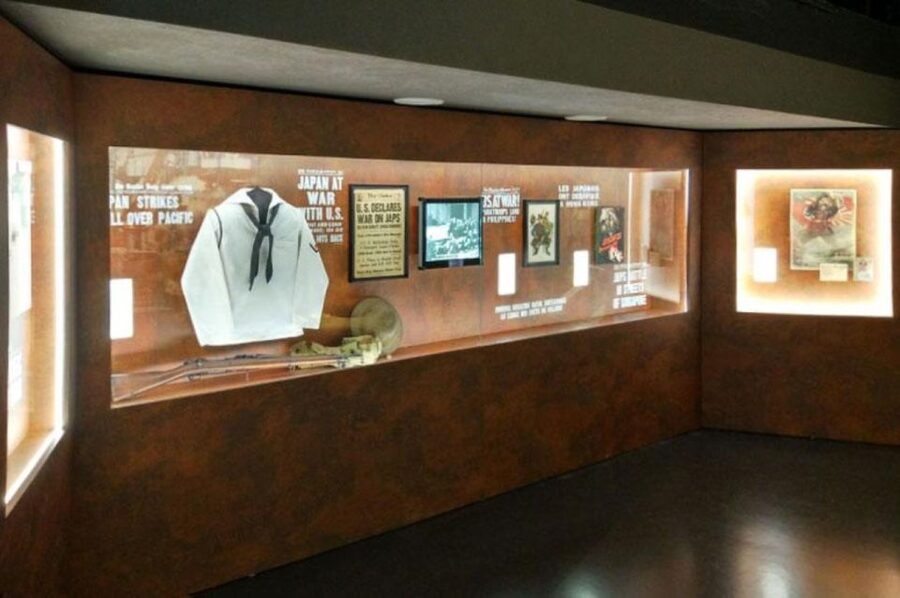
The museum uses several ways to tell its story. Films provide movement and scale. Official documents show how decisions were recorded and enforced. Personal testimony brings the human voice back into an event that can otherwise become a list of dates.
The original battle objects are especially useful for visitors who need something physical to connect with the text. You can look at an object and then place it within the larger story of occupation, combat, or liberation.
The displays are well organized, but do not expect a light, quick museum outing. The subject is painful, and the amount of material demands attention. One practical approach is to choose a few sections for close reading and let the rest give you the broader picture.
A visit of nearly four hours is realistic, and you could use a full day if you want to see everything in detail. That length supports the price, but only if you are willing to give the museum enough time.
The optional audio guide web app
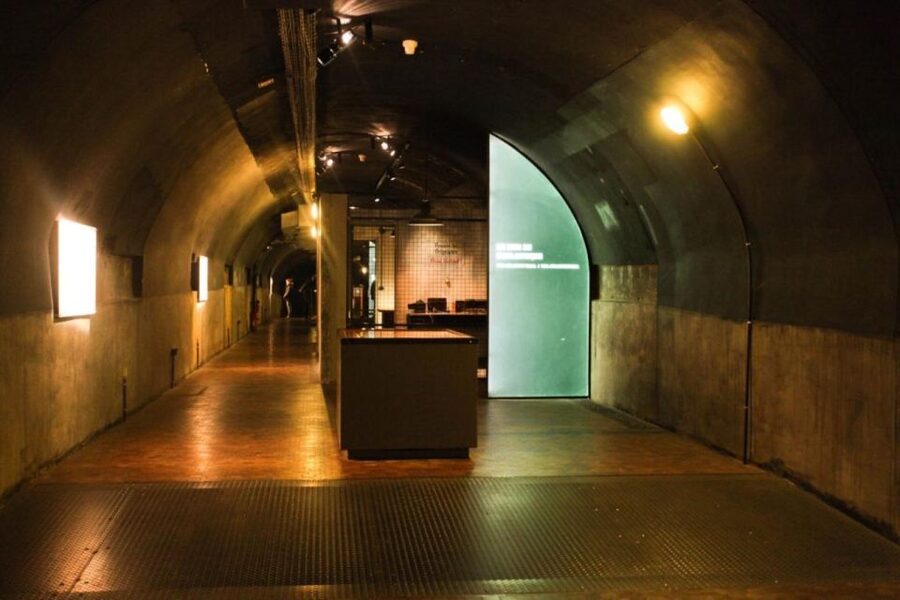
The audio option is a multilingual web app that you download and use on your phone. It can help you move through the museum with more direction, especially if you prefer listening to reading.
Pay close attention when booking. The app is not included automatically with every entrance ticket, and it cannot be bought separately. You must select both the entry ticket and the audio guide option if you want both.
This distinction matters because the ticket information can be easy to misunderstand. One visitor arrived expecting an audio guide and found that it had not been selected. Check your booking confirmation before you go.
The app may suit you if you want a guided structure but do not want to join a group. It may be less useful if your phone battery is low, you dislike listening through a device, or you prefer to read at your own pace. The experience does not include a guided tour with the entry ticket.
Three gardens and a needed pause
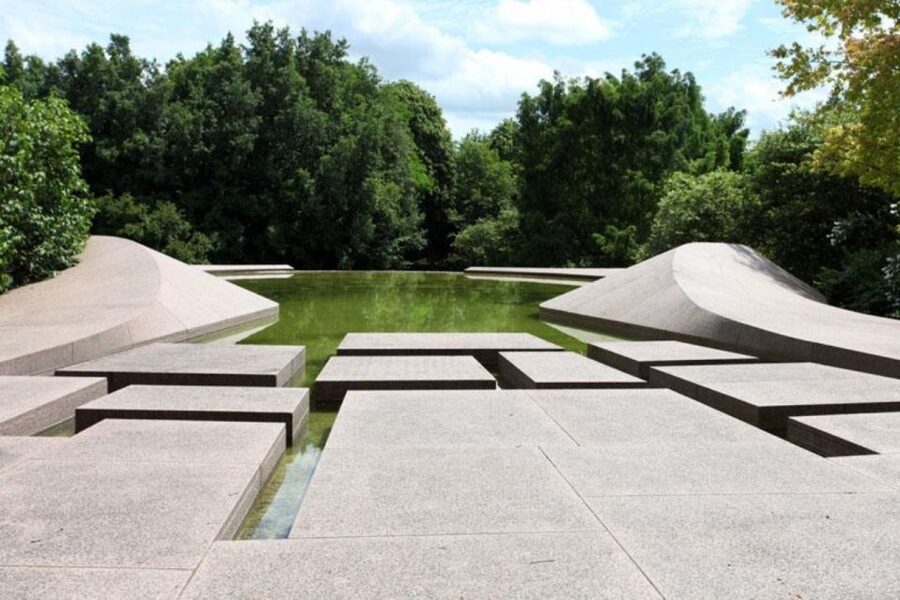
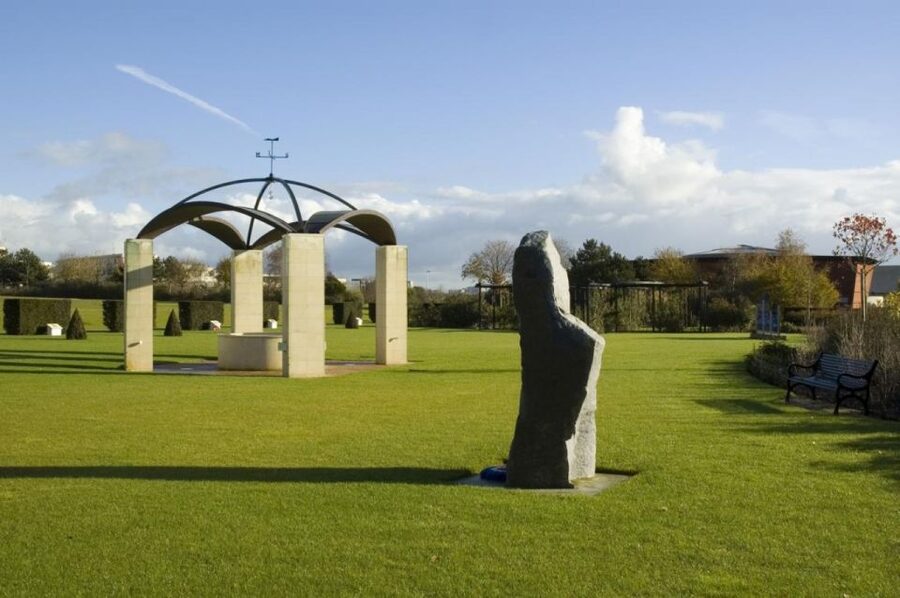
After the indoor displays, take time in the three memorial gardens. Each is dedicated to one of the three Allied forces that helped liberate France.
These gardens give you space to breathe after the museum’s most difficult sections. They also prevent the visit from ending with a final wall of text. You can pause, reflect, and think about the difference between studying war and living through it.
The gardens are not a replacement for the exhibits, but they complete the visit. I would save them for the end rather than treating them as a quick stop on the way in.
Food, picnic space, and the practical rhythm of a visit
The museum has two on-site restaurants, and you can also bring a picnic for the lawn. That makes the full-day ticket easier to use. You do not have to leave the site just because you need lunch or a break.
A sensible plan is to arrive early, watch the 19-minute film, spend two hours in the main exhibitions, take a break, and then return for the later sections and gardens. Your actual pace will depend on how much you read.
The museum is open for one day of use with this ticket, but check the day’s hours before setting out. Last entry is 90 minutes before closing, which is not enough time for a meaningful visit. The museum closes on Wednesdays in November and December, on December 25 and January 1, and for three weeks in January.
It can also change hours or close part or all of the building if visitor numbers become too high or safety requires it. That is unusual information to ignore, especially during busy periods.
Getting to the Caen Memorial
By car, approach from Paris on the A13 or from Rennes on the A84. Use the northbound ring road and take exit 7.
By bus, take route 2 from the city center. You present your ticket at the entrance of the Mémorial de Caen.
The ticket includes skip-the-ticket-line access, which can save time on a busy day. It does not remove the need to plan your arrival, since the museum may still have crowd limits or altered opening hours.
The building is wheelchair accessible. Pets are not allowed, although assistance dogs are permitted.
Is $24 good value?
At $24 per person, the ticket is fair value if you plan to stay several hours. You are not paying for a short exhibit or a single film. You get permanent exhibitions covering the period from the end of World War I through the Cold War, plus the 19-minute film, D-Day material, and the memorial gardens.
The value is strongest for history-minded visitors who will read, watch, and reflect. If you only have 60 to 90 minutes, the price may feel less attractive because you will see only part of the museum.
The optional audio app can improve the visit, but it is an extra choice rather than a built-in feature. Select it if you want help with the route or prefer spoken explanation. Do not assume it comes with the basic entry ticket.
Free cancellation up to 24 hours before the visit and the option to reserve now and pay later add useful flexibility. Those terms matter if your Normandy plans depend on weather, transport, or a changing schedule.
Who should visit the Caen Memorial?
I would recommend it to you if you want more than a quick D-Day overview. It suits adults, older children with support, students, and anyone trying to understand how the war began, how it was fought, and what followed.
It is also a good first stop before the Normandy beaches. The museum gives you the framework that makes sites such as the landing areas easier to understand.
You may want to skip it if you dislike long museum visits or prefer a single narrow subject. The amount of material can be tiring, and the Holocaust and occupation sections require emotional space. This is not a cheerful rainy-day attraction. It is a serious place that rewards patience.
Should you book the Caen Memorial ticket?
Book it if you can spare at least half a day and want a clear, broad account of 20th-century Europe. I especially like it for the way it connects prewar politics, the Holocaust, D-Day, the Battle of Normandy, and the Cold War instead of treating each event as a separate story.
Choose the audio app if you want extra guidance, but confirm that both options are selected. Arrive with enough time for the film, leave room for a meal or picnic, and save the gardens for a quiet ending.
If your schedule allows only a brief stop, you may need to be selective. If you have most of a day, the $24 ticket offers a thoughtful and substantial look at the history that shaped Normandy and modern Europe.
FAQ
How long is the Caen Memorial ticket valid?
The ticket is valid for one day.
How much does entry to the Caen Memorial cost?
The listed price is $24 per person.
Is the audio guide included with the entrance ticket?
No. The multilingual audio guide web app is an optional add-on and must be selected together with the entrance ticket.
Can I buy the audio guide without museum entry?
No. The web app audio guide cannot be purchased on its own.
Is there a guided tour included?
No. A guided tour is not included with this entrance ticket.
What does the Caen Memorial cover?
The museum covers the period from the end of World War I through the fall of the Berlin Wall, including World War II, the occupation, the Holocaust, D-Day, the Battle of Normandy, and the postwar period.
Is the museum wheelchair accessible?
Yes, the museum is wheelchair accessible.
Are pets allowed inside the museum?
No. Pets are not allowed, but assistance dogs are permitted.
When is the Caen Memorial closed?
The museum is closed on Wednesdays in November and December, December 25, January 1, and for three weeks in January. Last entry is 90 minutes before closing.
Just added around France
- Toulouse Self-Guided Audio Experience★ 3.5 · 3 reviews
- Toulouse : Albi and Cordes/Ciel Day Trip with audio guides★ 4.0 · 70 reviews
- Toulouse : Carcassonne Day Trip by Coach with audio guides★ 4.0 · 73 reviews
- Rouen Cathedral Self Guided Audio Tour★ 4.0 · 2 reviews
- Rouen: Audio Guided City and Joan of Arc Tour★ 4.0 · 2 reviews
- Rouen audio guided tour★ 4.0 · 19 reviews
- The Hardest City to Invade: Saint Malo’s Secrets Audio Guide★ 4.5 · 9 reviews
- The Tuileries Garden’s Classic Sights: A Self-Guided Audio Tour★ 4.0 · 3 reviews
Museums, compared.
Uffizi Priority Ticket & Masterpieces Audio App
Read our review →
Louvre Museum Hosted Entry and Mona Lisa Audioguide
Read our review →
St. Mark Basilica Ticket, Audioguide+History Gallery
Read our review →
Borghese Gallery Skip-the-Line Ticket & Audioguide
Read our review →
Borghese Gallery Ticket + Audioguide or Guided Tour
Read our review →
Orsay Museum Entry Ticket and Digital Audio Guide App
Read our review →
Uffizi Gallery Timed Entry Ticket & Audio Guide
Read our review →
Acropolis Museum Ticket with optional Audio Guide
Read our review →Browse the lists this tour appears in