

REVIEW · ROME AUDIO TOURS
Rome: Borghese Gallery Ticket and Optional Audio Guide
Rome keeps its best art in surprising places. The Borghese Gallery packs Caravaggio, Bernini, and Canova into a jewel-box villa, and I like the limited entry numbers and the chance to study masterpieces without a huge crowd. The optional phone audio guide adds useful context, though the $70 price is steep beside the gallery’s official ticket cost.
This is a self-guided visit, not a traditional tour with a person leading you room by room. I like that freedom, especially in a museum where a sculpture such as Bernini’s Apollo and Daphne deserves more than a quick glance. The tradeoff is that the ticket process can feel less personal, and the audio app may take patience to download and navigate.
Key points to know before booking
- Only two hours inside: The visit is compact and timed, so you need to keep an eye on the clock.
- The art is the star: Caravaggio, Bernini, Canova, Raphael, and other major names fill the villa’s rooms.
- Reserved entry matters: Same-day tickets can sell out, making advance booking useful during busy periods.
- The audio guide is optional: It works through a smartphone app in English or Italian, but you must download it before entering.
- Expect a premium price: At about $70 per person, you are paying for convenience and availability, not just admission.
- Pack light: Large bags and luggage are not allowed, and headphones are needed for the phone guide.
Why the Borghese Gallery deserves a place in your Rome plans

The Borghese Gallery is one of Rome’s most concentrated art collections. You do not spend half the day crossing vast halls to find one famous work. Instead, the art appears in a sequence of richly decorated rooms, with paintings on the walls and marble figures commanding the center.
That compact scale matters. You can see major works by Caravaggio, Bernini, and Canova in a single two-hour visit without museum fatigue taking over. I especially like this for a first visit to Rome, when your sightseeing list is already crowded with ancient ruins, churches, fountains, and piazzas.
The villa itself is part of the pleasure. You enter an elegant historic setting rather than a plain modern gallery, and the surrounding Villa Borghese park gives you room to continue walking afterward. The approach through the park can take time, so do not treat the gallery as a quick stop squeezed between distant sights.
The admission system also protects the experience. Numbers are limited by time slot, and the gallery generally feels more controlled than Rome’s busiest museums. You can get close to paintings and sculptures without constantly trying to see over someone’s shoulder.
More Museum Audio Tours in Italy
- Rome: Borghese Gallery Skip-the-Line Ticket & Audioguide
★ 4.3 · 4,318 reviews - Rome: Borghese Gallery Ticket + Audioguide or Guided Tour
★ 4.6 · 3,219 reviews - Rome: Borghese Gallery Skip-the-Line Tickets with Audioguide
★ 4.6 · 2,562 reviews
Collecting your ticket without a traditional meeting point
You do not meet a guide at a street corner or join a walking group. On the afternoon before your visit, the ticket code is sent by email, and it may also arrive by WhatsApp. You take that code to the desk at the gallery, where it is exchanged for the physical entrance ticket.
This arrangement is simple once you know what to expect. The GetYourGuide voucher itself is not the entrance ticket, so save the final ticket message and check your spam folder if it does not appear. At the desk, show the ticket sent by email or WhatsApp and follow the instructions for your reserved time.
That extra step can cause a little confusion. Some people expect to scan the original booking voucher and walk in, while the actual process requires the later code. Keep the message easy to access on your phone, and arrive with enough time to deal with the desk.
Do not arrive late. Tickets are tied to a specific time, and late arrivals can risk losing access. One particularly helpful staff member named Claudio was reported to have waited for a late arrival, but you should not count on that kind of rescue.
A two-hour route through 20 rooms
The visit lasts two hours, which is enough for a good look but not enough for a slow study of every work. The villa includes about 20 rooms, and the best approach is to notice the major pieces first, then return to anything that caught your eye.
The ground-floor sculptures
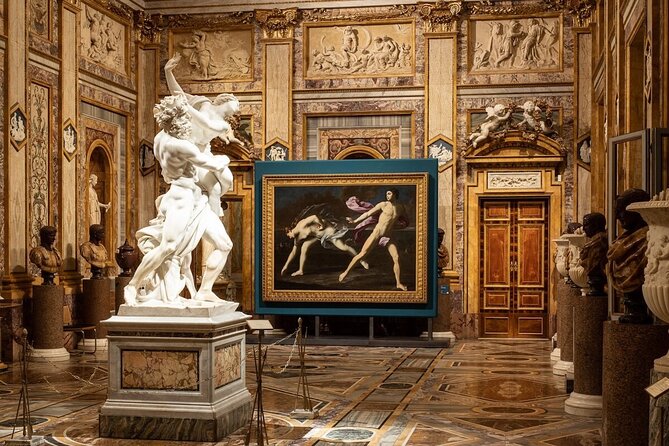
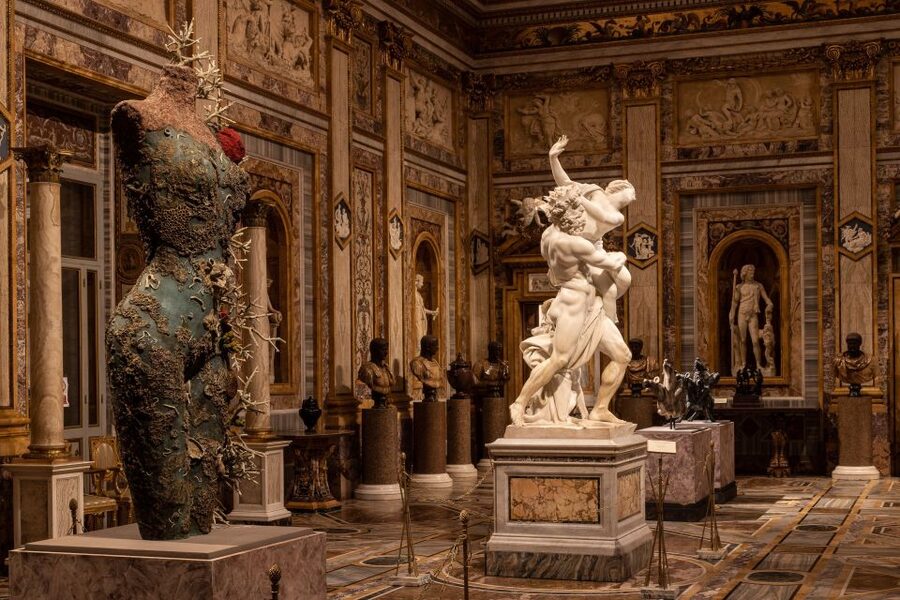
The ground floor is where Bernini takes much of the attention. His marble figures are not quiet decorations. They twist, lunge, turn, and create the impression that hard stone has suddenly become soft flesh and moving fabric.
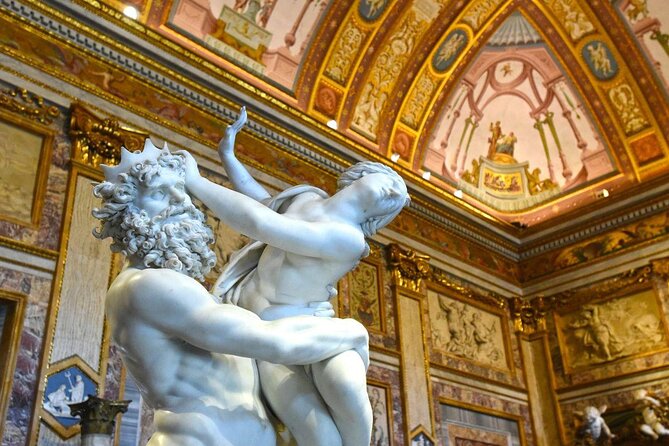
Look for Goat Amalthea with Infant Jupiter and Faun, an early work that gives you a useful comparison with Bernini’s later sculpture. Then look for the Rape of Proserpine, where the story is carried through the bodies, faces, and fingers of the figures.
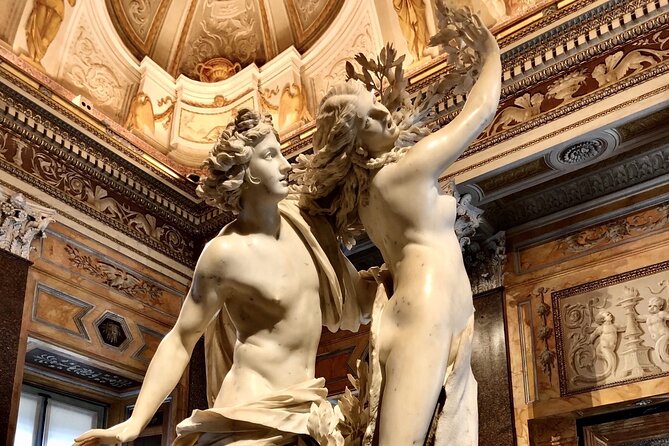
The famous Apollo and Daphne is the essential stop. The myth shows Apollo pursuing Daphne, who escapes by being transformed into a laurel tree. Bernini captures the moment of change: Daphne’s fingers become leaves, her feet take root, and Apollo reaches for a person who is already becoming something else.
This is exactly the kind of work that benefits from an audio explanation. Without context, you can admire the technical skill. With the story in mind, the sculpture becomes easier to read, from Daphne’s alarm to Apollo’s futile pursuit.
The collection includes a significant share of Bernini’s secular sculpture, so you get more than one famous statue in isolation. The room-to-room progression lets you see how his style developed, even if you are not an art specialist.
More Museum Audio Tours in Rome
- Rome: Borghese Gallery Skip the line ticket and Audioguide
★ 4.3 · 1,535 reviews - Borghese Gallery, Home to Canova’s Art – Entry with Audioguide
★ 4.0 · 884 reviews - Rome: Borghese Gallery Skip-the-Line Ticket & Audioguide
★ 4.0 · 768 reviews - Borghese Gallery entry ticket and audioguide App
★ 4.7 · 570 reviews
Caravaggio’s paintings
Caravaggio’s paintings bring a different kind of energy. His people look physical and immediate, with strong contrasts of light and shadow that pull the eye toward faces, hands, and gestures.
Do not miss Young Sick Bacchus and Boy with a Basket of Fruit. These works are useful reminders that Caravaggio could make ordinary human details carry the weight of a larger story. The pale, tired look of the young Bacchus is very different from the polished image of a healthy classical god.
The basket of fruit also rewards a close look. It is not just a pleasant still life. The fruit, leaves, and slight imperfections make the image feel close enough to touch, while the boy’s expression gives the painting a human presence.
You may want to linger here longer than planned. That is one reason to manage your time early. The gallery has many famous works, and the two-hour limit can pass quickly if you spend 15 minutes with every painting that catches you.
Canova and the upper rooms
Canova’s sculptures bring a smoother, more polished style to the visit. His figures have a different mood from Bernini’s dramatic movement, and seeing both artists in the same building makes the contrast especially clear.
The upper floor includes further paintings and works from the collection, but access can change. Some rooms may close for refurbishment, and one visit had the upper floor unavailable. Restoration work connected with the Jubilee may also alter routes or access, so check your messages before setting out.
Do not build your entire day around seeing one specific room without checking for updates. The gallery remains worthwhile even if a section is closed, but it is better to know in advance than to arrive with a rigid plan.
The optional phone audio guide

The audio guide is available in English and Italian. If you choose it, download the application before the visit, not while standing at the entrance. You need an Android phone running version 5.0 or later, or a compatible iPhone, along with about 100 to 150 MB of free space.
Bring your own headphones or AirPods. Headphones are not included, and the listing specifically advises bringing them.
The guide can make the collection more approachable. It gives you the story behind Apollo and Daphne, explains works by Bernini, Canova, and Caravaggio, and adds information about the artists. For someone who wants more than a quick look at the objects, that context is useful.
The weak point is navigation. The audio track may use numbers that do not match the gallery’s room numbering, and some sections may refer to works in more than one room. You may find yourself checking the sculpture, the room, and the app at the same time.
A reliable internet connection also matters during the download. Give yourself around 10 minutes before the visit if the app needs to install or load its content. If the technology becomes annoying, stop using it and look at the art directly. The gallery is strong enough to carry the visit without commentary.
There may also be physical audio guide options at the gallery, but availability is not guaranteed by this ticket. If the phone app is important to you, test the download before you arrive.
Is $70 a fair price?
The listed price is about $70 per person, which is considerably higher than the gallery’s official admission price. Several people have calculated the official ticket at roughly 15 euros, though prices and booking conditions can change.
So what are you buying for the extra money? Mainly, you are paying for a reserved place when official tickets are hard to obtain, plus the convenience of a third-party booking system and an optional audio app. If the gallery is sold out through its own channels and this is your only practical route in, the premium may feel reasonable.
If official tickets are still available, the value is weaker. One person described paying roughly three times the regular ticket cost, and that criticism is fair. This is not a guided tour with a specialist explaining every room. It is a ticket service with optional audio content.
I would compare the official Borghese Gallery website first, then decide how much certainty is worth to you. For a once-in-a-lifetime Rome visit with limited dates, paying more to secure a slot can prevent a major disappointment. For a flexible visit in a quiet season, you may prefer to try the official route.
Timing, crowds, and the best visit strategy

The limited admission numbers are one of the strongest parts of this experience. The gallery can feel calm, and you have a better chance of seeing the art without a packed room.
Early times are especially sensible. The collection becomes busier by the middle of the day, and an early booking gives you more mental energy for the sculptures. It also leaves the rest of the day open for the park and nearby Rome sights.
Give yourself extra time before the slot to walk through Villa Borghese and find the entrance. The park is large, and the route to the building may take longer than expected. After the gallery, you can continue through the gardens, where there are fountains, lemon trees, a small train, and rental bikes for two or four people, according to the information provided.
Inside, do not spend the first hour on minor works and rush the final rooms. Start with Bernini, Caravaggio, and Canova. Then use the remaining time for smaller pieces and rooms that interest you personally.
What you can and cannot bring

Large bags and luggage are not allowed. The gallery may require your belongings to be placed in storage, so arrive with only what you need.
A practical museum kit is simple:
- Your phone with the final ticket message
- Headphones if you bought the audio option
- Comfortable shoes
- A small amount of water before entry, rather than carrying drinks inside
- Enough free phone storage for the application
The gallery is not suitable for wheelchair users or people with mobility impairments according to the activity information. Access routes may also change during restoration work, so check current instructions before booking if stairs or long walks are a concern.
Who will enjoy this visit most?
I would recommend it most to people who want major art in a short, manageable visit. You do not need a degree in art history. The collection works for first-time museum visitors because Bernini’s sculptures are direct and dramatic, while Caravaggio’s paintings reward close looking without requiring a long lecture.
It also suits independent visitors who prefer to set their own pace. You are not tied to a guide’s speech or a large group moving from room to room. A couple or small family can pause at different works and regroup later.
It is less ideal if you want a full guided tour, extensive room-by-room interpretation, or a low-cost museum ticket. The audio guide helps, but it is not always easy to follow. If you need a clear route and expert explanations, look for a dedicated guided visit instead.
Should you book the Borghese Gallery ticket?

Book this option if your dates are fixed, official tickets are gone, and seeing the Borghese Gallery matters to you. The collection is too good to skip, and the controlled entry makes the visit calmer than many major Rome attractions.
Book it with caution if you can still buy directly from the gallery. At $70 per person, the convenience fee is large, and the audio guide has some practical flaws. Download the app early, arrive before your time, pack light, and keep the final ticket message ready.
My call: the gallery is an essential Rome visit, but this ticket is a convenience purchase, not a bargain. Pay the premium when availability matters more than price. Otherwise, try the official ticket channel first.
FAQ
How long does the Borghese Gallery visit last?
The activity lasts two hours. This is enough to see the main works, but you should manage your time carefully if you want to study many rooms.
Is the entry ticket skip-the-line?
Yes. The booking provides reserved entry through a separate entrance, though you still need to go to the desk and show the final ticket code sent by email or WhatsApp.
Do I need to meet a guide?
No. There is no required meeting point, and the visit is self-guided. You collect the physical ticket at the desk using the code sent before your visit.
Is the audio guide included?
The audio guide is included only if you select that option when booking. It is delivered through a smartphone application and is available in English and Italian.
Do I need to bring headphones?
Yes. Headphones or AirPods are not included, so bring your own if you select the audio guide.
Can I bring luggage or a large bag?
No. Luggage and large bags are not allowed inside the gallery. Pack as lightly as possible.
Can I cancel the booking?
You can cancel up to 24 hours before the activity for a full refund.
Just added around Rome
- Pantheon Skip the Line Entry Tickets with Digital Audio Guide★ 3.5 · 52 reviews
- St. Peter’s Basilica: Dome Climb with Lift & Audioguide★ 4.5 · 13 reviews
- Audio guide in Vatican Museums and Sistine Chapel★ 4.5 · 12 reviews
- Trastevere: A Self-guided Audio Tour of Rome’s Medieval Village★ 4.5 · 3 reviews
- Navova square underground with audioguide★ 4.5 · 17 reviews
- The Roman Jewish Ghetto: A Self-Guided Audio Tour★ 4.0 · 8 reviews
- Experience: The Pantheon Audio Tour★ 4.5 · 4 reviews
- St. Mary’s Basilica, Pope Francis Tomb Audio Tour with Crypt★ 4.0 · 3 reviews
Museums, compared.
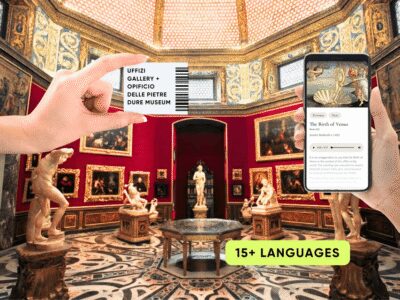
Uffizi Priority Ticket & Masterpieces Audio App
Read our review →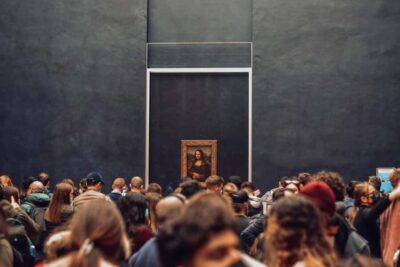
Louvre Museum Hosted Entry and Mona Lisa Audioguide
Read our review →
St. Mark Basilica Ticket, Audioguide+History Gallery
Read our review →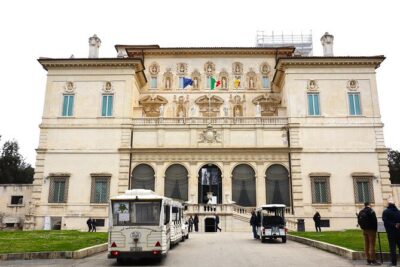
Borghese Gallery Skip-the-Line Ticket & Audioguide
Read our review →
Borghese Gallery Ticket + Audioguide or Guided Tour
Read our review →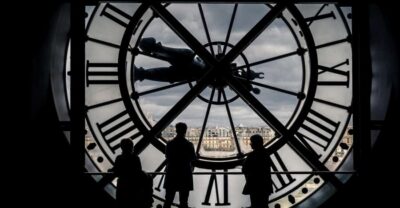
Orsay Museum Entry Ticket and Digital Audio Guide App
Read our review →
Uffizi Gallery Timed Entry Ticket & Audio Guide
Read our review →
Acropolis Museum Ticket with optional Audio Guide
Read our review →Browse the lists this tour appears in