

REVIEW · USA AUDIO TOURS
Shenandoah National Park Self-Guided Driving Audio Tour
Let the mountains tell their stories. This self-guided drive pairs Skyline Drive scenery with location-triggered audio about Shenandoah’s geology, people, wildlife, and past. I like the hands-free GPS narration, and I like that one $16.99 purchase covers everyone in the car, up to four people. The main catch is technical: you must download the tour before entering the park, since cell service can disappear quickly.
You control the day. Stop for photos, pause the audio, hike a trail, or spread the route across several outings using the advertised lifetime access. I also appreciate the useful previews before many stops, which help you decide if a pullout or hike deserves your time. Still, the app can confuse first-time users, and some audio may restart or lose its place if you shut it down.
Key points at a glance
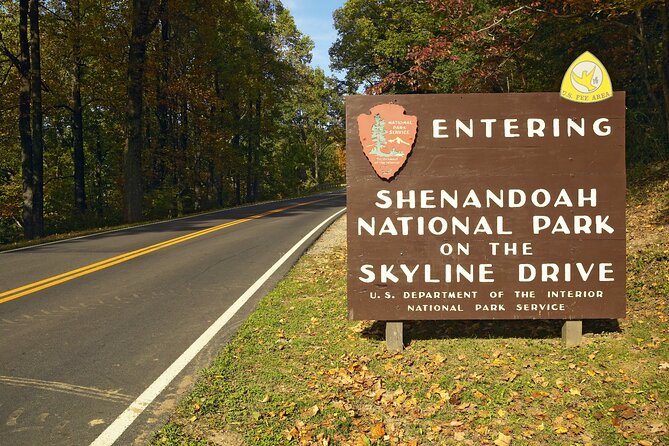
- 120-plus miles of Skyline Drive: Follow a north-to-south route from Front Royal to Rockfish Gap, with more than 100 audio stories.
- One purchase per car: The $16.99 price covers a group of up to four, making it good value for families and couples.
- Download before you go: The tour works offline, but setup requires strong Wi-Fi or cellular service before entering the park.
- Hikes range from easy to demanding: Choose from the accessible Limberlost Trail, the family-friendly Stony Man route, or the strenuous Cedar Run Trail.
- History gives the drive purpose: Audio covers Civil War sites, Indigenous peoples, President Herbert Hoover, mining, settlement, and the Appalachian Trail.
- Built for flexible days: Pause, skip, repeat, or stop the tour whenever you want, with no guide or fixed departure time.
What this Shenandoah audio tour actually does
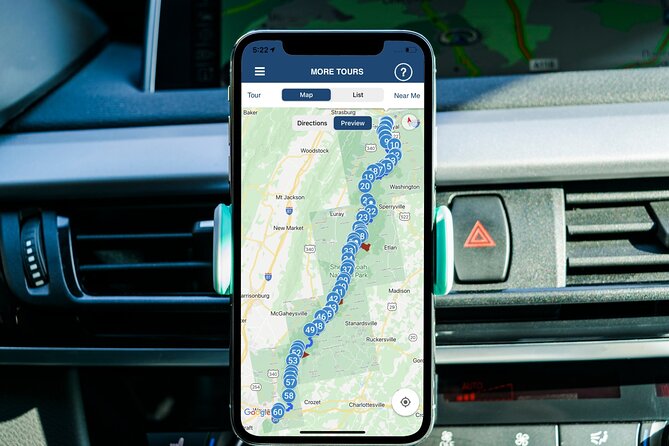
Think of it as a narrator riding in your car. Once you download the Action Tour Guide app, enter the password sent by email and text, and reach the first point on the route, the audio begins when your phone detects your location.
You do not meet a guide at Front Royal. You do not join a bus. You simply drive the park road, and the next story plays as you approach it. The app also gives directions and advance information, so you can decide if you want to pull over or keep moving.
That format suits Shenandoah unusually well. Skyline Drive is long, winding, and filled with overlooks that can begin to blur together after a few hours. The narration gives each section a distinct subject, from Civil War strategy to mountain geology and local communities.
The full route runs more than 120 miles and takes about four to five hours without allowing much time for hikes, long photo stops, meals, or fog delays. If you want to walk Fox Hollow, Stony Man, Limberlost, or one of the waterfall trails, plan on a longer day or split the route across multiple visits.
More Self-Guided Audio Tours in the USA
- Gettysburg Battlefield Self-Guided Driving Audio Tour
★ 4.5 · 910 reviews - Joshua Tree National Park Self-Guided Driving Audio Tour
★ 4.5 · 762 reviews - Ultimate Acadia National Park Self-Guided Driving Audio Tour
★ 4.0 · 521 reviews
Starting at Front Royal and Dickey Ridge
The southbound tour begins at Shenandoah National Park’s northern entrance near Front Royal. From there, you follow Skyline Drive through the park toward Rockfish Gap in the south.
Your first useful stop is Dickey Ridge Visitor Center. It has maps, snacks, and park information, and it also serves as the trailhead for Fox Hollow Trail. This is a sensible place to get oriented before committing to the long drive.
Fox Hollow Trail is about one mile and passes through thick greenery before reaching the Fox family cemetery, which dates to the early 1800s. It offers a quick walk with a human story attached, rather than just another overlook. If you want a gentle introduction to Shenandoah’s woods, this is one of the better early choices.
Signal Knob Overlook adds military context. The mountain served a strategic role for both Union and Confederate forces during the Civil War, so the view is tied to the valley’s position and movement of armies. The audio helps you look beyond the scenery and consider why this high ground mattered.
At Hogwallow Flats Overlook, the view reaches across Rappahannock County and toward Flint Hill. The narration turns to some of the region’s oldest mountains, called monadnocks, and the Six Nations who once occupied the area. This is one of the tour’s strengths: a short pullout becomes a lesson in geology and Native history.
Range View, Hogback, and the Appalachian Trail
Range View Overlook looks toward the center of Shenandoah National Park. From here, you may see from Keyser Mountain toward Stony Man Mountain, depending on visibility.
The next audio section discusses the origins of the Appalachian Trail. That connection is useful because several short walks later in the route follow or touch the famous footpath. You start to understand that the trail is not just a line on a map. It is part of the larger story of how people began protecting and experiencing the Blue Ridge.
Hogback Overlook provides one of the broadest views on Skyline Drive. It is described as the longest overlook in the park, with a wide view of the valley and mountains beyond. Bring your camera, but also give the audio time to explain the Iroquois, including their sports and warfare.
At Stony Man Overlook, casual walkers get one of the most approachable hikes on the route. The trail is about one mile and offers strong views without requiring an expert hiker. Families can consider it, though the usual hiking basics still apply: proper shoes, water, and attention to the weather.
Limberlost Trail offers an even gentler option. This 1.2-mile loop uses a boardwalk and has almost no elevation change. Educational plaques add information along the walk, and the route is described as accessible. This is a good choice if you want forest scenery without a steep climb.
Crescent Rock and the middle section of Skyline Drive

Crescent Rock Overlook sits at about 3,550 feet and faces west, making it a strong sunset stop. It also looks toward one of Shenandoah’s highest peaks. The site once hosted religious revival services, an unexpected detail that gives the overlook a human dimension.
Allow at least the listed 10 minutes here, and more if the light is good. Sunset timing will depend on the season, your direction of travel, and how much time you spend on earlier stops. The audio can tell you why the place mattered, but it cannot guarantee a clear view. Fog is a real possibility in the mountains, and one early section of the route may be hidden until conditions improve.
Cedar Run Trail is for a different kind of day. It is dog-friendly, about 5.8 miles long, and includes roughly 2,700 feet of elevation gain. That is a serious climb. Do not choose it because the word trail appears next to the overlook. It is best reserved for experienced hikers with enough time and energy.
Franklin Cliffs Overlook points toward Stanley, a town with roots reaching back to the 1700s. The audio uses the view to connect the park with the communities beyond it. That contrast matters throughout Shenandoah. The national park may feel wild from the ridge, but cultivated towns and working communities are never far away.
More Driving Audio Tours in the USA:
- Ultimate Lake Tahoe Self-Guided Driving Audio Tour
★ 4.5 · 435 reviews - Scenic Newport, RI Self-Guided Driving Audio Tour
★ 4.5 · 325 reviews - Arches National Park Self-Guided Driving Audio Tour
★ 4.5 · 288 reviews - Yellowstone National Park Self-Guided Driving Audio Tour
★ 4.5 · 249 reviews
Hoover’s retreat and the central park views

Rapidan Camp, also called Camp Hoover, was built by President Herbert Hoover and his wife, Lou Henry Hoover. It served as their rustic retreat during Hoover’s presidency from 1929 to 1933.
This stop offers a change from sweeping mountain views. You are hearing about a private presidential retreat inside a public park, and about the way political life and outdoor recreation met in the mountains. The stop is especially worthwhile if you enjoy American presidential history.
The Point Overlook looks across the Blue Ridge and Shenandoah Valley. Its audio also introduces Elkton, once home to the first permanent European settler in the Shenandoah Valley. Again, the tour links a distant view with settlement history, which keeps the drive from becoming a string of disconnected scenic stops.
Bearfence Mountain Trail is short at one mile, but it is not an easy stroll. The route includes a steep, gravelly scramble and is intended for ambitious hikers. The view from the top rewards the effort, but this is a poor pick for anyone who wants a flat family walk. Stony Man or Limberlost makes more sense for that purpose.
The Oaks Overlook shows the sharp divide between the park’s wooded ridges and the cultivated Shenandoah Valley. It also looks toward Massanutten Mountain. The narration then introduces Miriam M. Sizer, an anthropologist who studied local people nearly a century ago. Her work adds another layer to the story of the valley, beyond battlefields and presidents.
Waterfalls, birds, and the southern drive

South River Falls Trail combines hiking and birdwatching. It is a moderate 4.6-mile route leading to an 83-foot waterfall, and dogs are allowed. This is a good choice if you want a substantial walk and a clear destination, but it will take much longer than the listed four to five-hour driving estimate.
Swift Run Overlook shifts attention to birds. The audio offers a basic introduction to some of Shenandoah’s birdlife while you take in the view. It is a reminder to lower the volume, pause, and look around. An audio tour is most useful when it helps you notice the park rather than compete with it.
Bacon Hollow Overlook includes views of Flattop Mountain and Brokenback Mountain. The nearby audio turns toward Civil War events in the valley, continuing the tour’s habit of pairing scenery with human history.
Loft Mountain Overlook looks southeast toward the Blue Ridge as it lowers into the foothills and Piedmont. Rockytop Overlook adds views of the Big Run watershed wilderness. These stops are less about one famous landmark and more about seeing how the mountains change as you move south.
Jones Run Falls Trail offers another waterfall walk, with hidden swimming holes along the route. The tour points them out, but you should not assume every pool is suitable or safe. Conditions can change, and the audio cannot replace park signs or your own judgment.
Blackrock Summit Trail is a short hike to a rocky viewpoint and follows part of the Appalachian Trail. It is a useful pick for anyone who wants a brief walk with a clear connection to the larger trail network.
The final overlooks, mining, and Rockfish Gap

Moormans River Overlook faces east-southeast toward Pasture Fence Mountain, Sawlog Ridge, Bucks Elbow Mountains, and the Charlottesville Reservoir. You also hear about the Moormans River, which has repeatedly overflowed its banks and affected the surrounding area. The point is not only to admire the view, but to understand how water shapes the region.
Crimora Lake Overlook sits nearly 3,000 feet above sea level and looks toward Wildcat Ridge and Crimora Lake. The lake was once linked to manganese mining in the 1800s, and traces of those operations remain. This is a particularly good example of how the tour reveals old industry inside what now feels like protected wilderness.
Turk Mountain Overlook faces a quartzite-covered peak. Its name comes from a mysterious family connected with the area, though little is known about them today. The story has an appealing unfinished quality, and it gives the stop more character than a simple mountain label.
Calf Mountain Overlook is among the final stops and is known for sunset views. Since the route ends at Rockfish Gap, this can be a satisfying place to slow down before leaving the park. Just keep an eye on the clock. A four to five-hour estimate can stretch quickly once you add hikes and sunset waiting time.
At Rockfish Gap, the route concludes just beyond Skyline Drive’s southern end. The gap is an important passage through the mountains, and the narration connects it with the so-called Paul Revere of the South and Thomas Jefferson. It is a fitting final chapter because the tour has consistently treated roads, passes, rivers, and ridges as part of Virginia’s larger story.
Price, app performance, and practical setup

At $16.99 per group of up to four, the value is strongest when a full car uses it. A couple pays less than two separate admissions for a conventional guided activity, and a family can share the same narration without buying individual seats.
The tour includes offline maps, automatic audio playback, route guidance, and hands-free use. You can connect your phone to the car with Bluetooth, USB, or AUX. Apple CarPlay is supported for audio playback, while Android Auto support is still listed as forthcoming.
Download the separate Action Tour Guide app and the actual tour while you have strong Wi-Fi or cellular service. Do not wait until you reach the entrance. Cell service can be poor inside the park, and one setup problem caused a long delay before the tour could be downloaded.
Use an iPhone with iOS 15 or later, an Android device with version 9 or later, or an iPad or tablet with GPS and cellular connectivity. Keep your phone charged, and connect it to the car before you start. A full tank is also a sensible idea, since the route is long and the tour covers more than 120 miles.
The app generally plays the next story when you reach the right location, and it pauses when you stop for photos. Still, GPS can occasionally drift, and shutting the app down may make it restart from the beginning or lose your place. If something goes wrong, support is available, but it is much easier to test the tour before entering the park.
Current tour details advertise lifetime access with no expiry. That lets you return on another trip, repeat sections in the opposite direction, or listen to stories again at home. The route is designed for a southbound drive, so using it in the planned direction should give you the most predictable experience.
The park entrance pass is not included. You must pay for that separately. Free cancellation is available if you cancel at least 24 hours before the scheduled start time. Cancellations within 24 hours are not refunded.
Who should book it?
Book this tour if you want context while you drive, prefer setting your own pace, and plan to stop at several overlooks or short trails. It is especially useful for first-time visitors who want more than a park map but do not want a scheduled guide.
Families may like the mix of short stories, battlefield history, presidents, birds, and mountain views. The price also makes sense for up to four people in one car. Experienced hikers can use it as an audio layer around longer walks, though the narration is not a substitute for detailed trail planning.
Skip it if you dislike app setup, want a printed guide, or expect every stop to include detailed information about plants and animals. Some sections repeat the general scenic theme, and the app’s occasional GPS or playback problems can frustrate you.
My advice is simple: download and test everything at home, start with a full battery and a full tank, and treat the four to five hours as driving time only. With that preparation, the tour gives Skyline Drive a stronger sense of place for very little money.
FAQ
How much does the Shenandoah audio tour cost?
The tour costs $16.99 per group of up to four people. One purchase is intended to cover everyone in the car.
How long is the tour?
The route is more than 120 miles and takes about four to five hours to drive. Hikes, meals, photographs, and long stops will add time.
Where does the tour begin and end?
The southbound route begins at Shenandoah National Park’s north entrance near Front Royal and ends just beyond Rockfish Gap at the southern end of Skyline Drive.
Do I need cell service during the tour?
The tour works offline after you download it. You must download the app and tour while you have strong Wi-Fi or cellular service before entering the park.
Is the park entrance fee included?
No. A separate entrance pass is required for Shenandoah National Park and is not included in the audio tour price.
Can I pause or repeat the tour?
Yes. You can pause the tour, stop for hikes or photos, skip sections, and listen again. The current details advertise lifetime access with no expiry.
What device do I need?
An iPhone running iOS 15 or later, an Android device running version 9 or later, or an iPad or tablet with GPS and cellular connectivity is recommended. The audio can connect to your car through Bluetooth, USB, or AUX.
More National Park Audio Tours in the USA
- Self-Guided GPS Audio E-Bike Tour Hawaii Volcanoes National Park
★ 4.5 · 131 reviews - Self-Guided Audio Driving Tour in Glacier National Park
★ 4.5 · 101 reviews - Rocky Mountain National Park Self-Guided Driving Audio Tour
★ 4.5 · 92 reviews - Self-Guided Audio Driving Tour in Mesa Verde National Park
★ 4.5 · 86 reviews
Just added around the USA
- Self Guided Driving Audio Tour of Saguaro National Park★ 3.0 · 4 reviews
- Self-Guided Audio Driving Tour of Mount Lemmon★ 5.0 · 4 reviews
- Saguaro National Park Self-Guided Audio Tour★ 3.5 · 11 reviews
- A Self Guided Audio Tour in Tombstone★ 4.0 · 11 reviews
- Catskills Scenic Byway Self-Guided Driving Audio Tour★ 4.0 · 9 reviews
- Big Bend National Park Self Guided Audio Tour Guide★ 5.0 · 12 reviews
- Self-Guided Audio Driving Tour in Catskills Scenic Byway★ 4.5 · 7 reviews
- Shiloh Battlefield Self-Guided Driving Audio Tour★ 4.0 · 9 reviews
Driving Audio Tours, compared.



Ultimate Acadia National Park Self-Guided Driving Audio Tour
Read our review →



Browse the lists this tour appears in