
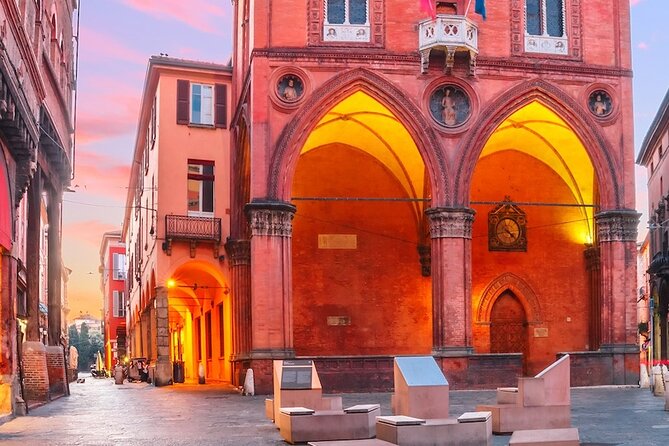
REVIEW · BOLOGNA AUDIO TOURS
Bologna: A Self-Guided Audio Tour from Porta Galliera to Le Tre Frecce
Bologna reveals itself one story at a time. This self-guided walk gives you a lively introduction to the city, linking its red roofs, old canals, university traditions, churches, markets, towers, and political past in about 60 to 90 minutes. I like the way the GPS-guided audio starts and pauses as you move, and I like the freedom to stop for photos, food, or an Aperol Spritz without holding up a group.
The price is also easy to justify at $11.99 per person, especially since you receive lifetime access in English and can use the maps and audio offline. The main drawback is simple: you are on your own. Construction near Porta Galliera can make the start confusing, and the experience cannot answer questions or take you inside museums and churches.
Key points at a glance
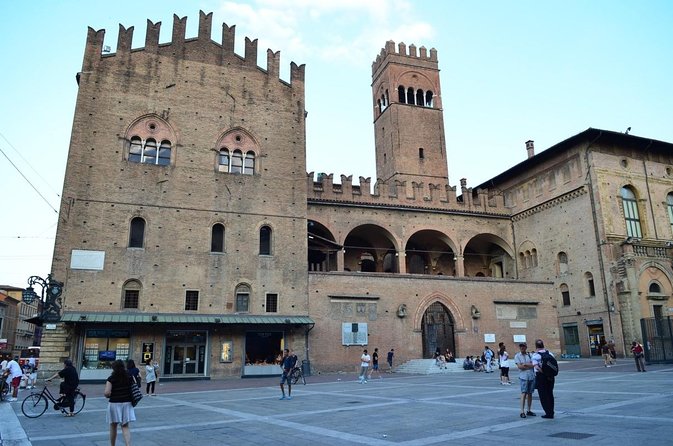
- A historic route from Porta Galliera to Le Tre Frecce: You cross central Bologna while following a clear north-to-south path.
- GPS-triggered commentary: The VoiceMap app starts and stops the narration as you reach each location.
- Bologna’s many personalities: The route explains the red, fat, towered, and cultured sides of the city.
- A strong mix of sights: You pass canals, a Napoleonic garden, San Pietro, San Petronio, the Quadrilatero, and the Two Towers.
- Time is flexible: The spoken route takes about one to one and a half hours, but you can stretch it into a longer outing.
- Best for independent visitors: You get a private experience for your own group, but no live guide, transport, food, or entry tickets are included.
Why this walk makes a good first look at Bologna
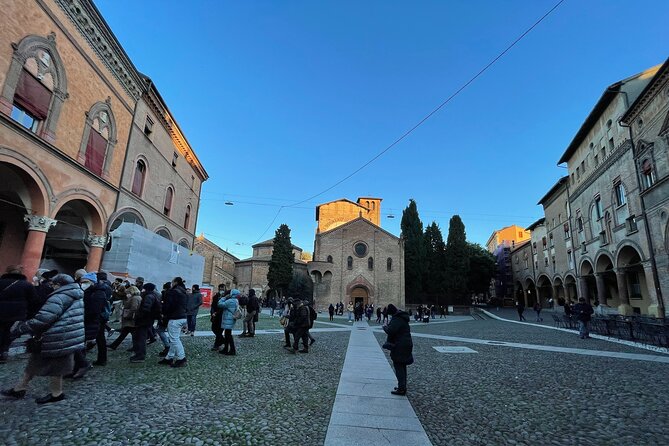
Bologna is unusually easy to misunderstand if you only visit its main square. The city has grand churches and leaning towers, but it also has covered streets, working food markets, old waterways, and political stories that do not always appear in a standard sightseeing checklist.
This route gives you a useful framework. It explains why Bologna has been called the red city, the fat city, the towered city, and the cultured city. Those nicknames are not just labels. They point you toward the city’s red roofs and political history, its hearty cooking, its former forest of towers, and its university, described here as the oldest in the world.
I especially like that the walk does not remain focused on one period. You move from medieval Bologna to Napoleon’s era, the Risorgimento, the 1848 rebellion, and modern street life. That range helps you see the city as a place that kept changing while its old center remained intact.
The route is also compact. It begins at Porta Galliera, near Piazza XX Settembre, and ends at Le Tre Frecce on Strada Maggiore. You do not need transport between stops. For a first afternoon in Bologna, it gives you a useful orientation before you return to places that deserve more time.
More Self-Guided Audio Tours in Italy
- Naples: Pompeii Self Guided Audio Tour
★ 3.9 · 211 reviews - Matera: Sassi di Matera Historical Self-Guided Audio Tour
★ 3.6 · 183 reviews - Self Guided Audio Tour-Coliseum & the Gladiator’s Legends
★ 3.5 · 49 reviews
Starting at Porta Galliera and the 1848 rebellion
The walk begins beside Porta Galliera, one of Bologna’s historic gateways. This is a practical meeting point near Piazza XX Settembre, but the area can be a little awkward if construction is taking place. Give yourself extra time to locate the start, especially if you are trying to begin on a tight schedule.
The opening story concerns an Austrian army retreating from Bologna after a local rebellion in 1848. That detail immediately gives the route some political weight. You are not simply looking at an old gate. You are hearing how the Bolognese resisted outside control and how that spirit helped keep the city from becoming part of the Vatican’s territory.
That story is one of the tour’s strengths. The commentary uses individual places to explain larger forces, rather than asking you to memorize dates without context. You get a sense of Bologna as a city with a strong civic identity and a history of pushing back.
From here, the walk moves toward Il Pincio, the entrance to Parco della Montagnola. The garden was commissioned by Napoleon and designed in a French style. It offers a change of mood after the city gate, with a reminder that Bologna’s appearance was shaped not only by medieval rulers but also by later political powers.
Piazza Otto Agosto and Bologna’s former waterways
The route continues through Piazza Otto Agosto, a broad urban space that helps connect the opening section to central Bologna. The walk is not only about stopping in front of monuments. You are also watching the city change as streets become more central and the buildings close in around you.
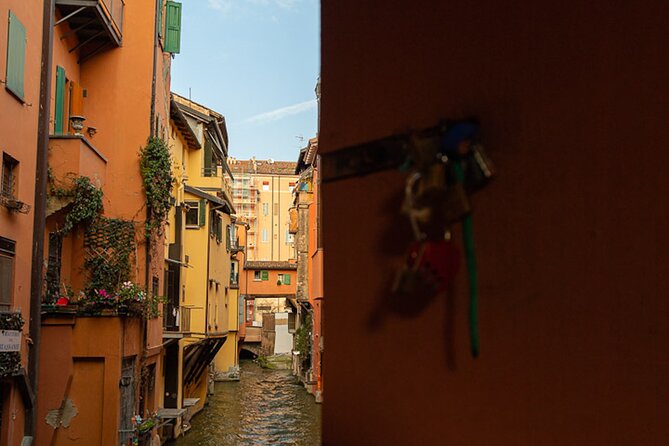
One of the more surprising themes appears at Canale delle Moline. Bologna once had a network of canals and rivers, enough for parts of the city to resemble Venice. Today, that water system is easy to miss, which makes the canal story particularly useful. It gives you a new way to read the streets and understand how trade, mills, and movement once worked here.
The audio also places Via Indipendenza in its post-Risorgimento setting. That means you are not just walking along a shopping street. You are considering what Bologna looked and felt like after Italian unification, when the city was adjusting to a new national identity.
This is a good example of the tour’s scale. The route does not stop for a long lecture at one monument. Instead, it gives you short pieces of background while you walk. If you want to photograph a building or check a side street, you can pause the app and resume later.
San Pietro, Piazza del Nettuno, and a clever statue story
As you continue, you pass San Pietro before reaching Piazza del Nettuno. The church is one of several major religious buildings along the route, but remember that the audio walk does not take you through museums or attractions. You can enter places independently if they are open, but admission and any interior visit are outside the $11.99 price.
Piazza del Nettuno brings one of the tour’s more entertaining stories. At the Fountain of Neptune, the commentary explains how the sculptor managed to make Neptune appear especially well-endowed even though the church had prohibited it.
This is exactly the kind of detail that works well in a walking tour. It gives you a reason to look closely at the statue rather than simply record its name and move on. You get art, local legend, and a little mischief in one stop.
The square also gives you a central reference point for Bologna. From here, the route moves toward the city’s major civic and religious sights, so it is worth taking your time if you want photographs or a closer look at the surrounding buildings.
Same place, a different route to walk:
- Rome: Pantheon Fast-Track Ticket and Official Audioguide
★ 4.5 · 27,353 reviews - Rome: Colosseum & Forum with Audio Guide App -Optional Arena
★ 4.2 · 24,770 reviews - Florence: Timed Entry to Michelangelo’s David + Audio App
★ 4.6 · 19,496 reviews - Rome: City Sightseeing Hop-on Hop-off Bus with Audioguide
★ 4.0 · 16,045 reviews
The Whispering Gallery under Torre dell’Arengo
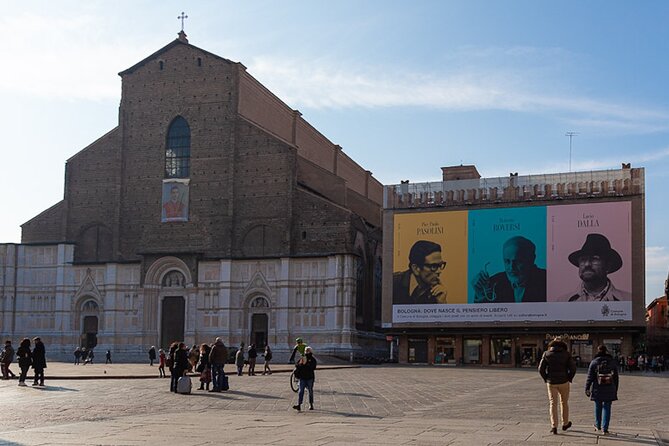
Under the Torre dell’Arengo, you enter what is known as the Whispering Gallery. The audio explains how lovers could murmur to each other from opposite corners while their legitimate partners remained unaware.
The story is lighthearted, but the setting also shows how medieval architecture can create unusual sound effects. This is a stop where you should not rush. Pause the narration if needed and test the space for yourself.
The tower forms part of the Palazzo del Podestà complex in the central square area, although this audio experience does not provide an interior tour of the building. The value comes from being pointed toward a detail you might otherwise miss.
I like stops such as this because they keep the walk from becoming a procession of formal facts. Bologna’s history includes politics, religion, engineering, food, and human behavior. The Whispering Gallery brings in the last category with a memorable local legend.
San Petronio and Bologna’s grand public center
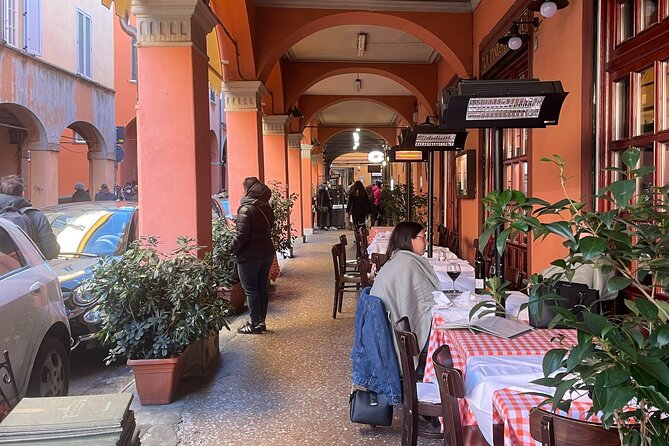
The route then brings you to San Petronio, the city’s largest and most important church. Even if you do not go inside, the exterior gives the walk a strong sense of scale. This is one of the points where you may want to pause the audio and spend extra time looking around.
San Petronio also helps explain Bologna’s ambition. The church is not presented as an isolated religious building. It belongs to the civic center, where the city’s public life, political power, and major landmarks meet.
The app keeps the visit flexible. You can listen while approaching the church, stop the narration, and decide whether to enter on your own. Any admission fee is separate, and the tour does not guide you through the interior. That limitation is important if you are expecting a complete church visit.
Still, as part of a city introduction, this section works well. You receive the setting and the main story, then retain the freedom to choose how much time to give the building.
The Quadrilatero and Bologna’s food-centered character
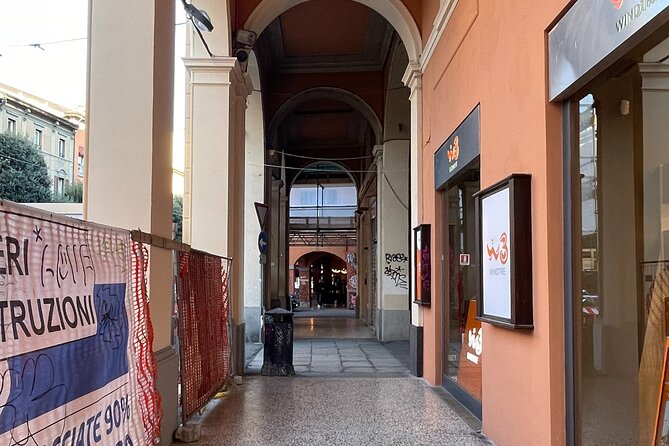
From San Petronio, the walk heads toward the Quadrilatero, Bologna’s old market district. This is one of the best sections for connecting the city’s nickname as the fat city with something you can actually see and smell around you.
The neighborhood is known for cafes and restaurants, and the route gives you a chance to move from monuments to everyday city life. I would not try to rush this part. If you want a coffee, snack, or drink, this is the natural place to pause the tour.
One of the useful features of an audio walk is that no group is waiting for you. You can stop for lunch, explore a side lane, or take a break and return to the route. One person extended the 90-minute walk into roughly three and a half hours by stopping to look up extra information, entering a few places, and taking an Aperol Spritz. That is a good illustration of how the advertised duration should be understood.
The spoken route itself takes about one to one and a half hours if you keep moving. Your actual outing can be much longer. Plan based on your interests, not just the audio length.
Via Rizzoli and Bologna’s Two Towers
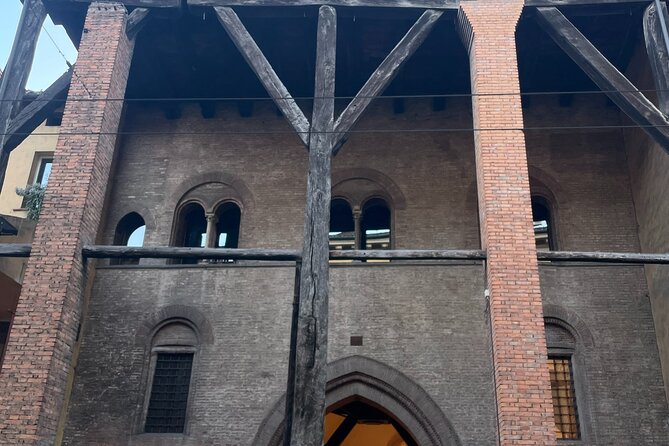
The walk continues along Via Rizzoli, one of the city’s important central streets. It then brings you to Garisenda and Asinelli, Bologna’s famous Two Towers.
These towers are among the clearest symbols of the towered city. Bologna once had more than 100 towers, creating a skyline very different from the one you see now. The audio uses Garisenda and Asinelli to explain that larger story and give the surviving towers their proper context.
This is another location where you may want to stop the narration. The route tells you what you are seeing, but it does not include a climb or a dedicated interior visit. Any decision to enter or pay for an attraction must be handled separately.
The approach through Via Rizzoli is helpful because it places the towers within the modern center rather than treating them as disconnected relics. You see how daily movement, shops, traffic, and famous medieval structures share the same streets.
Piazza della Mercanzia and the walk to Le Tre Frecce
After the Two Towers, the route leads through Piazza della Mercanzia. This smaller square provides another change in scale and brings you deeper into the historic center.
The final destination is Le Tre Frecce at Strada Maggiore 19. Here, the audio reveals legends connected with the Three Arrows, including one involving nudity. It is a fitting ending for a walk that mixes serious history with stories of romance, trickery, and local humor.
The tour ends in front of Le Tre Frecce. That makes the route practical if you want to continue along Strada Maggiore afterward, but the experience itself does not provide a return trip to the starting point. You should factor that into your plans if you have luggage, a restaurant reservation near Porta Galliera, or a train to catch.
How the VoiceMap app works in practice
You need your own smartphone and headphones. The purchase includes the VoiceMap application, the audio, maps, geodata, and offline access, but it does not include a device or listening equipment.
The GPS feature is the main convenience. As you walk toward a location, the app provides the relevant commentary and pauses as you move on. This removes the need to keep checking a printed route or manually start every short segment.
Navigation is generally easy to follow, and the app tracks your position along the route. Still, I would download the tour before leaving reliable internet access and check that the offline material is ready. You should also keep your phone charged, since navigation and audio use power.
The experience is offered in English only. It is a private activity for your own group, but private here means you are not joined by other customers. It does not mean you have a personal guide available to answer questions.
Who gets the most value for $11.99
At $11.99, this is a low-cost way to get structure, local stories, and navigation in one package. A live tour may give you more interaction, but the audio option is much easier to fit around an unpredictable day.
I think the price works best for:
- First-time visitors who want an overview before exploring Bologna in detail.
- Independent visitors who dislike fixed departure times.
- Short-stay visitors with only a few hours in the center.
- Couples and small groups who want to stop often without inconveniencing others.
- Last-minute planners who cannot find a suitable live tour.
The value is less clear if you want a deep museum visit, detailed architectural discussion, or spontaneous answers from a local guide. The route gives you a strong introduction, not a full study of Bologna.
The lifetime access also improves the price. You can use the tour again later, although the information provided does not promise updates or versions in other languages.
Practical limits to keep in mind
The route lasts about one to one and a half hours if you follow it without long breaks. You need to provide your own food and drinks, and the tour includes no transportation.
Most people can participate, but the supplied information does not provide detailed accessibility notes about every street, surface, or stop. If mobility access is important for you, check the route conditions before booking.
The non-refundable policy deserves attention. Once booked, the experience cannot be canceled or changed for a refund, even if your plans shift. That matters more here than it might for a flexible attraction ticket, since weather, transport delays, or a changed schedule could affect a walking plan.
Construction can also make the starting point harder to find. The opening at Porta Galliera is worth locating before you press play, rather than trying to solve the navigation problem while the audio is already running.
Should you book this Bologna audio walk?
Book it if you want an affordable, flexible introduction to central Bologna with clear directions and entertaining stories. The best features are the automatic GPS commentary, the freedom to set your own pace, the offline access, and the range of subjects covered in a short route.
Skip it if you require a live guide, museum admission, detailed interior commentary, or a refundable booking. For most independent visitors, though, $11.99 is a fair price for a compact walk that introduces Bologna’s gates, canals, churches, towers, food district, and local legends without taking over your day.
FAQ
Where does the Bologna audio tour begin?
It begins at Porta Galliera, at Piazza XX Settembre in Bologna.
Where does the tour end?
The route ends in front of Le Tre Frecce at Strada Maggiore 19.
How long does the tour take?
The audio walk takes about one hour to one and a half hours if you keep moving without extended stops.
What language is available?
The tour is offered in English.
Does the tour include a live guide?
No. It is a self-guided audio tour accessed through the VoiceMap application.
Do I need my own phone and headphones?
Yes. A smartphone and headphones are not included.
Can I use the tour offline?
Yes. Offline access to the audio, maps, and geodata is included.
Does the tour include museum or church admission?
No. The tour does not guide you through museums or other attractions, and any admission costs are separate.
Is transportation included?
No. You walk between the stops, and transportation is not included.
Can I cancel or change the booking?
No. The experience is non-refundable and cannot be changed for any reason.
Just added around Italy
- Torino Walking Tour with Audio and Written Guide by a Local★ 4.5 · 35 reviews
- Medieval Canals and Fountains: A Treviso Self-Guided Audio Tour★ 4.5 · 4 reviews
- Trapani Walking Tour with Audio and Written Guide by a Local★ 4.0 · 8 reviews
- Trento Walking Tour with Audio and Written Guide★ 4.5 · 11 reviews
- Sicily: Selinunte Park Entry Ticket & Sicily Digital Audio Guide★ 4.5 · 4 reviews
- Taormina Walking Tour with Audio and Written Guide by a Local★ 4.5 · 41 reviews
- Taranto Walking Tour with Audio and Written Guide by a Local★ 5.0 · 5 reviews
- Siracusa Walking Tour with Audio and Written Guide by a Local★ 5.0 · 59 reviews
Self-Guided Tours, compared.
Acropolis Ticket & Optional Self-Guided Audio Tours
Read our review →


Ultimate Acadia National Park Self-Guided Driving Audio Tour
Read our review →

Santorini: Akrotiri Ticket with Optional Self-Guided Audios
Read our review →
Browse the lists this tour appears in