

REVIEW · BERLIN AUDIO TOURS
Berlin’s Museum Island: A Self-Guided Audio Tour
Museum Island rewards a closer look. This 50-minute audio walk links the rebuilt Berliner Schloss, Lustgarten, Schlossbrücke, and Altes Museum while explaining how Berlin’s royal power and Enlightenment thinking shaped the city. I like the freedom to start whenever you wish, and I like that the VoiceMap app works offline once the tour is downloaded. The main drawback is that setup must be completed before you arrive.
I also appreciate the price: $5 per person buys lifetime access rather than a single scheduled outing. Still, this is not a museum ticket or a live guide, and the current rating of 3.7 from three ratings suggests the app preparation can make or break the experience. Download everything over strong Wi-Fi before heading to Lustgarten.
Key points to know before you go
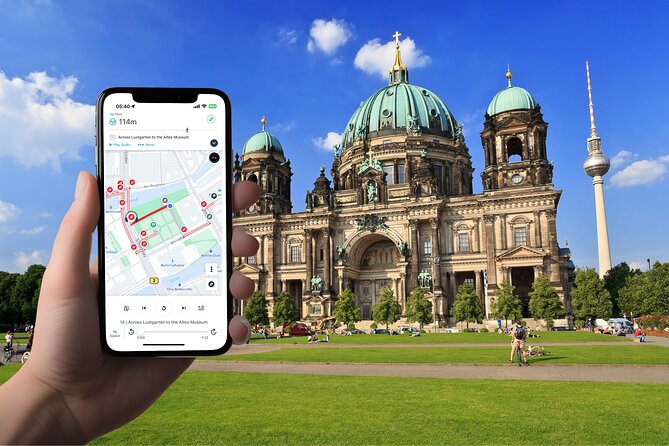
- A 50-minute walk through Berlin’s former seat of power: Begin at Lustgarten and finish near the Museum for Pre- and Early History.
- Rory MacLean provides the narration: The bestselling author guides you through Prussian militarism, the Enlightenment, architecture, and museum history.
- The route connects five major museums: You pass the institutions that make Museum Island a UNESCO World Heritage site.
- VoiceMap uses GPS to trigger the audio: The commentary plays at the intended place and time, with offline maps and sound after downloading.
- Museum visits are separate: You can pause to enter museums, but admission tickets are not included.
- The $5 price brings flexibility, not personal attention: You walk privately with your own group, without a live guide or arranged transportation.
Starting in Lustgarten beside Berlin’s old power center
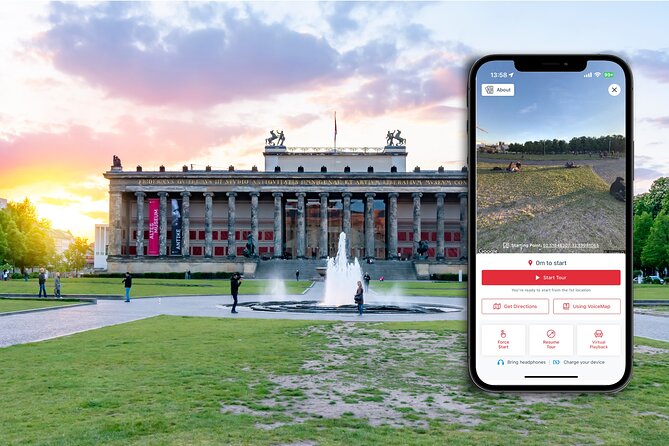
The tour begins at Am Lustgarten 1, beside the broad square that has served as Berlin’s seat of power for centuries. This is a useful starting point because the surrounding buildings let you see government, royal display, religion, and scholarship in one compact area.
I like tours that begin with a place rather than a list of dates, and Lustgarten does that job well. The audio sets up Berlin’s political story before sending you toward the Schloss and Museum Island. You are not simply walking from one attractive building to another. You are being asked to consider who controlled the city, how that power was presented, and how later generations challenged it.
The opening section also places the reconstructed Berliner Schloss in context. The building was once the main seat of Prussian and German royal power, was later destroyed, and has now been rebuilt. The tour uses that complicated story rather than treating the palace as a perfect old survivor.
You will want to arrive with your phone charged and the route already downloaded. The app relies on your smartphone’s GPS, so keeping location services active matters. The tour can start at your convenience, but that convenience does not mean you can skip the technical preparation.
More Self-Guided Audio Tours in Germany
- Self-Guided Audio Tour-The Fall of the wall: A light for humanity
★ 4.5 · 8 reviews - Self Guided Tours Berlin With 100 Captivating Audio Stories
★ 5.0 · 2 reviews - Berlin Self-Guided Audio City Tour
★ 4.5 · 2 reviews
The Berliner Schloss and the cost of royal power
The rebuilt Schloss is one of the route’s central subjects. The audio explains how the building has been treasured at some points and condemned at others. That shift in public feeling is more interesting than a simple palace description because it shows how Berlin has repeatedly argued with its own past.
The tour also points to Kaiser Wilhelm and the outbreak of the First World War. From the Schloss in 1914, Wilhelm sent a million men toward battles including Verdun, Ypres, and Passchendaele. The detail gives the palace a sharper edge. Its grand façade is not just a backdrop for photographs. It represents a political order with serious human consequences.
I find that historical framing valuable for visitors who might otherwise see the reconstructed building as an isolated architectural project. The audio connects the Schloss to militarism, monarchy, and memory. It also gives you a reason to look beyond the surface finish and ask why Berlin chose to rebuild this particular symbol.
The route does not promise entry into the Schloss or any other museum. You should treat this part as an outdoor orientation, with the narrated context supplied through your phone. If your main goal is to tour palace interiors, this walk will not replace a museum visit.
Crossing Schlossbrücke and reading Prussia in stone

From the palace area, the route crosses the famous Schlossbrücke. This bridge is not merely a practical link between parts of central Berlin. The tour points out features that express Prussia’s military philosophy, so you are encouraged to read the decoration as political messaging.
That is one of the better reasons to take an audio walk here. In a city filled with statues and grand public buildings, it is easy to photograph details without asking what they mean. The narration gives you a way to connect the bridge’s visual program with Prussia’s ideas about discipline, war, monarchy, and public duty.
The route is described as an easy walk, but you should still expect to be on your feet for close to an hour. A moderate level of physical fitness is recommended. There is no arranged transportation, and the experience is intended to be completed on foot between the opening and final points.
Because this is a GPS-led route, keep the app open and pay attention to where you are walking. You can pause the tour at any point, which is helpful if you want photographs, a rest, or a closer look at a building. The ability to stop is also useful if you decide to enter one of the museums along the way.
Architecture, reconstruction, and the problem of preserving the past
The narration discusses the architect’s vision for keeping the original building’s history alive. That subject adds another layer to the Schloss. Reconstruction is never just a matter of putting old walls back in place. It involves choices about which version of the past deserves to be seen and how much of a building should be recreated.
You may find this especially useful if you are interested in Berlin’s approach to damaged and divided monuments. The tour presents the Schloss as a place shaped by affection, rejection, destruction, and revival. It is a compact way to understand why this building remains politically and culturally charged.
I would not expect a technical architecture lecture. The experience is designed for a general audience and lasts about 50 minutes. Its strength is the connection between buildings and ideas, not a room-by-room examination of materials or construction methods.
The route’s pace should suit someone who wants a clear introduction before deciding which museum to enter. If you already know Berlin’s architectural debates in detail, some explanations may feel familiar. For a first visit, though, the framing helps you notice details you might otherwise pass without a thought.
More Museum Audio Tours in Berlin:
- Florence: Uffizi Priority Ticket & Masterpieces Audio App
★ 4.2 · 6,402 reviews - Paris: Louvre Museum Hosted Entry and Mona Lisa Audioguide
★ 4.6 · 5,235 reviews - Venice: St. Mark Basilica Ticket, Audioguide+History Gallery
★ 3.9 · 4,780 reviews - Rome: Borghese Gallery Skip-the-Line Ticket & Audioguide
★ 4.3 · 4,318 reviews
Five museums and the purpose of Museum Island
Museum Island is famous because several major museums occupy one historic area. The tour explains why these five institutions are grouped together as a UNESCO World Heritage site and links them to the development of civilizations across the ages.
The important point is not simply the number of museums. Their presence reflects the Enlightenment idea that art, archaeology, science, and history could be gathered, studied, and made available to the public. The audio connects that ambition to the wider intellectual changes that shaped Europe.
You can pause the walk to enter the German Historical Museum or other institutions near and on the island. Entrance fees are not part of the $5 purchase, so you should budget separately if you want to go inside. Since the tour lasts roughly 50 minutes, a museum visit will turn this into a much longer outing.
I like the pause function because it keeps the experience from forcing you to choose between a walking tour and a museum day. You can listen to the outdoor sections first, stop when a collection catches your eye, and resume later. The tour gives you lifetime access, so there is no need to rush through every stop on one visit.
Still, the audio cannot tell you current opening times or guarantee entry to any institution. The supplied operating information lists the experience itself as available every day, around the clock. Museum hours and admission arrangements are separate matters, so check them before planning a full day around the route.
The Altes Museum, lost murals, and a visitor’s first impression
One of the most memorable stops concerns the Altes Museum. The audio explains how many of its great murals were lost in 1944, adding wartime damage to the museum’s story. This is a strong example of how the walk moves beyond dates and architectural labels.
The tour also includes the words of a young factory worker from the 1850s describing his emotional first impression of the museum. That perspective matters. Museums are often described through architects, rulers, and scholars, but the reaction of an ordinary working person shows what a public cultural institution could mean to someone encountering it for the first time.
I value this kind of detail because it makes the museum feel like a public project, not only a royal collection. It also supports the tour’s larger theme: the Enlightenment changed who could encounter art, knowledge, and the material remains of earlier civilizations.
You may want to allow extra time at the Altes Museum after the walking portion. The audio gives you context outside the building, but it does not include admission or a guided visit through the galleries. If you have only an hour in Berlin, stay with the route. If you have a free afternoon, use it as an introduction before going inside.
Finishing near the Museum for Pre- and Early History
The route ends at the Museum for Pre- and Early History on Bodestraße 1 to 3. Ending near another museum keeps the focus on Museum Island as a group of institutions rather than a single palace or square.
That final location is practical for anyone who wants to continue exploring on foot. The route does not arrange onward transportation, meals, or museum entry, so you are responsible for what happens after the final audio section. The endpoint also gives you a natural moment to decide if you want more exhibits or if you have had enough information for one morning.
A 50-minute duration is a good fit for a first orientation. It is long enough to connect the main ideas but short enough to combine with another Berlin plan. I would not treat it as a complete study of Museum Island. Think of it as a focused introduction to the relationship between royal power, military culture, architecture, museums, and public education.
How VoiceMap affects the experience
VoiceMap is the core of the tour. Audio, maps, and geodata are available offline, and the GPS is designed to play each section at the right place. That means you can walk without relying on a constant mobile signal once the tour has been downloaded.
The setup needs care. Your booking confirmation contains a redemption code, and the app requires an account and an additional download before you begin. One person arrived expecting to activate the tour on site and found that the required steps were not finished. The provider recommends downloading the tour over a strong Wi-Fi connection before setting out.
This is the most important practical warning. Do not wait until you are standing in Lustgarten with no Wi-Fi. Install VoiceMap, redeem the code, create the account if prompted, download the tour, and check that the audio and map are available offline.
The system suits independent walkers who like controlling the pace. It does not suit someone who wants to ask questions, receive personal recommendations, or have a guide manage the route. This is a private activity for your own group, but private here means self-guided, not accompanied by a person.
What $5 buys, and what it does not
At $5 per person, the tour offers good value if you want historical orientation and already plan to walk around Museum Island. The price is lower than a typical live guided outing, and lifetime access means you can return to the route later.
The value depends on using the audio. If you only want a map of the island, you can find that elsewhere. The useful part is the narration by bestselling author Rory MacLean, which links physical details to larger questions about Prussian power, the Enlightenment, war, and public museums.
Your payment does not cover a smartphone, transport, food, drinks, or museum tickets. It also does not include a live guide. These exclusions are reasonable at this price, but you should count them when planning a full Museum Island day.
The non-refundable policy makes preparation especially important. Once purchased, the experience cannot be changed or refunded for any reason. Check that you have a compatible smartphone, enough battery, the VoiceMap app, and the downloaded tour before paying.
Who should choose this walk
I would recommend it to independent visitors who want a short historical introduction without joining a scheduled group. It is also useful for people who prefer to pause, take photographs, enter a museum, or stop for a break without holding up a guide.
The tour should suit first-time visitors who want to understand why Museum Island matters. It is particularly helpful if palace architecture, Prussian history, Enlightenment ideas, and the public role of museums interest you.
You may want to skip it if you dislike app setup or want a live conversation. The 3.7 rating from three ratings is not enough to define the experience, but it does reinforce the need to prepare the technology carefully. The only detailed complaint concerns the account and download process, not the historical route itself.
Service animals are allowed, the route is near public transportation, and only your group participates. Those details make it easy to fit into a larger Berlin plan, but you still need to manage your own transport and museum admissions.
Should you book Berlin’s Museum Island audio walk?
Book it if you want a low-cost, flexible walk that explains what you are seeing rather than simply pointing out buildings. The best reasons are the strong connection between the Schloss and Prussian militarism, the attention to Enlightenment museum culture, and the freedom to pause or return later.
Skip it if your priority is a live guide, included museum entry, or a polished experience that requires no technical preparation. For the right person, $5 is a sensible investment. Just redeem the code, finish the account setup, and download the audio before you leave your Wi-Fi connection.
FAQ
How long does the Museum Island audio tour take?
The tour lasts approximately 50 minutes.
Where does the tour begin?
It begins at Am Lustgarten 1, 10178 Berlin, Germany.
Where does the tour finish?
It ends at the Museum for Pre- and Early History, Bodestraße 1 to 3, 10178 Berlin.
Who narrates the audio tour?
The tour is narrated by bestselling author Rory MacLean.
Does the tour include museum admission?
No. Tickets and entrance fees for museums and other attractions are not included.
Can I enter museums during the walk?
Yes. You can pause the tour to enter the German Historical Museum or other institutions near and on Museum Island, but you must arrange and pay for admission separately.
Does the VoiceMap app work offline?
Yes. Offline access is provided for the audio, maps, and geodata after you download the tour.
What do I need before starting?
You need your own smartphone, the VoiceMap app, the redemption code from your booking confirmation, and the tour downloaded before you begin. A strong Wi-Fi connection is recommended for setup.
Is the tour private?
Yes. Only your own group participates, and the experience is self-guided rather than led by a live guide.
More Self-Guided Audio Tours in Berlin
- Athens: Acropolis Ticket & Optional Self-Guided Audio Tours
★ 4.1 · 2,542 reviews - Gettysburg Battlefield Self-Guided Driving Audio Tour
★ 4.5 · 910 reviews - Joshua Tree National Park Self-Guided Driving Audio Tour
★ 4.5 · 762 reviews - Ultimate Acadia National Park Self-Guided Driving Audio Tour
★ 4.0 · 521 reviews
Just added around Berlin
- Self-Guided Audio Tour-The Fall of the wall: A light for humanity★ 4.5 · 8 reviews
- Self Guided Tours Berlin With 100 Captivating Audio Stories★ 5.0 · 2 reviews
- Take the U Train: An Audio Story of Berlin’s Oldest Elevated Railway Line★ 4.0 · 2 reviews
- E-ticket to Berlin Botanical Garden with Audio Tour★ 5.0 · 2 reviews
- Berlin Self-Guided Audio City Tour★ 4.5 · 2 reviews
- Hop-on Hop-off Berlin Tour with Audio Guide★ 3.0 · 11 reviews
- Berlin: Französischer Dom Viewing Platform with Audio Guide★ 4.1 · 43 reviews
- Berlin: Charlottenburg Palace & Gardens Ticket & Audio Tour★ 4.2 · 9 reviews
Museums, compared.
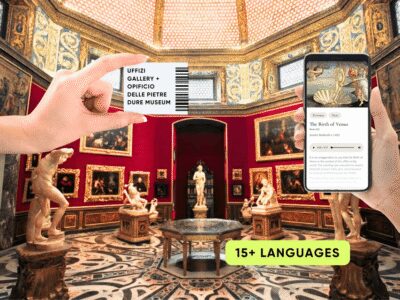
Uffizi Priority Ticket & Masterpieces Audio App
Read our review →
Louvre Museum Hosted Entry and Mona Lisa Audioguide
Read our review →
St. Mark Basilica Ticket, Audioguide+History Gallery
Read our review →
Borghese Gallery Skip-the-Line Ticket & Audioguide
Read our review →
Borghese Gallery Ticket + Audioguide or Guided Tour
Read our review →
Orsay Museum Entry Ticket and Digital Audio Guide App
Read our review →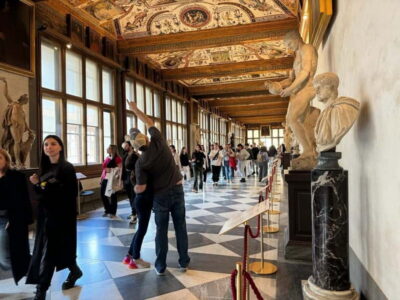
Uffizi Gallery Timed Entry Ticket & Audio Guide
Read our review →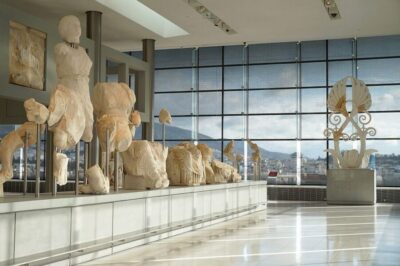
Acropolis Museum Ticket with optional Audio Guide
Read our review →Browse the lists this tour appears in