
REVIEW · BERLIN AUDIO TOURS
Take the U Train: An Audio Story of Berlin’s Oldest Elevated Railway Line
Berlin’s railway tells its story above street level. This self-guided audio tour follows the city’s first overhead U-Bahn route from Warschauer Straße to Gleisdreieck, using your phone’s GPS to play the right story in the right place. I like the route’s clear sense of direction and its focus on real city infrastructure, not just famous sights. I also like the freedom to pause, look around, and continue at your own speed.
The main point to understand is that this is mostly a walking tour, not a two-hour train ride. You spend only limited time actually riding the U-Bahn, so bring comfortable shoes and think of the train as part of the setting rather than the entire experience.
Key points to know before you go

- The route begins at Warschauer Straße, served by the U1 and U3, in Friedrichshain.
- Oberbaumbrücke is an early highlight, with its 1896 structure crossing the Spree between Friedrichshain and Kreuzberg.
- The audio follows the old railway corridor, including Skalitzer Straße, Gitschiner Straße, Hallesches Ufer, and Tempelhofer Ufer.
- GPS triggers the narration automatically, and the VoiceMap app works offline after the audio, maps, and location data are downloaded.
- You need a separate BVG ticket, either a day ticket or a single ticket valid for two hours on one route.
- The $14.99 price buys lifetime access, but it does not include transportation, food, headphones, or entry to museums.
What this Berlin audio tour really is
Think of Take the U Train as a moving history lesson tied to the city’s tracks, bridges, streets, and stations. The subject is the original Stammstrecke, Berlin’s first overhead U-Bahn line, built by Siemens & Halske at the end of the 19th century.
The route gives you a physical way to follow that story. Instead of listening to a general talk about Berlin’s transport system from one fixed location, you move along the railway corridor itself. The position of the tracks, the bridge over the Spree, and the long steel viaduct are all part of the experience.
I find that format useful because transport history can feel abstract in a museum. Here, the route gives the story a shape. You can see where the line runs and understand how it connects several parts of the city.
Still, you should set your expectations correctly. The audio guide follows the U-Bahn route, but you are not continuously sitting inside a train. One user described it as a walking tour with an audio guide, and that is the fairest description. If you want a long train journey, this may disappoint you. If you enjoy walking with a focused subject, it makes better sense.
More Train Rides in Berlin:
- From Naples: Caserta Palace Ticket and Train with Audioguide
★ 4.3 · 348 reviews - Porticcio: Coastal Train Ticket with Audio Guide & Tastings
★ 3.6 · 159 reviews - Zurich: Audio Guided City Tour and Train to “Top of Zurich”
★ 4.2 · 65 reviews
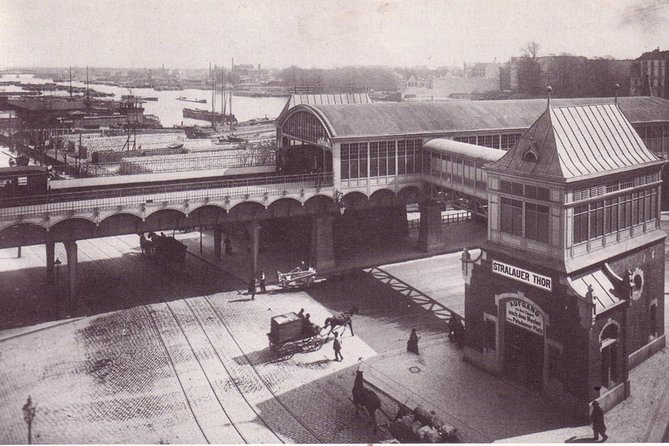
Starting at Warschauer Straße in Friedrichshain
The tour starts at Warschauer Str. 35, near Warschauer Straße station. The station serves the U1 and U3, so reaching the starting point by public transportation is straightforward.
This is a useful beginning because you start at the eastern end of the route, rather than joining the story halfway through. The audio can introduce the line before you follow it westward toward Gleisdreieck.
Give yourself a little time to get your bearings before pressing play. Make sure your phone has enough battery, your headphones work, and the VoiceMap app has access to your location. Since the audio uses GPS, the app needs to know where you are for the automatic playback to work properly.
The app includes offline access to the audio, maps, and geodata. That matters in a busy city, where a weak signal or an expensive data connection can make a phone-based tour awkward. Download what you need before starting, then you can focus on the route instead of staring at a loading screen.
The starting location is open all day and every day according to the supplied schedule. The tour itself takes about two hours, but your exact pace may vary because this is self-guided.
Crossing Oberbaumbrücke and the River Spree
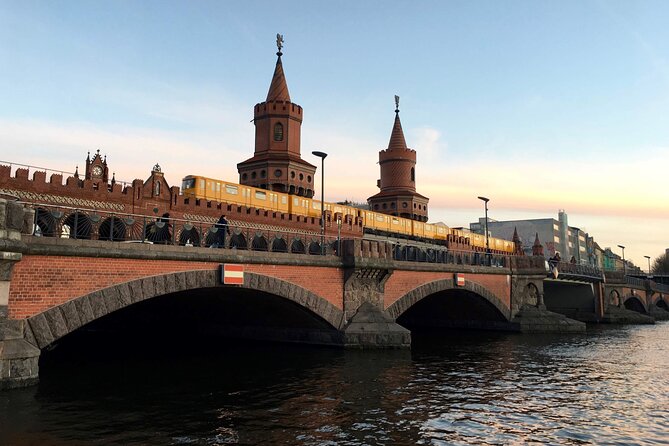
From Warschauer Straße, the route continues toward Oberbaumbrücke. This bridge dates from 1896 and connects Friedrichshain with Kreuzberg across the Spree.
The bridge is one of the most memorable points on the route because it links the railway story with Berlin’s wider urban story. You are not simply following rails. You are crossing between districts and seeing how the transport line fits into the city around it.
The bridge also gives the tour a natural change of scene. The route begins around a major U-Bahn station, then moves across the river before continuing beside streets and viaducts. That variety helps keep a two-hour audio walk from feeling like one long stretch of pavement.
I would pay attention here rather than treating the bridge as a quick connection between two audio points. The app should prompt the next section automatically when you reach the correct location, but you can pause if you want more time to look around.
The main limitation is that the guide does not include a personal guide to point out details in real time. If your phone loses your position or the audio starts late, you may need to check the route map yourself. The offline map helps, but you still need to stay aware of where you are.
Following the steel viaduct through Kreuzberg

After Oberbaumbrücke, the route follows the steel viaduct along Skalitzer Straße. It then continues along Gitschiner Straße, Hallesches Ufer, and Tempelhofer Ufer.
This is where the tour’s subject becomes easiest to understand. The railway is not just an object in the distance. It becomes a long, visible structure guiding your walk through the city.
The route through Kreuzberg also gives the experience a practical rhythm. You hear about the line while moving through several connected streets, rather than stopping at a single museum display. The audio can help you notice how the viaduct relates to the surrounding roads and neighborhoods.
I like this portion for its directness. You can follow the physical line and let the narration explain why it matters. It is a good match for people who enjoy architecture, transport, engineering, and city development.
At the same time, do not expect a parade of indoor attractions. The tour does not include museum admission or entry to any other sights along the way. Its value comes from the audio, the route, and the opportunity to see the railway corridor in place.
Because the route includes several streets and waterfront sections, wear shoes suited to walking. The supplied information does not give an exact walking distance, so you should judge the two-hour duration as a combined walking and transport experience rather than a fixed museum visit.
A few more audio tours around Berlin worth a look
- Berlin: Solar Powered Sunset Catamaran Cruise & Audio Guide
★ 4.6 · 1,043 reviews - Berlin: Boat Sightseeing Cruise with Audioguide
★ 4.6 · 947 reviews - Berlin: Panoramic Boat Tour with Bilingual Audio Guide
★ 4.1 · 136 reviews - Berlin: Französischer Dom Viewing Platform with Audio Guide
★ 4.1 · 43 reviews
Reaching Hallesches Ufer and Tempelhofer Ufer
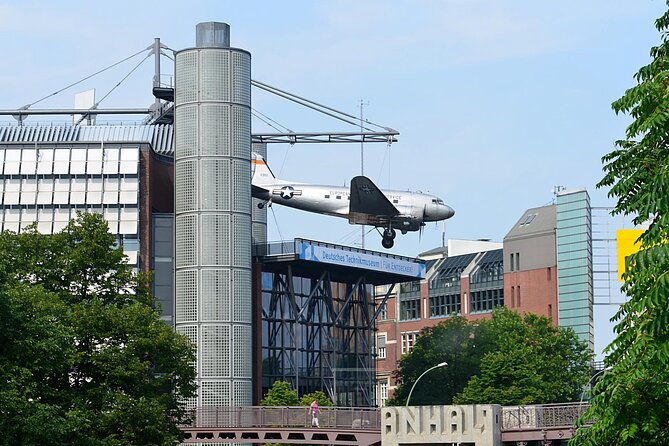
The route continues beside Hallesches Ufer and Tempelhofer Ufer before reaching Gleisdreieck. These sections keep the attention on the railway’s relationship with Berlin’s streets and waterways.
The audio format works well here because you can listen while moving. You are not tied to a guide’s schedule or required to stay with a group. If you want to stop briefly, take a photo, or catch your breath, you can pause the app and resume later.
That freedom is the strongest reason to choose this experience over a standard group tour. It is a private activity for your own group, and no other participants are added to your walk. You set the pace, decide when to continue, and can give more attention to the sections that interest you most.
The trade-off is the lack of personal contact. You cannot ask the audio guide a question or request more detail about a particular building. The information is prepared in advance, and the app delivers it at its set points.
For some people, that will feel efficient. For others, it may feel less lively than having a local person beside them. I would choose this format if you enjoy learning independently and do not need conversation during a tour.
Finishing at Gleisdreieck
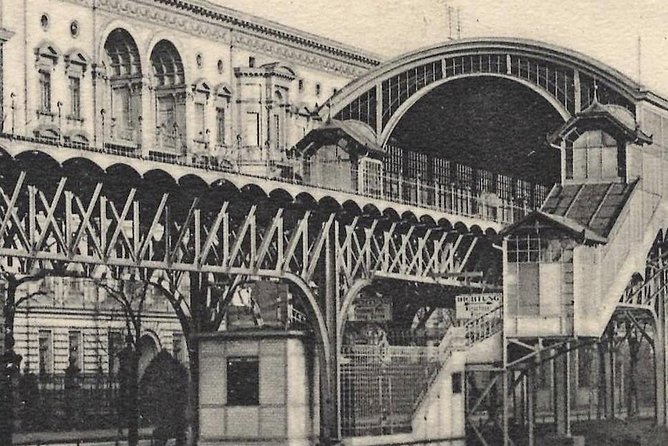
The tour ends at today’s Gleisdreieck station. This was the point where the eastern branch of the original overhead line ended, making it a logical finish for the story.
Ending at a major station also makes the tour easy to connect with the rest of your day. You are not returned to the starting point, so plan your next move from Gleisdreieck rather than assuming this is a circular walk.
The finish gives the route a clear beginning, middle, and end. You start in Friedrichshain, cross the Spree, continue through Kreuzberg, and arrive at a station connected with the line’s early development.
Because it is self-guided, the end time is flexible. The listed duration is about two hours, but you can listen faster or slower depending on your walking pace and pauses. The audio remains available for lifetime use, so you can also return to sections later.
The ticket detail that can catch you out
The $14.99 tour price does not include Berlin public transportation. You need a valid BVG day ticket or a single ticket, called an Einzelfahrschein, valid for two hours along a single route.
Validate the ticket before boarding the train, and keep it with you for the whole tour. Do not throw it away after the first ride. This is an easy detail to miss, especially if you think the $14.99 covers the full experience.
The ticket requirement affects the tour’s true cost. Add the appropriate BVG fare to the audio tour price, then bring your own smartphone and headphones. Food and drinks are also your responsibility, as are any museum or attraction tickets you might choose to buy along the way.
The price is reasonable if you value lifetime access and want a focused audio route you can use without a live guide. It is less attractive if you only want a one-time train ride, since the ticket cost is extra and the actual riding portion is limited.
How the VoiceMap app affects the experience
VoiceMap supplies the audio, map, and geodata. The important feature is automatic playback at the correct time and place through your phone’s GPS.
That arrangement lets you keep moving without constantly checking a written guide. When it works properly, the route feels well organized because the information arrives as you reach each section.
Before leaving, I would download the tour materials and check the app settings. Bring headphones, since they are not included. A fully charged phone is also sensible, even though the tour works offline after the content is saved.
GPS is helpful, but it is not magic. Keep the route map available in the app and pay attention to your surroundings. If the next section does not play immediately, avoid wandering far from the route while trying to fix it.
You receive confirmation when booking, and the tour is available seven days a week, at any time of day. The schedule lists the experience from midnight to midnight, so you have plenty of flexibility. You still need to choose a time when you can safely hear the audio and move through the city.
Who will get the most from this tour
I would recommend Take the U Train to you if you enjoy city infrastructure, railway history, and self-guided walks. It suits independent visitors who prefer a private activity and want to avoid a fixed group schedule.
It is also a good choice if you have already seen Berlin’s headline sights and want a more specialized subject. The tour links Friedrichshain, Kreuzberg, the Spree, and Gleisdreieck through one clear theme.
You may want something else if you want a traditional sightseeing tour with a live guide, frequent stops, or a long train journey. The audio gives you information, but it cannot answer questions or adjust the story to your interests.
Most people can take part, and service animals are allowed. The supplied details do not promise a fully accessible route, so if you have specific mobility needs, confirm the walking conditions before booking.
Should you book Take the U Train?
Book it if the idea of following Berlin’s oldest overhead U-Bahn route on foot sounds more appealing than simply riding a train. The route has a strong structure, the GPS audio keeps the story tied to place, and lifetime access gives the $14.99 fee more value than a one-use recording.
Skip it if you mainly want transportation or a continuous ride. The biggest surprise is also the clearest drawback: this is a walking tour that follows the U-Bahn, with only limited time on the train.
For the right visitor, it is an inexpensive and flexible way to understand a working part of Berlin through its bridge, viaduct, streets, and stations. Just buy the BVG ticket separately, download the audio before you start, and bring comfortable shoes.
FAQ
Where does the tour start?
It starts at Warschauer Str. 35 in Berlin, near Warschauer Straße station in Friedrichshain. Warschauer Straße is served by the U1 and U3.
Where does the tour end?
The tour ends at Gleisdreieck station in Berlin.
How long does the tour take?
The tour lasts approximately two hours.
Do I need a public transportation ticket?
Yes. You need a valid BVG day ticket or a single ticket valid for two hours along a single route.
Are transportation costs included in the $14.99 price?
No. Transportation is not included. You must purchase the required BVG ticket separately.
Do I need a smartphone and headphones?
Yes. You need your own smartphone and headphones. The VoiceMap application, audio, maps, and geodata are included, but the devices are not.
Does the tour work offline?
Yes. The VoiceMap app provides offline access to the audio, maps, and geodata after the material is available in the app.
Just added around Berlin
- Self-Guided Audio Tour-The Fall of the wall: A light for humanity★ 4.5 · 8 reviews
- Self Guided Tours Berlin With 100 Captivating Audio Stories★ 5.0 · 2 reviews
- E-ticket to Berlin Botanical Garden with Audio Tour★ 5.0 · 2 reviews
- Berlin Self-Guided Audio City Tour★ 4.5 · 2 reviews
- Hop-on Hop-off Berlin Tour with Audio Guide★ 3.0 · 11 reviews
- Berlin’s Museum Island: A Self-Guided Audio Tour★ 3.5 · 3 reviews
- Berlin: Französischer Dom Viewing Platform with Audio Guide★ 4.1 · 43 reviews
- Berlin: Charlottenburg Palace & Gardens Ticket & Audio Tour★ 4.2 · 9 reviews
Train Experiences, compared.
Caserta Palace Ticket and Train with Audioguide
Read our review →
Porticcio: Coastal Train Ticket with Audio Guide & Tastings
Read our review →
Audio Guided City Tour and Train to “Top of Zurich”
Read our review →
Browse the lists this tour appears in