
REVIEW · ROME AUDIO TOURS
Rome: Jewish Museum and Tempio Maggiore Entry with Audio
Rome keeps its oldest stories in unexpected places. The Jewish Museum and Tempio Maggiore visit traces a Jewish presence in the city that has continued for 2,200 years, with sacred objects, manuscripts, documents, and synagogue interiors. I like the museum’s clear seven-room layout, and I like that your ticket includes entry to the impressive Tempio Maggiore rather than stopping at exhibits alone.
I also like the downloadable audio guides, available in several languages, because you can set your own pace. The main caution is that the advertised synagogue guidance can be less substantial than expected. One recent experience included only a three-minute audio track accessed by QR code, while another visitor expected a French-speaking guide and could not find one.
Key points to know before you go
- The collection comes from Rome’s former Ghetto synagogues: Many objects were used in the five synagogues known as the Palazzo delle Cinque Scole during the Ghetto period from 1555 to 1870.
- Two synagogues are part of the visit: Your route includes the Tempio Maggiore and the Spanish Synagogue inside the museum complex.
- This is mainly a self-guided museum visit: The museum audio guide is included, but the synagogue portion may be brief rather than a full live tour.
- You enter through a security check: The meeting point is the main entrance after security, with express security access included.
- Audio access requires a phone: Download the Vatican&Rome App before arriving, and make sure your device has enough battery.
- The $20 price needs a value check: It may be worthwhile for guaranteed access and bundled audio, but prices reported at the venue have sometimes been lower.
A 2,200-year Jewish story in central Rome
The central reason to visit is simple: Rome’s Jewish community has lived continuously in the city for about 2,200 years. That gives the museum a strong sense of place. You are not looking at objects from a community that disappeared long ago. You are seeing evidence of a living religious and cultural tradition that adapted to Rome while keeping its identity.
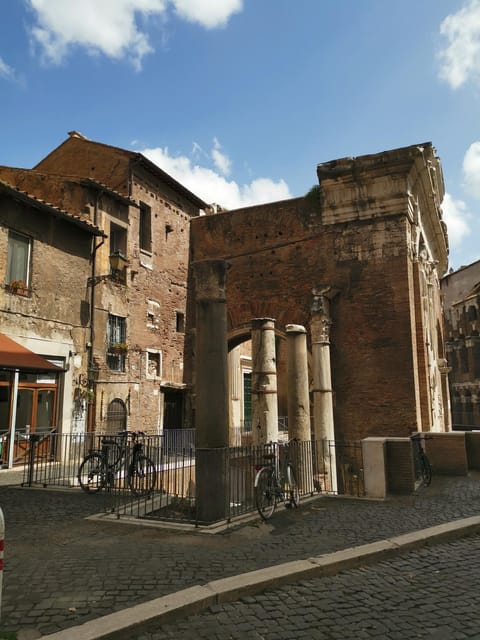
The museum focuses especially on the period of the Roman Ghetto, established in 1555 and ended in 1870. That era shaped daily life, worship, work, and movement for generations. The collection shows how Jewish residents maintained religious practice under difficult conditions and how they took part in the economic and social life of Rome.
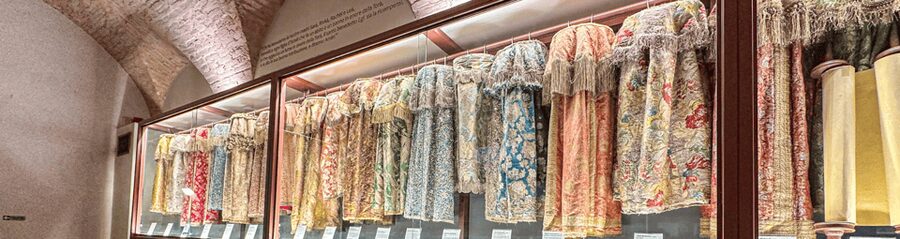
I find this more useful than a museum that presents history as a string of dates. Here, the objects help explain how a community functioned. The collection includes liturgical furnishings, manuscripts, incunabula, historical records, registers, and marble works. Each category gives you another way to understand worship, education, administration, and family life.
The museum’s material originally came from the Palazzo delle Cinque Scole, or Palace of the Five Synagogues. These five synagogues served different groups within the Roman Jewish community. Knowing that before you enter makes the displays easier to read. You are not seeing a random collection gathered from across Italy. Much of it belongs to one specific community and its former places of worship.
More Museum Audio Tours in Italy
- Rome: Borghese Gallery Skip-the-Line Ticket & Audioguide
★ 4.3 · 4,318 reviews - Rome: Borghese Gallery Ticket + Audioguide or Guided Tour
★ 4.6 · 3,219 reviews - Rome: Borghese Gallery Skip-the-Line Tickets with Audioguide
★ 4.6 · 2,562 reviews
Seven rooms that put objects into context
The museum occupies about 700 square meters and is arranged in seven rooms with different themes. This is a manageable size for a Rome visit. You can give the displays real attention without committing half a day to a huge institution.
The layout was updated in 2005. Before that, the collection had been shown in a single room since 1960. The newer arrangement gives the material more space and lets the museum present a clearer story. I would plan on moving slowly rather than treating the rooms as a quick prelude to the synagogue.
The first rooms help establish the long presence of Jewish people in Rome. The later sections concentrate more heavily on life during the Ghetto period. You might find religious objects placed alongside written records and architectural pieces, which helps connect private worship with public community life.
The manuscripts and incunabula are especially important for showing how knowledge and religious teaching were preserved. The registers and official documents provide a more administrative view. They can seem less dramatic than a silver ceremonial object, but they help show how a community recorded births, marriages, religious matters, and daily affairs.
The marble works also matter because they connect the museum with the city’s buildings and synagogues. Look for the relationship between an object’s religious purpose and its physical setting. The museum is not only telling you what Jewish Romans believed. It is showing how they built institutions and maintained communal life inside a powerful Roman setting.
Your audio guide should help you make those connections. Since the visit is largely self-guided, you can pause, replay sections, and spend more time with pieces that interest you. That freedom is useful, though the experience depends on how well your phone and the app work.
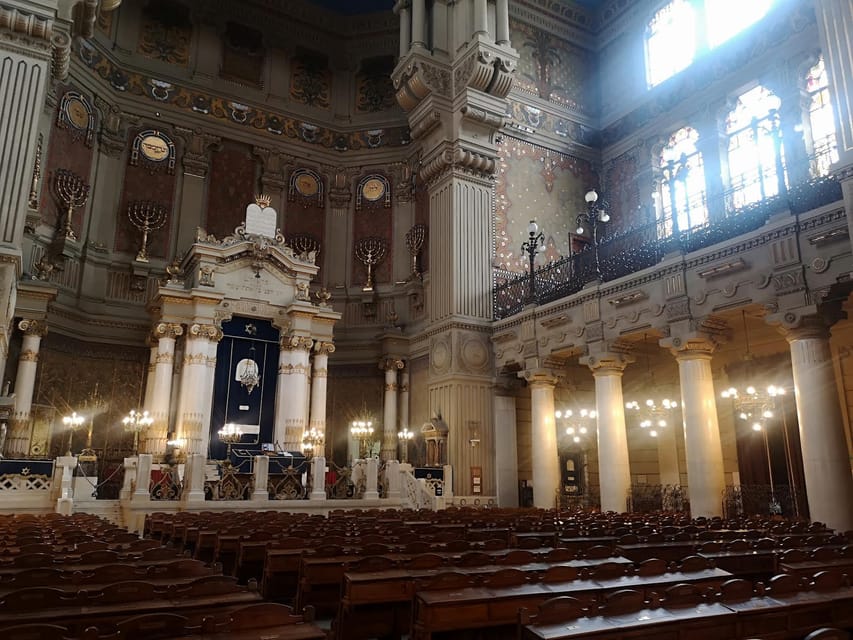
The Tempio Maggiore is the main visual reward
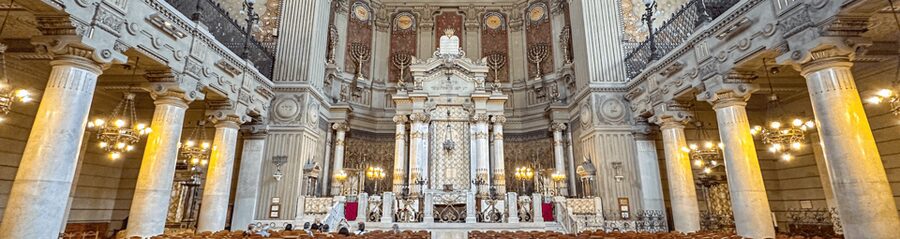
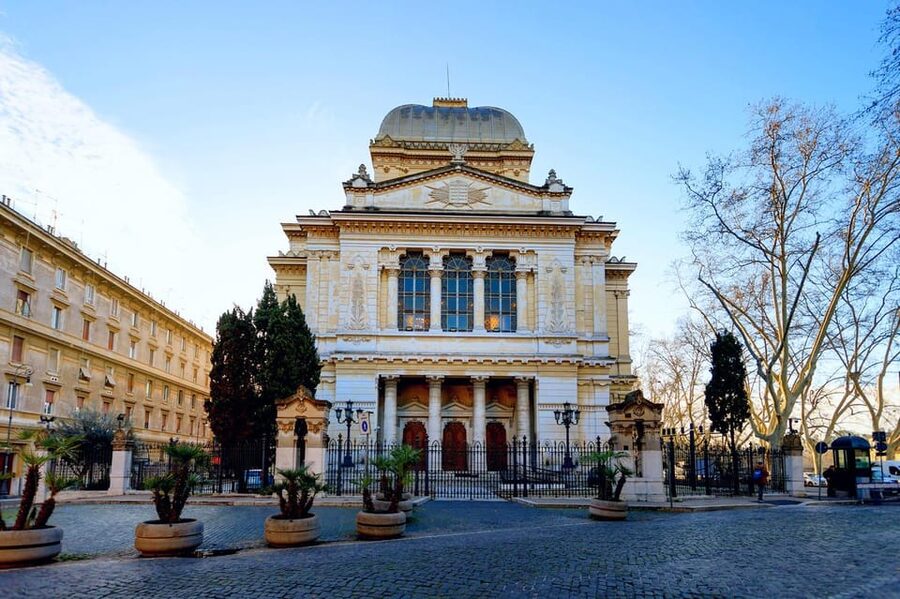
The Tempio Maggiore, Rome’s Great Synagogue, is included with admission. This is the part many people most want to see, and rightly so. It gives the museum visit a living religious setting instead of leaving you with display cases alone.
The synagogue is included with a guided visit, but you should set your expectations carefully. The information supplied for this experience does not promise a long, dedicated live tour in every language. One recent account described the synagogue portion as an English presentation accessed through a single QR code, with an audio recording lasting about three minutes.
That may be enough for basic orientation, but it is not the same as a full explanation from a specialist guide. If you are booking mainly for detailed synagogue interpretation, confirm the exact format and language before paying. The phrase guided tour can mean a short audio presentation here, not necessarily a person leading a small group through the building.
The practical benefit is that you do not need to arrange a separate synagogue visit. Entry is handled as part of the museum experience, and your reservation provides guaranteed access subject to the security process. In a city where popular sights can complicate your schedule, that certainty has real value.
The Tempio Maggiore also gives you a chance to think about the difference between museum preservation and religious use. The museum objects tell you about the community’s past. The synagogue shows that Jewish life in Rome is not merely a historical subject.
The Spanish Synagogue adds another layer
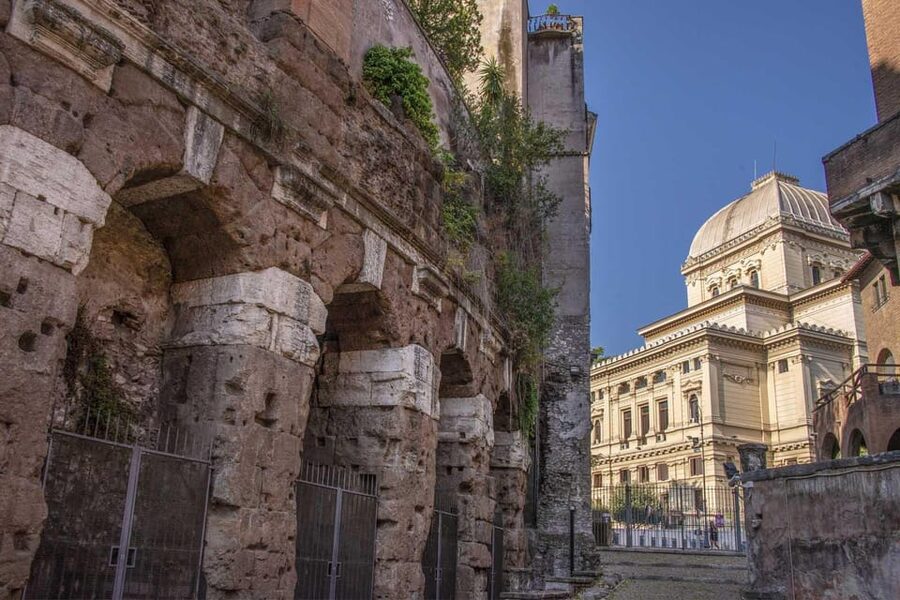
The itinerary also includes the Spanish Synagogue, located within the museum rooms. This is a useful feature because it widens the picture beyond one major building. The presence of two synagogues helps you understand that Rome’s Jewish community included different traditions and groups.
The name points to the Spanish tradition represented here. Rather than treating the community as one uniform block, the visit shows internal variety. That detail makes the collection more meaningful, especially when you have already seen objects from the five former synagogues.
Information about the exact length and format of the Spanish Synagogue visit is limited, so I would not plan your day around a long separate tour there. Think of it as part of the museum route, with the audio material providing the main explanation.
More Museum Audio Tours in Rome
- Rome: Borghese Gallery Skip the line ticket and Audioguide
★ 4.3 · 1,535 reviews - Rome: Borghese Gallery Ticket and Optional Audio Guide
★ 4.3 · 902 reviews - Borghese Gallery, Home to Canova’s Art – Entry with Audioguide
★ 4.0 · 884 reviews - Rome: Borghese Gallery Skip-the-Line Ticket & Audioguide
★ 4.0 · 768 reviews
What the audio guide actually adds
You will need to download the Vatican&Rome App from the App Store or Google Play before listening. This is not a small detail. If you wait until you are standing at the entrance, you may be dealing with weak reception, a full phone, or a battery that is already struggling after a morning in Rome.
The supplied information lists audio languages in slightly different ways. The museum guide is described as available in English, Hebrew, Spanish, German, Russian, and French in one section. Other details list Italian, English, Spanish, French, Portuguese, and German. The Jewish Quarter audio guide through the V&R App is listed in Italian, English, French, German, Spanish, and Portuguese.
Because of that mismatch, check the current language choices before you arrive. English is clearly supported, and several major European languages are listed, but Hebrew and Russian are not consistently shown across the information.
The separate Jewish Quarter audio guide is a worthwhile extra if you want to continue outside the museum. It is not a live walking tour, and no neighborhood guide is included. Instead, it gives you material to use on your own device as you explore the area.
That distinction matters. You are paying for museum access, synagogue entry, and audio content, not for a guide walking you through the quarter. If you prefer personal explanations and spontaneous questions, this format may feel thin. If you like setting your own pace, it gives you more control.
The meeting point and security process
Go directly to the main entrance of the Jewish Museum after the security check. The activity ends at the same point, so there is no transfer to arrange and no confusing final drop-off.
An express security check is included, but you should still allow time for screening. Religious sites and major institutions can have strict entry procedures, and the security step comes before you reach the stated meeting point. Keep your booking details ready and avoid arriving with an overcomplicated schedule immediately afterward.
A host or greeter may be available in Italian, English, Spanish, French, Portuguese, or German. The supplied details do not identify a specific host or guide by name. Do not book this expecting a named expert or a guaranteed language-specific person at the door.
The group size is limited to 10 participants. That is small enough to keep entry orderly and is better than being processed in a large crowd. Still, the visit itself is not necessarily a private tour. Once inside, your museum time is guided mainly by the audio device and the exhibition layout.
The site is listed as wheelchair accessible. If you need very specific access information for a particular room or synagogue area, it is sensible to confirm before arrival, since the general accessibility statement does not describe every part of the route.
Is $20 a fair price?
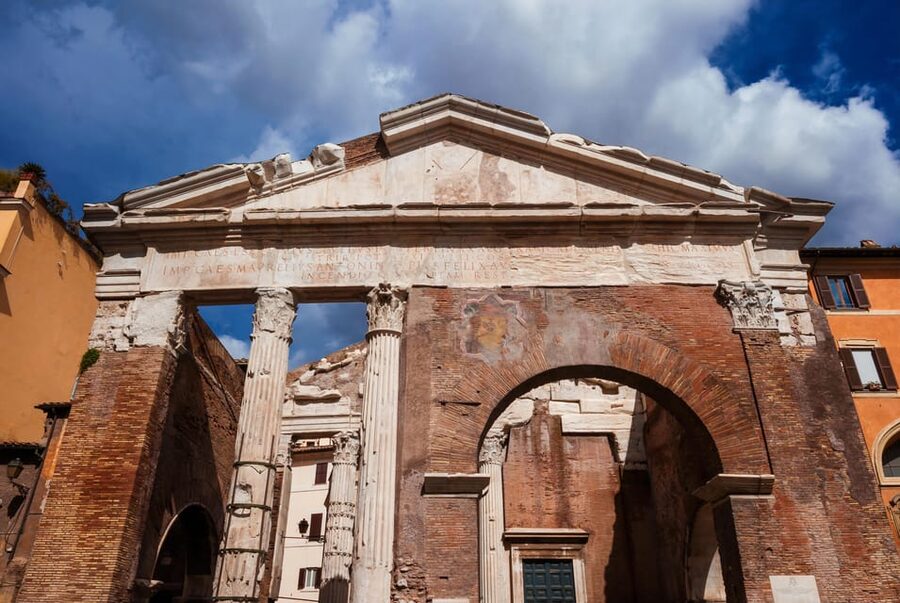
At $20 per person, this is not an extravagant Rome ticket, but the value depends on how you use it. You receive museum admission, access to the Tempio Maggiore, the Spanish Synagogue as part of the museum route, and downloadable audio material. Guaranteed admission can also help if your Rome schedule is tight.
The price becomes harder to justify if you mainly want a short look inside the Great Synagogue. One person paid €18 and found that the same activity was available for €12 directly on site. Prices can change, and those figures may not match your booking date, but they are a useful warning to compare the direct museum price before reserving.
The reservation platform may be worth the extra cost if you value advance planning, express security access, flexible cancellation, and reserve now, pay later terms. Cancellation is free up to 24 hours before the visit, which gives you some protection if your plans change.
I would not choose this experience solely because it says exclusive tour. The actual format is closer to reserved museum entry with audio support and synagogue access. That can be a good deal, but only if you understand what is included.
Who will get the most from this visit?
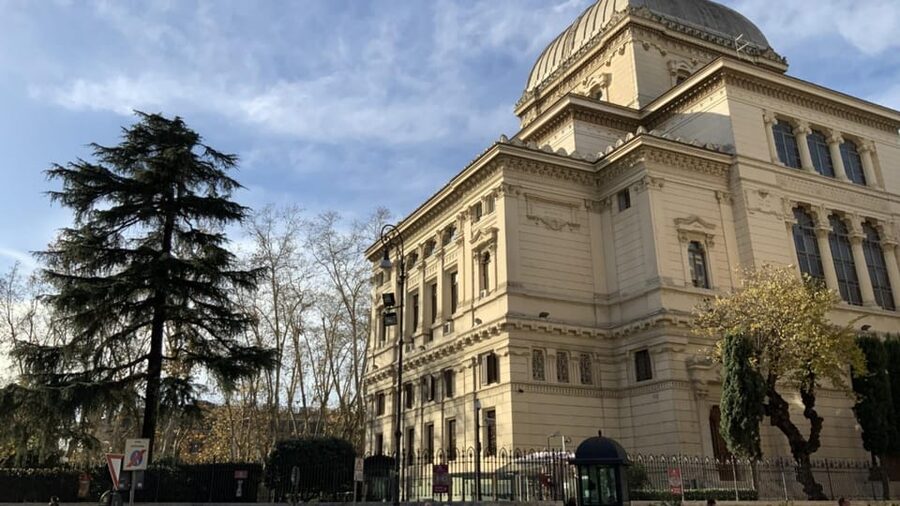
I recommend it to you if you want historical context rather than a quick photograph. The museum explains how Rome’s Jewish population preserved religious and cultural identity while taking part in the city’s wider social and economic life.
It suits independent visitors who like audio guides and do not need a person beside them at every stop. It also works well for anyone with a particular interest in religion, minority communities, Roman urban history, or the former Ghetto.
Families with older children may find the seven-room route manageable, especially if the audio guide helps younger listeners focus on selected objects. The material includes documents and ritual pieces, so it may not hold the attention of very young children for long.
I would be more cautious if you expect a detailed, French-speaking, live synagogue tour. One person specifically arrived expecting that service and could not find the guide. The available information does not confirm a live guide in every language.
You should also think twice if you do not want to download an app. The audio content depends on your own mobile device, and the synagogue explanation may rely on QR access. Bring headphones if you have them, and charge your phone before leaving your hotel.
My booking advice
I would book this visit when you want a focused cultural stop in Rome and value guaranteed entry. The museum is small enough to fit into a busy day, yet the 2,200-year story gives it more weight than its size suggests.
Before booking, check three things: the current direct admission price, the exact audio languages, and whether the Tempio Maggiore visit is live or QR-based at your chosen time. Those checks address the only real complaints: paying more than the on-site rate and expecting a fuller guide than the format provides.
The strongest reason to go is the combination of community history and actual synagogue access. The highest praise for the experience is deserved: it helps you understand Rome’s Jewish population in a way that a general city tour usually cannot.
FAQ
How long is the Jewish Museum and Tempio Maggiore experience?
The ticket is valid for one day, but no fixed visit length is provided. You should check the available starting times when booking.
What does the ticket include?
It includes Jewish Museum entry with a downloadable audio guide, entry to the Tempio Maggiore with guided content, access to the Spanish Synagogue within the museum route, and a Jewish Quarter audio guide through the V&R App.
Is a live guide included?
A host or greeter may be available, but the main museum visit uses an audio guide. The synagogue portion may be a short audio presentation rather than a full live tour, so confirm the format before booking.
Which languages are available?
The listed languages include Italian, English, Spanish, French, Portuguese, and German. One section also lists Hebrew and Russian for the museum audio guide, so check the current choices before arrival.
Do I need an app?
Yes. You need to download the Vatican&Rome App from the App Store or Google Play to listen to the audio guide on your mobile device.
Where do I meet the group?
Go to the main entrance of the Jewish Museum after completing the security check. The activity ends back at the same meeting point.
Is the experience wheelchair accessible?
Yes, the activity is listed as wheelchair accessible.
How large is the group?
The experience is described as a small-group activity limited to 10 participants.
Can I cancel the booking?
Yes. You can cancel up to 24 hours in advance for a full refund. Reserve now and pay later is also available.
Just added around Rome
- Pantheon Skip the Line Entry Tickets with Digital Audio Guide★ 3.5 · 52 reviews
- Trastevere: A Self-guided Audio Tour of Rome’s Medieval Village★ 4.5 · 3 reviews
- St. Peter’s Basilica: Dome Climb with Lift & Audioguide★ 4.5 · 13 reviews
- Audio guide in Vatican Museums and Sistine Chapel★ 4.5 · 12 reviews
- Navova square underground with audioguide★ 4.5 · 17 reviews
- The Roman Jewish Ghetto: A Self-Guided Audio Tour★ 4.0 · 8 reviews
- Experience: The Pantheon Audio Tour★ 4.5 · 4 reviews
- St. Mary’s Basilica, Pope Francis Tomb Audio Tour with Crypt★ 4.0 · 3 reviews
Museums, compared.
Uffizi Priority Ticket & Masterpieces Audio App
Read our review →
Louvre Museum Hosted Entry and Mona Lisa Audioguide
Read our review →
St. Mark Basilica Ticket, Audioguide+History Gallery
Read our review →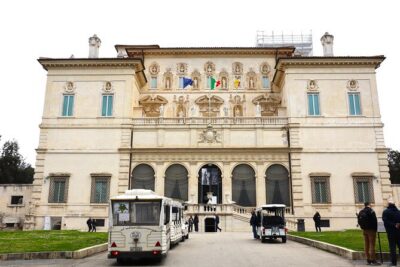
Borghese Gallery Skip-the-Line Ticket & Audioguide
Read our review →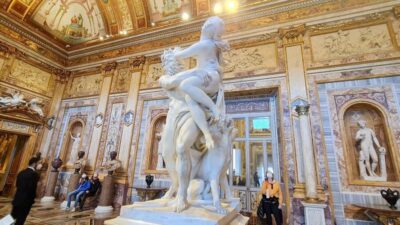
Borghese Gallery Ticket + Audioguide or Guided Tour
Read our review →
Orsay Museum Entry Ticket and Digital Audio Guide App
Read our review →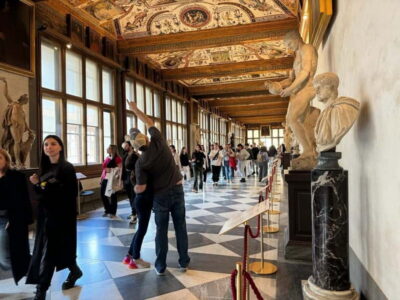
Uffizi Gallery Timed Entry Ticket & Audio Guide
Read our review →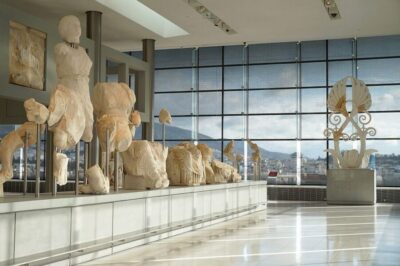
Acropolis Museum Ticket with optional Audio Guide
Read our review →Browse the lists this tour appears in