
REVIEW · ITALY AUDIO TOURS
R. Calabria: National Archaeological Museum & App audioguide
The bronzes alone make this museum worth your time. The Riace Bronzes are the headline attraction, but the museum also presents Greek, Roman, and prehistoric finds in a clear modern setting. I like the informative exhibition panels and the chance to see less famous objects that often get overlooked. I also like the views across the Strait of Messina, which give the visit a strong sense of place.
The main drawback is simple: this is an entry ticket with an app audioguide, not a guided tour. You need to exchange your voucher at the ticket office, and the Riace Bronzes room closes on several listed dates. Check that detail before booking, especially if the statues are your main reason for coming.
Key points at a glance
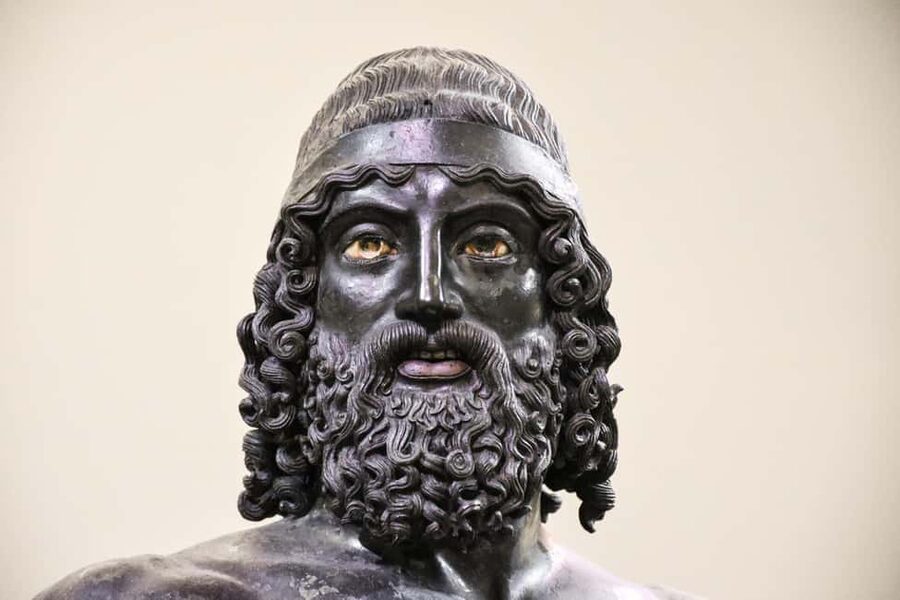
- The Riace Bronzes are the star attraction: See the famous ancient Greek statues in the museum dedicated to Calabria’s archaeological past.
- The museum covers a long stretch of history: Collections range from prehistoric objects through the Greek and Roman periods.
- The Hellenistic Necropolis is inside the museum: Burial finds discovered during construction add an unusual archaeological layer to the visit.
- The lapidary rewards patient visitors: Monumental inscriptions and architectural fragments offer clues about daily life, buildings, and public memory.
- The Strait of Messina is part of the experience: Museum windows and viewpoints connect the artifacts with the sea and the wider region.
- The $19 ticket is flexible: Entry is valid for one day, cancellation is free up to 24 hours ahead, and you can reserve without paying immediately.
Why the Reggio Calabria museum matters
Reggio Calabria sits on the toe of Italy, facing Sicily across the Strait of Messina. That location is important. Ancient Calabria was not an isolated corner of the country. It was part of the Greek world, shaped by trade, migration, settlement, warfare, and contact across the water.
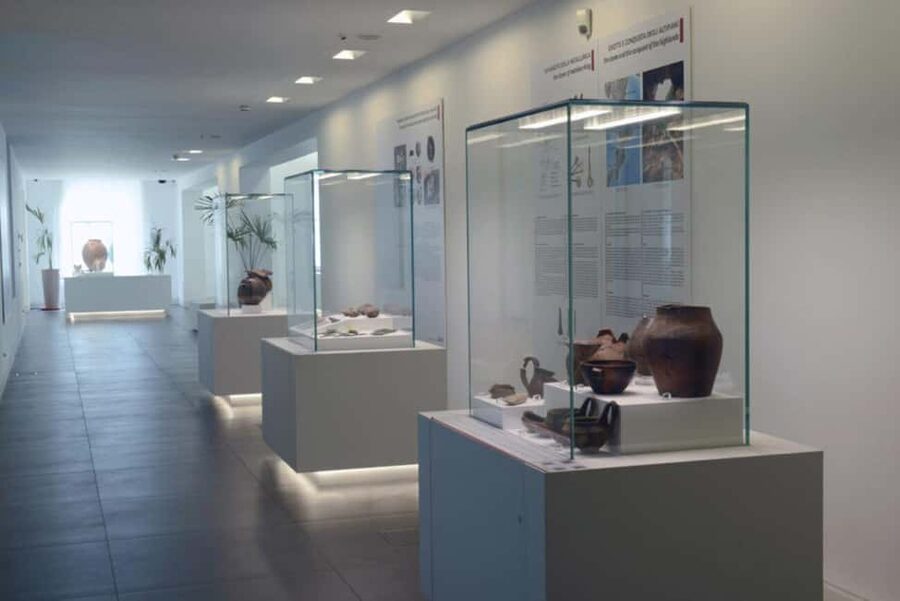
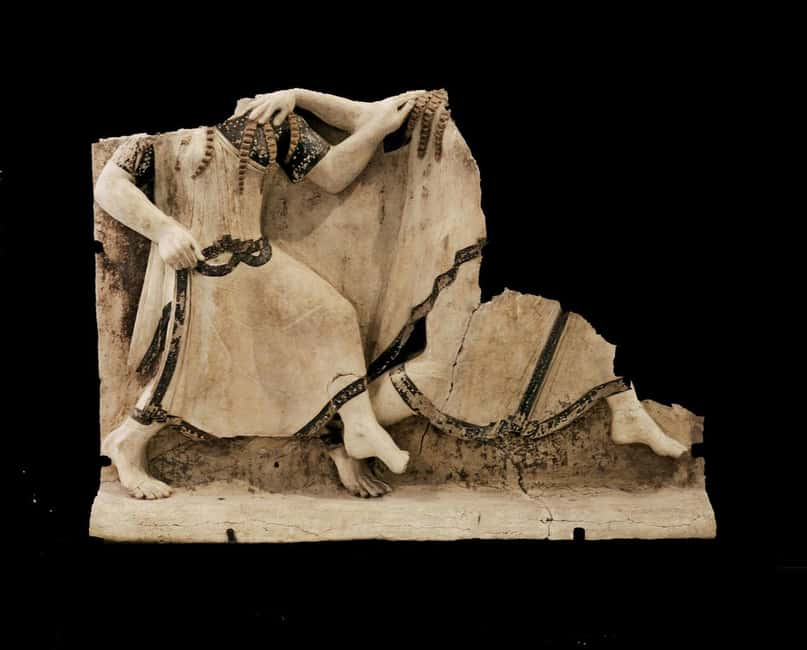
The National Archaeological Museum brings that past into one building. You can move from early objects to Greek art, Hellenistic burial remains, Roman material, inscriptions, and architectural fragments. The chronological range helps you see change over time instead of treating ancient history as one large, blurry block.
I especially like the way the museum makes room for both famous and ordinary objects. The Riace Bronzes draw the crowds, but the smaller finds explain how people lived, worshipped, buried their dead, and marked public spaces. The exhibition posters are reported to be informative and interesting, which matters here because many objects need context before they make sense.
This is not simply a room with two statues and a few side exhibits. It is a museum visit that can fill much of a day if you read the displays carefully. You can also keep it shorter if you focus on the main galleries and the bronzes.
More History Audio Tours in Italy
- Colosseum, Roman Forum & Palatine Hill with Audioguide App
★ 4.4 · 6,291 reviews - Venice: St. Mark Basilica Ticket, Audioguide+History Gallery
★ 3.9 · 4,780 reviews - Rome: Colosseum, Ancient Rome Tour or AudioGuided Tour
★ 4.4 · 2,879 reviews
Starting with the Riace Bronzes
The Riace Bronzes are the clear centerpiece. These ancient Greek statues are known for their lifelike form, powerful posture, and remarkable preservation. Their presence gives the museum international importance, and for many people they are the reason to visit Reggio Calabria in the first place.
Take your time in the room. Do not treat the statues as a quick photo stop. Look closely at the body positions, the balance, the faces, and the way the figures seem ready to move. Their impact comes from seeing them at close range, where the scale and detail are easier to appreciate.
The museum uses a modern layout that guides you through the collections. That helps the bronzes feel like part of a wider story rather than isolated celebrities. You can first understand the setting and the culture that produced such sculpture, then return to the statues with more context.
There is one major scheduling warning. The Riace Bronzes room is listed as closed on May 28, 29, and 30; June 18; July 2 and 3; and September 17 and 18. If you hold a ticket for one of those dates, you can visit the room on another date within 30 days by showing your ticket at the office. That is useful, but it may not help if you are passing through Reggio Calabria only once.
Before booking, check the date carefully. The museum itself may still offer worthwhile galleries during those closures, but the bronzes are the part most visitors will not want to miss.
From prehistoric Calabria to the Roman period
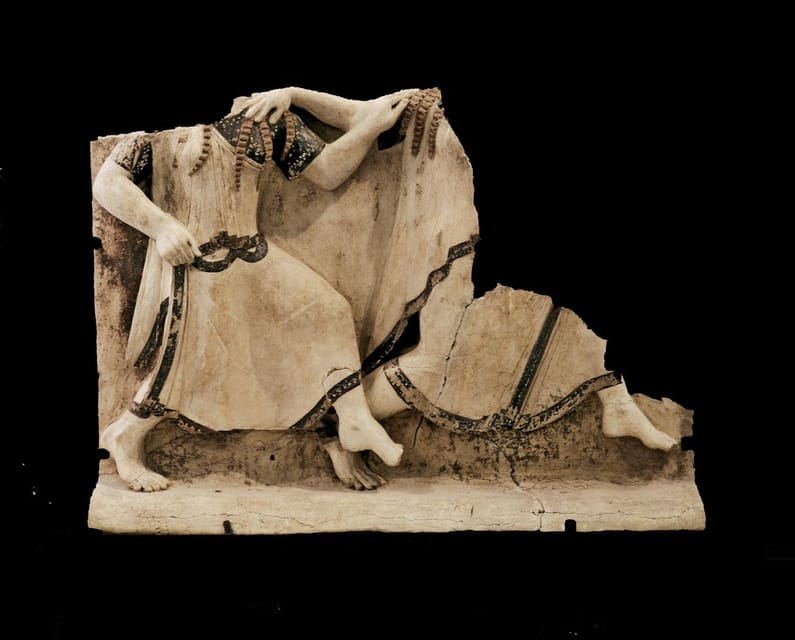
After the main attraction, the museum broadens its reach. The collections run from prehistoric times to the Roman era, giving you a compact way to follow the development of communities in southern Italy.
The value here is connection. A prehistoric tool or object may seem modest beside a monumental statue, yet it helps establish how early people used the region. Greek material shows the strength of Hellenic culture in southern Italy. Roman-era objects show how political power and daily life changed again.
You should not expect every display to have the same visual punch. Archaeological museums contain objects that require patience. Some pieces may be immediately appealing, while others become interesting only after you read the panel beside them.
That is why the exhibition text matters. The displays are described as well run, with posters that give useful information without leaving you to guess what you are seeing. I would plan enough time to read at least the main labels rather than rushing from one object to the next.
The museum also contains many less celebrated pieces. They may not receive the attention of the bronzes, but they broaden the visit. You get a stronger sense of Calabria when you see everyday or fragmentary objects alongside grand sculpture.
The Hellenistic Necropolis inside the museum
One of the most unusual parts of the visit is the Hellenistic Necropolis. These burial remains were discovered during construction of the museum itself, so the building contains a piece of the ancient site beneath or within its modern purpose.
That gives the museum a useful physical link to the past. Instead of seeing only objects removed from their original setting, you can consider how ancient people buried their dead and what they chose to place with them.
Burial finds can reveal social customs, beliefs, craft skills, and ideas about the afterlife. They also offer a different view of the ancient world than sculpture does. A statue often presents an ideal figure. A grave can show more personal habits and local practice.
The necropolis is particularly worthwhile if you want something beyond the standard famous-art itinerary. It may not have the immediate visual drama of the Riace Bronzes, but it adds depth to your understanding of the city’s ancient layers.
Give this section time. Look at the arrangement of the finds and read the explanations. The best experience comes from thinking about the relationship between the objects, the graves, and the people who placed them there.
More Museum Audio Tours in Italy
- Florence: Uffizi Priority Ticket & Masterpieces Audio App
★ 4.2 · 6,402 reviews - Rome: Borghese Gallery Skip-the-Line Ticket & Audioguide
★ 4.3 · 4,318 reviews - Rome: Borghese Gallery Ticket + Audioguide or Guided Tour
★ 4.6 · 3,219 reviews - Florence: Uffizi Gallery Timed Entry Ticket & Audio Guide
★ 4.2 · 2,794 reviews
Ancient inscriptions and the lapidary section
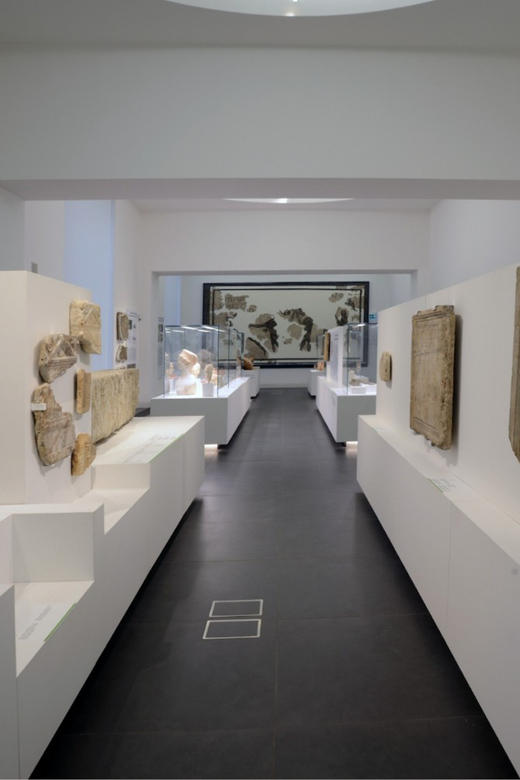
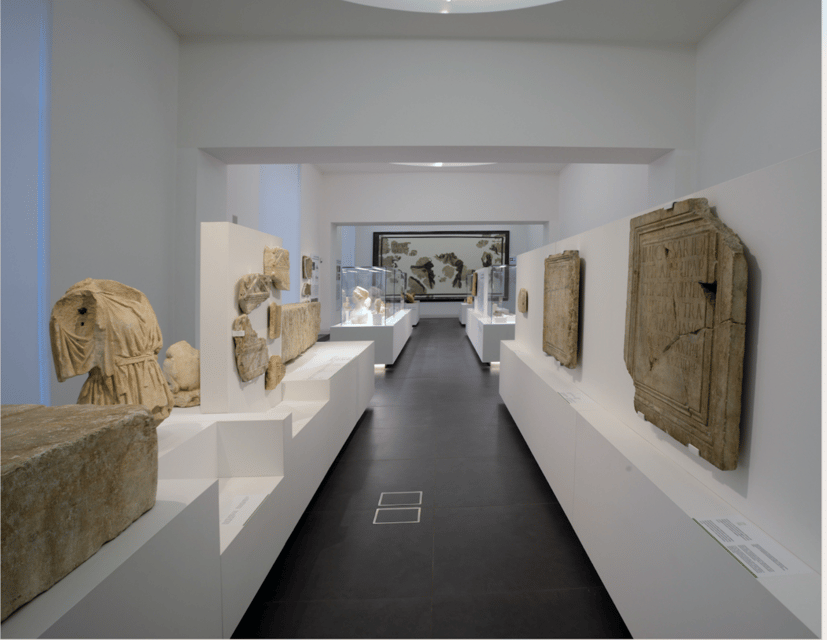
The lapidary contains monumental inscriptions and architectural fragments. In plain terms, you will see stones that once belonged to buildings, public spaces, and formal records.
This section can be easy to skim. Stone fragments do not always make an instant impression, especially after the statues. I would resist that temptation. Inscriptions are among the most direct surviving traces of ancient public life.
A carved text can record a dedication, a name, an office, a religious connection, or an event. Even when you cannot read the original language, the size and placement of the stone tell you something about how public memory worked.
Architectural fragments add another layer. A column piece, carved block, or decorative element hints at a building that no longer survives in full. The fragment asks you to imagine the original structure, but the museum’s explanatory material helps keep that imagination grounded.
This is a good part of the museum for visitors who enjoy details. It may be less appealing if you want only major sculptures. Still, it is one of the sections that separates a serious archaeological museum from a simple highlight display.
A photographic laboratory and the work behind the objects
The museum includes a state-of-the-art photographic laboratory and a substantial archive of historical artifact photographs. This may sound less exciting than ancient statues, but it reveals another side of museum work.
Photography helps document objects, preserve their appearance, record conservation, and support research. An artifact can be moved, damaged, restored, or viewed from a different angle over time. Photographs create a record of those changes.
This section also reminds you that archaeology is not only about what is placed behind glass. It depends on careful cataloging, preservation, study, and comparison. The museum’s photographic material gives you a look at that less visible process.
If you are visiting with children or with someone who prefers visual material to long labels, the photographic displays may provide a useful change of pace. If you are focused only on the famous statues, you might move through this area more quickly.
The glass-roofed courtyard and Strait of Messina views
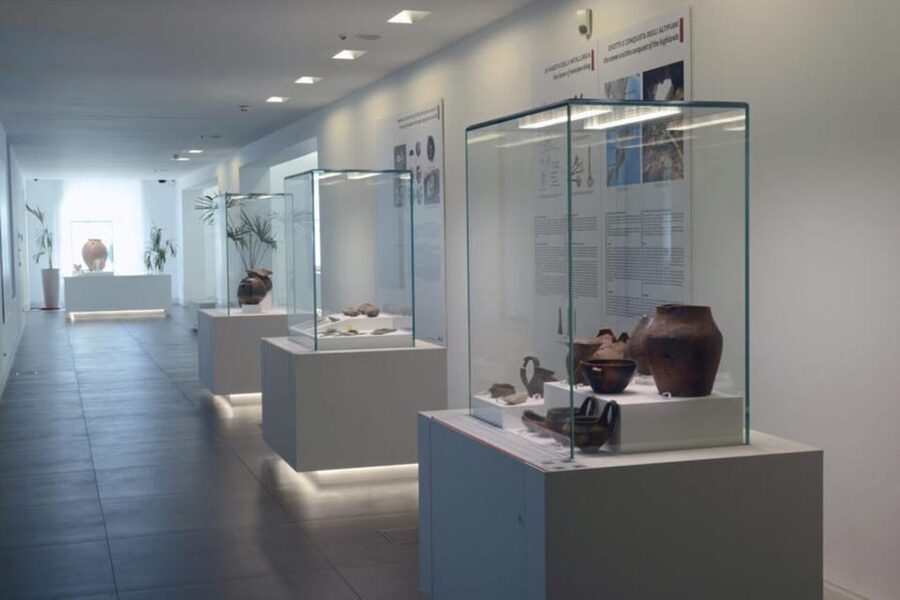
The visit ends naturally in the museum’s inner courtyard. A striking glass roof fills the space with daylight and gives the area a calmer feel after the galleries.
This is a good place to pause. Museums can become mentally crowded, especially when you are reading about several periods at once. The courtyard offers a quiet moment before you head back into Reggio Calabria.
The views toward the Strait of Messina add something that no indoor display can provide. You are not looking at ancient Calabria in a vacuum. You are seeing the waterway that helped connect southern Italy with Sicily and the wider Mediterranean world.
The view also helps explain why this location mattered. The strait is not just a pleasant backdrop. It is part of the geographic setting behind the objects in the museum.
I would save a few minutes for the courtyard even if you are short on time. It is not a separate attraction, but it gives the visit a satisfying final pause.
How the $19 price measures up
At $19 per person, the ticket is reasonably priced if you want to see the Riace Bronzes and spend time with the wider collection. The value is strongest for visitors who care about archaeology, ancient Greek art, or the history of Calabria.
You are paying for museum entry, not a private guide or a full walking tour of Reggio Calabria. That distinction matters. The app audioguide may help you move through the exhibits, but the information provided does not describe a live guide, group size, or a detailed guided route.
If you prefer to read at your own speed, the self-guided format is a benefit. You can linger at the bronzes, skim sections that interest you less, and take a break in the courtyard. If you want every object explained by a specialist, you may find the format limited.
The printed Pemcards postcard is included and can be sent anywhere in the world. It is a small extra, but a nice travel touch, especially if you like sending physical postcards instead of relying only on phone photos.
The one-day validity gives you some flexibility, though the activity is not described as a multi-day pass. Check the available starting times when you book, and remember that last entry is one hour before closing.
Practical details before you go
You must exchange your GetYourGuide voucher at the museum ticket office. Do not assume that showing the voucher directly at an exhibit entrance will be enough.
Large bags, luggage, and backpacks are not allowed. Plan to arrive without them, since the supplied information does not promise storage arrangements. Pets are also not permitted.
The museum is wheelchair accessible. That makes the visit easier for people who need step-free access, although the information provided does not give detailed notes about every gallery or restroom.
The activity ends back at the museum meeting point, so you are free to continue exploring Reggio Calabria afterward. There is no included transport, hotel pickup, or city tour. You arrange your own way to the museum.
Free cancellation is available up to 24 hours in advance for a full refund. You can also reserve now and pay later, which is useful when your Italian itinerary is still shifting.
Who will get the most from this visit?
I would recommend the museum to anyone who wants to see the Riace Bronzes without reducing Calabria to a beach stop. The collection gives you a reason to think about the region’s Greek and Roman past, not just its scenery.
It suits:
- First-time visitors to Reggio Calabria who want one major cultural stop
- People interested in ancient Greek sculpture
- Museum visitors who enjoy inscriptions, burial objects, and architectural fragments
- Families or mixed-age groups who need a self-paced visit
- Wheelchair users looking for an accessible museum activity
- Visitors with a free part of the day and an interest in local history
It may be less suitable if you want a live guide, a tightly scheduled tour, or a broader city experience in one booking. It also requires extra care if you are visiting on one of the dates when the Riace Bronzes room is closed.
Should you book the National Archaeological Museum?
Book it if you want the famous bronzes plus a serious look at Calabria’s ancient cultures. The $19 price is fair for the collection, the clear exhibition material, the necropolis, the lapidary, and the Strait of Messina setting.
Before paying, confirm your date and check the bronze room closure schedule. If the statues are essential, avoid the affected dates or plan to return within the 30-day ticket period.
This is best viewed as a flexible, self-guided museum visit. You will need to exchange your voucher, travel light, and make your own way there, but you gain the freedom to set your own pace. For most archaeology-minded visitors, that is a good trade.
FAQ
How much does admission cost?
The ticket costs $19 per person.
How long is the ticket valid?
The ticket is valid for one day. Check availability for the starting times offered on your chosen date.
Is a guided tour included?
No. The activity includes museum entry and an app audioguide, but it does not include a guided tour.
Where do I exchange the voucher?
You must exchange the GetYourGuide voucher at the museum ticket office.
Can I see the Riace Bronzes on every date?
No. The Riace Bronzes room is closed on May 28, 29, and 30; June 18; July 2 and 3; and September 17 and 18.
What happens if I have a ticket for a bronze room closure date?
You can visit the Riace Bronzes room on another date within 30 days by showing your ticket at the office.
Are large bags or backpacks allowed?
No. Luggage, large bags, and backpacks are not allowed.
Is the museum wheelchair accessible?
Yes, the activity is listed as wheelchair accessible.
Can I cancel for a refund?
Yes. You can cancel up to 24 hours in advance for a full refund. You can also reserve now and pay later.
Just added around Italy
- Torino Walking Tour with Audio and Written Guide by a Local★ 4.5 · 35 reviews
- Medieval Canals and Fountains: A Treviso Self-Guided Audio Tour★ 4.5 · 4 reviews
- Trapani Walking Tour with Audio and Written Guide by a Local★ 4.0 · 8 reviews
- Trento Walking Tour with Audio and Written Guide★ 4.5 · 11 reviews
- Sicily: Selinunte Park Entry Ticket & Sicily Digital Audio Guide★ 4.5 · 4 reviews
- Taormina Walking Tour with Audio and Written Guide by a Local★ 4.5 · 41 reviews
- Taranto Walking Tour with Audio and Written Guide by a Local★ 5.0 · 5 reviews
- Siracusa Walking Tour with Audio and Written Guide by a Local★ 5.0 · 59 reviews
Museums, compared.
Uffizi Priority Ticket & Masterpieces Audio App
Read our review →
Louvre Museum Hosted Entry and Mona Lisa Audioguide
Read our review →
St. Mark Basilica Ticket, Audioguide+History Gallery
Read our review →
Borghese Gallery Skip-the-Line Ticket & Audioguide
Read our review →
Borghese Gallery Ticket + Audioguide or Guided Tour
Read our review →
Orsay Museum Entry Ticket and Digital Audio Guide App
Read our review →
Uffizi Gallery Timed Entry Ticket & Audio Guide
Read our review →
Acropolis Museum Ticket with optional Audio Guide
Read our review →Browse the lists this tour appears in