REVIEW · USA AUDIO TOURS
The Civil Rights Movement in Atlanta: A Self-Guided Audio Tour
History feels different when you walk through it. This Atlanta audio tour links Sweet Auburn and Edgewood with the churches, homes, memorials, and public places tied to the city’s civil rights story. I like the freedom to start, pause, or restart whenever you wish, and I like that the downloaded tour works without cell service. The main drawback is simple: the GPS directions may not always keep you on course, so you should be comfortable checking your own map if needed.
At $11.99 per person, this is an inexpensive way to add historical context to a walk around Atlanta. It is best for independent visitors who prefer a phone in hand over a scheduled group tour. Just remember that the fee covers the audio, maps, and route, not food, transportation, museum admission, or a human guide.
Key Points Before You Set Out
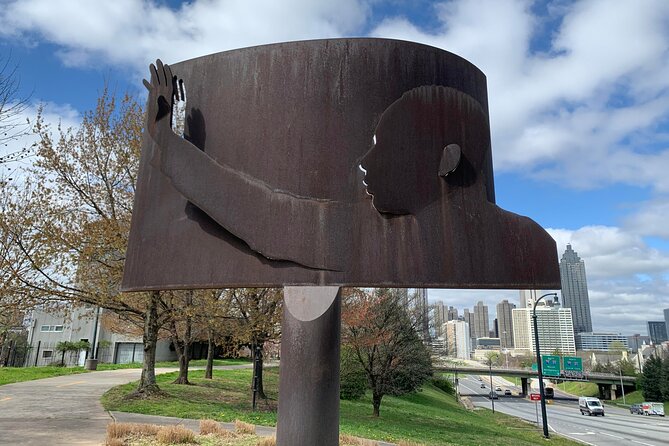
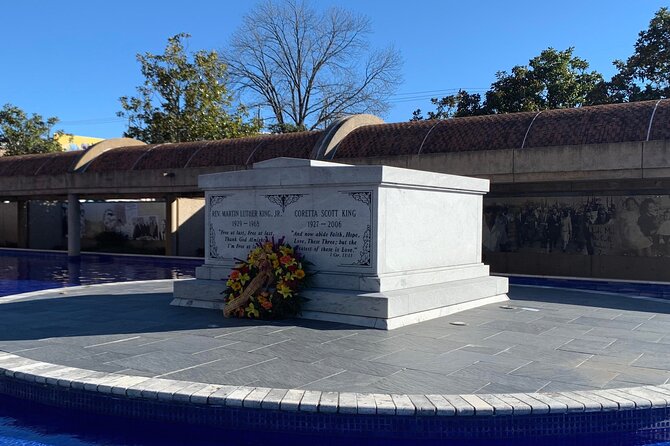
- Martin Luther King Jr. is the central thread: The route includes Ebenezer Baptist Church, the King Center, King’s birth home, the International Civil Rights Walk of Fame, and the Homage to King sculpture.
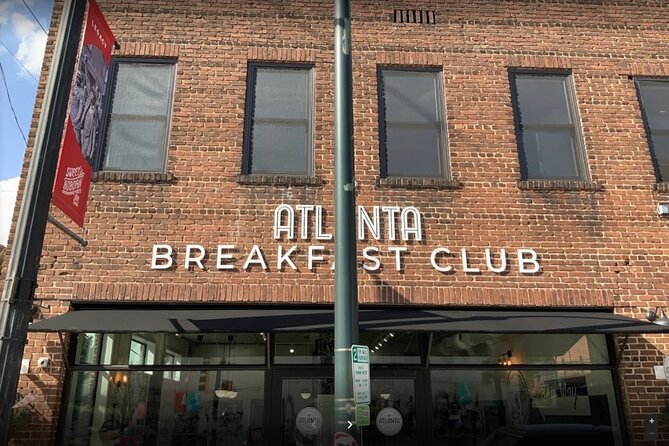
- The route begins and ends at the Atlanta Breakfast Club Chicken and Waffle Nitro Coffee Counter: The address is 340 Auburn Ave NE, Suite A.
- The tour takes about 90 minutes to two hours: Your pace and any stops inside nearby places will affect the total time.
- Offline access is a real advantage: Download the audio, map, and geodata through the VoiceMap app before walking.
- You will pass several places rather than tour them fully: Museum entry, church access, food, and drinks are not included.
- The technology needs a little attention: Some users have had trouble with the app or GPS, so bring your own sense of direction and a backup map.
Walking Through Sweet Auburn at Your Own Pace
The tour covers a meaningful section of Atlanta without forcing you into a fixed schedule. You listen through the VoiceMap app on an Android or iOS phone, with audio linked to your location. That means you can pause for lunch, stop to look around, or restart a section if you miss something.
I find this format particularly useful in a neighborhood where you may want to linger. The King Center, Municipal Market, and Sister Louisa’s Church of the Living Room and Ping Pong Emporium are not places you should rush past just to keep an audio guide happy. You can stop the narration, explore, then continue when ready.
The route is private in the sense that only your group uses the tour. You are not joining a busload or trying to hear a guide over a crowd. The tradeoff is that you must manage the walk, the app, and the timing yourself.
The start and finish are at the Atlanta Breakfast Club Chicken and Waffle Nitro Coffee Counter on Auburn Avenue. Since the tour runs every day at all hours, the practical opening time is up to you. The supplied information does not promise a particular business schedule for the coffee counter, so do not treat the listed 24-hour activity window as a guarantee that every nearby business will be open.
More Self-Guided Audio Tours in the USA
- Gettysburg Battlefield Self-Guided Driving Audio Tour
★ 4.5 · 910 reviews - Joshua Tree National Park Self-Guided Driving Audio Tour
★ 4.5 · 762 reviews - Ultimate Acadia National Park Self-Guided Driving Audio Tour
★ 4.0 · 521 reviews
Wheat Street Baptist Church and Ebenezer Baptist Church
The first church stop is outside Wheat Street Baptist Church. You pause briefly to hear about its history, then continue walking while the narration carries on. This is a useful early introduction to the religious institutions that helped shape Black Atlanta, though it is not a full church visit.
Soon after, the tour stops outside Ebenezer Baptist Church. This is one of the most important locations on the route because of its connection to Martin Luther King Jr. You hear about the church, its history, and King’s relationship with it.
The format here is deliberately short. You should expect to learn why the place matters while standing outside, not to enter for a service or guided interior tour. If you want a detailed architectural or theological study, this audio walk will only be a starting point.
Still, the stop works well because it puts King’s public life in a real neighborhood setting. You are not only hearing about a famous figure in a museum gallery. You are connecting his story with the church where his family and community had a lasting presence.
The King Center and the Meaning of Memory

The route gives you time to look around the King Center while you listen to an explanation of what the center represents and why it was created. This is one of the places where the self-guided format makes the most sense. You can pause the audio and spend as much time as you want looking around.
Admission to museums or other attractions is not included. The tour therefore works best as a companion to the King Center, not as a replacement for a full visit inside. If you plan to enter, allow extra time and budget separately for any ticket required.
The King Center also gives the walk an emotional center. The audio helps explain the purpose of the site, while your own time there lets you decide how much of the material you want to take in. I appreciate that balance. Some people want a quick outdoor history walk; others want to stop and read every panel.
The route then pauses outside Martin Luther King Jr.’s birth home. You hear about the house and continue walking as more of the story unfolds. The short stop means you should not assume the audio tour includes a full house visit or interior access.
The Birth Home and Civil Rights Walk of Fame
The birth home stop adds a personal scale to King’s story. Churches, plazas, and memorials can feel formal, but a home helps you picture the family and neighborhood setting behind the public figure. The narration gives you background without requiring a scheduled tour.
Next comes the International Civil Rights Walk of Fame. Here, the audio points out some of the famous faces represented along the route. This section gives you a chance to connect names and achievements with a physical public memorial rather than hearing a long list in isolation.
The walk of fame is especially useful if you are still learning the broader movement. The tour does not appear designed as an exhaustive history course, and the available feedback makes that clear: it offers a useful introduction, but you may want to read more afterward.
That is not a flaw for every listener. A two-hour walk cannot explain every campaign, leader, organization, and debate. Think of this section as a well-placed overview that helps you decide which people and events deserve further study.
Same place, a different route to walk:
- Los Angeles: Hop-On Hop-Off Bus Tour with Audio Guide
★ 3.7 · 2,030 reviews - City Sightseeing Hop-On Hop-Off Bus Tour with Audio Guide
★ 3.0 · 1,083 reviews - Medieval Torture Museum Ticket with Audio Guide and Ghost Hunting
★ 5.0 · 962 reviews - San Francisco: Alcatraz, Ferry & Audio Tour w/ Night Option
★ 4.4 · 617 reviews
Jackson Street Bridge and the Freedom Park Trail
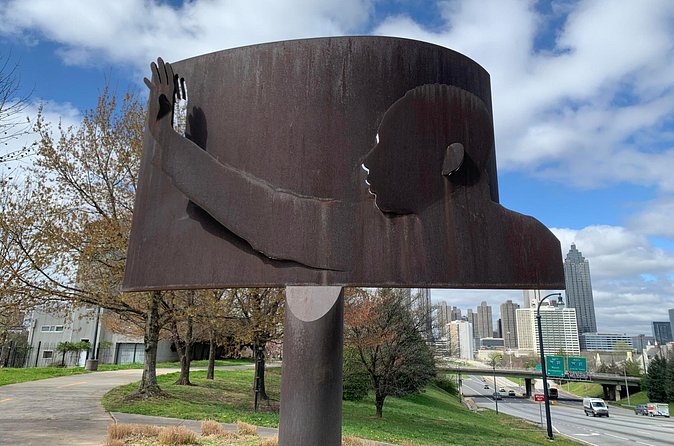
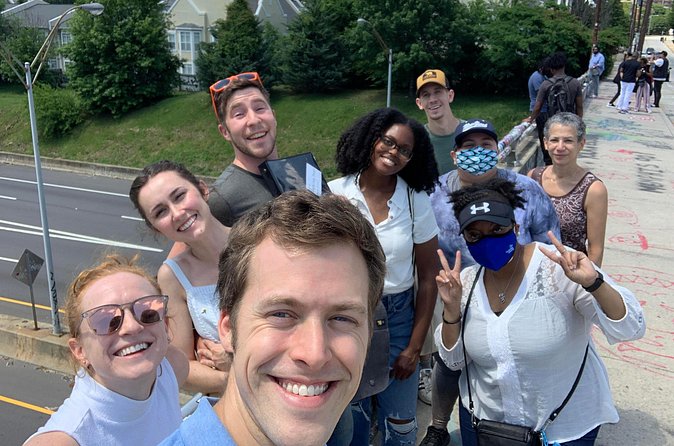
The brief stop on Jackson Street Bridge changes the mood. You hear about the bridge, its appearances in filmed scenes, and the landmarks visible from it. The stop is less about entering a building and more about looking outward, taking in the city, and understanding how a familiar viewpoint became recognizable.
You should pay attention to the audio directions here, especially if you are relying entirely on the phone’s GPS. One user got lost about 40 minutes into the walk and used Waze to regain the route. That practical warning matters more than the promise of hands-free navigation. Download the tour, but keep a second map available.
The route then follows part of the Freedom Park Trail. The narration explains the trail’s history and what it represents. This gives the walk some breathing room after the church and memorial stops. You are still learning, but you are doing so while moving through an outdoor public space rather than standing at one landmark after another.
The trail section also helps connect separate sites into a larger story. Atlanta’s civil rights history is not confined to one church or one memorial. The route uses streets, bridges, public art, and paths to show how the area’s memory has been marked across the city.
Homage to King and Sister Louisa’s Unusual Stop
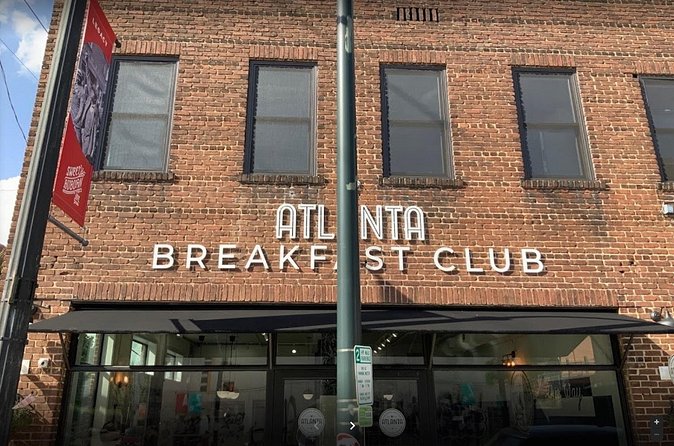
The tour pauses outside Homage to King, a sculpture connected to Martin Luther King Jr. You hear about its origins before moving on. This is another short outdoor stop, so expect interpretation rather than an extended art lecture.
The sculpture adds a visual element to the walk. After hearing about churches, homes, and civil rights leaders, you encounter a piece of public art designed to honor King. It is a reminder that the neighborhood tells its story through monuments as well as buildings.
The next stop is a sharp change of tone: Sister Louisa’s Church of the Living Room and Ping Pong Emporium. The audio explains the unusual venue’s history, and you have the option to go inside if you wish.
This optional stop is one of the route’s more memorable touches. It keeps the walk from feeling like a string of solemn memorials. You can pause for a look, but the tour does not include food, drinks, or any purchase inside. The venue may also have its own hours and policies, so treat the invitation as an option rather than a guaranteed part of the experience.
Municipal Market, John Lewis, and John Wesley Dobbs Plaza
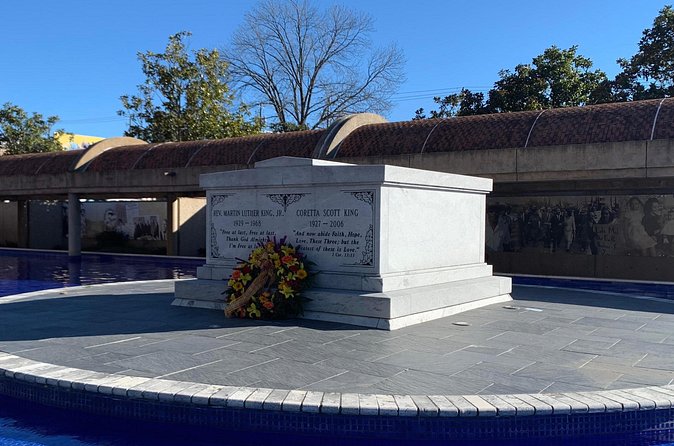
The route stops outside the Municipal Market, where you hear a short explanation before getting a chance to go inside for a treat. Food is not included, but this is a welcome practical break. A snack can make the difference between enjoying the final section and simply trying to finish it.
The stop also shows how the walk mixes civic history with ordinary city life. You are not spending the entire time in formal heritage sites. You are passing through places where people shop, eat, work, and meet.
The John Lewis Mural follows. Here, the audio introduces John Lewis and gives you a moment to look at the mural before continuing. This stop broadens the story beyond King and reminds you that the movement involved many leaders, organizers, and public voices.
At John Wesley Dobbs Plaza, the narration explains the man behind the name. The plaza may be brief on the route, but it adds another layer to Atlanta’s Black political and civic history. If you are interested in how the city developed beyond the best-known civil rights figures, this is one of the stops worth listening to closely.
The route does not try to make every location a long visit. That keeps the tour moving, but it also means you should take notes or plan further reading if a particular person catches your interest.
Madame C.J. Walker and the Return to the Start
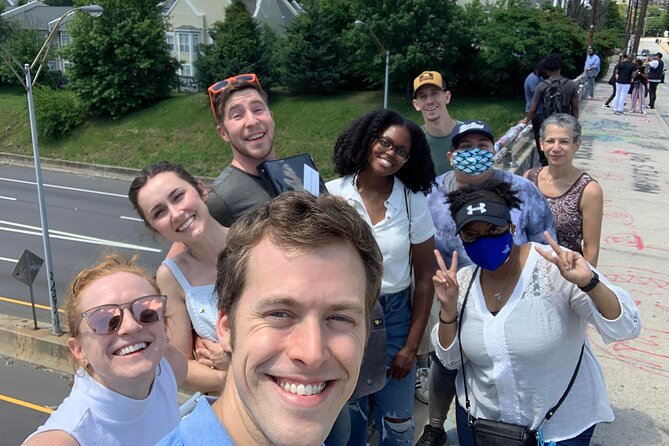
The final stop is the building associated with Madame C.J. Walker, located around the corner from the starting point. You hear about Walker and the significance of the building before the tour finishes.
Ending here is a smart choice because it brings the route back to its starting area without requiring a separate ride across Atlanta. It also closes the story with a figure whose business success and cultural influence add range to the walk.
The route is not only about Martin Luther King Jr. The churches, memorials, John Lewis mural, John Wesley Dobbs Plaza, and Madame C.J. Walker site widen the picture. You get an introduction to a community shaped by leadership, faith, business, public memory, and everyday neighborhood life.
Is $11.99 Good Value?
At $11.99 per person, the tour is priced as a low-cost introduction rather than a full guided excursion. You receive lifetime access in English, offline audio, maps, and geodata through the VoiceMap app. If you use the tour more than once, or share the route with someone in your group, that access adds value.
The price is less attractive if you expect a personal guide, museum tickets, or detailed historical lectures at every stop. You must supply your own smartphone and headphones, and any attraction admission, food, drink, or transportation costs extra.
I would compare it with the cost of a guided walking tour, but the experiences are different. A live guide can answer questions and correct your route in real time. This audio tour gives you control and privacy, but you lose that human help.
The overall score supplied for the experience is 3.4 out of 5 from seven ratings. The individual feedback ranges from strong praise for being at King-related places to serious complaints about unclear directions and app problems. That spread tells you exactly how to judge the value: the historical route is appealing, but the technology is part of the product and needs preparation.
How to Avoid the Main Problems
Download everything before you arrive. The tour works offline once the audio, map, and location data are stored, which is useful if reception drops.
Use headphones that let you remain aware of your surroundings. You will be walking through public streets, and you need to watch crossings, other pedestrians, and your route.
Keep your phone charged. The tour depends on the app and GPS, so a low battery can turn a relaxed walk into a navigation problem.
It is also sensible to open another map app before you start. One person had to use Waze after losing the route partway through. That does not make the tour unusable, but it does mean you should not surrender all responsibility to the blue dot.
If the app fails, VoiceMap support can be reached by phone and email. Contacting support during the problem is more useful than waiting until the walk is over, especially if the issue involves downloading or starting the tour.
The tour is offered in English only. Most people can participate, but the supplied details do not provide a specific distance, terrain description, or accessibility assessment. If those points matter to you, confirm them before booking.
Who Should Choose This Atlanta Walk?
I would choose this tour if you want a flexible introduction to Atlanta’s civil rights sites and prefer to set your own pace. It fits solo visitors, couples, families, and small private groups who can manage a phone-based route without constant assistance.
It is also a good pick if you want to combine history with nearby food and neighborhood stops. The Municipal Market and optional visit to Sister Louisa’s give you natural places to pause.
I would think twice if you want a detailed academic account, a guide who can answer questions, or guaranteed navigation from one stop to the next. The audio provides useful context, but it does not replace a full museum visit or a live specialist.
Should You Book It?
Book it if $11.99 feels like a fair price for a flexible, English-language introduction to Sweet Auburn and Edgewood. The strongest part is the chance to connect major King-related sites with John Lewis, Madame C.J. Walker, public art, churches, and neighborhood streets in one walk.
Skip it if you dislike troubleshooting apps or need a tightly managed route. Since the experience is non-refundable and cannot be changed after booking, prepare your phone, headphones, battery, and backup map before paying. For an independent visitor who values freedom over hand-holding, this can be a worthwhile Atlanta walk. Just approach it as an audio companion to the neighborhood, not as a substitute for every museum and historic interior along the way.
FAQ
How long does the self-guided audio tour take?
The estimated duration is about one hour and 30 minutes to two hours. Pauses at the King Center, Municipal Market, or other places can make the walk longer.
Where does the tour start?
It starts at the Atlanta Breakfast Club Chicken and Waffle Nitro Coffee Counter, 340 Auburn Ave NE, Suite A, Atlanta, Georgia 30312.
Where does the tour finish?
The tour ends back at the starting meeting point. The final Madame C.J. Walker stop is around the corner from the start.
What language is available?
The tour is offered in English.
Does the tour work without cell phone reception?
Yes. After you download it, the audio, maps, and geodata work offline through the VoiceMap app.
Do I need to bring my own phone and headphones?
Yes. A smartphone and headphones are not included.
Are museum tickets or attraction admission included?
No. Tickets or entrance fees for museums and other attractions along the route are not included.
Is food included in the price?
No. Food and drinks are not included, although the route gives you opportunities to visit the Municipal Market or Sister Louisa’s if you choose.
Can I cancel or change the booking?
No. The experience is non-refundable and cannot be changed for any reason after booking.
Just added around the USA
- Self Guided Driving Audio Tour of Saguaro National Park★ 3.0 · 4 reviews
- Self-Guided Audio Driving Tour of Mount Lemmon★ 5.0 · 4 reviews
- Saguaro National Park Self-Guided Audio Tour★ 3.5 · 11 reviews
- A Self Guided Audio Tour in Tombstone★ 4.0 · 11 reviews
- Catskills Scenic Byway Self-Guided Driving Audio Tour★ 4.0 · 9 reviews
- Big Bend National Park Self Guided Audio Tour Guide★ 5.0 · 12 reviews
- Self-Guided Audio Driving Tour in Catskills Scenic Byway★ 4.5 · 7 reviews
- Shiloh Battlefield Self-Guided Driving Audio Tour★ 4.0 · 9 reviews
Self-Guided Tours, compared.

Acropolis Ticket & Optional Self-Guided Audio Tours
Read our review →


Ultimate Acadia National Park Self-Guided Driving Audio Tour
Read our review →

Santorini: Akrotiri Ticket with Optional Self-Guided Audios
Read our review →