
REVIEW · KEY WEST AUDIO TOURS
Road Trip through the Lower Keys Audio Tour
The best Keys stories happen between the big stops. This $8 self-guided drive turns the Overseas Highway into a flexible audio tour, with GPS-triggered narration, historic photos, maps, and restaurant menus. I like that you set the pace yourself, and I like that the route points you toward places you could easily miss, including Blue Hole, Key deer territory, Sugarloaf Key, and Ramrod Key.
The main drawback is the amount of quiet driving. One stretch can last more than an hour with only a limited number of audio points, so this works best when you want a road trip aid, not nonstop commentary. Admission to Bahia Honda State Park, parking, your car, and your driver are not included.
Key points to know before you go
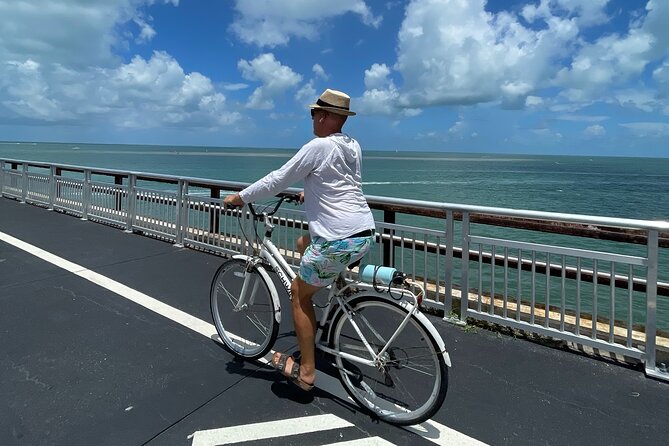
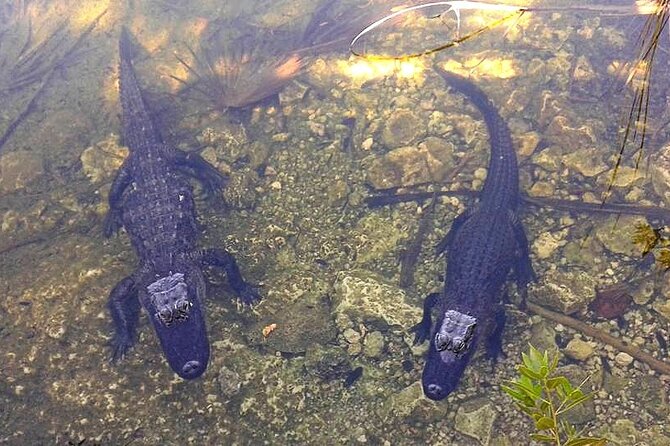
- Blue Hole offers the tour’s most unusual wildlife stop: You might see Florida alligators in the freshwater quarry and Key deer around Big Pine Key.
- GPS narration keeps your hands free: Audio begins as you approach points of interest, though a weak phone signal can make some triggers late.
- Bahia Honda is the major paid stop: Plan about two hours for its beaches and park scenery, with admission charged separately.
- The route includes local-style swimming spots: Sugarloaf Key and Ramrod Key offer informal places to cool off, while conditions and access may vary.
- No Name Key adds a food stop: The tour directs you toward a local pizza find, giving the drive a practical lunch or snack angle.
- The $8 price buys flexibility, not a full guided tour: It is good value if you explore several stops, but less compelling if you want constant narration.
What this Lower Keys audio tour actually gives you

This is a self-guided driving experience for the Lower Keys, beginning and ending in different locations according to the supplied booking details. You use your own vehicle and follow the route at your own speed. The mobile ticket gives you access to the audio, map, historic photos, and restaurant menus.
I like this setup for the Keys because the road itself is part of the experience. You are not being moved from one attraction to the next on someone else’s timetable. You can pause for a swim, spend longer at Bahia Honda, skip a stop, or turn the afternoon into a simple scenic drive.
The audio uses GPS to start narration as you approach certain places. That is the most useful feature here. You can keep your attention on the road rather than fiddling with a screen. Still, do not expect every minute of the drive to have a story attached. The narration is tied to points of interest, and the spaces between them can be long.
One useful detail comes from the GPS system itself: a couple of audio segments may begin later than expected if your phone has a weak GPS signal. That is not a reason to reject the tour, but it is a good reason to check your phone before setting off and keep the app ready.
More Driving Audio Tours in the USA:
- Gettysburg Battlefield Self-Guided Driving Audio Tour
★ 4.5 · 910 reviews - Joshua Tree National Park Self-Guided Driving Audio Tour
★ 4.5 · 762 reviews - Ultimate Acadia National Park Self-Guided Driving Audio Tour
★ 4.0 · 521 reviews
Blue Hole and Big Pine Key: the strongest opening stop
Blue Hole is a former freshwater quarry, and it gives the tour a change of mood from the open water and road views. The stop takes about 45 minutes and costs nothing to enter.
The attraction is simple but memorable. You may see an alligator in the water, and the surrounding Big Pine Key area is known for Key deer. One of the best moments described by the experience is spotting a Key deer trotting along the roadside before reaching Blue Hole. You need patience here. Wildlife sightings are never guaranteed, but this is exactly the sort of stop that feels worth the detour when it works.
Blue Hole also shows why an audio drive can be more useful than a straight point-to-point route. Without some direction, you might pass through Big Pine Key while focusing only on reaching Key West. With the tour, you have a clear reason to stop and look around.
Allow the full 45 minutes if you want time to watch the water and scan for wildlife. Keep your expectations in check, though. This is not a large attraction with a long list of facilities. Its appeal comes from the setting and the chance to see alligators and Key deer in one Lower Keys outing.
Bahia Honda State Park: give the beaches two hours
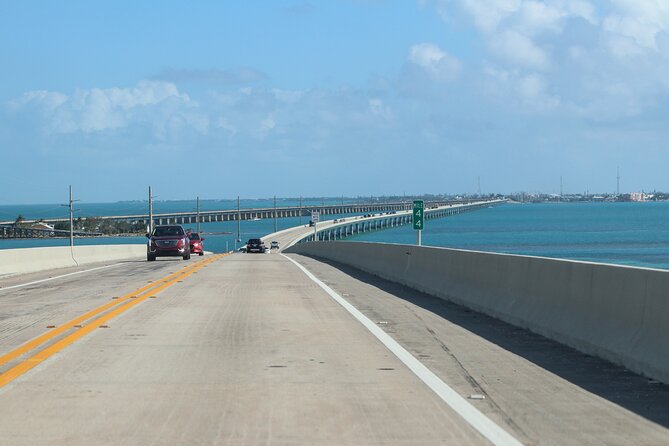
Bahia Honda State Park is the major feature of the route and appears twice in the supplied stop plan, which likely reflects its importance rather than two separate park visits. Plan around two hours here, and remember that park admission is not included.
This is where you should spend extra time if you want beaches, open views, and a proper break from the car. The experience describes Bahia Honda as the most beautiful state park in the Keys, with some of the best beaches in the area. That is strong praise, but the practical point is clear: do not treat this as a ten-minute photo stop.
The park is also the main cost consideration. The audio tour itself is only $8, but Bahia Honda charges admission separately, and parking fees are not included elsewhere in the tour price. Your total outing will depend on how many people are in your car and how long you stay.
I would schedule Bahia Honda when you have the most daylight and energy. Two hours gives you time to walk, sit by the beach, and enjoy the park without turning the rest of the route into a rushed checklist. If you have only a short afternoon, you may need to choose between a long park visit and several of the smaller swimming and food stops.
Sugarloaf Key: an informal swimming break
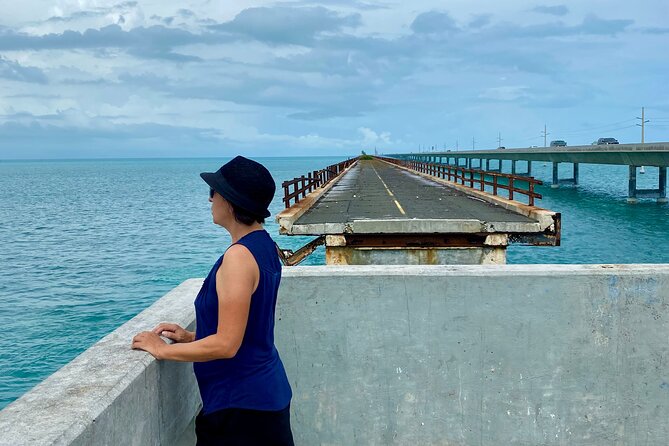
Sugarloaf Key offers a more local and less polished stop. The route points you toward an abandoned bridge where people can jump into a cool-water canal. The listed visit time is about one hour, and there is no admission charge.
This is the kind of suggestion that makes the route feel different from a standard sightseeing drive. Instead of directing you only to major parks, it points you toward a casual swimming hole. You get a sense of how the Keys can be enjoyed outside the headline beaches.
Use care here. The supplied information describes the spot as a place to jump into the canal, but it does not provide details about lifeguards, water conditions, or facilities. I would treat it as an informal stop, not a supervised attraction. If you are not comfortable with the conditions when you arrive, simply enjoy the surroundings and continue.
The one-hour estimate is generous enough for a relaxed break. It also gives you room to adjust. You can spend less time here and add that time to Bahia Honda, or stop longer if the heat makes a swim especially welcome.
A few more audio tours around the USA worth a look
- Los Angeles: Hop-On Hop-Off Bus Tour with Audio Guide
★ 3.7 · 2,030 reviews - City Sightseeing Hop-On Hop-Off Bus Tour with Audio Guide
★ 3.0 · 1,083 reviews - Medieval Torture Museum Ticket with Audio Guide and Ghost Hunting
★ 5.0 · 962 reviews - San Francisco: Alcatraz, Ferry & Audio Tour w/ Night Option
★ 4.4 · 617 reviews
No Name Key and the practical pleasure of a food stop
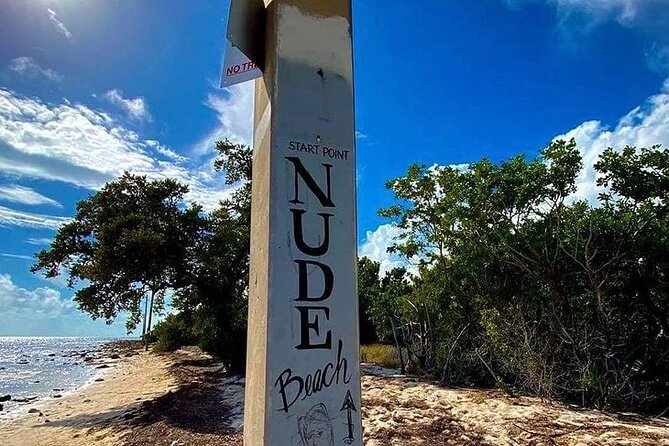
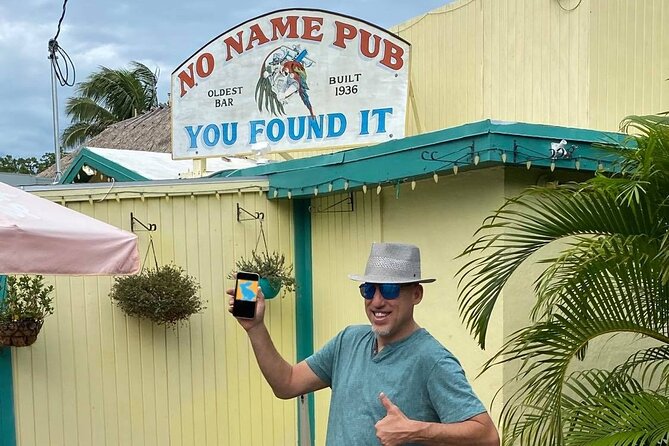
No Name Key is included as a one-hour stop, with the promise of finding some of the best pizza in the Florida Keys. The information does not name the restaurant, so use the supplied restaurant menus and map to identify the recommended place when you are ready to eat.
A food stop matters on a driving route. You are not just collecting scenic viewpoints. You need a place to pause, check the map, and decide how much of the remaining route you want to cover. The restaurant menus add a little practical help that many audio drives leave out.
No Name Key also helps break up the rhythm of the road. After Blue Hole and Bahia Honda, pizza gives the day a straightforward reset. I would not plan your entire day around the food claim alone, since the experience does not provide a menu, price range, or guarantee of opening hours. Think of it as a useful suggestion rather than a fixed meal reservation.
Seven Mile Bridge: history, views, and room to move
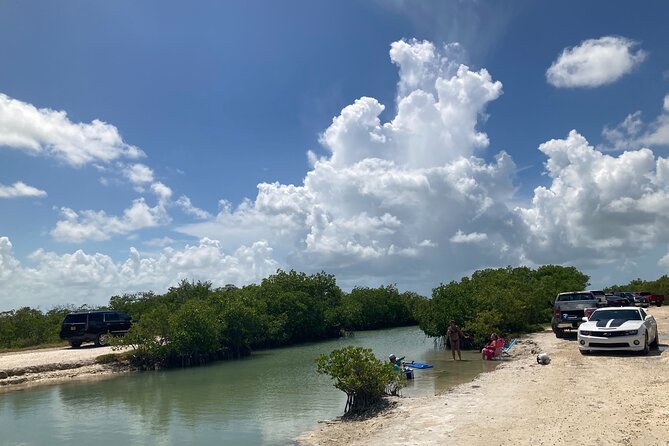
The Seven Mile Bridge is listed as a 45-minute stop. It is described as a historic bridge with places for biking, walking, and fishing, all without an admission charge.
This is a good point to get out and stretch your legs after the longer drives. The bridge adds a strong sense of place to the route because it connects the modern road trip with the older transportation story of the Florida Keys. One useful criticism of the audio experience is that it could offer more detail about when Route 1 through the Keys was built. If that subject interests you, you may find the bridge stop especially appealing, even if you want more historical context than the audio provides.
The stop is also a reminder that this is not a bus tour. You decide how long to walk, how much to photograph, and whether fishing or biking fits your day. The listed 45 minutes gives you a useful target, but your actual time will depend on your plans and comfort in the weather.
Ramrod Key: another local swimming hole
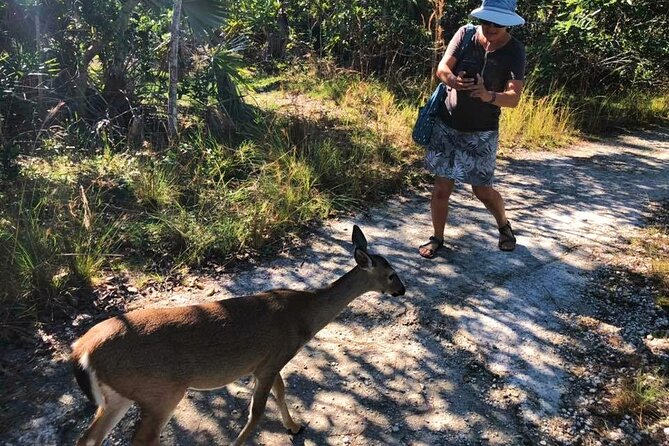
Ramrod Key offers a second secret swimming hole, with about an hour suggested and no admission charge. Like Sugarloaf Key, this stop adds a casual side to the route.
The benefit is variety. Bahia Honda gives you a formal state park, while Ramrod Key points you toward a simpler local swimming stop. If you enjoy finding less obvious places, this may be one of the most appealing parts of the drive.
The limitation is the lack of detailed information about facilities, supervision, and water conditions. The experience does not promise a developed beach or staffed recreation area. I would use the audio and map to find the site, then make your own decision once you arrive. If the stop does not suit you, the flexible format makes it easy to move on.
How much narration should you expect?
The audio works best as a companion to the drive, not as a continuous radio program. You get automatic GPS-triggered points, historic photos, a map, and some restaurant information. That is enough to add context when you reach a stop, but it does not fill every mile of the Overseas Highway.
This distinction matters when you judge the $8 price. If you want constant commentary, the tour may feel thin. One assessment of the experience found that a drive of more than an hour had only about a dozen points of interest and plenty of silent road time. Another pointed out that more facts like the information about square grouper would improve the route.
I see both sides. The audio has enough material to guide a flexible Lower Keys outing, and recent updates have added information and more stops. Still, you should buy it for the combination of route planning, GPS prompts, and access to places you might miss, not for a minute-by-minute lecture.
The strongest audio moments are likely to be the ones tied to what you can see right away: Blue Hole, Key deer country, the bridge, beaches, and local swimming spots. The value rises when you stop at several of them. If you only use one or two points, the purchase becomes harder to justify.
Timing your two-to-five-hour road trip
The stated duration is about two to five hours, but the individual stop suggestions add up to much longer if you visit every location fully. Blue Hole takes 45 minutes, Bahia Honda takes two hours, Sugarloaf Key one hour, No Name Key one hour, Seven Mile Bridge 45 minutes, and Ramrod Key one hour.
That tells you something important: the two-to-five-hour figure should be treated as a flexible estimate, not a promise that you can complete every stop in that window. A quick drive with a few short pauses can fit into an afternoon. A full route with both swimming holes, a meal, wildlife watching, the bridge, and Bahia Honda needs more time.
I would choose three or four priorities before you start. For example:
- Pick Blue Hole and Key deer country for wildlife.
- Pick Bahia Honda for beaches and a longer park break.
- Pick Sugarloaf or Ramrod Key for swimming.
- Pick No Name Key if food and a relaxed stop matter most.
- Pick Seven Mile Bridge for walking, fishing, and the route’s strongest transport history.
That approach keeps the tour flexible without leaving you wondering where to go next.
Who will get the most from the $8 price?
I think this works best for independent drivers who enjoy making their own schedule. It suits couples, families, and private groups because only your own party takes part, with no fixed guide pacing you from stop to stop.
It is also useful if you are driving north from Key West or south toward Key West and want more from the trip than a direct highway run. The route can reveal places you might otherwise skip, especially around Big Pine Key and the smaller keys.
You may want something else if you prefer a fully guided experience, constant narration, or a detailed account of the Keys’ road-building history. The tour is also less attractive if you have no vehicle, since the car and driver are not included.
The provider lists service animals as allowed and says most people can participate. Confirmation is received at booking. The mobile ticket keeps the setup simple, but remember that the experience is non-refundable and cannot be changed after purchase.
Should you book the Lower Keys audio tour?
Book it if you want a low-cost road trip framework and like the freedom to stop when something catches your eye. The best reasons are Blue Hole and Key deer country, the chance of seeing an alligator, Bahia Honda’s beaches, and the informal swimming stops at Sugarloaf and Ramrod Key.
Skip it if you expect a polished, nonstop audio documentary. The GPS narration can occasionally trigger late, and some stretches have no commentary. At $8, though, the risk is small, especially if you use the map, photos, menus, and several stops.
My practical choice would be to use this on a half-day or relaxed afternoon, select your priorities in advance, and save enough time for Bahia Honda. That gives you the freedom that makes the experience worthwhile without expecting the audio to entertain you every mile.
FAQ
Where does the Lower Keys audio tour take place?
It takes place in Key West and the Lower Keys, with stops including Blue Hole, Bahia Honda State Park, Sugarloaf Key, No Name Key, Seven Mile Bridge, and Ramrod Key.
How much does the experience cost?
The listed price is $8.
How long does the tour take?
The approximate duration is two to five hours, but visiting every suggested stop for its full recommended time can take longer.
Do I need my own vehicle?
Yes. The vehicle and driver are not included.
Does the price include Bahia Honda State Park admission?
No. Admission to Bahia Honda State Park is not included.
Are parking fees included?
No. Parking fees are not included.
Does the audio start automatically?
The tour uses GPS-triggered narration designed to start as you approach points of interest.
What happens if the GPS signal is weak?
Some audio sections may trigger later than expected if your phone has low GPS signal quality.
Can I cancel or change the booking?
No. The experience is non-refundable and cannot be changed for any reason.
Just added around the USA
- Self Guided Driving Audio Tour of Saguaro National Park★ 3.0 · 4 reviews
- Self-Guided Audio Driving Tour of Mount Lemmon★ 5.0 · 4 reviews
- Saguaro National Park Self-Guided Audio Tour★ 3.5 · 11 reviews
- A Self Guided Audio Tour in Tombstone★ 4.0 · 11 reviews
- Catskills Scenic Byway Self-Guided Driving Audio Tour★ 4.0 · 9 reviews
- Big Bend National Park Self Guided Audio Tour Guide★ 5.0 · 12 reviews
- Self-Guided Audio Driving Tour in Catskills Scenic Byway★ 4.5 · 7 reviews
- Shiloh Battlefield Self-Guided Driving Audio Tour★ 4.0 · 9 reviews
Driving Audio Tours, compared.



Ultimate Acadia National Park Self-Guided Driving Audio Tour
Read our review →

Browse the lists this tour appears in