
REVIEW · BULGARIA AUDIO TOURS
Plovdiv: Old Town Guided Walking Tour & Audioguide & Museum
Plovdiv rewards slow steps. This tour links Roman ruins, churches, Ottoman landmarks, and handsome old houses in one well-planned walk, while an audio guide in your own language keeps the commentary clear. I like the chance to enter several religious buildings and listen inside, and I like the freedom to move away from the guide for photos without losing the explanation. The main drawback is the pace: more than 20 sights in 2 to 2.5 hours means several stops are short.
A live English-speaking guide leads the route, but the recording is also available in Bulgarian, English, French, Greek, German, Italian, Russian, Spanish, and Turkish. One Spanish-speaking couple had Natalia explain the full walk in Spanish when they discovered they were the only Spanish participants that day, a thoughtful touch that made the experience more personal than the standard arrangement.
Key points at a glance
- Audio commentary inside churches: You do not need to crowd around the guide to hear the explanation.
- More than 20 historic sights: The route covers Roman, Ottoman, religious, and 19th-century Plovdiv.
- A useful $17 price: You receive a guide, audio device, and headphones for a full city-center orientation.
- A compact but active walk: Expect 2 to 2.5 hours, with steps, uneven surfaces, and many brief stops.
- Nine audio languages: This is especially helpful if you prefer listening in Spanish, German, Greek, Turkish, or another supported language.
- Coffee near Djumaya Mosque: The walk ends beside a 15th-century mosque, with a chance to rest and order Turkish coffee nearby.
Starting near Ramada Trimontium
The meeting point is near the main entrance of the Ramada by Wyndham Plovdiv Trimontium. Look for the guide holding the audio devices. This is a practical start in central Plovdiv, and the fixed meeting point is easier to find than a vague Old Town street corner.
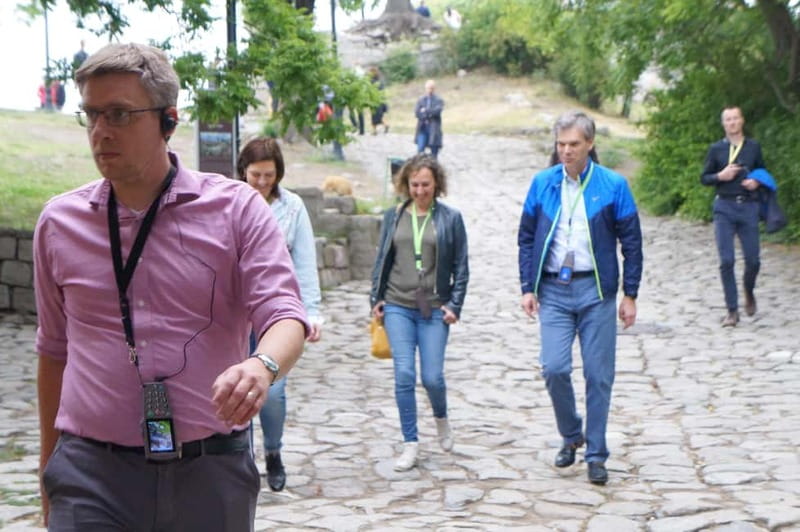
The guide remains with you for the entire walk. At each stop, the guide raises a sign showing the object number. You enter that number into your device, put on the headphones, and listen to the matching recording.
That system changes the feel of the tour. You can stand back to take a photograph, step inside a church, or move around a monument without trying to stay shoulder to shoulder with the guide. You also avoid the common city-tour problem of missing half the commentary because a bus or passing car is louder than the person speaking.
The arrangement is not completely hands-off. You still need to watch for the correct number and follow the guide from one place to the next. If you prefer a lively conversation throughout the walk, a traditional small-group tour may suit you better. If you value clear narration and some personal space, this format makes good sense.
More Museum Audio Tours in the world:
- Florence: Uffizi Priority Ticket & Masterpieces Audio App
★ 4.2 · 6,402 reviews - Paris: Louvre Museum Hosted Entry and Mona Lisa Audioguide
★ 4.6 · 5,235 reviews - Venice: St. Mark Basilica Ticket, Audioguide+History Gallery
★ 3.9 · 4,780 reviews
Roman Plovdiv from the Bishop’s Basilica to the Stadium
The first major stop is the Bishop’s Basilica of Philippopolis. The sightseeing time listed for this stop is about five minutes, so expect an introduction rather than a long museum visit. Its place early in the route gives you a quick entry into Plovdiv’s Roman past before the walk moves through the modern center.
The Cathedral of St. Louis follows, with about three minutes for sightseeing. This is a short exterior or orientation stop, so you should not expect a long interior visit here. The audio commentary helps put the cathedral into the larger story of Plovdiv’s religious and civic life.
Next comes the Roman Forum of Philippopolis. Four minutes is enough to point out the remains and explain their role, but not enough for a leisurely archaeological study. I would treat this part as a strong introduction to the city rather than a replacement for a dedicated archaeological museum visit.
The Statue of Milyo provides a three-minute photo stop. This is one of the route’s lighter moments. You get a chance to take a quick picture and see a more modern piece of Plovdiv’s public character before returning to ancient history.
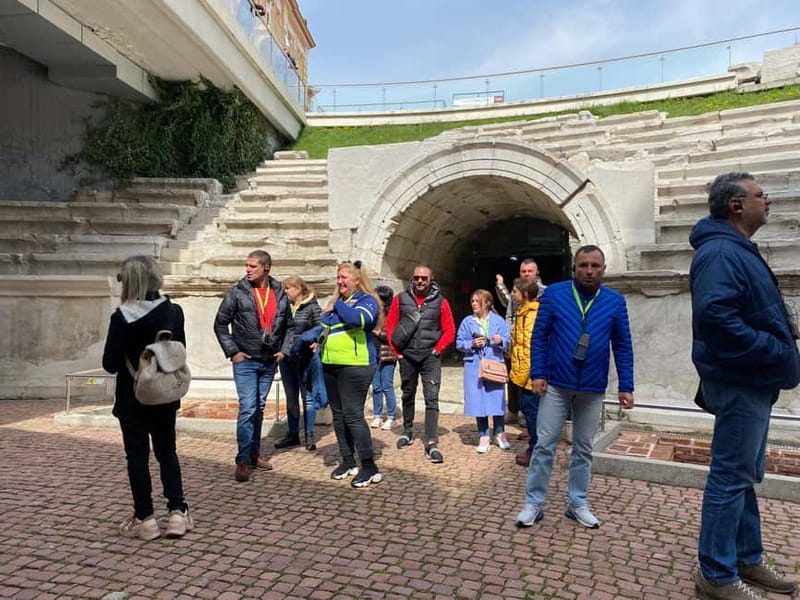
The Ancient Stadium of Philippopolis receives around five minutes. Its location in the center makes it an efficient stop, and the audio guide lets you hear about the site while looking at the surviving structure. The short timing is worth keeping in mind if Roman archaeology is your main reason for visiting Plovdiv. You will get an overview, not a detailed study.
Djumaya Mosque and the city’s religious mix
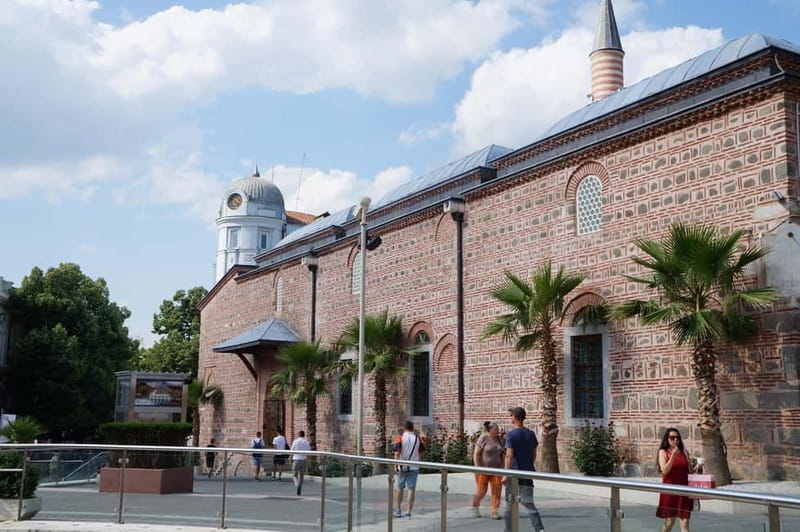
Djumaya Mosque comes next, with a seven-minute visit and sightseeing stop. It is one of the more important transitions in the walk, shifting from Roman Plovdiv to the city’s Ottoman chapter. The tour’s plan to include churches and a mosque gives you a broader view than a route limited to ruins and Old Town houses.
The audio system is particularly useful inside religious buildings. The guide can identify the object number outside, and you can then listen from a respectful distance inside. This is calmer than gathering around a speaker in a doorway, though you should still follow any instructions about photography and behavior at each place.
The Church of Sveta Bogoroditsa follows, with around four minutes. Again, that timing tells you to expect a concise visit. You will hear the explanation, look around, and move on rather than spend a long period examining every feature.
After the church, the route passes Lamartine’s House, with about six minutes for sightseeing. This stop adds a literary and cultural note to the walk. It also breaks up the sequence of religious and Roman sites, showing how Plovdiv’s Old Town includes later homes and public figures as well as ancient remains.
The Pharmacy Museum Hippocrates gets around three minutes. This is a quick exterior or focused viewing stop in the middle of a packed route. If unusual small museums interest you, you may want to return independently later, because the guided visit is designed to keep the whole walk moving.
Old Town houses, painted details, and Hisar Kapia
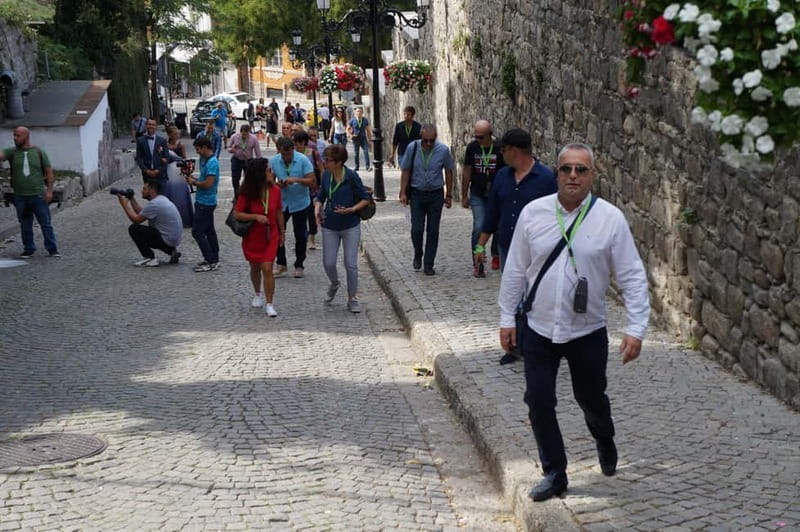
St. Konstantin and Elena Church allows about eight minutes, one of the longer church stops. That extra time matters. You can listen to the recording, look around more carefully, and take photographs without feeling rushed from the doorway.
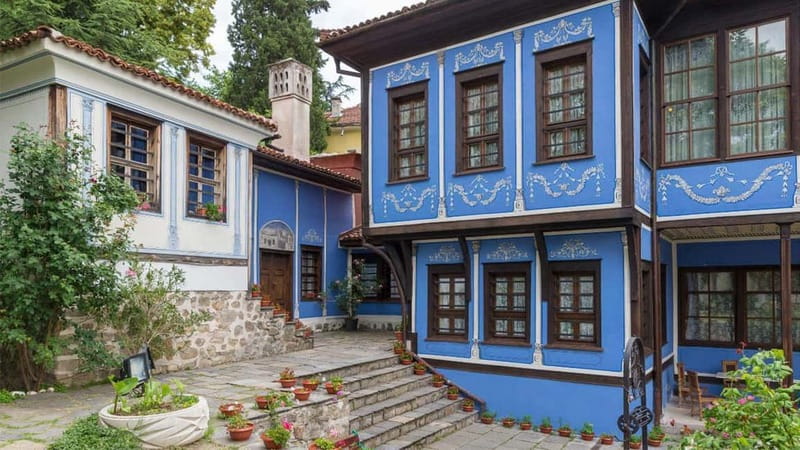
Balabanov’s House follows with approximately five minutes. The route now moves into the residential side of Old Town, where the architecture matters as much as any single object. You get a sense of how Plovdiv’s historic homes differ from its Roman remains and religious buildings.
House-Museum Hindliyan is another five-minute stop. Together, these houses make the Old Town feel like a lived-in historic district rather than a chain of isolated monuments. The limitation is that five minutes is brief for interiors, so the audio guide’s focused explanation is important.
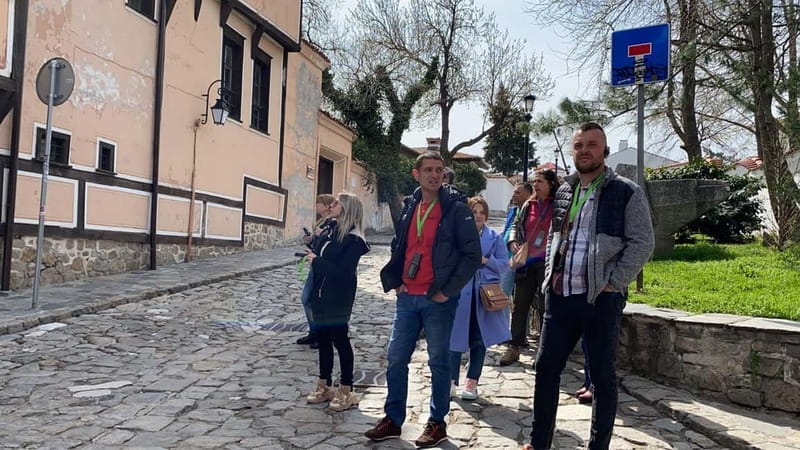
Hisar Kapia, one of Plovdiv’s best-known historic gates, receives about seven minutes. This is a good place for photographs and for understanding how the Old Town’s streets connect to its earlier defensive structure. Comfortable shoes matter here. The route includes old surfaces and changes in level, and high heels are specifically not allowed.
The Plovdiv Museum is listed for about seven minutes. The name is broad, so you should expect the guide to identify and explain the relevant museum stop rather than plan on a long museum session. If you want time to read displays at length, set aside another visit on your own.
More History Audio Tours in the world:
- Colosseum, Roman Forum & Palatine Hill with Audioguide App
★ 4.4 · 6,291 reviews - Rome: Colosseum, Ancient Rome Tour or AudioGuided Tour
★ 4.4 · 2,879 reviews - Colosseum, Roman Forum & Palatine Hill Entry and Audioguide
★ 4.1 · 2,475 reviews - Taormina: Ancient Theater Skip-the-Line Ticket & Audio Guide
★ 4.5 · 2,412 reviews
Nebet Tepe and the best sense of place
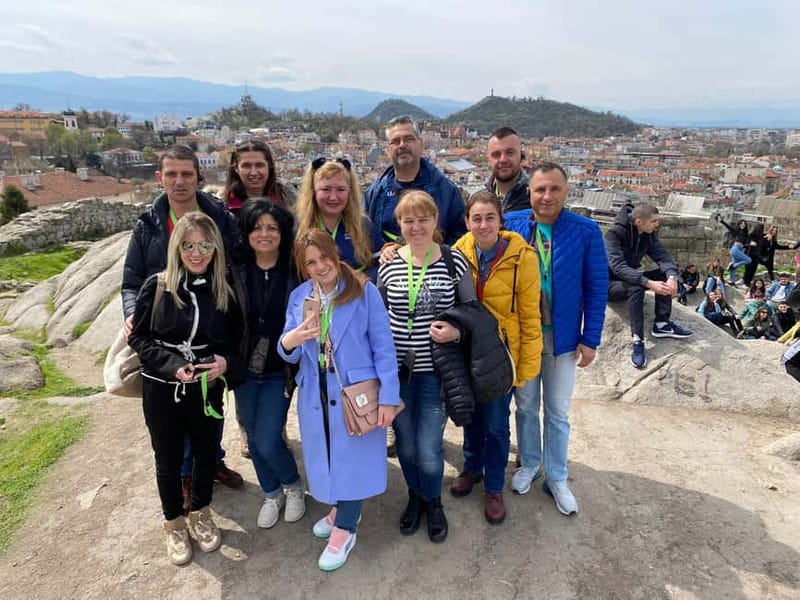
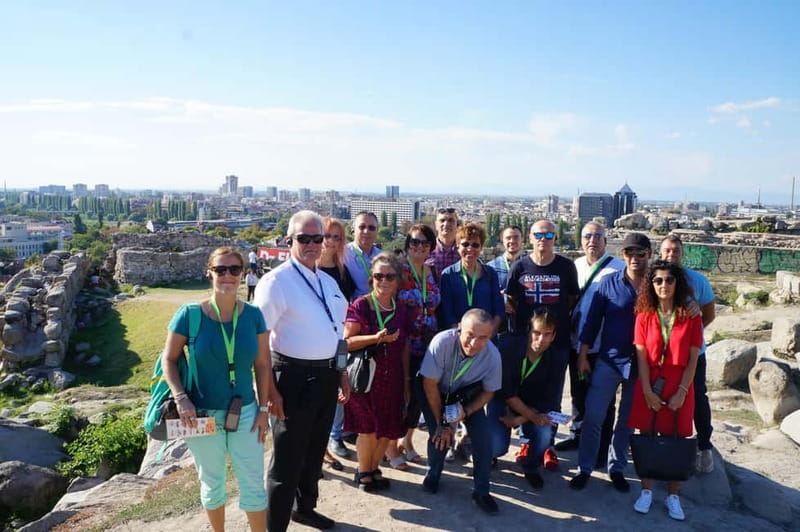
Nebet Tepe is the final major sightseeing stop, with an eight-minute visit. It gives the walk a strong finish because you are no longer looking only at a single building or ruin. You can take in Plovdiv from a higher point and connect the Roman, Ottoman, religious, and residential parts of the route.
The stop is still short, so do not expect a long rest or a detailed exploration of every path. But the timing gives you enough room to listen, look around, and take photographs. I would save a few questions for this point, especially if you want to understand how the different parts of the city fit together.
The route then finishes near Djumaya Mosque, where you can relax and order Turkish coffee. The published route places Djumaya Mosque earlier as a sightseeing stop and also identifies the mosque area as the finish, so the practical takeaway is simple: the tour begins in the newer central area and ends back around one of the Old Town’s key landmarks.
Why the audio guide makes a difference
The audio equipment is the main feature that separates this walk from a standard guided stroll. You receive a device and headphones, then select each stop by number. Commentary is available in nine languages: Bulgarian, English, French, Greek, German, Italian, Russian, Spanish, and Turkish.
The live guide speaks English, while the recording lets each participant listen in a preferred language. That is useful for mixed-language groups. One person can hear English while another listens in Spanish, without splitting the group or forcing everyone to follow one language.
There is also a practical benefit inside churches and temples. You can move to a better viewing position, take a photograph, or stand away from the entrance while continuing to hear the explanation. This does not remove the need for courtesy, but it reduces crowding.
The tradeoff is that audio devices require attention. You need to enter the correct number and keep the headphones with you. Some people also prefer asking questions as a guide speaks. Natalia’s willingness to give a Spanish explanation shows that the live guide may add a personal touch, but you should book this primarily as an English-led tour with multilingual audio support.
Is $17 good value for this route?
At $17 per person, the price is fair for a 2 to 2.5-hour guided orientation that includes the live guide, audio device, and headphones. You are not paying for transport, a meal, or a long stay inside each museum. The value comes from the number of places covered and the structure provided by the guide.
I see it as especially useful on a first day in Plovdiv. You receive a broad map of the city’s main historic areas, then you can decide which churches, houses, museums, or Roman sites deserve a longer return visit.
The price is less attractive if you want an unhurried archaeological tour. The route covers more than 20 cultural monuments, and several stops last only three to five minutes. You gain range, but not much time at each place.
The current rating is 4.1 from 17 ratings. That suggests a generally positive experience, with enough variation to remind you that the audio format and fast pace will not suit everyone equally.
Timing, clothing, and walking comfort
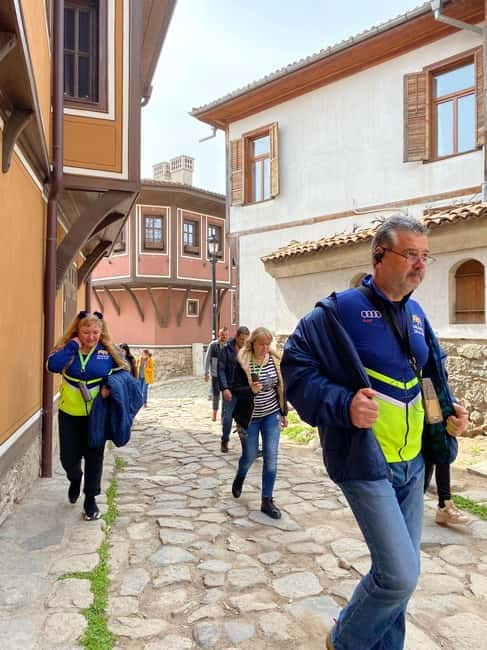
Bring comfortable shoes and water. The route includes walking through central streets, the Old Town, historic buildings, and Nebet Tepe. Mobility is a serious consideration because the experience is not suitable for wheelchair users or people with mobility impairments.
High heels are not allowed. Shorts, short skirts, and baby strollers are also listed as prohibited, so dress conservatively and plan for a walking route through religious sites. These rules may feel strict, but they are important when entering churches and a mosque.
You should allow the full 2 to 2.5 hours rather than assuming the stops are optional. There is no transport between sights, and the route is designed as one continuous walk.
The booking is valid for one day, with starting times depending on availability. You can cancel up to 24 hours before the activity for a full refund, and the reserve-now, pay-later option keeps the payment flexible while your plans settle.
Who will enjoy this Plovdiv walk?
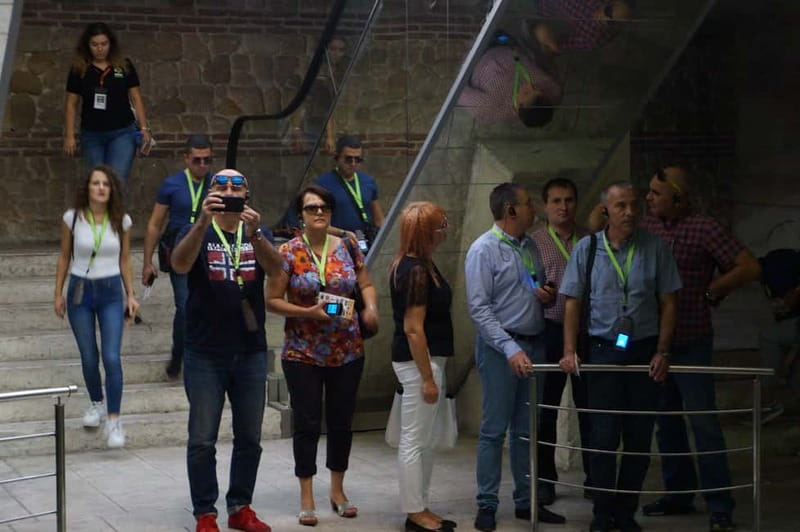
I would choose this tour if you want a first look at Plovdiv without arranging separate visits to every major area. It suits people who like context, photographs, and a clear route more than long museum sessions.
It is also a good choice for multilingual couples, families with older children who can manage the walk, and independent-minded visitors who dislike standing in a tight group around a guide. You can hear the commentary while keeping a little space.
I would hesitate if you use a wheelchair, have difficulty with uneven streets or steps, or need frequent rests. I would also choose a slower private tour if your main goal is detailed study of Roman architecture, church interiors, or the Old Town houses.
Should you book the Plovdiv Old Town tour?
Book it if you want a broad, affordable introduction to Plovdiv and like listening in your own language. The route covers an impressive mix of Roman remains, Ottoman heritage, churches, historic homes, museums, and Nebet Tepe, all with a guide to keep the day organized.
Skip it if you prefer to spend 20 minutes at every monument or dislike audio devices. For most visitors who have limited time in Plovdiv, the $17 price is sensible, especially because the tour gives you a clear list of places to revisit at a slower pace.
FAQ
Where does the tour start?
It starts near the main entrance of the Ramada by Wyndham Plovdiv Trimontium. The guide will be holding the audio guides.
Where does the tour finish?
The tour finishes near Djumaya Mosque, a 15th-century mosque. You can relax nearby and have Turkish coffee.
How long does the walking tour last?
The guided walk lasts approximately 2 to 2.5 hours.
What languages are available on the audio guide?
The audio guide is available in Bulgarian, English, French, Greek, German, Italian, Russian, Spanish, and Turkish.
What language does the live guide speak?
The live tour guide speaks English.
Is the audio guide included in the price?
Yes. The tour includes the audio guide and headphones.
How many sights does the tour visit?
The route includes more than 20 landmarks and cultural monuments in Plovdiv. The scheduled route lists 17 main stops, with several stops covering nearby sights or monuments.
What should I bring?
Bring comfortable shoes and water.
Is the tour suitable for wheelchair users?
No. The experience is not suitable for wheelchair users or people with mobility impairments. High heels, shorts, short skirts, and baby strollers are also not allowed.
More Audio Walking Tours in the world
- Sofia: City Monuments Guided Walking Tour with Audio Guide
★ 4.5 · 825 reviews - Florence: 2.5 hour Audio Guided Walking Tour led by Host
★ 4.6 · 293 reviews - Self Guided Classic Freedom Trail Location Aware (GPS) Walking Audio Tour
★ 4.5 · 258 reviews - Valletta: Self-Guided Historical Walking Tour (Audio Guide)
★ 3.7 · 251 reviews
Just added around the world
- Coba Ruins: Self-Guided Walking Audio Tour in Mexico★ 3.5 · 2 reviews
- Self Guided Driving Audio Tour of Saguaro National Park★ 3.0 · 4 reviews
- Torino Walking Tour with Audio and Written Guide by a Local★ 4.5 · 35 reviews
- Self-Guided Audio Driving Tour of Mount Lemmon★ 5.0 · 4 reviews
- Trondheim’s Inner Circle: A Self-Guided Audio Tour★ 4.0 · 15 reviews
- A Tromsø Introduction: A Self-Guided Audio Tour★ 3.5 · 19 reviews
- Panorama Bus Tour with Audio Guide★ 4.0 · 3 reviews
- Saguaro National Park Self-Guided Audio Tour★ 3.5 · 11 reviews
Museums, compared.
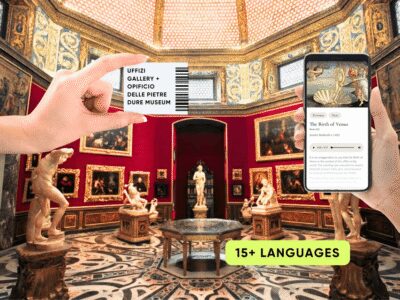
Uffizi Priority Ticket & Masterpieces Audio App
Read our review →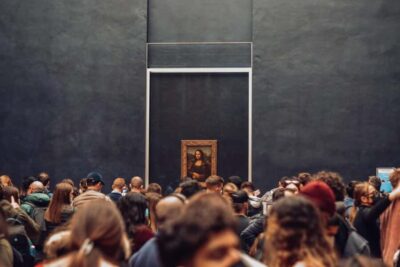
Louvre Museum Hosted Entry and Mona Lisa Audioguide
Read our review →
St. Mark Basilica Ticket, Audioguide+History Gallery
Read our review →
Borghese Gallery Skip-the-Line Ticket & Audioguide
Read our review →
Borghese Gallery Ticket + Audioguide or Guided Tour
Read our review →
Orsay Museum Entry Ticket and Digital Audio Guide App
Read our review →
Uffizi Gallery Timed Entry Ticket & Audio Guide
Read our review →
Acropolis Museum Ticket with optional Audio Guide
Read our review →Browse the lists this tour appears in