

REVIEW · USA AUDIO TOURS
Outer Banks Self-Guided Driving Audio Tour
Start with shipwrecks, dunes, and pirate lore. This Outer Banks driving tour turns a long coastal road trip into an easy history lesson, using GPS-triggered audio stories as you move between beaches, lighthouses, wildlife refuges, and small towns. I like the hands-free storytelling and the freedom to stop for food, photos, ferries, or a swim without waiting for a group. I also like the price: $24.99 per car, for up to four people, rather than a fee for each person.
The main catch is the app. You must download it in strong Wi-Fi or cellular service, enter the passcode, and begin at the proper starting point. A few audio problems and setup frustrations have been reported, and the tour does not currently put its map on the car screen through CarPlay. Take five minutes to get it working before you pull onto the road.
Key points to know before you go
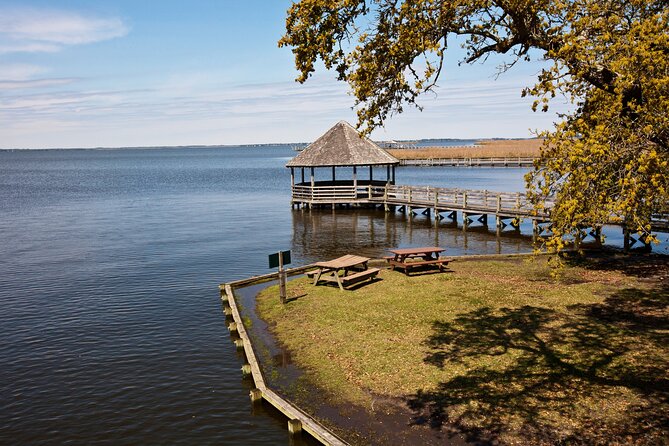
- More than 40 miles of Outer Banks road: The route links major sights from the Hatteras area through Bodie Island, Kitty Hawk, Duck, and Corolla.
- Over 35 location-triggered stories: Audio starts as you reach each point, so you can keep your eyes on the road.
- One purchase covers four people: At $24.99 per group, the cost is especially fair for a family or a full car.
- Use it offline after setup: Download the tour before leaving reliable service, then listen without Wi-Fi or cellular data.
- Pause and return anytime: The access has no expiry, so you can split the route across days or use it on a future trip.
- History with plenty of scenery: Expect shipwreck tales, lifesaving stations, wild horses, bird habitat, Blackbeard stories, and aviation history.
What this Outer Banks tour actually gives you
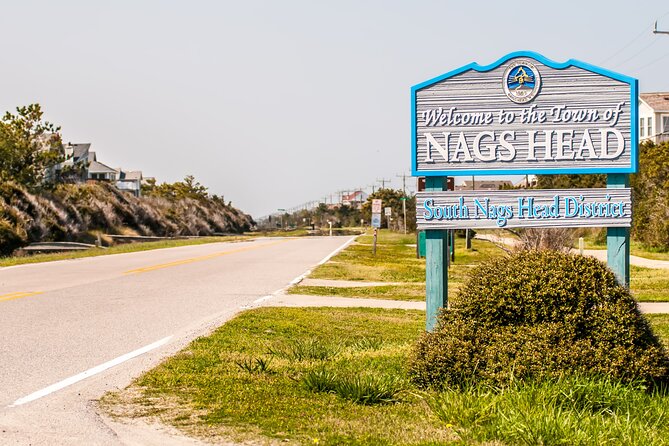
This is not a guided bus ride or a timed excursion. Nobody meets you at the start, and nobody sits beside you to answer questions. Instead, you drive your own car while the Action Tour Guide app plays short stories based on your GPS position.
The listed stops are generally built around five-minute audio segments, with a few longer ten-minute entries. The complete route takes about two to three hours, though your real day can run much longer once you add lighthouse visits, beach walks, meals, ferry plans, and museum stops.
That flexibility is the point. You can pause the story, pull over, skip a stop, or return another day. The access is lifetime, with no expiry, so the tour can work as a quick orientation on one visit and a more relaxed sightseeing aid on another.
The route has more than 35 audio stories, while the supplied itinerary identifies 27 main points. The exact order depends on the tour version and direction selected in the app. Follow the starting instructions carefully, since GPS stories trigger only when you are near the correct point and traveling along the intended route.
More Self-Guided Audio Tours in the USA
- Gettysburg Battlefield Self-Guided Driving Audio Tour
★ 4.5 · 910 reviews - Joshua Tree National Park Self-Guided Driving Audio Tour
★ 4.5 · 762 reviews - Ultimate Acadia National Park Self-Guided Driving Audio Tour
★ 4.0 · 521 reviews
Getting the app ready before the road
The practical setup deserves attention. After booking, you receive instructions and a password by email and text. Search for audio tour if the message is hard to find, then download the separate Action Tour Guide app.
Do this before reaching the Outer Banks. The tour must be downloaded while your phone has strong Wi-Fi or cellular service. Once downloaded, it works offline, which matters on a long coastal drive where service may drop.
Connect your phone to the car stereo by Bluetooth, USB, or AUX. Apple CarPlay is supported for audio playback, but the tour map may not appear on your car display. Android Auto support is still being developed, so plan to use the phone itself for navigation and app controls.
The safest approach is simple:
- Download the app and tour at your lodging.
- Enter the supplied password before driving.
- Open the correct tour version and direction.
- Go to the designated first point.
- Let the first story trigger before moving on.
One person should handle the phone while another person drives. A setup problem is much easier to solve in a parking area than on a narrow coastal road.
From Whalebone Junction to Bodie Island
The opening point is the Whalebone Junction Information Center, near the Outer Banks Visitors Bureau. This gives you a sensible introduction to Cape Hatteras National Seashore and the wider Outer Banks. Early stories set the tone with lost colonists, shifting sand, pirate ghosts, and the hazards that earned the coast its darker nickname.
Bodie Island Lighthouse brings the first strong maritime story. The tale centers on the four-masted schooner Laura Barnes, which struck the beach in 1921 after fog and rough water hid the shoreline. The crew survived, but pieces of the vessel remain in the sand.
That short story works well while driving because it connects the scenery to a real danger beneath the postcard views. You will not need a long stop to understand why navigation here was so hard.
The Bodie Lighthouse itself is also part of the route. The audio compares it with Cape Hatteras Lighthouse and explains the early trouble with its construction, including the fact that the original tower leaned badly. Admission to the tour’s roadside audio stops is free, but attraction entry, reservations, and passes are not included.
Crossing Oregon Inlet and the Bonner Bridge

Oregon Inlet is one of the route’s best examples of nature changing the map. A hurricane created the inlet in 1846, opening a water passage between Pamlico Sound and the Atlantic. The story of the ship Oregon adds a bit of improbable storm drama: rough seas lifted the vessel and placed it on a sandbar.
As you cross the Herbert C. Bonner Bridge, the app explains Pamlico Sound. It stretches about 80 miles long and 18 miles wide, yet remains no deeper than 26 feet. Rivers from the mainland feed the sound, creating the second-largest estuary in the United States after Chesapeake Bay.
I like this section because it explains what you are looking at instead of treating the bridge as a stretch of empty road. The shallow water also supports much of North Carolina’s commercial fishing, including crabs, oysters, and clams.
Near the far side is the Oregon Inlet Life-Saving Station, built in 1874. Before radar, GPS, and sonar, crews relied on observation and courage to rescue sailors along this dangerous coast. The Outer Banks nickname, the Graveyard of the Atlantic, makes more sense after this stop.
More Driving Audio Tours in the USA:
- Ultimate Lake Tahoe Self-Guided Driving Audio Tour
★ 4.5 · 435 reviews - Scenic Newport, RI Self-Guided Driving Audio Tour
★ 4.5 · 325 reviews - Arches National Park Self-Guided Driving Audio Tour
★ 4.5 · 288 reviews - Yellowstone National Park Self-Guided Driving Audio Tour
★ 4.5 · 249 reviews
Pea Island, beach access, and the lifesaving stations
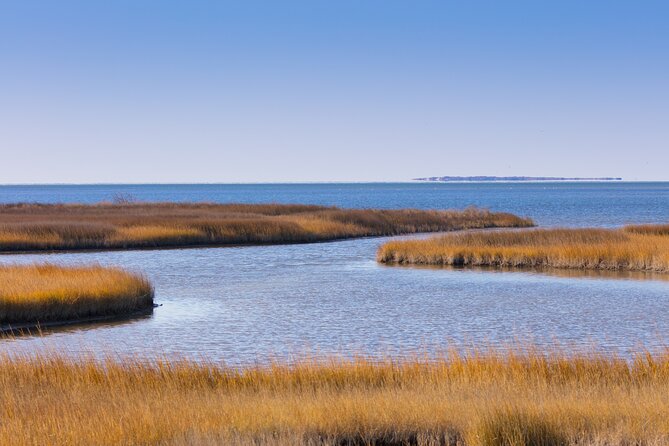
The drive through Pea Island National Wildlife Refuge covers about 13 miles of preserved land between Oregon Inlet and the northern edge of Rodanthe. The refuge sits along the Atlantic Flyway, a major migration corridor for birds moving up and down the coast.
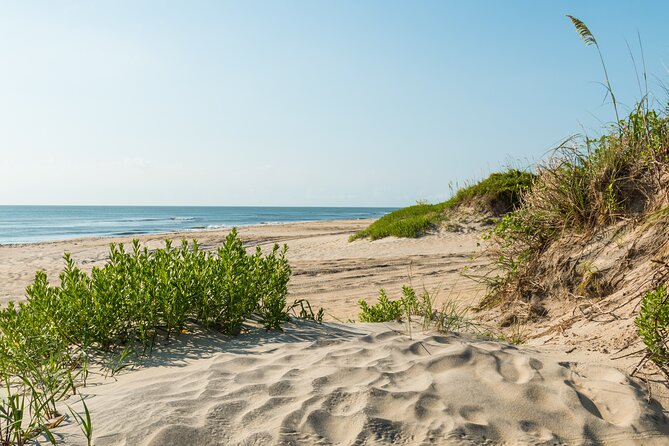
You may want to pause at Pea Island Beach. The beach is popular, but its size gives you room to find a quieter patch of sand. The app treats the stop as an opportunity to sit, look at the water, and take a break rather than as a rushed photo stop.
Jughandle Bridge raises a useful local question: why build a bridge beside an island instead of simply driving along it? The audio explains the reason, giving a bit of engineering context to what might otherwise seem like an odd road design.
At the Chicamacomico Life-Saving Station Historic Site and Museum, the focus returns to rescue work. Crews lived here, watched the coast, and trained with a beach apparatus, an early rescue device used to reach shipwrecked sailors. This is a worthwhile optional stop if you want more than a passing audio explanation.
Roanoke Island, kitesurfing, and Cape Hatteras
The Mother Vine on Roanoke Island is one of the route’s more unusual stories. This grapevine is about 400 years old and still produces grapes, although its exact origin is uncertain. It offers a welcome change from shipwrecks and lighthouses.
Kite Point shifts the mood again. The sandy shoreline became a center for kitesurfing, while nearby beaches have attracted windsurfers since the 1970s. The audio explains how this fast sport developed and points out where you can watch it.
Cape Hatteras Lighthouse receives a longer look. You hear about the construction problems that affected the Bodie Lighthouse, then compare them with the history of this much more famous tower. Cape Point adds another layer, showing how shifting sand and powerful weather continue to shape the coast.
At Hatteras village, the route becomes quieter and more local. The population is around 400, roads curve without a strict grid, and fishing shapes daily life. This is a good place to slow down, stop for a meal, or simply enjoy a small community connected closely to the water.
Blackbeard, ferries, and wartime memory

Teach’s Lair Marina points toward Edward Teach, better known as Blackbeard. Many local places carry his name, and the marina gives the pirate stories a physical setting rather than leaving them as folklore floating in the background.
The Hatteras Ferry Terminal is an important planning point. Ferries run to Ocracoke Island three or four times a day depending on the season, and you can take your car or walk aboard. Ferry schedules and space can affect your day, so treat this as an optional extension rather than an automatic part of the two-to-three-hour drive.
The WWII British Sailor Cemetery provides a quieter stop. During World War II, German U-boats attacked cargo ships leaving North Carolina. Allied personnel came from Europe to help fight the threat, and some who died are buried here.
This section gives the route more weight. The Outer Banks is not only about beaches, pirates, and summer rentals. Its waters also played a serious role in wartime history.
Jockey’s Ridge and the Wright brothers
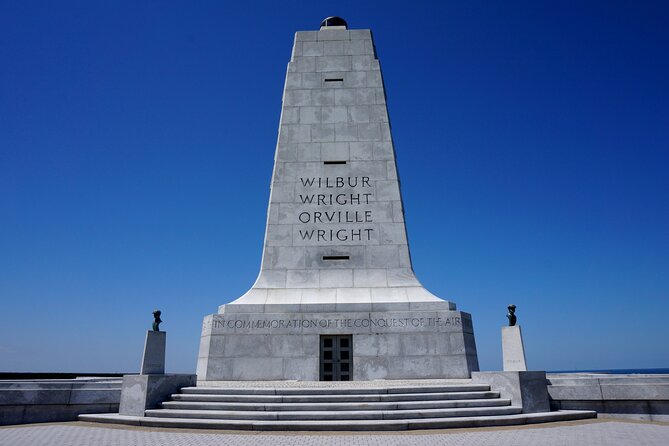
Jockey’s Ridge State Park contains the tallest sand dune system in the eastern United States. The audio explains how storms move sand inland while winds from the mainland push it in another direction, helping form the high dunes.
The Wright Brothers National Memorial is one of the route’s major stops. You can turn onto Wright Memorial Drive to see full-scale plane models, markers showing the distances of the first flights, and other memorial features. The related Wright Brothers Garage Monument points to the place associated with one of the brothers’ early gliders.
The Kitty Hawk section clears up a common point of confusion. The first flight took place a few miles south, in what is now Kill Devil Hills, but that community was not officially established in 1903. Kitty Hawk received the credit because it was the recognized town nearby.
Allow extra time here. The audio gives you background from the car, but the memorial and markers make more sense when you stop and walk around.
Piers, Duck, and the northern beaches
Avalon Pier offers a simple coastal break. It extends 440 feet into the ocean and includes views, fishing, restaurants, and shops. Turn off if you want a short walk or a place to pause between longer stretches of driving.
Duck Town Park Boardwalk is another good leg-stretching stop. The waterfront park connects with shops, restaurants, and trails. You can turn toward the Town of Duck or continue along the route.
Pine Island Audubon Sanctuary protects about 2,600 acres and supports hundreds of bird species. The audio also explains how hunting once reduced bird populations in this part of the Outer Banks. It is a useful reminder that protected land often exists because earlier habits caused serious damage.
These northern stops feel more built-up than the Hatteras section, with more places to eat and browse. That makes the route easier for families, but it can also make the drive feel less remote.
Corolla, the wild horses, and Currituck
Corolla marks the northern end of the listed route. Around 500 people live here year-round, while summer brings a much larger population. The area is known for its beach, water sports, small-town feel, and herd of wild horses.
The tour does not include a wild horse excursion or guarantee a horse sighting. It simply gives you the setting and background as you drive through Corolla. If seeing the horses is your main goal, you will need to arrange that separately.
Currituck Beach Lighthouse is a major architectural stop. Completed in 1875, the 162-foot tower carried a first-order Fresnel lens measuring about eight and a half feet tall and six feet wide. Its light could be seen from 21 miles away.
Nearby, the Whalehead Club shows a different side of Outer Banks history. Edward Collings Knight Jr. and his wife built the 22,000-square-foot Art Nouveau house in the early 1900s as a hunting lodge. The scale and style contrast sharply with the fishing villages farther south.
Price, pace, and who gets the best value
At $24.99 for up to four people, this tour is priced per vehicle, not per seat. A family of four pays less than $6.25 per person, and a couple still gets a private guide for less than the cost of many group excursions.
The value improves if you use the lifetime access. You can run the tour over multiple days, revisit it on another Outer Banks trip, or pause for side trips without paying again. That makes it more useful than a fixed two-hour activity, even though the suggested listening time is only two to three hours.
The tour suits you best if you:
- Prefer driving your own car.
- Want history without a fixed schedule.
- Are visiting the Outer Banks for the first time.
- Enjoy beaches, lighthouses, maritime stories, and aviation history.
- Have a group of up to four people.
- Are comfortable using a smartphone app.
It is less suitable if you want a live guide, a fully managed day, or guaranteed phone-screen navigation. A small number of people have had trouble with the passcode, downloads, or audio triggering. The fix is usually careful setup at the starting point, but you should still allow time to test it.
Should you book the Outer Banks audio tour?
I would book it if you want an affordable orientation to the Outer Banks and like controlling your own day. The best parts are the location-based stories, the broad route, and the mix of famous sights with odd details such as the Mother Vine, the beach apparatus, and the ship Oregon landing on a sandbar.
I would not book it as your only sightseeing plan. It does not include attraction tickets, ferry reservations, museum entry, or a live person to guide you. Think of it as the narrative layer for your road trip.
Download it early, connect the phone to your car stereo, start exactly where instructed, and keep the speed limit so the stories trigger correctly. If you do that, $24.99 buys a useful coastal companion with no expiry and plenty of room for your own stops.
FAQ
How much does the Outer Banks Self-Guided Driving Audio Tour cost?
The tour costs $24.99 per group, covering up to four people in one car.
How long does the tour take?
The suggested driving time is about two to three hours. Your day can take longer if you stop at beaches, lighthouses, museums, restaurants, or the ferry terminal.
Is the tour available in languages other than English?
No. The tour is offered in English.
Where does the tour start?
The listed starting point is Cape Hatteras National Park Road in Nags Head, North Carolina.
Where does the listed route end?
The listed endpoint is at 59200 Museum Drive in Hatteras, North Carolina.
Does someone meet you at the starting point?
No. This is a self-guided activity, so you go to the starting point and open the app yourself.
Do I need cellular service during the drive?
You need strong Wi-Fi or cellular service to download the tour first. After downloading, the tour works offline.
How does the audio begin?
Open the Action Tour Guide app at the proper starting point. The first story should begin automatically when you reach its GPS location, with later stories triggering along the route.
Are attraction tickets included?
No. Entry tickets, attraction passes, and reservations are not included.
Can I cancel for a full refund?
Yes, if you cancel at least 24 hours before the local start time. Cancellations or changes made within 24 hours are not refundable.
Just added around the USA
- Self Guided Driving Audio Tour of Saguaro National Park★ 3.0 · 4 reviews
- Self-Guided Audio Driving Tour of Mount Lemmon★ 5.0 · 4 reviews
- Saguaro National Park Self-Guided Audio Tour★ 3.5 · 11 reviews
- A Self Guided Audio Tour in Tombstone★ 4.0 · 11 reviews
- Catskills Scenic Byway Self-Guided Driving Audio Tour★ 4.0 · 9 reviews
- Big Bend National Park Self Guided Audio Tour Guide★ 5.0 · 12 reviews
- Self-Guided Audio Driving Tour in Catskills Scenic Byway★ 4.5 · 7 reviews
- Shiloh Battlefield Self-Guided Driving Audio Tour★ 4.0 · 9 reviews
Driving Audio Tours, compared.



Ultimate Acadia National Park Self-Guided Driving Audio Tour
Read our review →



Browse the lists this tour appears in