
REVIEW · JAPAN AUDIO TOURS
Osaka Castle & Temple Walking Tour with Multilingual Audio Guide
Two sides of Osaka meet early. This 3-hour-45-minute walk links the quiet Buddhist spaces of Shitennoji with the grand exterior views of Osaka Castle, using a multilingual audio guide for extra detail. I like the mix of short introductions from a local Japanese host and deeper stories you can hear in English, French, Spanish, German, Dutch, or Japanese. I also like the small-group format, capped at five people, which gives the walk a personal feel. The main drawback is the long morning, with plenty of walking and a subway transfer in the middle.
The route starts at 8:30 a.m. near Tennōji Station and ends by Tanimachi 4-chome Station. AJ Kajiwara has earned especially strong praise for his detailed stories, careful guidance, and knack for finding excellent photo spots. The $35.77 price is fair if you want historical context and help with navigation, though the 190-yen subway fare is extra and the Osaka Castle interior is not part of this experience.
Key points to know before booking
- The tour visits Shitennoji’s Central Complex: You go inside the temple grounds and walk close to the Five-Story Pagoda and Golden Hall.
- The audio guide works in six languages: Use your smartphone to hear local commentary after the host gives a short introduction in simple English.
- The group is limited to five people: This is a useful size for questions, pacing, and finding the best viewpoints.
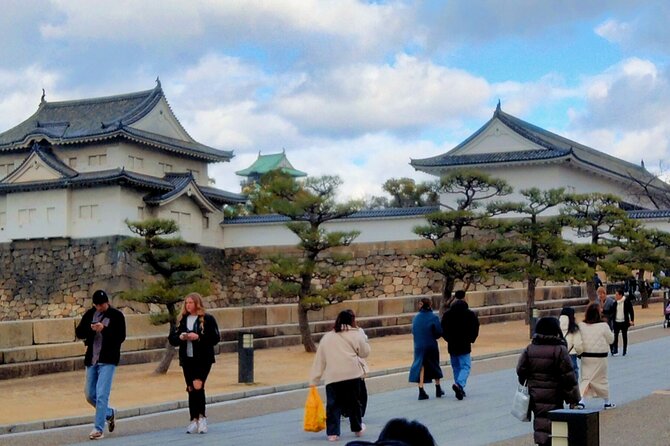
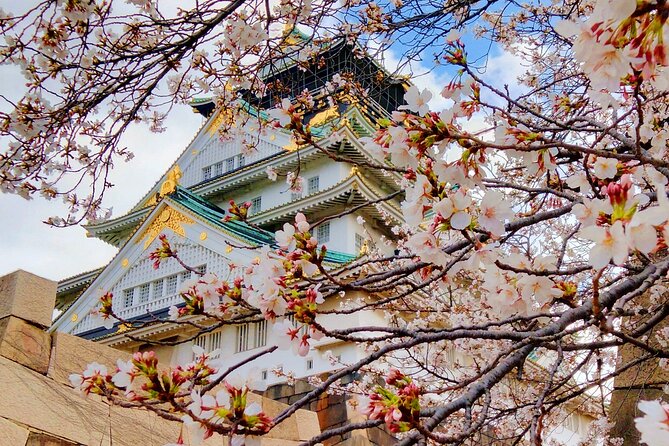
- Osaka Castle is viewed mainly from outside: The two-hour castle section focuses on the park, Main Tower views, stories, and photographs.
- The route includes three early stops: Chausuyama and Isshinji Temple add smaller religious and cultural sites before Shitennoji.
- You should allow for a subway fare: The Tanimachi Line trip from Shitennojimae-Yuhigaoka to Tanimachi 4-chome costs 190 yen and is not included.
Why this Osaka walk works well
Osaka is often presented through food, shopping, and neon signs. This experience gives you another view of the city, one built around Buddhist practice, castle power, public parks, and local stories.
I like the way the route moves between places with different moods. The first part near Tennoji feels focused and cultural. The later section around Osaka Castle is more open and spacious, with time to look at the Main Tower from several angles.
You are not simply following a guide from one famous gate to another. The host gives a brief explanation in simple English, then the audio guide adds more detail at selected spots. That setup is helpful if English is not your first language, or if you prefer to listen quietly rather than receive a constant stream of spoken information.
The group limit matters, too. With no more than five people, the host can keep the pace manageable and point out places that larger groups might pass. AJ Kajiwara is the guide name to request if he is available. His approach has been praised for detailed temple and castle stories, along with photo locations that are not always obvious.
The tradeoff is pace. This is not a casual stroll with long café breaks. You begin early, cover several sites, use the subway, and spend about two hours around Osaka Castle Park. Good shoes and a reasonable level of fitness will make the morning much easier.
More Multilingual Audio Guides in the world:
- Athens: Acropolis Ticket with Multilingual Audio Guide
★ 3.9 · 926 reviews - Geiranger: Bus Tour with Multilingual Audio Guide
★ 4.0 · 317 reviews - Sightseeing Cruise on the Danube with Audio Guide in Budapest
★ 3.5 · 229 reviews
Chausuyama and Tennoji Park, 15 minutes
The first stop is Chausuyama, a part of Tennoji Park. You visit three points connected with the area, with detailed audio information available at two of them.
Fifteen minutes is not long, so think of this as an introduction rather than a full park visit. The value comes from having the host show you where to look and explain why these points matter before the group moves on.
This short opening also helps you get used to the audio system. Access is provided by scanning a QR code at key locations, and WiFi is available near the host. You should bring a charged smartphone and headphones if you prefer to listen privately, although the supplied information does not specify whether headphones are provided.
The audio guide is a useful feature here because smaller places often lack the signs and explanations found at major attractions. You can hear more context without asking the host to translate every detail in several languages.
Isshinji Temple and Sanzenbuddha Hall, 10 minutes
The second stop is Isshinji Temple, where you view Buddhist statues at Sanzenbuddha Hall, a branch temple of Isshinji.
Again, the stop is brief, only about ten minutes. That makes it best for seeing the statues and getting a focused explanation, not for an extended visit or a long period of quiet reflection.
For me, this is a worthwhile addition because it keeps the morning from becoming a two-site checklist. You see a smaller religious setting before arriving at Shitennoji, then have a chance to compare the scale and layout of different Buddhist spaces.
The host can also assist with goshuin stamp collecting when possible. This is not included in the tour, and help is not guaranteed during busy periods, so you should treat it as a pleasant possibility rather than a planned part of the schedule.
Shitennoji’s Central Complex, 30 minutes
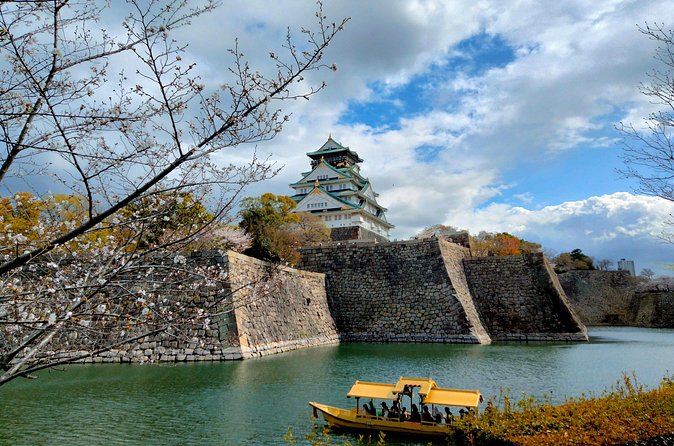
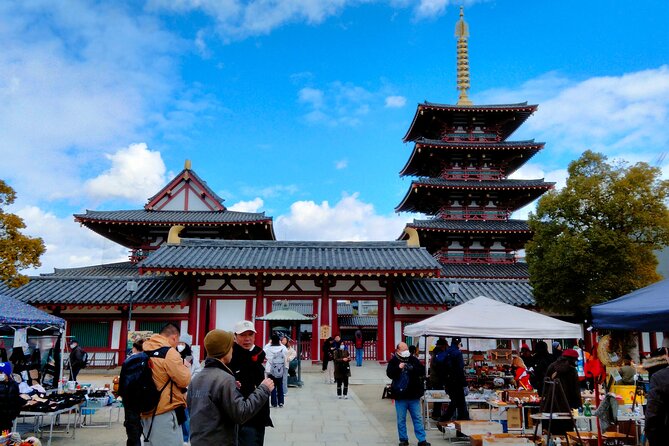
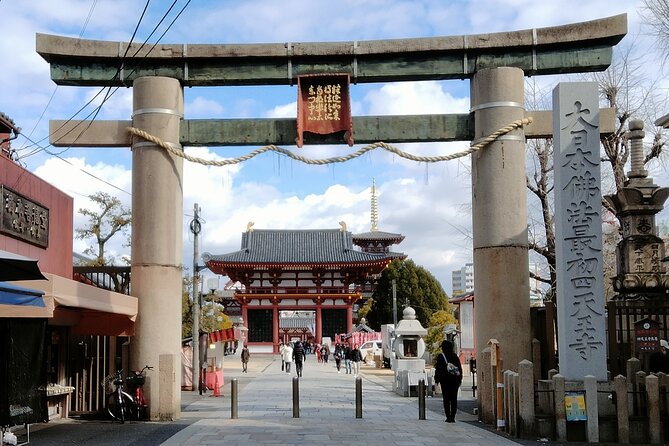
Shitennoji is the cultural heart of the first half. The tour includes admission to the Central Complex, so you can enter the temple area rather than viewing it only from outside.
The route brings you close to the Five-Story Pagoda and the Golden Hall. You will also learn how traditional Buddhist temple layouts are arranged, which gives the buildings more meaning than a quick photo stop can provide.
This is where the combination of host and audio guide makes the most sense. Your host sets the scene in clear, simple English. Then you can hear more detailed commentary in your preferred language. You can listen at your own pace instead of relying only on a short explanation while standing with the group.
Thirty minutes is enough for a useful introduction, but it is not an all-day temple visit. If you want extended time for prayer, photography, stamp collecting, or quiet observation, you may wish to return to Shitennoji independently.
The temple section is also one of the clearest reasons the price has value. Your admission to the Central Complex is included, and you receive a local explanation of the layout and key structures. The experience gives you context that can be easy to miss when exploring alone.
More Castle and Palace Audio Tours in the world:
- Prague: Skip-the-line Castle Ticket and Optional AudioGuide
★ 4.3 · 11,121 reviews - Amsterdam: Royal Palace Entry Ticket + Audio guide
★ 4.6 · 7,889 reviews - Topkapi Palace and Harem Skip-the-Line-Tickets & Audio Guide
★ 4.3 · 4,745 reviews - Milan: Sforza Castle Entry Ticket with Digital Audio Guide
★ 4.0 · 2,675 reviews
The five-minute subway connection
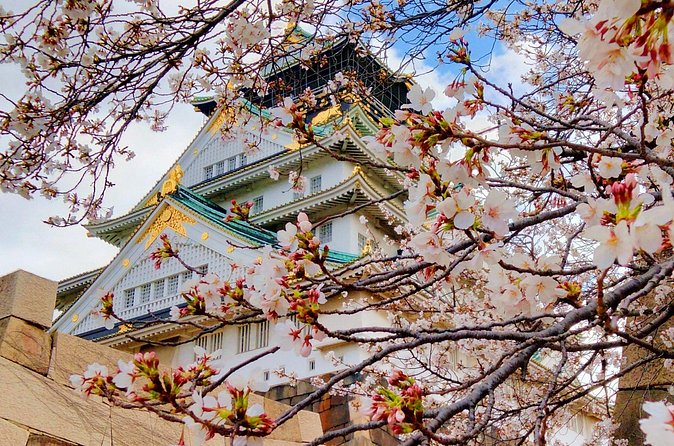
After Shitennoji, the group takes the Tanimachi Line from Shitennojimae-Yuhigaoka Station to Tanimachi 4-chome Station. The ride takes about five minutes, but you pay the 190-yen fare separately.
This transfer breaks the route into two natural halves. You finish the temple visits in the Tennoji area, then start the Osaka Castle section from a different part of the city.
The host provides navigation, which is useful if you are not comfortable with Osaka’s subway system. Still, remember that the walking time around each station and the process of boarding the train are part of the morning. The schedule is not just three hours and 45 minutes of uninterrupted sightseeing.
The end point is in front of Tanimachi 4-chome Station on the Tanimachi Line. That makes the finish convenient if you plan to continue around central Osaka, though the experience does not return you to Tennōji Station.
Osaka Castle Park and the Main Tower views
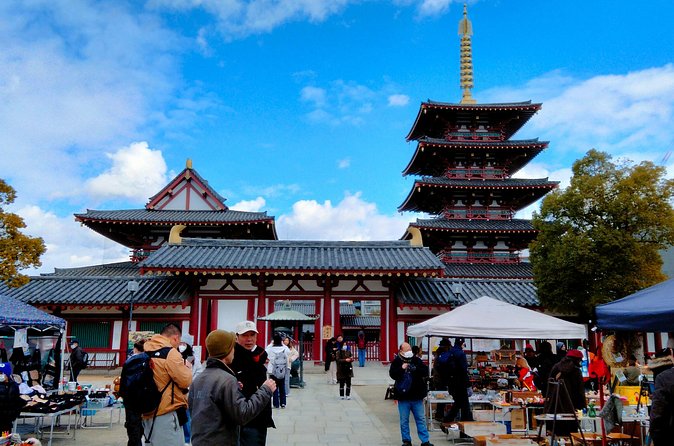
The final section takes about two hours, making it the longest part of the experience. You walk through Osaka Castle Park, hear detailed stories through the audio guide, and visit selected viewpoints for the exterior of the Main Tower.
This distinction is important. The tour does not include entry to the Main Tower, so you should not book it expecting an interior museum visit or a trip to the observation level. The focus is the park, the castle exterior, the surrounding views, and the stories connected with the site.
I like this approach for a first visit because a castle is often best understood from outside first. You have time to see the structure from different positions and to take photographs without rushing from the entrance straight into an indoor exhibit.
The host leads you to classic viewpoints as well as photo spots that are better known locally. That was one of the strongest parts of the experience for me on paper, and it matches the praise for AJ Kajiwara, who is described as especially good at finding striking views and sharing memorable stories.
Two hours gives the castle section more breathing room than the earlier stops. You can listen to the audio guide at key locations, look up at the Main Tower, and ask the host questions. The main limitation is that Osaka Castle Park is large, and the walk may feel tiring after the temple stops and subway ride.
What the audio guide adds
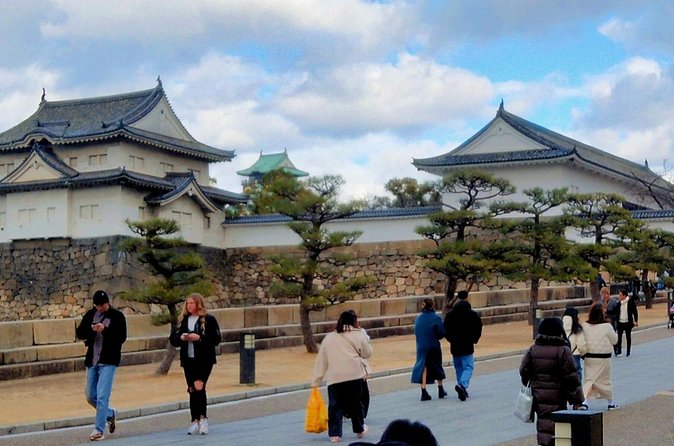
The audio guide is not a replacement for the host. It works alongside the host’s short explanations.
At each selected point, you scan a QR code and access the commentary on your smartphone. The guide is available in English, French, Spanish, German, Dutch, and Japanese. Free WiFi is available near the host, so you do not need to rely entirely on your own mobile data.
This format suits people who want more than a few basic facts but do not want a nonstop lecture. You can listen to the sections that interest you and use the host for directions, questions, and practical help.
The simple-English introductions are also useful for a mixed-language group. The experience does not depend on the host delivering every historical detail in advanced English. Instead, the audio content carries much of the extra explanation.
Bring a charged phone. The tour information confirms smartphone streaming and QR-code access, but it does not state that devices, headphones, or mobile chargers are supplied.
Price, group size, and overall value
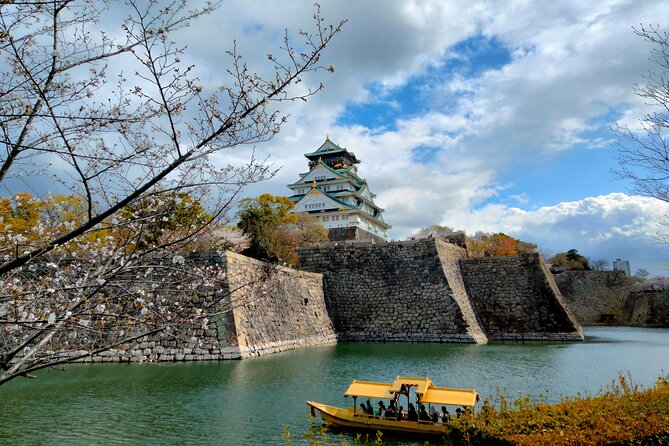
At $35.77 per person, this is reasonably priced for a small-group cultural walk lasting almost four hours. The cost includes the Shitennoji Central Complex admission, local guidance, the audio guide, WiFi near the host, bottled water, and a rain poncho in case of rain.
You still pay the 190-yen subway fare. Admission to the Osaka Castle Main Tower is not included because the tour concentrates on exterior viewpoints and the park.
The five-person maximum improves the value. A large group could make the early temple stops feel hurried and make it harder to hear the host. With a smaller group, you have a better chance to ask about temple customs, photography, directions, and local details.
The experience is strongest for someone who values explanation and route planning. If you are happy to walk alone with a guidebook, you can visit both major sites independently for less. You would, however, need to research the smaller stops, find the photo viewpoints, manage the transfer, and arrange your own cultural context.
Who should book this experience
I would recommend it to first-time visitors who want a structured morning and a clear introduction to Osaka’s religious and castle heritage.
It also suits solo visitors, couples, and small groups who prefer a personal guide without paying for a fully private tour. The multilingual audio options make it useful for international groups with different language needs.
You should be comfortable walking for much of the morning and spending time outdoors. The activity calls for moderate physical fitness, and the weather matters. Rain can affect the experience, though a poncho is supplied if conditions are manageable.
This may not suit you if your priority is entering Osaka Castle, spending a long time at Shitennoji, or moving at a very slow pace. It is also not the best choice if you want a food-focused Osaka tour. The emphasis here is temples, stories, views, and navigation.
The cancellation terms are favorable: you can cancel at least 24 hours before the start for a full refund. If poor weather forces cancellation, you can receive a different date or a full refund.
Should you book the Osaka Castle and Temple Walking Tour?
Book it if you want a compact cultural route with a small group, a helpful local host, and more detail than a standard sightseeing walk. The best reasons are the entry to Shitennoji’s Central Complex, the multilingual audio guide, and the chance to see Osaka Castle from carefully chosen exterior viewpoints.
Before booking, make sure you are comfortable with the early 8:30 start, the subway fare, the walking time, and the fact that Osaka Castle’s interior is not included. If those points fit your plans, this is a good-value way to connect two very different sides of Osaka in one morning.
FAQ
Where does the tour start?
It starts at the JR Ticket Office at Tennōji Station, at 10-45 Hideninchō in Tennoji Ward, Osaka.
What time does the experience begin?
The start time is 8:30 a.m.
Where does the tour finish?
It finishes in front of Tanimachi 4-chome Station on the Tanimachi Line.
How long does the tour last?
The experience lasts approximately 3 hours and 45 minutes.
How many people can join the tour?
The group has a maximum of five people.
Which languages are available for the audio guide?
The audio guide is available in English, French, Spanish, German, Dutch, and Japanese.
Is admission to Shitennoji included?
Yes. Admission to the Central Complex at Shitennoji Temple is included.
Is admission to Osaka Castle included?
The experience includes the Osaka Castle Park and exterior viewpoints, but it does not include admission to the Main Tower.
Is subway transportation included?
No. The Tanimachi Line fare is separate and costs 190 yen.
What happens if the weather is poor?
If the experience is canceled because of poor weather, you can receive a different date or a full refund.
More Audio Walking Tours in the world
- Sofia: City Monuments Guided Walking Tour with Audio Guide
★ 4.5 · 825 reviews - Florence: 2.5 hour Audio Guided Walking Tour led by Host
★ 4.6 · 293 reviews - Self Guided Classic Freedom Trail Location Aware (GPS) Walking Audio Tour
★ 4.5 · 258 reviews - Valletta: Self-Guided Historical Walking Tour (Audio Guide)
★ 3.7 · 251 reviews
Just added around the world
- Coba Ruins: Self-Guided Walking Audio Tour in Mexico★ 3.5 · 2 reviews
- Self Guided Driving Audio Tour of Saguaro National Park★ 3.0 · 4 reviews
- Torino Walking Tour with Audio and Written Guide by a Local★ 4.5 · 35 reviews
- Self-Guided Audio Driving Tour of Mount Lemmon★ 5.0 · 4 reviews
- Trondheim’s Inner Circle: A Self-Guided Audio Tour★ 4.0 · 15 reviews
- A Tromsø Introduction: A Self-Guided Audio Tour★ 3.5 · 19 reviews
- Panorama Bus Tour with Audio Guide★ 4.0 · 3 reviews
- Saguaro National Park Self-Guided Audio Tour★ 3.5 · 11 reviews
Multilingual Audio Guides, compared.
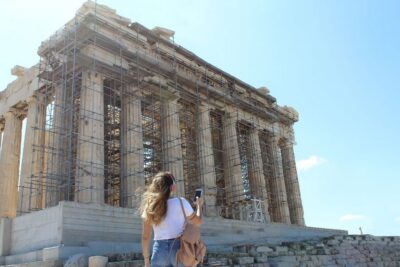

Geiranger: Bus Tour with Multilingual Audio Guide
Read our review →
Sightseeing Cruise on the Danube with Audio Guide in Budapest
Read our review →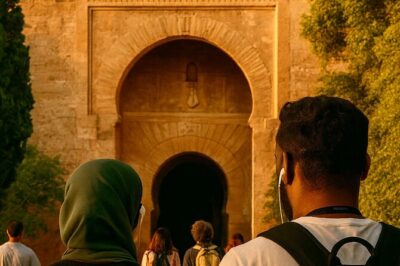
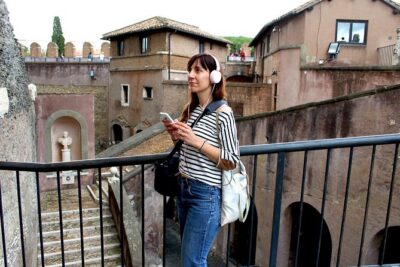
Castel Sant’Angelo E-Ticket & Multilingual Audio Guide
Read our review →
Best Of – with Tour Leader & Multilingual Audio Guide
Read our review →
Chiva Private Cultural Tour with Audio Guide in Buga
Read our review →
Acropolis Museum E-Ticket and Multilingual Audio Guide
Read our review →Browse the lists this tour appears in