
REVIEW · USA AUDIO TOURS
Michigan Lakeshore, M-22 Self-guided Driving Audio Tour
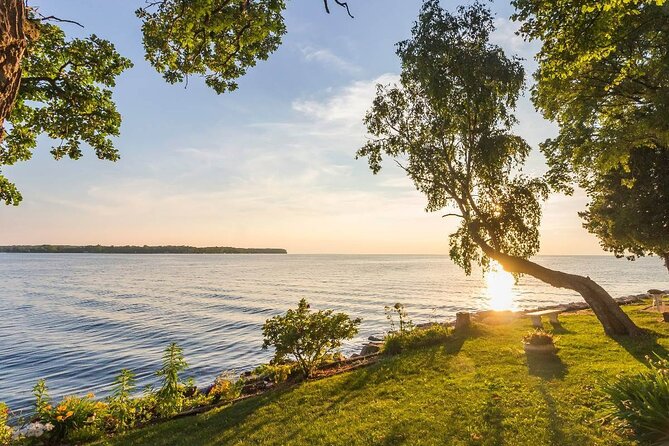
M-22 turns a road trip into a story. This self-guided audio tour follows more than 121 miles of Michigan’s Lake Michigan shore, linking beaches, lighthouses, marshes, dunes, small towns, and the Sleeping Bear Dunes area. I like the hands-free audio cues, which begin as you reach each point, and the fact that one $14.99 purchase covers a carload of up to four people.
I also like the freedom to stop for a swim, hike, snack, or overnight stay without losing the tour. The main catch is that the drive can take much longer than the stated eight to nine hours if you stop often, and some sites may close seasonally or during government shutdowns.
Key points to know before driving

- 121-plus-mile route: The tour runs from the Frankfort area toward Traverse City, with more than 78 audio stories along the way.
- One price per car: At $14.99 for up to four people, the cost is low compared with a private guide or group excursion.
- Best sights: Sleeping Bear Dunes, Point Betsie Lighthouse, Arcadia Marsh, Frankfort Beach, Historic Fishtown, and Grand Traverse Lighthouse are major stops.
- Flexible timing: You can start, pause, skip sections, and continue over several days because access does not expire.
- Offline operation: Download the tour over strong Wi-Fi or cellular service before setting out, then use it without a signal.
- Plan around closures: Some attractions and facilities may not be open outside the main season, so check ahead before promising yourself every stop.
Why M-22 works so well as an audio tour
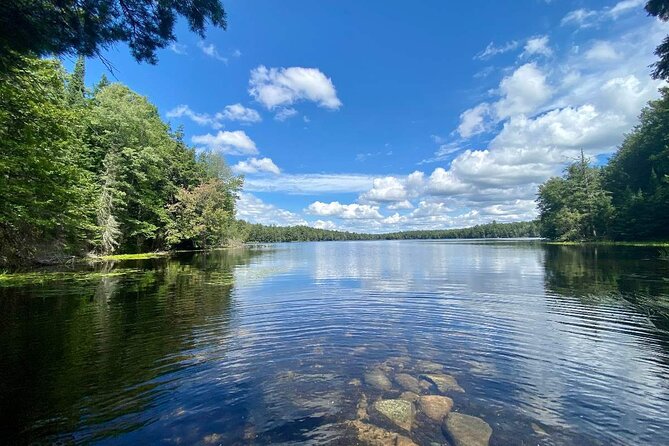
Michigan’s lower peninsula is easy to picture with your hand. Hold up your left hand with the palm facing away, and the shape resembles the state. This drive follows the outside of the pinky side, tracing Lake Michigan from Frankfort through Sleeping Bear Dunes and the Leelanau Peninsula toward Traverse City.
The route is not just a string of scenic pullouts. The narration explains how the Great Lakes connect, how timber shaped coastal towns, why the Manitou Passage mattered to shipping, and how Native communities remain part of the region’s story. That extra context makes a long drive feel purposeful rather than like a series of directions.
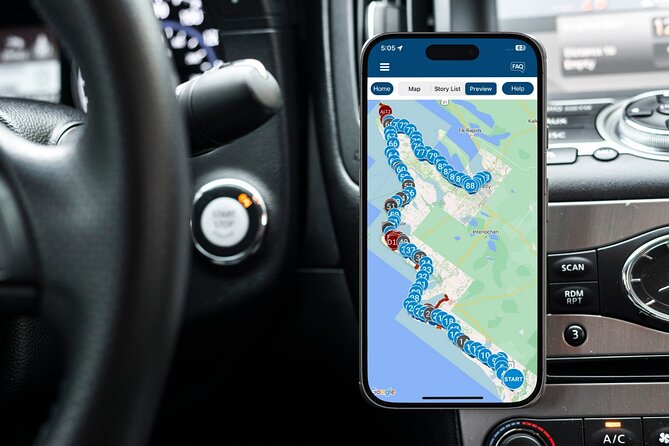
The app is designed to play automatically when you reach each story point. You do not need to keep touching your phone while driving, though you should still let the driver focus on the road and follow posted speed limits. Connect the phone to your car with Bluetooth, USB, or AUX. Apple CarPlay works with the audio, while Android Auto support is still being developed.
The tour is offered in English. You receive setup instructions and a password by email and text after booking. Search for audio tour if the message does not appear quickly. Download the separate Action Tour Guide app before leaving reliable service. This step matters, since the route is intended to work offline once the content is stored on your phone.
More Self-Guided Audio Tours in the USA
- Gettysburg Battlefield Self-Guided Driving Audio Tour
★ 4.5 · 910 reviews - Joshua Tree National Park Self-Guided Driving Audio Tour
★ 4.5 · 762 reviews - Ultimate Acadia National Park Self-Guided Driving Audio Tour
★ 4.0 · 521 reviews
Frankfort, Great Lakes Bay, and the first miles
The opening story sets the stage with the Great Lakes. Together, these lakes contain about 21 percent of the world’s surface freshwater, and their connected waters eventually drain toward the Atlantic Ocean. It is a useful beginning because the rest of the drive keeps returning to the relationship between water, shipping, timber, fishing, and settlement.
The first section around Frankfort takes about two to four hours of audio and driving, depending on how many stops you make. You are not expected to complete every walk at the exact moment the narration mentions it. Use the voice as a guide, then stop when the timing suits you.
At Portage Lake, the story turns to the lumber era. In the mid-1800s, mills appeared along the coast, processing timber that was shipped across the Great Lakes to larger cities. Portage is a good example of how the water brought both opportunity and trouble: forests supported fast growth, but the industry also changed the shore and depleted the trees that had made the mills possible.
Crystal Lake adds a geological twist. It was once a bay connected to Lake Michigan, until sand dunes closed the opening roughly 2,000 years ago. You will also hear about an effort to reopen the connection, backed by Archibald Jones and the Benzie County River Improvement Company. The nearby alpaca stop gives the route a lighter, more unusual pause between the area’s natural and industrial stories.
Arcadia Marsh and Green Point Dunes
Arcadia Marsh Nature Preserve is one of the strongest early stops for anyone who enjoys birds, butterflies, and plants. It is one of only 15 remaining coastal marshes along Michigan’s Lower Peninsula shoreline, and an elevated boardwalk lets you walk through the wet area without needing special footwear.
The entrance can be easy to miss, so pay attention as the audio points it out. Dogs are not allowed at the preserve. Allow about 30 minutes for the stop, although nature photographers and bird watchers may want longer.
Green Point Dunes offers a different kind of walk. The roughly two-mile trail passes through shaded woods before reaching a sandy Lake Michigan beach. Wooden stairs lead down toward the shore. The tour mentions a 10-minute audio stop, but the hike itself can take much longer, so this is one place where the listed stop time should not dictate your schedule.
That difference is important throughout the route. The audio stories are often short, but the sights they introduce are not. If you want to hike, swim, watch birds, or explore towns, treat the eight to nine-hour estimate as a driving framework, not a promise that you will see everything in one day.
Frankfort Beach and Point Betsie Lighthouse
Frankfort Beach is an easy shore stop. Continue along Forest Avenue toward the water, where a small parking lot serves the public beach. The sand, pier, and Frankfort lighthouse make this a pleasant place to stretch your legs without committing to a long walk.
Point Betsie Lighthouse is more visually striking. It is one of Michigan’s most photographed lighthouses and sits beside a sandy beach. You can visit the grounds, while guided tours are offered from Memorial Day weekend through late October for a small fee.
The timing of that tour schedule is worth noting. The audio narration can still guide you past the lighthouse outside the guided-tour season, but access to the interior and grounds may differ. Check current conditions before building your day around a specific admission.
More Driving Audio Tours in the USA:
- Ultimate Lake Tahoe Self-Guided Driving Audio Tour
★ 4.5 · 435 reviews - Scenic Newport, RI Self-Guided Driving Audio Tour
★ 4.5 · 325 reviews - Arches National Park Self-Guided Driving Audio Tour
★ 4.5 · 288 reviews - Yellowstone National Park Self-Guided Driving Audio Tour
★ 4.5 · 249 reviews
Sleeping Bear Dunes deserves a full day
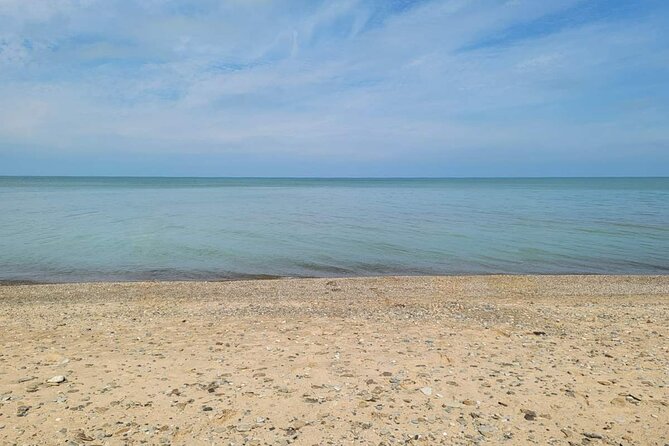
Sleeping Bear Dunes National Lakeshore is the centerpiece of M-22. The audio gives you background before you arrive, which helps you choose how much time to spend once you reach the park. If this is your main reason for taking the drive, do not squeeze the entire route into a rushed single day.
The Old Indian Trail provides a quieter hiking option. It has two loops of about 2.5 miles each and follows part of a route that early Native Americans used between a camp and fishing sites. The tour presents it as a good choice if you want a less crowded walk or have several days in the area.
The Philip A. Hart Visitor Center is a smart first stop within the national lakeshore. The directions point you toward West Front Street in Empire, then to a bluish building marked with park signs. Starting there gives you a chance to get current information before heading to the larger sights.
Empire itself adds a reminder of the area’s shipping past. The Empire State, launched in 1848, was a large and fast steamer for its era, with 40-foot paddle wheels. It carried passengers in comfort from Chicago toward northern Great Lakes ports.
The Dune Climb, Alligator Hill, and Glen Arbor

The Dune Climb is one of the park’s best-known attractions. The main dune rises nearly 300 feet, and visitors are encouraged to climb it. You will find plenty of parking and should spot the sand rise as soon as you arrive.
The climb looks simple, but the steep sand makes it more demanding than the short audio stop suggests. Give yourself time, water, and patience. The return walk is part of the effort, and reaching the top is not the only measure of a good visit.
Alligator Hill offers another way to see the park. The uphill trail leads toward Islands Lookout, where clear weather may allow views all the way to the Manitou Islands. The walk to the lookout is about three miles round trip. It is a better fit if you want a wooded trail and a high viewpoint rather than a direct challenge on open sand.
Glen Arbor is the route’s most useful place for a longer pause. It has art galleries, wine and cider tasting rooms, and cafes. You could easily use it for lunch or an overnight stay, especially if the national lakeshore deserves more than a quick pass.
Manitou Islands, Pyramid Point, and the passage

The Manitou Islands are part of Sleeping Bear Dunes National Lakeshore and are largely uninhabited. The narration also introduces Beaver Island, the largest island in Lake Michigan, and its unusual past, including a period as a self-proclaimed theocratic monarchy.
Pyramid Point is one of the best walking stops on the route. The trailhead leads to a view over Lake Michigan, with a roughly three-mile hike to the main overlook. The tour also points toward Port Oneida Beach, giving you another option if you want shoreline time rather than a hill walk.
The Manitou Passage separates the islands from mainland Michigan. From the mid-1800s into the early 1900s, commercial shipping filled these waters with vessels carrying goods. That history makes the views more interesting: you are not simply looking across open water, but across a route that once demanded careful navigation from working ships.
Good Harbor Beach is suited to a slower stop. You can stroll, swim, or watch the sunset. There are no lifeguards, and the route specifically warns about waves and rip currents, so treat swimming with care.
Leland’s Fishtown and the Leelanau Peninsula

The Leelanau Peninsula changes the feel of the drive. The narration explains that the name came from Henry Schoolcraft, a United States Indian agent in the 1820s, and connects him with Jane Johnston, whom he met while assigned to Sault Ste. Marie.
Leland’s Historic Fishtown is one of the most worthwhile town stops. The community grew beside the Leland River, where it reaches Lake Michigan. The river’s natural fish ladder helped make the site a long-standing fishing ground, and the area retains a strong connection to that working waterfront past.
This is the sort of stop that benefits from leaving the car. The audio can explain why the town matters, but a walk through Fishtown gives the history a physical setting. Allow more than the short narration time if you want to browse at an easy pace.
Northport to Traverse City
Northport sits on Grand Traverse Bay and was settled in the mid-1800s. The story connects its growth with a statewide smallpox epidemic that caused settlers to scatter into new areas. It is a reminder that local settlement patterns were shaped by difficult events, not only by trade and geography.
At Grand Traverse Lighthouse Museum, you will hear about the keepers who maintained the light. Philo Beers was the second keeper, following David Moon, who left after only about eight months. The detail gives a human scale to lighthouse work, which is often romanticized from a distance.
The route then passes through part of the Grand Traverse Indian Reservation and Peshawbestown. The community was named for Chief Peshaba after an Odawa group moved into the area once called Eagle Town. This section is especially valuable because it acknowledges Native communities as part of the present-day route, not merely as a subject from the distant past.
Suttons Bay grew as a port founded by Harry C. Sutton in 1854. It was first called Suttonsburg and served as a refueling point for steamships. Cordwood was loaded onto ships to heat their boilers, a practical detail that helps you picture how these coastal towns functioned before modern fuel systems.
The drive approaches Traverse City at the head of the east and west arms of Grand Traverse Bay. It makes a sensible base for exploring the Sleeping Bear Dunes area and the rest of the peninsula, especially if you prefer to split the route across several days.
The final highlighted stop is the Dennos Museum Center, known for rotating exhibits. Past exhibitions have included works by Dale Chihuly, Mathias J. Alten, Orna Ben-Ami, Andy Warhol, and the traveling Bodies Human exhibit. The museum gives the long coastal drive a cultural finish rather than ending only with another scenic overlook.
Price, timing, and who gets the best value
At $14.99 per group of up to four, this is inexpensive if you are sharing a car. Two couples or a family can use one purchase, making the per-person cost very low. You are paying for narration, directions, offline maps, and location-triggered stories, not admission to parks or museums.
You still need to pay any attraction fees, reserve anything that requires reservations, and cover your own food, fuel, parking, and lodging. Most outdoor stops are described as free, but access and opening conditions can change.
The strongest value comes from flexibility. You can use the tour on any day, pause it for a meal or hike, skip a stop, and return later. Access does not expire, so an ambitious one-day drive can become a two-day or repeat trip.
The main limitation is navigation. One piece of feedback specifically wished the route appeared more clearly on GPS. Download the content before departure and keep the app open at the starting point. If multiple versions appear, choose the one matching your starting point and direction.
Free cancellation is available up to 24 hours before the scheduled start. Changes or cancellations inside that window are not refundable.
Is the M-22 audio tour worth booking?
I would choose this tour if you want to drive independently but still want the area explained as you go. It suits couples, families, and small groups who dislike fixed departure times and want to decide for themselves when a beach stop becomes a swim, a short walk becomes a hike, or Glen Arbor becomes an overnight stay.
I would not treat it as a tightly managed sightseeing day. The route is long, the optional hikes add real time, and seasonal or government closures can affect individual stops. Check conditions before leaving, especially if Point Betsie, the visitor center, a museum, or a specific park facility is central to your plans.
For $14.99 per car, the combination of history, directions, and repeat access is hard to fault. Book it if you want the freedom of a road trip with a steady voice in the passenger seat, and give Sleeping Bear Dunes enough time to deserve its place at the heart of the drive.
FAQ
How long is the Michigan Lakeshore M-22 tour?
The full experience is estimated at eight to nine hours, while the route covers more than 121 miles. Frequent beach stops, hikes, museum visits, meals, or overnight stays can make the trip longer.
How many audio stories are included?
The route includes more than 78 audio stories covering the coast, towns, natural areas, lighthouses, and historical subjects.
Where does the tour begin?
The tour is associated with the Frankfort area. You go to the starting point yourself, and no guide meets you there.
Where does the tour end?
The activity ends at a different location from the starting point, with the route continuing toward the Traverse City area.
Is the tour guided in person?
No. It is a private, self-guided activity for your group. The audio starts automatically when you reach each story point.
Does the tour work without cell service?
Yes, after you download the tour in strong Wi-Fi or cellular service. The app includes offline maps and is designed to work without a signal afterward.
What devices are recommended?
An iPhone with iOS 15 or later, an Android device with version 9 or later, or an iPad or tablet with GPS and cellular connectivity is recommended.
Can I use the tour over more than one day?
Yes. You can pause the tour, take breaks, explore side trips, and continue later. Access has no expiration.
Are entrance fees included?
No. Attraction passes, entry tickets, and reservations are not included. The route itself includes many free outdoor stops, but individual facilities may charge admission.
Is cancellation free?
You can receive a full refund if you cancel at least 24 hours before the experience start time. Cancellations or changes made less than 24 hours before the start are not refunded.
Just added around the USA
- Self Guided Driving Audio Tour of Saguaro National Park★ 3.0 · 4 reviews
- Self-Guided Audio Driving Tour of Mount Lemmon★ 5.0 · 4 reviews
- Saguaro National Park Self-Guided Audio Tour★ 3.5 · 11 reviews
- A Self Guided Audio Tour in Tombstone★ 4.0 · 11 reviews
- Catskills Scenic Byway Self-Guided Driving Audio Tour★ 4.0 · 9 reviews
- Big Bend National Park Self Guided Audio Tour Guide★ 5.0 · 12 reviews
- Self-Guided Audio Driving Tour in Catskills Scenic Byway★ 4.5 · 7 reviews
- Shiloh Battlefield Self-Guided Driving Audio Tour★ 4.0 · 9 reviews
Driving Audio Tours, compared.



Ultimate Acadia National Park Self-Guided Driving Audio Tour
Read our review →



Browse the lists this tour appears in