
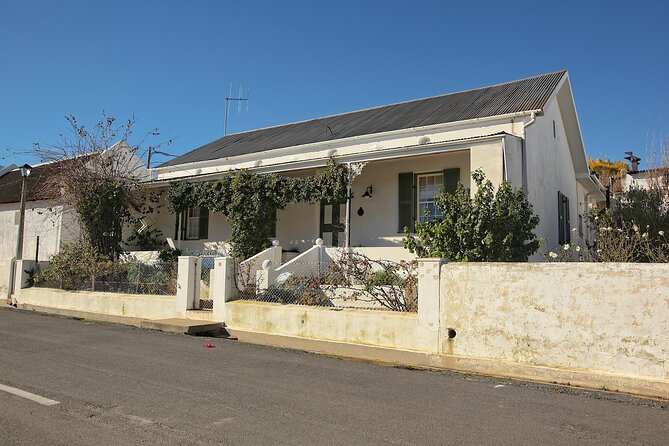
REVIEW · CHURCH & CATHEDRAL AUDIO TOURS
Historic Tulbagh: A Self-Guided Audio Tour of Church Street’s Heritage
Step into Tulbagh’s past. This self-guided walk follows Church Street through one of the town’s prettiest historic areas, using your phone to tell the story as you go. I like the freedom of choosing your own start time, and I like that you can pause the audio whenever you want to enter a museum, take a break, or simply look more closely at an old building. The price is modest at $5.20 per person, though museum tickets cost extra and the walk depends on you bringing a charged smartphone and headphones.
The route takes about one hour to one hour and 15 minutes. History fans will get the most from it, especially if you want more context than a quick stroll provides. The main caution is that this is an audio tour rather than a personal guide, so you will need to manage the app, follow the route, and make your own decisions about optional stops.
Quick points about the Church Street walk
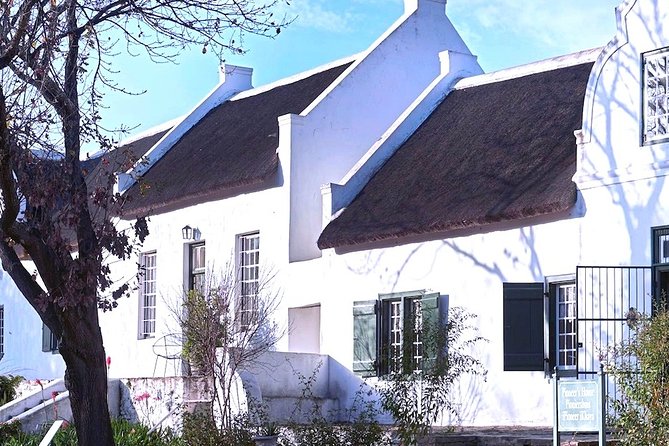
- The route makes a full loop through Church Street, beginning at the Earthquake Museum and ending at De Oude Bakkerij.
- The audio format gives you control, with the option to pause, restart, or take breaks whenever you choose.
- Four museums can be visited along the way, but entrance fees are not included in the tour price.
- The post-earthquake story is a major strength, giving the walk more purpose than a simple building-by-building tour.
- The Church Street Kitchen Gardens need realistic expectations, as litter and rubbish have affected the experience there.
- Offline maps and audio are included, so you do not need a constant mobile connection once the tour is downloaded.
Why Church Street works so well for a self-guided walk
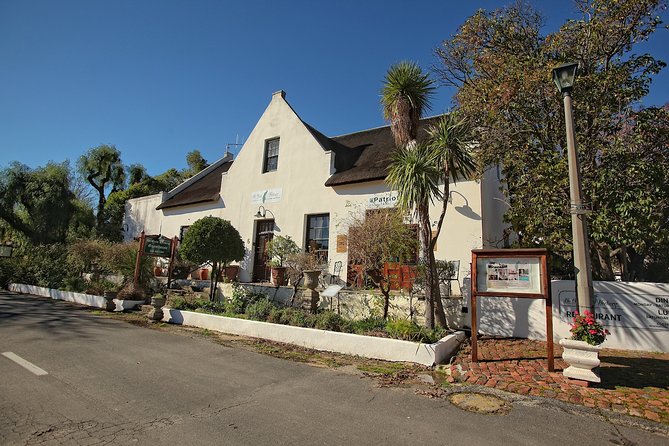
Church Street gives this experience a clear setting. Rather than sending you across a large town or asking you to follow a complicated route, it keeps your attention on one historic street and its collection of old buildings, museums, gardens, and public spaces.
That focus matters. You can look up from your phone and pay attention to the details around you, then return to the narration when you are ready. I prefer this kind of walking tour to an audio track that rushes you from one point to the next. Here, the structure leaves room for your own pace.
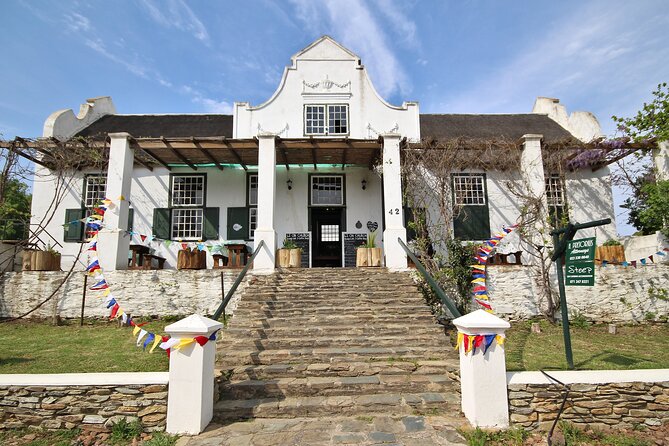
The walk begins at 4 Church Street, Tulbagh. The starting point is the Earthquake Museum, which gives you an immediate way to connect the town’s past with the changes that came later. You can choose to visit the museum, but admission is not part of the $5.20 tour fee.
More Church Audio Tours in the world:
- Rome: St. Peter’s Basilica & Dome Entry Ticket & Audio Tour
★ 4.2 · 7,537 reviews - Istanbul: Basilica Cistern Fast-Track Entry and Audio Guide
★ 4.6 · 7,521 reviews - Florence: Cathedral & Brunelleschi’s Dome Ticket & Audio App
★ 4.4 · 6,973 reviews
Starting at the Earthquake Museum
The Earthquake Museum is an optional first stop, but it is a useful one. The tour’s strongest subject is Tulbagh’s past and the restoration work that followed the earthquake, so beginning here can give the rest of the walk more meaning.
You do not have to enter if you are short on time. The audio route still works as a walk along Church Street. However, if you enjoy museums and want more background before looking at the buildings, this is one of the stops worth considering.
A useful practical point is that the tour does not include museum tickets. Budget extra if you plan to visit the museums along the route. The tour fee pays for the audio experience, app access, map, and geodata, not for entry to the attractions.
The Victorian and Honey Oak
From the starting point, the route passes the Victorian and Honey Oak. These names give the walk a series of easy landmarks, which is helpful when you are navigating by phone rather than following a guide with a flag or sign.
The audio commentary is the main reason to stop and listen at each place. Without it, you would mainly be looking at historic buildings from the outside. With it, you get a clearer sense of how each site fits into Church Street and Tulbagh’s wider story.
I recommend keeping your phone accessible but not staring at it constantly. The route is designed around audio, so you can listen while looking at the buildings. That is one of the better features of the format. You are not tied to reading long paragraphs on a screen as you walk.
The Toll House and Bain’s Barn
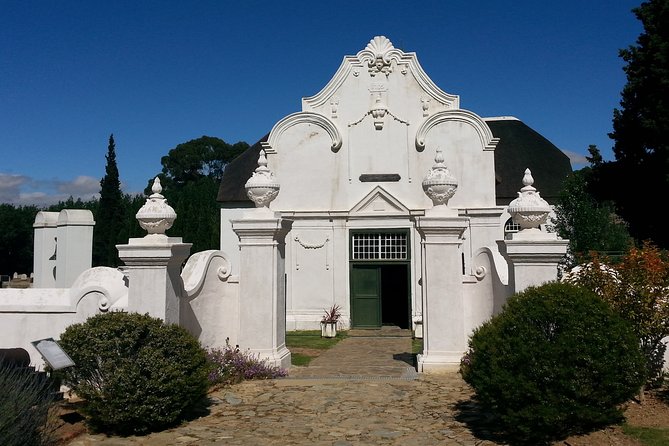
The walk continues past the Toll House and Bain’s Barn. These are the sort of stops that benefit from narration because the names alone do not explain their place in local history.
The audio tour gives you a reason to slow down. You can pause at each building, replay a section if you miss something, and continue when you are ready. If you are walking with family or friends, this also lets the group stop for photographs without losing the rest of the commentary.
The route is private in the simple but useful sense that only your group takes part. You are not sharing a fixed departure with strangers, and you do not need to keep up with a guide. The tradeoff is that there is no person beside you to answer a question or correct your route if you stop paying attention.
More History Audio Tours in the world:
- Colosseum, Roman Forum & Palatine Hill with Audioguide App
★ 4.4 · 6,291 reviews - Venice: St. Mark Basilica Ticket, Audioguide+History Gallery
★ 3.9 · 4,780 reviews - Rome: Colosseum, Ancient Rome Tour or AudioGuided Tour
★ 4.4 · 2,879 reviews - Colosseum, Roman Forum & Palatine Hill Entry and Audioguide
★ 4.1 · 2,475 reviews
Church Street Kitchen Gardens
The Church Street Kitchen Gardens add a different note to the walk. After several heritage buildings, the gardens give you an outdoor space to pause and take stock of the area.
This stop also comes with the clearest warning. The condition of the gardens has been described as disappointing, with litter and rubbish creating an abandoned and unsafe feeling. I would not treat this as the highlight of the route, and I would keep expectations modest.
The garden may still be worth seeing because it forms part of the route and gives you another view of Church Street. Just do not assume every stop will have the same care or polish. One especially useful detail is that the narrator was encountered tending the gardens, creating an opportunity for extra local information beyond the recorded audio. That kind of chance meeting cannot be promised, but it shows how the walk can connect you with the area in an informal way.
Paddagang, The Parsonage, and Cape Dutch Quarters
The route then passes Paddagang before stopping briefly in front of The Parsonage. These pauses help break up the walk and keep it from feeling like a single long narration.
The Parsonage is a brief stop rather than a major visit according to the route, so you should not plan your timing around a long interior tour there. Listen to the commentary, take in the setting, and continue along Church Street.
Next comes Cape Dutch Quarters. The name fits the architectural character of the route, but the value here is not just seeing attractive old façades. The audio helps connect the individual places to the town’s development and restoration. That broader story was one of the most praised parts of the experience, especially for someone who had visited Tulbagh many times but learned far more about the town and its post-earthquake restoration through this walk.
That is an important distinction. If you already know Church Street, you may still gain something from the narration. The tour is not only for first-time visitors who need directions.
Finishing at De Oude Bakkerij
The walk ends at De Oude Bakkerij c1805, a Cape Dutch National Monument, at the corner of Van der Stel and Waterkant Street. Ending at a named historic building gives the route a clear finish rather than leaving you wondering where the audio should stop.
The listed opening hours for the tour location run around the clock, from midnight to 11:59 p.m. daily. That describes access to the tour rather than guaranteeing that every museum or attraction will be open at any hour. If you want to go inside a museum, check its own opening arrangements before setting out.
Because the audio tour is available through an app, you control the starting time. You can begin in the morning, afternoon, or another time that fits your plans. The tour itself lasts around an hour to an hour and 15 minutes, but museum visits and photo stops will make the outing longer.
What the VoiceMap app adds
The tour uses the VoiceMap app for Android and iOS. Your purchase includes lifetime access to the English version, along with offline audio, maps, and geodata.
Offline access is valuable in practical terms. Download the tour before you start, then you can follow the route without depending on a strong mobile signal. You still need your own smartphone and headphones, since neither is supplied.
The app format also makes this a good choice for people who dislike rigid sightseeing schedules. You can stop for a drink, enter a museum, take photographs, or pause the narration while someone in your group catches up. A live guide cannot always offer that much flexibility.
You should also be comfortable with basic phone navigation. If you prefer a person to point out each building and answer questions as you go, this will feel less personal. If you like setting your own rhythm, the app is a strong match.
Is $5.20 good value?
At $5.20 per person, the tour is inexpensive for a guided introduction to Church Street. You are paying for the recorded commentary, route design, app access, and lifetime use rather than a one-time download that expires after your visit.
The value is best if you actually listen at the stops and use the story to understand the street. If you simply walk the route while the audio plays in the background, you may feel you paid for little more than directions.
Museum admissions can change the budget. The tour passes four museums, but tickets are extra, and the summary does not provide their individual prices. You should treat the audio tour as a low-cost base and decide separately which museums deserve your time and money.
For a private experience, the price is appealing. You are not paying for a full vehicle, group transfer, meal, or live guide. You are also not receiving those services. There is no transportation, food, or drink included, so plan to reach the starting point on your own.
Who will enjoy this most?
I would choose this walk if you:
- Enjoy local history and heritage buildings.
- Prefer to explore without a large group.
- Want to choose your own departure time.
- Like stopping often for photographs or museums.
- Are comfortable using an app on your own phone.
- Want a low-cost activity in Tulbagh.
It is especially useful for people who have already seen Church Street but feel they missed the story behind it. The recorded narration adds context that you would not necessarily get by walking past the buildings alone.
I would be less keen on it if you want a highly polished attraction at every stop, a live guide, or a carefully maintained garden. The Kitchen Gardens are the weak point, and the self-guided format requires more independence than a standard tour.
Practical advice before you set out
Download the VoiceMap app and the tour data before arriving at 4 Church Street. The offline function is included, but it is still sensible to prepare the route before you begin rather than trying to install everything at the starting point.
Bring headphones and make sure your phone has enough battery for the walk. These are not provided, and the audio is the heart of the experience.
Allow more than the basic 60 to 75 minutes if you intend to enter museums. The tour passes the sights in sequence, but museum visits are optional and carry separate fees.
Start when you have enough time to listen without rushing. Since you control the departure time and can pause the tour, there is no reason to hurry from one stop to the next.
The walk is listed as suitable for most people, but the information provided does not give detailed accessibility notes. If you need specific arrangements, confirm them before booking.
Cancellation and booking details
This experience is non-refundable and cannot be changed after booking. If your plans are uncertain, book only when you are confident about the date and time you want to use it.
Confirmation is provided at booking. The tour is offered by VoiceMap Audio Tours and is available in English.
Should you book the Church Street audio tour?
Book it if you want an inexpensive, flexible way to understand Tulbagh’s historic core. The strongest reason to go is the narration about the town’s past and post-earthquake restoration, not simply the act of walking past old buildings. I also like the private, pause-anytime format and the fact that the tour remains useful even if you have visited Tulbagh before.
Skip it if you want a live person, included museum admission, or a perfectly maintained route from start to finish. The gardens may disappoint, and the app places responsibility for navigation and equipment on you.
For $5.20, I think it is a sensible add-on to a Tulbagh visit, especially for history buffs. Download the audio, bring headphones, set aside at least 75 minutes if you want to take your time, and decide in advance which museums are worth the extra admission.
FAQ
Where does the audio tour start?
The tour starts at 4 Church Street, Tulbagh, 6820, South Africa, at the Earthquake Museum.
Where does the tour finish?
It ends at De Oude Bakkerij c1805, a Cape Dutch National Monument, at the corner of Van der Stel and Waterkant Street in Tulbagh.
How long does the tour take?
The walking portion takes approximately one hour to one hour and 15 minutes. Museum visits and other stops may make your outing longer.
What app does the tour use?
The tour uses the VoiceMap app, which is available for Android and iOS devices.
Is internet access required during the walk?
The tour includes offline access to the audio, maps, and geodata. You should download the material before starting.
Are museum entrance fees included?
No. Tickets and entrance fees for museums and other attractions along the route are not included.
What should I bring?
You need to bring your own smartphone and headphones. Transportation, food, and drinks are also not included.
Can I choose when to start?
Yes. This is a private self-guided tour, so you control the start time and can pause the audio for breaks.
More Self-Guided Audio Tours in the world
- Athens: Acropolis Ticket & Optional Self-Guided Audio Tours
★ 4.1 · 2,542 reviews - Gettysburg Battlefield Self-Guided Driving Audio Tour
★ 4.5 · 910 reviews - Joshua Tree National Park Self-Guided Driving Audio Tour
★ 4.5 · 762 reviews - Ultimate Acadia National Park Self-Guided Driving Audio Tour
★ 4.0 · 521 reviews
Just added around the world
- Coba Ruins: Self-Guided Walking Audio Tour in Mexico★ 3.5 · 2 reviews
- Self Guided Driving Audio Tour of Saguaro National Park★ 3.0 · 4 reviews
- Torino Walking Tour with Audio and Written Guide by a Local★ 4.5 · 35 reviews
- Self-Guided Audio Driving Tour of Mount Lemmon★ 5.0 · 4 reviews
- Trondheim’s Inner Circle: A Self-Guided Audio Tour★ 4.0 · 15 reviews
- A Tromsø Introduction: A Self-Guided Audio Tour★ 3.5 · 19 reviews
- Panorama Bus Tour with Audio Guide★ 4.0 · 3 reviews
- Saguaro National Park Self-Guided Audio Tour★ 3.5 · 11 reviews
Church & Cathedral Audio Tours, compared.

St. Peter’s Basilica & Dome Entry Ticket & Audio Tour
Read our review →
Basilica Cistern Fast-Track Entry and Audio Guide
Read our review →
Cathedral & Brunelleschi’s Dome Ticket & Audio App
Read our review →
Vatican & Sistine Chapel Ticket with Optional Audio Guide
Read our review →
St. Mark Basilica Ticket, Audioguide+History Gallery
Read our review →
Skip the Line: Vatican & Sistine Chapel Ticket with Audio Guide
Read our review →
St. Peter’s Basilica with Optional Dome Ticket & Audioguide
Read our review →
Browse the lists this tour appears in