
REVIEW · SACRAMENTO AUDIO TOURS
Historic Folsom: A Self-Guided Audio Tour
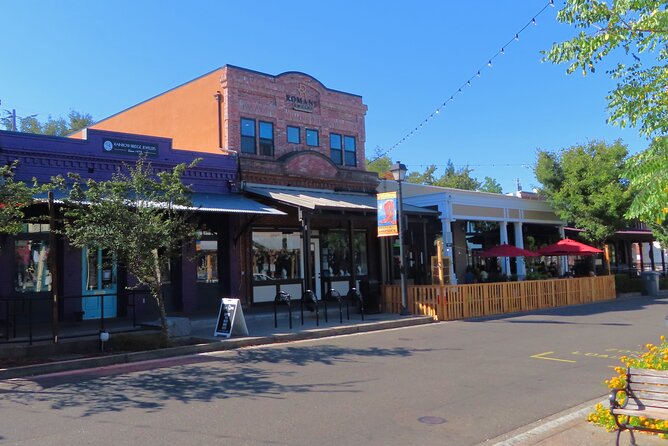
Folsom’s past is made for walking. This self-guided audio tour follows Sutter Street through one of Sacramento’s most historic communities, connecting Gold Rush stories, Native American history, the railroad, and Lake Natoma in about 90 minutes to two hours. I like that you can stop for a coffee, pause the narration, or restart a section without keeping up with a group.
I also like the offline maps and audio, which are useful in places where your phone signal may be weak. The $9.99 price is modest for lifetime access, but you should know the route can be confusing at the start, includes hilly sections, and may contain references to businesses that have changed.
Key points to know before you go
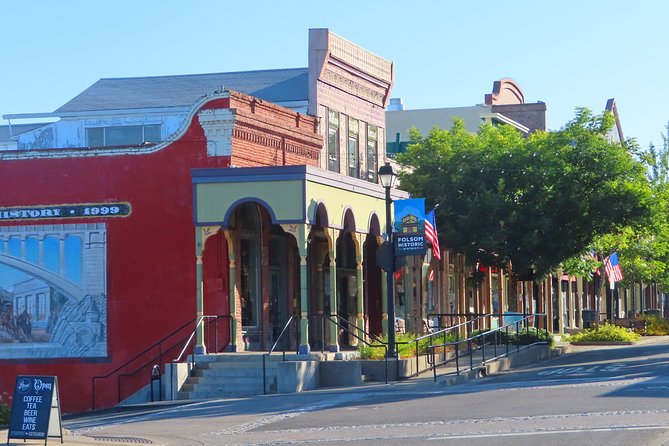
- The route begins near Historic Folsom and ends at the Folsom Historic Truss Bridge by Lake Natoma.
- You follow Sutter Street while learning about Gold Rush-era Folsom and local Native American history.
- The walk passes the Folsom Historical Museum, Sacramento Valley Railroad, Sutter Street Theatre, and Folsom Powerhouse State Historic Park.
- You can pause, restart, and explore at your own pace rather than follow a fixed group schedule.
- Download everything before walking, since the tour works without cell phone reception once prepared.
- Allow extra time for the hills, orientation, photographs, and any attraction you choose to enter.
Why this Folsom walk is worth considering
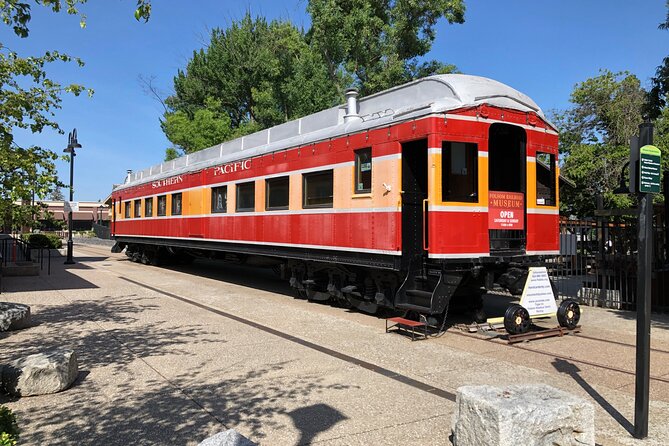
Folsom is often associated with its prison, but this tour focuses on the older town center and its Gold Rush roots. The route gives you a useful sense of how the community grew around transportation, river power, commerce, and the Sacramento Valley Railroad.
I like the format because it leaves room for your own interests. A guide-led walk keeps you moving at one pace. Here, you can pause beside an old building, step into a museum if it is open, or stop the narration while you find the next point. That freedom matters in a small historic district where the best moments may come from looking closely rather than rushing through a set script.
The audio is offered in English through the VoiceMap app for Android and iOS. You receive lifetime access, along with maps and location data that can be used offline after downloading. You still need your own smartphone and headphones, and you will need to charge your phone before setting out.
The main caution is orientation. The stated start is 609 Leidesdorff Street, but the practical starting area is described as the Historic Folsom parking lot near Riley and Scott Streets. Conflicting directions have caused confusion, with references to the Moose Lodge and the area near the historic power station. I would open the route before leaving home and confirm the first GPS point while you have a reliable connection.
More History Audio Tours in the USA
- Santa Fe Historic Downtown Smart Phone Audio App Self Guided GPS Walking Tour
★ 4.5 · 112 reviews - Savannah’s Historical District: A Self-Guided Audio Tour
★ 4.5 · 69 reviews - Self-Guided Walking Audio Tour of Historic Santa Fe
★ 4.5 · 43 reviews
Starting near Leidesdorff Street
The route begins in the Historic Folsom area, near 609 Leidesdorff Street. This is a sensible place to begin because you are close to the old commercial district and the early parts of the story.
Give yourself a few minutes before pressing play. Check that the app has downloaded the audio, maps, and geodata. Also confirm that the blue location marker is near the Historic Folsom parking area around Riley and Scott Streets, since the starting instructions have not always been perfectly consistent.
This small preparation step can save you from wasting the first part of the tour searching for the correct corner. One past user had trouble finding the start because three different locations appeared in the instructions. The provider later clarified the Historic Folsom parking lot as the intended beginning and invited the customer to contact support for help.
That is useful practical advice: do not wait until you are standing on an unfamiliar street to sort out the starting point. Download the route, review the first map screen, and keep the confirmation information handy.
Following Sutter Street through old Folsom
Sutter Street is the backbone of the walk. The audio uses the street and its surroundings to explain how Folsom developed during and after the Gold Rush.
You can expect a mix of historical narration and directions as you move through the district. The strongest part of this format is its independence. If a storefront or building catches your eye, you can pause without holding up anyone else. If you want to move quickly through a section, you can do that too.
The route is not simply a straight stroll with no effort. One user found the hills steeper than expected, so comfortable shoes are a wise choice. The total walking time is listed as roughly one and a half to two hours, but the clock can stretch if you stop for photos, food, a museum visit, or a closer look at the historic buildings.
Pay attention to the audio instructions. One piece of feedback noted that directions sometimes said to continue without clearly identifying where to stop. That means you should keep an eye on the map and not rely only on the narration to tell you when a section is finished.
The app’s automatic GPS playback can be convenient, but it also means you should stay aware of your location. If the narration seems out of step with what you see, pause and check the map rather than walking farther down the street.
The Folsom Historical Museum
The route passes the Folsom Historical Museum, one of the clearest places to connect the audio story with physical objects and local records.
The tour does not include entrance to the museum, so treat it as an optional stop rather than part of the paid audio experience. The value here is choice. You can listen from outside and continue, or allow extra time to see whether the museum is open and decide if its displays fit your interests.
For anyone who likes local history, this is the kind of stop that can give the wider Gold Rush story a more personal scale. The audio introduces the setting, while a museum visit may offer objects, photographs, and documents that make the town’s past easier to picture. Since opening hours and admission are not included in the tour price, check those details separately before building your schedule around a visit.
More Self-Guided Audio Tours in the USA
- Gettysburg Battlefield Self-Guided Driving Audio Tour
★ 4.5 · 910 reviews - Joshua Tree National Park Self-Guided Driving Audio Tour
★ 4.5 · 762 reviews - Ultimate Acadia National Park Self-Guided Driving Audio Tour
★ 4.0 · 521 reviews - Ultimate Lake Tahoe Self-Guided Driving Audio Tour
★ 4.5 · 435 reviews
The Sacramento Valley Railroad connection
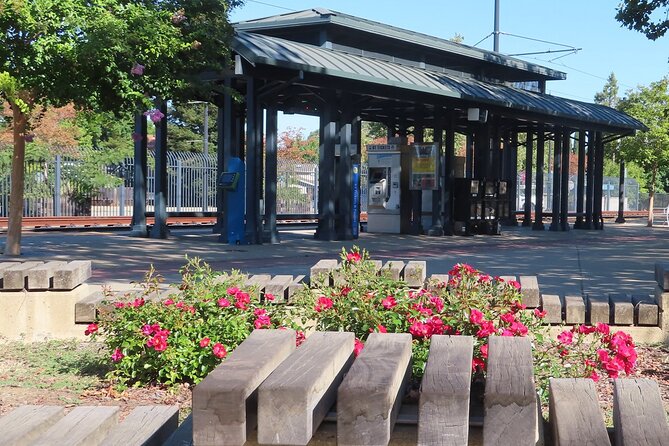
The route also passes the Sacramento Valley Railroad, an important part of Folsom’s transportation story.
Railroads changed how people, goods, and news moved through California. On a walking tour, the railroad stop helps explain why Folsom mattered beyond its immediate streets. The town’s story was tied not only to mining but also to the systems that carried supplies and people between communities.
I like this part of the route because it gives the walk a clear theme. You are not hearing disconnected facts. Sutter Street, the railroad, the river, and the power station all point to the practical forces that helped the town grow.
The exact presentation depends on your position and the app’s directions, so keep the map visible if the narration seems vague about where to pause. This is also a good place to stop the audio briefly and look around rather than listening while hurrying to the next point.
Sutter Street Theatre and the town’s changing character
The tour passes the Sutter Street Theatre, adding a cultural stop to the route’s story of commerce and industry.
This section helps show that historic streets do not freeze in one period. A town center can carry Gold Rush associations, railroad connections, working businesses, and later entertainment venues at the same time. The theatre is part of that more recent layer.
The tradeoff with any walking audio tour is that businesses and venues can change. One past experience found that some commercial references were out of date. I would treat those details as a snapshot rather than a guarantee that every named business still operates or looks the same.
That does not erase the value of the route, but it does mean you should focus on the stable features: the street plan, public buildings, railroad references, museum, powerhouse, and river setting. Those are more dependable anchors than a particular shop or restaurant.
Folsom Powerhouse State Historic Park
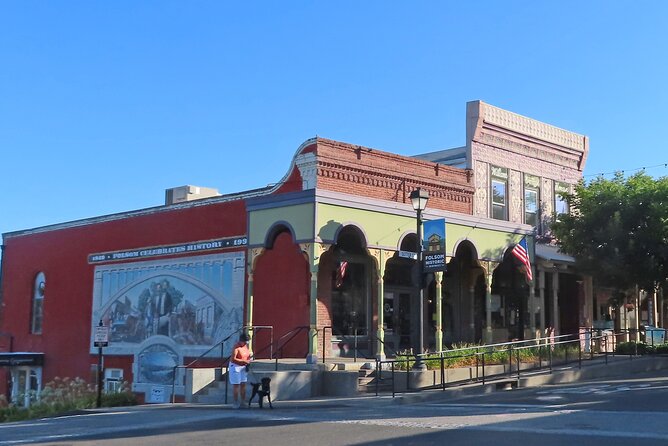
The Folsom Powerhouse State Historic Park is one of the most distinctive stops on this walk.
The powerhouse connects Folsom to the practical use of river energy and to the development of electric power. It gives the tour a strong change of subject after the commercial and railroad sections of Sutter Street.
Admission is not included, so you can decide if you want to enter separately. If you are interested in engineering, industry, or how towns functioned beyond their storefronts, this may be the stop where you want to spend extra time. If your goal is a quick overview, the audio’s exterior commentary may be enough.
The park also provides an important reminder that Folsom’s story is not only about prospectors and old buildings. Water, power, transport, and infrastructure shaped daily life. That broader focus makes the tour more useful than a simple list of Gold Rush dates.
Finishing at Lake Natoma and the Rainbow Bridge
The walk ends at the Folsom Historic Truss Bridge, also identified as Rainbow Bridge, beside Lake Natoma.
This is a satisfying endpoint because the route moves from the old commercial center toward the water and the wider setting around it. The bridge and lake give you a clear place to stop the audio and take stock of the route.
The end point is not a transportation hub or a return to the starting location. Plan accordingly. Since this is a one-way walk, you should think about what you will do after reaching the bridge. The supplied information does not include transportation between the end and start, so do not assume a ride back is part of the experience.
You may also want to reserve a few minutes at the end rather than pressing stop as soon as the final narration finishes. The lake and bridge provide a natural pause after the denser historical sections.
What the $9.99 price really gets you
At $9.99 per person, this is inexpensive compared with a private guided walk. The fee gives you lifetime access to the English-language tour, GPS audio, offline maps, and location data through VoiceMap.
That price works best if you value flexibility. You can spread the tour over more than one visit because access does not expire, at least according to the supplied tour details. You can also stop for lunch or an attraction and return to the audio later.
The value is less certain if you want a polished, tightly managed experience with a clearly marked beginning, live answers, and a guide who adjusts the pace. You are responsible for your own phone, headphones, navigation, timing, and decisions about entrance fees.
You should also budget for anything not included. Food and drinks, transportation, museum admission, and tickets to other attractions are separate. The low ticket price is real, but it covers the audio framework, not a full day of activities.
The app, offline use, and practical snags
The offline feature is one of the tour’s best advantages. Once the material is downloaded, the audio, maps, and location data can work without cell phone reception. That reduces the need to keep loading map pages as you walk.
Download everything before arriving. Test the first section, check your phone’s storage, and bring headphones that stay comfortable for up to two hours. Since the tour is private and self-guided, you will not have a group leader to solve a technical problem on the spot.
There has also been an app-related problem with pausing. One user reported that VoiceMap repeatedly closed or required the access code to be entered again after the tour was paused. I cannot promise that you will encounter the same issue, but it is worth keeping your booking code available and knowing how to reopen the tour.
If the app behaves oddly, do not keep walking while trying to fix it. Stop in a safe place, reopen the route, and confirm your location. VoiceMap support can be contacted if you need help, and the provider has offered to investigate problems and process a refund in a reported case, although the stated booking terms describe the experience as non-refundable.
Who will enjoy this tour most
I would choose this tour if you like local history but dislike being locked into a group schedule. It suits independent walkers, couples, families with older children, and anyone making a short visit to the Sacramento area who wants more context than a quick stroll provides.
It is especially useful for people who enjoy connecting several themes: Native American history, the Gold Rush, rail travel, theatre, electric power, and the river corridor. The audio gives those subjects a common route rather than asking you to find each place separately.
You may want a different option if you have difficulty with hills, dislike using a phone for directions, or need a fully accessible route with detailed terrain information. The supplied material does not provide accessibility details, and one account specifically warned that much of the route is steep and hilly.
This is also not the best choice if your priority is a live conversation. The tour cannot answer follow-up questions in real time, and its directions may require more attention than a guide-led walk.
My call: book it if you prepare first
I would book this for $9.99 if I wanted a flexible introduction to Historic Folsom and was comfortable managing an app. The strongest features are the low price, offline access, private pace, and route that links Sutter Street with the museum, railroad, theatre, powerhouse, and Lake Natoma.
I would not book it at the last minute without checking the start point. Download the tour, confirm the Historic Folsom parking area near Riley and Scott Streets, wear shoes suited to hills, and allow more than the bare 90 minutes if you plan to stop.
Think of it as a useful audio companion rather than a perfectly guided production. With a little preparation, it can give you a pleasant and informative way to understand Folsom’s old center without paying for a private guide.
FAQ
Where does the Historic Folsom audio tour start?
The listed start address is 609 Leidesdorff Street, Folsom, California 95630. The practical starting area is the Historic Folsom parking lot near the corner of Riley and Scott Streets.
Where does the tour end?
The tour ends at the Folsom Historic Truss Bridge, also called Rainbow Bridge, beside Lake Natoma in Folsom.
How long does the tour take?
The walk takes approximately one hour and 30 minutes to two hours. Stops, photos, food, and attraction visits can make your outing longer.
What language is the tour offered in?
The tour is offered in English.
Does the tour work without cell phone reception?
Yes. After you download the tour, the audio, maps, and geodata can be used offline.
What app do I need?
You need the VoiceMap app, which is available for Android and iOS devices.
Is a smartphone included?
No. You need to bring your own smartphone.
Are headphones included?
No. You need to provide your own headphones.
Are museum and attraction entrance fees included?
No. Tickets or entrance fees for museums and other attractions along the route are not included.
Can I pause or restart the tour?
Yes. You can start, pause, and restart the self-guided tour at your own pace.
Just added around the USA
- Self Guided Driving Audio Tour of Saguaro National Park★ 3.0 · 4 reviews
- Self-Guided Audio Driving Tour of Mount Lemmon★ 5.0 · 4 reviews
- Saguaro National Park Self-Guided Audio Tour★ 3.5 · 11 reviews
- A Self Guided Audio Tour in Tombstone★ 4.0 · 11 reviews
- Catskills Scenic Byway Self-Guided Driving Audio Tour★ 4.0 · 9 reviews
- Big Bend National Park Self Guided Audio Tour Guide★ 5.0 · 12 reviews
- Self-Guided Audio Driving Tour in Catskills Scenic Byway★ 4.5 · 7 reviews
- Shiloh Battlefield Self-Guided Driving Audio Tour★ 4.0 · 9 reviews
Self-Guided Tours, compared.

Acropolis Ticket & Optional Self-Guided Audio Tours
Read our review →


Ultimate Acadia National Park Self-Guided Driving Audio Tour
Read our review →

Santorini: Akrotiri Ticket with Optional Self-Guided Audios
Read our review →
Browse the lists this tour appears in