
REVIEW · FLORENCE AUDIO TOURS
Florence: Santa Maria Novella Entry Ticket & Audioguide
Florence’s most surprising church may be beside the station. Santa Maria Novella combines a striking Gothic interior, Renaissance design, peaceful cloisters, and major works by Giotto, Masaccio, Botticelli, Brunelleschi, Vasari, and others. I like the skip-the-line entry and the way the multimedia tablet adds context to art that can otherwise feel hard to read.
The $18 price is reasonable if the queue is long and you want guided explanations in your own language. The main drawback is that the meeting instructions can be confusing, and the direct admission price may sometimes be lower. You also need to leave a valid passport or ID card while using the tablet.
Key points to know before booking
- The visit covers the basilica and cloisters: Plan for about one hour, though the art and frescoes can easily keep you inside longer.
- The entrance instructions need attention: Ticket redemption is to the right of the church, while some visitors have been directed to a rear or north-side office near the station.
- The multimedia guide uses a 7-inch tablet: It offers audio, high-definition images, and 3D reconstructions in English, Spanish, French, German, and Italian.
- You must arrive at the booked time: Your selected date and entry slot are binding, and late arrival can mean refused entry.
- The church is packed with major art: Look for works connected with Giotto, Masaccio, Brunelleschi, Paolo Uccello, Ghirlandaio, Filippino Lippi, Botticelli, and Vasari.
- Some areas may be closed: Check what is open on your date, since portions of the complex have occasionally been unavailable.
Why Santa Maria Novella deserves your time
Santa Maria Novella is not simply a convenient church to visit because it sits beside Florence’s main railway station. It is one of the city’s key monuments, with a story that reaches back to the first Dominican friars who settled here in the early 13th century.
The complex grew over many centuries. That long development is exactly what makes the visit rewarding. You see medieval Gothic forms alongside later Renaissance ideas, all within a single religious complex. Michelangelo reportedly called the church his bride, a fitting compliment for a building that combines strength, elegance, and careful detail.
I especially like the contrast between the busy station area outside and the calm cloisters within. Once you pass into the complex, the city noise gives way to painted passages, chapels, frescoes, and architectural details that reward a slower pace.
The church also helps explain how Florence became a center of art. This is not a room filled with isolated paintings. The works are part of a working religious setting, connected to Dominican worship, teaching, burial traditions, and the wealth of Florentine patrons.
A few more audio tours around Florence worth a look
- Florence: Timed Entry to Michelangelo’s David + Audio App
★ 4.6 · 19,496 reviews - Florence: Uffizi Priority Ticket & Masterpieces Audio App
★ 4.2 · 6,402 reviews - Florence: Palazzo Vecchio Entrance Ticket & Audioguide
★ 4.4 · 4,822 reviews
Finding the correct entrance beside the station
The practical challenge begins before you see the art. The booking instructions say to go to the right of Santa Maria Novella to redeem your ticket, then collect the multimedia guide once inside the basilica.
In practice, the exact entrance can be confusing. Some people have been told to use a tourist office across from the train station or a gate at the back, on the north side of the church. The safest approach is to arrive early, keep your confirmation ready, and ask staff where prepaid tickets are being exchanged before joining a line.
Do not assume that the large front facade is the correct place for every part of the process. The ticket redemption point and the entrance used by prepaid visitors may not be identical. This is one of those small Florence details that can cost you time if you arrive at the last minute.
Your selected time matters. The entry slot is binding, and you can be refused if you miss it. I would arrive at least 15 minutes early, especially if you are coming from a train, carrying luggage, or visiting during a busy part of the day.
You need a passport or another valid ID card. The ticket office keeps the document while you use the multimedia guide, so bring an identification document you can safely leave there for the duration of the visit.
Inside the basilica: Gothic structure and Renaissance vision
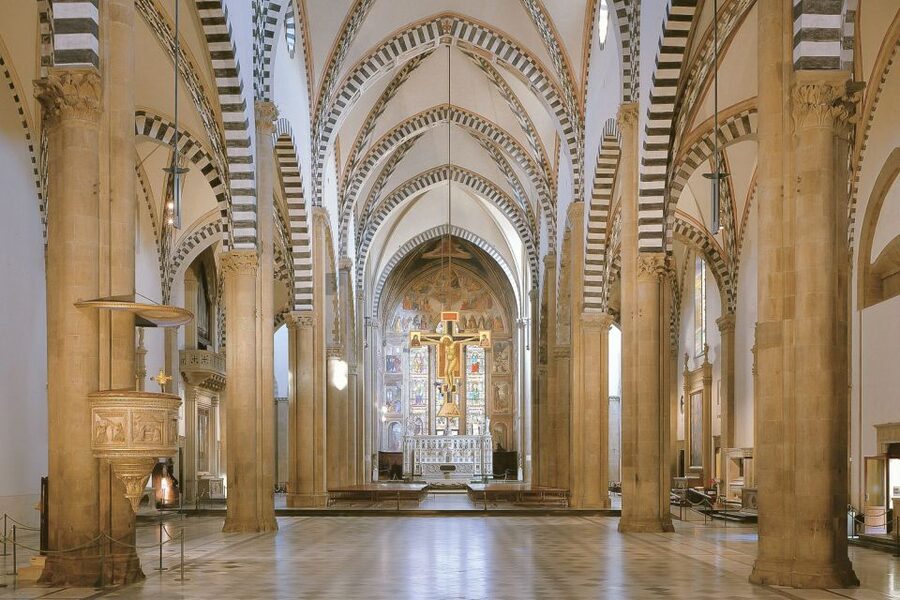
The basilica is the heart of the visit. Santa Maria Novella began as a Dominican foundation, and its interior reflects both the order’s religious purpose and Florence’s artistic ambition.
Look first at the overall structure before turning to individual artworks. The height, chapels, arches, and repeated architectural lines create a strong sense of order. Then let the tablet direct you toward details that are easy to miss from the center of the nave.
The audio and visual content is useful because it explains what you are seeing rather than simply naming it. High-definition images can help you study a painting’s details, while 3D reconstructions give you a clearer sense of how the complex developed over time.
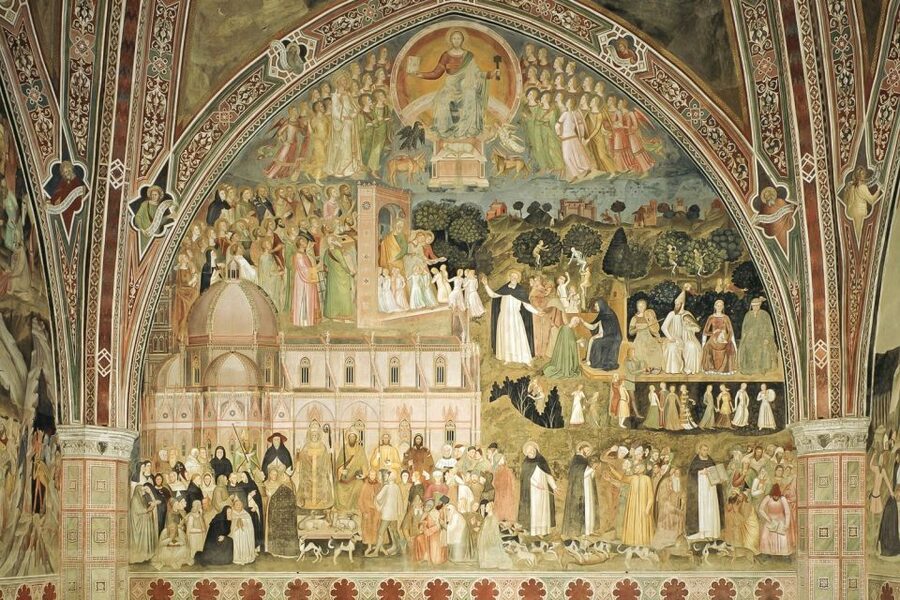
The guide covers artists from the Middle Ages and Renaissance, including Giotto, Masaccio, Filippo Brunelleschi, Paolo Uccello, Domenico Ghirlandaio, and Filippino Lippi. Botticelli and Vasari are also associated with the art you can admire here.
Masaccio is especially important to Florence’s artistic story. His work helped push painting toward stronger perspective and more convincing human figures. Giotto represents an earlier shift toward greater emotional and physical presence. Seeing these names in the setting where their work was made or displayed gives the lesson more weight than reading about them in a guidebook.
The church is also a place to look upward and outward. Frescoes, paintings, chapels, and architectural accents compete for attention. One hour is the advertised length, but you may need longer if you want to listen to the complete commentary and stop often for photographs or close inspection.
The cloisters add a quieter second act
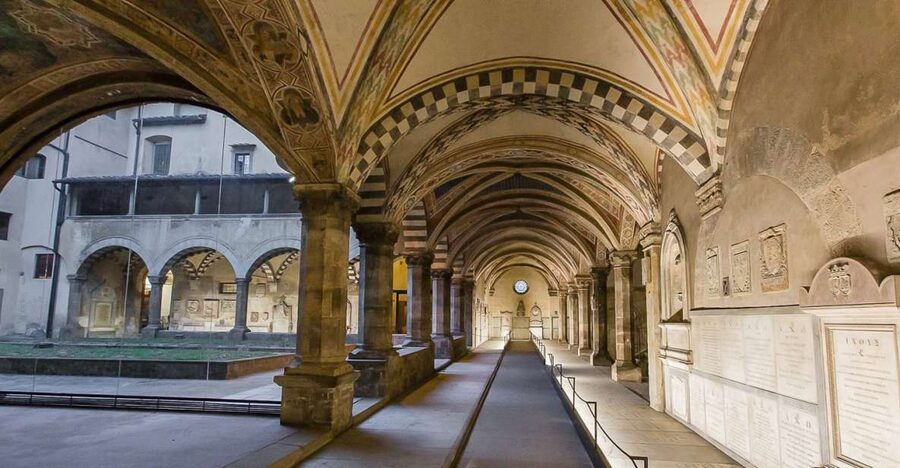
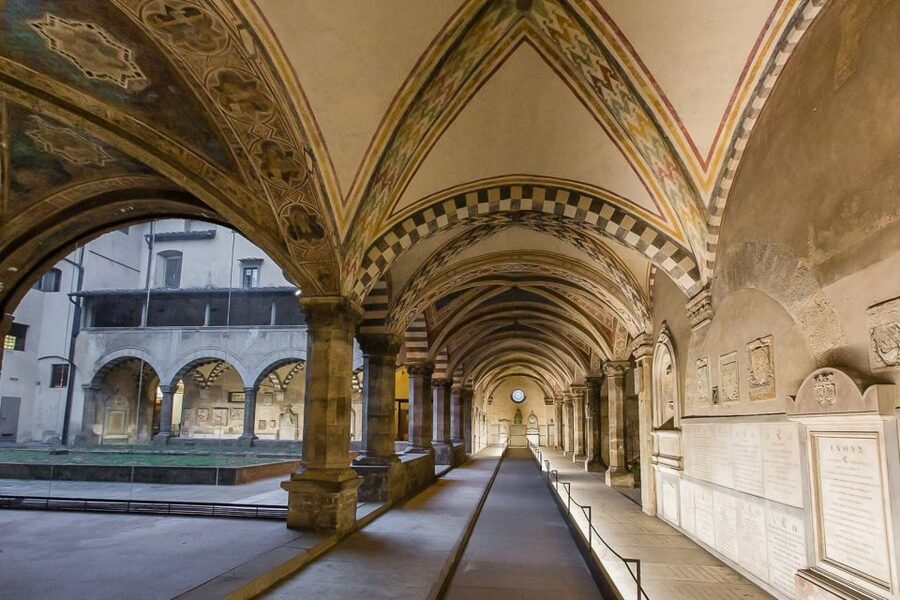
The cloisters are an important reason not to treat this as a quick church stop. Their covered walkways bring you into a more enclosed part of the complex, with painted decoration and a calmer rhythm than the main basilica.
The outdoor passages have murals and frescoes that are easy to overlook if you rush from the church to the exit. I would save time for these walkways rather than spending the whole visit inside the nave.
The cloisters also help you understand Santa Maria Novella as a monastery, not only as a grand church. The complex grew around Dominican life, and these quieter spaces make that connection easier to picture.
There is one practical warning. Parts of the wider complex may be closed on a given date. A section of the church grounds and some museum areas have not always been available, and admission arrangements may not change when that happens. If a particular chapel, relic display, or museum section matters to you, check its availability before booking.
The exhibition of relics can add another layer to the visit when open. It is not the main reason to come, but it gives more context to the religious function of the building.
Same place, a different route to walk:
- Florence: Uffizi Gallery Timed Entry Ticket & Audio Guide
★ 4.2 · 2,794 reviews - Florence: Michelangelo’s David Entrance Ticket and Audio App
★ 4.3 · 1,901 reviews - Florence: Uffizi & Accademia Priority Tickets with Audio App
★ 4.4 · 1,253 reviews - Florence: Eco-Friendly Golf Cart City Tour with Audio Guide
★ 4.6 · 1,094 reviews
How the multimedia tablet works
The multimedia guide is a 7-inch tablet with audio, high-definition images, and 3D reconstructions. It is available in English, Spanish, French, German, and Italian.
The content is generally one of the strongest parts of the experience. Santa Maria Novella contains so much art that a silent walk through the rooms can leave you unsure where to look first. The guide gives you a path through the building and explains why particular works matter.
It is also useful for architectural details. A 3D reconstruction can show how the complex changed over the centuries in a way that a printed label cannot. The visual material may help you understand the original setting of a fresco or the relationship between different parts of the church.
The equipment is not perfect. Some people have found the controls awkward, and tablets can lock or time out. One visitor gave up using the guide because the interface was difficult, while others found it easy and informative.
Give yourself a few minutes at the start to learn the controls. If the screen times out, ask the staff for help rather than repeatedly pressing buttons. The commentary is worthwhile, but the device can distract from the church if you spend more time managing it than looking around.
The same multimedia guide is used by children and adults. Families should not expect a separate child-focused version. Older children who enjoy art and buildings may still get plenty from it, but the material is designed for a general audience.
Is the $18 price good value?
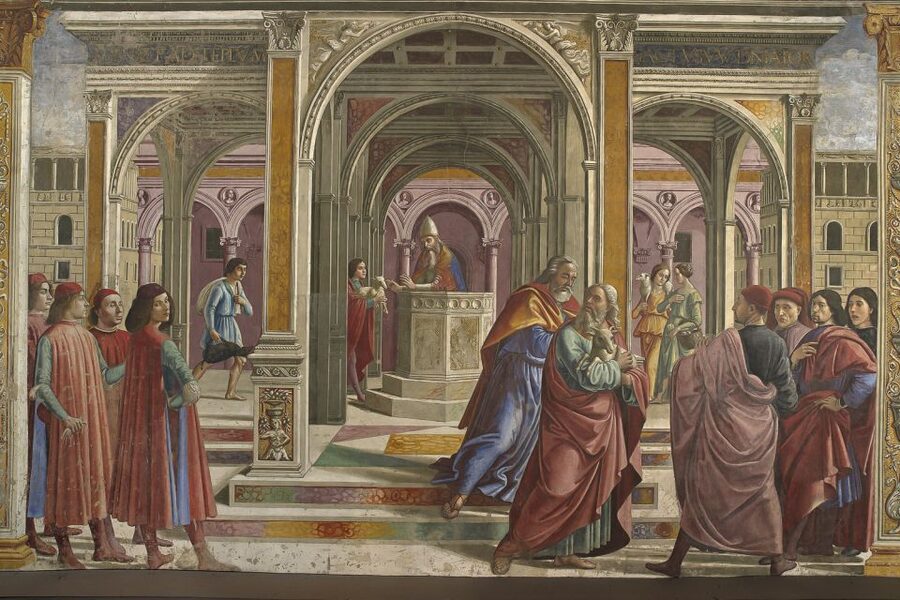
At $18 per person, the experience sits in the middle range for a major Florence sight. The value depends on two things: how long the ticket line is and how much you want explanation while you look.
If the church is busy, skip-the-line admission can save useful time. Florence rewards advance planning, especially when you are fitting several museums and churches into one day. Paying a little more to avoid an uncertain wait can make sense when your schedule is tight.
The multimedia guide adds value if you like learning as you walk. You receive more than basic admission, and the commentary covers a large number of important artists and spaces.
Still, do not book blindly. Several people have found that buying admission and the audio guide directly at the church can cost less. That means the $18 package is not automatically the cheapest option. Its main extra value is convenience, advance booking, and the chance to avoid the ticket line.
I would compare the direct price for your date before paying. If the difference is small, the reserved entry may be worth it. If you are visiting at a quiet time and do not mind handling the ticket office yourself, buying locally could be the better bargain.
Timing your one-hour visit
The stated visit lasts about one hour, but you should treat that as a guide rather than a strict limit for your sightseeing. The appointment time controls when you enter, while the full booking is valid for one day.
A sensible visit might look like this:
- Use the first few minutes to redeem the voucher and collect the tablet.
- Spend the main part of the visit in the basilica, listening to the sections on the major artworks.
- Reserve time for the cloisters, murals, and frescoes.
- Return the multimedia guide and collect your ID before leaving.
If you arrive late in the afternoon, confirm the closing time for the ticket office. One visitor arrived with only a short period left before the office closed and felt rushed, particularly because the tablet process took time.
Do not plan this as a rushed stop between a train arrival and another timed museum unless you have a generous buffer. The station location is convenient, but finding the correct office can take longer than expected.
The main strengths and weaknesses
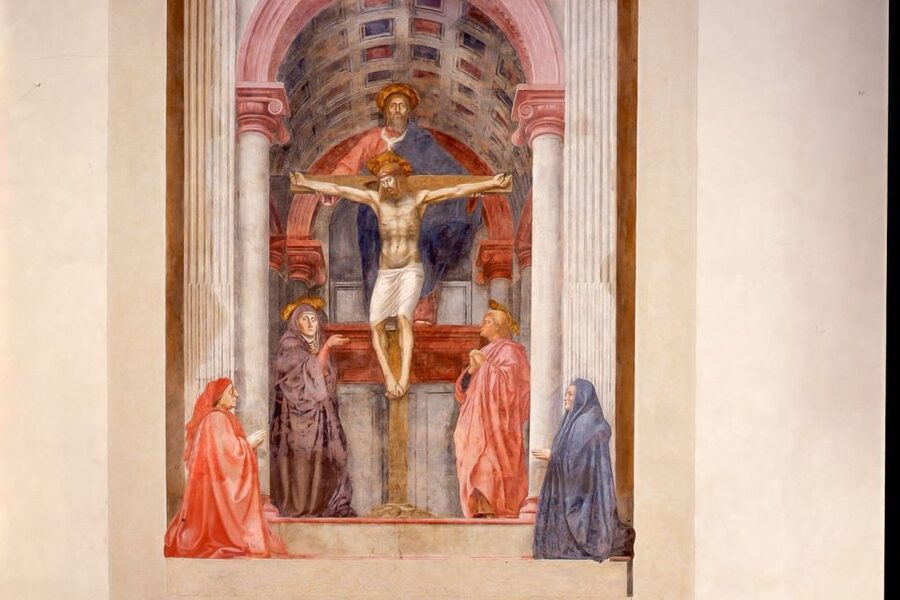
The strongest part of the experience is the building itself. Santa Maria Novella is beautiful, historic, and unusually varied. The church, art, cloisters, covered walkways, and relic displays create a fuller visit than a quick look at the facade suggests.
The multimedia content is another clear strength. It helps you connect artists, architecture, and religious use. English coverage is available, and the other language choices make the visit practical for many international visitors.
The weaknesses are mostly logistical:
- The entrance directions are not always clear.
- Some areas may be closed.
- The tablet controls can be awkward.
- Your passport or ID must be left at the office temporarily.
- The package may cost more than buying admission directly.
- The tablet is the same for adults and children.
- This is not a guided tour with a person leading you through the church.
The booking does provide free cancellation up to 24 hours before the visit, and you can reserve now and pay later. Those features are useful if your Florence schedule is still changing, but they do not remove the need to arrive at the exact booked time.
Who should book this experience?
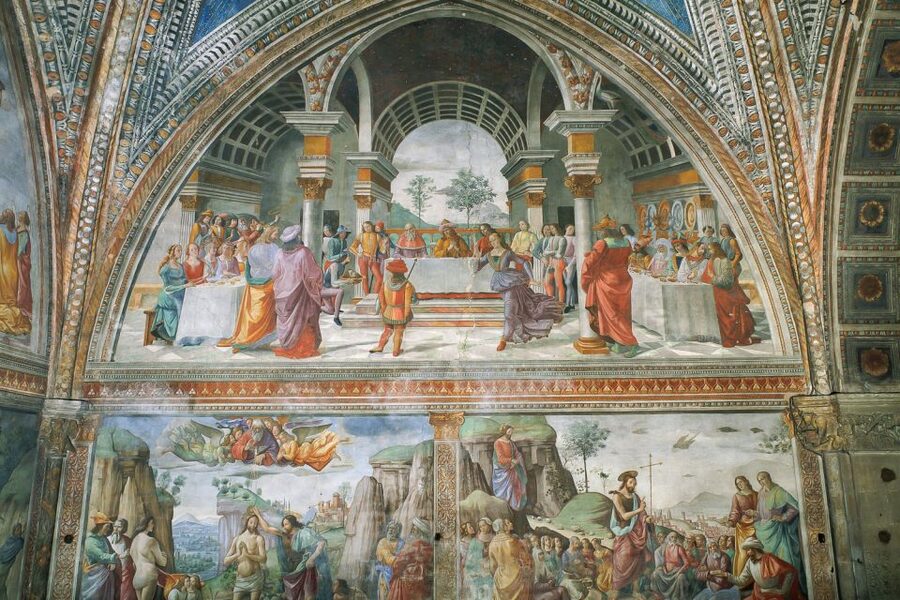
I would recommend it to first-time visitors who want a clear introduction to Santa Maria Novella without hiring a private guide. It suits anyone who likes art but wants help knowing which paintings and architectural details deserve attention.
It is also a good fit if you have a tight Florence schedule and want reserved admission. The station location makes it easy to combine with a train journey, provided you allow time to find the ticket office.
Families may appreciate the visual explanations, though the device is not specially designed for children. Art students, church architecture fans, and people interested in Dominican history will likely want more than the basic one-hour route provides.
I would hesitate if your main goal is the lowest possible price. In that case, compare direct admission first. I would also think twice if you dislike tablet-based tours or do not want to leave your ID at a ticket office.
Should you book Santa Maria Novella with the audioguide?
Yes, if you value timed entry and clear explanations of Florence’s medieval and Renaissance art. The basilica and cloisters are well worth seeing, and the guide can turn a beautiful but confusing church into an understandable visit.
Book it when the $18 price is close to the direct rate, when you expect a queue, or when your schedule depends on entering at a set time. Skip it when the direct ticket is much cheaper, when key sections are closed, or when you prefer exploring without an electronic guide.
Arrive early, confirm the entrance on the right or the designated rear office, keep your booking time in mind, and bring a valid ID. With those details handled, Santa Maria Novella becomes one of Florence’s most rewarding one-hour stops.
FAQ
How long does the Santa Maria Novella visit last?
The visit is described as lasting about one hour and includes the basilica and cloisters. You may spend longer if you listen to all the commentary and examine the art closely.
What languages are available for the multimedia guide?
The guide is available in English, Spanish, French, German, and Italian.
Is a human tour guide included?
No. The booking includes admission and a multimedia guide, but not a live tour guide.
Where do I redeem the ticket?
You are instructed to go to the right of Santa Maria Novella to redeem the ticket. Some visitors have instead been directed to a rear or north-side entrance near the tourist office across from the train station, so arrive early and confirm the correct location with staff.
Do I need identification?
Yes. You must bring a passport or valid ID card, which the ticket office keeps temporarily while you use the multimedia guide.
Can I enter at any time during the day?
No. The date and time slot selected during booking are binding. You can be refused entry if you do not arrive at the allotted time.
Can I cancel the booking?
Yes. You can cancel up to 24 hours in advance for a full refund. The booking also offers a reserve-now, pay-later option.
Just added around Florence
- Uffizi Gallery Audio-Guided Visit with optional Accademia Gallery★ 3.5 · 42 reviews
- Florence: Uffizi Gallery Reserved Ticket & Digital Audio Guide★ 4.5 · 3 reviews
- Florence: Uffizi Gallery Audio Guided Tour led by Tour Leader★ 3.5 · 6 reviews
- Uffizi Combined Ticket:UFFIZI, PITTI, BOBOLI & digital audioguide★ 4.0 · 26 reviews
- Florence: Uffizi Gallery Timed Entry Ticket with Audio★ 3.0 · 3 reviews
- Accademia Gallery Skip the line Tickets with Audio Guide★ 4.0 · 10 reviews
- Florence Walking Tour with Audioguide on Your Smartphone★ 4.5 · 9 reviews
- Florence Self Guided Audio Tour★ 3.0 · 5 reviews
Florence Audio Tours, compared.
Timed Entry to Michelangelo’s David + Audio App
Read our review →
Uffizi Priority Ticket & Masterpieces Audio App
Read our review →
Uffizi Gallery Timed Entry Ticket & Audio Guide
Read our review →
Michelangelo’s David Entrance Ticket and Audio App
Read our review →
Uffizi & Accademia Priority Tickets with Audio App
Read our review →
Eco-Friendly Golf Cart City Tour with Audio Guide
Read our review →
Uffizi Gallery Reserved Entry Ticket & Audioguide
Read our review →Browse the lists this tour appears in