REVIEW · FLORENCE AUDIO TOURS
Florence: Accademia Gallery David Entry & Audio Guide App
David is worth planning around. Florence’s Accademia Gallery gives you a reserved entry time, a special access point, and the chance to see Michelangelo’s famous David alongside Medieval and Renaissance art. I like the pre-booked admission, which removes the need to buy a ticket at the museum, and I like the freedom to explore at your own pace with the POP Guide app.
The main drawback is that skip-the-line does not mean walk straight in. You still meet a host, exchange your voucher for a physical ticket, and may wait outside with other timed-entry visitors. The audio guide is useful when it works, but it requires your own charged phone, headphones, internet access, and an app download before arrival.
Key points to know before you go
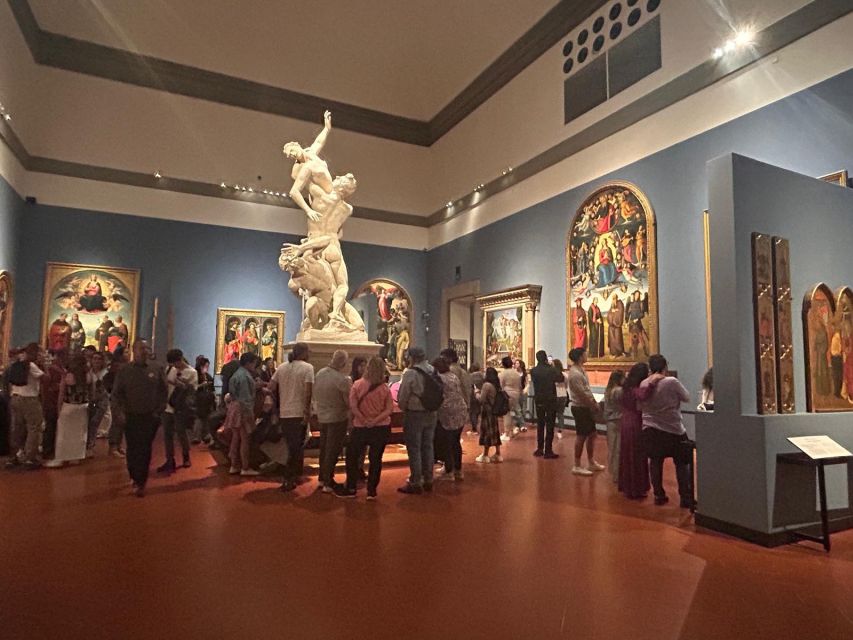
- David is the main event: Michelangelo’s marble masterpiece is displayed in the main hall, along with several unfinished sculptures.
- Your ticket is collected nearby: Meet the host outside Carrefour Express at Via Ricasoli 115, by the red street number, and look for the white ENJOY ROME flag.
- Timed entry saves real time: The regular ticket queue can stretch for hours, though security and museum capacity can still cause delays.
- The app is not a private guide: You explore independently, using the POP Guide on your smartphone rather than following a live guide.
- There is more than David: The visit includes plaster models, Medici musical instruments, Stradivarius violins, altarpieces, and paintings by artists such as Giotto and Botticelli.
- Prepare for a warm wait: Bring water, headphones, a charged phone, and only a small bag, since luggage and large bags are not allowed.
Why the Accademia deserves a place in your Florence plans
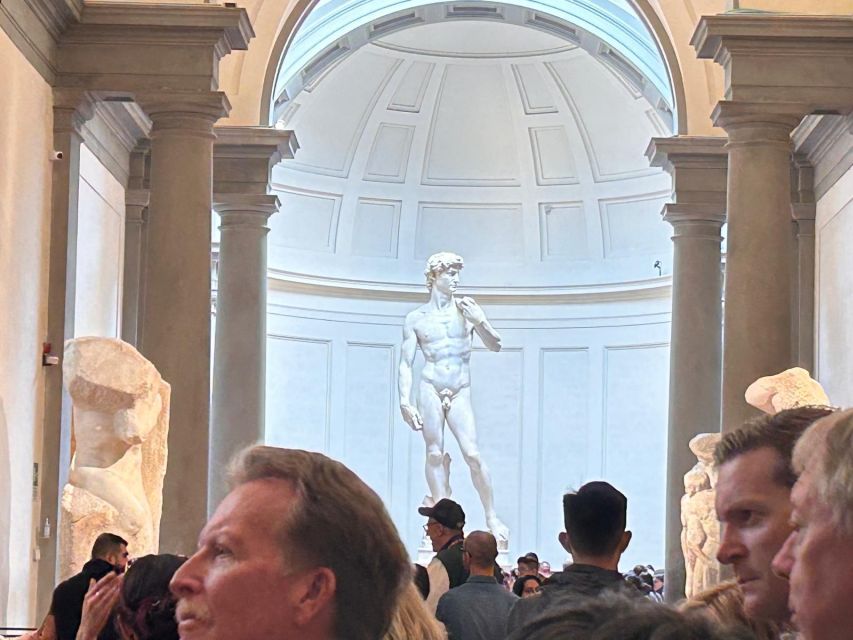
The Accademia is not a huge museum, but it contains one of Europe’s most famous works of art. Michelangelo’s David draws the crowds, yet the rest of the collection gives you a clearer picture of Florence’s artistic world.
The museum brings together Medieval and Renaissance paintings, sculpture, plaster models, and historic instruments. That mix makes the visit more rewarding than a quick photograph in front of David. You can see how art changed over time, from religious altarpieces to the careful study of the human body that made Renaissance sculpture so powerful.
I would allow enough time to move beyond the main hall. Many people hurry toward David, take a few pictures, and leave. That is understandable, especially when the museum is crowded, but the painting galleries and Gipsoteca add useful context.
This experience is best for someone who wants a simple museum visit with a little guidance, not a full private tour. You can pause, skip sections, and move at your own speed. That makes it a good match for independent visitors, families with different interests, and anyone who dislikes being tied to a guide’s pace.
More Museum Audio Tours in Florence
- Florence: Uffizi Priority Ticket & Masterpieces Audio App
★ 4.2 · 6,402 reviews - Florence: Uffizi Gallery Timed Entry Ticket & Audio Guide
★ 4.2 · 2,794 reviews - Florence: Uffizi & Accademia Priority Tickets with Audio App
★ 4.4 · 1,253 reviews
Meeting the host at Via Ricasoli 115
Your visit begins before you reach the museum entrance. Go to the Carrefour Express supermarket at Via Ricasoli 115, near the red street number. A staff member holding a white flag marked ENJOY ROME will exchange your GetYourGuide voucher for the physical museum ticket.
This meeting point is easy to miss if you are watching only for the Accademia entrance. Give yourself extra time. Several people found the staff easy to locate and helpful, while others found the entrance process chaotic because they had to identify the host, collect the ticket, and then join the correct queue.
The staff member’s role is important. You are not joining a guided tour inside the galleries, but the host helps you reach the correct entrance. Sakila received especially warm praise for staying with visitors and giving support until they entered. That kind of help matters when several lines form near the museum.
Arrive early, particularly for a morning time slot. The staff has to distribute tickets to several people, and the museum enforces entry times. Arriving at the last minute leaves little room for confusion, a delayed host, or a slow-moving queue.
What skip-the-line really means here
The timed ticket is the main reason to book this experience. Without advance admission, the ticket-buying line can consume a large part of your day. A pre-reserved ticket avoids that first step and guarantees your planned admission, subject to the museum’s capacity and security procedures.
Still, keep your expectations realistic. You may not walk directly through the door. A separate entrance and timed booking reduce the wait, but they do not remove it. One visit involved about 30 minutes of waiting, and other reports describe a long line outside even with advance tickets.
The museum controls how many people are inside at one time. If the galleries are full, entry can be postponed slightly. Weather may also affect the wait, since much of the process takes place outdoors. Bring water in warm weather, and dress sensibly for standing around.
This is a classic Florence tradeoff: you pay more than a basic museum ticket might cost in order to save time and avoid the ticket office. At $38 per person, the value depends on your schedule. If you have only one day in Florence, or you are visiting during a busy period, avoiding a potentially hours-long ticket queue can make the price reasonable. If you have plenty of time and are comfortable arranging museum admission yourself, the extra cost may feel less attractive.
Michelangelo’s David in the main hall
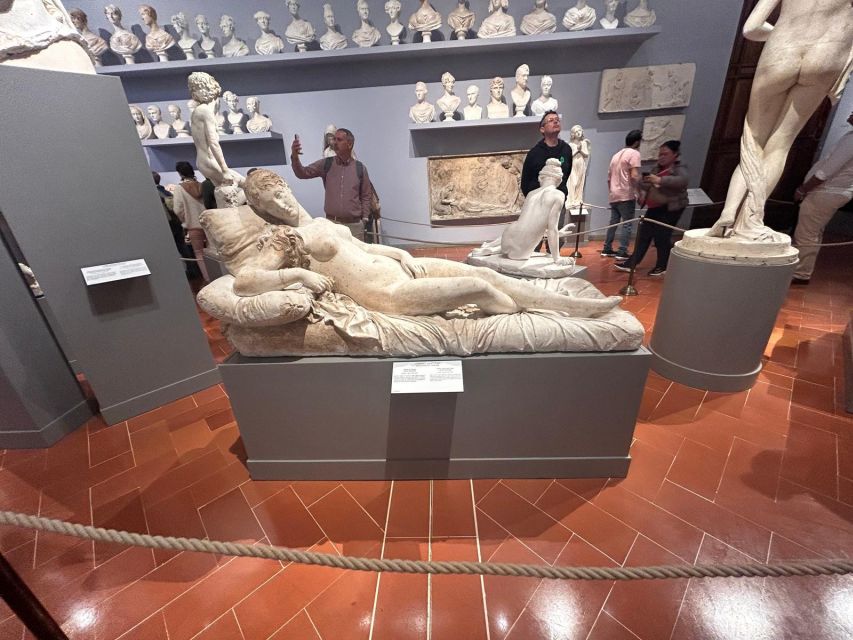
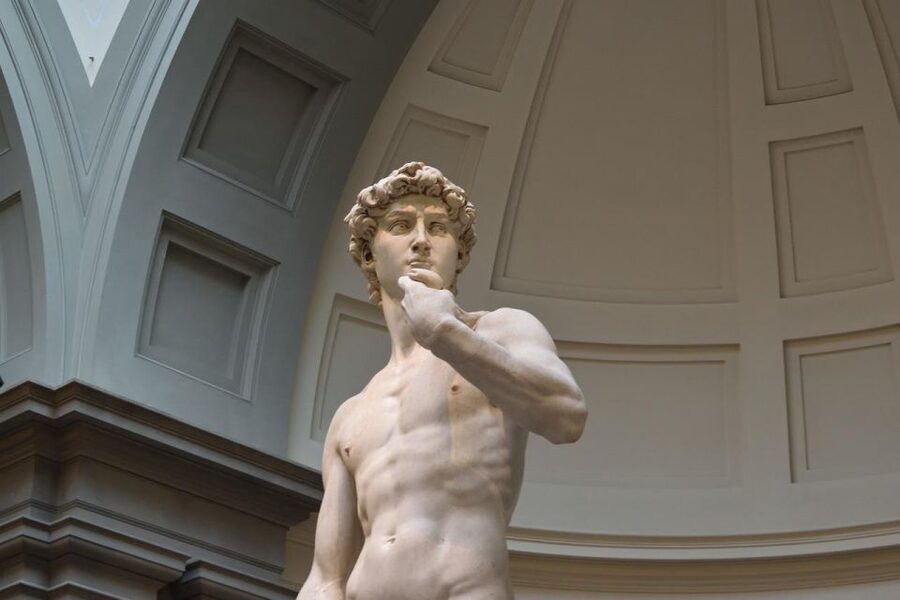
Once inside, head toward David. The statue is displayed at the end of the main hall, where its scale and position give you room to look from several angles.
David is famous for good reason. Michelangelo captured a moment of alertness and concentration rather than a static pose. You can study the details of the hands, face, stance, and carefully shaped body. The sculpture is familiar from photographs, but the original has a physical presence that photographs cannot reproduce.
The hall also contains Michelangelo’s unfinished works, often called the Prisoners or Slaves. Their incomplete surfaces let you see figures emerging from the marble. These pieces are valuable because they show the sculptor’s process, not just the polished result.
Take your time here, but do not let the crowd force you into a rushed stop. The museum is designed around David, so the room can feel busy. Your audio app may help explain the sculpture and its setting, but you can also simply walk around and look. The independent format means you are free to return to a detail instead of moving on with a group.
More Museum Audio Tours in Italy
- Florence: Uffizi Gallery Reserved Entry Ticket & Audioguide
★ 4.5 · 970 reviews - Florence Duomo, Baptistery & Opera Museum Audioguided Tour
★ 4.2 · 607 reviews - Florence: Accademia Gallery Reserved Entry & Audio Guide
★ 4.3 · 600 reviews - Florence: Uffizi Gallery Tickets with Optional Audio Guide
★ 4.1 · 503 reviews
The Gipsoteca and Florence’s sculptural tradition
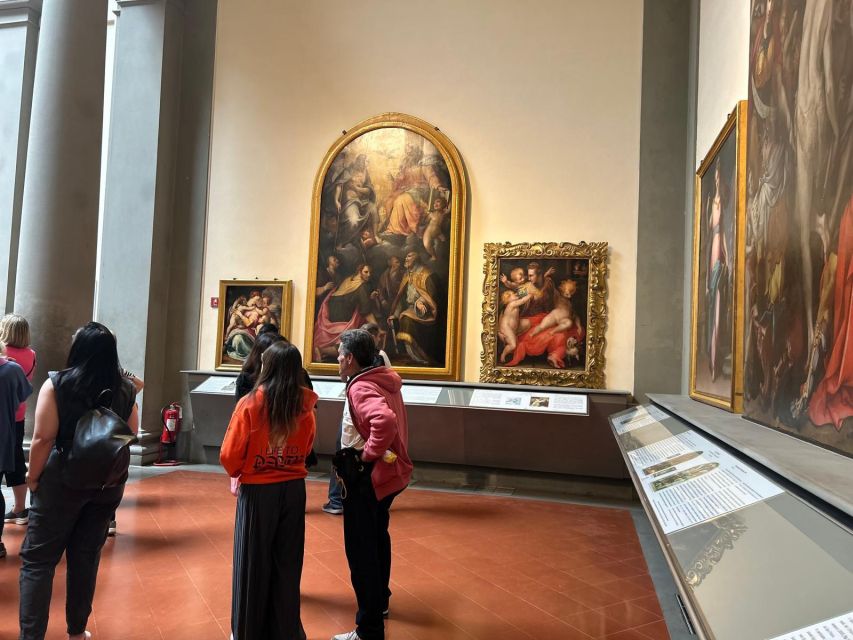
The Gipsoteca contains original plaster models by nineteenth-century Florentine sculptors. It is a different experience from the marble sculpture in the main hall.
Plaster models were used as working studies and patterns for finished works. They can look less dramatic than David, but they reveal how sculptors planned poses, clothing, facial expressions, and proportions. For anyone interested in technique, this room is one of the museum’s most useful stops.
The Gipsoteca also gives the collection a wider time span. The Accademia is not only a place for Michelangelo. This room shows how Florence continued its sculptural traditions into the nineteenth century.
The audio app can be handy here because some works may be less familiar than David. Use the guide selectively. You do not need to listen to every entry, and the freedom to choose your stops is one of the better features of a phone-based guide.
Medici instruments and three Stradivarius examples
The museum also holds musical instruments from the Medici collection. Three are by Stradivarius, giving you a small but memorable connection to Florence’s musical past.
This section changes the rhythm of the visit. After marble and painted panels, the instruments show the technical skill valued by the Medici court. They also remind you that Renaissance Florence was not only a city of painters and sculptors. Music, court culture, craftsmanship, and collecting all belonged to the same world.
Do not expect a large music museum. The instruments are one part of a broader collection, but they are worth seeking out if you like decorative arts, music, or Medici history. The audio guide may help explain what you are seeing, especially if you would otherwise pass through quickly.
Medieval and Renaissance paintings
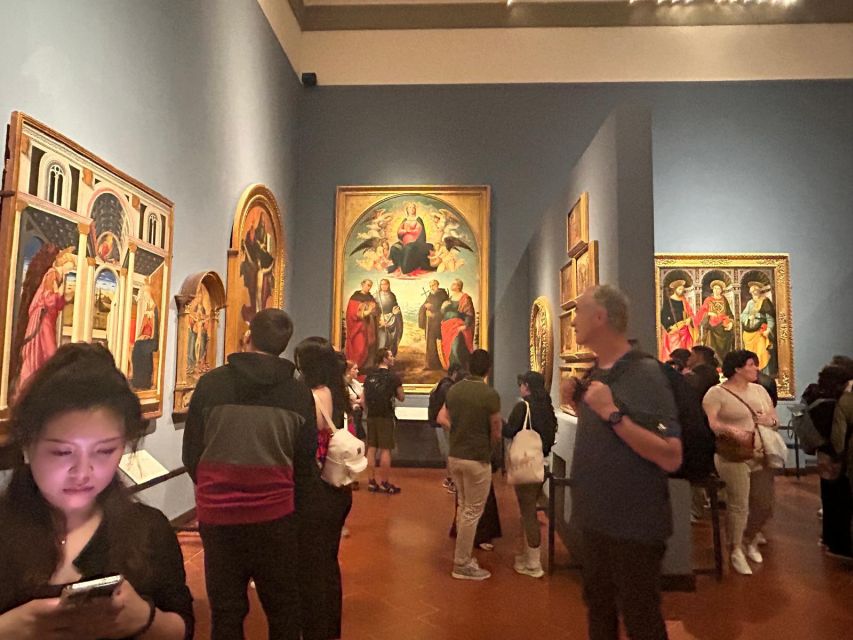
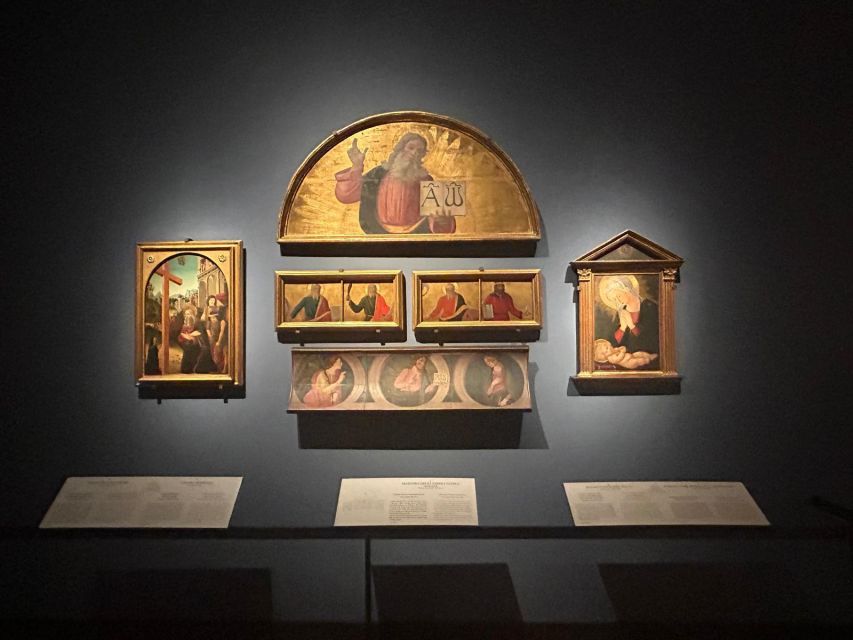
The painting galleries provide the visual foundation for the museum. Here you can see works by Medieval and Renaissance artists, including Giotto and Botticelli.
These paintings help you follow the changes in Florentine art. Medieval works often feel more formal and devotional, while Renaissance artists paid increasing attention to space, human expression, and the body. You do not need an art degree to appreciate the shift. Look at how figures are arranged, how faces are painted, and how backgrounds change from symbolic settings to more believable spaces.
The paintings also make David more meaningful. Michelangelo did not appear in isolation. He belonged to a city where artists studied earlier masters, competed for commissions, and pushed familiar religious subjects in new directions.
The top floor holds magnificent altarpieces. This is an easy section to miss if you assume the museum ends after the sculpture galleries. I recommend following the route upward before leaving. The altarpieces can be visually dense, so the audio app is useful when you want a short explanation of the subject or style.
Using the POP Guide app
The POP Guide app is included, but it is not the same as having a licensed guide beside you. You listen through your own smartphone and move through the museum independently.
Download the app before you reach the meeting point. The staff provides login credentials there, but installing the app at the entrance can be stressful, especially if the mobile signal is weak or the queue is moving. You need internet access to download it, and you should bring your own headphones.
Make sure your phone is charged. The guide runs through your device, so a low battery can turn an interesting aid into a useless one. A small portable charger would be sensible, though it is not listed as a required item.
The app has limitations. It may not work fully offline, and the map can be confusing because it does not always match the museum layout clearly. Some people found the audio helpful, while others entered without successfully downloading it and did not feel they had missed much.
I would treat the app as a bonus rather than the central reason to book. It can add background and help you understand unfamiliar paintings, but the timed ticket is the most valuable part of the package. If detailed art explanation matters greatly to you, a live licensed guide would offer more depth and an easier chance to ask questions.
Heat, crowds, bags, and accessibility
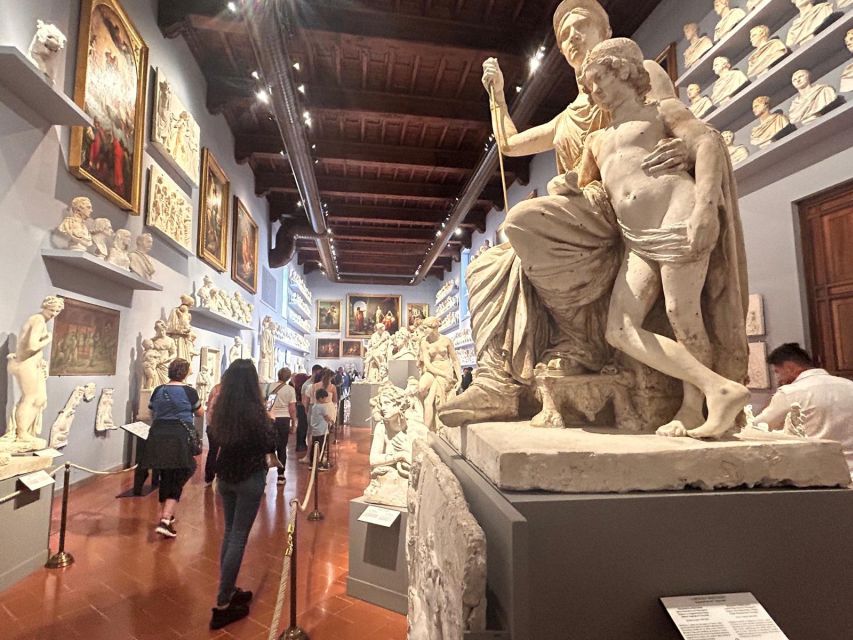
The Accademia visit involves walking through several galleries and may include an outdoor wait. Warm weather can make the process tiring, so carry water and avoid arriving dehydrated.
Large bags and luggage are not allowed. Pack lightly. You should bring your passport or ID card for children using a discounted ticket, since visitors aged 6 to 17 must show valid photo identification with their birth date. Without it, the full adult price applies.
The museum is wheelchair accessible. The experience is offered in English, and the host or greeter speaks English. Headphones are not included, so bring your own if you want to use the audio guide comfortably.
The $38 price includes the Accademia entrance ticket and the POP Guide app. It does not include a live guide, headphones, transport, food, or personal expenses. Free cancellation is available up to 24 hours before the scheduled visit, and the reserve-now, pay-later option can help if your Florence plans are still changing.
Who should book this Accademia entry?
I would choose this option if you value convenience and have a fixed Florence schedule. The advance ticket protects you from the museum’s regular ticket queue, and the host helps you navigate the meeting point and entry process.
It suits independent visitors who want to explore alone rather than follow a group. Families may also appreciate the ability to move at different speeds, although younger children may need help with the phone and app.
I would think twice if you expect a full guided tour. There is no guide accompanying you inside, and the app can be unreliable if you cannot download it before arrival. Art lovers who want detailed explanations and questions answered should consider a proper guided visit instead.
Should you book it?
Book it if saving time matters more than saving money. David is one of Florence’s essential sights, and getting the ticket arranged in advance removes the most frustrating part of the visit. The paintings, unfinished sculptures, instruments, and altarpieces make the admission more than a one-statue photo stop.
Do not book it expecting an instant entrance or a personal art expert. You may still wait, and the audio app requires preparation. Download it before meeting the host, arrive early, bring headphones and water, and keep your bag small.
For a first visit to Florence during a busy period, this is a practical choice. The timed ticket does the heavy lifting. The app is helpful when available, but David and the museum’s collection remain the real reasons to go.
FAQ
How much does the Accademia Gallery experience cost?
The price is $38 per person. It includes the Accademia Gallery entrance ticket and the POP Guide audio guide app.
How long does the experience last?
The activity is listed with a duration of one day. Your museum visit takes place at the selected entry time, and you explore the galleries at your own pace.
Where do I meet the host?
Meet at the Carrefour Express supermarket at Via Ricasoli 115, near the red street number. Look for a staff member holding a white flag marked ENJOY ROME.
Is a live guide included?
No. The package includes the POP Guide audio app, but not a live guide.
Do I need headphones?
Headphones are not included, so bring your own if you want to use the audio guide.
Do I need internet access?
Yes. You need internet access to download the POP Guide app. Download it before arriving at the meeting point.
Can I enter without using the audio guide?
Yes. The audio app is included, but the museum ticket is the essential part of the experience. You can explore the galleries at your own pace.
Is the entrance completely skip-the-line?
The reserved ticket lets you avoid the ticket office line and use a separate entrance. However, you may still wait for security, timed entry, or museum capacity controls.
What identification do children need?
Visitors aged 6 to 17 using the discounted ticket must show a valid photo ID with their birth date. Without it, they must buy the full adult ticket.
Can I cancel the booking?
You can cancel up to 24 hours in advance for a full refund. The reserve-now, pay-later option is also available.
More Smartphone Audio Tours in Italy
- Uffizi Gallery Reserved Ticket & Digital Audio Guide App
★ 4.3 · 69 reviews - Florence: Opera del Duomo & Baptistery E-Ticket & Audio Tour
★ 3.5 · 52 reviews - Florence: Brunelleschi’s Dome Reserved Timed Ticket & Audio App
★ 4.0 · 49 reviews - Florence Audioguide – TravelMate app for your smartphone
★ 4.1 · 29 reviews
More Smartphone Audio Tours in Florence
- Florence: Timed Entry to Michelangelo’s David + Audio App
★ 4.6 · 19,496 reviews - Florence: Michelangelo’s David Entrance Ticket and Audio App
★ 4.3 · 1,901 reviews - Florence: Duomo Cathedral Timed Entry Ticket & Audio App
★ 3.7 · 472 reviews - Florence: Cathedral & Brunelleschi’s Dome Ticket & Audio App
★ 4.4 · 148 reviews
Just added around Florence
- Uffizi Gallery Audio-Guided Visit with optional Accademia Gallery★ 3.5 · 42 reviews
- Florence: Uffizi Gallery Reserved Ticket & Digital Audio Guide★ 4.5 · 3 reviews
- Florence: Uffizi Gallery Audio Guided Tour led by Tour Leader★ 3.5 · 6 reviews
- Uffizi Combined Ticket:UFFIZI, PITTI, BOBOLI & digital audioguide★ 4.0 · 26 reviews
- Florence: Uffizi Gallery Timed Entry Ticket with Audio★ 3.0 · 3 reviews
- Accademia Gallery Skip the line Tickets with Audio Guide★ 4.0 · 10 reviews
- Florence Walking Tour with Audioguide on Your Smartphone★ 4.5 · 9 reviews
- Florence Self Guided Audio Tour★ 3.0 · 5 reviews
Museums, compared.
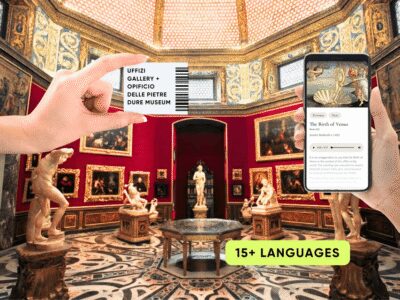
Uffizi Priority Ticket & Masterpieces Audio App
Read our review →
Louvre Museum Hosted Entry and Mona Lisa Audioguide
Read our review →
St. Mark Basilica Ticket, Audioguide+History Gallery
Read our review →
Borghese Gallery Skip-the-Line Ticket & Audioguide
Read our review →
Borghese Gallery Ticket + Audioguide or Guided Tour
Read our review →
Orsay Museum Entry Ticket and Digital Audio Guide App
Read our review →
Uffizi Gallery Timed Entry Ticket & Audio Guide
Read our review →