
REVIEW · GREECE AUDIO TOURS
Epidaurus: Temple of Asclepius & Theatre with optional audio
Ancient theater, modern timing. Epidaurus gives you a rare chance to walk into one of Greece’s finest surviving theaters, then explore the Sanctuary of Asclepius and its small archaeological museum at your own pace. I like the pre-booked entry, which helps with a site that uses time slots, and I like the freedom to linger without being tied to a live guide. The main drawback is that this is not a guided tour, and the digital audio may not work smoothly on every phone.
The theater is the star, with its carefully shaped stone seating and famous acoustics. I also like that the ticket covers more than the performance space, letting you see the medical sanctuary and Roman-era exhibits in the museum. At $30 per person, the value is strongest for independent sightseers who want a simple day visit, not for anyone expecting transport, personal commentary, or a fully hosted excursion.
Key points to know before booking
- Timed entry matters: You may enter only at your selected time or within 15 minutes before or after it.
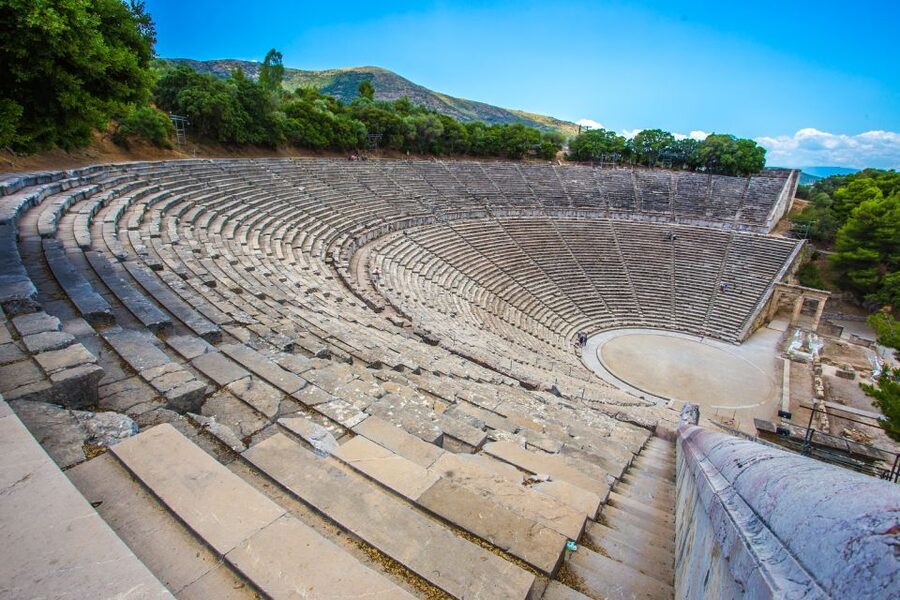
- The theater is the main event: You can walk onto the stage area, climb the stairs, and test the famous acoustics for yourself.
- The sanctuary adds meaning: Epidaurus was not only a theater site, but also a major healing center connected with Asclepius.
- Two audio options may apply: A self-guided Epidaurus audio tour is included only with the option that lists it, while the Nafplion audio tour is included with all options.
- The museum is compact: It helps explain the exposed buildings and includes material connected with the Roman era.
- Bring your own headphones: No earphones or physical audio device are supplied, and one low-rated booking reported trouble getting the audio to work on a phone.
Why Epidaurus deserves a place in your Peloponnese plans
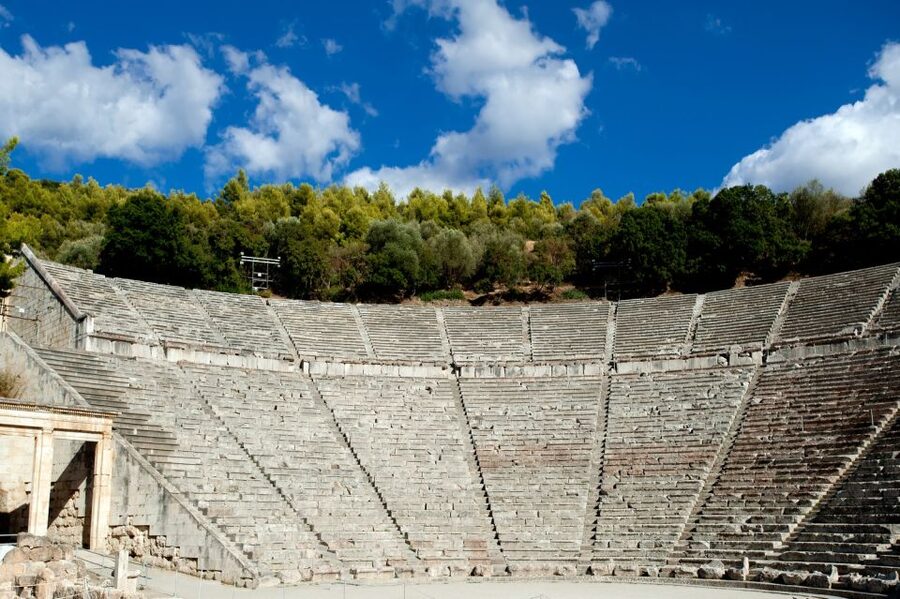
Epidaurus works because its parts fit together. The theater gives you an architectural thrill, the sanctuary explains why the site mattered, and the museum fills in details that stone foundations alone cannot show.
You are not simply checking off an ancient theater. You are entering a place built for performance and healing, with a layout that still makes sense after many centuries. The visit can be quiet and self-directed, which suits people who prefer to look closely rather than move along with a large group.
The experience is listed as valid for one day, with availability tied to starting times. That makes it useful for a wider Peloponnese itinerary, especially if you are arranging your day around Nafplion or other nearby sights. Still, the fixed slot means you need to plan carefully. This is not a flexible open ticket.
The ticket costs $30 per person. That is a reasonable price if you value guaranteed regular admission and want access to the theater, sanctuary, and archaeological museum in one stop. It is less attractive if you need a ride from your hotel, a live guide, or a reduced admission rate. None of those are included.
A few more audio tours around Greece worth a look
- Athens: Acropolis Ticket with Optional Audio or Live Guide
★ 4.2 · 11,055 reviews - Athens: Cape Sounio & Poseidon Temple Trip with Audio Guide
★ 4.4 · 4,521 reviews - Athens: Acropolis Ticket with Audio Guide
★ 4.0 · 3,575 reviews
Entering the ancient theater
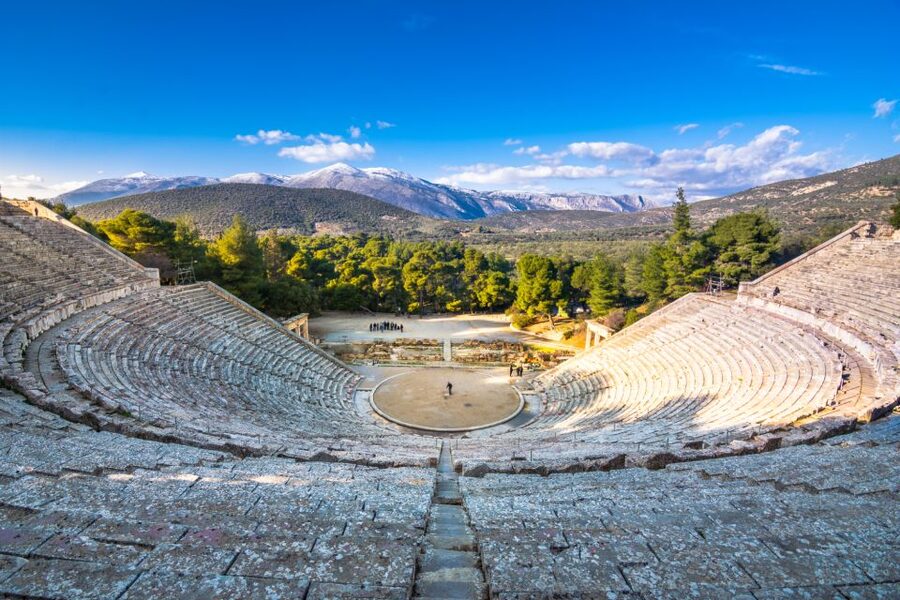
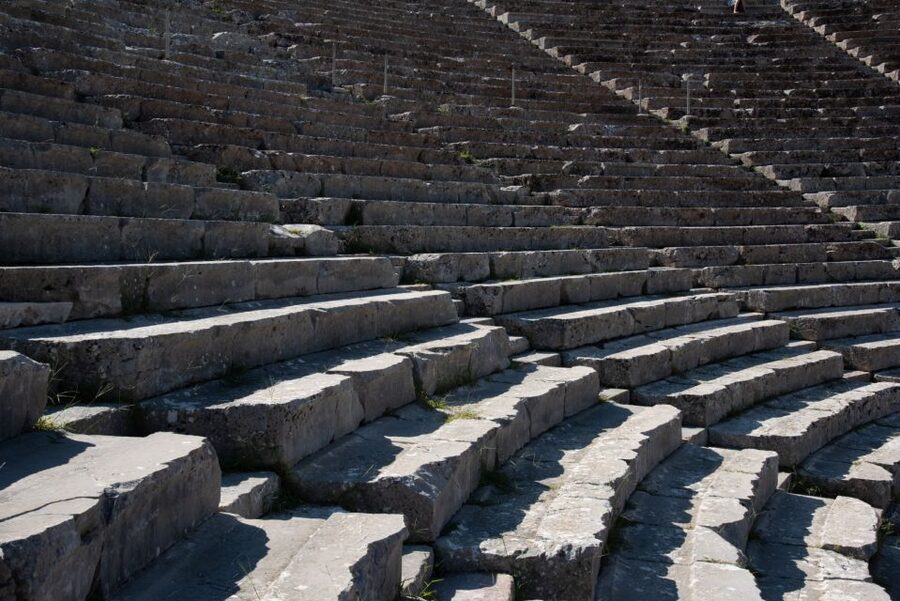
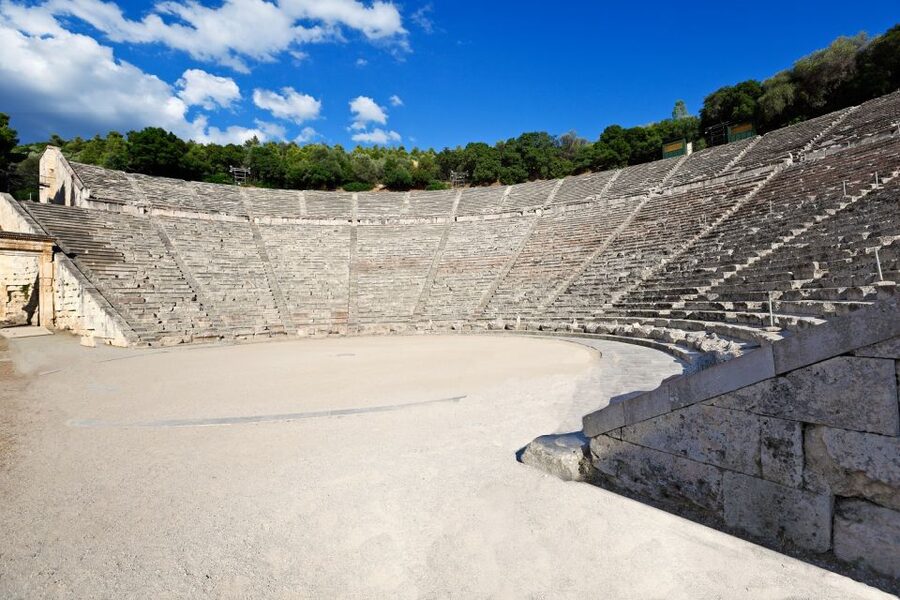
The theater is the clearest reason to book. Once inside, you can walk toward the stage area, look up at the curved rows, and climb the stairs to see how the structure holds together as a whole.
Its shell-like form is the feature you notice first. The seating rises in a broad, carefully balanced curve, giving the monument a sense of order rather than bulk. You can pause in the center of the performance area and look toward the upper seats, or reverse the view and study the geometry from above.
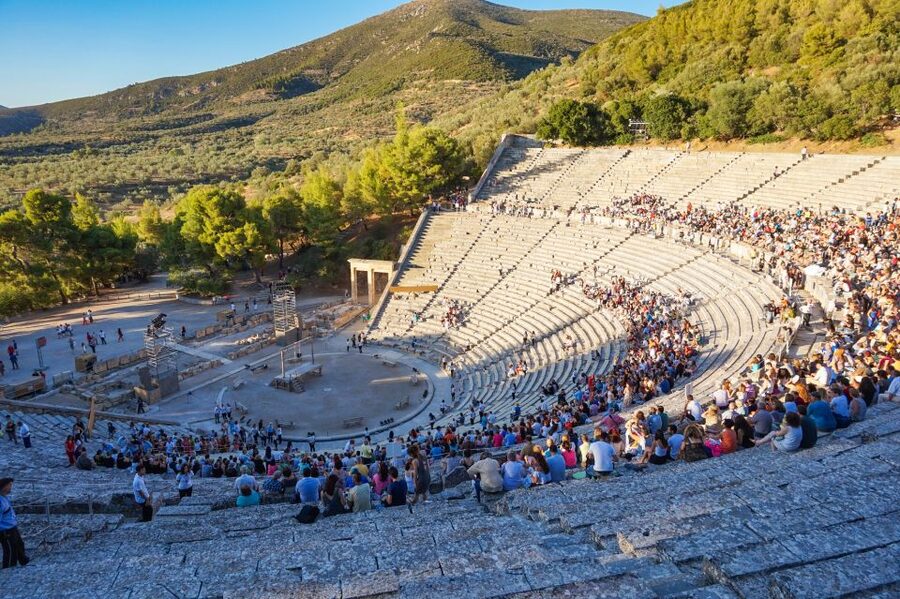
The famous acoustics are part of the appeal. The design allows sound to carry across the theater, so the space invites you to test it rather than merely photograph it. The ticket does not provide a performer or live demonstration, but you can experience the effect by speaking from the central area while someone else listens farther up the rows.
The theater is described as one of the best-preserved ancient theaters in Greece. That matters because the surviving structure lets you understand how the audience, stage, and seating related to one another. In many ancient sites, you must reconstruct the original form from scattered blocks. Here, the overall design remains easy to read.
I would give the theater plenty of time. A quick photo and exit would miss the point. Look at the way the seating follows the curve, notice the stairs dividing the rows, and spend a few minutes listening to the space. The experience is physical as much as visual.
Walking through the Sanctuary of Asclepius

The theater gets the attention, but the Sanctuary of Asclepius gives Epidaurus its larger purpose. Asclepius was associated with healing, and the sanctuary formed the religious and medical heart of the ancient site.
The supplied experience describes the sanctuary as having a healing atmosphere. That feeling comes less from one single object than from the shift in mood between the grand theater and the quieter remains around it. You can walk through the archaeological area at your own speed and consider how performance, worship, and care for the sick once shared one complex.
Do not treat the sanctuary as a short path to the theater. It provides the context that makes the visit more rewarding. The theater was not an isolated entertainment building dropped into the countryside. It belonged to a place where people came for religious reasons and hopes of recovery.
You should also keep expectations realistic. The entry ticket gives you access, not a personal explanation of every ruin. If you select the Epidaurus audio option, you can add spoken background in your chosen language. If you do not select that option, you will need to rely on whatever information is available on site and your own preparation.
The audio languages listed are English, Spanish, Italian, French, German, Polish, Portuguese, Japanese, and Dutch. That is a useful range, but remember that headphones are not included. Bring your own pair, and make sure your phone is ready before you arrive.
What the archaeological museum adds
The archaeological museum inside the site is small, but it earns its place on your route. After seeing foundations and exposed remains outdoors, you can look at objects and architectural pieces that help explain what you have just seen.
The museum includes exhibits connected with the Roman era and the exposed parts of the ancient buildings. That makes it a good second stop, not a replacement for the open-air ruins. I would visit the theater and sanctuary first, then use the museum to sharpen your understanding of the site.
Because the museum is described as small, do not expect a huge collection or a long indoor visit. Its value is practical. It gives names, forms, and physical evidence to structures that can otherwise blur together after an hour outside.
You may find the museum especially useful if you are not using the audio option. It adds a layer of interpretation without requiring you to join a group. On the other hand, people who want a full archaeological lecture may find the self-guided format too light.
Same place, a different route to walk:
- From Athens: Delphi Full Day V.R. Audio Guided Tour
★ 4.6 · 3,028 reviews - Athens: Acropolis Museum Ticket with optional Audio Guide
★ 4.4 · 2,652 reviews - Athens: Acropolis Ticket & Optional Self-Guided Audio Tours
★ 4.1 · 2,542 reviews - Parthenon & Acropolis Museum with Audio or Live Tour Option
★ 4.1 · 2,446 reviews
Using the optional audio without frustration
The audio setup deserves careful attention. The experience includes a self-guided audio tour for Nafplion with all options, but the self-guided Epidaurus audio tour is included only if you choose the option that specifically offers it.
That distinction is easy to miss during booking. If your priority is background information while walking through the sanctuary and theater, check the exact option rather than assuming every ticket includes the Epidaurus commentary.
The audio is not supplied on a physical device. You need your own phone and headphones. One booking received a very poor score because the audio would not work on the user’s phone, so I would treat this as a point worth preparing for, not a minor footnote.
Before your visit, charge your phone and bring headphones that work with it. If you are visiting with someone else, remember that no earphones are included for either of you. The tour remains usable without the audio because the ticket is primarily an admission ticket, but you will lose the added explanations.
The language list is generous. English, Spanish, Italian, French, German, Polish, Portuguese, Japanese, and Dutch are available. This makes the audio more useful for international visitors, provided your chosen booking option includes the Epidaurus portion.
Timing, tickets, and the $30 value
The ticket is valid for one day, but entry is controlled by a selected date and time slot. You may enter only at that time or within 15 minutes before or after it. Arriving far outside that window could put your admission at risk.
That rule changes how you should plan the day. Leave a buffer for traffic, parking, navigation, or a late lunch. Do not schedule another fixed appointment immediately before the entry time. A flexible morning can become stressful if you are trying to reach the gate at the last possible minute.
The travel date and entry time cannot be amended for any reason. The activity is also non-refundable. Those terms make accuracy important at checkout. Check your calendar before paying, especially if Epidaurus is one stop among several in the Peloponnese.
At $30, the ticket is best viewed as a convenience purchase. You are paying for regular adult admission on a selected date and time, with the main archaeological attractions included. You are not paying for hotel pickup, transport, a live guide, personal expenses, or a physical audio player.
This is regular adult-price admission for people of all ages. The offer does not include a reduced-admission option. From April 1, 2025, EU citizens under 25 and non-EU citizens under 18 can receive free admission by showing identification at the ticket booth. People with disabilities can also receive free admission by presenting a Disability Certificate.
That creates an important value check. If you qualify for free admission, paying $30 for the regular ticket may not make sense. The rules say you must provide the required document at the ticket booth, so bring your passport, ID card, or relevant certificate.
What to bring for a comfortable visit
Epidaurus is an outdoor archaeological site, so basic preparation improves the experience. Bring water and a sun hat. These are simple items, but they matter when you are walking between the theater, sanctuary, and museum.
You should also carry your passport or ID card. Identification is particularly important for visitors seeking free admission under the age or disability rules. Even if you expect to use the standard ticket, keeping an ID with you is sensible because it is specifically listed among the recommended items.
Headphones are essential if you plan to use the audio. No earphones are provided, and no physical audio device is supplied. Since one person reported that the phone audio did not work, I would not wait until the entrance to discover a connection or compatibility problem.
The meeting point may vary according to the option booked. Read the confirmation details closely so you know where your selected admission arrangement begins. This is especially important because the experience does not include hotel transfer.
Who will enjoy this experience most
I would recommend this ticket to independent visitors who want to spend time at the theater without a group setting. It suits people who like to read, listen, photograph, and pause when something catches their eye.
It is also a good fit for anyone already arranging a day in the Peloponnese and needing a timed entrance. The pre-booked ticket removes some uncertainty at a site where the ticket office may not have availability at your preferred time. That is useful during busy periods, although you give up flexibility in return.
Families can use the ticket because people of all ages may enter with the regular adult-price admission. Still, families should check the free-admission rules for eligible children or young people before purchasing. The standard offer does not automatically provide discounted entry.
I would be more cautious if you want a guided lesson in ancient medicine, theater design, or Roman archaeology. There is no live guide. The audio can help, but only with the correct option, a charged phone, and working headphones.
Should you book the Epidaurus ticket?
Book it if the ancient theater is high on your list and you want a simple, self-paced visit with timed admission. The theater’s preserved form, famous acoustics, sanctuary, and small museum make the $30 worthwhile for many independent sightseers.
Skip it if you need transport, a live guide, flexible dates, or reduced admission. Also think twice before booking the standard ticket if you qualify for free entry and can provide the required documents.
My practical advice is to select your time carefully, confirm whether the Epidaurus audio is included, bring ID, water, a hat, and headphones, and arrive within the narrow entry window. Do that, and this becomes a focused way to experience one of Greece’s great ancient performance spaces without being hurried through it.
FAQ
Where is the Epidaurus experience located?
It is located at the archaeological site of Epidaurus in the Peloponnese, Greece.
How much does admission cost?
The listed price is $30 per person for the regular adult-price ticket.
How long is the ticket valid?
The ticket is valid for one day, on the selected date and time slot.
Can I enter at any time during the day?
No. Entry is permitted only at the selected time, or 15 minutes before or after that time.
What does the ticket include?
It includes entry to the Temple of Asclepius and the Theatre of Epidaurus on the selected date and time. A self-guided Nafplion audio tour is included with all options, while the Epidaurus audio tour is included only with the option that lists it.
Is a live guide included?
No. A live guide is not included.
Which languages are available for the audio guide?
The listed languages are English, Spanish, Italian, French, German, Polish, Portuguese, Japanese, and Dutch.
Do I need to bring headphones?
Yes, bring your own headphones if you want to use the audio. Earphones and a physical audio device are not provided.
Can I change my date or entry time after booking?
No. The travel date and entry time cannot be amended, and the activity is non-refundable.
Just added around Greece
- E-Ticket to Akrotiri with Audio Tour on your Phone★ 5.0 · 2 reviews
- Authentic Santorini: A Self-Guided Audio Tour of Oia★ 4.5 · 3 reviews
- The Palace of the Grand Master E-Ticket with Audio Tour★ 4.0 · 9 reviews
- The Palace of the Grand Master. Self-guided Audio Tour★ 3.5 · 15 reviews
- Acropolis of Lindos E-Ticket with Audio Tour on your Phone★ 4.5 · 8 reviews
- Explore Lindos Acropolis in 3D & Audio★ 4.0 · 4 reviews
- Olympia Archaeological Site & Museum E-Ticket with Audio Tour★ 4.0 · 11 reviews
- Mykonos: Find your (queer) god Self-Guided Audio Tour★ 4.0 · 2 reviews
Greece Audio Tours, compared.


Cape Sounio & Poseidon Temple Trip with Audio Guide
Read our review →
Acropolis Museum Ticket with optional Audio Guide
Read our review →
Acropolis Ticket & Optional Self-Guided Audio Tours
Read our review →
Parthenon & Acropolis Museum with Audio or Live Tour Option
Read our review →
Knossos Palace Entry Ticket with Optional Audio Guide
Read our review →Browse the lists this tour appears in