
REVIEW · TUCSON AUDIO TOURS
Downtown Tucson: An Audio Tour by an Author and Historian
Tucson’s past is packed into a short walk. This self-guided audio tour takes you from a Spanish fort site to the city’s famous chimichanga restaurant, with stories about adobe homes, mansions, architects, and local families along the way. I like the freedom to start when you wish and the clear one-hour-to-75-minute length. I also like that the audio, map, and route data can be used offline.
The $8.99 price is easy to justify if you want a focused introduction to central Tucson without paying for a live guide. The main concern is technical: you need a smartphone, headphones, the VoiceMap app, and the access code. A few bookings have had trouble receiving the code in time, so I would check your email and text messages before heading out.
Key points to know before you go
- Begin at a former Spanish fort: The route starts outside the Presidio San Agustín del Tucson Museum, built around the site of an 11-acre Spanish fort.
- See Tucson’s adobe tradition: Casa de Cordova and other Sonoran row houses show how early homes were built for the local climate.
- Follow the mansion district: Main Avenue’s grand homes connect to architects Henry Trost and David Holmes.
- Use the tour offline: Download the audio, maps, and geodata before walking, especially if your phone service is uncertain.
- Finish with Tucson food history: The route ends at El Charro Café, identified as Tucson’s oldest Mexican restaurant and the home of the chimichanga.
- Plan for an easy, independent walk: The tour lasts about an hour to an hour and 15 minutes, with time to pause and look around.
A short walk through three centuries of Tucson
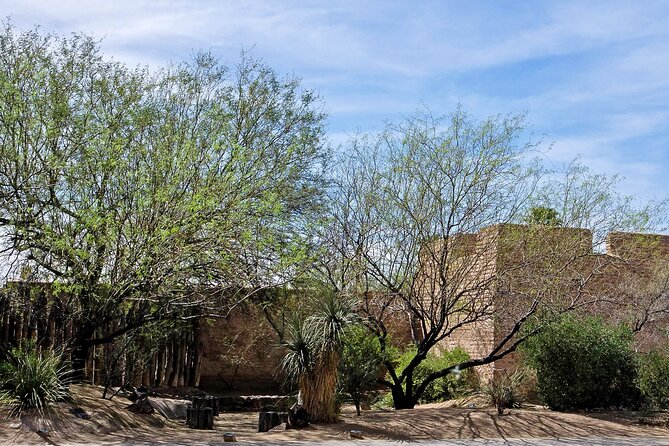
I like the way this route is arranged through time. You begin with Tucson’s Spanish colonial period, move through adobe homes and late 19th-century architecture, and finish with a famous local restaurant.
That gives the walk a useful shape. You are not simply hearing isolated facts at random corners. The route helps you see how Tucson changed from a fortified settlement into a city with fashionable homes, civic spaces, museums, and long-standing restaurants.
The audio format also leaves room for your own pace. You can stop for a closer look, pause the narration, or let the story continue while you walk. One person who completed the route described it as an easy walk with many stops and enough time to look around. That is a good description of the experience: it is more about noticing buildings and understanding their place in Tucson than rushing from one attraction to the next.
Because this is self-guided, you do not have to match a guide’s pace or wait for a group. The tradeoff is that you are responsible for starting the app, keeping your phone charged, and following the route.
A few more audio tours around the USA worth a look
- Los Angeles: Hop-On Hop-Off Bus Tour with Audio Guide
★ 3.7 · 2,030 reviews - City Sightseeing Hop-On Hop-Off Bus Tour with Audio Guide
★ 3.0 · 1,083 reviews - Medieval Torture Museum Ticket with Audio Guide and Ghost Hunting
★ 5.0 · 962 reviews
Start at the Presidio San Agustín del Tucson Museum
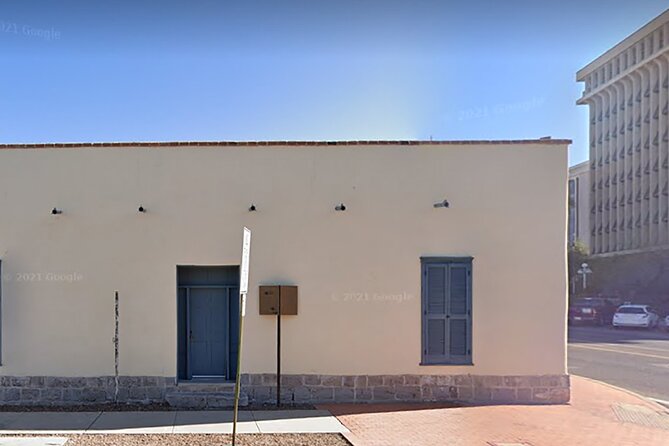
The tour begins outside the Presidio San Agustín del Tucson Museum at 197 N Church Avenue. This is a strong starting point because the site introduces Tucson at its earliest stage, when the city was shaped by Spanish military and settlement needs.
The fort once covered 11 acres. The opening section explains what daily life was like for early settlers in the late 1700s. That practical focus matters. Instead of treating the fort only as a military landmark, the audio helps you picture the routines and pressures of people living inside an isolated frontier settlement.
You should allow a few minutes here before moving on. The tour is designed to be heard while walking, but this first stop gives you the historical frame for everything that follows. The later homes and civic buildings make more sense once you understand that Tucson developed from this fortified Spanish settlement.
The starting point is also convenient for public transportation, and the tour does not require you to meet a guide or join a scheduled group. Just remember that admission to any site is not included. The experience mainly takes place outdoors and passes by buildings rather than promising entry into every location.
Adobe homes and Tucson’s Sonoran row houses
One of the most appealing parts of the route is the look at Sonoran row houses. These adobe homes are made from bricks of earth, a building method closely tied to the region’s climate and early settlement patterns.
You pass Casa de Cordova, an adobe home restored and dedicated by First Lady Betty Ford in 1974. That detail gives the building a second layer of interest. It is not only an example of historic construction, but also part of a later effort to preserve Tucson’s architectural past.
I like this section because it moves the discussion away from famous monuments and toward ordinary housing. A home can tell you how people lived, what materials were available, and how a community adapted its buildings to local conditions.
The route does not turn the walk into a technical architecture class. Instead, it gives you enough context to look more closely at walls, proportions, and the difference between a modest adobe row house and the grander homes ahead. If architecture interests you, this is one of the places where pausing the audio and studying the building will add value.
Main Avenue’s mansions and the Tucson Museum of Art
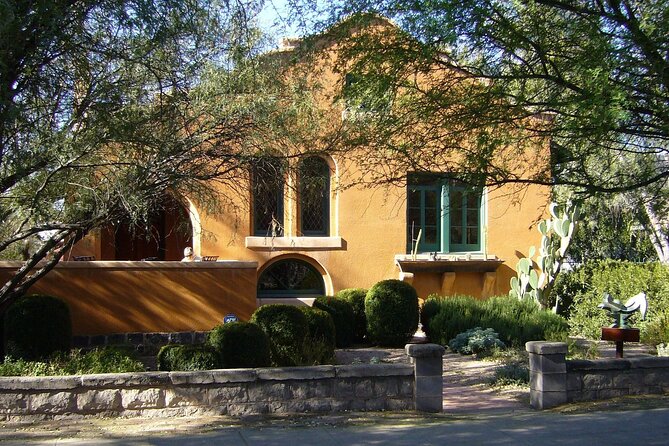
The tour then reaches what historians call the mansions on Main Street. This section includes the Tucson Museum of Art and several of the area’s more imposing historic homes.
The change in scale is important. The earlier adobe houses reflect Tucson’s Spanish and Sonoran roots. These larger residences point to a later period when prominent residents could commission more elaborate homes and display their status through architecture.
The Tucson Museum of Art adds an appealing cultural stop to the walk, although the audio route passes by it rather than including admission. If you want to go inside, treat that as a separate visit and allow extra time. The $8.99 tour price does not cover personal expenses or admission fees.
For me, the best use of this portion is to compare the buildings rather than view each one alone. You can hear how Tucson’s appearance changed, then look from one style to the next. The route makes downtown feel like a place with layers, not a collection of unrelated old façades.
Same place, a different route to walk:
- Gettysburg Battlefield Self-Guided Driving Audio Tour
★ 4.5 · 910 reviews - Joshua Tree National Park Self-Guided Driving Audio Tour
★ 4.5 · 762 reviews - San Francisco: Alcatraz, Ferry & Audio Tour w/ Night Option
★ 4.4 · 617 reviews - Ultimate Acadia National Park Self-Guided Driving Audio Tour
★ 4.0 · 521 reviews
A pastry stop at Café a la C’Arte
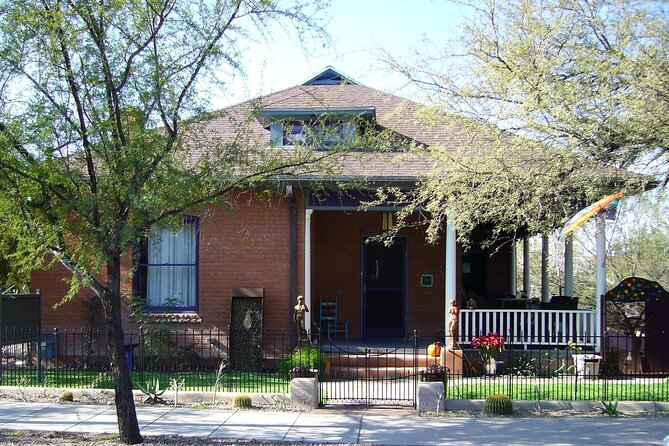
The walk passes Café a la C’Arte, where you can find pastries. Food stops are not included, so this is an optional pause rather than part of the tour price.
Still, it is a useful place to break up the walk. An audio tour works better when you are not trying to absorb every sentence while moving continuously. Stopping for a pastry gives you a chance to pause the app, look back at the buildings you have just heard about, and continue when you are ready.
The café also fits the overall character of the route. This is not only a history lesson about forts and mansions. It connects older Tucson to places you can enjoy in the present day. Bring money or a payment method if you want food or drink, since those costs are separate.
The J. Knox Corbett House and two important architects
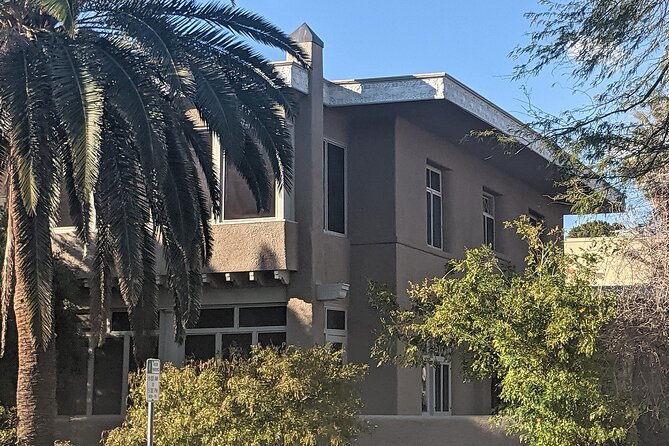
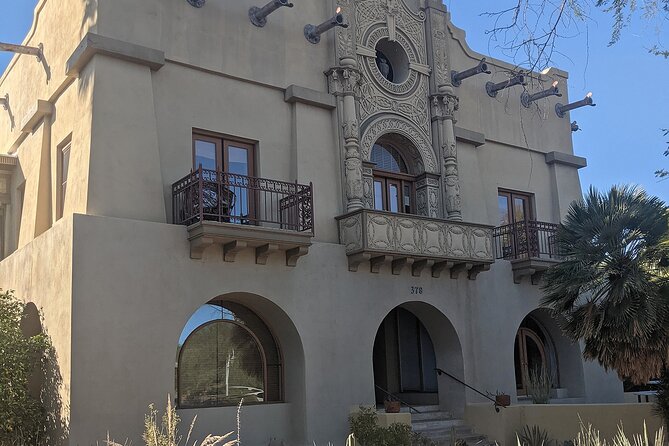
The J. Knox Corbett House provides one of the tour’s more specific architectural stories. Like several of Main Avenue’s sophisticated homes from the 1890s and early 1900s, its appearance is linked to architects Henry Trost and David Holmes.
This is the point where the route can help you notice the people behind the buildings. Large historic homes are easy to admire from the sidewalk, but knowing that particular architects shaped the look of the neighborhood gives the architecture a clearer identity.
I appreciate that the tour names both Trost and Holmes rather than treating every old building as simply historic. The focus on individual designers makes you pay attention to recurring ideas and details across several homes.
The route passes by the house, so your experience depends on what can be seen from the street. You should not expect a full interior tour. For an outdoor audio walk, though, the house gives the story a concrete subject and keeps the discussion tied to something directly in front of you.
Christopher Franklin Carroll Centennial Park
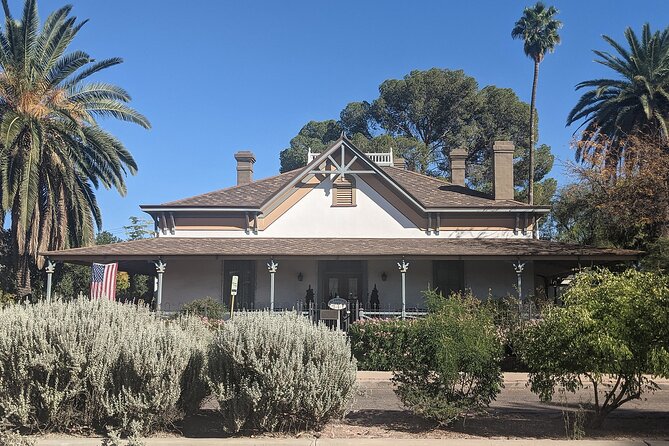
The route passes Christopher Franklin Carroll Centennial Park and explains the park as you walk. This is a quieter part of the experience, but it helps vary the route after several architectural stops.
A park can also give you a moment to reset. The walk is short, yet listening to history requires attention. Use this stretch to check your map, pause the recording if needed, and take in the surroundings before the next house.
The route does not promise a long stop or a special activity at the park. Its value is mainly in the story attached to the place and in the change of pace. If you prefer tours packed with interior visits, this section may feel light. If you like a walk with breathing room, it works well.
The Franklin House and El Presidio Bed and Breakfast
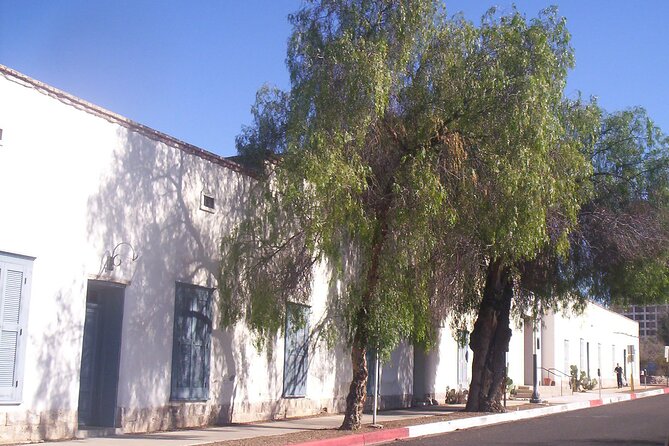
The Franklin House is another stop where the audio tells you about the original owners. That detail keeps the architecture connected to people rather than leaving you with dates and building names alone.
The route then passes El Presidio Bed and Breakfast. You will hear how the property was used under different owners, adding a small piece of social history to the walk. Historic buildings often change purpose over time, and this stop shows how one property can carry several chapters.
Both locations are passed from the street. The audio provides the background while you look at the exterior, so you should think of this as an architectural neighborhood walk rather than a series of museum entries.
This is also where the route’s independent format works well. You can linger if one house catches your eye, or keep moving if you have already had enough architecture. No group is waiting for you, and the audio can be paused whenever you want.
Finish at El Charro Café and the chimichanga story
The tour ends in front of El Charro Café at 311 N Court Avenue. The restaurant is identified as Tucson’s oldest Mexican restaurant and the home of the chimichanga, giving the walk a memorable finish.
That ending is practical as well as entertaining. After about an hour of walking, you have an obvious place to consider for a meal. Food is not included, so you will need to pay separately if you decide to eat there.
Ending at a restaurant also brings the route back to everyday Tucson. You begin with a military settlement from the late 1700s and finish with a restaurant that remains part of the city’s food identity. It is a tidy way to connect the past with something you can experience at the end of the walk.
The listed opening hours show the location as available Monday through Sunday, around the clock. That does not mean every service or dining option will suit your plans, so check current restaurant details separately if you intend to eat there.
How the VoiceMap format works in real life
You receive lifetime access in English through the VoiceMap app for Android and iOS. The package includes offline audio, maps, and geodata, which is a real advantage for a walking route.
Download everything before you start. Offline access means you are less dependent on mobile reception, and it helps preserve your phone battery and data. You still need your own smartphone and headphones, neither of which is supplied.
The main practical weakness is access-code delivery. The code and instructions are meant to arrive by email and SMS, but some bookings have had trouble receiving them before the planned start. Check both channels well ahead of time. If there is a problem, the provider lists support at [email protected].
This is a private activity in the sense that only your group participates, but it is not a private live guide. You are listening to recorded narration and managing the route yourself. Service animals are allowed, and most people can take part.
Is $8.99 a fair price?
Yes, if you want a low-cost introduction to downtown Tucson. For $8.99, you get a route lasting roughly one hour to one hour and 15 minutes, lifetime access, and offline audio and map data.
The value is strongest for independent visitors who enjoy history and architecture but do not need a live guide. You can spread the tour across your own schedule and take extra time at a café, museum, or house that interests you.
The value is weaker if you expect extensive entry into buildings, food, transportation, or personal guiding. Those are not included. You are paying for the narration and route design, not a full day of admissions and services.
The overall rating of 3.9 from 23 ratings suggests a generally useful experience with some important technical complaints. The positive side is consistent: people praise the easy walking route, the way it moves through several centuries, and the information about history, architecture, and Tucson’s story. The negative side is mostly about receiving the access code or getting the correct tour to appear in the app.
Who should choose this Tucson walk?
I would choose this tour if you:
- Like history, architecture, and self-guided sightseeing
- Want a short activity in central Tucson
- Prefer stopping and starting on your own
- Are comfortable using a phone app and headphones
- Want an affordable orientation before exploring more of downtown
- Enjoy combining sightseeing with a café or restaurant stop
I would choose something else if you need a live guide, guaranteed personal help, or included access to historic interiors. The tour is also less suitable if you dislike listening to narration while walking or do not want to manage a route on your phone.
Dog owners may appreciate that the experience is outdoors and that service animals are allowed. The supplied information does not promise that every business along the route permits pets, so check individual venue rules before bringing a non-service dog inside.
Should you book it?
Book this audio walk if you want a flexible, inexpensive way to understand downtown Tucson’s buildings and past. Its strongest feature is the progression from the Presidio to adobe homes, mansions, parks, and El Charro Café. The architecture and history work together, and the short length makes it easy to fit into a larger day.
Before booking, make sure you are happy with a recorded tour and have a working smartphone, headphones, and app access. After booking, confirm that the code arrives by both email and SMS. If you want an easy route with plenty of freedom, this is a good-value choice. If you want a human guide or interior visits, spend your money elsewhere.
FAQ
How long does the downtown Tucson audio tour take?
The tour takes approximately one hour to one hour and 15 minutes.
Where does the tour begin?
It begins outside the Presidio San Agustín del Tucson Museum at 197 N Church Avenue, Tucson, Arizona 85701.
Where does the tour end?
It ends in front of El Charro Café at 311 N Court Avenue, Tucson, Arizona 85701.
What language is the tour offered in?
The tour is offered in English.
Do I need a smartphone and headphones?
Yes. A smartphone and headphones are not included, so you need to provide your own.
Does the tour work offline?
Yes. Offline access to the audio, maps, and geodata is included through the VoiceMap app.
Is food included in the price?
No. Food and drinks are not included. Café a la C’Arte and El Charro Café are passed along the route, but any purchases are separate.
Is admission to museums or other attractions included?
No. Personal expenses and admission fees are not included.
Can I cancel for a full refund?
Yes, if you cancel at least 24 hours before the experience start time. Cancellations or changes made within 24 hours are not refunded or accepted.
Just added around the USA
- Self Guided Driving Audio Tour of Saguaro National Park★ 3.0 · 4 reviews
- Self-Guided Audio Driving Tour of Mount Lemmon★ 5.0 · 4 reviews
- Saguaro National Park Self-Guided Audio Tour★ 3.5 · 11 reviews
- A Self Guided Audio Tour in Tombstone★ 4.0 · 11 reviews
- Catskills Scenic Byway Self-Guided Driving Audio Tour★ 4.0 · 9 reviews
- Big Bend National Park Self Guided Audio Tour Guide★ 5.0 · 12 reviews
- Self-Guided Audio Driving Tour in Catskills Scenic Byway★ 4.5 · 7 reviews
- Shiloh Battlefield Self-Guided Driving Audio Tour★ 4.0 · 9 reviews
Tucson Audio Tours, compared.


Saguaro NP and Mt. Lemmon Self Guided Driving Audio Tour Bundle
Read our review →

Browse the lists this tour appears in