
REVIEW · PHILADELPHIA AUDIO TOURS
Discover Fantastic Philadelphia: Self-Guided Audio Tour
Philadelphia rewards slow looking. This self-guided route links the Rocky steps, Independence Hall, and Elfreth’s Alley with about two hours of audio guidance, letting you set the pace instead of following a group flag. I like the freedom to pause for a museum, lunch, or a closer look at a historic street. I also like the low listed price of $14.83 per person, especially if you mainly want a walking route with historical context.
The main caution is navigation. The audio and GPS map are meant to work on your own smartphone, and unclear directions could make the route frustrating. You will need a charged phone, a comfortable walking pace, and enough patience to check the map as you go.
Key points to know before you go
- Nine stops connect Philadelphia’s Parkway and Old City: The route begins at the Philadelphia Museum of Art and ends at Elfreth’s Alley.
- About two hours of audio are included: You can listen while walking, pause when you enter a museum, and continue later.
- Admission is not included at several major sights: The Philadelphia Museum of Art, Franklin Institute, Masonic Temple, National Constitution Center, and Betsy Ross House charge separate admission.
- Independence National Historical Park is the strongest value section: Independence Hall, the Liberty Bell, Congress Hall, and the Benjamin Franklin Museum are close together.
- The tour is private by design: Only your group takes part, so you avoid group chatter and complaints.
- The route may take two to five hours: Your total time depends on walking speed, stops, museum visits, and how often you pause the audio.
From the Rocky steps to the Benjamin Franklin Parkway
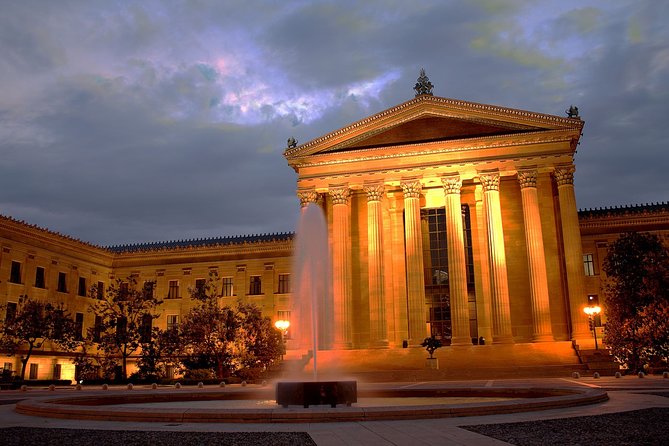
The tour starts at 9:00 a.m. outside the Philadelphia Museum of Art, at 2600 Benjamin Franklin Parkway. This is a smart opening point. You begin with one of Philadelphia’s most recognizable sights, then move toward the city center along a grand cultural avenue.
The museum is famous for its wide staircase, made even more famous by the Rocky films. You can climb the steps, look back over the Benjamin Franklin Parkway, and take in the broad city view before continuing. The tour allows about 30 minutes here, which is enough for the exterior and a quick look around, but not enough for a serious museum visit.
Inside, the Philadelphia Museum of Art holds major works by Vincent van Gogh, Pablo Picasso, and Marcel Duchamp, along with American, European, Asian, and contemporary collections. It also has sculpture gardens and special exhibitions. Admission is not included, so you should treat the museum as an optional extended stop rather than assume your ticket covers entry.
The route also points you toward Fairmount Park and the surrounding Parkway. If art is your main reason for visiting Philadelphia, you may want to spend much longer here and accept that the rest of the route will take more than the two-hour audio estimate.
More Self-Guided Audio Tours in the USA
- Gettysburg Battlefield Self-Guided Driving Audio Tour
★ 4.5 · 910 reviews - Joshua Tree National Park Self-Guided Driving Audio Tour
★ 4.5 · 762 reviews - Ultimate Acadia National Park Self-Guided Driving Audio Tour
★ 4.0 · 521 reviews
Science and spectacle at The Franklin Institute
The next stop is The Franklin Institute, also on the Benjamin Franklin Parkway. It is named for Benjamin Franklin and focuses on science and technology through hands-on exhibits.
The Giant Heart is the signature attraction. You can walk through a large model of a human heart, a simple but memorable way to turn anatomy into something physical and easy to understand. The Fels Planetarium, flight simulators, IMAX theater, and rotating exhibits give the museum plenty to do beyond the audio stop.
The suggested time is another 30 minutes, but that is best viewed as an introduction. Families and anyone who enjoys interactive science will likely want more time. Again, admission costs extra.
This part of the route is useful because it shows Philadelphia as more than a city of colonial buildings. The Parkway gathers art, science, history, and public institutions in a compact area. You get a better feel for the city by seeing those subjects side by side.
The ornate rooms of the Masonic Temple
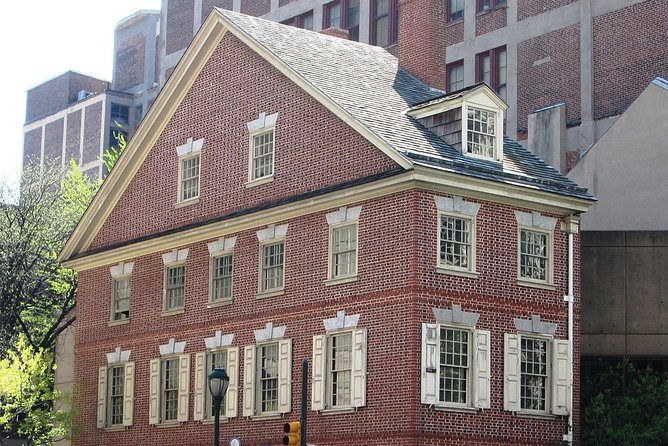
The Masonic Temple takes you from science to elaborate 19th-century architecture. Located near Philadelphia City Hall and the Pennsylvania Convention Center, the building serves as the headquarters of the Grand Lodge of Pennsylvania.
Its interior includes detailed stonework, stained glass, and meeting rooms designed in different architectural styles. The Egyptian Room, Gothic Room, and Corinthian Hall are named highlights. Each gives you a different visual mood, and the contrast is part of the appeal.
The stated stop lasts about 30 minutes, with admission not included. Guided tours are available at the temple, but this self-guided experience does not include a temple admission or a separate guided tour. You should check the practical details before building your day around an interior visit.
For me, this is one of the route’s more unusual stops. The Liberty Bell and Independence Hall are obvious choices on a Philadelphia itinerary. The Masonic Temple gives you a chance to see a less familiar side of the city, provided you arrange entry.
Independence National Historical Park puts the story together
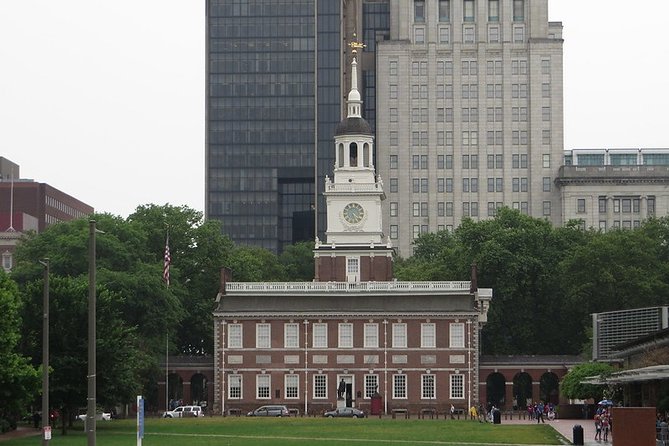
The tour then reaches the central historical district at Independence National Historical Park. This is the heart of the route, and it deserves more than a hurried half hour if American political history interests you.
Independence Hall is the key site. The Declaration of Independence and the U.S. Constitution were debated and signed here. That makes the building more than an old landmark. It is the place where arguments about government, rights, and the future of the country took physical form.
Congress Hall is nearby. The U.S. Congress met there from 1790 to 1800, before the national capital moved to Washington, D.C. The Benjamin Franklin Museum adds another layer by focusing on Franklin’s life and work.
The park offers guided tours, educational programs, and exhibits. The audio route can help you understand the area, but it does not replace every official program or admission arrangement. Some sites are free, while others may use timed entry or separate admission rules. The supplied information confirms that Independence National Historical Park itself is free, but you should still check the specific building you plan to enter.
This is also where the self-guided format helps. You can pause the audio, read signs, take photographs, and return to a point that caught your attention. A group tour would keep moving. Here, you decide how much time the founding story deserves.
Same place, a different route to walk:
- Los Angeles: Hop-On Hop-Off Bus Tour with Audio Guide
★ 3.7 · 2,030 reviews - City Sightseeing Hop-On Hop-Off Bus Tour with Audio Guide
★ 3.0 · 1,083 reviews - Medieval Torture Museum Ticket with Audio Guide and Ghost Hunting
★ 5.0 · 962 reviews - San Francisco: Alcatraz, Ferry & Audio Tour w/ Night Option
★ 4.4 · 617 reviews
Seeing the Liberty Bell up close
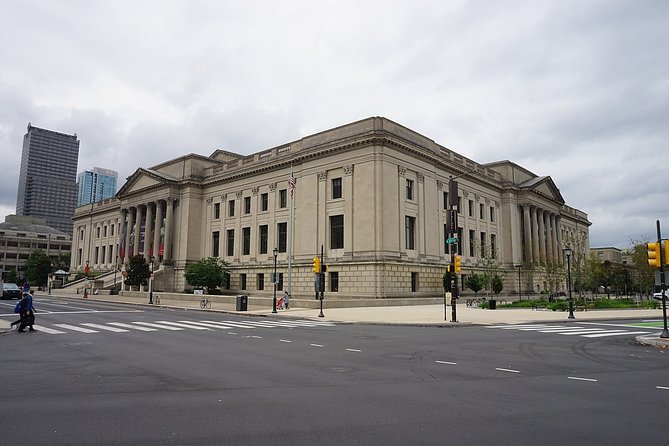
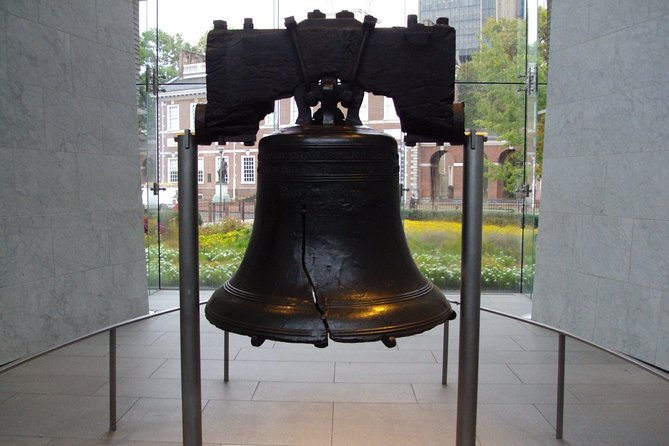
The Liberty Bell Center is part of Independence National Historical Park and provides a closer look at one of the country’s best-known symbols. The bell sits inside a modern glass pavilion, making it visible in a bright, open setting.
The famous crack is easy to spot, but the surrounding story matters just as much. Exhibits and multimedia presentations explain the bell’s history and its meaning as a symbol of liberty. The audio stop gives you a useful introduction before or after you enter.
Admission to the center is free. That makes this one of the strongest inclusions in the route, especially for a first visit to Philadelphia. You do not need to spend extra money at every stop to get value from the tour.
Allow time for the surrounding area as well. The Liberty Bell Center is close to Independence Hall and other historic sites, so the route becomes more efficient here. Several important sights are gathered within a small area.
Declaration House and the working life of Thomas Jefferson
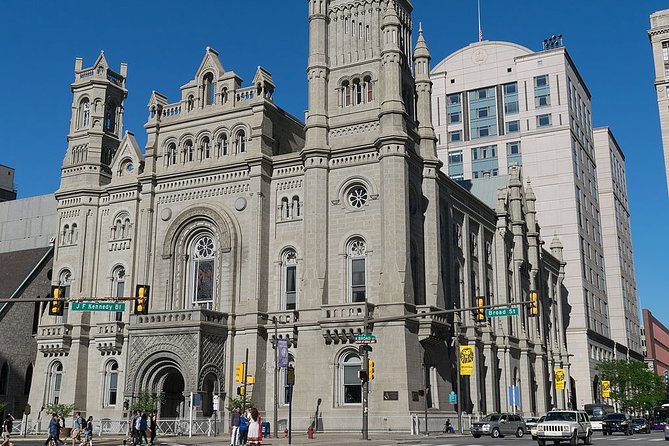
Declaration House, also called the Graff House, focuses on Thomas Jefferson’s stay in Philadelphia in 1776. The site is associated with the drafting of the Declaration of Independence.
The reconstructed house includes period furnishings, exhibits, and a writing desk connected with Jefferson’s work. The setting helps you picture the practical side of the moment. Great political documents were written by people living and working in ordinary rooms, not only in grand public halls.
The visit is listed as free and lasts about 30 minutes. It is close to the Liberty Bell Center and Independence Hall, so you will not need a separate transportation plan for it.
I would treat Declaration House as a context stop. It may not take as long as the larger museums, but it helps connect the famous document with the person who drafted it and the city where the work happened.
The National Constitution Center makes the founding debate interactive
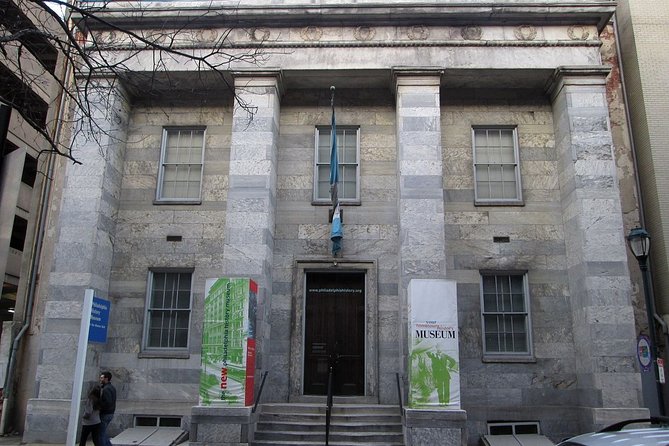
The National Constitution Center is another paid stop near Independence Hall and the Liberty Bell Center. Its focus is the U.S. Constitution and its continuing effect on American life.
The museum uses interactive exhibits, multimedia presentations, and hands-on activities. Signers’ Hall features life-size statues of the Founding Fathers. Freedom Rising is a theatrical presentation about the Constitution, offering a more staged and dramatic format than a standard gallery.
The suggested audio stop is 30 minutes, but the museum has enough material to occupy much longer. Admission is not included, so you need to decide if the extra cost fits your interests.
This is a good choice if you want more than dates and famous names. The museum is designed to explain ideas, debate, and civic principles in a way that can work for families and adults alike. If you already plan to enter Independence Hall and the Liberty Bell area, adding this museum can turn a quick historic walk into a fuller day of American government and politics.
Betsy Ross House and the limits of famous stories
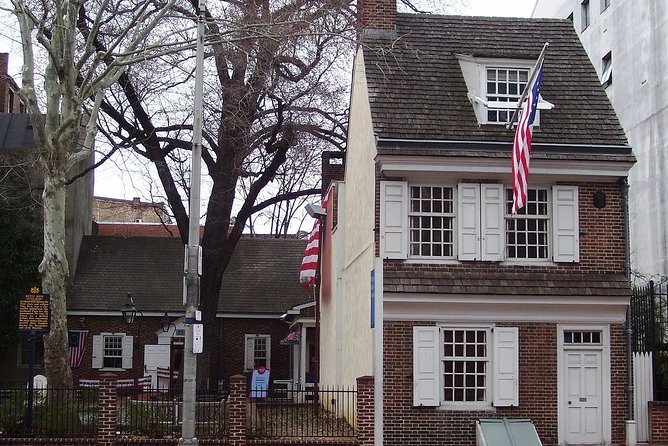
The Betsy Ross House is in Old City, close to the other historic stops. It is the 18th-century home where Betsy Ross is believed to have sewn the first American flag.
That wording matters. The site presents a famous Philadelphia story, but the exact details of the first flag are part of a long-standing tradition rather than something proved beyond doubt. A good visit lets you enjoy the story while keeping that distinction in mind.
Inside, you can see period-furnished rooms, Betsy’s upholstery shop, and living quarters. Displays and historical reenactments help explain her life and her connection with the American Revolution. The house also has its own self-guided audio tour.
Admission is not included in the Philadelphia route. The planned 30 minutes gives you enough time for a compact visit, though you may need longer if you want to read every display.
This stop works well after the larger national sites because it brings history down to a personal scale. You leave grand halls and political documents behind and look at the life of a craftswoman in an ordinary home.
Elfreth’s Alley ends the route on a residential street
The final stop is Elfreth’s Alley, at the Elfreth’s Alley Museum, 126 Elfreth’s Alley. The audio tour ends here, so do not expect guidance beyond this point.
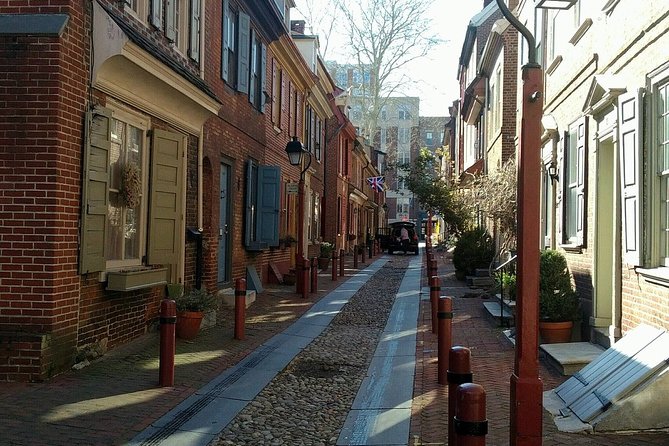
Dating to 1703, Elfreth’s Alley is described as one of the oldest continuously inhabited residential streets in the United States. Its 32 historic houses show Georgian and Federal architecture, with cobblestones, small gardens, and carefully preserved facades.
The alley gives you a different kind of historical experience. Independence Hall explains national politics. Elfreth’s Alley shows where ordinary people lived, worked, and raised families in colonial Philadelphia.
The Elfreth’s Alley Museum occupies houses 124 and 126. You can learn about the early residents and the street’s changing story. Entry to the alley itself is free, while the museum may involve its own admission arrangements. The supplied tour details list this stop as free, but they also state that admission fees are generally not included, so check before entering the museum.
Ending here makes sense. After the grand political story of Independence National Historical Park, you finish with a quiet street that feels more intimate and physical.
How the self-guided format works in practice
The tour includes audio files and a GPS map, but no audio device. You download and play the tour on your own smartphone. That keeps the price low and means you do not need to return equipment.
The tradeoff is responsibility. You must bring a charged phone, manage playback, and follow the map yourself. One person found the audio valuable and appreciated not having to listen to complaints from other people in a group. Another found the map unclear and the directions hard to understand. That contrast tells you exactly who will enjoy this format: someone comfortable with phone navigation and willing to stop, check the route, and correct course.
The route is private, so only your own group participates. That is a real benefit for couples, families, and friends who want to linger at different stops. It also means there is no guide on hand to answer a question or rescue you from a wrong turn.
The route is listed as taking two to five hours. The audio itself runs about two hours, while the nine suggested stops are each given 30 minutes. If you add all nine stops, you already reach about four and a half hours before allowing for walking or a full museum visit. Plan around the longer estimate if you want to enter several buildings.
The meeting time is 9:00 a.m. Starting early gives you a better chance of fitting in the museums and historic sites before the day gets away from you.
Is $14.83 a good value?
At $14.83 per person, the tour is inexpensive compared with a private guided walk. The price covers the audio files and GPS map, not museum tickets, food, drinks, or transportation.
The value depends on how you use it. If you want a simple narrative connecting the city’s major sights, the price is reasonable. You can walk at your own pace, pause for lunch, and skip any paid stop that does not interest you.
The price is less attractive if you expect a fully guided experience with clear turn-by-turn help, admission to the museums, or transportation between the Parkway and Old City. Those costs remain yours.
You should also remember that the low per-person rate may not equal the final total for your booking. Check the amount shown at checkout, particularly if you are purchasing for a group.
Walking, comfort, and planning advice
You need moderate physical fitness for this route. The experience involves moving through several areas of Philadelphia, with walking between stops and time spent on your feet inside museums and historic buildings.
Wear comfortable shoes. The route includes a museum staircase, city sidewalks, and the cobblestones of Elfreth’s Alley. You can shorten the experience by skipping paid interiors, but the self-guided format does not include transportation.
Public transportation is nearby, which gives you flexibility at the beginning or end of the day. The route starts at the Philadelphia Museum of Art and finishes in Old City, so you should not expect to return to the starting point automatically.
Service animals are allowed. The experience is offered in English only.
Free cancellation is available if you cancel at least 24 hours before the 9:00 a.m. start time. Changes or cancellations inside that window are not accepted for a refund.
Who should book this Philadelphia audio tour?
I would recommend it to independent sightseers who like controlling the day. It suits couples, families with older children, and small private groups that want history without a fixed guide schedule.
It is especially useful if you plan to visit only some of the paid attractions. You can use the audio around the free sites, then decide on the spot if the Philadelphia Museum of Art, Franklin Institute, Masonic Temple, National Constitution Center, or Betsy Ross House deserves an entry fee.
I would be cautious if you dislike map apps or want a polished, human-led walk. The unclear-navigation problem can undermine the experience, and the audio cannot answer questions or adapt the route for you.
FAQ
How long does the Philadelphia self-guided audio tour take?
The experience is estimated at two to five hours. The audio guidance lasts about two hours, while your total time depends on walking speed, pauses, and visits to museums or historic buildings.
Where does the tour start?
The tour starts at the Philadelphia Museum of Art, 2600 Benjamin Franklin Parkway, Philadelphia, Pennsylvania 19130. The listed start time is 9:00 a.m.
Where does the tour end?
The audio tour ends at the Elfreth’s Alley Museum, 126 Elfreth’s Alley, Philadelphia, Pennsylvania 19106. This is the final point of the route.
Is admission included?
Admission is not included for several stops, including the Philadelphia Museum of Art, The Franklin Institute, the Masonic Temple, the National Constitution Center, and the Betsy Ross House. Independence National Historical Park, the Liberty Bell Center, Declaration House, and Elfreth’s Alley are listed as free stops, though specific interior admission arrangements should be checked.
Do I need to bring my own phone?
Yes. The tour includes audio files and a GPS map, but no audio device. You download and use the tour on your own smartphone.
Can I cancel for a full refund?
Yes, if you cancel at least 24 hours before the experience start time. Cancellations or changes made less than 24 hours before the start are not refunded.
Should you book it?
Book this tour if you want a low-cost, private way to connect Philadelphia’s main cultural and historic sights. Its best feature is freedom: you can listen at your own pace, skip what does not appeal to you, and spend longer at Independence Hall, the Liberty Bell, or Elfreth’s Alley.
Do not book it expecting museum admission, transportation, or a guide who will lead you around every corner. Bring a charged phone, allow up to five hours, and keep the map open. With those expectations, the route offers a useful introduction to Philadelphia and a good amount of history for the price.
Just added around the USA
- Self Guided Driving Audio Tour of Saguaro National Park★ 3.0 · 4 reviews
- Self-Guided Audio Driving Tour of Mount Lemmon★ 5.0 · 4 reviews
- Saguaro National Park Self-Guided Audio Tour★ 3.5 · 11 reviews
- A Self Guided Audio Tour in Tombstone★ 4.0 · 11 reviews
- Catskills Scenic Byway Self-Guided Driving Audio Tour★ 4.0 · 9 reviews
- Big Bend National Park Self Guided Audio Tour Guide★ 5.0 · 12 reviews
- Self-Guided Audio Driving Tour in Catskills Scenic Byway★ 4.5 · 7 reviews
- Shiloh Battlefield Self-Guided Driving Audio Tour★ 4.0 · 9 reviews
Self-Guided Tours, compared.

Acropolis Ticket & Optional Self-Guided Audio Tours
Read our review →


Ultimate Acadia National Park Self-Guided Driving Audio Tour
Read our review →

Santorini: Akrotiri Ticket with Optional Self-Guided Audios
Read our review →
Browse the lists this tour appears in