REVIEW · USA AUDIO TOURS
Chicago’s Storied Neighborhood: An Audio Tour
Hyde Park rewards a slower look. This self-guided walk brings you through one of Chicago’s most distinctive neighborhoods, pairing University of Chicago buildings, public art, Washington Park, and the DuSable Museum with commentary from Bill Ayers, a local professor and activist. I like the personal narration and the freedom to stop whenever you wish. I also like that the VoiceMap app works offline, so you can follow the route without relying on a live data connection.
The main drawback is the amount of quiet walking between spoken sections. The route covers about three miles, according to the practical information supplied with the experience, and some of that distance comes with limited commentary. You should think of this as a walking route with an audio guide, not a continuous lecture.
The tour is offered only in English and takes about 40 minutes to an hour, though your own stops can make it longer. It has a modest overall rating of 2.8 from four reviews, with praise for Bill Ayers’s personal stories but clear criticism of the downtime and the lack of detail at certain landmarks.
Key points to know before you go
- Bill Ayers provides the voice: His connection to Hyde Park gives the tour a personal angle that a standard recorded guide may not offer.
- The route begins by the University of Chicago Laboratory Schools: You start at 1362 East 59th Street and finish at 1101 East Hyde Park Boulevard.
- Expect outdoor views rather than building interiors: The route passes major University of Chicago sites, but it does not include entry into the original university buildings.
- Washington Park adds breathing room: The walk moves beyond campus into a major green space before reaching the DuSable Museum of African American History.
- The audio has quiet stretches: Bring patience, comfortable shoes, and a willingness to look around without constant narration.
- The app includes offline maps and audio: You receive lifetime access through VoiceMap on Android or iOS.
What this Hyde Park walk is really like
This is not a traditional guided tour with a person leading a group. You use the VoiceMap app on your own smartphone, put on your headphones, and follow the route from one location to the next. The app is designed to begin the commentary at the correct spot, which takes some guesswork out of a self-guided walk.
That setup gives you useful control. You can pause the audio, stop for photographs, take a break, or move at your own speed. Because the tour is private, only your group participates, so you do not need to match the pace of strangers.
The tradeoff is simple: you are responsible for your own timing and comfort. The route is open every day around the clock, but that does not mean every stop or surrounding attraction is open at all hours. The audio tour itself can be started any time within the stated availability period, from July 22, 2020 through March 7, 2027.
The advertised duration is 40 minutes to one hour. In practice, the route’s approximate three-mile distance, stops, photographs, and pauses can make it a longer outing. If you are 82, have limited stamina, or simply dislike long walks, take that distance seriously. There is no stated transportation component, and the tour ends at a different location from where it begins.
A few more audio tours around the USA worth a look
- Los Angeles: Hop-On Hop-Off Bus Tour with Audio Guide
★ 3.7 · 2,030 reviews - City Sightseeing Hop-On Hop-Off Bus Tour with Audio Guide
★ 3.0 · 1,083 reviews - Medieval Torture Museum Ticket with Audio Guide and Ghost Hunting
★ 5.0 · 962 reviews
Starting at the University of Chicago Laboratory Schools

The tour begins outside the University of Chicago Laboratory Schools at 1362 East 59th Street. This is a sensible starting point because it places you in the Hyde Park area near the university campus and gives the narration a clear point of reference.
You should arrive with your phone charged and your headphones ready. The smartphone and headphones are not included, and the audio depends on the VoiceMap app. Downloading the tour’s audio, maps, and geodata for offline use is one of the strongest practical features. It lets you concentrate on the route instead of worrying about mobile service.
The opening section is likely most useful if you want an introduction to Hyde Park through a local voice. Bill Ayers’s role as a professor and activist gives the narration a personal connection to the area. His stories are the part I would value most, especially if you prefer local perspective over a string of dates and architectural labels.
Still, the start does not promise an indoor visit to the Laboratory Schools or other university buildings. This is an exterior walking route. If you expect to enter historic rooms or see interiors that are normally closed, you will need to adjust your expectations.
Rockefeller Memorial Chapel and the university quarter
From the opening point, the route passes Rockefeller Memorial Chapel. The chapel is one of the major visual markers on the university side of the walk, and its presence helps show the scale and character of the surrounding campus.
The tour also passes several University of Chicago faculties and buildings. This section gives you a sense of how Hyde Park and the university fit together, rather than treating the campus as an isolated attraction. The route is useful for orientation, especially if you have never walked through this part of Chicago.
The limits are important. The experience passes the buildings but does not include admission to the original university interiors. One review specifically found the lack of entry disappointing, so I would not book this expecting a behind-the-scenes campus tour.
The audio seems strongest when Ayers adds his own memories and observations. It is less satisfying when you are walking past an important building with little or no narration. You may find yourself looking at the architecture while waiting for the next audio section to begin. That is not necessarily a problem for an independent walker, but it can feel thin if you want constant explanation.
Frederick C. Robie House from the outside
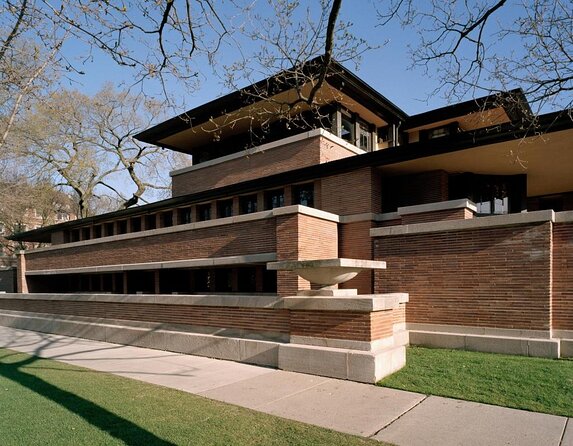
The route passes Frederick C. Robie House, one of the best-known architectural landmarks in the area. Its inclusion gives the walk a clear design focus and adds another reason to look closely at the buildings rather than simply follow the map.
The supplied details do not indicate that admission to the house is included. Personal expenses and admission fees are excluded, so you should treat the stop as an exterior pass-by unless you arrange something separately. The tour itself is not a house visit.
That distinction matters when judging value. If you want a full architectural tour, this audio walk will not replace a dedicated Robie House admission. If you want to place the house within a broader Hyde Park walk, the stop makes more sense. You get a neighborhood route, campus context, and local commentary in one outing.
Same place, a different route to walk:
- Gettysburg Battlefield Self-Guided Driving Audio Tour
★ 4.5 · 910 reviews - Joshua Tree National Park Self-Guided Driving Audio Tour
★ 4.5 · 762 reviews - San Francisco: Alcatraz, Ferry & Audio Tour w/ Night Option
★ 4.4 · 617 reviews - Ultimate Acadia National Park Self-Guided Driving Audio Tour
★ 4.0 · 521 reviews
The Nuclear Energy Sculpture and Chicago’s public memory
Another stop is the Nuclear Energy Sculpture. This gives the walk a change of tone. Instead of focusing only on campus buildings and architecture, the route points you toward a work connected to nuclear energy and the wider public meaning of the university.
The sculpture is especially relevant because the tour’s route is not just a list of pretty buildings. Hyde Park carries academic, political, cultural, and civic associations, and the sculpture helps bring those themes into the walk. Bill Ayers’s commentary may be at its most interesting when it connects a physical site to the people and debates associated with the neighborhood.
Again, do not expect a long explanation at every point. The most common complaint about this audio tour is the amount of quiet time. You may need to spend part of the route taking in the surroundings on your own.
Washington Park changes the rhythm
The walk continues through parts of Washington Park, giving you a break from the university buildings. This is one of the route’s useful changes in setting. The tour moves from an academic district into open public space, which helps show that Hyde Park is more than a campus neighborhood.
Washington Park also gives you a natural place to pause. Since the tour is self-guided, you can stop the audio, sit for a while, check the map, and continue when you are ready. That flexibility is much better than being pushed along by a fixed group schedule.
The weakness is that the tour may not say enough about the park. One review specifically wished for more information about Washington Park and the boulevard system. I share that concern as a value question: a three-mile walk needs strong commentary to justify its length, and the park section could use more spoken material.
If your main goal is a detailed explanation of Washington Park, this may leave you wanting more. If you like combining audio with your own observation, the quieter pace may suit you.
The DuSable Museum of African American History
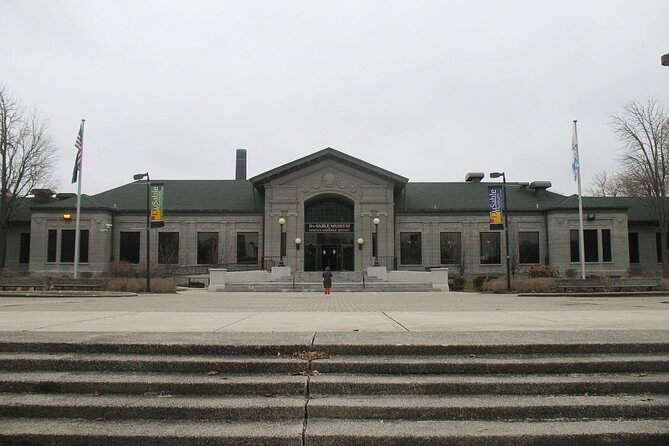
The route passes the DuSable Museum of African American History, an important cultural stop and a major point of interest in Hyde Park. Its inclusion broadens the tour beyond university history and architecture.
The audio tour does not include food, transportation, or admission fees. Nothing in the supplied details says that museum entry is part of the experience, so plan on viewing the museum from the route unless you make separate admission arrangements. You should also check the museum’s own opening information if you want to go inside.
This is a place where the audio route could have offered more context. The stop has clear importance, but the tour’s stated format is mainly a pass-by walk. I would treat the museum as a reason to extend your Hyde Park visit, not as a guaranteed interior experience included in the audio price.
The stop can still be valuable because it helps connect the neighborhood’s university identity with Chicago’s African American cultural story. You get a broader sense of the area by walking between these different kinds of landmarks.
Finishing at 1101 East Hyde Park Boulevard
The tour ends outside the apartments at 1101 East Hyde Park Boulevard. This is not the same place as the starting point, so plan your transportation before you begin. The route is not a loop, and the supplied information does not include transport between the two ends.
Ending on Hyde Park Boulevard gives the walk a neighborhood finish rather than returning you to campus. That can be useful if you have another plan in the area, but it may be inconvenient if you leave a car near the Laboratory Schools. Hyde Park is near public transportation, which helps, though the experience does not provide transportation itself.
The final stop also reinforces the tour’s style. You are moving through real streets and public places, not from one ticketed attraction to another. That makes the experience feel more like a neighborhood walk, but it also means you should plan for ordinary city walking conditions and a little self-management.
How strong is the audio commentary?
The best part of the narration is Bill Ayers’s personal connection to Hyde Park. One positive review praised his stories and felt they gave the experience added character. That is the clearest reason to choose this tour over simply walking the same streets with a map.
The audio is not consistently dense. Another review described long stretches with little talking, and the most negative review found the information too limited. These are not minor concerns when the route covers about three miles. You are paying for interpretation, so silent stretches can make the experience feel less worthwhile.
I would approach the tour as a framework. The app tells you where to go and provides selected commentary, while your own eyes and curiosity fill in some of the gaps. That works best for independent visitors who enjoy setting their own pace. It works less well for anyone who expects a guide speaking continuously from start to finish.
Is the tour worth the price?
No price is provided here, so I cannot judge the exact dollar value. I can judge what you receive: lifetime access in English, the VoiceMap app for Android and iOS, and offline access to the audio, maps, and geodata.
That package has value if you plan to keep the tour and use it at your own pace. There is no scheduled group to catch, and the lifetime access gives you flexibility to revisit the route. The private format also avoids paying for a larger group experience when you want to walk independently.
The value is weaker if you expect extensive commentary at every stop, entry to university buildings, admission to Robie House or the DuSable Museum, or transportation. Those costs and activities are outside the experience. Given the 2.8 rating from four reviews, I would only pay a modest price for it and would compare it with free walking information before booking.
Who should book this Hyde Park audio tour?
I would recommend it most to an independent visitor who wants a structured walk through Hyde Park and likes listening to a local voice. It is also a good fit if you prefer private activities, need the freedom to pause, or want offline maps and audio.
The tour may suit university fans, architecture enthusiasts, and people interested in Chicago’s civic and cultural landmarks. Bill Ayers’s connection to the area is a real draw for anyone who values first-person stories.
I would be cautious if you have difficulty walking three miles, need frequent seating, or want a short route. I would also look elsewhere if your priority is entering the University of Chicago buildings, touring Frederick C. Robie House, visiting the DuSable Museum as part of the ticket, or hearing uninterrupted commentary.
Book it if you see the audio as a flexible neighborhood companion rather than a full guided tour. Skip it if the quiet stretches and exterior-only format would frustrate you. Hyde Park deserves time, but this particular tour asks you to supply some of the curiosity yourself.
FAQ
How long does the Hyde Park audio tour take?
The stated duration is approximately 40 minutes to one hour. Your total time may be longer if you pause, take photographs, or explore along the way.
How far is the walking route?
The supplied review information describes the route as approximately three miles. Keep that distance in mind before booking.
What language is the tour offered in?
The tour is offered in English.
Where does the tour begin?
It begins outside the University of Chicago Laboratory Schools at 1362 East 59th Street, Chicago, Illinois 60637.
Where does the tour end?
It ends outside 1101 East Hyde Park Boulevard Apartments at 1101 East Hyde Park Boulevard, Chicago, Illinois 60615.
Is admission to the buildings included?
No admission fees are included. The route passes the Rockefeller Memorial Chapel, Frederick C. Robie House, University of Chicago buildings, the Nuclear Energy Sculpture, Washington Park, and the DuSable Museum of African American History.
What do I need to use the tour?
You need a smartphone and headphones. These are not included. The VoiceMap app is available for Android and iOS.
Can I use the tour without mobile data?
Yes. The tour includes offline access to the audio, maps, and geodata.
Can I cancel for a full refund?
Yes, if you cancel at least 24 hours before the experience start time. Cancellations within 24 hours are not refunded, and changes within that period are not accepted.
Just added around the USA
- Self Guided Driving Audio Tour of Saguaro National Park★ 3.0 · 4 reviews
- Self-Guided Audio Driving Tour of Mount Lemmon★ 5.0 · 4 reviews
- Saguaro National Park Self-Guided Audio Tour★ 3.5 · 11 reviews
- A Self Guided Audio Tour in Tombstone★ 4.0 · 11 reviews
- Catskills Scenic Byway Self-Guided Driving Audio Tour★ 4.0 · 9 reviews
- Big Bend National Park Self Guided Audio Tour Guide★ 5.0 · 12 reviews
- Self-Guided Audio Driving Tour in Catskills Scenic Byway★ 4.5 · 7 reviews
- Shiloh Battlefield Self-Guided Driving Audio Tour★ 4.0 · 9 reviews
USA Audio Tours, compared.


City Sightseeing Hop-On Hop-Off Bus Tour with Audio Guide
Read our review →
Medieval Torture Museum Ticket with Audio Guide and Ghost Hunting
Read our review →



Ultimate Acadia National Park Self-Guided Driving Audio Tour
Read our review →