

REVIEW · USA AUDIO TOURS
Charleston Self-Guided Audio Walking Tour
Charleston rewards slow walking. This self-guided audio tour links churches, grand homes, memorials, markets, and difficult chapters of American history in one route through the old city. You can pause for lunch, museums, or photos, then continue when ready. I especially like the clear GPS-led format and the freedom to use the tour more than once.
I also like the range of stops, from Circular Congregational Church to Rainbow Row and the Old Slave Mart Museum. The main caution is that the route depends on your phone’s GPS and proper setup, and some early sections have few convenient bathrooms. If you wander too far from the path, the narration may skip or fail to trigger.
Key details before you set out

- More than 45 audio stories: The route gives you a steady stream of historical commentary rather than a single short introduction.
- Over two miles through central Charleston: Plan on roughly one to two hours of walking time, or several hours if you stop often.
- Lifetime access: You can use the tour on future trips and replay stories at home or on another visit.
- Offline operation: Download the tour over strong Wi-Fi or cellular service before arriving, then use it without a signal.
- Important phone tip: Keep your screen and GPS active while walking, and use earbuds for easier listening.
- Good value at $14.99: Couples may be able to share one tour with split headphones, though separate devices are more convenient.
A low-cost way to meet Charleston
Charleston’s historic center is compact, but it is not simple. A few blocks can take you from colonial churches to grand Georgian houses, from market stalls to a memorial marking slave auctions. A good audio route helps connect those places instead of leaving you with a collection of pretty facades.
At $14.99 per person, this tour is priced below many live walking tours. You are paying for the narration and route, not for entry to museums or houses. That distinction matters. The audio portion can guide you past many landmarks, but attraction tickets, reservations, and interior visits are extra.
The best value comes from the lifetime access. You can listen once on a quick Charleston stop, then return to the same tour on another trip. You can also replay a story at home, which is useful when a place deserves more attention than you had time to give it in the street.
The route is private in the practical sense: no group gathers, and no guide waits at the starting point. You walk with your own party and control the pace. That works well for families, couples, and people who dislike being tied to a fixed departure time.
More Audio Walking Tours in the USA
- Self Guided Classic Freedom Trail Location Aware (GPS) Walking Audio Tour
★ 4.5 · 258 reviews - Cape Cod & Provincetown Self-Guided Driving & Walking Audio Tour
★ 4.0 · 207 reviews - Santa Fe Historic Downtown Smart Phone Audio App Self Guided GPS Walking Tour
★ 4.5 · 112 reviews
Start near Market Street, then let the app lead

The stated starting point is 152 Market Street, with the route finishing at Charleston City Market at 188 Meeting Street. Download the separate Action Tour Guide app before you arrive, enter the password sent by email and text, and make sure the tour is stored on your phone while you still have a strong connection.
Once you reach the first location, the audio should begin when you enter the correct GPS area. The next story should play as you approach its point. This hands-free setup is one of the tour’s strongest features, but it also requires a little care.
Start at the marked point and follow the route at a normal walking pace. One person using an older phone had trouble compared with a newer Galaxy device, and another report noted that the GPS needed time to settle. If audio does not begin, check that location services are active, the correct tour version is open, and the phone is not in sleep mode.
The app works on an iPhone running iOS 15 or later, an Android phone running version 9 or later, or an iPad or tablet with GPS and cellular capability. Each booked traveler can use the same password on the corresponding number of devices.
Churches and civic power in the opening miles
The first major stop is Circular Congregational Church. The congregation dates to 1681 and began as a gathering place for Dissenters who did not follow the Church of England. The current circular building dates from 1891, after the earlier structure burned.
This is a useful opening stop because it introduces Charleston as a place shaped by religious difference, not only by wealthy merchants and plantation owners. Give yourself time to look at the building before moving on. The audio is most useful here when you connect the physical church with the story of who was allowed, or not allowed, to worship in colonial South Carolina.
Hibernian Hall follows with a different kind of community story. Built in 1840, it served the Hibernian Society, founded in 1801 by Irish immigrants and their descendants. Its purpose included aid, support, and cultural activity for Charleston’s Irish community.
The South Carolina Historical Society Museum is another important marker. The society began in 1855 and preserves material connected with South Carolina and its people. The tour points you toward the museum, but admission is not included, so decide in advance if you want to make an indoor stop.
At the Four Corners of Law, Broad and Meeting Streets bring four government and legal institutions together. The nickname gives you a quick way to understand Charleston’s civic center. This is a short stop, but it helps explain how the city’s public life was organized.
South Carolina Society Hall, built in 1803, adds a social and charitable side to that picture. The South Carolina Society was founded in 1737 and played a role in Charleston’s political and cultural life. The building is one of those places that can look like a handsome old house until the narration explains its purpose.
The John Robert Pringle House offers a more personal colonial story. The amusing name connection with the snack is not the point. Instead, the stop uses Pringle’s life to show what existence could look like for a European colonist in early Charleston.
Grand homes, White Point Garden, and the waterfront

The route continues toward several impressive residences, including the Patrick O’Donnell House and the Palmer Home. The O’Donnell House is tied to the story of a man who wanted a perfect home for his fiancée, a project said to have taken 12 years. It is a small human detail, but it gives the architecture a bit of personality.
The Palmer Home was built in 1825 for Thomas Bennett Jr., South Carolina’s governor from 1820 to 1822. John Ravenel Palmer bought the property in 1861, and the Palmer family held it for decades. The story helps you read Charleston’s houses as records of changing ownership and status, not simply as attractive backdrops.
The Edmondston-Alston House also dates to 1825 and has connections to notable residents and visitors. The audio can tell you why the house matters, but remember that passing a historic house is not the same as touring its rooms. If you want interiors, check admission separately.
White Point Garden gives the walk some breathing room. Once called Oyster Point, it was a public gathering place as early as the 18th century and later served defensive purposes during wartime. The park has witnessed important events, so it is worth slowing down instead of treating it as a shortcut.
The tour also addresses Charleston’s Civil War importance. The city’s deepwater port and central role in cotton production made it strategically valuable to both Confederate and Union forces. That context is essential because Charleston’s elegant streets can otherwise make the past seem gentler than it was.
A monument to General William Moultrie connects the city to the American Revolution. Moultrie commanded the fort on Sullivan’s Island during the 1776 Battle of Sullivan’s Island, later known as Fort Moultrie. This is a reminder that Charleston’s military importance began long before the Civil War.
Longitude Lane is one of the more memorable small stops. The narrow passage is linked to a real cannon that was removed from the lane and replaced by a fake cannon in White Point Garden. Details like this help keep the walk from becoming a parade of dates and famous names.
More Self-Guided Audio Tours in the USA
- Gettysburg Battlefield Self-Guided Driving Audio Tour
★ 4.5 · 910 reviews - Joshua Tree National Park Self-Guided Driving Audio Tour
★ 4.5 · 762 reviews - Ultimate Acadia National Park Self-Guided Driving Audio Tour
★ 4.0 · 521 reviews - Ultimate Lake Tahoe Self-Guided Driving Audio Tour
★ 4.5 · 435 reviews
Rainbow Row and the history you cannot soften
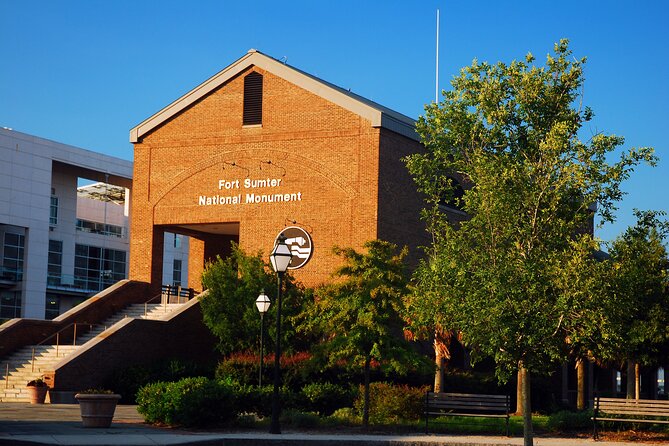
Rainbow Row is one of Charleston’s most photographed stretches. The colorful houses began as mercantile stores and residences for merchants and traders. Their appearance today reflects later preservation, but the audio places them within the city’s commercial past.
Take your photographs, but listen closely as well. Charleston’s charm is inseparable from trade, wealth, labor, and slavery. The next stops make that connection direct.
The Slave Auction Site Memorial marks land where slave auctions occurred in the late 1700s and early 1800s. It is a stark point on the route, and the tour rightly connects it to the forces at stake during the Civil War. This is not a light sightseeing stop, and it should not be treated as one.
The Old Slave Mart Museum adds another layer. It is separate from the Old Exchange, which appears earlier in the broader route, and its purpose and setting differ. Entry is not included, so you will need a separate ticket if you want to go inside. Even if you only pass the museum, the audio helps place Charleston’s commercial center within the history of the domestic slave trade.
This portion of the walk is one reason I would not choose the tour only for architecture. The route is most valuable when it asks you to hold the beautiful streets and the painful past in view at the same time.
The pineapple, theater, church, and market finish

The Pineapple Fountain is a lighter stop after the memorials and museum. Built in 1990, it refers to a familiar Charleston symbol and provides a good place for photos. The fountain is modern, but the story behind the pineapple connects it to older local customs.
Dock Street Theater has a particularly good built-in mystery. The building began as a theater in 1736 and reopened as one in 1937. The audio explains what happened during the long period between those two dates, giving you a reason to look beyond the current facade.
St. Philip’s Church is easy to spot because it projects into Church Street. The street bends around the church and then straightens again, an unusual detail that makes more sense once you hear the explanation. This is the kind of small urban clue that a self-guided route handles well: you notice the oddity, then get the story.
The final stop is Charleston City Market, established in 1804. It is a practical ending because you can continue browsing after the narration finishes. Look for local arts and crafts, Gullah sweetgrass baskets, and food. The market gives the walk an active finish rather than leaving you beside an isolated monument.
The market is also useful if you have walked slowly. One person completed the route in about four hours after stopping for drinks, lunch, and photos. The stated walking time is closer to one or two hours, but the city rewards pauses, and you should not feel pressure to hurry.
Timing, comfort, and the small technical catch

The tour covers more than two miles and includes over 45 audio stories. Most people should allow at least one to three hours, depending on how quickly they walk and whether they enter museums or stop for food.
You can pause the tour, take a break, explore a side street, or return another day. That flexibility was repeatedly praised, and it is the main advantage over a fixed group walk. Families can stop when children need a rest, and history fans can replay material or use the extra Learn More content.
Plan your bathroom stop before the first half of the route. Restrooms can be scarce early on, and one practical report specifically advised keeping this in mind. The app includes a Near Me option for restrooms and restaurants, but it is still smarter not to wait until the last minute.
The route itself needs attention. Some points of interest along the way may not have narration, and the tour is not designed to comment on every building you pass. One earlier version also had a section where the directions became unclear after the walker left the route. Start carefully, use the in-app map, and avoid making large detours until you know where the next trigger point is.
The provider has indicated that route problems have been corrected and that the tour has been updated. Still, GPS-based tours are not foolproof. A newer phone, active location services, earbuds, and a downloaded map give you the best chance of a smooth walk.
Who gets the most from $14.99

I would choose this tour if you want Charleston’s major historic sights in a flexible format and you enjoy listening while walking. It is especially useful for a short visit, a family group with uneven energy levels, or a couple who wants to stop for lunch without losing a guide.
History fans should use the Learn More sections. The standard stories may feel too brief if you want scholarly detail at every stop, and one rating specifically found the commentary lighter than expected. The extra material can help, but the tour still favors an accessible overview over a full academic treatment.
The $14.99 price is fair because the route is long, the app works offline, and access does not expire. Couples can potentially share one purchase by splitting headphones, though that makes it harder to hear street sounds and discuss what you are seeing.
Cancellation is free if you cancel at least 24 hours before the scheduled start. Changes or cancellations inside that window are not refundable.
Should you book the Charleston audio walk?
Book it if you value control, low cost, and a route that connects major Charleston sights with stories you can hear at your own pace. The churches, civic buildings, Rainbow Row, memorials, and market create a useful first look at the city, and lifetime access gives the purchase lasting value.
Skip it if you want a live guide answering questions, commentary at every building, or guaranteed GPS performance without any preparation. Download the app in advance, begin at the correct point, bring earbuds, keep your phone awake, and plan a restroom break early. With those simple steps, this is a practical way to meet Charleston on your own terms.
FAQ
How long does the Charleston Self-Guided Audio Walking Tour take?
The walking portion takes about one to two hours, while the overall experience may last one to three hours or longer if you stop for meals, photos, museums, or breaks.
How far is the walking route?
The route is more than two miles long and includes more than 45 audio stories.
What is included in the $14.99 price?
The price includes the audio stories, route guidance, offline maps, GPS-triggered narration, extra Learn More content, and lifetime access through the Action Tour Guide app.
Are museum and attraction tickets included?
No. Attraction passes, entry tickets, and reservations are not included.
Where does the tour start and finish?
The stated starting point is 152 Market Street in Charleston. The tour ends at Charleston City Market, at 188 Meeting Street.
Is the tour available in languages other than English?
No. The tour is offered in English.
Do I need Wi-Fi during the walk?
You need strong Wi-Fi or cellular service to download the tour before starting. After downloading, it works offline.
Can I pause the tour and continue later?
Yes. You can pause, take breaks, explore side trips, and continue later. The access does not expire, so you can also use it on another Charleston visit.
Do I need to meet a guide?
No. This is a private, self-guided activity. No one meets you at the starting point.
What phone or equipment should I bring?
Use an iPhone with iOS 15 or later, an Android device with version 9 or later, or an iPad or tablet with GPS and cellular capability. Earbuds are recommended, and the phone should keep GPS active while you walk.
Just added around the USA
- Self Guided Driving Audio Tour of Saguaro National Park★ 3.0 · 4 reviews
- Self-Guided Audio Driving Tour of Mount Lemmon★ 5.0 · 4 reviews
- Saguaro National Park Self-Guided Audio Tour★ 3.5 · 11 reviews
- A Self Guided Audio Tour in Tombstone★ 4.0 · 11 reviews
- Catskills Scenic Byway Self-Guided Driving Audio Tour★ 4.0 · 9 reviews
- Big Bend National Park Self Guided Audio Tour Guide★ 5.0 · 12 reviews
- Self-Guided Audio Driving Tour in Catskills Scenic Byway★ 4.5 · 7 reviews
- Shiloh Battlefield Self-Guided Driving Audio Tour★ 4.0 · 9 reviews
Self-Guided Tours, compared.

Acropolis Ticket & Optional Self-Guided Audio Tours
Read our review →


Ultimate Acadia National Park Self-Guided Driving Audio Tour
Read our review →

Santorini: Akrotiri Ticket with Optional Self-Guided Audios
Read our review →
Browse the lists this tour appears in