
REVIEW · ATHENS AUDIO TOURS
Athens: Hadrian’s Library Entry Ticket and Audio Guide
Ancient Athens still speaks here. Hadrian’s Library is a compact archaeological site where Roman ambition, Greek learning, and Christian worship share the same stones. I like the story-led audio guide, which helps you picture students, teachers, and philosophers among the ruins, and I like the easy central location, just two minutes from Monastiraki Metro station. The main consideration is that this is a digital self-guided visit, not a live tour, and the web app needs an internet connection on site.
For $28 per person and about one hour, this works best for visitors who want context without committing to a long walking tour. I especially appreciate the explanation of how the site changed from a library and cultural center into a place of Christian worship. Bring your own headphones, a charged phone, water, and sun protection.
Key Points to Know Before You Go
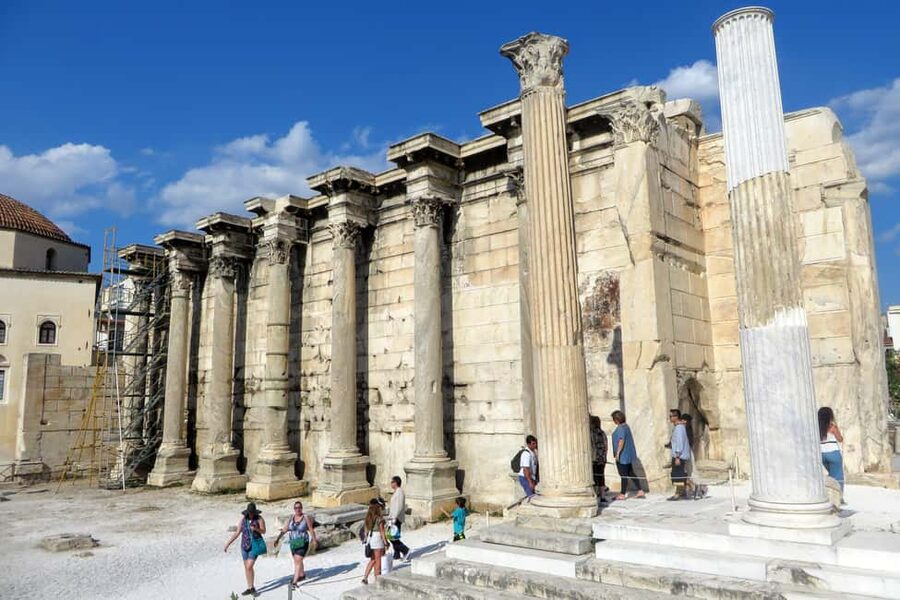
- The Monumental Entrance frames the visit: Four Corinthian columns once greeted people entering from the Roman Agora.
- The central courtyard was more than a garden: It was a social and academic center with colonnades, statues, water, and space for discussion.
- The site changed purpose in the fifth century: Three Christian churches were built here over time.
- The library was probably much larger than the ruins suggest: It may have held 17,000 to 20,000 works in papyrus and parchment.
- The audio guide is available in seven languages: Choose English, French, German, Italian, Spanish, Dutch, or Chinese.
- The visit is short and flexible: Plan on one hour, with no meeting point and no live guide.
What Hadrian’s Library Was Built to Do
Emperor Hadrian built the complex in 132 AD. He had a strong attachment to Greece and wanted Athens to remain a major center for culture and learning under Roman rule.
The name can be slightly misleading. This was not simply a quiet room lined with books. It functioned as a library, school, meeting place, lecture center, and garden. People came to read, teach, debate, walk, and conduct official business.
That wider purpose is important when you visit. If you look only for shelves and books, the site may seem sparse. If you picture it as a full cultural complex, the remaining courtyard and colonnades make much more sense.
I like that the audio guide presents the site through human activity instead of only dates and measurements. The best storytelling helps you look beyond fallen walls and imagine how the place sounded when it was full of conversation.
A few more audio tours around Athens worth a look
- Athens: Cape Sounio & Poseidon Temple Trip with Audio Guide
★ 4.4 · 4,521 reviews - Athens: Acropolis Ticket with Audio Guide
★ 4.0 · 3,575 reviews - From Athens: Delphi Full Day V.R. Audio Guided Tour
★ 4.6 · 3,028 reviews
Starting at the Monumental Entrance
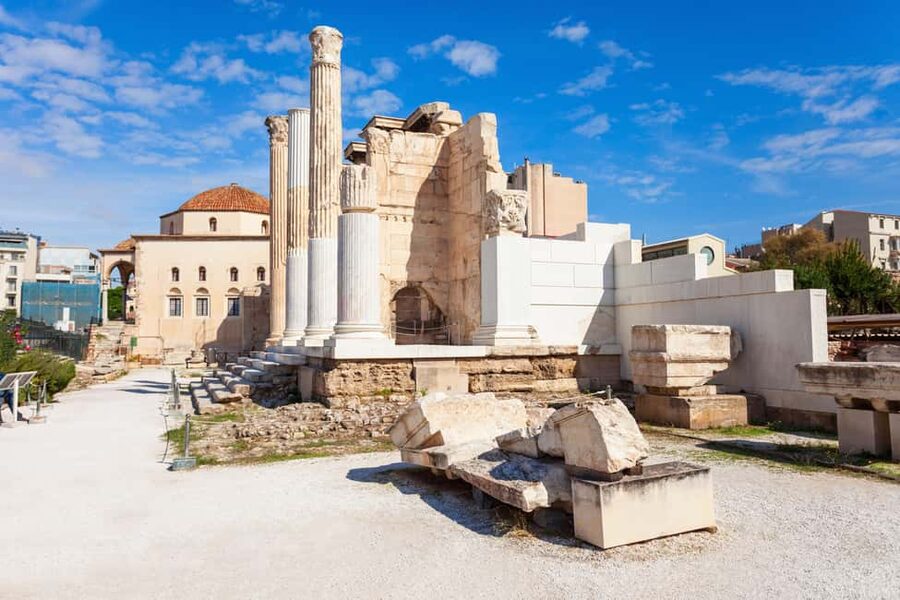
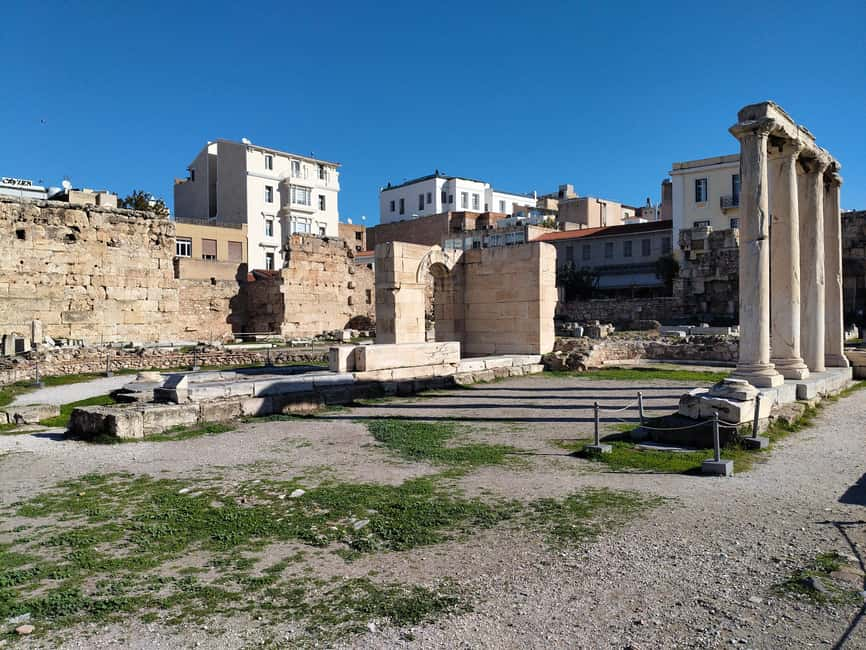
Your visit begins at the Propylon, or Monumental Entrance. This was the public face of Hadrian’s Library, designed to make an immediate impression.
Four tall columns made from purple marble once rose beside white Pentelic marble. The color contrast would have been striking in bright Athenian sunlight. It was a clear display of money, power, and cultural ambition.
The entrance faced the Roman Agora, so the library was connected to the daily life of the city. People could move from the noise and trade of the marketplace into a more ordered space devoted to study and discussion.
This is a good place to start the audio guide because the entrance gives you the basic idea of the whole complex. You are not simply stepping into a storage room for scrolls. You are entering a public institution built to give Athens an intellectual center.
The surviving columns also help you understand the scale of the original structure. Much has disappeared, but the monumental proportions are still readable. Take a few minutes here before moving inward. The entrance is one of the strongest visual points of the visit.
The Central Courtyard and Its Lost Garden
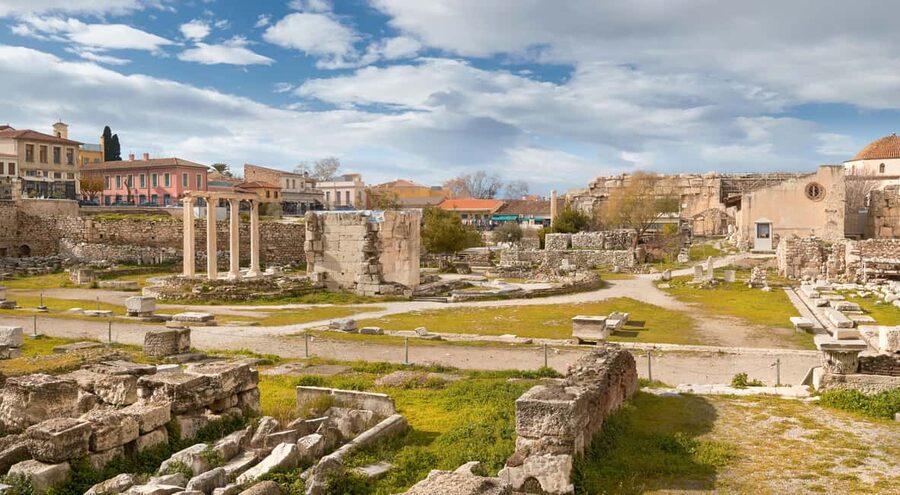
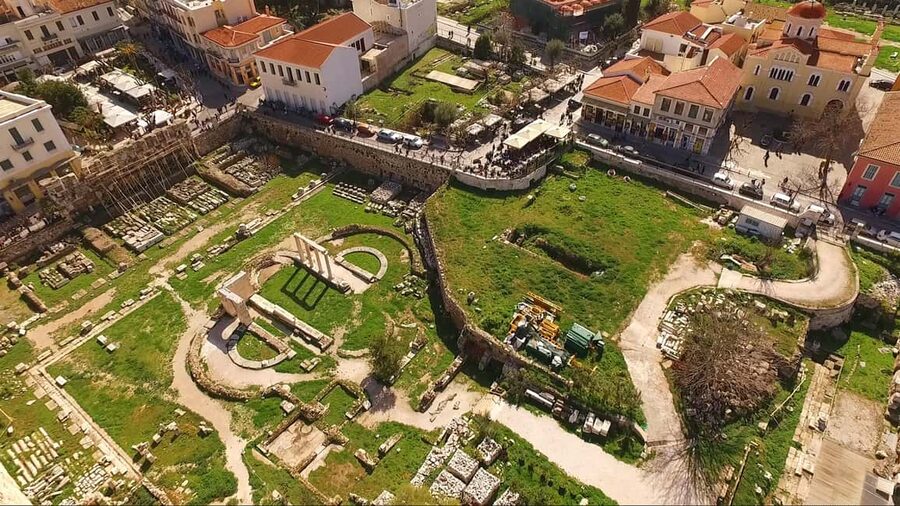
Beyond the entrance was a large central courtyard covered in marble and surrounded by columns. The courtyard formed the heart of the complex.
Statues of gods, heroes, and philosophers once lined the sides. In the center was a long pool surrounded by gardens. Water and planting would have provided a cooler, calmer setting than the streets outside.
The audio guide asks you to picture the courtyard as a working public space. Students could read under the colonnades. Teachers could walk with pupils. Philosophers could argue over ideas. Officials could meet and conduct business.
That description gives the ruins a useful sense of movement. You are not looking at an empty rectangle. You are looking at a place designed for people to linger.
The courtyard is also where the gap between the original design and the present site is most obvious. The gardens, pool, statues, and marble decoration are largely gone. You need some imagination, and the audio guide supplies much of the missing picture.
If you are visiting in the strong midday sun, this is where practical planning matters. Wear comfortable shoes, bring water, and use a hat and sunscreen. An umbrella can also be useful, particularly because much of the visit takes place outdoors.
From Roman Library to Christian Worship
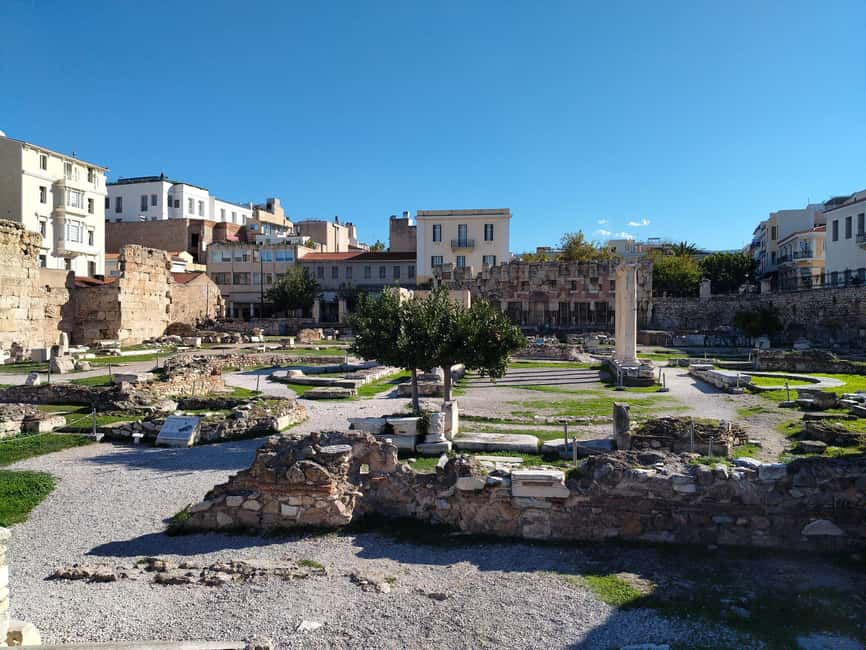
One of the most interesting parts of the visit is the change in purpose during the fifth century AD. The courtyard no longer served mainly as the center of a Roman educational complex. It became a Christian place of worship.
Three churches were built here over time:
- The Tetraconch Church
- A large basilica
- The Church of the Megali Panagia
This sequence shows how Athens changed while the site remained useful. The older Roman buildings were not simply forgotten. The central area was adapted to meet new religious and community needs.
The Tetraconch Church is especially important because its unusual form marks the first major Christian phase at the site. Later, the basilica and the Church of the Megali Panagia changed the arrangement again.
You may find that this part gives the visit more depth than a simple Roman ruin tour. Hadrian’s Library was not frozen in the second century. It continued to serve the city through different periods and beliefs.
I also like that the audio guide treats the Christian buildings as a central part of the story, rather than a footnote. Many ancient sites are presented as if their Roman period were the only period that mattered. Here, the later buildings help you understand how communities reused important places.
Same place, a different route to walk:
- Athens: Acropolis Museum Ticket with optional Audio Guide
★ 4.4 · 2,652 reviews - Athens: Peloponnese Highlights Day Trip and V.R. Audio Guide
★ 4.5 · 1,425 reviews - Athens: Acropolis Museum Ticket with Audio Guide
★ 4.1 · 835 reviews - Athens: National Archaeological Museum Ticket w/ Opt. Audio
★ 4.4 · 713 reviews
The Eastern Library Halls
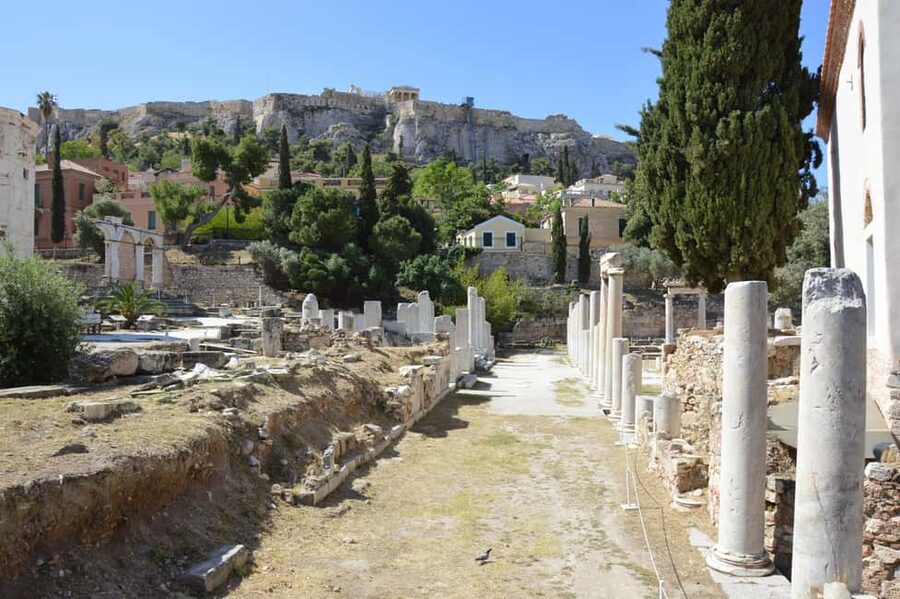
On the eastern side of the courtyard were the library halls. Wooden cupboards held papyrus scrolls and parchment books in niches along the walls.
The collection may have included 17,000 to 20,000 works. That number helps you grasp the scale of the institution, even though the original books and cupboards are gone.
These rooms were not silent reading areas in the modern sense. They included places for reading, lectures, teaching, and debate. Students, philosophers, and officials used the space for study and public discussion.
The distinction matters. Ancient libraries often functioned as active educational centers, not just book repositories. The audio guide explains this well by describing the activity that once filled the rooms.
The eastern wing may not produce the same immediate visual impact as the entrance. Still, it is essential for understanding why the complex was built. The columns and courtyard show its public grandeur, while the library halls explain its practical purpose.
If you enjoy ancient history, this is the point where the visit becomes more than a collection of architectural fragments. You can connect the design to the way information was stored, taught, and shared before printed books.
Walking the Peristyle and Side Chambers

A long peristyle surrounded the courtyard. It had 100 marble columns and provided a covered walkway around the complex.
The peristyle offered shade from the sun and protection from rain. It was also a natural place to walk and talk. Behind the columns were side rooms used for lectures, small meetings, reading, and official work.
This is one of the easiest areas to picture in daily use. A covered walkway naturally encourages people to stop, speak, and move between rooms. The design joined the formal parts of the institution with the social side of learning.
The audio guide helps connect the separate pieces. Without explanation, a row of columns can look like a decorative remnant. With context, it becomes part of the building’s circulation system and public life.
Do not rush through the peristyle simply because it comes near the end. Look at how the columns organized the courtyard and how the rooms behind them supported different activities. The site is compact, but each part had a specific role.
How the Audio Guide Works
This is a self-guided digital experience. There is no live guide, and headphones are not supplied.
After booking, Athenian Tours sends the entrance ticket and instructions by email. Check your spam folder if the message does not appear in your main inbox. You then use the provider’s instructions to download or access the content.
The audio guide is offered in English, French, German, Italian, Spanish, Dutch, and Chinese. That range makes the visit accessible to many international visitors.
There are two practical points to take seriously. First, the web app does not work offline, so you need internet access at the site. Second, your smartphone or tablet should be fully charged.
Bring your own earphones. If you are visiting with someone else, sharing one set may make it harder to follow the commentary, so plan accordingly.
The lack of a live guide has both benefits and limits. You can move at your own speed and pause when you want. You are also responsible for handling the technology and deciding how much time to spend at each stop.
The strongest part of this audio experience is its storytelling. It does not treat the site as a list of cold facts. It gives you images of people using the library, which makes the remaining architecture easier to understand.
Location, Timing, and Getting There
Hadrian’s Library is in central Athens, next to Monastiraki Square. The easiest route is the Blue Metro line to Monastiraki station. From there, the entrance is about a two-minute walk.
Because there is no meeting point, you do not need to search for a guide or gather with a group. You can make your way directly to the entrance once you have the ticket and digital instructions.
The stated duration is one hour. That is a sensible amount of time for a focused visit, especially if you listen to the guide as you move through the Propylon, courtyard, churches, library halls, and peristyle.
I would not treat this as a full-day activity. It fits neatly into a larger central Athens plan, perhaps alongside the Roman Agora and Monastiraki area. The site’s location makes it useful when you want a shorter historical stop between other sights.
You should still check the available starting times before booking. The activity is non-refundable, so be certain about your schedule and make sure you can access the email and audio content before heading out.
Is $28 Good Value?
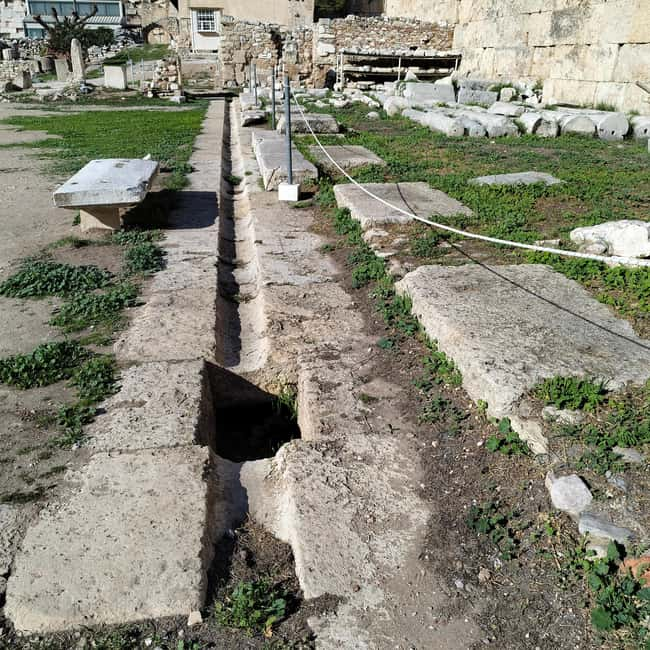
At $28 per person, this is not the cheapest way to see an archaeological site in Athens. The value depends on how much you want from the visit.
If you only want to walk through the ruins and take a few photos, the price may feel high for a one-hour stop. The site is compact, and there is no live guide included.
If you want the entrance ticket paired with a structured explanation in your own language, the price is easier to justify. The audio guide gives the courtyard, churches, library halls, and peristyle a clear place in the story. It also saves you from arriving with no context and trying to piece the ruins together on your own.
I see this as a good fit for independent visitors who prefer flexibility but still want interpretation. It is less suitable if you want lively conversation, questions answered on the spot, or a guide who can adjust the visit to your interests.
The most praised quality is the way the narration turns the past into something you can picture. That matters at an archaeological site where much of the original building has disappeared.
Who Should Choose This Visit?
I would recommend Hadrian’s Library for you if you:
- Like Roman and early Christian history
- Prefer self-guided sightseeing
- Want a short activity in central Athens
- Appreciate storytelling more than a simple list of facts
- Need an audio guide in one of seven languages
- Are comfortable using your own phone and headphones
Families and independent sightseers may like the freedom to move at their own pace. Students of architecture and ancient culture should pay close attention to how the complex changed over time.
You may want to choose a live walking tour instead if personal questions and group discussion are important to you. You should also think twice if you do not have reliable internet access, a charged phone, or your own earphones.
Should You Book Hadrian’s Library?
Book it if you want a focused, well-explained visit to a smaller Athenian archaeological site. The location is excellent, the one-hour length is manageable, and the audio guide gives real meaning to the Roman courtyard, library rooms, and later churches.
Skip it if you are looking for a large monument with many preserved interiors or a live guide. At $28, the ticket and audio narration need to add value for you.
For the right visitor, they do. Hadrian’s Library offers a clear look at how one place served Athens across several eras: Roman cultural center, Christian worship site, Ottoman administrative area, and modern archaeological site. Bring the practical essentials, check your email, and arrive ready to use your imagination along with your phone.
FAQ
Where is Hadrian’s Library located?
Hadrian’s Library is in central Athens, right next to Monastiraki Square.
How do I reach Hadrian’s Library by metro?
Take the Blue Metro line to Monastiraki station. The entrance is about a two-minute walk from the station.
How long does the visit take?
The planned duration is one hour.
Is a live tour guide included?
No. This is a self-guided digital tour with an audio guide, not a live guided visit.
Which languages are available for the audio guide?
The audio guide is available in English, French, German, Italian, Spanish, Dutch, and Chinese.
Do I need internet access at the site?
Yes. The web app does not work offline, so you need internet access during the visit.
What should I bring?
Bring comfortable shoes, a sun hat, sunscreen, water, an umbrella if needed, your own headphones, and a fully charged smartphone or tablet.
How will I receive my ticket and instructions?
Athenian Tours sends the entrance ticket and instructions by email. Check your spam folder if you do not see the message.
Just added around Athens
- Temple of Olympian Zeus: Self-Guided Audio Tour on your Phone (without ticket)★ 4.0 · 8 reviews
- Athens Ticket Pass: Acropolis & 6 Sites with 5 Audio Guides★ 3.5 · 84 reviews
- Ancient Agora of Athens: A Self-Guided Audio Tour★ 3.5 · 3 reviews
- Self Guided Tour In Athens With 100 Captivating Audio Stories★ 4.0 · 4 reviews
- Athens Hop-On Hop Off w/ Acropolis & Acr.Museum tickets & 3 audio★ 3.0 · 5 reviews
- E-ticket for Kerameikos with Audio Tour on Your Phone★ 5.0 · 4 reviews
- Audioguided tour of Athens’ alternative neighbourhood of Exarchia★ 5.0 · 2 reviews
- Private Audio Guided Walking Tour in Athens★ 3.5 · 2 reviews
Athens Audio Tours, compared.

Cape Sounio & Poseidon Temple Trip with Audio Guide
Read our review →

Acropolis Museum Ticket with optional Audio Guide
Read our review →
Peloponnese Highlights Day Trip and V.R. Audio Guide
Read our review →
National Archaeological Museum Ticket w/ Opt. Audio
Read our review →
Acropolis & Parthenon Entrance Ticket w/optional SG Audio Tours
Read our review →Browse the lists this tour appears in