
REVIEW · AMSTERDAM AUDIO TOURS
Amsterdam Self-Guided Audio Tour
Amsterdam rewards the curious walker. This $6 self-guided audio tour gives you a private way to explore 21 sights, from Centraal Station to Zaanse Schans. I like the freedom to choose your own route, and I like the unusually broad mix of museums, markets, historic buildings, and viewpoints. The main catch is that admission fees and transportation are extra, so the bargain price covers guidance, not entry.
You receive a SoundCloud playlist and a Google My Maps route on your selected date. I also like that you can spread the experience across as many as six days instead of racing through Amsterdam in one long outing. Just remember that this is not a GPS-guided tour, and you need a charged phone, internet access, and headphones.
Five things to know before you go
- You get 21 audio stops for $6: That is excellent value if you plan to visit several sights and want historical context without paying for a private guide.
- The route covers far more than the canal belt: You can hear about Rembrandt, Anne Frank, Dutch maritime power, modern art, local markets, and windmills at Zaanse Schans.
- You choose the order: Start at Centraal Station, Dam Square, the Museumplein area, or any other marked location.
- Museum tickets are not included: Rijksmuseum, the Van Gogh Museum, Anne Frank House, NEMO, and other paid sites require separate admission.
- The links last up to six days: This makes it possible to use the audio in short sections instead of attempting every stop in one day.
What this $6 Amsterdam audio tour really offers
This is best understood as a low-cost collection of short audio commentaries, not a guided walk with a person leading you through the streets. Each stop is listed for about 20 minutes, except Verzetsmuseum Amsterdam, which is listed for 10 minutes. In practice, you will also need time for walking, museum visits, food, photographs, and transport.
The advertised duration is three to nine hours. That range makes sense only if you choose selected stops. Listening to every 20-minute segment alone would take about seven hours, before you move between locations or enter any museums. You should treat the itinerary as a menu rather than a command.
I like this arrangement because Amsterdam rewards wandering. You might spend a morning around Centraal Station and the old center, take a break for lunch, then use another part of the audio near Museumplein. The six-day access period gives you room to do that.
The service is private in the simplest sense: only your group uses it. There is no meeting time, no bus, and no need to keep up with a group. The tradeoff is that you are responsible for navigation and timing.
More Self-Guided Audio Tours in the Netherlands
- Amsterdam’s Red Light District: A Self-Guided Audio Tour
★ 4.5 · 9 reviews - Amsterdam Scavenger Hunt and Highlights Self Guided Audio Tour
★ 4.0 · 9 reviews - Self-Guided Audio Tour of The Red Light District
★ 5.0 · 5 reviews
Using SoundCloud and Google My Maps
On your selected date, the access links arrive through the booking platform’s messaging system. One link opens a SoundCloud playlist with the audio tracks. The other opens an interactive Google My Maps itinerary in a web browser.
The map is important. It marks the attractions with headphone icons and lets you select each location. You can also tap the tour title below the map to see the complete list. Selecting a site brings up a link to its individual audio guide.
You should open both links before setting out. The map is intended to be used in a browser, not directly in the Google Maps app. That small detail matters, since using the wrong app could leave you searching for the route or the audio.
Bring:
- Headphones or earphones
- A fully charged smartphone
- Internet access
- A little preparation about which museums you want to enter
The audio can be played before your visit, which is useful for deciding what interests you. You can also listen as you arrive at each location. The links remain valid for up to six days, so you can build your own plan.
Centraal Station, OBA, and NEMO
Centraal Station is a sensible starting point. The audio focuses on the grand station’s construction on wooden poles, its relationship with Amsterdam’s water, details in the decorated facade, and stories connected with wartime resistance. The listed listening time is 20 minutes, and admission to the station is free.
I would use this stop to get your bearings. Amsterdam’s main railway station is also a major transport hub, so it gives the tour a practical beginning. The drawback is that a station can be noisy and crowded, making headphones useful.
The OBA Library offers a different view of the city. Its modern glass architecture and waterfront setting introduce Amsterdam’s effort to turn an industrial area into a cultural district. The audio also discusses the building’s design, public use, and sustainable features.
You do not need to buy a ticket for the library stop. It is a good choice if you want a pause from formal museums and prefer to see how Amsterdam serves residents today. The 20-minute guide focuses on the building and its urban role, not a full cultural program.
Nearby NEMO Science Museum is easy to recognize because of its green, ship-shaped form. The commentary covers architect Renzo Piano, the engineering required to build over a tunnel, and the building’s connection to water and innovation.
Admission to NEMO is not included. You can listen outside and decide later if the exhibits merit the extra ticket. The rooftop is also highlighted for city views, but you should check current access conditions before planning your day around it.
Maritime power and wartime courage
Het Scheepvaartmuseum occupies a 17th-century naval storehouse and offers one of the clearest looks at Amsterdam’s seafaring past. The audio introduces ship construction, navigation, trade, exploration, and the maritime force that helped Amsterdam become a major international center.
This is one of the places where the audio can add real value before you enter. A large museum can feel scattered without a basic framework. Here, you get a short explanation of the building and the subjects you are about to see. The entrance fee is separate, and 20 minutes of audio is only an introduction to the museum.
Verzetsmuseum Amsterdam shifts the focus from national power to personal choices during World War II. The commentary covers underground newspapers, rescue work, resistance activity, and the difficult decisions faced by people living under occupation.
Only 10 minutes of audio is listed for this stop, so it should not be mistaken for a full museum visit. I would allow extra time if the subject matters to you. The museum content is serious, and the self-guided format lets you move quietly and pause when needed. Admission is extra.
More Self-Guided Audio Tours in Amsterdam:
- Self-Guided Audio Tour Holocaust Series: The Jewish Quarter
★ 5.0 · 5 reviews - Self Guided Tours Amsterdam With 100 Captivating Audio Stories
★ 4.5 · 3 reviews - Houseboat Museum Amsterdam Self Guided Audio Tour
★ 5.0 · 3 reviews - Athens: Acropolis Ticket & Optional Self-Guided Audio Tours
★ 4.1 · 2,542 reviews
Four museums around the old center
H’ART Museum presents art in a restored historic setting. The audio describes the building’s former banking use, its later exhibition role, and the way older architectural details are combined with contemporary displays.
The stop is listed for 20 minutes, but the museum itself requires separate admission. This is a useful introduction if you enjoy modern exhibitions but do not want a formal tour. The audio may help you decide how much time to spend inside.
Museum Het Rembrandthuis takes you into the house and studio connected with Rembrandt van Rijn. The commentary covers his collecting habits, artistic methods, financial troubles, and the art market of 17th-century Amsterdam.
This stop is valuable because it connects the painter to ordinary rooms, materials, and domestic life rather than treating him only as a name beside a famous painting. Entry is not included, and you should allow more than the 20-minute audio time if you want to see the house properly.
Our Lord in the Attic Museum offers one of Amsterdam’s most memorable historical settings. A Catholic church was built inside the upper floors of a canal house, reflecting the limits placed on public worship during the city’s religious conflicts.
The audio explains how the space was concealed, how families maintained their faith, and how religious tolerance changed over time. The narrow stairs are part of the character of the building, but they may not suit everyone. Admission is extra, and the listed 20 minutes is only a guide.
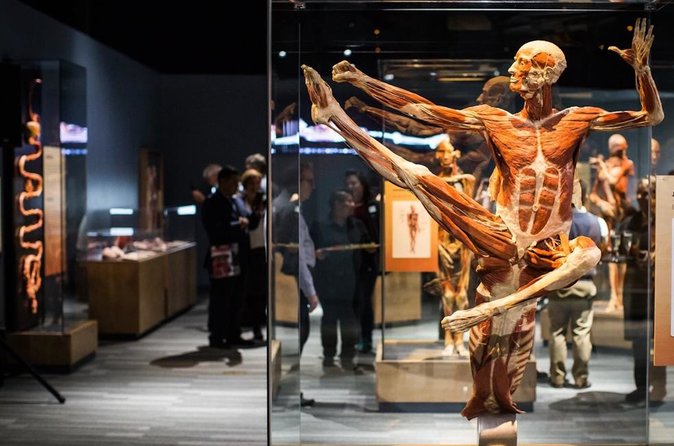
Body Worlds is the most unusual stop in the group. It uses preserved human bodies to explain anatomy, health, mortality, and the plastination process. The audio also addresses the donation program and ethical questions surrounding the displays.
This attraction can be fascinating or uncomfortable, depending on your interests. I would not put it on every visitor’s must-see list, but the self-guided format lets you decide privately. Entry costs extra.
Dam Square, the Royal Palace, and Anne Frank House

Dam Square is the city’s central public stage. The audio follows its change from a medieval marketplace to a place for ceremonies, protests, royal events, and public remembrance.
Admission to the square is free, and it is easy to include while walking between other stops. The area can feel hectic, so listen from a quiet edge rather than expecting perfect concentration in the middle of the square.
The Royal Palace Amsterdam rises directly beside Dam Square. The commentary explains its original role as a city hall, its later connection with the monarchy, its foundations, and the imagery celebrating Dutch wealth and maritime power.
The palace requires a separate ticket. The 20-minute audio gives you a framework for the grand rooms and ceiling paintings, but it is not a substitute for taking time to examine the interiors. If you enjoy architecture and civic history, this is one of the stronger paid stops.
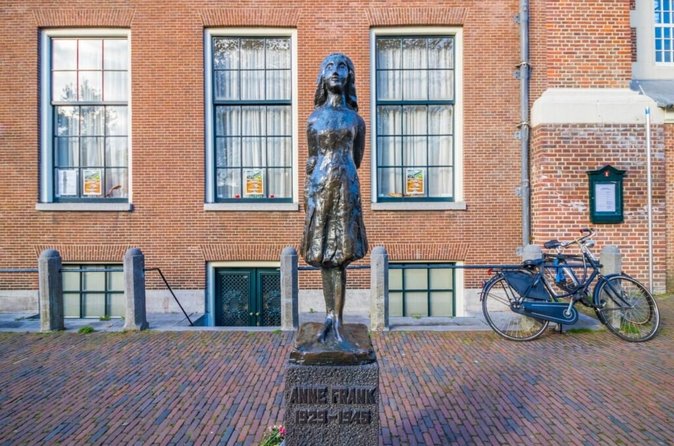
Anne Frank House needs careful planning. The audio covers the persecution of Dutch Jews, the secret rooms, the people who hid there, Anne’s writing, and the preservation of her story.
The house is not merely another sight to fit between two museums. It calls for quiet attention, and you should allow enough time to process what you see. Admission is separate, and the audio cannot replace the experience of entering the preserved rooms. Check ticket arrangements before building your route around this stop.
Begijnhof and the Museumplein cluster

Begijnhof provides a calm contrast to the city center. The courtyard was home to religious women who lived in a community without taking formal vows. The audio discusses their way of life, the courtyard’s architecture, religious change, and Amsterdam’s oldest surviving wooden house.
There is no admission charge for the stop. You should keep your voice low and treat it as a residential and historic place, not simply another photo stop. The 20-minute commentary gives this quiet courtyard a useful social context.
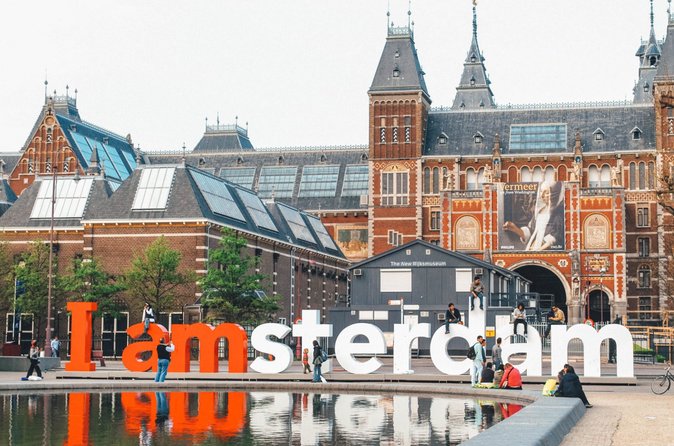
The Rijksmuseum is the major art stop in the collection. The audio introduces the building, its renovation, the Dutch Golden Age, Rembrandt’s Night Watch, and the methods used to protect important works.
Admission is extra, and you could spend much of a day inside. The 20-minute track works best as a short orientation. It can help you decide which galleries deserve your attention, especially if you have limited time.
Moco Museum takes a more recent approach, featuring contemporary art, street art, digital work, and popular cultural figures. The audio explains the museum’s approach to artists such as Banksy and the way modern institutions invite personal response.
This is a smaller and more focused choice than the Rijksmuseum, but it still requires a separate ticket. I would choose it if you want something modern after spending time with Dutch old masters.
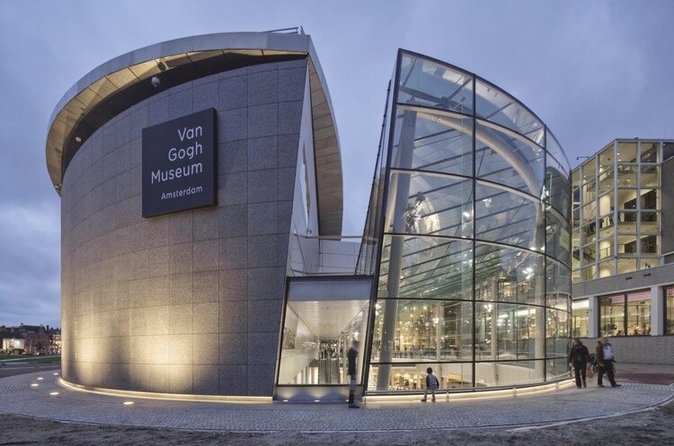
The Van Gogh Museum is another major stop that needs advance planning. The commentary follows Van Gogh’s life, artistic changes, relationships, mental struggles, pigments, and brushwork.
The museum is best taken slowly. Twenty minutes of audio can point out themes to watch for, but it is not enough time to appreciate the collection fully. Entry is not included, and you should organize your ticket before arriving.
The Stedelijk Museum completes the Museumplein group with modern and contemporary art. The audio discusses De Stijl, CoBrA, experimental exhibitions, social issues, and the museum’s modern extension, often called the bathtub.
This stop suits you if you enjoy art that asks questions instead of offering easy answers. Like the other museums, it has its own admission charge.
Vondelpark is the free outdoor stop nearby. The audio connects the park, museums, concert venues, and surrounding streets with 19th-century urban planning. It is a useful place to rest between museum visits.
Albert Cuyp Market and A’dam Lookout

Albert Cuyp Market brings food and daily commerce into the tour. The commentary covers Dutch cheese, family-run stalls, immigration, traditional recipes, and the market’s change from a local gathering to a well-known destination.
There is no admission fee. You pay only for anything you choose to eat or buy. This is one of the best places to use your senses rather than stare at a screen, so listen to the track before walking through the stalls.
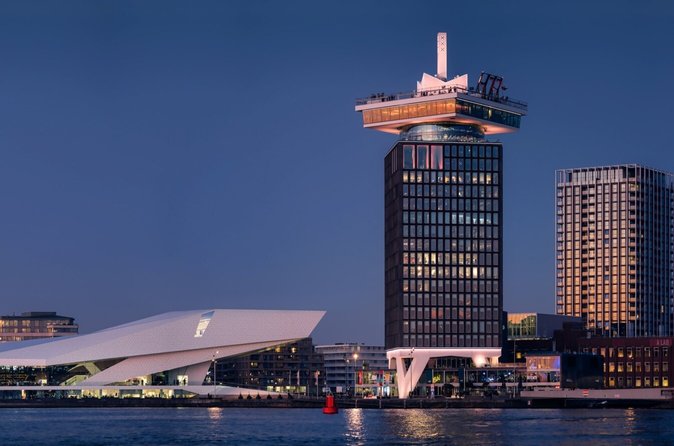
A’dam Lookout offers a high view across Amsterdam. The audio explains the tower’s earlier industrial broadcasting role, the city’s water challenges, urban planning, and landmarks visible from above.
Admission is extra. The value depends on weather and your interest in city views. Because you can choose how long to stay, it works well as a short visit or a longer break.
Zaanse Schans, the one major outing beyond Amsterdam
Zaanse Schans is the only stop that clearly takes you beyond the central city experience. It presents windmills, historic buildings, traditional crafts, cheese-making, and wooden shoe production.
The audio explains how wind power supported Dutch industry and how people adapted to a wet environment. This gives you useful context for the engineering and rural traditions represented there.
Transportation is not included, so you must arrange your own way to reach the site. That makes Zaanse Schans harder to combine casually with the central Amsterdam stops. Plan it as its own outing, and do not assume the three to nine hour estimate includes every transport connection.
Is the $6 price good value?
At $6 per person, the price is hard to criticize if you want an inexpensive introduction to Amsterdam. A single paid attraction can cost far more, while this gives you audio material for 21 locations.
The value drops if you expect admission, transport, a live guide, or turn-by-turn directions. You pay separately for museums and viewpoints, and you need to organize your own movement through the city.
The strongest value comes from selective use. Choose perhaps a few free sights, one or two museums you already plan to visit, and one market or viewpoint. If you try to force all 21 stops into one day, the experience will feel rushed.
One customer praised the engaging commentary and the ability to learn about the city quickly. That matches the product’s main strength: it gives you useful background without tying you to a group schedule. A separate complaint concerned changing the booking date. The terms are strict, and the experience is non-refundable and cannot be amended, so check your date and language choice carefully before paying.
Who should book this experience?
I would recommend it to independent visitors who like deciding their own pace. It suits solo visitors, couples, and families who do not want a fixed walking tour. It is also a good fit if you already know which museums you want to enter and need a little context around them.
It is less suitable if you want a guide to answer questions, keep you oriented, or explain the city as you walk. It is also a poor match if you do not want to use your phone or pay separate entrance fees.
Final booking advice
Book this audio tour if you want a cheap planning tool with short historical explanations and the freedom to build your own Amsterdam days. Prepare both links in advance, carry headphones, and select only the stops that fit your interests.
Skip it if you expect a fully led experience or an all-inclusive ticket. For $6, it offers useful value, but the best experience comes when you treat it as a flexible audio library, not a one-day race through 21 attractions.
FAQ
How much does the Amsterdam Self-Guided Audio Tour cost?
The tour costs $6 per person.
How long does the tour take?
The stated duration is approximately three to nine hours. You can also split the experience across multiple days because the access links remain valid for up to six days.
Is this a GPS-guided tour?
No. It is a self-guided audio tour, not a GPS-guided experience. You choose your route and move between stops using the interactive map and your own navigation.
How do I receive the audio guide?
On your selected travel date, you receive private access links through the booking platform’s messaging system. One link opens the audio playlist, and the other opens the interactive itinerary map.
What platforms host the tour materials?
The audio playlist is hosted on SoundCloud, and the itinerary map is hosted through Google My Maps. The map should be opened in a web browser rather than the Google Maps app.
What should I bring?
Bring headphones or earphones, a fully charged smartphone, and internet access.
Are attraction tickets included?
No. Entry fees are not included. Attractions such as NEMO, Het Scheepvaartmuseum, Verzetsmuseum Amsterdam, the Royal Palace, Anne Frank House, the Rijksmuseum, and the Van Gogh Museum require separate admission where applicable.
Can I start and finish anywhere?
Yes. You decide your starting point, ending point, order of attractions, and daily schedule.
Can I cancel or change the booking?
No. The experience is non-refundable and cannot be changed for any reason. Check the date and language selection carefully before booking.
Just added around Amsterdam
- Van Gogh Museum Ticket with Audio Guide and Unlimited Access Time★ 5.0 · 25 reviews
- Van Gogh Museum with Audio Guide★ 3.5 · 80 reviews
- Self Guided Tours Amsterdam With 100 Captivating Audio Stories★ 4.5 · 3 reviews
- Combo Ticket: Rijksmuseum Amsterdam & 1h Cruise with Audio Guide★ 3.0 · 83 reviews
- Self-Guided Audio Tour of The Red Light District★ 5.0 · 5 reviews
- Houseboat Museum Amsterdam Self Guided Audio Tour★ 5.0 · 3 reviews
- Self-Guided Audio Tour Holocaust Series: The Jewish Quarter★ 5.0 · 5 reviews
- Amsterdam Walking Tour with Audioguide on Your Smartphone★ 3.5 · 3 reviews
Self-Guided Tours, compared.

Acropolis Ticket & Optional Self-Guided Audio Tours
Read our review →


Ultimate Acadia National Park Self-Guided Driving Audio Tour
Read our review →

Santorini: Akrotiri Ticket with Optional Self-Guided Audios
Read our review →
Browse the lists this tour appears in