
REVIEW · AUSTRALIA AUDIO TOURS
Adelaide’s Queer History: A Self-Guided Audio Tour
Adelaide’s past has stories worth hearing. This self-guided queer history walk links city landmarks, Pride sites, and personal stories in a compact route you can complete in about an hour. I like the low price of $11.99 and the freedom to pause whenever you want. I also like the VoiceMap app, which provides offline audio, maps, and GPS directions. The main concern is that the commentary focuses mostly on queer history from the 1970s onward, so you may want more detail about earlier decades.
The walk is produced by Katina Vangopoulos, who worked as a tour guide in Europe before returning to Adelaide and starting her own tour company. That personal connection gives the route a local purpose. Still, one important limitation remains: several sites are easy to locate on your own, and the tour may feel less rewarding if you already know Adelaide’s queer landmarks.
Key points to know before you go
- A $11.99 introduction to Adelaide’s queer past: The price is modest for a private audio experience with lifetime access.
- A route from the Adelaide University Footbridge to Compton Street: You cross central Adelaide while passing cultural institutions, nightlife venues, Pride Walk, and Light Square.
- A curious pair of pink short shorts: The tour explains why polyester blend pink short shorts matter to Adelaide’s queer story.
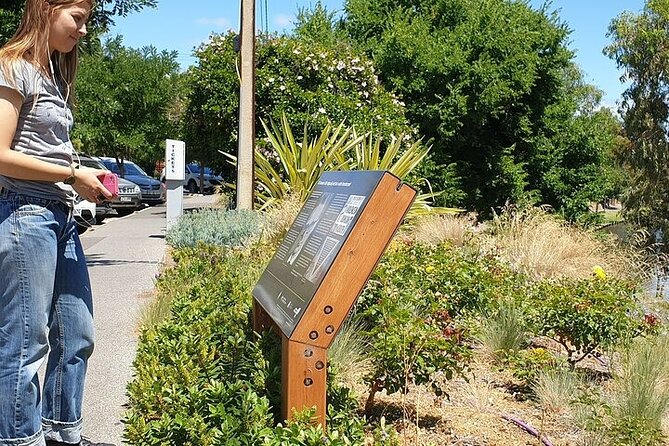
- VoiceMap works offline: Download the audio, map, and location data before setting out so you do not need mobile service along the way.
- You control the pace: Finish in roughly one hour, or stop longer at places that catch your attention.
- A useful but limited historical lens: The tour gives most attention to modern queer history, especially from the 1970s onward.
Starting at the Adelaide University Footbridge
The tour begins at the Adelaide University Footbridge beside Karrawirra Parri in North Adelaide. This is a practical starting point because the route immediately places you within Adelaide’s central cultural area rather than sending you to a distant suburb.
Before the walking commentary begins, the audio explains how VoiceMap works. That matters if you have never used a GPS-triggered tour. You receive directions to the starting point, put in your headphones, open the app, and tap start when you are ready.
The app then plays each section automatically as you move. You do not need to keep checking a written itinerary or search for the next stop. If you walk off course, the turn-by-turn directions help guide you back.
I would download everything before leaving your accommodation. The tour includes offline access to the audio, maps, and geodata, so you can listen without relying on a live phone signal. You still need your own smartphone and headphones, which are not supplied.
The walk is private in the sense that only your group uses it. There is no guide waiting at the bridge and no fixed departure time. That makes it a good fit if you dislike joining a large group or want to begin after breakfast, before dinner, or whenever your day allows.
More History Audio Tours in the world:
- Colosseum, Roman Forum & Palatine Hill with Audioguide App
★ 4.4 · 6,291 reviews - Venice: St. Mark Basilica Ticket, Audioguide+History Gallery
★ 3.9 · 4,780 reviews - Rome: Colosseum, Ancient Rome Tour or AudioGuided Tour
★ 4.4 · 2,879 reviews
The Migration Museum and the question of belonging
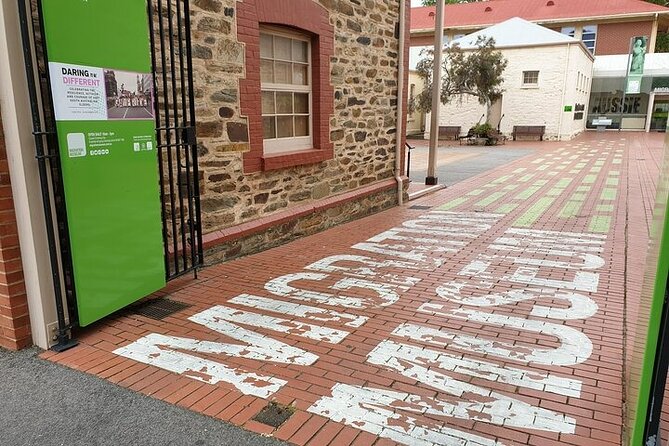
The route passes the Migration Museum, one of Adelaide’s key cultural institutions. You do not receive admission to the museum, and the experience does not include a museum visit. Instead, the audio discusses the building and its place along the route.
This stop adds useful context because queer stories often connect with wider questions about identity, belonging, movement, and public life. The tour does not simply send you from one nightlife venue to the next. It places queer Adelaide within the city’s broader civic and cultural setting.
If you want to enter the museum, plan that separately. The $11.99 covers the audio walk only, and attraction tickets are not included. You should also allow extra time if you stop inside, since the advertised walking time of one to one and a half hours assumes the audio route itself rather than a full museum visit.
I like this part of the walk for its balance. You get a queer-focused story while moving through places that many people might otherwise view only as general sightseeing stops. The limitation is that the supplied details do not identify a particular exhibition or gallery section here, so the value comes mainly from the commentary rather than an included indoor experience.
Art, politics, and one historic work
Next, the walk passes the Art Gallery of South Australia. Again, you hear about the institution while continuing along the route rather than receiving entry to the collection.
The audio also points to one particular historic artwork inside the gallery. That detail gives the stop more focus than a simple mention of the building. If the piece interests you, you can choose to return later and see it in person, but admission and any gallery visit are outside the tour.
This is one of the better uses of a self-guided format. The audio can introduce an object without forcing you to spend an hour inside the gallery at that moment. You can keep moving, note the name of the work, and decide later if it deserves a closer look.
You should keep your expectations measured. The route does not promise a full art-history tour or a guided gallery visit. Its purpose is to connect one work and one major institution with Adelaide’s queer story. That is enough to sharpen your sense of place, but not enough to replace a dedicated museum tour.
Mary’s Poppin and Adelaide’s nightlife story
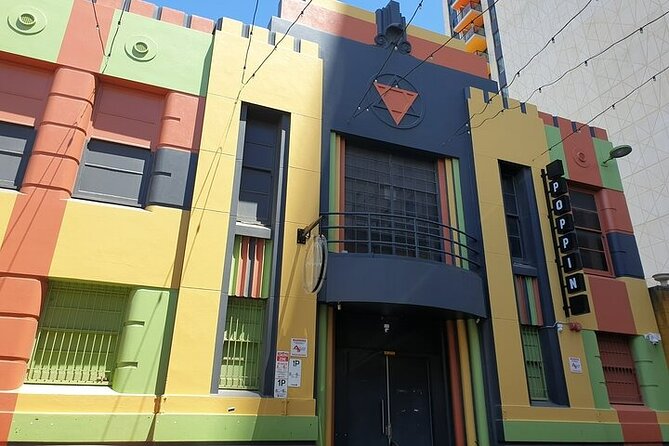
The route then passes Mary’s Poppin, a well-known Adelaide venue associated with queer nightlife. This stop shifts the tone from public institutions to the places where people gather, perform, socialize, and build community.
You hear about the venue as you walk. Since there is no included entry, food, or drink, treat it as an outside stop unless you make separate plans. The audio gives you the historical and cultural frame, while the venue itself remains an optional part of your evening.
I like this contrast between the Art Gallery and Mary’s Poppin. One represents formal culture and public collections. The other points toward nightlife and community space. Together, they show why a city’s queer story cannot be reduced to one parade or one bar.
The tour’s treatment of modern queer history is strongest in sections like this. If your main interest is Adelaide’s queer life from the 1970s onward, the route should give you a useful introduction. If you are looking for detailed accounts of earlier legal, social, or personal history, you may find the treatment too brief.
That is the central choice you are making with this tour. You are paying for an accessible city walk with selected stories, not an academic history course. At $11.99, that distinction is reasonable, but it is worth knowing before you book.
More Self-Guided Audio Tours in the world:
- Athens: Acropolis Ticket & Optional Self-Guided Audio Tours
★ 4.1 · 2,542 reviews - Gettysburg Battlefield Self-Guided Driving Audio Tour
★ 4.5 · 910 reviews - Joshua Tree National Park Self-Guided Driving Audio Tour
★ 4.5 · 762 reviews - Ultimate Acadia National Park Self-Guided Driving Audio Tour
★ 4.0 · 521 reviews
Adelaide’s Pride Walk and the importance of pink shorts
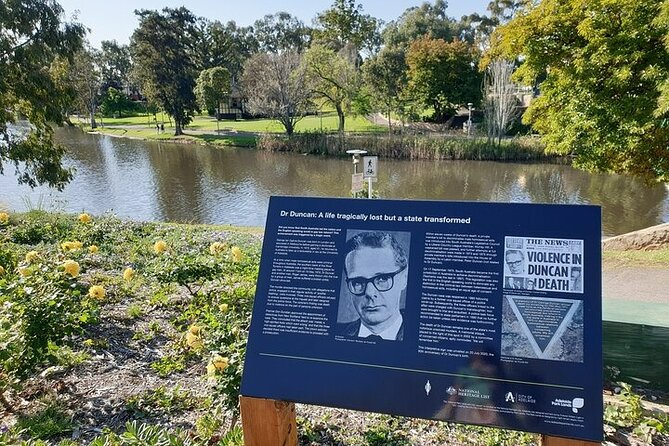
A particularly memorable detail is the explanation of why a pair of polyester blend pink short shorts matters to Adelaide’s queer history. It is the kind of small, concrete object that can make a broad historical subject easier to picture.
Rather than giving you only dates and institutions, the tour uses a specific item to connect personal expression with public history. The shorts may sound humorous at first, but that is part of their value. Queer history often survives through clothing, photographs, venues, marches, and objects that carry meaning beyond their everyday use.
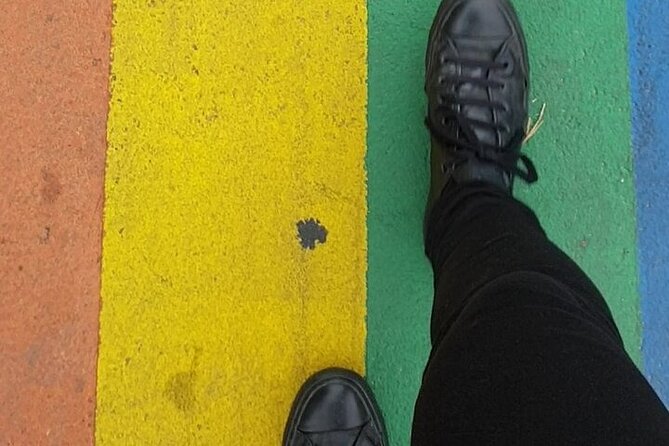
The route also takes you across part of Adelaide’s Pride Walk. You hear about the first Pride Walk and how the city’s public expression of queer identity developed.
This section should appeal to anyone who wants to understand how private community life became more visible in public spaces. A walk can make that point more clearly than a list of dates because you are physically moving through the streets connected with the story.
The route is not described as covering every part of Pride Walk. You should expect a selected section rather than a full, formal tour of the entire installation. Still, it gives you a reason to look down and pay attention to the path under your feet instead of treating it as ordinary pavement.
Light Square and Adelaide’s pride marches
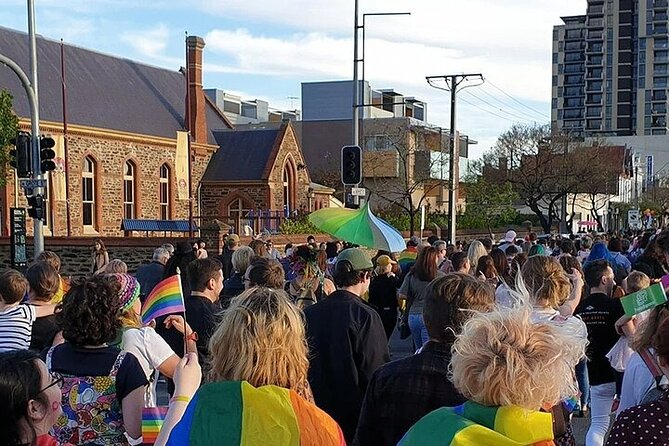
The final major area is Light Square, where the audio continues the story of Adelaide’s pride march. This gives the route a sense of movement and public action. You have already heard about venues, museums, art, and Pride Walk. Here, the focus turns more directly to marches and shared visibility.
Light Square also helps keep the walk grounded in the city rather than turning it into a series of disconnected anecdotes. The route has a clear physical progression, and the final section brings the public side of queer history into view.
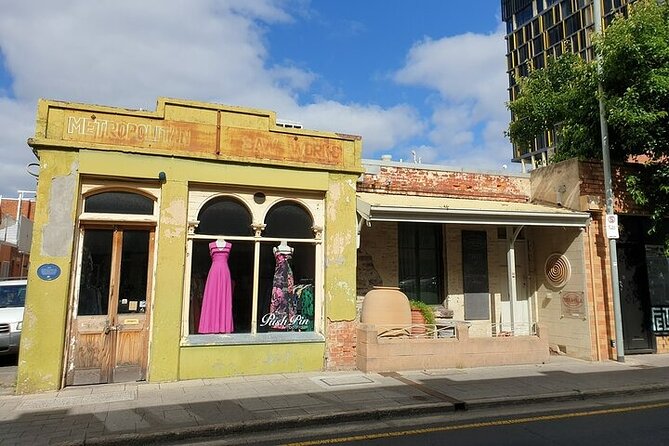
The tour ends on Compton Street in Adelaide. There is no return transfer, and transportation is not included, so check your plans before starting. You may want to finish near your next meal, evening activity, or accommodation, depending on where you are staying.
Because the walk lasts about one to one and a half hours, the route should fit easily into a morning or afternoon. The time can stretch if you stop for photos, pause the audio, visit an attraction, or spend time thinking about a particular story. That flexibility is one of the experience’s strongest features.
How the VoiceMap format affects the experience
VoiceMap is designed for independent walking rather than live guiding. The GPS playback starts sections based on your location, and the app supplies turn-by-turn directions. This reduces the need to stare at a map, though you should still pay attention to traffic, crossings, and your surroundings.
The tour includes lifetime access in English. You can use it before your scheduled date and after it, rather than treating your booking as a single-use event. There is also a virtual tour option, which lets you listen from home.
That home option is useful if you want to preview the route, revisit the stories after your walk, or cannot make it to Adelaide. It does not replace being in the city, but it adds value to a low-cost purchase.
The format also has clear limits. You do not have a person beside you to answer questions, adjust the route, or offer extra context. If you enjoy conversation and spontaneous local recommendations, a live guide would offer more. If you prefer privacy, control, and a quiet pace, the app may suit you better.
Is $11.99 good value?
For $11.99 per person, I see this as a low-risk introduction rather than a major sightseeing purchase. You receive the audio, maps, GPS data, offline access, and lifetime use. There are no museum tickets, meals, transport costs, or physical guide fees included.
The value is strongest if you are new to Adelaide, interested in queer history, or want a structured walk that you can fit around other plans. The price also makes it reasonable to use the tour as a starting point, then return independently to the Art Gallery, Migration Museum, Pride Walk, or Mary’s Poppin.
The value is weaker if you already know the landmarks well. One clear criticism is that you can locate some of the sites and basic information yourself, especially with a phone. The tour needs to earn its price through storytelling and connections between places, not simply by pointing out buildings.
The published booking pattern suggests people reserve it well ahead, with an average of 33 days. That does not mean you must book months in advance, but it is sensible to reserve it when you finalize your Adelaide plans. You can cancel for a full refund up to 24 hours before the start time. Changes or cancellations inside that window are not accepted for a refund.
Who should take this Adelaide audio walk?
I would recommend it to:
- People interested in Adelaide’s queer past and present
- First-time visitors who want a short city walk with a clear theme
- Independent visitors who dislike fixed group departures
- Couples, friends, and private groups who want to listen together
- Anyone who likes to pause, replay, or revisit a tour later
- Visitors comfortable using a smartphone and headphones
I would be more cautious if you want a detailed account of Adelaide before the 1970s. The historical coverage appears weighted toward modern queer history. You may also want something else if you prefer a live local guide who can answer questions as they arise.
The route suits adults and most people who can take part in a normal city walk, but the supplied information does not provide detailed accessibility notes. If you have specific mobility needs, confirm the route conditions before booking.
Should you book it?
Book this tour if you want an affordable, private, flexible introduction to Adelaide’s queer landmarks and pride history. The pink short shorts, Pride Walk, Light Square, and Mary’s Poppin give the walk memorable anchors, while VoiceMap keeps the timing in your hands.
Skip it if you already know these places well or expect a detailed history reaching far before the 1970s. For most first-time visitors with an interest in Adelaide’s queer story, $11.99 is a fair price for an hour of focused walking and a useful audio guide you can keep using after the day ends.
FAQ
How long does Adelaide’s Queer History audio tour take?
The tour takes approximately one hour to one and a half hours. You control the pace and can pause at stops along the way.
Where does the tour start?
It starts at the Adelaide University Footbridge beside Karrawirra Parri in North Adelaide, South Australia.
Where does the tour finish?
The tour ends on Compton Street in Adelaide.
Is a live guide included?
No. This is a self-guided audio tour accessed through the VoiceMap app. Only your group participates, and there is no live guide accompanying you.
Does the tour work offline?
Yes. The VoiceMap app provides offline access to the audio, maps, and geodata.
Are attraction tickets, food, or headphones included?
No. Museum and attraction entry, food, drinks, transportation, a smartphone, and headphones are not included.
Just added around the world
- Coba Ruins: Self-Guided Walking Audio Tour in Mexico★ 3.5 · 2 reviews
- Self Guided Driving Audio Tour of Saguaro National Park★ 3.0 · 4 reviews
- Torino Walking Tour with Audio and Written Guide by a Local★ 4.5 · 35 reviews
- Self-Guided Audio Driving Tour of Mount Lemmon★ 5.0 · 4 reviews
- Trondheim’s Inner Circle: A Self-Guided Audio Tour★ 4.0 · 15 reviews
- A Tromsø Introduction: A Self-Guided Audio Tour★ 3.5 · 19 reviews
- Panorama Bus Tour with Audio Guide★ 4.0 · 3 reviews
- Saguaro National Park Self-Guided Audio Tour★ 3.5 · 11 reviews
Self-Guided Tours, compared.

Acropolis Ticket & Optional Self-Guided Audio Tours
Read our review →


Ultimate Acadia National Park Self-Guided Driving Audio Tour
Read our review →

Santorini: Akrotiri Ticket with Optional Self-Guided Audios
Read our review →
Browse the lists this tour appears in