REVIEW · PARIS AUDIO TOURS
Paris: Rodin Museum Ticket & Optional Digital AudioGuide App
Sculpture feels different at close range. The Rodin Museum gives you that chance, placing The Thinker, The Gates of Hell, and hundreds of other works inside the elegant Hôtel Biron and its garden. I like the freedom to explore at your own speed, and I like the mix of finished marble, early plaster, and outdoor sculpture. The main catch is that the audio guide is independent, does not cover the gardens, and may not always explain every work you want to see.
At $23 per person, this is a fair choice if you want a focused art stop in central Paris and plan to use the audio guide. The museum itself is the star, not a guide-led tour, so you enter on your own at 77 Rue de Varenne and set your own pace.
The visit is valid for one day, with no need to stay for a fixed time once inside. Bring a charged smartphone, your own headphones, and a passport or ID card if you may qualify for free entry. The ticket is non-refundable, so check your date carefully before booking.
Key points to know before you go
- The Thinker at close range: See Rodin’s famous figure in person, where surface, weight, and small details are much easier to appreciate than in a photograph.
- Hôtel Biron: Walk through the 18th-century mansion that became Rodin’s home and studio, with works arranged through its elegant rooms.
- A sculpture garden in the city: Outdoor works give you room to step back and see how Rodin’s figures change in open air and natural light.
- Early plasters and later works: The collection lets you compare Rodin’s first working forms with pieces from the later part of his career.
- Camille Claudel’s work: The museum also presents pieces by Rodin’s muse and protégé, adding another important thread to the visit.
- Bring your own audio setup: The digital guide arrives by link, and you need your own headphones and a charged phone to use it.
Why the Rodin Museum deserves a place in your Paris plans
The Rodin Museum is not a giant, exhausting art museum where you must march through room after room. It gives you a clear subject: Auguste Rodin, his working process, his most famous sculptures, and the artists connected to him.
That focus makes the museum easy to fit into a Paris day. You can spend a full day if you want to study the collection and garden, or make it a shorter stop built around the best-known works. The ticket remains valid for one day, but once you leave, you cannot re-enter with the same ticket.
I especially like the way the museum shows sculpture from more than one angle. Rodin’s finished pieces are important, but the early plasters can be just as revealing. They show an artist thinking through form before a work reaches its final material and surface.
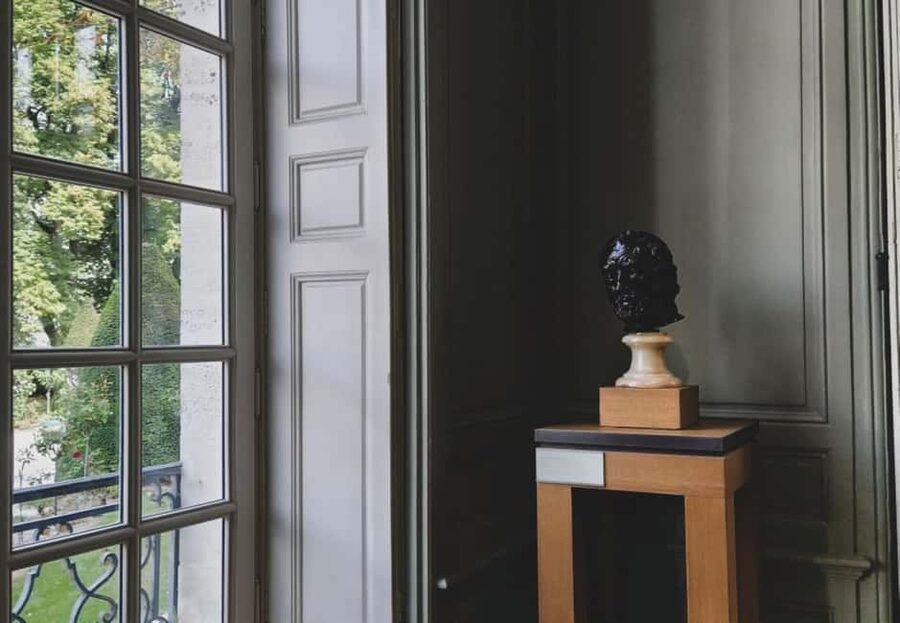
The setting adds another layer. The Hôtel Biron was an 18th-century mansion and became Rodin’s home and studio. Instead of seeing the sculptures in a plain modern gallery, you encounter them in rooms with a strong sense of place, then move outside for works displayed in the garden.
This is a good choice if you want art that rewards looking rather than rushing. You do not need to know much about Rodin before arriving. The audio guide can supply background on his life, methods, and the period in which he worked, while the museum itself gives you time to form your own reaction.
More Museum Audio Tours in France
- Paris: Louvre Museum Hosted Entry and Mona Lisa Audioguide
★ 4.6 · 5,235 reviews - Paris: Orsay Museum Entry Ticket and Digital Audio Guide App
★ 4.4 · 3,170 reviews - Louvre Museum Timed Entrance Ticket with Audio Guide
★ 3.0 · 453 reviews
Entering Hôtel Biron at 77 Rue de Varenne
There is no group meeting point. You go directly to Musée Rodin at 77 Rue de Varenne, 75007 Paris, and enter independently with your ticket.
That arrangement suits people who dislike being tied to a guide or a gathering time. You can arrive during your selected time window, pass through the entrance process, and begin with the mansion or the garden according to your own plan.
The museum opens Tuesday through Sunday from 10:00 a.m. to 6:30 p.m. Last entry is at 5:45 p.m., and the rooms close at 6:15 p.m. Mondays, January 1, May 1, and December 25 are closed days.
Do not plan to arrive at the last moment. A late afternoon entry may leave you with less time than expected, especially if you want both the indoor collection and the garden. Since you cannot exit and come back in on the same ticket, make sure you have everything you need before entering.
Children must be accompanied by an adult, and unaccompanied minors are not allowed. Visitors under 18 and residents of the European Union under 26 can enter free with valid identification, so check your eligibility before paying $23.
Inside the mansion: Rodin’s work in rooms with character
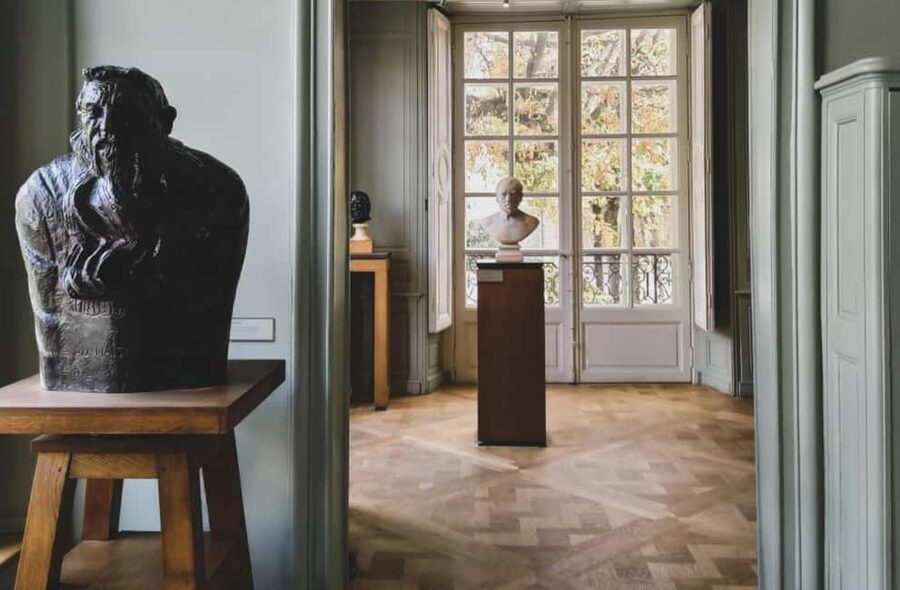
The indoor visit takes place through the rooms of Hôtel Biron. This is where you can examine Rodin’s sculptures at close range, without the distractions of a large museum covering many artists and centuries.
The collection includes more than 6,000 sculptures. You will not study every piece in one visit, but the number gives you a sense of the museum’s scope. The collection reflects Rodin’s artistic experiments, from early plaster forms to later works that show how his ideas developed over time.
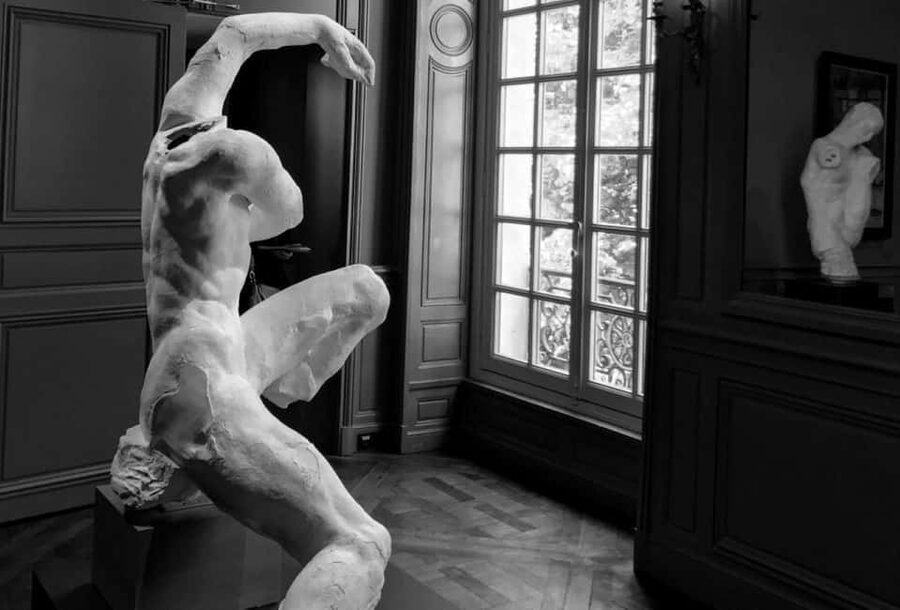
Look carefully at the surfaces. Rodin is known for figures that feel active and unfinished in places, and the museum lets you inspect those choices directly. A photograph often reduces a sculpture to a single shape, but in person you can move around it and notice how the form changes with your position.
The early plasters are particularly useful for understanding his process. They reveal stages of making that are easy to miss when you see only a famous final version. If you like knowing how art is built, these works may interest you as much as the major finished sculptures.
The rooms also include works connected to Camille Claudel, Rodin’s muse and protégé. Her presence widens the visit beyond a single celebrated artist and gives you another body of work to consider alongside his.
Seeing The Thinker and The Gates of Hell
The museum’s major draw is the chance to see Rodin’s best-known works in person. The Thinker is familiar from books, films, and countless reproductions, but its physical presence is different when you can study the body, pose, and surface at close range.
Take your time with it. Notice how the figure’s posture suggests thought through the entire body, not only the head. You can also walk around the sculpture and see how the silhouette shifts from different angles.
The Gates of Hell offers another kind of experience. This ambitious work contains a crowded field of figures and movement, so it rewards patient looking rather than one quick glance. It also helps explain how Rodin explored bodies, gestures, and emotional intensity on a large scale.
The museum is a good place to compare famous works with less familiar pieces. Once you have seen The Thinker, resist the urge to leave immediately. The smaller sculptures and working forms can show you more about Rodin’s choices than a single iconic object.
Photography is allowed in the museum and garden areas, so you can take your own pictures of the art. Use that freedom as a way to record details for later, but do not let your phone turn the visit into a camera checklist. Sculpture asks for a little time.
More Museum Audio Tours in Paris
- Paris: Louvre Museum Ticket & Exclusive Immersive AudioGuide
★ 3.5 · 369 reviews - Paris: Louvre Museum Hosted Entry & Masterpieces Audio Guide
★ 4.2 · 281 reviews - Paris: Museum of Decorative Arts Ticket and City Audio Tour
★ 3.3 · 146 reviews - Paris: Rodin Museum Skip-the-line Entry Ticket with Audio
★ 4.0 · 102 reviews
The garden: the museum’s most pleasant change of pace
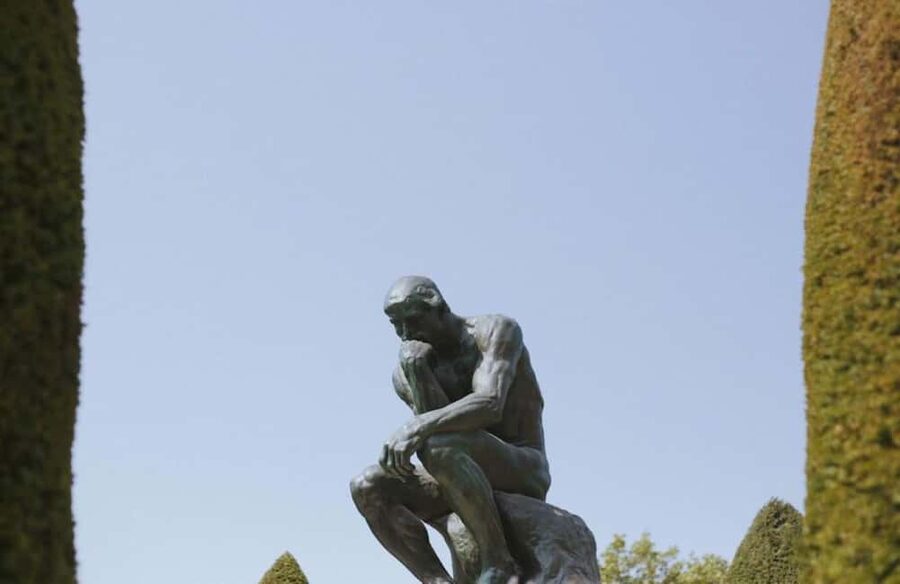
After the rooms of Hôtel Biron, the garden gives you space and a different light. Rodin’s sculptures are no longer contained by walls, and you can step back to see their relationship to open ground and the surrounding estate.
A sunny day can make this part of the visit especially enjoyable. You get a slower walk between works, with less pressure to stand in one exact spot. The garden is also useful if the indoor rooms begin to feel crowded or visually intense.
The digital audio guide does not cover the gardens, so you should treat this section as a self-guided walk. Read any available information on site and spend time looking at how the sculptures appear outdoors rather than expecting a spoken explanation for every stop.
That limitation matters if you are paying mainly for interpretation. The garden remains an important part of the museum experience, but the audio guide will not provide a full route through it.
The outdoor area also gives you better opportunities to take photographs from a distance. Again, move around the sculpture before deciding on a favorite view. Rodin’s work often changes considerably when you shift your position.
How useful is the digital audio guide?
The audio guide is a downloadable app accessed through a link. It is separate from the museum’s paid audio guide and is not an official museum service, so museum staff cannot help you operate it.
The link is sent to the email address used when booking, usually the day before your visit, and it also appears on your voucher. Check your email before leaving for the museum. A charged smartphone and your own earphones are required, and headphones are not included.
The guide offers several languages: English, German, French, Italian, Japanese, Spanish, Chinese, Korean, Dutch, Portuguese, Hindi, and Arabic. That range makes the package practical for many people, especially if you prefer to hear explanations rather than read labels.
Its content covers Rodin’s life, artistic methods, personal stories, and the historical setting of his work. Used well, it gives structure to a self-guided visit and helps you understand why the plasters and unfinished-looking surfaces matter.
Still, keep your expectations in check. The audio is not guaranteed to cover every object, and it does not cover the gardens or temporary exhibitions. It may also feel uneven in places, with some explanations more useful than others.
For that reason, I see the audio as a helpful extra rather than the main reason to book. If you enjoy learning through commentary, it can add real value. If you prefer to look quietly or already know Rodin’s work, you may be satisfied with the museum and garden alone.
Is $23 good value for this Paris museum visit?
The $23 price includes admission to Musée Rodin and the digital audio guide. Value depends on how you use the visit.
For an adult who wants the museum, garden, famous sculptures, and background commentary, the price is reasonable for a full-day ticket in Paris. You can arrive at a convenient time, stay as long as you like during the day, and explore without paying for a fixed-length private tour.
The price is less appealing if you qualify for free admission. Visitors under 18 and EU residents under 26 can enter free with valid identification, so those visitors should confirm the current booking conditions before purchasing this package.
It is also less useful if you do not plan to use the app. The audio guide requires preparation, your own headphones, and a working phone. If you want a formal museum audio guide or help from museum staff with the app, this arrangement may not suit you.
The non-refundable policy is another reason to plan carefully. Check the opening day, date, and your email address before booking. A valid email matters because that is where the audio link is sent.
Who will enjoy this experience most?
I would recommend the Rodin Museum to anyone who wants a focused art visit rather than a broad survey of Paris museums. It suits first-time visitors who want to see The Thinker, as well as returning visitors who prefer to spend time with one artist.
It is also a good fit for people who like gardens, photography, and historic interiors in equal measure. The combination of Hôtel Biron and outdoor sculpture gives the visit variety without requiring a second attraction.
Families can make good use of the flexible timing, but children must remain with an adult. The museum may be most rewarding for older children and teenagers who can engage with the idea of sculpture being changed, cast, and developed over time.
You should think twice if you dislike using your phone at museums. There is no in-person guide, the digital guide is independent from the museum, and staff cannot provide technical help with it. You should also think twice if the temporary exhibition is your priority, since the digital guide does not include temporary exhibitions.
Practical tips for a smoother visit
- Check your email the day before: The audio link is sent by email and also appears on your voucher.
- Charge your phone fully: The guide depends on your smartphone, and there is no included audio equipment.
- Bring headphones: Earphones or headphones are not supplied.
- Carry identification: It is required for entry checks and may prove free admission eligibility.
- Allow time for both sections: The mansion and garden offer different experiences, so avoid using all your time indoors.
- Do not leave mid-visit: Re-entry is not permitted with the same ticket.
- Plan around closing times: Last entry is 5:45 p.m., but the rooms close at 6:15 p.m.
- Check the closure days: The museum is closed Mondays, January 1, May 1, and December 25.
Should you book the Rodin Museum ticket?
Book it if you want a flexible, self-guided visit centered on Rodin’s major works, his working process, and the setting of Hôtel Biron. The garden, early plasters, Camille Claudel works, and permission to take your own photos give the visit more depth than a quick stop for The Thinker alone.
The $23 price makes the most sense for adults who will use the audio guide and stay long enough to see both the mansion and garden. It is not the best choice for someone who wants a live guide, official museum audio support, or detailed commentary on the garden and temporary exhibitions.
For most art-minded visitors, this is a calm and worthwhile Paris stop. Go early enough to avoid squeezing the garden into the final minutes, bring your own headphones, and give the less famous sculptures the same attention as the icons.
FAQ
Where is the Rodin Museum located?
The museum is at 77 Rue de Varenne, 75007 Paris, France. You enter the attraction on your own, with no group meeting point.
How long is the ticket valid?
The ticket is valid for one day. Once inside, you may stay as you like during that day, but you cannot leave and re-enter with the same ticket.
What are the Rodin Museum opening hours?
The museum is open Tuesday through Sunday from 10:00 a.m. to 6:30 p.m. Last entry is at 5:45 p.m., and the rooms close at 6:15 p.m.
Is the museum closed on any days?
Yes. It is closed Mondays, January 1, May 1, and December 25.
Is the audio guide an official museum guide?
No. The digital audio guide is an independent service and is separate from the museum’s paid audio guide. Museum staff cannot assist with it.
What do I need to use the digital audio guide?
Bring a charged smartphone and your own headphones or earphones. The audio link is sent by email, usually the day before your visit, and is also shown on your voucher.
Can children enter the museum?
Children must be accompanied by an adult, and unaccompanied minors are not allowed. Visitors under 18 and EU residents under 26 can enter free with valid identification.
More Smartphone Audio Tours in Paris
- Montmartre Paris Walking Tour with Audioguide on Your Smartphone
★ 4.5 · 17 reviews - Paris Street Art, smartphone audioguided tour
★ 5.0 · 15 reviews - Mysteries & Legends, smartphone audioguided walking tour
★ 4.5 · 13 reviews - Paris Jewish Quarter Marais Smartphone GPSAPP Audio Walking Tour
★ 4.0 · 11 reviews
More Smartphone Audio Tours in France
- Paris Orsay Museum Entry Ticket with Digital Audio Guide
★ 3.5 · 93 reviews - Paris: Musee De L’Armee Ticket With Digital Audio Guide
★ 4.2 · 39 reviews - Paris Audioguide – TravelMate app for your smartphone
★ 4.1 · 27 reviews - Louvre Paris Tour with Audioguide on Your Smartphone (no ticket)
★ 3.5 · 20 reviews
Just added around Paris
- The Tuileries Garden’s Classic Sights: A Self-Guided Audio Tour★ 4.0 · 3 reviews
- Self-Guided Audio Tour -The Eiffel Tower, Exterior★ 4.0 · 9 reviews
- Audioguide – The Eiffel Tower and its secrets★ 4.0 · 4 reviews
- A Self-Guided Audio Tour Around Parc Montsouris★ 3.5 · 6 reviews
- The French Revolution: Self Guided Audio Tour of Paris★ 4.5 · 3 reviews
- Summit Eiffel Tower Audio Guide Tour with Unlimited Time Access★ 4.5 · 58 reviews
- Self-Guided Audio Tour – Montmartre: The heart of art and bohemia★ 3.5 · 7 reviews
- Latin Quarter, Paris Walking Tour with Audioguide★ 4.5 · 2 reviews
Museums, compared.
Uffizi Priority Ticket & Masterpieces Audio App
Read our review →
Louvre Museum Hosted Entry and Mona Lisa Audioguide
Read our review →
St. Mark Basilica Ticket, Audioguide+History Gallery
Read our review →
Borghese Gallery Skip-the-Line Ticket & Audioguide
Read our review →
Borghese Gallery Ticket + Audioguide or Guided Tour
Read our review →
Orsay Museum Entry Ticket and Digital Audio Guide App
Read our review →
Uffizi Gallery Timed Entry Ticket & Audio Guide
Read our review →