
REVIEW · AUSTRALIA AUDIO TOURS
Margaret River: Self-Guided Audio Tour of Mammoth Cave
Mammoth Cave keeps its best story underground. This two-hour visit combines a walk through Australian bushland with a self-guided cave tour, and I like the freedom to pause when you wish. I also like the rare chance to see a 50,000-year-old zygomaturus jawbone still fixed in the cave wall.
The main consideration is the format: you guide yourself, so the experience depends on listening carefully and keeping your own pace. Wheelchair access reaches only the first chamber, about 30 metres inside, which makes the full route unsuitable for some visitors.
Key points to know before you go
- Ancient fossils give the cave its main purpose: Mammoth Cave preserves remains of giant animals that disappeared around 46,000 years ago.
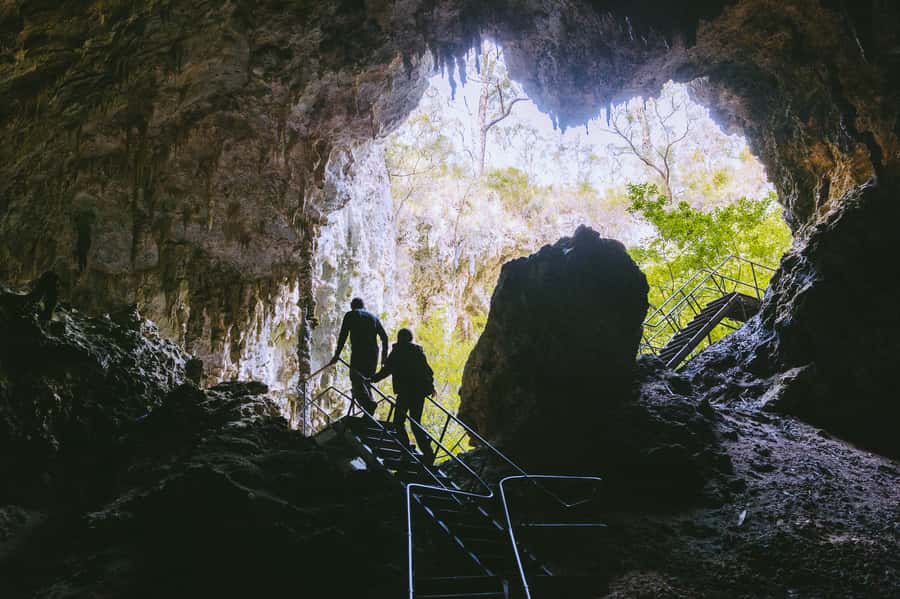
- The tour begins in Australian bushland: A gently sloping boardwalk leads from the entrance toward the cave.
- A 50,000-year-old jawbone remains in place: The zygomaturus fossil is embedded in the cave wall rather than displayed behind glass.
- You can listen in five languages: Audio guides are listed in English, German, French, Malay, and Chinese.
- The visit takes about two hours: That includes the cave experience and a winding walk through Marri forest.
- The route has limits for wheelchair users: Access reaches the first chamber only, around 30 metres into the cave.
Why Mammoth Cave feels different from a standard cave visit
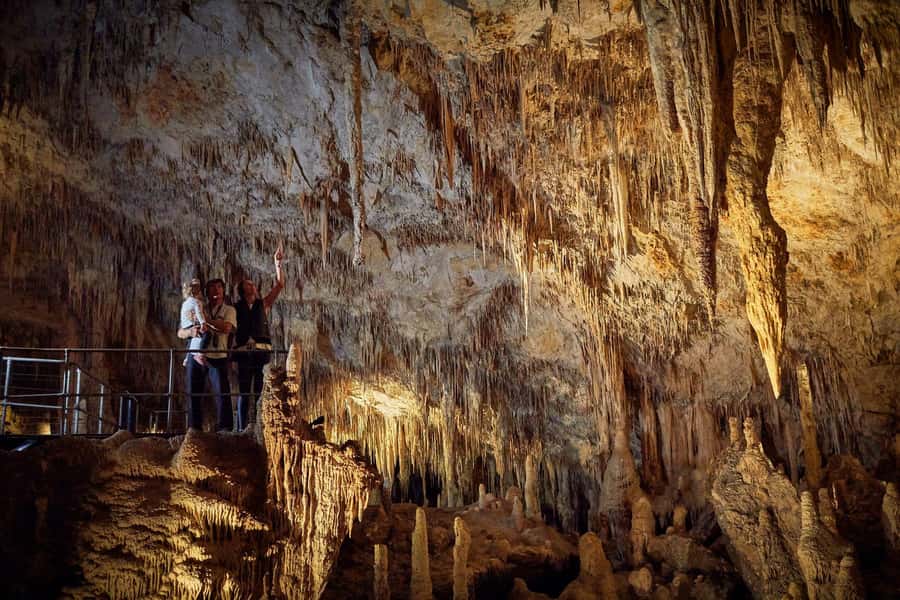
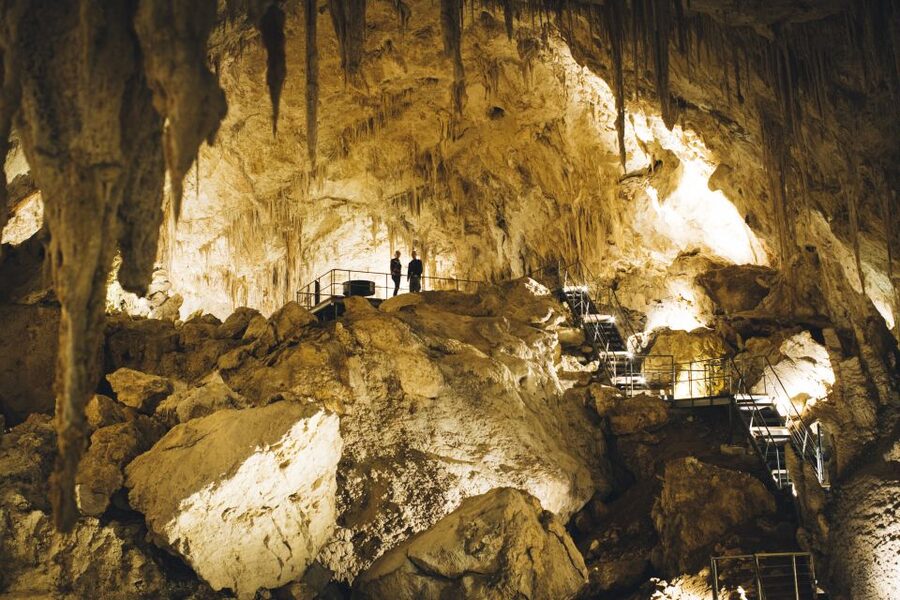
Many cave tours focus on rock shapes, lighting, and underground drama. Mammoth Cave adds a stronger reason to look closely: this was once a natural trap and shelter for animals that no longer exist.
The cave contains evidence of about 10,000 fossils. During excavation, many proved to be the remains of giant species that became extinct around 46,000 years ago. That changes the mood of the visit. You are not simply walking through a pretty cavern. You are moving through a record of ancient Australian life.
I find that point especially useful if you are deciding between several caves in the Margaret River region. Mammoth Cave is not presented only as a geological sight. Its appeal comes from the link between the cave, the surrounding bush, and Australia’s lost giant fauna.
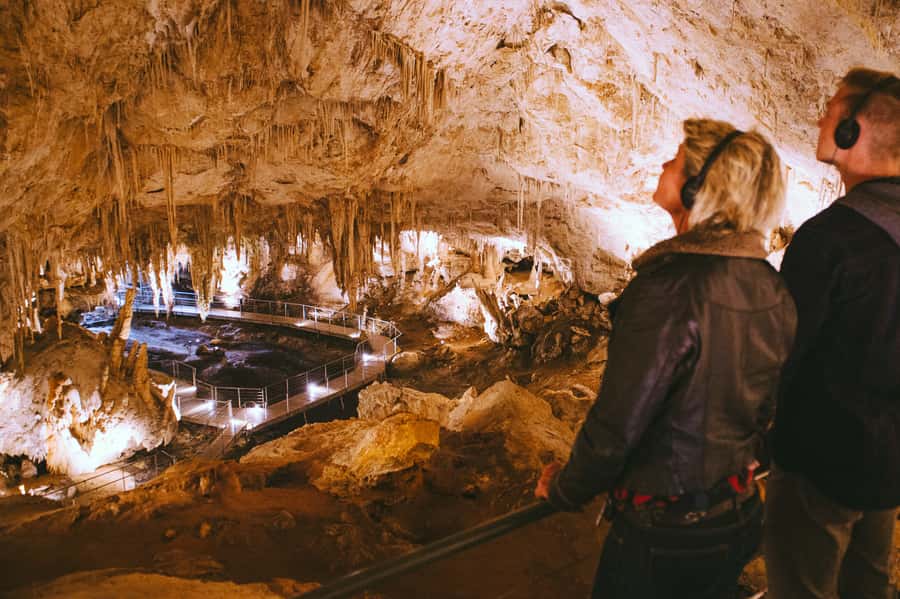
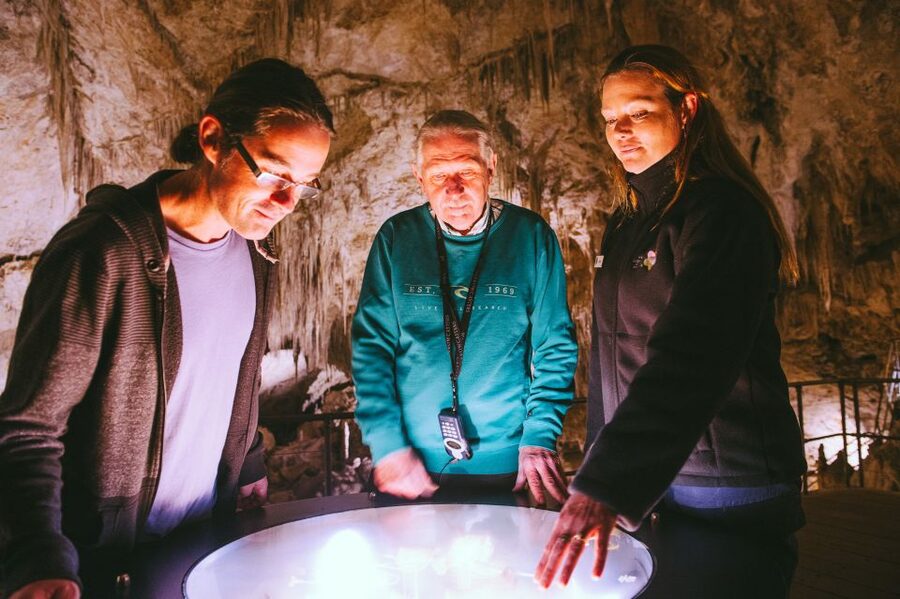
The experience also gives you more control than a fully guided tour. You collect an MP3 audio headset at the main entrance, then follow the route at your own speed. If one section catches your interest, you can give it more time. If your children lose patience, you are not holding up a whole group.
That freedom has a tradeoff. A live guide can answer a question on the spot and point out small details you might miss. Here, the audio track supplies the explanation, while you must pay attention to the route and make your own sense of the space.
More Self-Guided Audio Tours in the world:
- Athens: Acropolis Ticket & Optional Self-Guided Audio Tours
★ 4.1 · 2,542 reviews - Gettysburg Battlefield Self-Guided Driving Audio Tour
★ 4.5 · 910 reviews - Joshua Tree National Park Self-Guided Driving Audio Tour
★ 4.5 · 762 reviews
Starting at the main entrance
Your visit begins at the Mammoth Cave main entrance, where you show your confirmation voucher and collect the audio guide. The host or greeter is listed as English-speaking, while the recorded tour is available in English, German, French, Malay, and Chinese.
It is worth getting organized before you enter. Check that you have the right audio language, understand the basic route, and are comfortable carrying or wearing the MP3 headset. This is a self-guided visit, so there is no tour leader setting the pace once you move inside.
The meeting point is at approximately 34.0600357 degrees south and 115.0296783 degrees east. In practical terms, use the Mammoth Cave main entrance as your destination rather than relying on the coordinates alone.
The two-hour duration matters when planning the rest of your day. You can pair the cave with other Margaret River or Augusta area activities, but leave enough room for the full route instead of treating Mammoth Cave as a quick photo stop.
Walking through bushland before the cave
The approach is part of the experience, not just a path to the main attraction. You enter through native Australian bushland on a gently sloping boardwalk.
That transition helps set the scene. Rather than stepping straight from a car park into an enclosed room, you first walk among local plants and listen for Australian birdlife. The setting gives the fossil story a stronger sense of place: these ancient animals belonged to this part of the continent, not to a distant museum display.
The route later winds through Marri forest, with whistling birds and native flora along the way. I like this outdoor section because it gives the visit a natural rhythm. You have the enclosed cave, then a return to open forest, with the two parts connected by the same environment.
Do not expect the bush walk to be a separate long hike. The advertised visit lasts about two hours overall, and the bushland sections form part of the route. The available information does not give a separate walking distance or detailed trail grade beyond the gently sloping boardwalk, so you should plan for a nature walk rather than assume a flat indoor attraction.
Inside the cave, the audio tour sets the pace
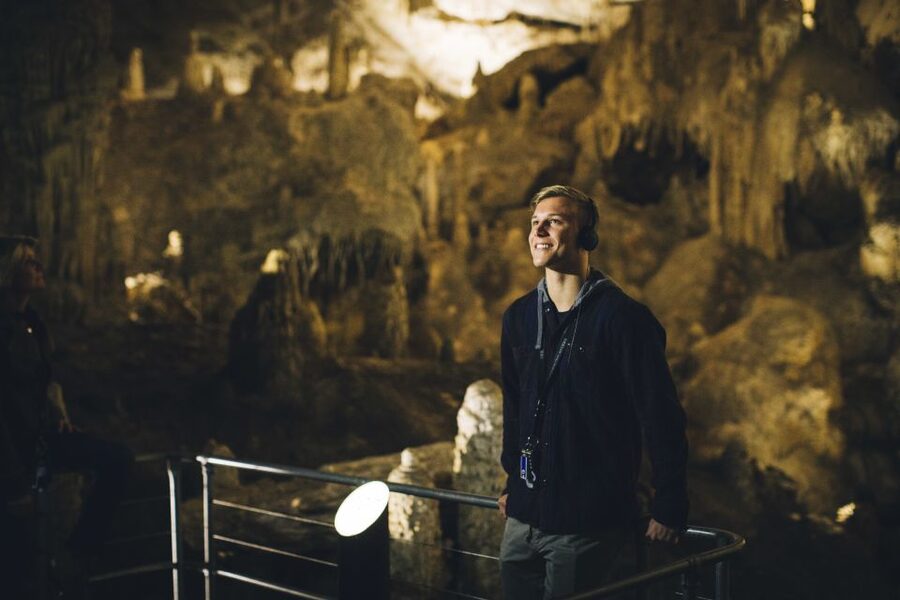
Once you enter the cave, the audio guide provides the main commentary. This format works well for people who prefer a quiet visit or want to stop for photographs and observation without staying beside a guide.
I would listen closely at the beginning. The audio explains the cave as a natural time capsule and introduces the fossil deposits that accumulated over thousands of years. The number is striking: roughly 10,000 fossils were found inside.
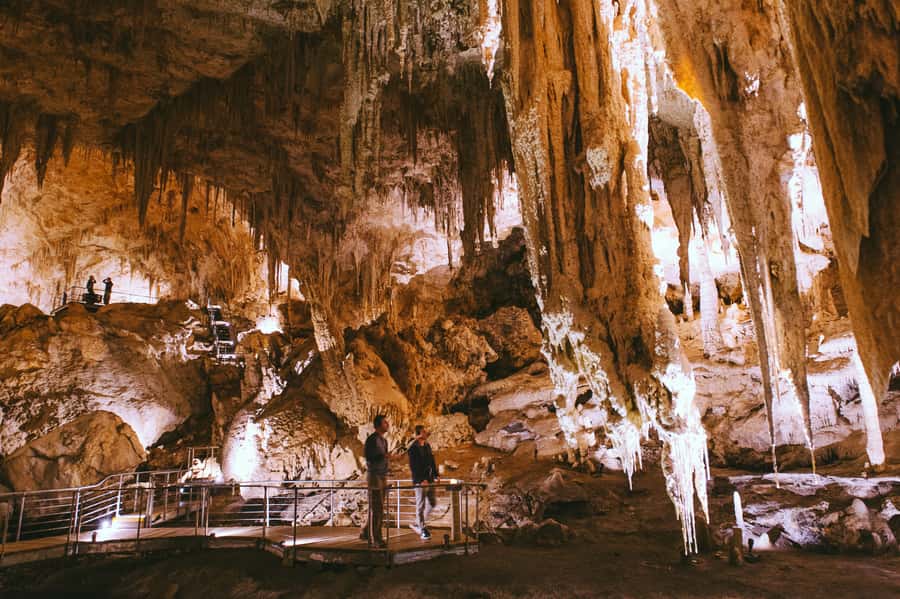
Because you control the pace, you can spend extra time examining the cave interior. The available details do not promise elaborate lighting effects or a particular collection of mineral formations, so I would choose Mammoth Cave for its fossils and setting first, not for a theatrical underground show.
That distinction helps avoid disappointment. If your ideal cave visit means dramatic stalactites, a live storyteller, or a tightly managed route, another cave tour may suit you better. If you want a quieter experience with room to listen and look, the audio format is a sensible choice.
The recorded information also makes the cave more approachable for international visitors. English is the host language, but the audio guide includes German, French, Malay, and Chinese. Confirm the available option when you collect the headset, since the experience depends on the recording working for you.
A few more audio tours around the world worth a look
- Barcelona: Sagrada Familia Entry Ticket with Audio Guide
★ 4.6 · 105,312 reviews - Rome: Pantheon Fast-Track Ticket and Official Audioguide
★ 4.5 · 27,353 reviews - Barcelona: Casa Batlló Entry with Self-Audioguide Tour
★ 4.7 · 25,359 reviews - Rome: Colosseum & Forum with Audio Guide App -Optional Arena
★ 4.2 · 24,770 reviews
The fossil story, from accumulation to extinction
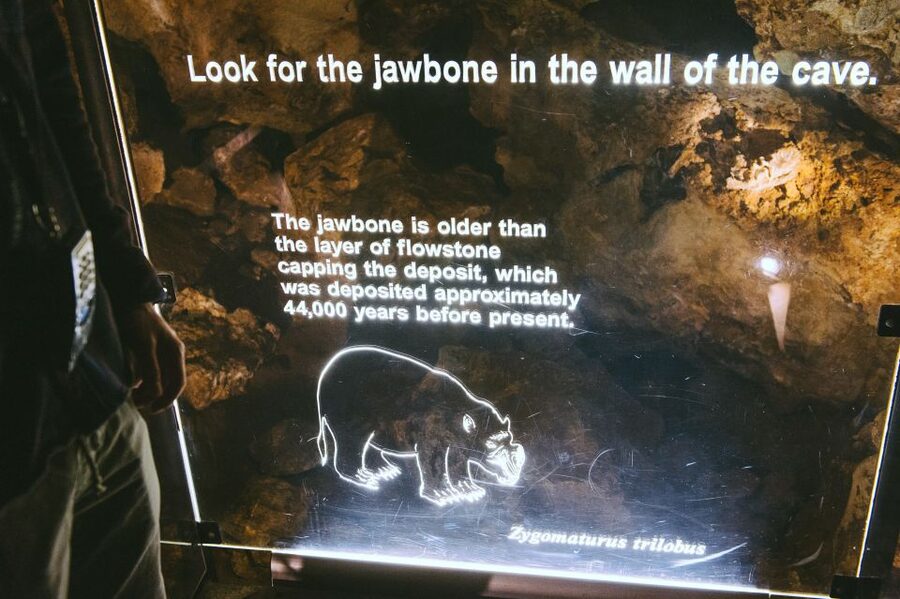
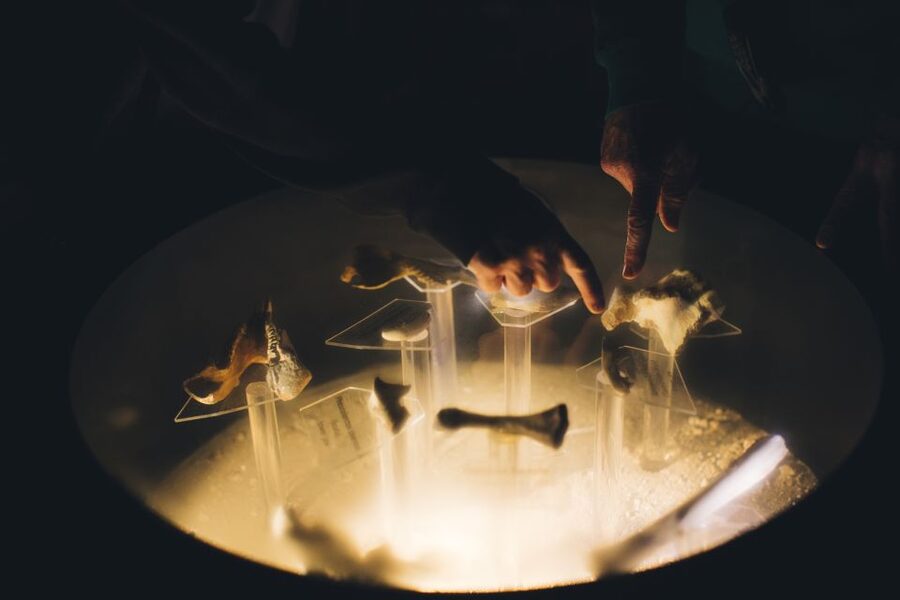
The most important part of the visit is the explanation of what happened inside the cave. Fossils accumulated there over a very long period, eventually creating a record of animals that lived in ancient Australia.
Many of those remains belonged to giant species that became extinct around 46,000 years ago. The experience connects an actual cave deposit with a major change in Australia’s past. That gives the visit more weight than a simple display of old bones.
The star detail is a 50,000-year-old zygomaturus jawbone embedded in the cave wall. Seeing the fossil in its original setting is more memorable than viewing a loose bone in a cabinet. You can understand that the cave itself preserved the evidence.
The jawbone also gives the tour a clear visual focus. If you are visiting with children, this is the detail I would highlight before entering. It is concrete, unusual, and easier to remember than a long list of extinct animal names.
Still, the cave does not turn the fossil material into a full museum visit. The information provided does not list a large number of reconstructed skeletons, interactive exhibits, or a separate gallery. You are coming to see the cave and selected remains in context.
Leaving the cave through Marri forest
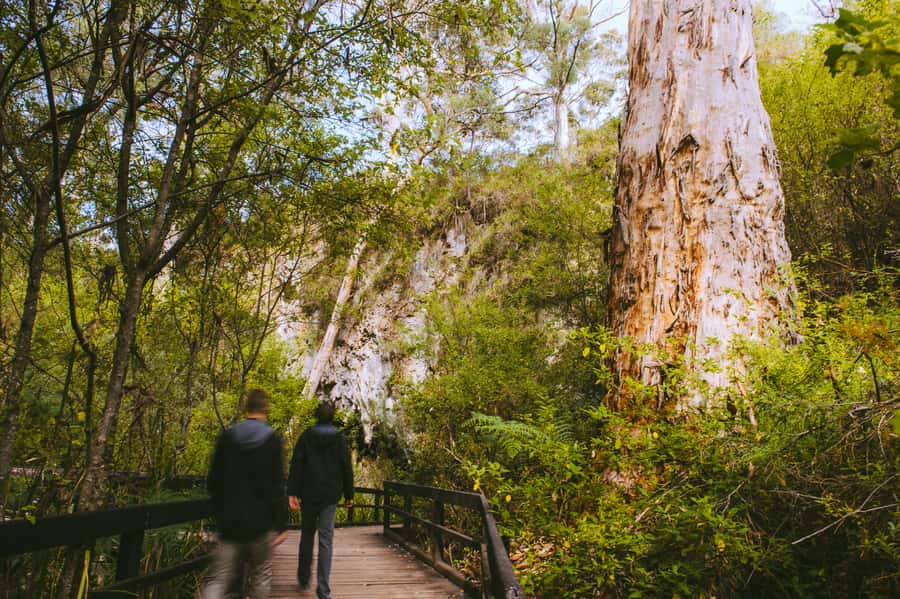
The route finishes with a winding walk through Marri forest. This outdoor ending is a welcome contrast after time underground, especially if you like to let a place settle in rather than exit directly into a shop or parking area.
The setting includes whistling birds and native flora displays. These details may sound modest, but they help make the visit feel tied to Western Australia. You are not only being shown what is below the ground. You are also seeing the living environment around the cave.
I would keep the final forest section in your schedule instead of rushing away after the cave. It completes the story from ancient fossils to present-day bushland. The forest is not described as a separate guided walk, so treat it as part of your self-guided route.
The available details do not give a promise of particular bird species or seasonal flowers. That is useful to remember when setting expectations. You may notice different sounds and plants depending on conditions, but the fixed appeal is the forest setting itself.
Is two hours good value?
No price is provided here, so I cannot judge the exact cost in dollars. I can judge what you receive for the time: a cave visit, a multilingual audio guide, fossil interpretation, a bushland approach, and a Marri forest walk.
That is solid value if you want more than a short underground look. The audio guide gives the visit educational purpose, while the natural setting adds time outside the cave. You are paying for access to a protected site and a structured route, not just a few minutes beside a fossil.
The self-guided format may also help families or independent visitors use the time well. You can move at a comfortable speed rather than matching a group. On the other hand, the value is weaker if you want personal conversation, detailed questions answered in real time, or a guide who points out every feature.
The rating of 4.7 from 48 reviews supports the idea that the format works well for many people. The strongest praise focuses on the visit being informative and, in one assessment, having nothing that needed changing. I would take that as encouragement for people who value clear information and a straightforward experience, not as a promise that every visitor will find the physical route easy.
Physical access and who should take care
Children under 17 must be accompanied by an adult. That rule matters because this is not a supervised children’s activity. You remain responsible for keeping younger visitors with you while managing the audio equipment and route.
Wheelchair access is available to the first chamber, approximately 30 metres into the cave. The full cave route is not described as wheelchair accessible, so call ahead for current details if access is important to your plans.
The information does not provide a full list of stairs, surface changes, or seating points. If you have limited mobility, do not assume that the gently sloping boardwalk means every part of the cave route will be equally easy. Ask the provider directly before booking.
I think the experience suits:
- Adults and older children who enjoy fossils, natural science, and self-paced visits
- People who prefer audio commentary to a fixed group tour
- International visitors who want a choice of recorded languages
- Visitors combining a cave stop with bushland and forest scenery
- Families who can keep children close and manage the route together
It may be less suitable if you need full wheelchair access, want a live guide, or dislike listening through a headset.
What to bring and how to plan your time
The supplied information does not list a required equipment checklist, but practical planning still helps. Wear footwear suitable for a boardwalk and a winding forest route, and allow the full two hours rather than booking another activity too close afterward.
You should also be ready for a self-guided visit. Keep your confirmation voucher available at the main entrance, collect the MP3 headset before entering, and select your preferred language at the start.
Because the experience moves between bushland, cave, and forest, it is sensible to plan for changing surroundings. The details do not state cave temperatures, weather protection, or food facilities, so you should not rely on the visit providing those extras.
The operator allows cancellation up to 24 hours before the activity for a full refund. A reserve-now-and-pay-later option is also available, which can help if your Margaret River schedule is still changing.
Mammoth Cave compared with other local choices
Mammoth Cave is a good pick when fossils are your priority. Its 50,000-year-old zygomaturus jawbone and the story of extinct giant animals give it a clear identity.
A fully guided visit to another cave may be better if you want live commentary and the chance to ask questions as you go. Mammoth Cave gives you flexibility instead, with the audio recording and a route that includes bushland.
It also works well beside non-cave activities in the region. You could choose it when you want to balance a day of food, wine, or outdoor stops with something tied to natural history. The experience is not described as a wine tour, wildlife encounter, lighthouse visit, or helicopter flight, so book it for the cave and forest setting rather than expecting those elements here.
Should you book the Mammoth Cave audio tour?
Book it if you want a calm, informative visit built around ancient Australian fossils, native bushland, and personal pacing. The embedded zygomaturus jawbone is a strong reason to go, and the five audio languages make the story accessible to a broad audience.
Think twice if you need full wheelchair access or insist on a live guide. For everyone else, the two-hour format offers a useful mix of underground history and outdoor scenery, with enough freedom to make the visit feel like your own rather than a march through a crowded schedule.
FAQ
Where does the Mammoth Cave audio tour begin?
The meeting point is the Mammoth Cave main entrance. Show your confirmation voucher there to receive the audio guide.
How long does the experience take?
The stated duration is two hours. This includes the cave visit and the surrounding bushland and Marri forest sections.
Is the tour guided by a person?
No. It is a self-guided audio tour. An English-speaking host or greeter is listed at the meeting point, but the cave commentary comes through the MP3 audio guide.
Which languages are available on the audio guide?
The audio guide is listed as available in English, German, French, Malay, and Chinese.
What fossil can you see inside Mammoth Cave?
You can see a 50,000-year-old zygomaturus jawbone embedded in the cave wall.
How many fossils were found in the cave?
About 10,000 fossils accumulated inside Mammoth Cave and were later found during excavation.
How old are the extinct animals connected with the fossils?
Many of the giant species became extinct around 46,000 years ago. The zygomaturus jawbone is described as 50,000 years old.
Can wheelchair users access Mammoth Cave?
Wheelchair access reaches the first chamber, around 30 metres into the cave. Contact the provider directly for more information about access beyond that point.
Can children visit without an adult?
No. Children under 17 must be accompanied by an adult.
Can I cancel the booking?
You can cancel up to 24 hours in advance for a full refund. A reserve-now-and-pay-later option is also available.
Just added around the world
- Coba Ruins: Self-Guided Walking Audio Tour in Mexico★ 3.5 · 2 reviews
- Self Guided Driving Audio Tour of Saguaro National Park★ 3.0 · 4 reviews
- Torino Walking Tour with Audio and Written Guide by a Local★ 4.5 · 35 reviews
- Self-Guided Audio Driving Tour of Mount Lemmon★ 5.0 · 4 reviews
- Trondheim’s Inner Circle: A Self-Guided Audio Tour★ 4.0 · 15 reviews
- A Tromsø Introduction: A Self-Guided Audio Tour★ 3.5 · 19 reviews
- Panorama Bus Tour with Audio Guide★ 4.0 · 3 reviews
- Saguaro National Park Self-Guided Audio Tour★ 3.5 · 11 reviews
Self-Guided Tours, compared.
Acropolis Ticket & Optional Self-Guided Audio Tours
Read our review →
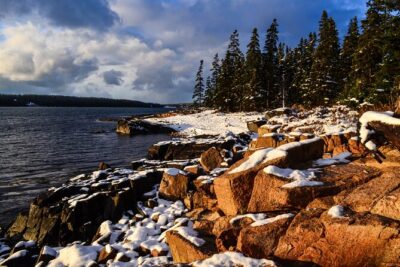
Ultimate Acadia National Park Self-Guided Driving Audio Tour
Read our review →

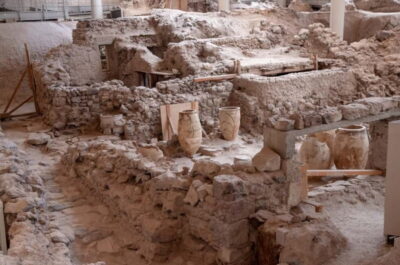
Santorini: Akrotiri Ticket with Optional Self-Guided Audios
Read our review →
Browse the lists this tour appears in