
REVIEW · AMSTERDAM AUDIO TOURS
Amsterdam: Royal Palace Entry Ticket + Audio guide
Look up before you walk on. Amsterdam’s Royal Palace packs Dutch Golden Age paintings, polished furniture, grand chandeliers, and serious royal ceremony into a visit that works well even on a busy city day. I especially like the freedom to choose a shorter or longer audio route, and the palace’s location on Dam Square makes it easy to fit between other sights.
The audio guide is the real value here. It explains the rooms, art, former residents, and continuing royal use in a clear, entertaining way. The main drawback is that some sections can feel similar after a while, and the route signage is not always easy to follow. You should allow about 90 minutes if you want to listen carefully rather than simply glance around.
Key Points to Know Before You Go
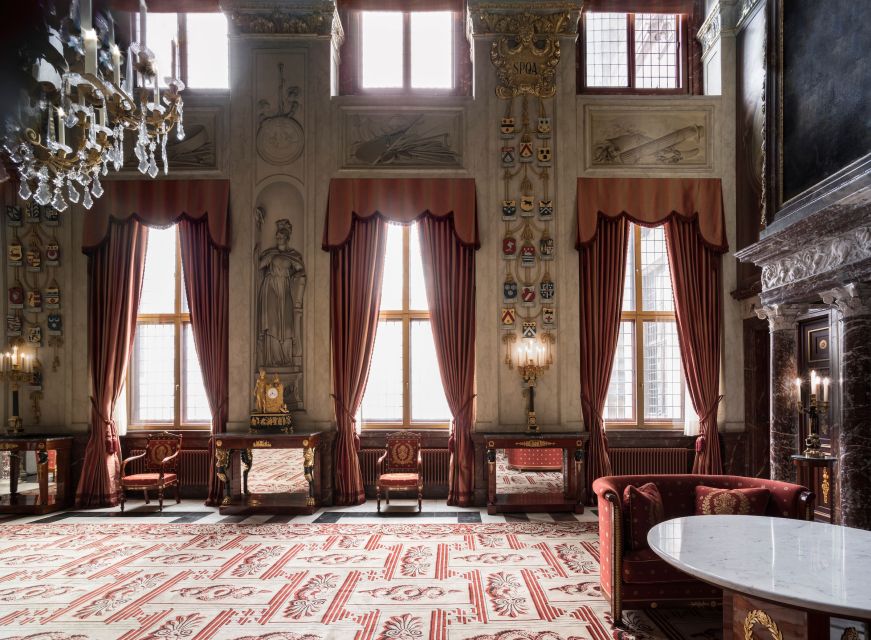
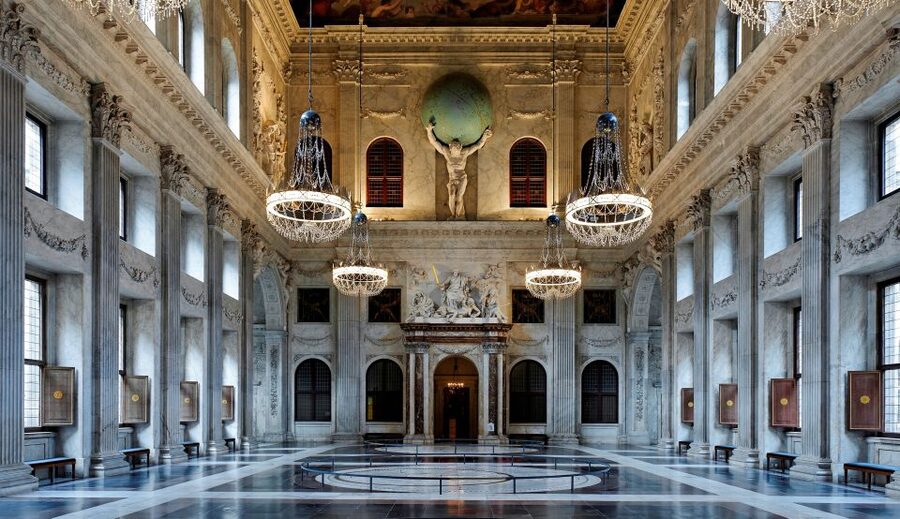
- The Citizens’ Hall is the grand centerpiece: Walk into a vast marble chamber with the statue of Atlas carrying the sky on his shoulders.
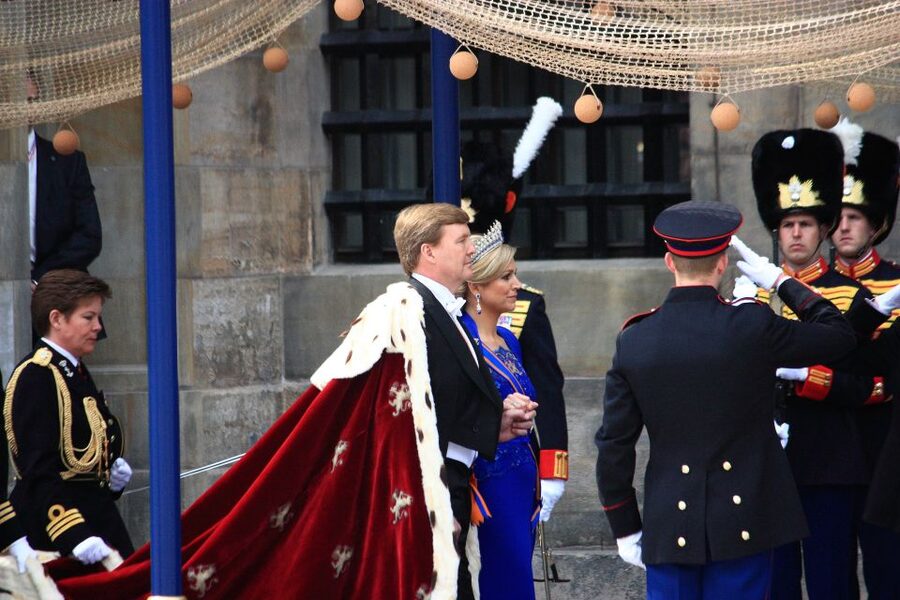
- This is still a working royal building: State visits, award ceremonies, banquets, and royal receptions continue here.
- The audio guide lets you set the pace: Choose a shorter or longer visit, pause between rooms, and listen in eight languages.
- The palace rewards an early visit: Prepaid entry can help you use the priority lane, while early arrival may mean fewer people inside.
- Children under 18 enter free: Pick up their ticket at the counter, while adults can use the smartphone ticket at the scan desk.
- Plan for one to two hours: Some visitors finish in about an hour, but 90 minutes to two hours gives the rooms and audio commentary proper attention.
Reaching the Palace on Dam Square
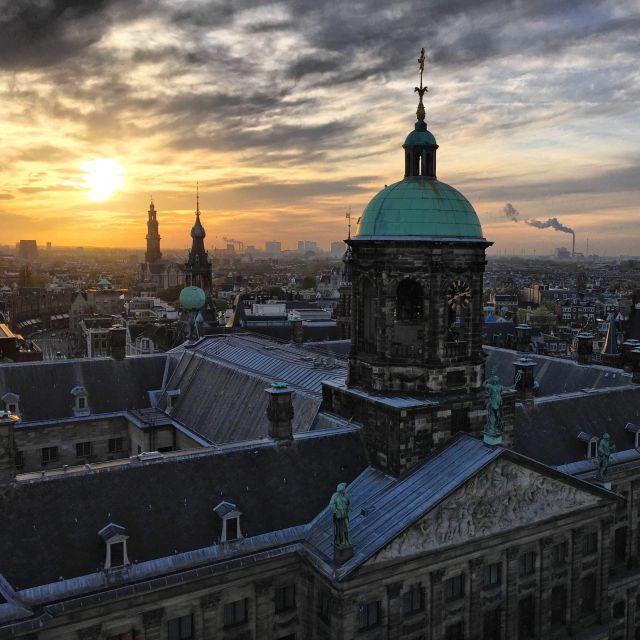
The Royal Palace sits directly on Amsterdam’s Dam Square, one of the easiest central locations in the city. Tram numbers 2, 4, 12, 13, 14, 17, and 24 stop nearby. The nearest GVB tram stop is Dam Square, and Metro 52 serves the area through Rokin station.
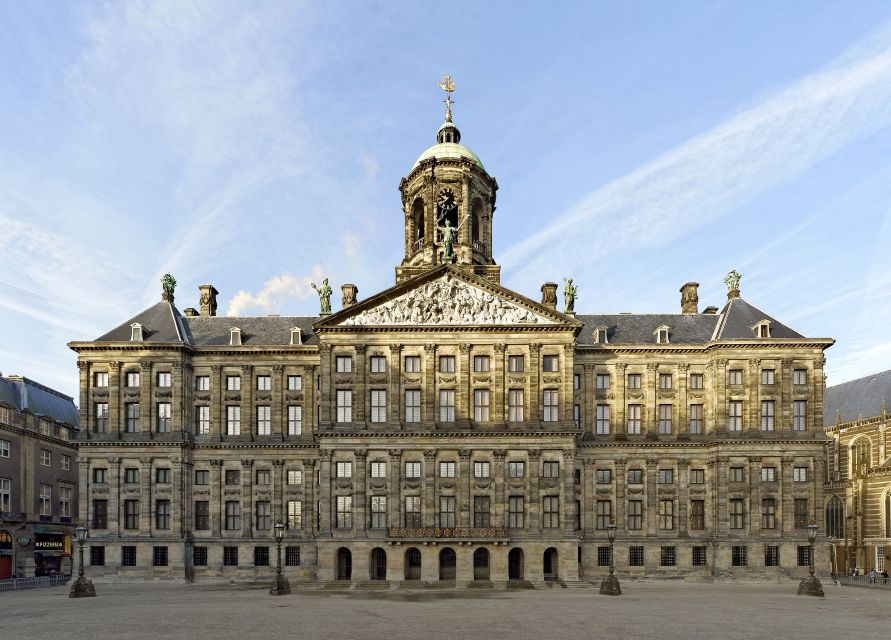
That central location matters because this visit does not require a separate half-day plan. You can pair it with a walk through the historic center, shopping around Kalverstraat, or another attraction near Dam Square. I would avoid treating it as a quick ten-minute stop, though. The exterior gives little clue about how much detail waits inside, and rushing through the rooms would miss the point.
When you arrive, show your smartphone ticket at the scan desk. The priority lane is useful if there is a line for people buying tickets in person. It does not turn the palace into a private visit, but it can save time, especially during a busy afternoon.
The last entry is 45 minutes before closing. Check the available starting time when booking, since the ticket is valid for one day rather than tied to a fixed guided group. That flexibility makes the visit easy to fit around Amsterdam’s changing weather and your other plans.
More Castle and Palace Audio Tours in Amsterdam:
- Prague: Skip-the-line Castle Ticket and Optional AudioGuide
★ 4.3 · 11,121 reviews - Topkapi Palace and Harem Skip-the-Line-Tickets & Audio Guide
★ 4.3 · 4,745 reviews - Milan: Sforza Castle Entry Ticket with Digital Audio Guide
★ 4.0 · 2,675 reviews
The First Rooms: A Palace Built for Public Power
The building dates from the 17th century, and its design reflects Amsterdam’s importance during the Dutch Golden Age. You are not simply walking through a private royal home. The palace was made to express civic power, wealth, order, and ambition.
That distinction helps explain the scale. Some rooms feel formal rather than cozy, with broad spaces, polished surfaces, and decoration meant to impress official visitors. The building now serves the Dutch royal family for state visits, award ceremonies, and other receptions, so the visit connects past public power with present-day ceremony.
The audio guide gives that setting useful context. Without it, you can admire the ceilings, paintings, clocks, and furniture, but you may miss why the decoration was chosen or how the rooms functioned. I recommend taking the audio device even if you normally prefer to wander through museums alone.
The commentary is available in Chinese, Dutch, English, French, German, Italian, Russian, and Spanish. It is designed for self-guided use, so you can stop, start, and skip sections. That is a major advantage if one room catches your eye or if someone in your group wants a faster route.
The Citizens’ Hall and Atlas
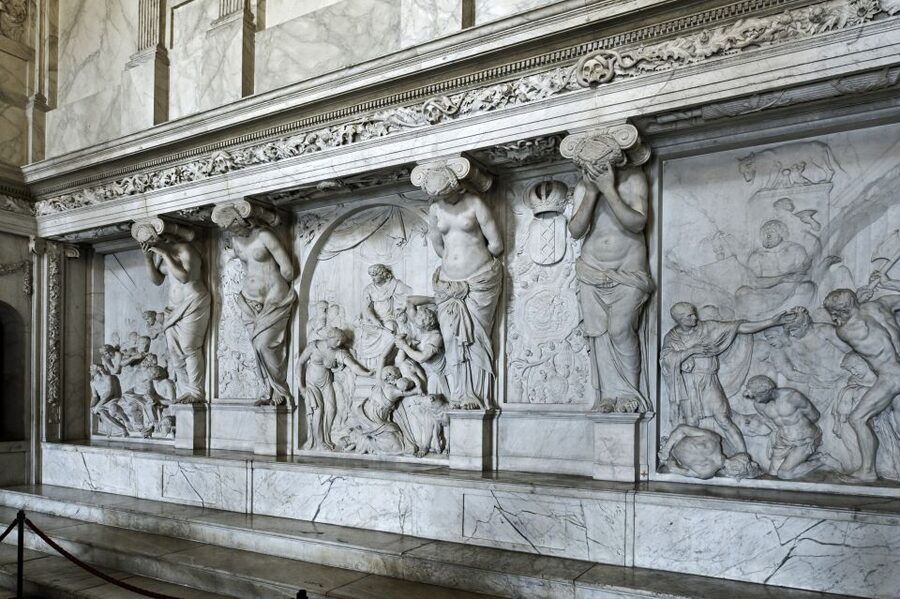
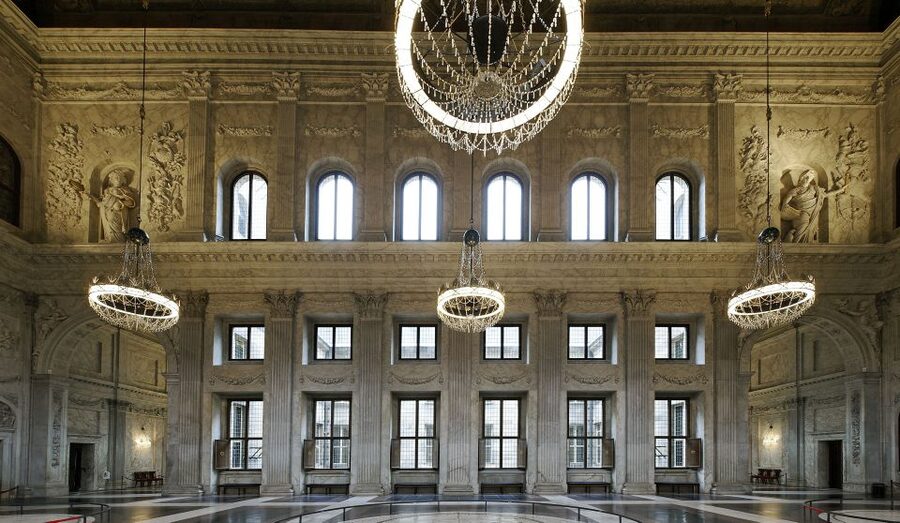
The Citizens’ Hall is the room most likely to make you pause. Its marble floor and walls create a grand sense of scale, while the statue of Atlas carries the sky above you. This is the visual heart of the palace and the place where the building’s message becomes easiest to read: Amsterdam wanted visitors to understand its importance.
Give yourself time here. Look beyond the main statue and notice how the room uses architecture and sculpture together. The audio guide helps connect those details to the palace’s original civic purpose, rather than leaving you with only the impression of a large, handsome hall.
The room can also be the busiest part of the route. If you arrive during a crowded period, step aside when possible and let other people pass. The palace has limited places to sit, and stairways can become congested, so this is not an ideal visit for anyone who needs frequent rests while walking.
For families, the scale and sculpture may hold children’s attention better than a long sequence of portraits. A special children’s multimedia tour is available in Dutch and English. Children under 18 do not pay admission, but you need to collect their ticket at the counter.
Paintings by Bol and Flinck
The palace contains works linked to major Dutch Golden Age artists, including Ferdinand Bol and Govert Flinck. Their paintings give the rooms more than decoration. They help show how art, government, history, and civic pride were presented in a grand public building.
The audio commentary is particularly useful here because the paintings are not always self-explanatory. You can see the figures, colors, and composition immediately, but the explanation adds the reason the work belongs in this setting and how it fits the palace’s larger message.
You should not expect a modern gallery arrangement with large walls of explanatory text. This is a room-by-room palace visit, and the audio guide carries much of the interpretation. One visitor who skipped the device found that a great deal was missed because there was less written information than expected. That is the clearest practical lesson: take the audio guide, even if you only listen to the main stops.
The commentary is also a good fit for mixed-interest groups. You can listen closely to the paintings you care about, then move on without waiting for a guide or the rest of a group. I like that control because palace tours can become tiring when every visitor must follow the same pace.
A few more audio tours around Amsterdam worth a look
- Amsterdam: 75 Minute City Canal Cruise with Audio Guide
★ 4.4 · 19,938 reviews - Amsterdam: City Centre Canal Cruise including Audioguide
★ 4.3 · 16,901 reviews - Amsterdam: Heated Canal Cruise Including Audioguide
★ 4.2 · 2,773 reviews - Amsterdam: Canal Cruise with Live Commentary & Audio Guide
★ 4.4 · 1,034 reviews
Louis Napoleon’s Furniture, Clocks, and Chandeliers
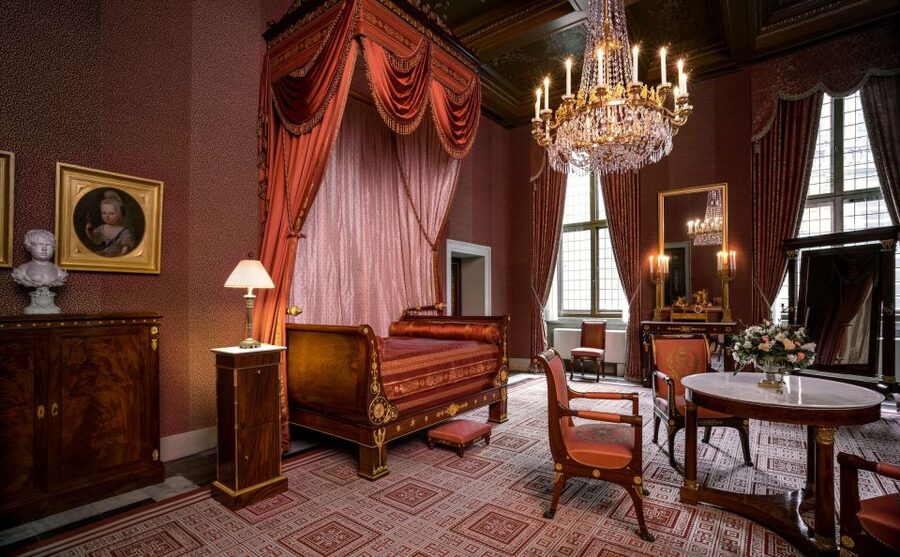
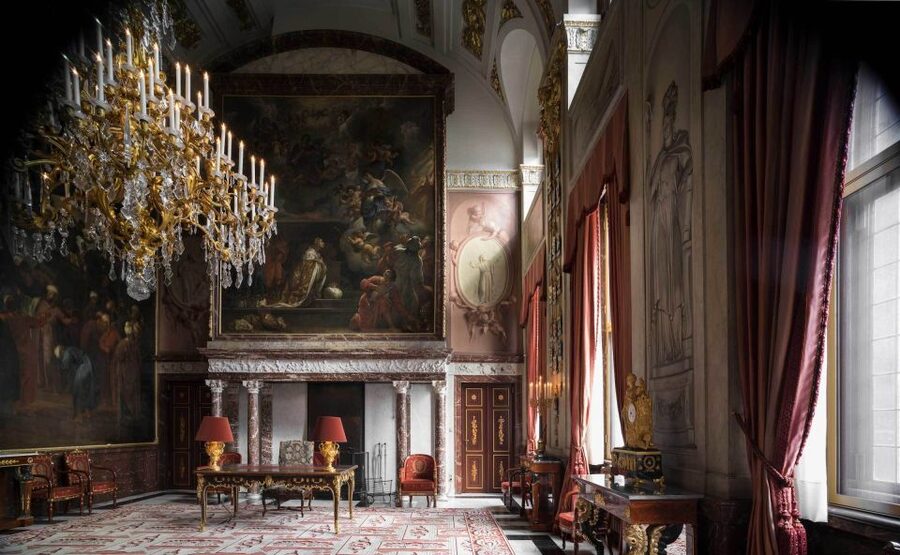
Another pleasure here is the collection of preserved furniture, chandeliers, and clocks from the time of Louis Napoleon. These objects make the palace feel more lived in and more specific. They show how royal taste changed the character of the building and how furnishings can carry as much historical information as paintings.
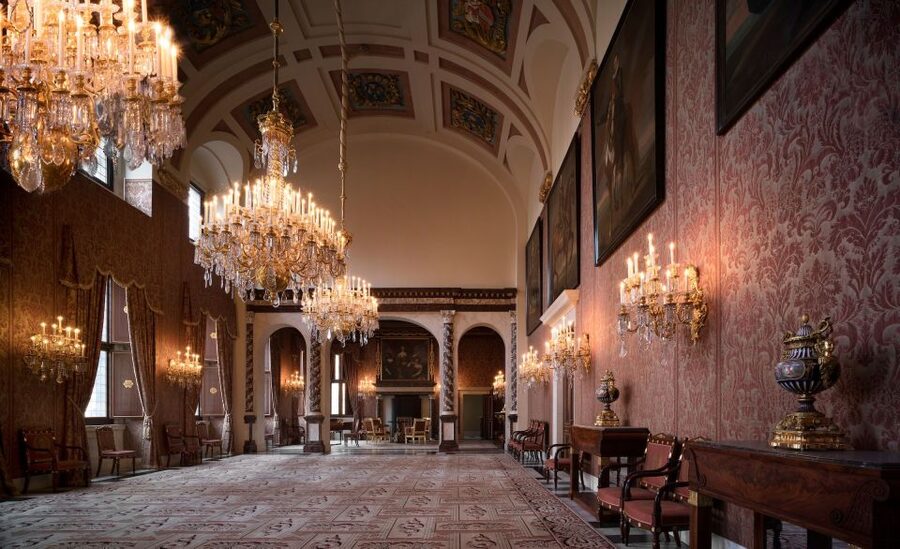
The rooms are carefully maintained, and the interiors have a polished, formal quality. If you enjoy furniture, decorative arts, or historic interiors, you may spend longer here than expected. The objects are not just background props. Together, they show how officials and royalty wanted rooms to look when receiving important people.
Still, the visual rhythm can become repetitive. One room after another may bring another decorated ceiling, formal chair, chandelier, or clock. The shorter audio option is useful if you like architecture but do not want to hear every explanation. The longer route suits anyone who wants the full story of the palace and its furnishings.
The visit is at its best when you alternate between listening and looking. Pause the audio while studying a detail, then restart it when you are ready. You are not locked into a guide’s schedule, and that makes the palace feel less like a procession and more like your own visit.
How Long Should You Spend Inside?
Allow about 90 minutes for a satisfying visit. That gives you time to follow the main audio stops, look around the Citizens’ Hall, and enjoy the principal rooms without racing.
An hour can work if your schedule is tight. Several visitors have completed the route in roughly that time, especially when entering later in the day and choosing a shorter audio experience. But if you want to hear nearly everything, take photographs without flash, and pause for the architecture, plan on 90 minutes to two hours.
You can also spend more time if palace interiors are your main interest. The ticket is valid for one day, but the visit itself follows a self-guided route rather than a fixed timed group. The practical limit is your own energy and the palace’s opening schedule.
I would not plan this as a major attraction for very small children unless they enjoy historic buildings. The children’s audio tour helps, but the visit includes quiet galleries, stairs, and limited places to sit. Older children who like stories, statues, and grand rooms may enjoy it more than toddlers.
Is the $15 Price Good Value?
At about $15 per person, the ticket is fairly priced for a central Amsterdam attraction that includes admission and the multimedia tour. The audio guide is not an optional extra, and that matters because it provides much of the useful explanation.
The value is strongest if you listen to the commentary. If you only walk through quickly, the palace may feel like a short sequence of attractive rooms. If you use the audio route, you get a clearer sense of the building’s purpose, the art, the royal rooms, and its current use for official events.
Families also get a financial break because children under 18 enter free. You still need to collect their tickets at the counter, but that can make this a reasonable stop for parents with older children.
Prebooking can be worthwhile even if the ticket price is not dramatically different from buying in person. The priority lane may save time, and several visitors found it convenient to arrive with tickets already on their phones. If you are visiting during a busy period, time saved at the entrance can be worth more than a small price difference.
The ticket also includes a cloakroom. Food, drinks, smoking, flash photography, and video recording are not allowed inside. You can take the experience at your own pace, but you should be prepared for a traditional museum setting rather than a casual attraction.
Accessibility and Practical Comfort
The palace is wheelchair accessible, with a lift, an accessible toilet, and wheelchairs available for visitors to use. That makes the building easier to manage than many historic sites, although you should still expect a substantial indoor walk.
The main practical issue is seating. There are few places to rest, and stairs may become crowded. If you have mobility concerns, allow extra time and ask staff for help. Staff members are described as friendly and helpful, and assistance is available at the entrance and around the visit.
Coat and bag check are straightforward, which is useful in colder months. Since the palace does not allow food or drinks, plan to eat before entering or after you finish. Dam Square gives you plenty of options nearby, but the palace itself is not a place for a snack break.
Photography is limited by the rules: no flash photography and no video recording. That is worth knowing if you like documenting every room. The building is best enjoyed by looking carefully rather than trying to turn the visit into a photo session.
Who Will Enjoy This Palace Most?
I would recommend the visit to anyone interested in Dutch art, royal ceremony, historic interiors, architecture, or Amsterdam’s civic story. It is also a good choice when the weather is poor because nearly the entire experience takes place indoors.
The audio format suits independent visitors, couples, families with older children, and anyone who dislikes being tied to a group schedule. You can choose English or one of seven other languages, pause when you want, and select a shorter or longer route.
It may be less satisfying if you want a quiet private palace or a highly interactive attraction. The building can be busy, the rooms can feel visually similar, and the route includes little seating. Visitors who prefer contemporary art or hands-on exhibits may find the palace more formal than exciting.
For a first visit to Amsterdam, I see it as a strong one to two-hour addition rather than an all-day destination. The palace is impressive, but its greatest strength is how much history it gives you in a compact central visit.
Should You Book the Royal Palace Amsterdam Ticket?
Book it if you want to see Amsterdam’s grandest official interior without committing to a long guided tour. The Citizens’ Hall, Golden Age paintings, royal furnishings, and clear audio guide make the admission worthwhile, especially at the listed $15 price.
I would book ahead if you value a priority entry lane or have a tight schedule. Visit early if you want a better chance of moving through the rooms comfortably. Give yourself 90 minutes, take the audio guide, and do not judge the palace by its exterior alone. Inside, the building explains a much bigger story about Dutch power, art, and royal ceremony.
FAQ
Where is the Royal Palace of Amsterdam?
The palace is on Dam Square in central Amsterdam. The nearest GVB tram stop is Dam Square, and Metro 52 serves Rokin station.
Which languages are available for the audio guide?
The multimedia tour is available in Chinese, Dutch, English, French, German, Italian, Russian, and Spanish.
Is there a children’s audio tour?
Yes. A special multimedia tour for children is available in Dutch and English.
Do children under 18 need to pay?
Children under 18 enter free, but they need to pick up a ticket from the counter.
How long should I allow for the visit?
Plan for about 90 minutes to two hours if you want to follow the audio guide carefully. A shorter visit of about an hour is possible.
Is the Royal Palace wheelchair accessible?
Yes. The building has a lift, an accessible toilet, and wheelchairs available for visitors to use.
Can I take food, drinks, or pets inside?
No. Pets, smoking, food, drinks, flash photography, and video recording are not allowed inside the palace.
Just added around Amsterdam
- Van Gogh Museum Ticket with Audio Guide and Unlimited Access Time★ 5.0 · 25 reviews
- Van Gogh Museum with Audio Guide★ 3.5 · 80 reviews
- Self Guided Tours Amsterdam With 100 Captivating Audio Stories★ 4.5 · 3 reviews
- Combo Ticket: Rijksmuseum Amsterdam & 1h Cruise with Audio Guide★ 3.0 · 83 reviews
- Self-Guided Audio Tour of The Red Light District★ 5.0 · 5 reviews
- Houseboat Museum Amsterdam Self Guided Audio Tour★ 5.0 · 3 reviews
- Self-Guided Audio Tour Holocaust Series: The Jewish Quarter★ 5.0 · 5 reviews
- Amsterdam Walking Tour with Audioguide on Your Smartphone★ 3.5 · 3 reviews
Castle & Palace Audio Tours, compared.
Topkapi Palace and Harem Skip-the-Line-Tickets & Audio Guide
Read our review →
Sforza Castle Entry Ticket with Digital Audio Guide
Read our review →
Topkapi Palace and Harem Ticket with Audio Guide
Read our review →
Knossos Palace Entry Ticket with Optional Audio Guide
Read our review →

Dolmabahce Palace and Harem Fast-Track & Audio
Read our review →
Neuschwanstein Castle Skip-the-Line Ticket with Audio Guide
Read our review →Browse the lists this tour appears in